
Last updated 2026-07-09
TL;DR
The NuRecover portable sauna is a steam-heated personal pod that folds flat, heats in 10-15 minutes, and costs $150-$280 depending on model. It works, with real limits: your head stays outside the steam, sessions run short, and durability is fair. Good for renters and travelers. Less compelling if you have space and budget for a real home sauna.
What is the NuRecover portable sauna and how does it work?
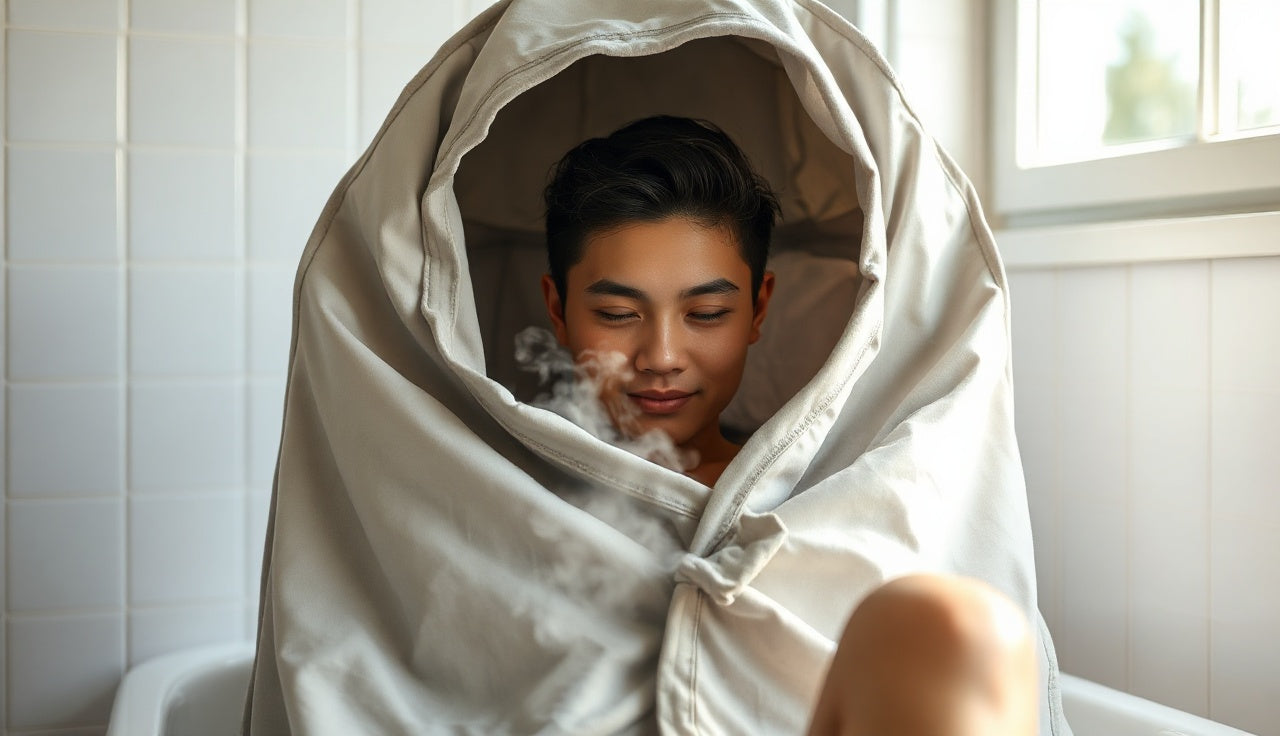
The NuRecover portable sauna is a collapsible personal steam tent. You sit inside on a foldable stool, run a steam hose into the base, and the fabric enclosure traps heat and moisture around your body. Your head stays out through an adjustable collar at the top.
The steam generator, usually a 1,000-1,800 watt unit, heats water and pumps steam into the tent. Most NuRecover models reach around 115-130°F (46-54°C) inside. That's cooler than a traditional Finnish dry sauna, which runs 160-200°F (71-93°C) [1]. The heat still raises your core temperature and makes you sweat, just through humid steam instead of dry convective air.
The tent is a multilayer Oxford-style polyester. It folds into a carry bag about the size of a large backpack. Setup is genuinely fast, usually under 5 minutes once you've done it twice. Fill the generator, plug it in, zip yourself in, wait 10-15 minutes for the tent to get hot.
Here's what the marketing skips. Because your head sits in cool air, the neural cues that normally tell you to get out of a sauna are partly bypassed. You may sweat harder than you expect and feel fine doing it. That isn't dangerous on its own, but hydrate before and during, same as any heat session [2].
What are the NuRecover portable sauna models and what do they cost?
NuRecover sells two main tiers, though the product line has shifted over time and model names aren't consistent across retailers. As of mid-2025, expect $150 at the low end and $280 at the top.
The entry tent runs $150-$180. You get a basic steam generator, the fabric tent, a foldable chair, a hand hole for your phone or a towel, and a carry bag. The generator is around 1,000 watts and takes closer to 15 minutes to get hot.
The upgraded version runs $220-$280. The generator steps up to 1,500-1,800 watts, heat-up drops to about 10 minutes, and the interior is slightly larger. Some listings add a digital timer and temperature control.
| Model Tier | Price Range | Steam Wattage | Heat-Up Time | Interior Temp (approx) |
|---|---|---|---|---|
| Entry | $150-$180 | ~1,000W | 12-15 min | 115-125°F |
| Upgraded | $220-$280 | 1,500-1,800W | 8-12 min | 120-130°F |
For context, a basic infrared home sauna panel system starts around $1,000, and a proper barrel or cabin sauna runs $2,000-$8,000+ installed [3]. Price is the NuRecover's whole pitch. If you rent, travel a lot, or want to test heat therapy before spending real money, the entry cost is low enough to be nearly disposable.
Both Amazon and NuRecover's own site carry these. Prices swing a few dollars week to week. Buy from the NuRecover site or an authorized Amazon listing to dodge the knockoffs, which are out there.
Does the NuRecover portable sauna actually work for heat therapy?
Yes, with caveats. The science on heat therapy is real. Regular sauna use is linked to cardiovascular benefits, better recovery markers, and heat shock protein production [4]. The open question is whether a portable steam tent copies enough of that stimulus to count.
Honest answer: it probably captures a meaningful chunk of the benefit, but nobody has run a head-to-head trial of portable steam tents against traditional saunas. The nearest evidence comes from steam bathing research. A 2021 review in Complementary Therapies in Medicine found that whole-body steam bathing produced measurable cardiovascular and autonomic responses, though the effects were smaller than those documented for dry Finnish sauna [5]. The head-out design of the NuRecover (and every personal steam tent) means your brain never takes the same thermal load, which shifts the physiological picture.
For muscle recovery and relaxation, most regular users say the NuRecover does the job. You sweat, you warm up, your muscles let go. The psychological payoff of a dedicated heat ritual isn't nothing. Sessions of 15-30 minutes at 120°F with real hydration are a reasonable recovery tool.
The long-term cardiovascular findings everyone quotes come from a different setup. The Finnish cohort studies linking frequent sauna use to lower cardiac death risk over decades used dry saunas at higher temperatures [4]. I'd be careful assuming the NuRecover delivers identical outcomes. It might. We don't have the data to say.
For the full evidence picture on heat exposure, the sauna benefits breakdown separates what the research shows from what people extrapolate.
| NuRecover portable (entry) | 120 |
| NuRecover portable (upgraded) | 128 |
| Infrared home sauna | 140 |
| Traditional Finnish dry sauna | 185 |
Source: Laukkanen JA et al., JAMA Internal Medicine 2015; product specifications
How does the NuRecover compare to other portable saunas?
The personal steam tent market runs on a few recognizable names (SereneLife, Durherm, LifePro) plus a flood of unbranded Chinese units. NuRecover sits mid-tier and has a bigger following in the recovery-athlete crowd, mostly from social media.
Here's how the main variables stack up across the category:
| Brand | Price | Wattage | Interior Material | Session Duration (typical) |
|---|---|---|---|---|
| NuRecover (entry) | ~$160 | 1,000W | Oxford polyester | 15-30 min |
| NuRecover (upgraded) | ~$250 | 1,500W+ | Oxford polyester | 15-40 min |
| SereneLife SLISAU35BK | ~$130-$160 | 800-1,000W | Oxford polyester | 15-30 min |
| LifePro Rejuv | ~$300-$350 | 1,500W | Reinforced polyester | 20-40 min |
| Unbranded/Generic | ~$60-$110 | 600-800W | Thin polyester | 10-20 min |
At the entry level, the NuRecover's structural edge over SereneLife is thin. What sets it apart is the community and the brand's recovery-athlete focus. The upgraded tier, with real wattage behind it, is an easier choice to defend. The LifePro Rejuv is a genuine step up in build quality, but you pay for it.
Generic units under $100 are a gamble. The generators are often underpowered and fabric quality bounces around enough that some buyers report seam failures within a few months. If your budget is locked under $120, look at SereneLife before any no-name unit.
For a wider look across the portable sauna category, heat delivery, material quality, and realistic durability matter more than brand marketing.
What are the real downsides of the NuRecover portable sauna?
The limits are real and the marketing waves past most of them.
Start with the head-out design. This is fundamental, not a footnote. The Finnish cohort studies involve full-body heating, head included. The hyperthermia response, the cardiovascular load, the heat shock protein induction: all of it is shaped partly by how hot your brain gets [4]. Keeping your head in cool air changes the experience and likely changes the physiology, though by how much is genuinely unknown.
Next, humidity. A steam tent runs at close to 100% relative humidity inside. That's different from both a dry sauna and an infrared sauna. Your sweat can't evaporate efficiently, so your skin feels soaked even at lower temperatures. Some people love it. Some find it claustrophobic. No way to know which you are until you try it.
Third, durability. The Oxford polyester holds up fine for a year or two of regular use. The generator is the weak point. Several NuRecover owners on forums report generator trouble (inconsistent steam, mineral scaling from hard water) after 12-18 months. Distilled or filtered water stretches its life a lot. This isn't a NuRecover flaw. Every steam generator has it.
Fourth, space and setup beat a real sauna but aren't zero. Open, the tent needs about a 3x3 foot footprint and an outlet nearby. The included chair is basic and cramped for tall users. Folding it back up annoys you the first few times.
Fifth, the temperature ceiling. At 115-130°F, you're below a proper sauna. Whether that matters depends on your goal. For relaxation and light recovery, no. For replicating the heat stimulus from the Laukkanen cardiovascular studies, it probably falls short.
None of this makes it a bad product. It makes it a specific product for a specific use. Know what you're buying.
Is the NuRecover portable sauna safe to use?
For most healthy adults, yes, with reasonable precautions. Steam tents at 115-130°F are a mild heat exposure next to a traditional sauna.
The precautions that count: drink at least 16 oz of water before you get in, skip it if you've been drinking alcohol, cap sessions at 20-30 minutes while you're new to heat, and keep a fast exit route. The head-out design is an actual safety perk here. You can see and think clearly the whole time, and unzipping takes about 3 seconds if something feels off.
Some people should ask a doctor before using any sauna: those with cardiovascular disease, poorly controlled blood pressure, pregnant women, and anyone on medications that affect thermoregulation or blood pressure [6]. The National Heart, Lung, and Blood Institute notes that heat stress can worsen existing cardiovascular conditions [6].
The generator gets very hot. Keep kids and pets away. Don't run it unattended. A UL listing (check the generator label) means the electrical parts passed basic safety testing. Not all cheap generic units have one.
Mineral scaling from hard water is a maintenance issue, not a safety issue, but a clogged generator can act unpredictably. Descale it every 10-15 uses or follow the manufacturer's schedule. Plain white vinegar handles it.
How do you set up the NuRecover portable sauna?
Setup takes under 5 minutes once you know the steps. The first time runs 10-15.
Unfold the chair inside the tent footprint. Open the tent and drape it so the collar sits around shoulder height when you're seated. Thread the steam hose through the lower vent. Fill the generator reservoir with distilled or filtered water to the fill line, usually 1.5-2 liters. Plug it in, set the timer (20-30 minutes is a good start), and turn it on.
Give it 10-15 minutes to pre-heat before you sit down. You can skip the pre-heat and get in cold, which is fine but means the first few minutes are cooler. Once inside, zip the collar around your neck. Snug enough to trap steam, loose enough not to press your throat.
Keep water within reach, through the hand-hole zipper or just outside. A towel inside helps. Sessions of 15-30 minutes are typical. When you're done, unplug the generator, unzip, and let everything dry fully before folding. Store it damp and you'll get mildew.
Cleaning is simple: wipe the interior with a damp cloth and mild soap every few uses. The steam does most of the sanitizing, but sweat residue builds up on the chair and lower fabric.
Can you use the NuRecover portable sauna for weight loss?
This comes up constantly, so here's the straight answer: the weight you drop in a sauna session is water, and it comes back the second you rehydrate. A 20-minute steam session might pull 0.5-1.5 lbs of sweat depending on your size and how hot the tent runs. That number returns to zero after a glass of water.
Sauna use burns a little extra through the cardiac work of thermoregulation, but the numbers are modest, roughly 25-50 additional calories in a 20-minute session versus sitting at rest, and even that isn't well studied in portable steam tents [7]. That's not a meaningful deficit.
The sweat suits sauna culture runs on the same illusion: real sweat, real temporary drop on the scale, real rehydration required, no lasting fat loss from the sweat itself.
What heat exposure may legitimately help is recovery: easing delayed onset muscle soreness, improving sleep, and supporting the consistent training that actually changes body composition over time [5]. That's a real reason to use the NuRecover. Losing weight by sweating is not.
How does the NuRecover portable sauna compare to a traditional or infrared home sauna?
This is the comparison that matters for most buyers.
A traditional Finnish sauna runs 160-200°F, uses wood-heated stones (kiuas) for dry heat with occasional ladle-poured steam (löyly), and puts your whole body inside, head included [1]. The health-benefit research base is built mostly on this style. The Laukkanen cohort study followed over 2,300 Finnish men for roughly 20 years and found that men using a sauna 4-7 times per week had a 63% lower risk of sudden cardiac death than once-a-week users, though this is observational and can't prove causation [4].
An infrared sauna uses radiant panels at 120-150°F, heating your body directly rather than the air, with your full body and head inside. The evidence base is smaller than for traditional sauna but growing.
The NuRecover sits in its own bucket: lower heat, high humidity, head excluded. It's easier to use, costs far less, and fits anywhere. It's not a stand-in for the real thing if you're chasing the deeper physiological stimulus.
If you own your home, have the space, and can spend $1,500+, a proper home sauna is almost certainly the better long-term buy. If you rent, travel, or want a daily heat ritual with no construction, the NuRecover makes sense.
SweatDecks carries options from portable tents up through full indoor and outdoor sauna cabins, which is a good way to see the price and size jump before you decide.
Can you do contrast therapy with the NuRecover portable sauna?
Contrast therapy alternates hot and cold exposure, and it's one of the more popular recovery protocols right now. The NuRecover can handle the heat half [8].
A typical sequence: heat for 10-20 minutes, cold for 1-5 minutes, repeated 2-3 rounds. The cold can be a cold shower, a stock tank, or a dedicated cold plunge. The NuRecover's portability makes running this in a bathroom or backyard practical with barely any setup.
The research on contrast therapy is genuinely promising for acute recovery, lower perceived soreness, and maybe better circulation, though the ideal protocol (temperature gaps, timing, round count) isn't settled [8]. A 2022 review in Sports Medicine found contrast water therapy cut muscle soreness more effectively than passive recovery, but the effect sizes swung widely across studies.
Practically: if you already have or are eyeing a cold plunge or ice bath, bolting the NuRecover on as your heat phase is a cheap, logical way to run contrast at home. The tent heats fast enough that you aren't stuck waiting 30 minutes between phases.
One honest caveat. The NuRecover tops out at 120-130°F, lower than a traditional sauna, so your hot-to-cold gap is smaller than it would be with a real sauna. You'll still feel it. Whether that smaller delta matters for your specific goals isn't settled.
What do real users say about the NuRecover portable sauna?
I'm not going to invent testimonials. What I can do is summarize the consistent patterns in public reviews on Amazon and Reddit's r/Sauna and r/TheSauna.
The praise that repeats: easy setup, real sweating within 15-20 minutes, good portability for apartments, feels great after training, fair price for what you get.
The complaints that repeat: the chair gets uncomfortable past 20 minutes (people swap in their own stool), the generator starts underperforming after a year or so, hard-water areas kill generators faster, the collar leaks steam and the seal quality varies unit to unit, and users over 6'2" find the collar position awkward.
One recurring middle take: people who used it consistently for 6-12 months, then bought a real sauna, generally call the NuRecover a worthwhile on-ramp that helped them build the habit, and they don't regret it even after upgrading.
The most disappointed buyers expected it to feel like a real sauna. It doesn't. It feels like a warm, humid personal pod. That's not nothing, but it's different.
Is there a warranty and what's the return policy?
NuRecover's standard warranty, as publicly listed, is 1 year on the steam generator and 6 months on the tent and accessories. That's roughly typical for the category, though some competitors offer a bit more.
Buy through Amazon and their return window covers the first 30 days. After that, warranty claims go through NuRecover directly. User reports suggest service is responsive but slow, often 1-2 weeks to resolve. Keep your proof of purchase.
One practical note: mineral scaling damage from hard water usually isn't covered as a defect. Use distilled water from day one and it never becomes a problem. Most steam generator warranties spell this out in the fine print, NuRecover's included.
Buying a second unit for a gym or commercial recovery space? The personal-use warranty doesn't cover commercial use. That's standard across the category.
Frequently asked questions
How long should a NuRecover portable sauna session be?
Start with 15-20 minutes if you're new to heat therapy. Experienced users run 20-35 minutes. Listen to your body: if you feel dizzy, lightheaded, or nauseated, get out. Hydrate well before and after. The head-out design makes it easier to monitor how you feel than a fully enclosed sauna, which is a real practical advantage.
Can you use essential oils in the NuRecover portable sauna?
You can add a few drops of eucalyptus or similar oil to the generator water, but it speeds up mineral buildup and can degrade rubber seals faster. Safer: hang a eucalyptus bundle near the collar or put a few drops on a towel inside the tent. NuRecover doesn't officially recommend oils in the generator, and using them may affect warranty coverage.
How much electricity does the NuRecover portable sauna use?
The upgraded generator runs at roughly 1,500 watts. A 30-minute session uses about 0.75 kWh. At the U.S. average residential rate of 16.5 cents per kWh (EIA, 2024), that's about 12 cents per session. Daily use for a month costs roughly $3-$4 in electricity, which is negligible.
Can you use the NuRecover portable sauna while pregnant?
No, and this isn't a cautious hedge. Prolonged heat exposure during pregnancy is linked to neural tube defects and other complications, especially in the first trimester. ACOG advises pregnant women to avoid raising core body temperature above 102.2°F (39°C). Any sauna or steam bath, the NuRecover included, carries this risk. Consult your OB before any heat therapy during pregnancy.
Does the NuRecover portable sauna help with detoxification?
Sweat contains trace amounts of certain compounds, but your liver and kidneys handle nearly all of what people call 'detox.' The idea that sauna sessions meaningfully speed toxin removal beyond normal organ function isn't well supported. What sweating reliably does is raise body temperature, support circulation, and feel good. Those are real benefits worth having without the detox framing.
Is the NuRecover portable sauna good for people with arthritis?
Heat therapy has documented short-term benefits for joint stiffness and pain in osteoarthritis and rheumatoid arthritis, per Cochrane review evidence. Warm, moist heat tends to penetrate tissue well. The NuRecover's steam environment can feel good for achy joints. Still, anyone with a diagnosed inflammatory condition should clear heat therapy with their rheumatologist, especially during flares.
Can you use the NuRecover portable sauna every day?
Most regular users do 3-5 sessions per week without trouble. Daily use is probably fine for healthy adults, but take occasional rest days and stay attentive to how you're recovering. The Finnish sauna studies showing strong benefits include people using saunas 4-7 times per week, so frequent use has a track record, though those studies used higher-temperature traditional saunas, not steam tents.
How do you clean and maintain the NuRecover portable sauna?
Wipe the interior fabric with a damp cloth and mild soap every few sessions. Let everything dry fully before storing to prevent mildew. Descale the generator every 10-15 uses by running a diluted white vinegar solution through it. Use distilled water if your tap is hard. The chair and fabric are low-maintenance; the generator needs the most attention.
What is the difference between the NuRecover portable sauna and an infrared sauna blanket?
An infrared blanket wraps your body in far-infrared heat and covers your upper body and sometimes neck, but you lie flat rather than sit, and there's no steam. Blankets run $150-$500 and reach 120-150°F. The NuRecover uses steam in a tent with you seated. Both are portable heat therapy; the experience differs enough that personal preference matters more than any performance gap.
Does the NuRecover portable sauna work for cold and flu symptoms?
Steam inhalation has evidence for temporary relief of nasal congestion, and the warm, humid tent can feel genuinely soothing when you're sick. It won't shorten the illness. Avoid heat exposure if you're running a fever, since you're already hyperthermic. There's no clinical evidence that sauna sessions clear infections faster, despite the popular belief.
How does the NuRecover portable sauna differ from a traditional sauna experience?
The differences are meaningful. A traditional sauna runs 160-200°F, heats your entire body including your head, uses dry heat or brief steam bursts, and delivers full-body hyperthermia. The NuRecover runs 115-130°F, keeps your head in ambient air, and holds high humidity throughout. Both produce heavy sweating, but the physiological and sensory experience is noticeably different.
Where can I buy the NuRecover portable sauna?
NuRecover sells directly through its own website and through Amazon, with similar pricing on both. Avoid no-name listings that use NuRecover images but aren't fulfilled by NuRecover or Amazon directly, since the steam tent category has a significant counterfeit problem. The official site or an Amazon listing with NuRecover as the seller is the safest path.
Sources
- Laukkanen JA et al., JAMA Internal Medicine, 2015 - Finnish sauna temperature norms: Traditional Finnish saunas operate at 80-100°C (176-212°F); this is the reference temperature for research on dry sauna health effects
- CDC - Heat Stress (NIOSH Workplace Safety and Health Topics): Heat exposure increases fluid loss through sweating; adequate hydration is essential before, during, and after heat exposure sessions
- HomeAdvisor (Angi) - Sauna Installation Cost Guide: Home sauna installation costs range from approximately $1,000 for pre-built infrared units to over $8,000 for custom wood-fired builds
- Laukkanen JA et al., JAMA Internal Medicine 2015 - Sauna bathing and cardiovascular mortality: Men using sauna 4-7 times per week had 63% lower risk of sudden cardiac death vs once-per-week users; study population used traditional Finnish dry saunas at ~80-100°C
- Complementary Therapies in Medicine - Steam bathing cardiovascular review, 2021: Whole-body steam bathing produces measurable cardiovascular and autonomic responses, though effect sizes are smaller than those documented for dry Finnish sauna
- National Heart, Lung, and Blood Institute - Heart Health and Extreme Heat: Heat stress can exacerbate existing cardiovascular conditions; people with heart disease, hypertension, or certain medications should consult a physician before sauna use
- Harvard Health Publishing - Sauna Health Benefits: Sauna sessions burn modestly more calories than rest due to thermoregulatory cardiac work, but not enough to drive meaningful fat loss; sweat weight loss is temporary
- Sports Medicine - Contrast water therapy meta-analysis, 2022: Contrast water therapy reduced perceived muscle soreness more effectively than passive recovery across multiple trials; optimal temperature protocol not yet established
- U.S. Energy Information Administration - Electricity Monthly Update: U.S. average residential electricity rate was approximately 16.5 cents per kWh as of 2024
- ACOG - Exercise During Pregnancy (FAQ): ACOG advises pregnant women to avoid raising core body temperature above 102.2°F (39°C); saunas and hot tubs pose this risk
- Cochrane Database of Systematic Reviews - Thermotherapy for arthritis: Thermotherapy, including moist heat, has documented short-term benefits for reducing joint stiffness and pain in osteoarthritis

Share:
Contrast therapy tub: how it works, what to buy, and is it worth it
Can a portable sauna reach 180 degrees? What you need to know