
Last updated 2026-07-09
TL;DR
Regular dry sauna use, typically at 80 to 100°C (176 to 212°F) for 15 to 20 minutes, is linked to lower cardiovascular mortality, improved blood pressure, better exercise recovery, and reduced all-cause mortality risk. The strongest evidence comes from the Finnish Kuopio cohort study, which tracked over 2,300 men for 20 years. Most benefits require consistent use, 4 to 7 sessions per week, not occasional visits.
What is a dry sauna, and how is it different from a steam room?
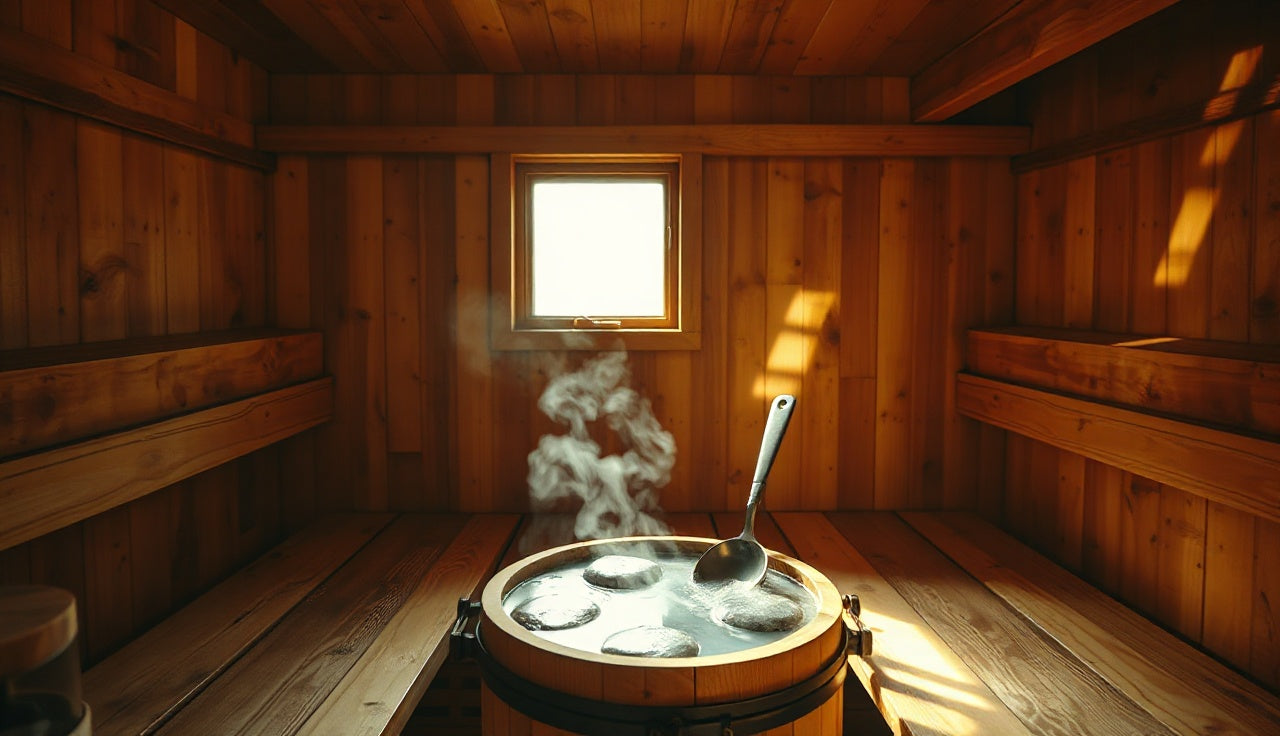
A dry sauna heats the air around you, typically with an electric heater or wood-burning stove, to between 80°C and 100°C (176 to 212°F), while keeping relative humidity low, usually 10 to 20%. Your body sweats heavily, but the low humidity lets that sweat evaporate quickly, which is what creates the intense dry heat sensation.
A steam room works differently. It runs at lower temperatures, around 40 to 50°C (104 to 122°F), but pushes humidity to near 100%. The heat feels more oppressive because sweat can't evaporate. For a side-by-side breakdown, see our guide on sauna vs steam room.
Why does the distinction matter for health benefits? Most of the clinical research, including the Finnish studies cited throughout this article, was done on traditional Finnish dry saunas. Extrapolating those findings to steam rooms, infrared saunas, or blanket saunas is a stretch the data doesn't support. If you're reading a benefit claim about saunas, always ask: which type of sauna, at what temperature, and what was the study population?
What does the research say about dry sauna benefits?
The most cited body of evidence comes from the Kuopio Ischemic Heart Disease Risk Factor (KIHD) study, a Finnish cohort that followed 2,315 middle-aged men for a median of 20 years [1]. Men who used a sauna 4 to 7 times per week had a 40% lower risk of all-cause mortality compared to men who used it once per week. Fatal cardiovascular disease risk dropped by 50% in that same frequent-use group. These are striking numbers, but there's an important caveat: observational studies can't prove causation. People who sauna frequently may also be healthier in other ways.
A 2018 review in Mayo Clinic Proceedings pulled together the broader literature and concluded that "sauna bathing, an activity used for thousands of years, is associated with a wide array of health benefits" including reduced blood pressure, improved arterial compliance, and lower rates of fatal cardiac events [2]. That same review noted the physiological response during a sauna session closely resembles moderate-intensity aerobic exercise: heart rate climbs to 100 to 150 beats per minute, cardiac output increases, and core body temperature rises by 1 to 2°C.
So the research is genuinely encouraging. It's not hype. But the effect sizes come from populations doing real, hot, frequent sessions, not occasional 10-minute visits at 65°C.
For a broader look at all the evidence on sauna health effects, our sauna benefits guide covers the full picture, including infrared and steam variations.
What temperature does a dry sauna need to be for health benefits?
This is one of the most searched questions about saunas, and the honest answer is that most of the research used sessions at 80 to 100°C (176 to 212°F). The KIHD study participants used saunas averaging around 79°C (174°F) [1]. Finnish sauna culture traditionally targets 80 to 100°C, and Finnish health guidelines support that range.
The American College of Sports Medicine notes that the physiological stress needed to produce cardiovascular adaptations, including heat shock protein upregulation and plasma volume expansion, generally requires core temperature elevation of at least 1°C above baseline [3]. Achieving that in a typical 15 to 20 minute session generally requires ambient temperatures above 70°C. Sessions at 60°C or below tend to be too mild to drive meaningful physiological change in most people, though they may still feel relaxing.
Here's a simple breakdown of temperature ranges and expected effects:
| Sauna temp | Humidity | Typical effect |
|---|---|---|
| 60 to 70°C (140 to 158°F) | 15 to 25% | Light sweating, relaxation, mild cardiovascular stimulus |
| 70 to 80°C (158 to 176°F) | 10 to 20% | Moderate cardiovascular load, significant sweat, muscle relaxation |
| 80 to 100°C (176 to 212°F) | 5 to 15% | Heavy sweat, strong cardiovascular stimulus, core temp rise of 1 to 2°C |
| Above 100°C (212°F) | <10% | Very high stress, not recommended for beginners or people with heart conditions |
Optimal sauna temperature for health benefits, based on available evidence, is 80 to 100°C for sessions of 15 to 20 minutes. That's the range where the studied populations trained and where the outcomes data was collected.
| 1x per week (baseline) | 0% |
| 2–3x per week | 24% |
| 4–7x per week | 40% |
Source: JAMA Internal Medicine, Laukkanen et al., 2015
How does dry sauna use affect the heart and blood vessels?
During a sauna session at 80 to 90°C, heart rate typically rises to 100 to 150 bpm within the first 10 minutes [2]. Peripheral blood vessels dilate to move heat to the skin, which drops systemic vascular resistance. Cardiac output increases to compensate, mimicking a brisk walk or light jog. Blood pressure may temporarily dip during the session, then return to baseline afterward.
With regular use, there appear to be lasting adaptations. A 2017 Finnish study published in the American Journal of Hypertension tracked blood pressure changes in participants doing 3 sessions per week over 8 weeks and found a statistically significant reduction in systolic blood pressure [4]. The mechanism is thought to involve improvements in endothelial function and reduced arterial stiffness.
The mortality data from the KIHD cohort is the headline number here. Men sauna bathing 4 to 7 times per week showed a 50% reduction in fatal cardiovascular disease risk over 20 years compared to once-per-week users [1]. Again, observational. But the dose-response relationship, more sessions correlating with better outcomes, strengthens the plausibility that sauna use itself is driving some of the effect.
For people with existing heart disease: the Finnish Sauna Society and Finnish cardiac guidelines don't categorically forbid sauna use for stable heart patients, but they recommend avoiding it immediately post-acute myocardial infarction and always consulting a physician first. The American Heart Association has not issued specific sauna guidelines as of 2024.
Does dry sauna use help with muscle recovery and athletic performance?
Athletes have used heat for recovery for generations, and there is reasonable mechanistic support for it. Core temperature elevation triggers production of heat shock proteins (HSPs), particularly HSP70 and HSP90, which help refold damaged proteins after exercise-induced stress [3]. Elevated HSP levels are associated with faster muscle repair in animal models, though controlled human data is thinner.
A small but well-designed study by Scoon et al. (2007) in the Journal of Science and Medicine in Sport had cyclists do post-training sauna sessions (30 minutes at 87°C) for three weeks and found an 11.8% increase in run time to exhaustion, attributed partly to a 7.1% increase in plasma volume [5]. Plasma volume expansion means more blood available per heartbeat, which improves cardiovascular efficiency.
Growth hormone is another frequently cited mechanism. A 1988 study found that two 15-minute sauna sessions at 80°C, separated by a 30-minute break, produced a 16-fold increase in growth hormone compared to baseline [6]. That sounds dramatic. The practical relevance is less clear because the GH spike is short-lived and the magnitude of effect on muscle protein synthesis in healthy adults has not been well quantified in follow-up research.
Practically speaking, many athletes use sauna sessions in the 24 to 48 hour window after hard training rather than immediately after, and avoid sessions that push dehydration before competitions. The cold plunge or ice bath is more commonly used immediately post-training for acute inflammation control.
What are the mental health and cognitive benefits of dry sauna use?
This is an area where the mechanistic story is compelling but the controlled trial evidence is early. Heat exposure increases norepinephrine, a neurotransmitter associated with focus and mood, by up to 300% during a session [2]. Beta-endorphin levels also rise, which likely explains the characteristic post-sauna feeling of calm and mild euphoria.
A study published in Psychiatry Research (2016) found that whole-body hyperthermia, at a core temperature elevation consistent with sauna use, produced significant reductions in depression scores that persisted for six weeks after a single session [7]. The study was small (n=30) and used infrared devices rather than Finnish sauna, so the translation to dry sauna isn't direct. But the hypothalamic thermoregulatory pathway the researchers targeted is the same regardless of heat source.
Dementia and Alzheimer's risk have also appeared in the Kuopio data. Men using sauna 4 to 7 times per week had a 65% lower risk of Alzheimer's disease compared to once-per-week users in a 20-year follow-up [8]. The researchers adjusted for several confounders, but the mechanism remains speculative. One hypothesis is that improvements in cardiovascular health reduce vascular contributions to cognitive decline.
Nobody has good data on whether sauna use can treat clinical depression or anxiety in isolation. What the evidence supports is that regular heat exposure produces real neurochemical changes, and those changes are associated with improved mood in observational and preliminary trial data.
How does dry sauna affect inflammation and immune function?
Acute sauna exposure produces a mild inflammatory response, similar to exercise, followed by an anti-inflammatory rebound. Regular sauna use is associated with lower levels of C-reactive protein (CRP) and interleukin-6 (IL-6), both markers of chronic inflammation, in people who sauna frequently versus infrequently [2].
White blood cell counts, including lymphocytes and neutrophils, rise temporarily after a sauna session, suggesting a transient activation of immune surveillance. Some researchers think this explains the lower respiratory infection rates seen in sauna users, though a Cochrane review on sauna and common cold prevention found the evidence was too limited to draw firm conclusions [9].
Heat shock protein production is the mechanism most researchers point to for both the anti-inflammatory and immune effects. HSPs act as molecular chaperones. They help clear damaged proteins and signal immune cells. But translating elevated HSP levels into clinical outcomes in humans is still a work in progress.
If you're using sauna to supplement recovery from illness, the general medical advice is to avoid sauna with active fever, since you're already hyperthermic, and with acute infections where the extra cardiovascular stress could be harmful.
How long should a dry sauna session be to get health benefits?
The Finnish studies that produced the mortality and cardiovascular data used typical session lengths of 15 to 20 minutes per session, at 80 to 100°C, with sessions often repeated 2 to 3 times with cooling breaks [1]. That's a reasonable target for most people.
Beginners shouldn't start there. First few sessions of 8 to 10 minutes at 70 to 80°C are more appropriate while your body adapts. Heat tolerance builds over 2 to 4 weeks. Going too long too fast risks heat exhaustion, nausea, or dangerous drops in blood pressure on standing.
On the upper end: sessions beyond 30 minutes at 90°C carry escalating dehydration risk and don't appear to produce proportionally greater benefit based on available data. Diminishing returns kick in fast. Twenty minutes of quality heat stress does more than thirty minutes of pushing through discomfort.
Cooling breaks between rounds matter. Most Finnish protocols include a 10 to 15 minute cool-down, either a cold shower, cold plunge, or sitting in cool air, between sauna rounds. This contrast therapy pattern is associated with the greatest cardiovascular stimulus and is also how most research subjects used saunas. You can read more about combining heat and cold in our cold plunge benefits guide.
How often do you need to sauna to see benefits?
Frequency matters more than any single session parameter. The KIHD study showed a clear dose-response: once per week produced the least benefit, 2 to 3 times per week more, and 4 to 7 times per week the most [1]. The 40% reduction in all-cause mortality was specific to the 4 to 7 sessions per week group.
For cardiovascular benefit, most researchers suggest a minimum of 3 to 4 sessions per week to produce lasting changes in arterial stiffness and blood pressure. For general relaxation and recovery, even once or twice a week is probably worthwhile, though the mortality data won't back that up with the same confidence.
If you're building a home setup, see our guide on home sauna options, since having convenient access is the biggest predictor of consistent use. A sauna you use five times a week in your garage beats the perfect sauna at a gym you visit twice a month.
SweatDecks carries a range of home sauna options for this exact reason: lowering the friction to daily use is how the frequency numbers become achievable.
Are there risks or people who should avoid dry saunas?
Yes, and they're worth being direct about. Dry sauna use at 80 to 100°C is physiologically intense. It's not appropriate for everyone.
People who should avoid it or use extreme caution:
- Anyone with unstable angina, recent (within 3 months) myocardial infarction, or severe aortic stenosis. The Finnish Sauna Society guidelines specifically caution against sauna use within 3 to 4 weeks of a cardiac event.
- People with poorly controlled hypertension. Blood pressure may fluctuate significantly during and after a session.
- Pregnant women. The American College of Obstetricians and Gynecologists advises against raising core body temperature above 39°C (102°F) during pregnancy [10].
- Anyone who has been drinking alcohol. Alcohol impairs thermoregulation and significantly raises the risk of dangerous hypotension and arrhythmia in the heat. A Finnish study found alcohol was involved in a disproportionate share of sauna-related deaths [2].
- Children and the elderly need shorter, cooler sessions and extra attention to hydration.
Dehydration is the most common risk for otherwise healthy users. Sweat losses of 0.5 to 1.0 kg per session are typical [2]. Replacing that fluid before and after the session with water or electrolyte drinks is straightforward but often ignored. Don't sauna on an empty stomach or immediately after a large meal either.
The net message: dry sauna is generally safe for healthy adults who follow sensible protocols. The risk profile isn't trivial, but it's manageable.
What's the best way to set up a dry sauna at home to get these benefits?
Three things matter most for getting the health outcomes the research describes: hitting the right temperature (80 to 100°C), using it frequently enough (4 to 7 times per week if you're targeting the mortality data), and having a setup you'll actually use consistently.
For most homeowners, an indoor barrel or cabin-style electric sauna is the easiest path to consistent 80 to 100°C sessions. Electric heaters heat faster than wood-burning stoves (usually 30 to 45 minutes to temp versus 45 to 90 minutes) and are easier to control. If you have outdoor space, an outdoor sauna with a wood burner is a genuinely pleasant option and brings you closest to the Finnish research context.
If budget is a concern, a portable sauna can reach therapeutic temperatures and is far cheaper, though the experience is not quite the same as a full cabin. Worth exploring before committing to a full installation.
Sauna size matters less than people think. A one or two-person sauna is fine for solo use. Larger rooms take longer to heat and cost more to run. A well-insulated 1 to 2 person unit with a quality 6 to 9 kW heater will hit and hold 90°C reliably.
For a full buying walkthrough, see our main sauna guide, which covers heater types, wood options, electrical requirements, and cost ranges.
How does dry sauna compare to cold plunge for recovery and health benefits?
They work through opposite mechanisms and aren't really in competition. Sauna drives vasodilation, raises core temperature, and increases heart rate and cardiac output. Cold plunge drives vasoconstriction, lowers core temperature, and activates the sympathetic nervous system.
The combination of heat followed by cold, contrast therapy, produces stronger cardiovascular stimulus than either alone. Blood vessels alternately dilate and constrict, which some researchers describe as a passive workout for vascular smooth muscle. Heart rate variability improvements from contrast therapy protocols have been documented in small trials.
For muscle recovery specifically: cold immersion in the 24 hours after intense training reduces delayed-onset muscle soreness and perceived fatigue, according to a 2012 Cochrane review on cold-water immersion [11]. Sauna in the same window may blunt acute inflammatory signaling, though some sports scientists argue you want some of that inflammation for training adaptation.
The practical protocol many athletes use: sauna on rest days or after low-intensity sessions, cold plunge after high-intensity training days, and alternating contrast sessions on recovery days. See our ice bath guide for cold-side details, or the cold plunge benefits article for the evidence breakdown on the cold side.
At SweatDecks, we see the most interest from homeowners who want both a sauna and a cold plunge as a paired setup, which is exactly what the contrast therapy evidence supports.
Frequently asked questions
What are the main health benefits of using a dry sauna regularly?
The best-documented benefits are reduced cardiovascular mortality, lower all-cause mortality risk, improved blood pressure and arterial function, enhanced muscle recovery, and better mental well-being. The Kuopio cohort study, tracking 2,315 men for 20 years, found a 40% reduction in all-cause mortality for men who sauna 4 to 7 times per week versus once a week. These benefits require consistent, frequent use at genuine Finnish sauna temperatures of 80 to 100°C.
What temperature should a dry sauna be for health benefits?
Most research supporting cardiovascular and mortality benefits was conducted at 80 to 100°C (176 to 212°F). Sessions at 70 to 80°C produce moderate cardiovascular stimulus and are appropriate for beginners. Temperatures below 65°C are unlikely to raise core body temperature enough to drive the physiological adaptations seen in studies. If you're building or buying a sauna specifically for health outcomes, target a heater that can hold 85 to 95°C under load.
How long should I stay in a dry sauna for maximum benefit?
Research populations typically used 15 to 20 minute sessions. Beginners should start at 8 to 10 minutes and build up over 2 to 4 weeks. Sessions beyond 30 minutes at high temperatures increase dehydration and heat exhaustion risk without proportionally greater benefit. Many Finnish protocols involve 2 to 3 rounds of 15 to 20 minutes with 10 to 15 minute cooling breaks between rounds, and that pattern is what the clinical evidence reflects.
How many times a week do I need to sauna to reduce cardiovascular risk?
The Kuopio KIHD study data showed the strongest cardiovascular mortality reduction in men who used a sauna 4 to 7 times per week, a 50% lower risk of fatal cardiovascular disease. Two to three times per week showed intermediate benefit. Once per week showed the least. If your goal is cardiovascular health, 4 or more sessions per week at proper temperature and duration is the target the evidence actually supports.
Does a dry sauna help with weight loss?
No meaningful evidence supports dry sauna as a weight loss tool. You lose 0.5 to 1.0 kg of fluid per session through sweating, but that weight returns once you rehydrate. Caloric expenditure during a sauna session is modest, roughly comparable to light walking. The cardiovascular stimulus is real, but sauna should not be treated as a substitute for exercise when fat loss is the goal.
Can you use a dry sauna every day?
Yes, for healthy adults. Daily sauna use is normal in Finland, where the KIHD research was conducted. The key is proper hydration before and after each session, avoiding alcohol, and keeping session length reasonable (15 to 20 minutes). People with cardiovascular conditions should consult a physician. Start with a lower frequency and shorter sessions if you're new, and build up over 2 to 4 weeks.
What should you do after a dry sauna session?
Rehydrate immediately with water or an electrolyte drink to replace the 0.5 to 1.0 kg of fluid typically lost. A cool shower or cold plunge can enhance cardiovascular stimulus and help regulate body temperature. Avoid jumping into intense exercise right after. Most Finnish protocols include a rest period of 20 to 30 minutes after the final sauna round before resuming normal activity. Eating a light snack is fine; a heavy meal is not recommended.
Is a dry sauna safe during pregnancy?
No, it is not considered safe. The American College of Obstetricians and Gynecologists advises pregnant women to avoid raising core body temperature above 39°C (102°F), and a typical 80 to 100°C dry sauna session can easily exceed that threshold. Elevated core temperature during the first trimester in particular is associated with risk of neural tube defects. Pregnant women should avoid dry sauna and discuss heat therapy options with their OB.
Does dry sauna increase growth hormone?
Yes, acutely. A 1988 study found that two 15-minute sauna sessions at 80°C with a 30-minute break produced a 16-fold increase in growth hormone compared to baseline. The spike is short-lived, and the practical impact on muscle protein synthesis in healthy adults has not been well quantified in subsequent research. It's a real physiological response, but the body-composition implications are less clear than the dramatic number implies.
Is a dry sauna or infrared sauna better for health benefits?
The cardiovascular and mortality evidence was built on traditional dry saunas at 80 to 100°C. Infrared saunas operate at 45 to 60°C and have a different heat-delivery mechanism. Some preliminary infrared research shows cardiovascular benefit, but the evidence base is much smaller. If you're choosing specifically based on the longevity and cardiovascular data, a traditional dry sauna matches the studied conditions more closely.
Can dry sauna use help with anxiety or depression?
Early evidence is intriguing but not conclusive. Heat exposure raises norepinephrine by up to 300% and triggers beta-endorphin release, both associated with improved mood. A 2016 Psychiatry Research study found a single whole-body hyperthermia session reduced depression scores for six weeks in 30 participants. That study used infrared, not dry sauna, and the sample was small. Sauna is not a treatment for clinical depression; it may be a useful adjunct for general mood and stress.
What's the difference between a dry sauna and a steam room for health?
Dry saunas run at 80 to 100°C with 10 to 20% humidity. Steam rooms run at 40 to 50°C with near-100% humidity. The cardiovascular and mortality research was done on dry saunas. Steam rooms may have benefits too, especially for respiratory symptoms, but the longevity data doesn't transfer directly. If the Finnish mortality outcomes are your reason for interest, a dry sauna is the format that matches the evidence.
How do I know if my home sauna is hot enough to get health benefits?
Use a sauna thermometer mounted at bench level, since that's where your body sits, not at ceiling level where heat pools. Target 80 to 95°C at bench height. If your heater is undersized for the room or the insulation is poor, it may struggle to reach therapeutic temperature. A properly sized electric heater (typically 6 to 9 kW for a 1 to 2 person sauna) in a well-insulated room should reach 85 to 90°C within 30 to 45 minutes.
Should I do a sauna before or after a cold plunge?
Most contrast therapy protocols run sauna first, then cold plunge. The heat-to-cold sequence produces strong vasoconstriction after vasodilation, which is the physiological mechanism behind the cardiovascular training effect of contrast therapy. Some athletes alternate multiple rounds. Cold-to-heat is less common but not harmful. Avoid ending on heat if you need to perform athletically soon after, since you may feel too relaxed. End on cold for alertness, sauna for relaxation.
Sources
- JAMA Internal Medicine, Laukkanen et al., 2015, 'Association Between Sauna Bathing and Fatal Cardiovascular and All-Cause Mortality Events': Men sauna bathing 4–7 times per week had 40% lower all-cause mortality and 50% lower fatal cardiovascular disease risk versus once-per-week users over 20-year follow-up of 2,315 Finnish men
- Mayo Clinic Proceedings, Laukkanen et al., 2018, 'Cardiovascular and Other Health Benefits of Sauna Bathing': Sauna bathing is associated with reduced blood pressure, improved arterial compliance, lower fatal cardiac event rates, and heart rate increases to 100–150 bpm during sessions; alcohol was found in a disproportionate share of sauna-related deaths
- American College of Sports Medicine, position statements and exercise physiology resources: Cardiovascular adaptations and heat shock protein upregulation generally require core temperature elevation of at least 1°C above baseline
- American Journal of Hypertension, Podstawski et al., 2017, sauna and blood pressure study: Three sauna sessions per week over 8 weeks produced a statistically significant reduction in systolic blood pressure
- Journal of Science and Medicine in Sport, Scoon et al., 2007, 'Effect of post-exercise sauna bathing on the endurance performance of competitive male runners': Post-training sauna sessions (30 minutes at 87°C) for three weeks produced an 11.8% increase in run time to exhaustion and a 7.1% increase in plasma volume in cyclists
- Acta Physiologica Scandinavica, Leppäluoto et al., 1988, sauna and growth hormone: Two 15-minute sauna sessions at 80°C separated by a 30-minute break produced a 16-fold increase in growth hormone compared to baseline
- Psychiatry Research, Janssen et al., 2016, 'Whole-body hyperthermia for the treatment of major depressive disorder': A single whole-body hyperthermia session produced significant reductions in depression scores that persisted for six weeks; study had n=30
- Age and Ageing, Laukkanen et al., 2017, 'Sauna bathing is inversely associated with dementia and Alzheimer's disease in middle-aged Finnish men': Men using sauna 4–7 times per week had a 65% lower risk of Alzheimer's disease compared to once-per-week users over 20-year follow-up
- Cochrane Database of Systematic Reviews, Ernst et al., 'Sauna for the common cold': Evidence for sauna use in prevention of common cold is too limited to draw firm conclusions
- American College of Obstetricians and Gynecologists (ACOG), Committee Opinion on heat exposure during pregnancy: ACOG advises pregnant women to avoid raising core body temperature above 39°C (102°F); elevated first-trimester core temperature is associated with neural tube defect risk
- Cochrane Database of Systematic Reviews, Bleakley et al., 2012, 'Cold-water immersion (cryotherapy) for preventing and treating muscle soreness after exercise': Cold immersion in the 24 hours after intense training reduces delayed-onset muscle soreness and perceived fatigue compared to passive rest

Share:
Are ice baths good for you? What the science actually says
Far infrared sauna: what it is, what the research shows, and whether it's worth buying