
Last updated 2026-07-09
TL;DR
Yes, ice baths have real, documented benefits, mostly for cutting delayed-onset muscle soreness (DOMS) and perceived fatigue after hard exercise. The evidence is strongest for recovery and mixed for long-term strength and muscle growth. Most healthy adults can use them safely at 50-59°F (10-15°C) for 10-15 minutes. People with heart conditions should check with a doctor first.
What does the research actually say about ice baths?
Ice baths work for post-exercise recovery, and the effect is measurable. It is not in your head. A 2012 Cochrane systematic review of 17 randomized controlled trials found that cold water immersion reduced DOMS compared to passive rest, with the biggest effect at 24 and 96 hours after exercise [1]. That is not a fringe finding. It is one of the most cited recovery reviews in sports medicine.
The mechanism is reasonably well understood. Cold water causes vasoconstriction, slowing blood flow to the muscles you just worked. That slows the local inflammatory cascade. When you get out and blood rushes back in (reactive hyperemia), metabolic waste products clear faster. Tissue temperature drops enough to slow nerve conduction velocity, which dampens the pain signals that make DOMS feel so rough the day after a hard workout.
The research has limits too, and you should know them before you spend money or time. Most studies use athletes: cyclists, swimmers, rugby players, distance runners. Casual weekend exercisers barely show up in the data. Control conditions vary wildly across studies, which makes direct comparisons hard. One meta-analysis in the British Journal of Sports Medicine found cold water immersion beat contrast water therapy and passive recovery for reducing DOMS and perceived fatigue at the 24-hour and 48-hour marks, but the effect sizes ran from small to moderate [2].
Nobody has clean data comparing ice baths head-to-head with sleep, protein timing, or active recovery. The honest reading: ice baths are one of the better-supported recovery tools, and they are not a cure-all.
What are ice baths good for, specifically?
The clearest, best-supported benefit is reducing delayed-onset muscle soreness and perceived fatigue after intense exercise. That covers strength training, endurance events, team sports, and any activity that loads your muscles eccentrically.
Here is where the evidence holds up:
DOMS reduction. The Cochrane review showed cold water immersion consistently beat passive rest for muscle soreness at 24 to 96 hours after exercise [1]. The winning protocol: 10-15 minutes at 10-15°C (50-59°F).
Perceived recovery and readiness. Athletes report feeling more ready to train again after cold water immersion versus rest. Part of that is subjective, but subjective recovery drives training volume and consistency across a season.
Core temperature reduction. In hot conditions, post-exercise cold immersion drops core temperature faster than passive cooling. That matters for endurance athletes training in heat and for anyone managing heat illness risk [3].
Sleep quality, tentatively. Some small studies suggest cold exposure before bed may speed sleep onset, possibly through the drop in core body temperature that follows. The data here is thin. A 2012 study in the Journal of Physiological Anthropology found that leg immersion in cold water before sleep improved sleep quality in young men, but the sample was small [4]. Promising, not proven.
Mental sharpness and mood. Cold exposure fires up the sympathetic nervous system and spikes norepinephrine hard. A 2008 paper in Medical Hypotheses by Shevchuk proposed cold showers as a treatment for depression based on that norepinephrine surge, though clinical trials are limited [5]. Most people who plunge regularly report better mood and alertness. The biology supports it. The clinical evidence is still catching up.
What ice baths are NOT good for: building muscle (more below), erasing all exercise inflammation (some of that inflammation is the signal your body needs to adapt), and treating acute injuries. The old RICE protocol has been largely revised. Icing a fresh sprain is now debated in sports medicine because early inflammation may be part of healing [6].
Do ice baths actually slow muscle growth?
This is the caveat that matters most if you train for size. Yes, there is real evidence that ice baths taken right after strength training can blunt muscle growth and strength gains over time.
A 2015 study in the Journal of Physiology by Roberts and colleagues had 21 men complete 12 weeks of lower-body strength training, then assigned them to either cold water immersion (10 minutes at 10°C) or active recovery after each session [7]. The cold water immersion group ended the 12 weeks with significantly smaller gains in muscle mass and strength. Muscle biopsies showed suppressed satellite cell activity, which is the cellular machinery behind muscle repair and growth.
The likely reason: the post-exercise inflammatory signal that ice baths dampen is the same signal your muscles use to start rebuilding bigger and stronger. Blunt the inflammation, blunt the adaptation.
So the practical read. If your goal is strength or size, skip the post-session ice bath or wait at least a few hours after training before you get in. If your goal is surviving back-to-back competition days (a tournament with two games in one weekend), the soreness relief outweighs the marginal adaptation cost. Context drives this one.
| 24 hours post-exercise | 3.0 |
| 48 hours post-exercise | 2.4 |
| 72 hours post-exercise | 2.1 |
| 96 hours post-exercise | 2.9 |
Source: Cochrane Database of Systematic Reviews, Bleakley et al. 2012
How long should you stay in an ice bath?
The research clusters around 10-15 minutes as the sweet spot for most adults. Studies that found real DOMS reduction used that range, usually at water temperatures between 10-15°C (50-59°F) [1][2]. Going longer adds no benefit and raises the risk of hypothermia and cold shock.
New to cold immersion? Start short. Two to three minutes in the first week is plenty. Your body's cold shock response (that gasping, hyperventilating reaction in the first 30 to 90 seconds) is real and dangerous if you are not ready for it. Cold shock can trigger cardiac arrhythmias in susceptible people [8]. Getting your breathing under control before you submerge more of your body is the single most important safety habit you can build.
A rough progression for beginners:
| Week | Target Duration | Temperature Range |
|---|---|---|
| 1-2 | 2-5 minutes | 15°C (59°F) |
| 3-4 | 5-8 minutes | 13-15°C (55-59°F) |
| 5+ | 10-15 minutes | 10-15°C (50-59°F) |
These are not hard rules. They come from common protocols in published studies and practitioner guidance. Your tolerance will differ. If you feel numb, shiver uncontrollably, or your skin turns white or bright red in patches, get out.
Children and older adults should stay in shorter and warmer. Nobody has run rigorous dose-response studies across every age group, so the honest answer is to stay conservative until you know how your body responds.
How cold does an ice bath need to be?
Most of the research that shows benefits uses water at 10-15°C (50-59°F) [1][2]. Below 10°C (50°F) is colder than most studies use and carries higher cold shock and hypothermia risk with no documented added benefit for DOMS.
For reference, tap water in most US homes runs 10-15°C in winter and 18-22°C (64-72°F) in summer. To pull water down to 10-15°C in warm weather, you need ice. Which raises the next practical question.
How much ice do you need for an ice bath?
It depends on your starting water temperature, the volume of your tub, and how cold you want to get. A standard bathtub holds roughly 150-200 liters (40-55 gallons) of water.
A rough rule of thumb from athletes and coaches: a 1:1 ratio of ice to water by volume drops the temperature by roughly 15-20°C when the water starts at room temperature (around 20°C / 68°F). So for a full bathtub at room temperature, you need 40-55 gallons of ice, which is 150-200 pounds, to reliably hit 10°C. That is a mountain of ice, and it explains why grocery-store bags do not cut it for serious cold plunging.
Most people run a mix of tap water and enough ice to hit 12-15°C (54-59°F), the upper end of the effective range. That takes roughly 15-25 pounds of ice per session if your tap water is already cold (below 15°C). If your tap water starts warm (above 20°C), plan for 40-60 pounds per session.
A dedicated cold plunge unit with a chiller kills the ice math entirely and holds a steady temperature with no ongoing ice cost. For daily users, the payback period is often shorter than people expect.
Are ice baths good for women specifically?
The recovery benefits apply to women as much as men, even though most cold water immersion research was done on men. That gap in the literature is real. But nothing in the available evidence suggests women benefit less. The core mechanisms (vasoconstriction, DOMS reduction, norepinephrine release) work across sexes.
A few physiological differences are worth knowing. Women generally carry a higher percentage of body fat, which adds thermal insulation, so women may tolerate cold water better than men of similar fitness at the same temperature. Women also tend to have smaller body mass, which means core temperature drops faster once they are in. The net effect varies by person.
Menstrual cycle phase may matter. Some research suggests pain sensitivity shifts across the cycle, with the luteal phase (after ovulation) linked to lower pain thresholds. Cold immersion may feel harder during the luteal phase, but there is no strong evidence the recovery benefit shrinks. A 2021 review in the journal Temperature flagged the need for more sex-stratified research in cold exposure [9].
Pregnancy is a clear exception. Cold shock and rapid temperature swings are not appropriate during pregnancy. Check with an obstetrician before any cold immersion while pregnant.
For everyone else, the guidance is the same as for men. Start conservatively, manage the cold shock response, and stick to an evidence-backed temperature and duration (10-15 minutes at 10-15°C).
Who should avoid ice baths, or at least talk to a doctor first?
Cold water immersion puts real stress on your cardiovascular system. The cold shock response spikes heart rate and blood pressure immediately, then triggers a vagal slowing response. Most healthy people handle it fine. Some cannot.
Talk to a doctor before starting if you have:
- Any diagnosed cardiovascular disease, arrhythmia, or history of heart attack
- Raynaud's phenomenon or cold urticaria (cold allergy)
- Uncontrolled hypertension
- Peripheral neuropathy (reduced ability to sense temperature)
- A history of cold-related illness (frostbite, severe hypothermia)
CDC guidance on cold water survival points to the first 30 seconds of immersion as the most dangerous stretch, largely because of the gasping reflex and the chance of inhaling water or triggering a cardiac event [8]. Entering water below 15°C without acclimation is a genuine physiological challenge. It is more than discomfort.
Alcohol and ice baths do not mix. Alcohol wrecks thermoregulation and your ability to sense dangerous cold. Never combine them.
Ice baths vs. cold showers vs. cold plunge tubs: what is the actual difference?
Cold showers beat nothing, and they are convenient, but they hit less body surface area and are hard to control for temperature and duration. Most of the research showing recovery benefits used full-body immersion. A cold shower on your upper back and shoulders is a different stimulus than sitting in 10°C water up to your chest.
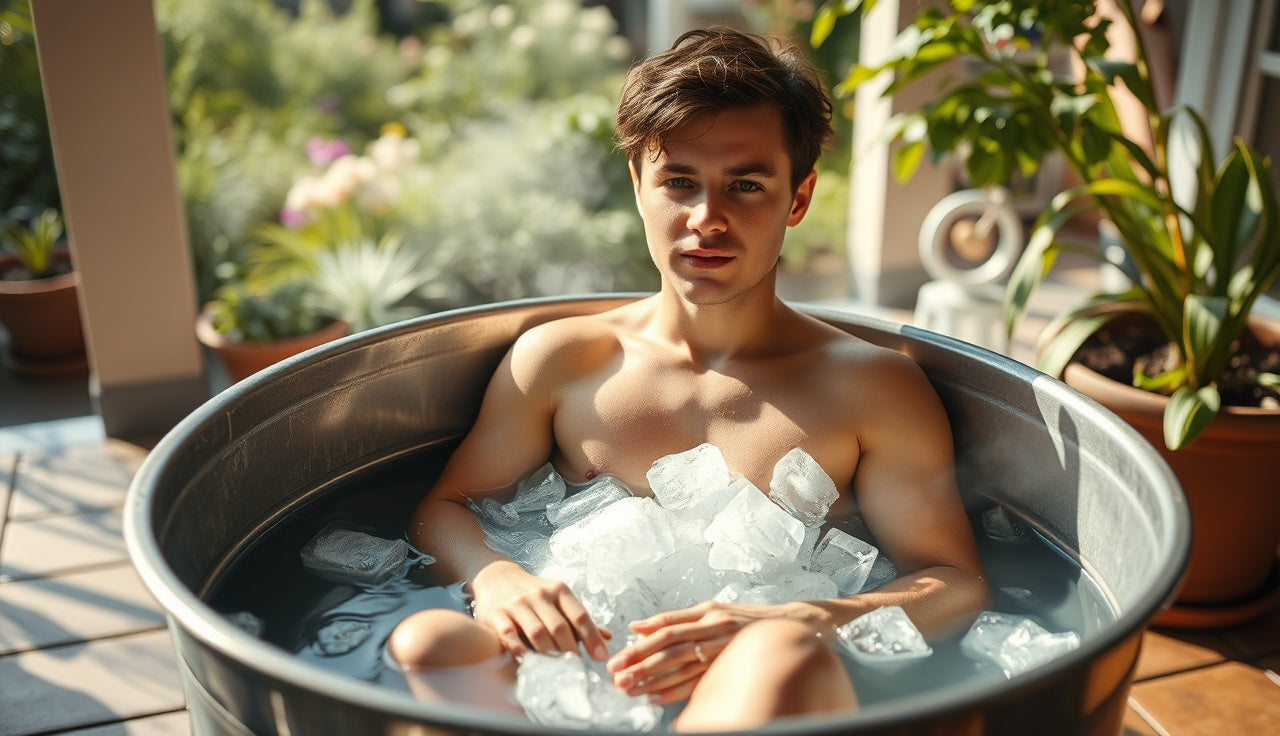
A standard bathtub works fine for occasional use. The downsides: ongoing ice cost, temperature that creeps up as you sit in it, and the prep hassle. For someone doing two or three sessions a week, a bathtub with ice bags is a reasonable place to start.
Dedicated cold plunge tubs and pools hold a steady temperature, filter the water between sessions, and drop the per-session cost and hassle of ice. They run from around $500-800 for basic tubs without chillers to $3,000-10,000+ for insulated units with active chilling and filtration. If you use cold immersion more than three times a week, the math usually favors a dedicated unit within a year or two versus buying ice.
Some people pair cold plunges with a sauna for contrast therapy, alternating heat and cold. The data on contrast therapy for recovery is positive, though head-to-head comparisons with cold-only protocols are mixed [2]. For the heat side of the equation, the cold plunge benefits page covers contrast therapy in detail, and the ice bath guide walks through setup options.
SweatDecks carries a range of cold plunge tubs if you are at the point of comparing units.
How often should you take ice baths?
There is no consensus frequency in the literature because it has not been studied directly. Most research protocols use post-exercise immersion, meaning once per training session, not once a day no matter what you did.
The practical answer from the research: use ice baths after genuinely hard sessions, not as a daily ritual unhooked from training. If you train intensely five days a week and want cold immersion after every session, the Roberts 2015 caveat applies. You may be trading short-term soreness relief for slower long-term adaptation when those sessions target strength or size [7].
Endurance athletes with high training volumes and back-to-back days do daily post-session cold immersion, and the support is stronger there, since their limiter is recovery capacity rather than muscle protein synthesis.
For most recreational exercisers training three to four days a week, once or twice a week post-session is probably enough to capture the recovery benefit without stacking up the adaptation-blunting risk.
What temperature should the water be, and how do you actually set up an ice bath at home?
Target 10-15°C (50-59°F). That is the range used in most effective protocols [1][2]. Below 10°C is colder than the research supports and meaningfully raises risk. Above 15°C starts to lose effectiveness for DOMS, though 15-20°C is still cold enough for some benefit and safer for beginners.
For a bathtub setup: 1. Fill the tub with cold tap water first. Measure it with a cheap waterproof thermometer. 2. Add ice a little at a time and stir. Check the temperature as you go. 3. Get in before it warms back up. It will warm faster once you are in, because your body radiates heat. Keep extra ice ready if you need to hold temperature.
A stock tank or dedicated cold plunge vessel works the same way. Stock tanks (the kind sold for livestock at farm supply stores) hold temperature better than bathtubs thanks to thicker walls and a smaller opening relative to volume. A 100-gallon stock tank costs $100-200 and is a popular DIY plunge.
A dedicated chiller unit that connects to a plunge or stock tank runs $600-2,000 on its own and holds temperature without ice. Worth it if you plunge more than three times a week. If you are on the fence about equipment, the ice bath guide covers the range from DIY to purpose-built.
Are there benefits beyond exercise recovery, like for mental health or inflammation?
The mental health angle is plausible but not clinically proven. Cold exposure drives a big spike in norepinephrine (a neurotransmitter and hormone tied to alertness, focus, and mood). A study by Srámek and colleagues in the European Journal of Applied Physiology found that immersion in 14°C water raised norepinephrine by 300% and dopamine by 250% over baseline [10]. Those are large effects. Whether they turn into real antidepressant or anti-anxiety benefits in a clinical population, with consistent protocols, is not established. The Shevchuk hypothesis paper from 2008 is the most-cited theoretical framework, and no large randomized controlled trials have followed it [5].
General inflammation is more complicated. Post-exercise, reducing inflammation with cold immersion is the goal, and it works. But chronic systemic inflammation (the kind linked to cardiovascular disease, diabetes, and metabolic syndrome) is a different target entirely. There is no strong evidence that regular ice baths lower chronic inflammatory markers like CRP or IL-6 in people who are not doing intense exercise. Cold exposure research in healthy adults shows transient effects, not lasting changes to resting inflammation.
The honest summary: the mental lift is real and biologically plausible, the DOMS reduction is well documented, and the mental health and chronic inflammation claims are interesting hypotheses that need harder study before anyone treats ice baths as therapy for those conditions.
Frequently asked questions
How long should you stay in an ice bath for the best results?
Most research showing DOMS reduction used 10-15 minutes at 10-15°C (50-59°F). Beginners should start with 2-5 minutes and build up over several weeks. Staying past 15 minutes adds no benefit and raises hypothermia and cold shock risk. The first 30-90 seconds are the hardest. Controlled breathing makes it safer.
What temperature should an ice bath be?
Aim for 10-15°C (50-59°F). That is the range most commonly used in studies that showed recovery benefits. Below 10°C is colder than the research supports and raises cold shock risk. Above 15°C is safe for beginners but gives less DOMS benefit. Use a waterproof thermometer instead of guessing.
How much ice do I need for an ice bath at home?
For a standard bathtub starting at room temperature (around 20°C), you need 40-60 pounds of ice to reach 10-12°C. If your tap water is already cold (below 15°C), 15-25 pounds may be enough. A 1:1 ice-to-water ratio by volume drops temperature by roughly 15-20°C. A dedicated chiller unit eliminates the ice math entirely.
Are ice baths good for women, or are there specific concerns?
The recovery benefits apply to women as well as men. Women carry slightly more thermal insulation from body fat but also smaller average body mass, so core temperature drops faster. Pain sensitivity may vary with menstrual cycle phase. Pregnancy is the key exception: avoid cold immersion during pregnancy without explicit guidance from an obstetrician. Otherwise, use the same temperature and duration guidelines.
Do ice baths slow muscle growth?
Yes, there is real evidence for this. A 2015 study in the Journal of Physiology found that cold water immersion after strength training blunted muscle mass and strength gains over 12 weeks compared to active recovery, likely by suppressing the satellite cell activity needed for muscle repair. If muscle growth is your main goal, skip the post-session ice bath or wait several hours after training.
Are ice baths safe for people with heart conditions?
Cold water immersion triggers a cold shock response: an immediate spike in heart rate and blood pressure, then a cardiac slowing effect. Most healthy adults handle it. For anyone with diagnosed cardiovascular disease, arrhythmia, or uncontrolled hypertension, cold immersion poses real risk. Get medical clearance before starting. Enter the water slowly and never alone if you have any cardiovascular history.
What is the difference between a cold plunge and an ice bath?
Functionally, both involve cold water immersion. 'Ice bath' usually means a bathtub or container filled with water and ice, a DIY setup. A cold plunge usually means a purpose-built vessel with insulation, filtration, and often an active chiller that holds a steady temperature. Cold plunges are more convenient for regular use. Ice baths are cheaper to start with.
How often should you take ice baths?
There is no definitive research on optimal frequency. For most recreational exercisers, once or twice a week after hard sessions captures the recovery benefit without the adaptation-blunting risk for strength training. Endurance athletes with high training loads often use cold immersion daily with less concern about interfering with muscle growth, since their goal is recovery capacity.
Can ice baths help with depression or anxiety?
Cold exposure causes a large norepinephrine spike (around 300% above baseline in one study at 14°C) and a big dopamine increase. The biological rationale for mood benefits is real. But clinical trials testing cold immersion as a depression treatment are limited. A 2008 theoretical paper by Shevchuk proposed the mechanism, and large randomized controlled trials have not followed. Treat this as plausible, not proven.
Should you take an ice bath before or after exercise?
After exercise. Pre-exercise cold immersion can blunt muscle activation and reduce performance. The research showing DOMS reduction and recovery benefits applies ice baths post-exercise, usually within 30-60 minutes of finishing. Before exercise, a warm-up is what the evidence supports. Post-exercise is when cold immersion delivers its documented benefits.
Can ice baths help with injury recovery?
For acute injuries (fresh sprains, strains), the old RICE protocol is now debated in sports medicine. Early inflammation after injury may be part of healing, and icing acutely can delay it. For post-exercise muscle soreness that is not an acute injury, cold immersion has solid evidence. Do not use an ice bath as a substitute for medical evaluation of a real injury.
What should you do after an ice bath?
Warm up naturally. Dress in warm layers, move around gently, and let your body reheat through its own mechanisms rather than jumping straight into a hot shower. The reactive hyperemia after cold immersion (the blood rush back into muscles) is part of the recovery mechanism. A hot shower right after may short-circuit it. Wait 20-30 minutes before using significant external heat.
Are cold plunges and ice baths the same thing?
Same principle, different setups. Both use cold water immersion for recovery. An ice bath is typically DIY: a bathtub or stock tank with ice added to reach target temperature. A cold plunge is usually a purpose-built unit with a chiller and filtration. The physiological stimulus is the same if water temperature and duration match. The main difference is convenience and consistency.
Sources
- Cochrane Database of Systematic Reviews, Bleakley et al. 2012, 'Cold-water immersion (cryotherapy) for preventing and treating muscle soreness after exercise': Cold water immersion reduced DOMS compared to passive rest across 17 RCTs, with the largest effect at 24 and 96 hours post-exercise
- British Journal of Sports Medicine, Bieuzen et al. 2013, 'Contrast Water Therapy and Exercise Induced Muscle Damage': Cold water immersion outperformed contrast water therapy and passive recovery for reducing DOMS and perceived fatigue at 24 and 48 hours
- Journal of Athletic Training, Casa et al. 2007, 'Cold Water Immersion: The Gold Standard for Exertional Heatstroke Treatment': Cold water immersion is the most effective method for rapid core temperature reduction in exertional heat illness
- Journal of Physiological Anthropology, Sung et al. 2012, 'Effect of bathing or footbathing on sleep in winter': Cold leg immersion before sleep improved subjective sleep quality in young men
- Medical Hypotheses, Shevchuk 2008, 'Adapted cold shower as a potential treatment for depression': Cold exposure triggers large norepinephrine surges and was proposed as a potential treatment for depression based on the mechanism, though clinical trials are limited
- British Journal of Sports Medicine, Bleakley et al. 2011, 'PRICE needs updating, should we call the POLICE?': The traditional RICE protocol for acute injury is now debated; early inflammation after injury may be part of healing and icing acutely can delay that process
- Journal of Physiology, Roberts et al. 2015, 'Post-exercise cold water immersion attenuates acute anabolic signalling and long-term adaptations in muscle to strength training': Cold water immersion after strength training blunted muscle mass and strength gains over 12 weeks and suppressed satellite cell activity compared to active recovery
- Centers for Disease Control and Prevention, Cold Water Survival guidance: Cold shock response during the first 30 seconds of cold water immersion can trigger gasping reflex, cardiac arrhythmias, and is the leading cause of cold-water drowning
- Temperature (Taylor & Francis), Moran et al. 2021, 'Sex differences in responses to cold exposure': A 2021 review flagged the need for more sex-stratified research in cold exposure, noting differences in body composition and thermoregulation between men and women
- European Journal of Applied Physiology, Srámek et al. 2000, 'Human physiological responses to immersion into water of different temperatures': Immersion in cold water at 14°C increased norepinephrine by approximately 300% and dopamine by approximately 250% compared to baseline
- International Journal of Sports Physiology and Performance, Pointon et al. 2012, 'Cold water immersion recovery following intermittent running performance': Most effective cold water immersion protocols in RCTs use 10-15 minutes at 10-15°C for post-exercise DOMS reduction

Share:
Far infrared sauna: what it is, what the research shows, and whether it's worth buying
Dry sauna benefits: what the research actually shows