
Last updated 2026-07-10
TL;DR
Contrast therapy (alternating sauna heat and cold plunge) burns modest extra calories, raises norepinephrine, and may improve insulin sensitivity. But no controlled trial shows meaningful fat loss from contrast therapy alone. It works best as a recovery tool that keeps you training harder. Expect a small metabolic edge, not a weight-loss protocol.
What actually happens in your body during contrast therapy?
Contrast therapy means cycling between heat exposure (a sauna, steam room, or hot bath) and cold exposure (a cold plunge, ice bath, or cold shower), usually at a work-to-rest ratio somewhere between 2:1 and 3:1, heat to cold. The alternation forces your cardiovascular system to work hard. Blood vessels dilate in the heat and constrict sharply in the cold, creating what physiologists sometimes call a "vascular pump."
Your heart rate climbs a lot in the heat. A 2018 review in Mayo Clinic Proceedings reported that sitting in a dry sauna at around 80°C can raise heart rate to 100-150 beats per minute, roughly matching the demand of moderate-intensity exercise [1]. That cardiovascular load burns calories. The cold half then triggers a spike in norepinephrine (sometimes spelled noradrenaline), a catecholamine that pushes fat cells to release fatty acids.
Think of it in three layers. There is the acute calorie burn from thermoregulation: your body burns energy to make sweat in the heat and to generate warmth in the cold. There is the hormonal response: catecholamines, growth hormone, and (maybe) better insulin signaling. And there is the systemic recovery effect that lets you train harder and more often, which is where most of the real body-composition work gets done.
None of those three layers work miracles on their own. But they are real, measurable, and additive when contrast therapy sits on top of a genuine training and nutrition program.
How many calories does contrast therapy actually burn?
Real answer: a full contrast therapy session burns roughly 200-400 calories above your resting baseline, about the same as a 30-minute jog. A sauna session burns more than sitting on the couch, but the numbers are modest, and this is where the hype collides with inconvenient math.
A frequently cited estimate puts passive sauna heat exposure at roughly 1.5 to 2 times the resting metabolic rate, which works out to somewhere around 100-300 calories for a 20-30 minute session depending on your body weight, the sauna temperature, and individual variation [1]. A 2018 study in BMC Complementary and Alternative Medicine found that a single sauna session produced a mean heart rate increase of about 73% over resting, which puts the caloric expenditure in the ballpark of a brisk walk, not a run [2].
The cold side is trickier to pin down. When you shiver in cold water, your body burns real energy: shivering thermogenesis can push metabolic rate to 2 to 5 times resting levels [3]. But most modern cold plunge protocols aim to stop shivering by keeping exposure short (usually 2-5 minutes at 10-15°C), so you get the hormonal stimulus without the full shivering burn. Controlled-cold protocols without shivering still switch on brown adipose tissue (BAT), but the caloric contribution of BAT in humans is debated, with some researchers estimating only 50-200 extra calories per day even in people with very active BAT [3].
Add it up honestly. Three rounds of 15-20 minutes sauna plus 3-5 minutes cold plunge might burn 200-400 calories above your resting baseline. That is real. It is also about what you would burn on a 30-minute jog. Nobody gets lean from jogging three times a week with no dietary change, and the same logic applies here.
| Activity | Approx. extra calories burned (30 min, 80 kg person) |
|---|---|
| Sitting at rest | 0 (baseline) |
| Brisk walk | ~130-150 |
| One sauna session (80°C, 20-30 min) | ~100-300 |
| Shivering cold exposure (vigorous) | ~150-300 |
| Contrast therapy session (3 rounds) | ~200-400 |
| 30-min moderate run | ~280-350 |
Sources: Mayo Clinic Proceedings 2018 [1], Hanssen et al. metabolic estimates [3].
Does cold exposure actually boost metabolism long-term?
Long, mild cold exposure can raise metabolism over weeks; short cold plunges have not been shown to do the same. The whole question hinges on brown adipose tissue. BAT is metabolically active fat that generates heat by burning calories, and adults have more of it than researchers once thought. A 2009 paper in the New England Journal of Medicine confirmed that adult humans have functional BAT and that its activity climbs in colder environments [11].
Repeat cold exposure appears to increase BAT volume and activity over weeks. Hanssen et al. (2015, Nature Medicine) showed that 10 days of mild cold exposure (15°C for 6 hours a day) increased BAT activity and improved insulin sensitivity by about 43% in obese subjects [3]. That insulin finding is arguably more interesting than the direct calorie-burn number, because chronically elevated insulin ties tightly to fat storage and to how hard it is to lose weight.
Here is the catch. Those subjects sat in cold air for 6 hours a day. They were not doing 3-minute cold plunges. Short cold immersion protocols have not been shown in controlled trials to produce the same sustained BAT activation that long, mild cold exposure produces. The research on brief cold immersion and lasting metabolic rate is genuinely thin. Nobody has good data on this from well-controlled long-term trials. The closest work suggests that any metabolic bump from a cold plunge returns to baseline within a few hours.
The acute norepinephrine spike from cold immersion, though, is real and large. A 2000 study by Srámek et al. in the European Journal of Applied Physiology found that immersion in 14°C water produced a 2 to 3 fold increase in norepinephrine [4]. Norepinephrine drives lipolysis (the release of fatty acids from fat cells), so there is a plausible path to fat mobilization, even if the downstream body-composition effect has not been cleanly shown in humans at the doses most people actually do.
| Sitting at rest (baseline) | 0 |
| Brisk walk | 140 |
| Sauna session (80°C, 20-30 min) | 200 |
| Shivering cold exposure | 225 |
| Contrast therapy session (3 rounds) | 300 |
| 30-min moderate run | 315 |
Source: Mayo Clinic Proceedings 2018 [1]; Srámek et al. 2000 [4]; Hanssen et al. 2015 [3]
What does the research say about sauna and weight loss specifically?
Heat exposure has real data behind it, but not for fat loss. Regular sauna use is tied to better cardiovascular health (a large Finnish cohort found dose-dependent drops in cardiovascular mortality with 4-7 sessions per week [5]), while the weight loss data is much weaker.
Most sauna-related "weight loss" in short-term studies is water weight from sweating, and it comes back the moment you rehydrate. A 2018 systematic review found that sauna bathing produced short-term weight reductions, but those came from fluid loss, not fat [2]. No long-term randomized controlled trial has shown that sauna use alone meaningfully cuts body fat percentage.
Where heat exposure shows real promise is in holding onto or building lean mass. A 2012 paper in the Journal of Science and Medicine in Sport found that post-exercise sauna raised circulating growth hormone, which supports muscle protein synthesis [6]. More muscle means a higher resting metabolic rate, which matters for long-term weight management. That pathway is indirect, and it needs you to be exercising, more than sauna-bathing.
If you already train regularly, adding sauna sessions (see our guide to sauna benefits for the full picture) may support body composition through the lean-mass pathway. That is a different claim than "sauna burns fat," but it is a real one with a mechanism behind it.
Does contrast therapy improve insulin sensitivity in ways that support fat loss?
This is probably the most interesting metabolic angle in the whole discussion. Insulin sensitivity, your body's ability to use insulin efficiently to move glucose into cells, sits at the center of fat storage and fat burning. People with poor insulin sensitivity store more energy as fat and have a harder time getting it back out.
The Hanssen et al. Nature Medicine study mentioned above showed a 43% improvement in insulin sensitivity after repeated mild cold exposure [3]. Separate work on heat exposure has found that repeated sauna use can improve insulin sensitivity in obese and diabetic populations. Passive heat therapy has improved glycemic control in type 2 diabetic patients over 8-12 week protocols [7].
Contrast therapy combines both stimuli, and the hypothesis is that the vascular pump effect plus the combined hormonal response produce a bigger metabolic signal than either alone. That is a reasonable hypothesis. It has not been tested in well-powered randomized controlled trials specifically on insulin sensitivity as of this writing. The individual pieces of evidence point that way; the combined protocol just has not been studied rigorously enough for a confident claim.
For someone who is overweight, insulin resistant, and looking for lifestyle additions that might improve metabolic health alongside diet and exercise, the evidence is suggestive enough to be worth pursuing. For a lean athlete chasing the last two kilograms, the insulin angle matters much less.
Can contrast therapy reduce inflammation in a way that supports weight loss?
Chronic low-grade inflammation is now understood as both a cause and a consequence of obesity. Adipose tissue, especially visceral fat, pumps out pro-inflammatory cytokines that impair metabolism and drive more fat storage. Lower inflammation may make it easier to lose fat, and both heat and cold exposure show anti-inflammatory effects.
Regular sauna use lowers circulating C-reactive protein (CRP), a key marker of systemic inflammation [5]. Cold immersion cuts post-exercise inflammatory markers like interleukin-6 in the short term, though the picture gets complicated by evidence that suppressing some post-exercise inflammation also blunts muscle adaptation [8].
Timing is the catch. Cold plunges right after strength training may cut soreness but also dull the growth stimulus. Roberts et al. (2015, Journal of Physiology) found that post-resistance-training cold water immersion attenuated long-term strength gains compared to active recovery, by interfering with anabolic signaling [8].
Here is the practical read: for inflammation and metabolic health, put contrast therapy on rest days or after cardio, not right after a strength session. That is not a rule carved in stone, but it is the interpretation most exercise physiologists would give you from the current data.
Is contrast therapy better for weight loss than sauna alone or cold plunge alone?
Nobody has run a direct head-to-head trial comparing body-composition effects of sauna alone versus cold plunge alone versus contrast therapy. That study does not exist yet in peer-reviewed literature as of mid-2026. So any answer here is built from mechanism and inference.
The case for contrast being superior is the additive stimulus. You get the heat-driven cardiovascular load and growth hormone pulse, plus the cold-driven norepinephrine spike and BAT activation, plus the vascular cycling. Each pathway pulls a different lever, so combining them should, in theory, produce a broader metabolic signal.
The case against is the compromise built into the format. By cutting cold time short to make the alternation practical, you may miss the sustained cold adaptation that grows BAT. And by breaking up heat rounds, you may lose some of the sustained elevated core temperature that maximizes growth hormone (studies suggest GH peaks after about 20-30 minutes of uninterrupted heat [6]).
My honest read: contrast therapy is best as a recovery protocol with metabolic side benefits, not as a weight-loss intervention you would pick over the alternatives. If pure metabolic effect were your only goal, longer uninterrupted heat followed (separately) by longer cold might produce larger individual hormonal responses. But contrast therapy is more enjoyable for most people, which means they actually do it, which matters enormously for any health habit.
For the full picture on the cold side, the cold plunge benefits guide covers the norepinephrine and recovery data in more depth.
How should you structure a contrast therapy protocol if fat loss is a goal?
If you are adding contrast therapy to support weight loss, here is a protocol grounded in current evidence, with honest hedging where the data runs thin.
Temperature targets: Sauna at 70-90°C (most research uses this range). Cold plunge or ice bath at 10-15°C. Going colder than 10°C does not seem to buy proportionally greater metabolic benefit and it raises the safety risk, especially for people new to cold [4].
Round structure: Three to four rounds total. Each heat round runs 10-20 minutes; each cold round runs 2-5 minutes. A common ratio is 3:1 by time (15 minutes heat, 5 minutes cold). Some protocols end on cold, some on heat. The literature does not cleanly favor one ending for metabolic outcomes.
Frequency: Two to four sessions per week looks like the sweet spot the Finnish sauna literature points to for cardiovascular and metabolic benefit [5]. Daily contrast therapy is probably fine for most healthy adults but is not clearly better than every-other-day for fat loss specifically.
Timing relative to exercise: On strength days, do contrast therapy at least 4-6 hours after your session, or do it the morning before evening training, to avoid blunting muscle adaptation. On cardio or rest days, timing matters less [8].
Hydration: You will lose real fluid volume sweating. Drink 500-750 ml of water around each session. Dehydration itself drags down metabolism and energy, working against the whole point.
For setup options at home, a cold plunge paired with a home sauna or even a portable sauna gives you a workable contrast setup without the infrastructure of a commercial spa. The gear does not need to be expensive to work.
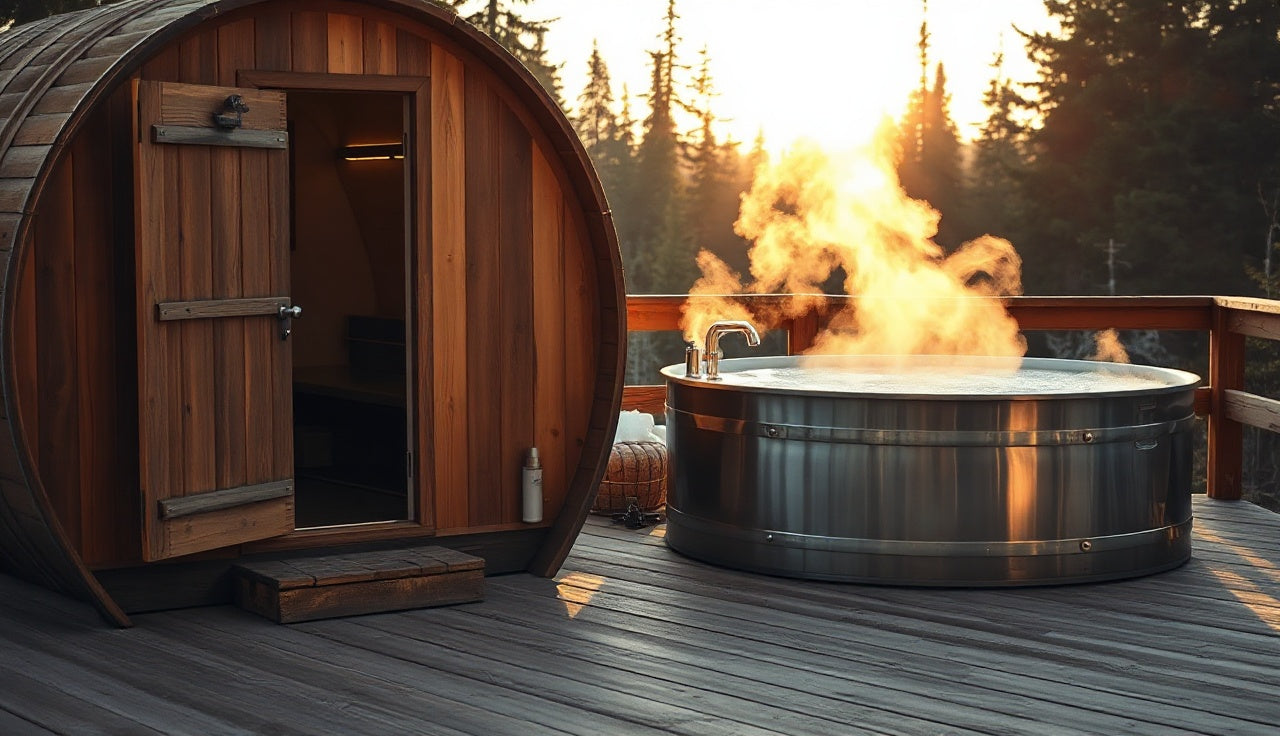
At SweatDecks, the setup customers reach for most often is a dedicated cold plunge tub next to a barrel or cabin sauna. Proximity matters, because how fast you can move between heat and cold affects the vascular response.
Are there any real risks of contrast therapy that could undermine your weight-loss goals?
Yes, and they are worth naming plainly.
Cardiovascular stress. The rapid vascular shifts in contrast therapy are a real load on the heart. The same Finnish research that tied sauna to lower cardiovascular mortality also notes that sauna is contraindicated for people with unstable angina, recent heart attack, or severe aortic stenosis [5]. Anyone with cardiovascular disease should get medical clearance first. Going too fast between extreme heat and extreme cold is specifically risky because of the sharp blood pressure swings.
Heat illness. Sitting too long in a very hot sauna, especially without enough water, can cause heat exhaustion or heat stroke. Those are medical emergencies. Most people self-regulate fine, but alcohol raises the risk dramatically. The Finnish sauna mortality data shows a strong link between sauna deaths and alcohol use [5].
Hypothermia. Extended cold immersion, especially below 10°C, can drop your core temperature faster than you expect, particularly if you are already fatigued or lean. Two to five minutes at 10-15°C is the pragmatic safe range for most healthy adults.
Muscle recovery trade-off. As noted above, cold immersion after strength training may blunt muscle adaptation [8]. If building muscle is part of your weight-loss strategy (it should be, given the resting metabolic rate benefit of lean mass), mistimed cold exposure can work against you. This is a subtle but real risk that gets lost in a lot of contrast therapy enthusiasm.
For healthy adults who use basic common sense, contrast therapy is very safe. But if you have any cardiovascular, metabolic, or orthopedic condition, check with your doctor before you start.
What does contrast therapy do well that genuinely supports long-term weight management?
Here is the case I find most convincing, and it is not the headline calorie-burn argument.
Contrast therapy, done consistently, appears to improve sleep quality. A 2019 systematic review in Sleep Medicine Reviews found that passive body heating before sleep (including warm baths and sauna) shortened sleep onset latency and improved slow-wave sleep [9]. Sleep quality is one of the strongest behavioral predictors of body weight regulation. A single night of poor sleep raises ghrelin (the hunger hormone) and lowers leptin (the satiety hormone), producing measurable jumps in caloric intake the next day. People who sleep badly make worse food choices and have less drive to train.
If contrast therapy helps you sleep better, that downstream effect on eating and training consistency may be the biggest weight-management benefit it delivers, far bigger than the direct calorie burn.
Then there is the stress and cortisol angle. Chronic psychological stress raises cortisol, which promotes visceral fat and impairs fat mobilization. Regular sauna use has been associated in the compiled sauna literature with lower perceived stress and reduced cortisol in habitual users [10]. A calmer cortisol profile does not melt fat on its own, but it removes one of the biggest obstacles for stressed-out people trying to manage their weight.
And then adherence. People who enjoy a recovery ritual (contrast therapy is genuinely enjoyable for most people who try it) tend to stay more consistent with their training. Consistency beats intensity for long-term body composition, every time.
For the full picture of what heat does for the body, the sauna benefits explainer and the ice bath guide both expand on the sleep and stress findings. SweatDecks also publishes contrast therapy setup guides if you are ready to build a home system.
What should you realistically expect from contrast therapy for weight loss in 8-12 weeks?
Straight answer: add contrast therapy two to four times a week on top of your current lifestyle with no other changes, and you should expect modest results at best. A rough estimate from the calorie-burn and metabolic data lands at maybe an extra 400-1,200 calories burned per week across two to four sessions. That is perhaps 0.05-0.15 kg of body fat per week, so in 8-12 weeks you might see 0.4-1.8 kg of extra fat loss compared to doing nothing. Those ranges are my estimates extrapolated from the component studies, not from a trial that tested contrast therapy for fat loss over that window.
Add contrast therapy to a genuine caloric deficit and a consistent training program, and the picture shifts. The better recovery and sleep, lower inflammation, and improved insulin sensitivity could amplify the results of your training, let you push harder and more often, and keep cortisol from sabotaging your diet. In that context, contrast therapy can punch above its weight as an adjunct.
So set expectations clearly. Contrast therapy does not replace diet and training. It is a useful add-on with real physiological effects that makes recovery more enjoyable and may improve several markers relevant to long-term weight management. That is a fair, honest description of what the evidence supports.
Frequently asked questions
Does contrast therapy burn belly fat specifically?
No evidence shows that contrast therapy preferentially reduces visceral or subcutaneous belly fat. Fat loss is systemic and governed by caloric deficit, not by where you apply heat or cold. Cold exposure does activate brown adipose tissue, which sits mostly around the neck and spine, not the belly. The cold-therapy-for-belly-fat claim circulating on social media has no solid controlled-trial support.
How long should each contrast therapy session be for metabolic benefit?
Most heat research uses 15-30 minute rounds at 70-90°C. Cold immersion for the norepinephrine response appears to plateau within 2-5 minutes at 10-15°C. A practical full session of three rounds (15 min sauna, 3-5 min cold, repeated) runs about 55-70 minutes total. There is no strong evidence that going past three rounds produces meaningfully greater metabolic benefit.
Is contrast therapy better for weight loss than just exercising more?
No, not even close. Exercise burns far more calories, builds muscle that raises your resting metabolic rate, and has vastly more evidence behind it for fat loss. Contrast therapy works best as a complement to exercise, mainly to improve recovery and consistency. If you have limited time, spend it exercising. Add contrast therapy once you have the training and diet fundamentals handled.
Can you do contrast therapy every day for weight loss?
Daily contrast therapy is generally safe for healthy adults, and the Finnish sauna literature links 4-7 sessions per week to better cardiovascular outcomes than fewer [5]. Whether daily frequency beats 3-4 times per week for fat loss is unknown. Practically, most people find daily sessions hard to fit in. Every-other-day is a realistic, evidence-consistent target, with care to avoid cold immersion right after strength training.
Does contrast therapy help with water weight or just water retention?
Sauna sessions cause real fluid loss through sweating (often 0.5-1.5 liters per session), which shows up as immediate scale weight loss. That is water, not fat, and it returns the moment you rehydrate. Any short-term weight change after a contrast therapy session is essentially all water weight. Actual fat loss needs a sustained caloric deficit across days and weeks, not a single session.
Does contrast therapy raise growth hormone?
Yes, heat exposure raises growth hormone. A 2012 study in the Journal of Science and Medicine in Sport found that post-exercise sauna increased circulating growth hormone compared to controls [6]. Growth hormone supports muscle protein synthesis and fat mobilization. The GH response is meaningful, though context-dependent: it is larger after exercise than at rest, and blunted by recent carbohydrate intake. Cold exposure has a smaller stimulatory effect on GH.
Is contrast therapy safe for people who are obese or overweight?
Generally yes, with medical clearance for anyone with cardiovascular risk factors. Obese subjects showed meaningful insulin sensitivity improvements in the Hanssen et al. cold exposure study [3]. Heat tolerance may run slightly lower in people carrying more weight, so starting with shorter heat rounds (10-12 minutes) at moderate temperatures (70-75°C) and building up gradually is sensible. Hydration is especially important. Anyone with type 2 diabetes or hypertension should consult a physician first.
Does drinking cold water or cold showers produce the same metabolic effect as a cold plunge?
Not really. Cold showers produce a modest norepinephrine response but far less than full cold immersion, partly because water conducts heat away from the body about 25 times faster than air at the same temperature. Drinking cold water burns a trivial number of extra calories (roughly 8 calories per 500 ml, from the energy needed to warm it to body temperature). Neither substitute approaches the stimulus of genuine cold water immersion.
Can contrast therapy help with weight loss after menopause?
No controlled trial has looked at contrast therapy for post-menopausal fat loss specifically. What we know: post-menopausal women accumulate visceral fat faster, partly from lower estrogen and poorer insulin sensitivity. Both heat and cold exposure have shown insulin sensitivity benefits in metabolically compromised populations [3][7], which is mechanistically relevant. Whether that translates to meaningful fat loss in this group remains untested. The anti-inflammatory and sleep-quality benefits may matter especially given the hormonal shifts of menopause.
Does cold plunging after a sauna hurt muscle gains if you are also trying to build muscle for weight loss?
Yes, this is a real trade-off. Roberts et al. (2015, Journal of Physiology) found that cold water immersion after resistance training attenuated long-term strength and muscle mass gains compared to active recovery, by interfering with mTOR and satellite cell signaling [8]. If building muscle is a goal, skip the cold plunge after strength sessions or wait at least 4-6 hours. Use contrast therapy on rest days or after cardio sessions instead.
How does contrast therapy compare to wearing sauna suits for weight loss?
Sauna suits produce weight loss almost entirely through excessive sweating and fluid loss, not fat loss. They carry real heat illness risk during exercise. Contrast therapy works through hormonal and cardiovascular mechanisms with a much safer profile. The calorie burn from contrast therapy is modest but real; the 'weight loss' from sauna suits is temporary and largely illusory. The two are not comparable as fat-loss tools. For more on sauna suit use, see the sweat suits sauna guide.
What temperature cold plunge is best for metabolic and fat-loss effects?
The research cluster sits mostly in the 10-15°C range. Srámek et al. used 14°C for their norepinephrine study [4], and the Hanssen mild-cold protocol used 15°C. Going below 10°C does not appear to buy proportionally greater metabolic benefit and it meaningfully raises the risk of hypothermia and cardiovascular shock. For most people, 10-15°C for 2-5 minutes is the practical sweet spot backed by the available evidence.
Are there any supplements that amplify the weight-loss effects of contrast therapy?
No supplement has been tested with contrast therapy in a weight-loss trial, so no honest answer exists here. Some practitioners pair contrast therapy with caffeine (which has its own modest metabolic effect) or time sessions fasted to theoretically maximize fat oxidation during the session. These are plausible ideas without strong evidence behind the specific combination. Avoid any product marketing itself as a contrast-therapy booster. None of them have clinical backing.
Sources
- Mayo Clinic Proceedings, Laukkanen et al. 2018, 'Cardiovascular and Other Health Benefits of Sauna Bathing': Sauna at ~80°C raises heart rate to 100-150 bpm, approximating moderate-intensity exercise, and increases metabolic rate roughly 1.5-2x resting
- BMC Complementary and Alternative Medicine, Podstawski et al. 2018, 'Sauna-Induced Body Mass Loss': A single sauna session raised mean heart rate ~73% above resting; short-term weight reductions were driven by fluid loss, not fat
- Nature Medicine, Hanssen et al. 2015, 'Short-term cold acclimation improves insulin sensitivity in patients with type 2 diabetes mellitus': 10 days of mild cold exposure at 15°C for 6 hours/day increased BAT activity and improved insulin sensitivity by ~43% in obese subjects; BAT thermogenesis estimated at 50-200 extra calories/day
- European Journal of Applied Physiology, Srámek et al. 2000, 'Human physiological responses to immersion into water of different temperatures': Immersion in 14°C water produced a 2-3 fold increase in norepinephrine compared to thermoneutral immersion
- JAMA Internal Medicine, Laukkanen et al. 2015, 'Association Between Sauna Bathing and Fatal Cardiovascular and All-Cause Mortality Events': 4-7 sauna sessions/week associated with dose-dependent reductions in cardiovascular mortality; sauna contraindicated with unstable angina or recent MI; alcohol strongly associated with sauna-related deaths
- Journal of Science and Medicine in Sport, Scoon et al. 2012, 'Effect of post-exercise sauna bathing on the endurance performance of competitive male runners': Post-exercise sauna increased circulating growth hormone in athletes compared to controls
- Diabetes Care (American Diabetes Association journal), passive heat therapy and glycemic control literature: Passive heat therapy improved glycemic control markers in type 2 diabetic patients over 8-12 weeks
- Journal of Physiology, Roberts et al. 2015, 'Post-exercise cold water immersion attenuates acute anabolic signalling and long-term adaptations in muscle to strength training': Cold water immersion after resistance training attenuated long-term strength and muscle mass gains compared to active recovery by interfering with mTOR and satellite cell signaling
- Sleep Medicine Reviews, Haghayegh et al. 2019, 'Before-bedtime passive body heating by warm shower or bath to improve sleep': Passive body heating before sleep shortened sleep onset latency and improved slow-wave sleep quality in a systematic review of controlled studies
- Finnish Sauna Society, compiled sauna physiology and cortisol literature: Regular sauna use associated with reduced perceived stress and lower cortisol levels in habitual users
- New England Journal of Medicine, Cypess et al. 2009, 'Identification and Importance of Brown Adipose Tissue in Adult Humans': Confirmed that adult humans have functional brown adipose tissue and its activity increases in colder environments

Share:
Is contrast therapy dangerous? Risks, safety rules, and who should avoid it
Contrast therapy after workout: does it actually work?