
Last updated 2026-07-09
TL;DR
The Clearlight Premier IS-C is a three-person corner far infrared sauna with True Wave carbon/ceramic heaters, ultra-low EMF output (under 3 mG), and a footprint built for room corners. It runs on standard 120V, assembles in two to four hours, and lists around $4,500 to $5,500 depending on options. Best for households wanting a permanent home sauna without a full-wall footprint.
What exactly is the Clearlight Premier IS-C?
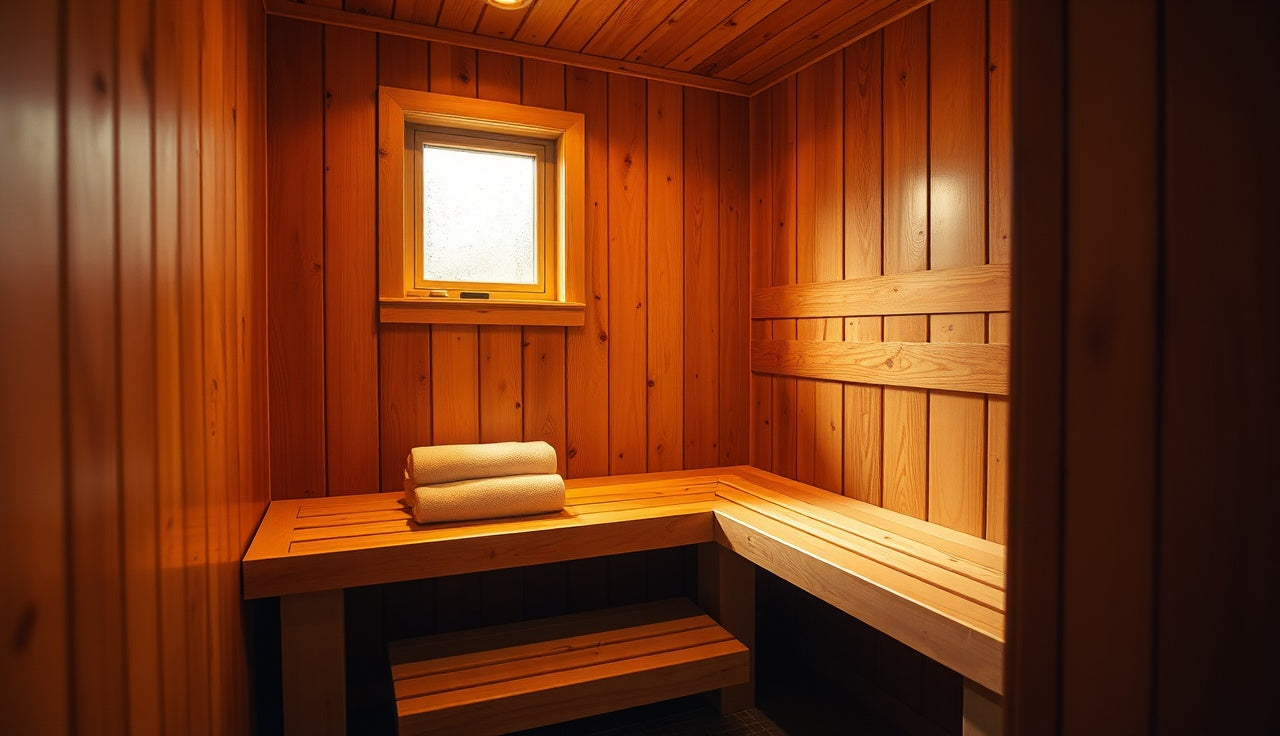
The Clearlight Premier IS-C is a factory-built, plug-and-play far infrared sauna that seats three adults and tucks into a room corner. The corner geometry is the whole point. Instead of eating up a flat 6-foot wall section, the unit uses two angled back walls so the front face cuts diagonally across a corner. That saves 12 to 18 inches of floor depth compared to a standard three-person box, which matters a lot in a spare bedroom or finished basement.
Clearlight is a brand under Sauna Works, Inc. The Premier line sits in the middle of their lineup, between the entry-level Sanctuary and the flagship Sanctuary Y series. IS-C stands for Infrared Sauna Corner.
The cabinet is Western red cedar throughout. Clearlight uses cedar partly for its natural resistance to warping under heat cycling, and partly because the smell is genuinely pleasant. Basswood (better for allergy-sensitive users) or eucalyptus are sometimes available as factory upgrades, but cedar is the default.
Heating is what separates Clearlight from most of the market. The Premier IS-C uses True Wave II heaters, which combine carbon and ceramic elements in the same panel. Carbon panels give a broad, even heat spread. Ceramic elements run hotter at the surface and emit more in the mid-infrared band. Clearlight argues the combination gives deeper tissue penetration than either alone. That claim is plausible based on infrared physics, but the clinical evidence for any specific brand outperforming another is thin. What is documented is that far infrared wavelengths (4 to 1000 micrometers) penetrate soft tissue more than near-infrared [1].
The unit ships as pre-assembled panels that bolt together with nothing more than a basic hex key. Most buyers report assembly in two to four hours with two people.
What are the dimensions and weight of the IS-C?
The IS-C has a roughly 67 by 67 inch corner footprint, stands 75 inches tall inside, and weighs about 475 pounds assembled. Confirm the current spec sheet before ordering, because Clearlight updates configurations periodically.
| Spec | Value |
|---|---|
| Interior depth (each side from corner) | approx. 47 in |
| Interior width across the diagonal front | approx. 67 in |
| Interior height | 75 in |
| Exterior footprint (approx.) | 67 in x 67 in corner cut |
| Weight (assembled) | approx. 475 lbs |
| Seating | 3 adults |
| Wall material | Western red cedar |
| Glass | 8 mm tempered |
That 67 by 67 inch corner footprint is the number to take to your tape measure before you buy. You need that much clear floor in the corner, plus at least 6 inches on each open side for airflow and access to the back panel connections. Ceiling height needs to clear 80 to 84 inches so the panels can tilt upright during assembly.
Weight matters for second-floor installs. At 475 pounds assembled, you sit well within the 40 pounds per square foot live-load minimum most residential floors meet [2]. But if that weight concentrates on a few panel feet, confirm with a contractor or structural engineer if you have any doubt about your floor system. A rubber anti-vibration mat or sauna-grade floor liner under the unit helps spread the load.
The IS-C is bigger than a two-person model but lighter and shallower than Clearlight's four-person IS-D. If you are truly space-constrained, the home sauna sizing guide is worth reading before you commit to any three-person unit.
How does far infrared heating work and why does it matter?
Far infrared heats your body directly instead of heating the air first. It emits radiation in the 5 to 15 micrometer range, absorbed straight into water molecules in soft tissue [1]. Your core temperature rises at a lower air temperature, typically 120 to 140°F in a far infrared unit versus 160 to 200°F in a traditional Finnish sauna.
A regular Finnish sauna heats air, the air heats your skin, and your body eventually warms. Far infrared skips most of that chain.
The lower air temperature is not a weakness. Most people find a 30-minute far infrared session more comfortable than a 15-minute traditional session that produces a similar sweat. The most-cited cardiovascular research uses traditional high-heat saunas (the large Finnish population studies especially), so if you want to match that research context exactly, traditional heat is more studied. Several trials have used far infrared specifically.
A 2018 randomized controlled pilot in Complementary Therapies in Medicine found that far infrared sauna use (15 minutes at roughly 140°F) reduced fatigue scores in chronic fatigue syndrome patients over four weeks [3]. The sample was small (34 participants) and it is one study. Nobody should buy a sauna expecting it to treat a medical condition. What the research does support, across multiple designs, is that repeated sauna sessions are associated with cardiovascular stress adaptation, better endothelial function, and a relaxation response [4].
The IS-C tops out around 140°F, high for a far infrared unit. You set temperature and session length on a digital touchscreen, and you can pre-heat the cabin remotely through the optional Clearlight app so it is ready when you walk in from a workout.
For a wider look at the science, the sauna benefits article covers the evidence across both heat formats without picking a side.
What is the EMF level on the Clearlight Premier IS-C and should you care?
Clearlight publishes third-party test results showing the Premier heaters emit under 3 milligauss (mG) of magnetic field at body contact and near-zero electric field. The ICNIRP reference level for general public ELF-EMF exposure at 50/60 Hz is 1,000 mG [5]. At under 3 mG, the IS-C sits far below that line.
EMF in home saunas means extremely low-frequency electric and magnetic fields (ELF-EMF) from the electrical resistance heaters. The debate in the sauna community runs hot and mostly ahead of the evidence.
There is no credible evidence that the EMF levels from home sauna heaters cause measurable health harm. The concern comes from proximity and duration (you sit close to the heaters for 20 to 45 minutes, repeatedly), not from any documented mechanism at these field strengths. If you want to be conservative, the low-EMF design is a reasonable buying criterion. If a salesperson is pitching you a sauna on the theory that competitors will give you cancer, that is fear-based selling with nothing behind it.
EMF levels vary a lot by heater design. Carbon panel heaters generally measure lower than older ceramic rod heaters at body distance. True Wave II combines the two but positions the carbon layer toward the body, which is why the contact measurements come out low. Independent third-party lab verification is the standard you should hold any brand to, Clearlight included.
| ICNIRP general public reference limit | 1,000 |
| Typical older ceramic rod heater (reported range) | 50 |
| Typical carbon panel heater (reported range) | 15 |
| Clearlight True Wave II (IS-C, published) | 3 |
Source: ICNIRP ELF Guidelines 2010 (limit); Clearlight published third-party test data (IS-C)
How much does the Clearlight Premier IS-C cost and what is included?
The base MSRP for the Premier IS-C has run roughly $4,500 to $5,500 over the past two years, though Clearlight runs promotions often and pricing shifts. Total landed cost with electrician and delivery upgrades realistically lands at $5,000 to $6,500 for most buyers. The base price typically includes:
- The full cedar cabinet (pre-assembled wall panels, floor, roof)
- True Wave II carbon/ceramic heaters
- Chromotherapy LED lighting
- Digital touchscreen controller
- Bluetooth audio with speakers
- Backrest and one bench configuration
- Limited lifetime warranty on the cabinet and heaters
What it usually does not include: white-glove delivery, a dedicated 20-amp circuit, or accessories like extra backrests, cover protectors, or sauna stones (you do not need stones for an infrared unit anyway). Freight delivery is standard. The unit ships on a pallet in a few large boxes. Curbside drop is the default; threshold or room-of-choice delivery costs extra.
Electrical is real money if you do not already have a dedicated 20-amp 120V circuit near the install spot. A licensed electrician running a new 20-amp circuit with a GFCI breaker can cost $150 to $500 depending on panel location and local labor rates [9]. The IS-C does not need a 240V circuit, which beats many three-person models.
That is not cheap for a recreational purchase. For context, comparable competitors like the Sunlighten mPulse 3 and JNH Lifestyles 3-person span the $3,000 to $6,000 range depending on feature tier, so Clearlight sits at the upper-mid part of the real market.
Comparing this to a $200 portable sauna is not apples to apples. The IS-C is a permanent fixture with a completely different use experience.
What is it like to use the IS-C? How hot does it get and how long are sessions?
The cabin feels spacious for one, comfortable for two, and tight for three (you will be touching shoulders). Treat the three-person rating as maximum occupancy, not a target. The unit needs 20 to 30 minutes to preheat from cold to a typical 130 to 140°F.
Set your target temperature, start the pre-heat, go change, and it is ready when you are.
Sessions for cardiovascular research protocols usually run 15 to 30 minutes at 130 to 160°F, though traditional sauna culture (Finnish use especially) involves multiple shorter rounds with cooling breaks [4]. Far infrared sessions are often a single 30 to 45 minute block because the lower air temperature is easier to sit through.
The bench layout has a main bench along the back two walls and a lower bench in front. Sit upright on the main bench or recline if you are alone. The True Wave heaters mount behind the benches and on the side walls. Floor heaters come standard on some configurations, so confirm with the spec sheet; this has changed across production runs.
The chromotherapy lighting (colored LEDs) is standard. Some people love it as part of the ritual. Others kill it immediately. It does not affect heat output.
One honest drawback: wood benches in an infrared sauna get hot. Not burning hot, but uncomfortable for bare legs during long sessions at max temperature. A towel on the bench is not optional. It is standard practice.
Is the Clearlight Premier IS-C a good value compared to other three-person infrared saunas?
Value depends on what you need, but here is an honest side-by-side at similar configurations. Clearlight's real edges are the lifetime warranty, the corner geometry, the published EMF data, and build quality that holds up in owner reviews over years.
| Model | Approx. price | Heater type | EMF claim | Warranty | Corner option |
|---|---|---|---|---|---|
| Clearlight Premier IS-C | $4,500-$5,500 | Carbon/ceramic (True Wave II) | <3 mG | Lifetime (cabinet/heaters) | Yes (IS-C) |
| Sunlighten mPulse 3 | $5,500-$7,000 | Near/mid/far combo | <0.2 mG | Limited lifetime | No |
| JNH Lifestyles Ensi 3P | $1,800-$2,500 | Carbon panel | No publish | 3 yr structural | No |
| Dynamic Andora 3P | $1,500-$2,000 | Carbon panel | No publish | 5 yr | No |
| Finnleo SunRise 3P | $3,500-$5,000 | Carbon panel | Low (published) | Lifetime | No |
The weaknesses are price (the Sunlighten mPulse is cheaper in some configurations and has a more sophisticated multi-spectrum heater), and the fact that True Wave II is not the newest heater design anymore.
For most buyers who want a permanent install, strong warranty coverage, and low-EMF confidence, the IS-C is a defensible buy. If budget is the priority, the JNH and Dynamic units are functional if less refined. If you want the most sophisticated far infrared heater technology on the market, Sunlighten's full-spectrum units have a stronger case.
SweatDecks carries the Clearlight Premier line and can confirm current pricing and lead times, which matter because these units ship from overseas and can run 4 to 8 week lead times.
For broader guidance on picking a home sauna, including size, power requirements, and installation, that article walks through the decision step by step.
What do you need to install the Clearlight IS-C at home?
You need a corner where both walls run at least 6 feet each, a flat level floor, and a ceiling that clears at least 84 inches. The IS-C sits directly on hardwood, tile, concrete, or vinyl plank. It runs on a standard 120V, 20-amp dedicated circuit with a GFCI breaker and a NEMA 5-20 plug. No hardwiring, no 240V.
Keep it off carpet. The floor heaters need airflow underneath, and carpet holds moisture. A sauna floor mat or cedar floor tile under the unit is the right call.
Electrical is genuinely easy relative to most three-person saunas. A typical US kitchen or bathroom circuit is 20 amps, so if you have a panel slot and a reasonable run to the install location, the cost is modest. GFCI protection on the dedicated circuit follows NEC code for enclosed electrical installations like this [9].
Ventilation is passive. Far infrared saunas make no steam, so you do not need a vapor barrier on the room walls (unlike a steam room, covered in sauna vs steam room). A small vent gap at the bottom front of the unit is standard. Most installs need no room modifications.
Assembly is a two-person job. The panels are heavy and you need someone to hold a wall section while you bolt it. Clearlight provides a manual and most buyers follow it without professional help. The main failure mode is assembling in the wrong order, so start with the floor and work up.
Outdoor placement is possible only under a covered structure that keeps off direct rain and standing water. Cedar handles temperature swings well, but the electronics are not weatherproofed for direct exposure. If you want a dedicated outdoor sauna, Clearlight makes an outdoor-rated version; the standard IS-C is an indoor unit.
What health benefits are associated with regular far infrared sauna use?
The honest answer: the evidence is promising but not settled, and nobody should buy a sauna expecting it to treat a specific disease. Regular sauna use, traditional or infrared, is a low-risk practice for most healthy adults that produces a real relaxation response, likely some cardiovascular adaptation over time, and possible recovery benefits.
The strongest evidence base comes from large Finnish population studies following traditional high-heat sauna users. A 2018 paper in the Journal of Human Hypertension (Laukkanen et al.) reported that frequent sauna bathing (4 to 7 sessions per week) was associated with reduced risk of hypertension in a cohort of 1,621 men followed over 25 years [4]. That is an association study, not a controlled trial, and the participants used traditional saunas, not infrared.
For far infrared specifically, a 2009 review in the Journal of the Canadian Chiropractic Association concluded that "far infrared sauna therapy was shown to be safe" for cardiovascular patients and found some evidence for improved cardiac output and reduced blood pressure [6]. The review noted study quality was generally low.
Researchers have also looked at far infrared for muscle recovery. A small 2015 study in SpringerPlus found that far infrared sauna use post-exercise (15 minutes, 140°F) reduced perceived muscle soreness compared to passive rest [7]. Effect sizes were modest.
Sauna is not a substitute for exercise, sleep, or medical care. If you want the full evidence picture, the sauna benefits article goes deeper across heat modalities.
People often pair infrared sessions with cold exposure (hot-cold contrast), which has its own recovery evidence base [8]. After a 30-minute IS-C session, finishing with a cold shower or a cold plunge is a common protocol. The rationale is real: contrast drives repeated vasodilation and vasoconstriction cycles that appear to improve recovery markers and subjective wellbeing.
What does the warranty cover and how is Clearlight customer service?
Clearlight offers a lifetime warranty on the IS-C cabinet and heaters for residential use. That is one of the strongest warranty positions in the infrared sauna market and a genuine differentiator. It covers manufacturing defects in the wood panels, heater elements, and the control system for the life of the original purchaser.
What it does not cover: damage from improper installation, water damage from standing water or heavy condensation, and cosmetic wear. The control board and digital components have historically fallen under the lifetime policy, but confirm the current terms directly with Clearlight, since warranty language gets updated.
Customer service quality reads mixed in public owner communities. The positive pattern: warranty claims for heater failure are generally honored without much friction. The negative pattern: parts availability and response time during high-demand periods (2020 to 2022 especially) drew complaints. That is common for a mid-size specialty manufacturer, but worth knowing if fast service matters to you.
For installation questions, Clearlight has a video library and a phone support line. Most common issues (a heater not firing, a digital panel glitch) are solvable by the owner with phone guidance. Physical repair visits are not part of the service model. They send parts.
How does the IS-C compare to buying a custom built-in sauna?
A custom built-in sauna for three people, cedar-lined with comparable heater quality, typically runs $8,000 to $20,000 installed depending on your contractor, region, and finish level. The IS-C at $4,500 to $5,500 plus delivery and electrical lands at less than half that for most buyers.
The tradeoffs are practical.
A custom sauna is permanent and adds real value to your home if done well. The IS-C is technically movable (bolt it apart, move it), though nobody does this casually at 475 pounds. On resale, a used IS-C in good condition sells for $2,000 to $3,500 on Craigslist and Facebook Marketplace based on current listings, which is better retention than most exercise equipment.
Custom saunas can be built to exact dimensions. The IS-C gives you one corner configuration with limited layout flexibility. If your space is oddly shaped, custom wins. If a corner configuration fits your room, the IS-C is more practical.
For most homeowners, the IS-C hits the right balance. It is a real sauna, not a budget box. It holds up over years of use. And it does not require a contractor, a permit (in most jurisdictions), or a renovation. If you are weighing a custom build, get a local contractor quote first and compare the full cost honestly.
Are there any real downsides or common complaints about the IS-C?
Yes. Five worth knowing before you buy.
First, the Bluetooth audio is functional but underwhelming. The speakers are small, the bass is thin, and if you care about music during sessions, you will want a portable Bluetooth speaker on the bench instead. Hardly a dealbreaker, but it comes up often.
Second, the bench height is fixed. Some users with shorter legs find the main bench slightly uncomfortable for long sits. A cedar step stool solves it, but that is an add-on cost.
Third, the IS-C does not get as hot as a traditional Finnish sauna. Max temperature around 140°F means it will not replicate the intense dry heat of a Finnish sauna at 185 to 200°F. If that high-heat experience is what you want, this is the wrong product. People coming from that tradition may feel it is underwhelming at first. They usually adapt and come to appreciate the longer comfortable session, but the first few uses can feel anticlimactic if you expected the same intensity.
Fourth, the chromotherapy lighting uses visible LEDs in a small enclosed space. Some people find the colored light distracting or the fixtures cheap-looking. Subjective, but it shows up in owner feedback enough to flag.
Fifth, at around 475 pounds assembled, the IS-C cannot go through a standard doorway once built. Assembly happens in the room. If the entrance is narrow, plan for panel-by-panel movement through the doorway and assembly inside. Individual panels fit through a 28-inch door, so this is usually solvable, just annoying.
Frequently asked questions
Does the Clearlight Premier IS-C require a 240V outlet?
No. The IS-C runs on a standard 120V, 20-amp dedicated circuit with a GFCI breaker and a NEMA 5-20 plug. That is a genuine advantage over many three-person infrared saunas that require a 240V circuit and hardwiring. You still need a dedicated 20-amp circuit, not a shared one, which may mean an electrician adding a new run from your panel.
How long does the Clearlight IS-C take to heat up?
Expect 20 to 30 minutes from a cold start to reach the typical session temperature of 130 to 140°F. With the optional Clearlight app you can trigger preheat remotely so it is ready when you arrive. A warm room speeds this up; a cold garage in winter takes longer.
Can the Clearlight Premier IS-C be used outdoors?
Clearlight rates the standard IS-C for indoor use only. The electronics and control board are not weatherproofed for direct rain. Under a fully covered, well-ventilated structure (a covered patio or sauna shed) it can work, but you take on more maintenance risk. Clearlight makes dedicated outdoor sauna models if outdoor placement is your plan.
What is the actual EMF level of the Clearlight IS-C and is it safe?
Clearlight publishes third-party test results showing under 3 milligauss at body contact distance. The ICNIRP general public reference level for ELF-EMF is 1,000 milligauss at 50/60 Hz, so the IS-C sits far below that threshold. There is no established evidence that EMF levels from home infrared saunas cause health harm at these field strengths.
How many people actually fit comfortably in the IS-C?
Three is the rated maximum and it works for three, but shoulders will touch. In practice the IS-C is most comfortable for one or two adults. Families often buy it for the flexibility of a third person occasionally, not as a daily three-person use case. If you regularly plan to use it with three people, look at the four-person IS-D.
What wood is the Clearlight IS-C made from?
Western red cedar is the standard material. Clearlight has offered basswood upgrades for users sensitive to cedar aroma or who prefer a lighter interior. Cedar suits most buyers because of its natural resistance to humidity and heat cycling, and the scent is pleasant and authentic. Confirm current wood options with Clearlight when ordering.
Does the Clearlight IS-C help with weight loss?
You will sweat, which means temporary water weight that returns when you rehydrate. Actual fat loss from sauna use is not meaningfully supported by current evidence. Calorie burn during a 30-minute far infrared session is likely 150 to 300 kcal based on heart rate response data, but that is not a reliable basis for a weight loss program. Sauna is a recovery and relaxation tool, not a substitute for exercise or diet.
How long does the Clearlight Premier IS-C warranty last?
Clearlight offers a lifetime warranty on the cabinet (cedar panels, frame) and heater elements for the original residential purchaser. The control system and electronics have historically been included under lifetime coverage too, though you should confirm current terms directly with Clearlight. This is one of the stronger warranty positions in the infrared sauna category and a real reason to pay the premium over budget brands.
What floor is needed under the Clearlight IS-C?
The unit sits on hardwood, tile, concrete, laminate, or vinyl plank. Carpet is not recommended because the floor heaters need airflow underneath and carpet holds moisture that can cause odor and panel damage over time. A cedar floor tile set or a rubber sauna mat under the unit protects your floor finish and helps with drainage if any condensation occurs.
Can I pair the Clearlight IS-C with a cold plunge for contrast therapy?
Yes, and it is a popular protocol. A 20 to 30 minute far infrared session followed by cold water immersion drives repeated vasodilation and vasoconstriction, which several studies link to improved recovery markers and subjective wellbeing. No specific duration or temperature ratio is strongly established, but 10 to 15 minutes hot and 2 to 5 minutes cold per cycle is a common starting point. See the cold plunge and cold plunge benefits articles for the evidence side.
How does the IS-C corner design actually save space compared to a standard three-person sauna?
A standard rectangular three-person sauna needs a clear wall section of roughly 5.5 to 6 feet and projects 4 to 5 feet out from the wall. The IS-C's angled front face uses a corner that was otherwise dead space, and the unit projects diagonally rather than straight out, cutting the straight-line depth into the room by 12 to 18 inches depending on how you measure. In a 12 by 12 foot room, that difference can decide whether the unit fits at all.
Does the IS-C come with a smart home or app connection?
Clearlight offers an app (iOS and Android) for remote preheat scheduling and temperature control over WiFi. It is not natively integrated with major smart home platforms like Apple HomeKit or Google Home, though some users rig workarounds through smart plugs. The app is a convenience feature, not a requirement; the digital touchscreen on the unit works on its own.
Is a permit required to install the Clearlight IS-C?
In most US jurisdictions, a freestanding prefabricated infrared sauna needs no building permit because it is treated as furniture, not a permanent structure. The electrical work (new circuit installation) does require an electrical permit in most places, which your licensed electrician will pull. Rules vary by city and county; confirm with your local building department if in doubt, especially in a condo or HOA community.
How does far infrared sauna differ from a traditional Finnish sauna or steam room?
Traditional Finnish saunas heat air to 160 to 200°F with a wood stove or electric kiuas. Steam rooms use lower air temperatures (100 to 120°F) at 100% humidity. Far infrared saunas heat your body more directly via radiant energy at 120 to 140°F with very low humidity. The experience is gentler, sessions run longer, and far infrared units are easier to install at home. For the full comparison, the sauna vs steam room article covers the tradeoffs.
Sources
- National Institutes of Health / NCBI: Vatansever & Hamblin, Photonics Lasers Med 2012, 'Far infrared radiation (FIR): its biological effects and medical applications': Far infrared wavelengths (4 to 1000 micrometers) are absorbed by water molecules in soft tissue, producing deeper tissue warming at lower ambient temperatures than conductive heat
- International Code Council, International Residential Code (IRC) Section R301, residential structural loads: Residential floor live load minimum is 40 pounds per square foot under standard IRC residential code, relevant to second-floor sauna installations
- NCBI / Complementary Therapies in Medicine: Soejima et al. 2018, 'Waon therapy for chronic fatigue syndrome': A randomized controlled pilot (n=34) found far infrared sauna use (15 min at approx 140°F) over four weeks produced measurable reductions in fatigue scores in chronic fatigue syndrome patients
- NCBI / Journal of Human Hypertension: Laukkanen et al. 2018, 'Sauna bathing and hypertension risk in middle-aged Finnish men': In a cohort of 1,621 men followed over 25 years, frequent sauna bathing (4 to 7 sessions per week) was associated with reduced risk of hypertension compared to once-weekly use
- International Commission on Non-Ionizing Radiation Protection (ICNIRP), ELF EMF Guidelines 2010: ICNIRP reference level for general public ELF-EMF (50/60 Hz) is 1,000 milligauss (100 microtesla); the Clearlight IS-C measures under 3 mG, well below this threshold
- NCBI / Journal of the Canadian Chiropractic Association: Beever 2009, 'Far-infrared saunas for treatment of cardiovascular risk factors': Review concluded that 'far infrared sauna therapy was shown to be safe' for cardiovascular patients and produced some evidence for improved cardiac output and reduced blood pressure
- NCBI / SpringerPlus: Mero et al. 2015, 'Infrared sauna bathing and recovery from strength exercise in men and women': A small 2015 controlled study found 15-minute far infrared sauna sessions post-exercise at 140°F reduced perceived muscle soreness compared to passive rest
- NCBI / International Journal of Circumpolar Health: Heinonen & Laukkanen 2018, 'Sauna bathing and systemic inflammation': Repeated sauna sessions are associated with cardiovascular stress adaptation, improved endothelial function, and systemic inflammation reduction in observational and controlled studies
- US Consumer Product Safety Commission (CPSC), GFCI safety guidance for home electrical installations: GFCI protection on dedicated circuits is required by NEC code for sauna and similar enclosed electrical installations to prevent ground fault injury

Share:
Sharper Image ice bath: what you actually get for the price
Sharper Image ice bath: what you actually get for the price