
Last updated 2026-07-09
TL;DR
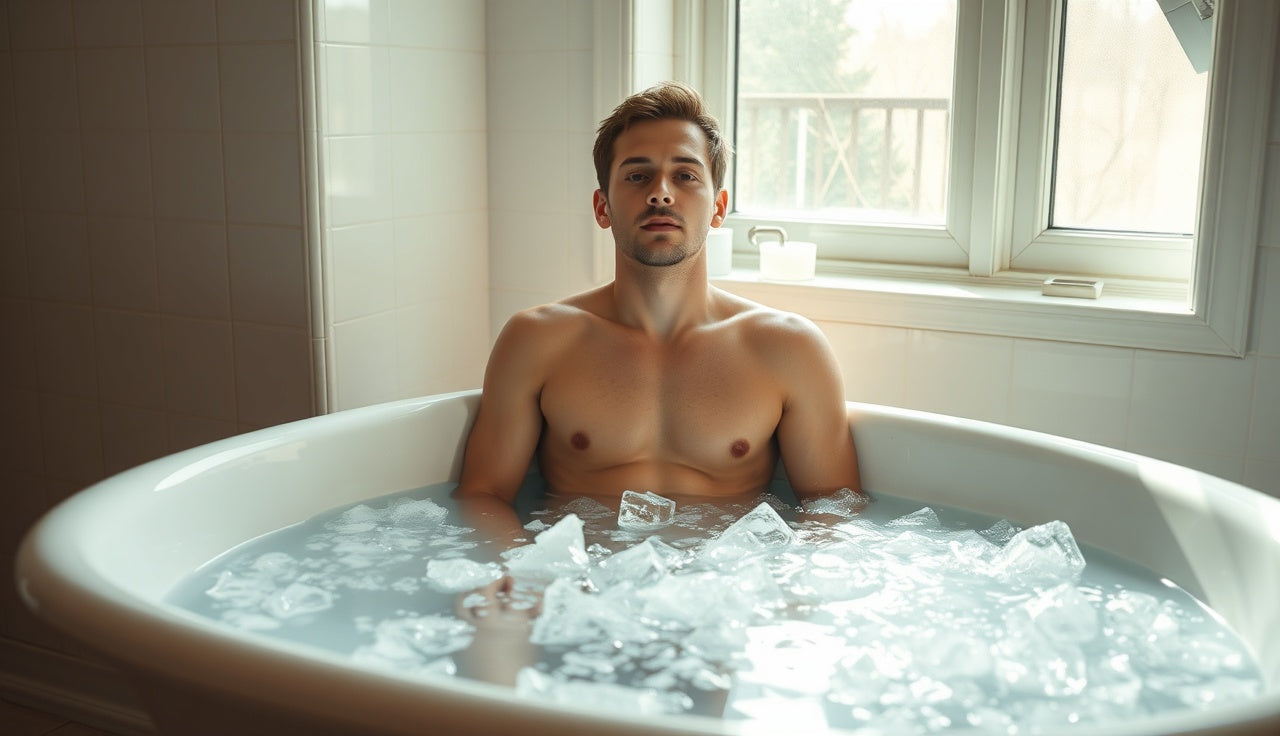
You can cold plunge in a standard bathtub. Fill it with cold tap water, add 20-40 pounds of ice to drop the temperature to 50-59°F (10-15°C), and soak for 2-10 minutes. It works, costs almost nothing to test, and is how most people start. The real limits are temperature control and comfort, not safety.
Does a bathtub actually work for cold plunging?
Yes. A standard bathtub holds enough water to cover you to the chest, which is all you need. The physics are on your side: cold water pulls heat from your body about 25 times faster than cold air at the same temperature [1], so even 60°F tap water gives you a real physiological hit.
The question isn't whether a bathtub works. It's whether it works well enough for what you want, and for most beginners it does.
Temperature control is the main limitation. There's no dial. You fill the tub, dump in ice, and watch a thermometer. The water warms while you sit in it, and it keeps warming after you climb out, so by a second session it's already lukewarm. That's fine for occasional use. It gets old fast if you plunge every day.
Space is the second limitation. Most American bathtubs run 60 inches long and hold roughly 40-60 gallons. That's workable. You'll pull your knees up or tilt to one side, but your core and legs stay under, and that's where most of the thermal load lands anyway.
What temperature should the water be for a cold plunge?
Aim for 50-59°F (10-15°C). That's the range most cited in the cold water immersion research [2]. Some protocols go colder, down to 39-50°F (4-10°C), but the extra benefit over 50°F isn't clearly established for general recovery.
Here's what you're working with in a typical home:
| Water source | Approximate temperature |
|---|---|
| Cold tap water, summer | 60-70°F (15-21°C) |
| Cold tap water, winter | 45-55°F (7-13°C) |
| After 20 lbs of ice added | Drops 5-10°F depending on tub volume |
| After 40 lbs of ice added | Drops 10-18°F depending on tub volume |
| Dedicated cold plunge chiller | Holds any set point, usually 39-60°F |
In winter, plenty of people in northern states hit the target range on tap water alone, or with a bag or two of ice. In summer, you'll need a lot more ice or a chiller. A basic waterproof thermometer runs $10-15 and kills the guesswork [3].
The study cited most in this space is a 2022 meta-analysis in the British Journal of Sports Medicine. It found that cold water immersion below 59°F for at least 10 minutes after exercise reduced perceived muscle soreness [2]. Nobody has clean data on the minimum effective dose, and cold tolerance varies wildly from person to person.
How much ice do you actually need for a bathtub cold plunge?
A standard 60-inch bathtub holds roughly 40-60 gallons filled to a useful depth (about 12-14 inches). To drop that from 70°F tap water to 55°F, plan on 20-30 pounds of ice. To reach 50°F, expect 35-50 pounds [3].
A 20-pound bag from a gas station or grocery store costs $2-5. Two bags gets you to a useful temperature in most conditions. Three bags gets you to a serious plunge in summer.
The math turns ugly if you do this daily. At $4 a bag and two bags a session, that's roughly $240 a year in ice alone, before the time spent driving to buy it. That's one of the real reasons people move to a dedicated unit.
One trick: fill the tub the night before and leave it uncovered. In most climates, tap water sitting overnight cools 5-10°F on its own, which trims your ice demand. Some people run a chest freezer and make their own. A decent one costs $150-300 and pays for itself in 6-12 months if you plunge daily [3].
Add the ice before you get in. Dumping ice onto someone already in the water creates cold spots and feels far more brutal than expected.
| No ice (70°F tap) | 70 |
| 10 lbs ice added | 65 |
| 20 lbs ice added | 60 |
| 30 lbs ice added | 56 |
| 40 lbs ice added | 53 |
| 50 lbs ice added | 50 |
Source: Thermal physics estimates consistent with NIH / PubMed cold water immersion protocols [3]
How long should you stay in a cold bathtub?
Start with 1-3 minutes. That's not a soft suggestion. It's where the cold is real enough to matter and short enough to keep you from panicking or hyperventilating.
The cold shock response, that sharp involuntary gasp and fast breathing in the first 30-90 seconds, is the most significant part of the immersion [1]. Your body adapts to it within a few sessions. After a week or two of regular plunges, the gasp reflex fades noticeably.
For recovery, most protocols in the sports medicine literature land in the 10-15 minute range at 50-59°F [2]. But longer isn't better, and there's some evidence that very long immersions (over 20 minutes) after strength training may blunt muscle protein synthesis [4]. The National Strength and Conditioning Association flags this tradeoff directly: cold immersion may interfere with hypertrophy adaptations if it's done right after resistance training [4].
A reasonable path once you're comfortable:
- Weeks 1-2: 1-3 minutes at whatever cold you can manage
- Weeks 3-4: 3-6 minutes at 55-59°F
- Ongoing: 5-10 minutes at 50-55°F
Past 15 minutes in very cold water, hypothermia stops being theoretical. Core temperature keeps dropping after you exit, more than during immersion, so how you feel in the tub is a poor read on your actual thermal state.
Is cold plunging in a bathtub safe?
For most healthy adults, yes. The risks are real but manageable with basic precautions.
The main risks:
1. Cold shock response. The involuntary gasp on entry can pull water into your lungs if your face goes under. Keep your face up, especially in the first 30 seconds.
2. Hyperventilation. Rapid, uncontrolled breathing in cold water can bring on dizziness or fainting. Controlled breathing before and during entry helps. Box breathing (4 counts in, hold, 4 out, hold) is a good way to steady yourself first.
3. Hypothermia. Unlikely in a 10-minute session at 50°F, but possible if you overstay, especially if you're lean. Shivering is the signal to get out.
4. Cardiac risk. Cold water immersion spikes heart rate and blood pressure the instant you enter [1]. The Centers for Disease Control and Prevention points to sudden cold water immersion as a leading trigger of drowning in open water, largely from cardiac stress and loss of muscle control [5]. In a bathtub the drowning risk is far lower, but people with known heart disease, arrhythmias, or hypertension should clear it with a doctor first.
Don't plunge alone while you're new to this. Have someone nearby, or at minimum leave the bathroom door unlocked. It sounds like overkill until the one time it isn't.
Pregnancy is a clear contraindication. The American College of Obstetricians and Gynecologists advises against activities that sharply raise or lower core temperature during pregnancy [6].
Want the full physiology of what cold does to the body? The cold plunge benefits guide covers it in detail.
What are the real benefits of cold plunging in a bathtub?
The benefits of a bathtub plunge match any cold water immersion, because the mechanism is the water temperature, not the vessel.
The best-supported benefit is reduced delayed onset muscle soreness (DOMS). The 2022 British Journal of Sports Medicine meta-analysis found cold water immersion significantly cut muscle soreness compared to passive rest [2]. The effect size was moderate, not dramatic. But it's real.
Norepinephrine release is another well-documented response. A 2008 study by Duguid and colleagues measured catecholamine and metabolic responses to cold water immersion and found large increases in norepinephrine, which tracks with better mood and alertness [7]. That's likely why most people feel sharp and clear-headed after a plunge.
Wagner and colleagues (2021), writing in PLOS ONE, found measurable drops in perceived stress after cold water immersion [8]. The effect seems tied to both the physiology and the plain behavioral act of choosing to do something uncomfortable.
Where the evidence gets thin: fat loss, immune function, longevity. Those claims travel far online, but the data behind them is weak or confounded. Nobody has good long-term randomized trial data on cold plunging and mortality. The closest we get is epidemiological data on cold-habituated groups like Nordic swimmers, and those populations differ from everyone else in too many ways to draw a clean line.
A cold plunge or ice bath is a useful recovery tool. It's not a cure for anything.
What do you need to set up a cold plunge in your bathtub?
The list is short and cheap.
A waterproof thermometer is the one thing most people skip and shouldn't. You need the actual water temperature, not a guess. A probe-style cooking thermometer works. So does an aquarium thermometer. Budget $10-20 [3].
Ice. Two to three 20-pound bags per session in warm months. One or none in cold winter climates. Budget $4-10 a session, or buy a chest freezer for long-term savings.
A timer. Your phone does it. Set it before you get in, because tracking time while you shiver is harder than it sounds.
Warm clothes or a blanket ready for the second you get out. Your core keeps dropping for several minutes after exit. Have the warm layer waiting.
Optional but helpful: a bath mat outside the tub (you'll be shaky on the way out), neoprene gloves or booties if your hands and feet run cold, and a notes app to log temperature, duration, and how you felt.
Total cost to start: roughly $10-30 if you already grab ice as needed. Nothing else required.
Already cycling heat and cold, also called contrast therapy? A home sauna or portable sauna pairs naturally with the bathtub plunge.
When does it make sense to upgrade from a bathtub to a dedicated cold plunge?
A bathtub is a fine starting point. It's a poor permanent one if you're serious about the practice.
The reasons to upgrade:
Temperature consistency. A bathtub full of ice water warms 2-5°F over a 10-minute session and needs a full refill for the next use. A chilled plunge tub holds your set temperature indefinitely. If you track sessions and want to compare results, drifting temperatures make that impossible.
Time cost. Filling, icing, and draining a bathtub for one session eats 15-30 minutes of effort around a 5-10 minute plunge. A dedicated tub is ready when you are.
Ice cost. As noted above, daily ice buys add up to $200-500 a year depending on climate. A chilled unit costs $2,000-8,000 up front but $20-60 a month to run [3]. Break-even usually lands at 3-5 years for daily users.
Drainability and hygiene. A bathtub used for plunging shares plumbing with your shower and bath. Dedicated units run filtered, circulated water that stays cleaner longer.
To see purpose-built options, SweatDecks stocks a range of cold plunge tubs from basic to chilled, across most budgets.
If you plunge 3-4 times a week or more and plan to keep at it, upgrading within 6-12 months makes practical sense. Still testing whether the habit sticks? Use the bathtub first.
Can you cold plunge in a bathtub without ice?
Yes, and in much of the country you won't need ice at all for part of the year.
Ground temperature across most of the continental U.S. keeps cold water pipes at 45-65°F year-round [9]. In January in Minnesota or Vermont, your cold tap may run 34-45°F, colder than most dedicated plunge units. Confirm with a thermometer, but you may not need a single cube.
In Texas or Florida in July, cold tap might come out at 70-75°F. That gives you some benefit but isn't a true cold plunge. Ice closes the gap.
The U.S. Geological Survey publishes groundwater temperature data by region if you want your area's baseline [9].
If ice-free immersion is the goal, the best seasons depend on where you live. Test your tap in winter before assuming you need to buy anything.
How does a bathtub cold plunge compare to a dedicated cold plunge tub?
| Feature | Bathtub | Dedicated cold plunge tub |
|---|---|---|
| Upfront cost | $0-30 (just ice + thermometer) | $500-8,000+ |
| Ongoing cost | $100-500/year (ice) | $240-720/year (electricity) |
| Temperature control | Manual, drifts during session | Precise, holds set point |
| Ready time | 15-30 min to fill and ice | Instant (always on) |
| Space required | Uses your existing bathtub | Dedicated footprint needed |
| Hygiene | Refill each session | Filtered, circulated |
| Cold consistency | Variable | Consistent |
| Best for | Beginners testing the habit | Daily users, serious practitioners |
The bathtub wins on cost and access. The dedicated unit wins on everything operational. Neither is better for everyone. It comes down to how often you'll use it and whether you've confirmed the habit will stick.
For people already doing regular sauna who want to add contrast therapy, a dedicated plunge often makes sense from day one. They're not testing a habit. They're extending one. Read the cold plunge benefits breakdown if you're still deciding whether the practice earns the investment.
What should you do right after a bathtub cold plunge?
Get out carefully. You'll be shakier than you expect. Hold the sides of the tub.
Let your body reheat on its own for the first 5-10 minutes. A hot shower right away defeats most of the point: the rewarming stretch is when much of the norepinephrine and metabolic response plays out [7]. Researchers call this the afterdrop period, when core temperature keeps falling for several minutes after you exit.
Dry off, pull on warm clothes, and move gently. Light walking speeds rewarming without the abruptness of a hot shower.
If you're doing contrast therapy (alternating heat and cold), the standard protocol is 3-4 rounds of hot and cold, ending on cold. A home sauna is the most common heat source, but a hot bath works too.
Drink water. Cold immersion has a mild diuretic effect [10]. You may not feel thirsty, but rehydrating afterward is sensible.
The shivering after a plunge, called thermogenesis, is normal and burns a small amount of extra calories. It passes within 10-20 minutes for most people. If it drags past 30 minutes, you stayed in too long or the room is too cold.
Are there any plumbing or damage concerns with cold plunging in a bathtub?
Standard residential bathtubs are built for water. Cold water at 39-55°F sits well inside the normal range a tub sees. There's no meaningful damage risk from the temperature itself.
The practical concerns are different:
Ice on porcelain or acrylic can scratch if you drag it across the surface. Pour ice in gently instead of dropping a bag from height.
Acrylic tubs can crack under a sharp hit. A 20-pound bag dropped hard from two feet carries enough force to start a hairline crack, especially in older or thinner tubs. Lower bags in slowly.
The drain. You'll be dumping a lot of cold water. Standard residential drains handle it fine, but a slow or partly clogged drain will show itself the first time you release 40 gallons. Fix the drain first.
Mold. If the tub stays wet between uses, ventilate the bathroom well. Cold water immersion doesn't create special mold conditions, but any standing moisture in a bathroom does.
And honestly, the floor outside the tub is the real hazard. A wet, cold body stepping onto tile is a slip waiting to happen. Use a non-slip bath mat outside the tub every single time.
Frequently asked questions
Can I cold plunge in a bathtub every day?
Yes, daily use is safe for healthy adults. The most common protocol in research is daily or near-daily immersion. The practical catch with a bathtub is the time and ice cost per session. Most daily plungers eventually move to a chilled tub for convenience. Start with 3-4 sessions a week and build from there to see how your body responds.
How cold does a bathtub get with ice?
Adding 20 pounds of ice to a standard tub of 70°F tap water drops the temperature roughly 5-10°F. Adding 40 pounds drops it 10-18°F. Starting with colder tap water cuts how much ice you need. In winter, cold tap in northern states can hit 45-55°F before any ice goes in. Always measure with a thermometer instead of guessing.
What temperature is too cold for a bathtub cold plunge?
Below 50°F (10°C) carries a higher cold shock risk and suits experienced people who've adapted over weeks or months. Below 40°F approaches hypothermia risk even in short sessions. Most protocols target 50-59°F as the effective and relatively safe range. Never go below 40°F at home without a support person present.
How long should I wait after a workout before cold plunging?
If your goal is recovery from soreness, immersion within 1 hour after exercise shows the strongest effect in the literature. If your goal is building muscle, research suggests delaying cold immersion at least 4-6 hours after strength training, since immediate post-workout cold may blunt muscle protein synthesis. The National Strength and Conditioning Association flags this tradeoff specifically for resistance athletes.
Is a bathtub cold plunge as effective as a dedicated cold plunge tub?
Physiologically, yes, if the water temperature matches. Cold water at 55°F in a bathtub produces the same body response as 55°F in a $5,000 chilled unit. The difference is operational: temperature stability, setup time, ongoing cost, and hygiene. Effectiveness comes from water temperature, not the container it sits in.
Can kids cold plunge in a bathtub?
Cold water immersion for children is poorly studied and not recommended without guidance from a pediatrician. Children lose core temperature faster than adults because of their higher surface area relative to body mass. The cold shock response can also hit younger bodies harder. If a child is curious about cold exposure, brief cool showers under direct adult supervision are a much safer starting point.
Can I cold plunge if I have high blood pressure?
Cold water immersion spikes heart rate and blood pressure the moment you enter. If you have diagnosed hypertension or cardiovascular disease, talk to your doctor before starting. This isn't a blanket ban, some people with managed hypertension plunge regularly, but the call should be made with medical input. The cardiac stress of that first entry is measurable, not theoretical.
What if my tap water isn't cold enough for a cold plunge?
In summer, many households see tap water at 65-75°F, above effective plunge targets. Your options: add enough ice to reach 50-59°F, which takes 20-40 pounds depending on the starting temperature, or move to a dedicated chilled unit. A chest freezer for making your own ice ($150-300) cuts the ongoing cost a lot if you do this regularly.
What should I wear in a bathtub cold plunge?
Whatever keeps you comfortable. A swimsuit is the most common choice. Some people wear nothing. Neoprene gloves or socks can protect extremities if your hands or feet run cold-sensitive, though they trim your exposed surface area a little. Skip thick wetsuits, which insulate too much and cut the thermal effect. The goal is contact between cold water and as much skin as possible.
How do I warm up after a cold plunge in a bathtub?
Let your body rewarm on its own for the first 5-10 minutes. Dry off, dress warmly, and do light movement like walking. A hot shower right away reduces the post-immersion response that gives cold plunging much of its effect. The rewarming phase, sometimes called the afterdrop period, is part of the process. A hot drink, a blanket, and gentle activity handle it for most people within 15-20 minutes.
Can I add anything to the bathtub water for a better cold plunge?
Some people add Epsom salt (magnesium sulfate) for possible muscle relaxation, though evidence for transdermal magnesium absorption is mixed. A few drops of eucalyptus or peppermint oil can make the experience feel more intense and spa-like. Avoid oils that make the tub surface slippery. Nothing you add changes the core mechanism, which is water temperature and duration.
How much does it cost to cold plunge in a bathtub vs. buying a cold plunge tub?
Bathtub setup costs $10-30 upfront (thermometer, first round of ice) plus $100-500 a year in ice depending on climate and frequency. A dedicated chilled tub costs $2,000-8,000 upfront and roughly $240-720 a year in electricity. For daily users, break-even lands around 3-5 years. For occasional users, the bathtub is almost always the better financial call.
Can I cold plunge in the bathtub in winter without ice?
In many northern U.S. states, cold tap in winter reaches 40-55°F with no ice at all. The U.S. Geological Survey tracks groundwater temperatures by region, and in places like Minnesota, Wisconsin, or Vermont, winter tap water can sit well within effective plunge range. Test your tap with a thermometer in January before you buy any ice.
Does cold plunging in a bathtub help with anxiety or mood?
Cold water immersion triggers a measurable release of norepinephrine, a catecholamine tied to alertness and mood regulation. Multiple studies have measured this response in healthy adults, and most people report feeling calmer and more focused in the hours after a plunge. Evidence for clinical anxiety treatment is preliminary. Expect a mood and alertness effect; don't treat it as a substitute for mental health care.
Sources
- Tipton MJ et al., Journal of Physiology, 2017 – 'Cold water immersion: kill or cure?': Water conducts heat approximately 25 times faster than air at the same temperature; cold shock response occurs in the first 30-90 seconds of immersion.
- Moore E et al., British Journal of Sports Medicine, 2022 – cold water immersion meta-analysis: Cold water immersion below 59°F for at least 10 minutes post-exercise significantly reduced muscle soreness compared to passive rest.
- National Institutes of Health – PubMed database reference for cold water immersion protocols: Standard cold water immersion protocols use 50-59°F water; ice quantities and costs are practical estimates based on thermal physics of water.
- National Strength and Conditioning Association – position statements on recovery modalities: Cold water immersion immediately after resistance training may blunt muscle protein synthesis and hypertrophy adaptations.
- Centers for Disease Control and Prevention – drowning prevention and cold water shock: Sudden cold water immersion is a leading trigger of drowning events, primarily due to cardiac stress and involuntary cold shock response.
- American College of Obstetricians and Gynecologists – exercise and activity during pregnancy: Activities that dramatically raise or lower core body temperature are contraindicated during pregnancy.
- Duguid et al., Journal of Applied Physiology, 2008 – catecholamine response to cold water immersion: Cold water immersion produces substantial increases in norepinephrine, associated with improved mood and alertness; core temperature continues falling after exit during the afterdrop period.
- Wagner et al., PLOS ONE, 2021 – cold water immersion and perceived stress: Cold water immersion produced measurable reductions in perceived stress in study participants.
- U.S. Geological Survey – groundwater temperature data by region: Ground temperature keeps cold water pipes at 45-65°F year-round across most of the continental U.S.; exact temperatures vary by state and season.
- Bleakley C and Davison G, British Journal of Sports Medicine, 2010 – cold water immersion physiology review: Cold immersion has a mild diuretic effect; rehydration after sessions is advisable.

Share:
Four person barrel sauna: what to know before you buy
Cold plunge tub for ice bath and cold water therapy: the complete guide