
Last updated 2026-07-09
TL;DR
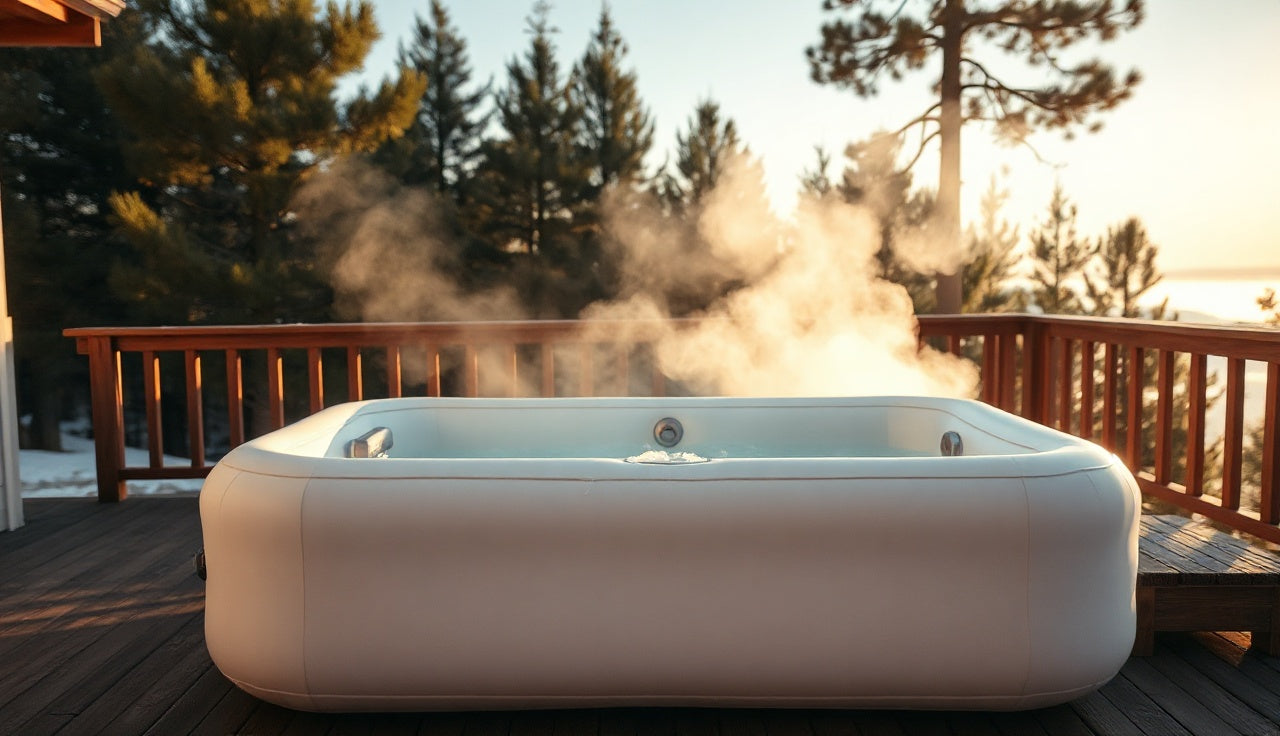
The Wave Antarctic is a drop-stitch inflatable ice bath that holds roughly 105 gallons and inflates firm enough to feel like a rigid tub. Deflated, it packs to carry-on size. It sits at the affordable end of the inflatable cold plunge market, usually $200 to $400, and suits athletes, travelers, and anyone who wants real cold therapy without a permanent install.
What is the Wave Antarctic drop stitch ice bath?
The Wave Antarctic is an inflatable cold plunge tub built with drop stitch construction, the same layered internal thread technology used in paddleboards and inflatable kayaks. Pump it up and thousands of polyester threads hold the walls parallel under pressure, so the finished tub feels genuinely firm instead of the squishy, collapsing softness you get from a basic vinyl pool. That firmness decides how stable the tub feels when you step in and how well it keeps its shape across dozens of sessions.
On paper, the Antarctic targets the portable recovery market: athletes who travel, homeowners with no outdoor space for a permanent plunge, or people who want to test cold exposure before spending $3,000 or more on a chilled unit. It ships flat, inflates in roughly 5 to 10 minutes with a standard pump, and deflates just as fast for storage.
The name 'Antarctic' is marketing, not an engineering spec. Wave brands its lineup after cold-weather geography to signal the purpose at a glance. Cold performance comes down to two things: how well the tub insulates to slow ice melt, and how much water volume you're chilling. Both get covered below.
New to cold water immersion? The ice bath guide covers the fundamentals, including temperature targets, session length, and the basic physiology of the cold shock response.
How does drop stitch construction work, and why does it matter for an ice bath?
Drop stitch connects two parallel fabric layers with thousands of short polyester threads, all cut to the same length and woven perpendicular between the skins. Inflate the structure and internal air pressure tries to push the walls apart, but the threads cap how far they travel. You get a rigid, flat surface under pressure rather than a rounded balloon shape [1].
For a cold plunge, this delivers three real benefits. The tub holds its shape when you climb in, so the walls don't fold or tip. The firm structure makes getting in and out easier, which matters when your legs are cold and your motor control is a little off. And drop stitch walls are thicker and denser than standard PVC bladder walls, adding a modest layer of insulation between your water and the air.
The trade-off: drop stitch tubs weigh more per square foot than thin vinyl inflatables and need more air pressure to reach full rigidity, usually 10 to 15 PSI. Under-inflation is the most common user error with these products. If the walls still give noticeably when you press them, the tub is not fully inflated, and it will perform well below spec.
Here's how the main construction types stack up against each other and against rigid alternatives:
| Construction type | Rigidity when filled | Insulation | Portability | Typical price range |
|---|---|---|---|---|
| Drop stitch inflatable | High | Moderate | Excellent | $150-$500 |
| Standard PVC inflatable | Low-moderate | Low | Excellent | $50-$200 |
| Foam-insulated hard shell | Very high | High | Poor | $500-$1,500 |
| Chilled stainless/acrylic unit | Very high | Very high (active) | None | $3,000-$10,000+ |
Drop stitch sits in a useful middle ground. It's not as insulating as a foam shell, but it packs down small and it beats basic inflatable pools on rigidity and durability by a wide margin [2].
What are the key specs of the Wave Antarctic?
Published specs from Wave put the Antarctic at roughly 71 inches long by 28 inches wide by 28 inches deep (about 180 x 70 x 70 cm), with capacity around 105 gallons (400 liters). Drop stitch walls typically run 2 to 3 inches thick when fully inflated, and the Antarctic sits in that range.
Empty weight is roughly 15 to 18 pounds depending on included accessories. One person can carry it, and rolled into its bag it drops into a car trunk or a large piece of luggage without a fight.
The liner is typically a two-ply PVC/polyester composite outer skin with a TPU inner coating for waterproofing. TPU handles cold better than plain PVC, which can turn brittle and crack near freezing. Ice bath water usually sits between 50 and 59 degrees Fahrenheit (10 to 15 C), and the TPU lining shrugs that off [3].
The drain is a standard threaded plug at the bottom that empties by gravity. No pump needed. That sounds minor until you're staring down 105 gallons at the end of a session and realize how much time a bottom drain saves versus tipping a full tub.
One honest caveat: Wave has revised specs across model years and regional markets, so verify dimensions and capacity on the actual product listing before you buy. Minor batch variations exist.
| Budget PVC inflatable pool | $125 |
| Drop stitch inflatable (e.g. Wave Antarctic) | $300 |
| Rigid foam-insulated hard shell | $1,000 |
| Chilled cold plunge (entry-level) | $3,500 |
| Chilled cold plunge (premium) | $7,000 |
Source: SweatDecks market survey and publicly listed retail prices, 2024
How cold does it actually get, and how long does the temperature hold?
The Antarctic gets exactly as cold as you make it with ice, and it stays cold only as long as the insulation slows the melt. There's no refrigeration. You are working with ice, full stop. This is the question that separates real cold plunge products from glorified camping pools.
At roughly 105 gallons, the Antarctic holds about 880 pounds of water. One pound of ice absorbs about 144 BTU as it melts. Dropping 880 pounds of water by 15 degrees Fahrenheit means removing roughly 13,200 BTU, which works out to somewhere around 90 to 100 pounds of ice, assuming zero heat gain from the surroundings [4]. Real life adds ambient air, body heat, and warm ground, so plan on 50 to 80 pounds of bagged ice for a single session in moderate weather.
Insulation is the other lever. The drop stitch walls help, but the bottom of the tub sitting on a warm deck or slab of concrete conducts heat upward the entire time. Set the tub on an insulating mat or wooden platform and you'll hold temperature noticeably longer.
For a typical 10 to 15 minute session at 50 to 59 degrees, most users report manageable temperature with a solid starting ice load. Run multiple sessions across a day and you'll be topping up ice. If you want set-and-forget cold, the Antarctic is the wrong product. Go look at a chilled cold plunge unit instead.
Cold water immersion research generally targets 50 to 59 degrees Fahrenheit (10 to 15 C). A 2022 meta-analysis in Sports Medicine found that cold water immersion at 10 to 15 C for 10 to 15 minutes was the most commonly studied protocol for post-exercise recovery, with evidence for reduced perceived muscle soreness [5].
What are the real pros and cons of the Wave Antarctic?
Here's the honest assessment, not the marketing sheet.
The real strengths are portability, price, and setup speed. If you live in an apartment, travel with a team, or genuinely can't install a permanent tub, a drop stitch inflatable solves a real access problem. At $200 to $400 it also lets you find out whether cold immersion is something you'll stick with before you drop $4,000 on a chilled unit. For a lot of people, that's the smart financial move.
Drop stitch construction puts the Antarctic well above the cheap inflatable pool category. Firm walls, a TPU liner, and a dedicated drain are meaningful upgrades over $60 Amazon knockoffs. If you plan to use an inflatable cold plunge seriously, the extra cost for drop stitch is money well spent.
The real weaknesses are insulation and ongoing ice cost. Ice for a single session runs $10 to $20 at a gas station or grocery store. Five sessions a week is $50 to $100 in ice alone. In hot climates, summer sessions eat even more. Over six months, ice can cost more than the tub did. That's not a dealbreaker, but anyone selling inflatable ice baths as cheap to run is skipping this part of the math.
The tub also wants care around sharp objects and rough surfaces. A puncture is fixable with the included kit, but a slow leak mid-session is a genuine annoyance. Check the inflation valve and eyeball the seams now and then.
At 28 inches wide, larger or taller users may find the fit tight. If you're over 6 feet, confirm the 71-inch length works for a comfortable immersion posture before buying.
How does the Wave Antarctic compare to other inflatable ice baths?
The inflatable cold plunge category has grown fast. A few comparisons worth making.
The Plunge Sport and similar entry-level inflatable pools use basic PVC without drop stitch. They cost less ($50 to $150) but flex hard under body weight, skip the bottom drain, and wear out faster with regular use. Fine for occasional testing, not for a consistent recovery practice.
The Ice Barrel is a rigid polypropylene vertical barrel that doesn't inflate, around $1,200. It insulates better than any inflatable, holds temperature longer, and never needs careful inflation. The catch: it weighs 77 pounds, you can't move it easily, and it lives outdoors permanently. A different use case entirely.
The Inergize and Edge Theory Labs inflatables also use drop stitch in the same price tier as the Antarctic. Differences between these are often marginal and come down to included accessories (lids, covers, thermometers), drain design, and warranty. Prioritize a cover or lid, because it slows heat gain between and during sessions more than any other add-on.
Chilled units from Plunge, Ice Barrel's powered version, and ColdTub start around $3,000 and run continuously at a set temperature. No ice, steady temperature, no prep beyond turning a dial. If you're serious about daily cold therapy and have the budget, a chilled unit is flatly better at holding temperature. The cold plunge benefits article lays out the case for spending that much.
SweatDecks carries a selection of cold plunge options across the price range, including drop stitch inflatables, if you want to compare specs side by side in one place.
Is an inflatable drop stitch ice bath safe to use?
Cold water immersion carries real physiological risks, and the container type (inflatable versus rigid) doesn't change them.
The most immediate risk is the cold shock response: the involuntary gasp and hyperventilation triggered by sudden cold immersion. In open water this reflex causes drownings. In a controlled ice bath the risk is much lower, but it's exactly why you never submerge your head and why first-time users should keep someone nearby for the initial session [6].
People with cardiovascular disease, hypertension, Raynaud's disease, or cold urticaria should talk to a physician before starting. Cold water causes rapid vasoconstriction and a short spike in blood pressure and heart rate. Most healthy adults tolerate this fine; those with underlying cardiac conditions face elevated risk. The CDC warns that cold water immersion can trigger cardiac events in people with pre-existing heart disease [7].
The Antarctic's structural safety is sound when properly inflated. The walls hold under normal user weight. The drain prevents overflow. Your main safety job is avoiding hypothermia: keep sessions under 15 to 20 minutes and don't let the water get so cold it causes numbness or loss of motor control before you can climb out. Water below 50 degrees Fahrenheit (10 C) substantially raises that risk for most users [10].
Children should not use cold plunges built for adults. The dimensions and the physiological demands of cold immersion are not appropriate for kids.
How do you set up, fill, and maintain the Wave Antarctic?
Setup is genuinely fast once you've done it once.
Unroll the tub, find the inflation valve (usually a twist-lock or Boston valve), and connect your pump. An electric pump reaches full rigidity in 5 to 8 minutes. Hand pumping works but takes longer and burns more effort. Target 10 to 15 PSI. The wall should feel hard when you press it firmly with your palm. Under-inflation is the most common setup mistake, so err toward more air, not less.
Fill with cold water first, using a hose or shower connection. For a 105-gallon tub starting at 65-degree tap water, add ice to reach your target. Use a thermometer, not a guess. A waterproof digital thermometer accurate to plus or minus 1 degree is a $10 tool that pays off in consistency.
Between sessions, empty fully through the bottom drain, rinse with clean water, and leave the tub open to air dry before storage. Water left standing in a sealed inflatable tub grows bacteria and algae. Some users add a little food-grade hydrogen peroxide or a non-chlorine oxidizer when they'll refill and reuse across a day, but a full drain-and-dry between sessions is cleaner and simpler.
For outdoor use in the sun, a UV-protective cover or shade meaningfully extends the liner's life. TPU and PVC both degrade under sustained UV over months of outdoor storage.
A dedicated inflatable repair kit (included with most Wave products) patches punctures cleanly if you keep it dry and handy. The process mirrors patching a paddleboard: clean the area, apply the patch adhesive, press firmly, and cure for 24 hours before refilling.
What temperature and session length should you actually use?
There's no universal protocol, because the research doesn't point to one, and anybody claiming otherwise is oversimplifying.
The most commonly studied range for post-exercise recovery is 50 to 59 degrees Fahrenheit (10 to 15 C) for 10 to 15 minutes [5]. That's a reasonable starting point for most healthy adults. Water in that range is cold enough to trigger the vasoconstriction and norepinephrine response researchers link to recovery and mood effects, without pushing into hypothermia territory for short sessions.
Andrew Huberman's lab at Stanford popularized 11 minutes per week as a minimum weekly cold exposure target, via a widely cited 2021 podcast protocol rather than a peer-reviewed study. That figure came from his read of existing literature, not an original trial, so treat it as a rough heuristic. Nobody has good data on the precise minimum effective dose. The closest real studies suggest even a single 10-minute session produces acute reductions in perceived soreness and some hormonal changes [5].
Beginners should start at 60 degrees and work down. Your first session feels overwhelming even at 60. Three to five sessions in, 55 becomes manageable for most people. Below 50, the risk-benefit math gets harder to justify for general wellness, though some elite athletes use colder water for specific protocols.
One caution on timing: a 2019 study in the Journal of Physiology found that cold water immersion right after strength training may blunt long-term muscle growth, so schedule cold away from your key lifting sessions if hypertrophy is the goal [9].
For contrast therapy (alternating heat and cold), pairing the Antarctic with a sauna or home sauna session is the pattern best supported by existing literature. Hot-cold cycling shows consistent results for perceived recovery in small sports science studies, though the mechanism is still debated [8].
What does the Wave Antarctic cost, and is it good value?
Pricing moves with promotions, but the Wave Antarctic has generally sold in the $200 to $400 range for the standard version. That's the middle of the inflatable drop stitch category, above true budget pool inflatables and well below rigid or chilled options.
Value depends entirely on how you'll use it. For someone who genuinely does cold immersion 3 to 5 times a week, a $300 tub pays for itself fast even with ice cost. For someone who uses it twice and then buries it in a closet, it's expensive. The portability payoff is real if your situation calls for it. If you have a yard and a fixed spot, an $800 to $1,200 rigid foam-insulated tub will beat the Antarctic on temperature retention and lifespan with no inflation ritual.
Here's the comparison most buyers actually face: inflatable drop stitch at $200 to $400 plus $50 to $100 a month in ice, versus a chilled cold plunge at $3,000 to $6,000 with electricity of roughly $20 to $50 a month depending on efficiency and local rates. Break-even lands around 18 to 30 months of regular use before the chilled unit becomes cheaper on total cost. That math assumes consistent use, which most people don't manage in year one.
Want the full picture before deciding? The cold plunge guide covers pricing across inflatable, rigid non-chilled, and chilled tiers in detail.
Who should buy the Wave Antarctic, and who should skip it?
Buy it if you travel regularly and want consistent cold exposure on the road. A 15-pound inflatable that fits in a duffel is a genuinely different product for that job. No other cold plunge category serves a traveling athlete this well.
Buy it if you're testing cold immersion for the first time and can't justify a big upfront spend. At $200 to $400, the cost of a wrong call is contained.
Buy it if your living situation blocks permanent installation. Apartment dwellers, renters, and people who move often: a drop stitch inflatable is your realistic path to home cold therapy.
Skip it if you want set-it-and-forget-it temperature. The daily ritual of hunting down ice, managing water, and inflating will wear on you within a few weeks unless you actually enjoy the process. If you want cold therapy to be frictionless, spend more on a chilled unit.
Skip it if you're a larger athlete. At 71 inches long and 28 inches wide, the Antarctic is tight for anyone over 6 feet or with a broad build. Verify dimensions first.
Skip it if you'll use it in very hot weather often. In a 90-degree summer, holding sub-60 water for a real session takes a lot of ice, and the economics get annoying fast. A chilled unit looks much better in that climate.
If you're building a home recovery setup with heat too, pairing this tub with even a basic portable sauna gets you a contrast therapy station for under $1,000 total. That's hard to beat for the money.
Frequently asked questions
How long does it take to set up the Wave Antarctic ice bath?
With an electric pump, the Antarctic inflates to full rigidity in 5 to 8 minutes. Filling 105 gallons with a standard garden hose takes another 10 to 15 minutes. Add ice and you're ready in under 30 minutes total. The first time runs longer while you learn the valve and pump connection. By the second or third session, most users are immersed within 20 minutes of starting.
How much ice do I need for the Wave Antarctic?
For a 105-gallon tub starting at typical tap water (60 to 65 F) and targeting 50 to 55 F, expect 50 to 80 pounds of bagged ice in moderate weather. In hot summer conditions or on a warm deck, plan on closer to 80 to 100 pounds. Store-bought bags run 8 to 10 pounds each, so budget 6 to 10 bags per session at $1.50 to $2.50 a bag.
Can I use the Wave Antarctic indoors?
Yes. The Antarctic works indoors on any floor that can handle the weight. A full 105-gallon tub holds about 880 pounds of water plus the tub itself. Most concrete basement floors handle this without concern; wooden floors should be checked for load capacity first. Put a waterproof mat underneath to protect the floor and cut heat transfer from the ground into the water.
How durable is drop stitch material for an ice bath?
Drop stitch tubs made from 1000D PVC or TPU-coated material are much more durable than standard inflatable pools. The Wave Antarctic uses two-ply construction that handles regular inflation, immersion, and deflation with normal care. The main risks are sharp objects, UV degradation from prolonged outdoor sun, and under-inflation that lets the walls flex and stresses seams. With a cover and indoor or shaded storage, 3 to 5 years of regular use is realistic.
What temperature should I set my ice bath to as a beginner?
Start at 60 F (15.5 C) for your first few sessions. That's cold enough to produce a real response without overwhelming cold shock. Once 60 feels manageable after 3 to 5 sessions, drop toward 55. Most post-exercise recovery research uses 50 to 59 F (10 to 15 C) as the target range. Going below 50 adds risk without clear extra benefit for most recreational users.
Is the Wave Antarctic inflatable ice bath worth it compared to a rigid tub?
It depends on your situation. The Antarctic wins on portability and price. A rigid foam-insulated tub ($500 to $1,500) wins on insulation, temperature hold, and long-term durability. If you have a permanent spot and plan to plunge daily for years, a rigid tub is likely better value over time. If you travel, rent, or want to test cold immersion before a bigger investment, the Antarctic is the sensible choice.
Can the Wave Antarctic be used year-round in cold climates?
Yes, though winter use in freezing climates changes the math. You may need no ice at all when air temperatures sit near or below freezing, since tap water arrives cold enough. The bigger issue is storage: inflating and deflating in very cold weather stresses PVC and TPU. Store the tub indoors between sessions in freezing temperatures. Never leave water sitting in it in sub-freezing conditions, since expanding ice can split the seams.
What accessories should I buy with the Wave Antarctic?
A waterproof digital thermometer is the most important add-on, about $10 to $15, since guessing water temperature defeats the purpose. An insulating lid or cover slows ice melt and keeps debris out between sessions. Get a dedicated pump if one isn't included. A ground mat or EVA foam pad protects the tub bottom and cuts heat transfer from the ground. A repair kit should ship with the tub, but confirm before buying.
How often should I clean the Wave Antarctic ice bath?
Drain and rinse after every session if you can. If you're running multiple sessions in one day, keep the water clean by starting fresh or using a small amount of non-chlorine oxidizer between rounds. Warm, used water left standing in a sealed tub grows bacteria quickly. For a full clean, use a dilute white vinegar rinse, rinse again with clean water, and air dry completely before folding and storing.
Does cold water immersion actually help with muscle recovery?
The evidence is moderate. A 2022 meta-analysis in Sports Medicine found cold water immersion at 10 to 15 C reduced perceived muscle soreness in the 24 to 96 hours after exercise. The mechanisms are still debated, with vasoconstriction, reduced swelling, and placebo all likely contributing. One caveat: some research suggests frequent cold immersion right after strength training may blunt long-term muscle growth, so timing relative to your goals matters.
Can I do contrast therapy (sauna then cold plunge) with the Wave Antarctic?
Yes. Pairing the Antarctic with a sauna is one of the most practical uses for this product. A common protocol is 10 to 20 minutes in a sauna or steam, then 5 to 10 minutes in the cold plunge, repeated 2 to 3 rounds. Research on contrast therapy for perceived recovery and cardiovascular adaptation is encouraging, though studies are generally small. See the sauna benefits guide for more on the heat side.
What PSI should the Wave Antarctic be inflated to?
Drop stitch cold plunge tubs generally need 10 to 15 PSI for full rigidity. The Antarctic should feel hard when you press firmly with your palm. If the wall gives more than a few millimeters under firm pressure, add air. Under-inflation is the most common user error with drop stitch products and hurts both structural performance and comfort during immersion. Check the manual, since Wave may publish a precise PSI target for your model year.
How heavy is the Wave Antarctic when full?
At roughly 105 gallons, the filled Antarctic holds about 880 pounds of water plus the 15 to 18 pound tub, for a total near 900 pounds. Do not try to move it once filled. Decide on placement before you fill. Most residential floors in a standard home handle this load, but if you have any doubt about floor strength, especially on upper floors or older wooden construction, consult a structural engineer first.
Where can I buy the Wave Antarctic ice bath?
The Wave Antarctic sells through Wave's direct website and select cold therapy specialty retailers. SweatDecks carries a selection of cold plunge options including inflatable drop stitch tubs, so checking the catalog gives you a comparison of what's in stock across price tiers. Avoid unverified third-party marketplace listings for inflatable cold plunges, since counterfeit and spec-misrepresented products are common in this category.
Sources
- Journal of Materials Science, 'Mechanical behavior of drop-stitch inflatable structures under pressure': Drop stitch construction uses parallel polyester thread arrays to maintain flat parallel walls under internal air pressure, producing rigid flat surfaces rather than balloon shapes.
- American Society for Testing and Materials (ASTM International): TPU coatings provide superior cold-temperature flexibility and puncture resistance compared to standard PVC at temperatures near freezing, relevant to ice bath liner performance.
- Consumer Product Safety Commission (CPSC), Inflatable Products Standards: TPU inner coatings are recommended for inflatable products used at low temperatures due to resistance to cold-induced embrittlement.
- Engineering Toolbox, Water Cooling and Ice Heat Capacity: One pound of ice absorbs approximately 144 BTU as it melts at 32 F; this figure is used to estimate ice quantities needed to chill a given water volume to target temperature.
- Sports Medicine, 'Cold-Water Immersion and Recovery From High-Intensity Exercise: A Meta-Analysis' (2022): Cold water immersion at 10-15 C for 10-15 minutes was the most commonly studied protocol for post-exercise recovery, with evidence supporting reduced perceived muscle soreness in the 24-96 hour post-exercise window.
- Royal National Lifeboat Institution (RNLI), Cold Water Shock: Cold shock response causes involuntary gasping and hyperventilation upon sudden cold water immersion; submerging the head dramatically increases drowning risk from this reflex.
- Centers for Disease Control and Prevention (CDC), Cold Water Drowning and Cardiac Risk: Cold water immersion can trigger cardiac events in individuals with pre-existing heart disease due to rapid vasoconstriction and transient blood pressure spikes.
- International Journal of Sports Physiology and Performance, 'Contrast Water Therapy and Exercise Induced Muscle Damage': Hot-cold cycling (contrast therapy) shows consistent results for perceived recovery in sports science studies, though mechanistic explanations remain debated.
- Journal of Physiology, 'Effects of cold water immersion on muscle hypertrophy' (Fyfe et al., 2019): Frequent cold water immersion immediately after strength training may blunt long-term hypertrophy adaptations, suggesting that timing of cold exposure relative to training goals matters.
- National Oceanic and Atmospheric Administration (NOAA), Cold Water Survival Guide: Water temperatures below 50 F (10 C) substantially increase the risk of hypothermia and loss of motor control, with meaningful impairment occurring within 30 minutes for most adults.

Share:
Ice bath therapy: what it does, how to do it, and what the science actually says
Does cold plunge burn fat? What the science actually says