
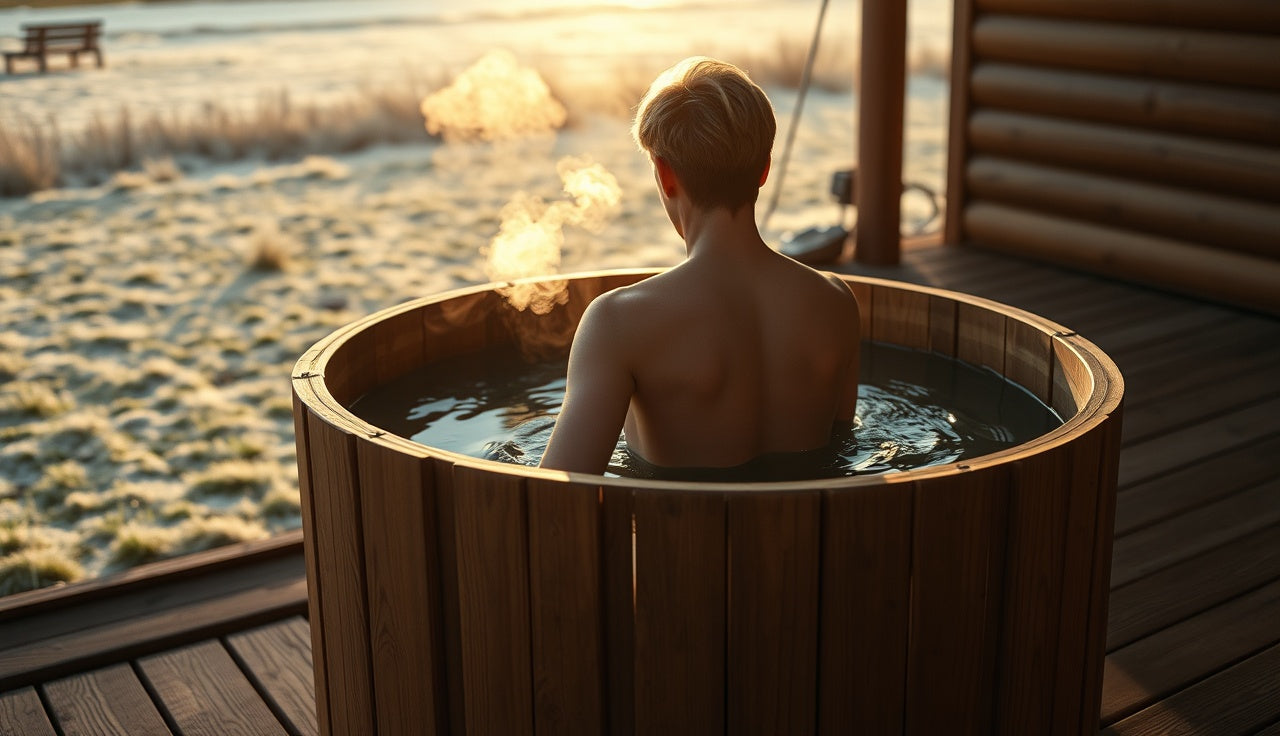
Last updated 2026-07-09
TL;DR
Cold plunges do burn extra calories, somewhere in the 100-300 range per session depending on water temperature and your body size, mostly through shivering and brown fat activation. But the evidence for meaningful long-term fat loss from cold exposure alone is thin. Cold water is a useful tool, not a weight-loss shortcut.
Does cold plunge burn fat?
Yes, but the word 'burn' is carrying a lot of weight in that sentence. Cold water forces your body to make heat, and making heat costs calories. Some of those calories come from fat. So technically, yes. The better question is how much, and whether it moves the needle on body composition over weeks and months.
Two pathways do the work. The first is shivering, which is just muscle contracting fast to generate heat. Shivering burns calories quickly, around 400 per hour in hard cold by some estimates, though most plunge sessions are too short to rack up big numbers. The second pathway is more interesting: brown adipose tissue, or brown fat, a type of fat that burns energy to produce heat instead of storing it. [1]
Regular cold exposure can raise brown fat activity and even increase how much of it you carry. A 2015 study in the Journal of Clinical Investigation found that men who slept in 66°F rooms for a month increased their brown fat volume by about 42% and improved insulin sensitivity. [2] That's a real effect. But sleeping in a cool room is a long way from sitting in a cold plunge for 10 minutes, and 'improved insulin sensitivity' is not the same as 'lost significant body fat.'
Cold plunges burn fat. The effect is real. How much it matters next to diet and exercise is a separate question, and the honest answer is: probably not much.
How many calories does a cold plunge burn?
A 10-15 minute cold plunge at 50-55°F burns roughly 100-300 calories, counting the rewarming period afterward. Treat that as an informed estimate, not a guaranteed number. Nobody has published a tightly controlled study giving a reliable per-session figure for a typical home protocol, so we reason from physiology and the closest research we have.
Heat loss in cold water runs about 25 times faster than in air at the same temperature. [3] Your body answers by revving up thermogenesis. The burn rate depends on water temperature, immersion depth, your body size (larger bodies lose heat faster in absolute terms but carry more insulating mass), your brown fat activation, and how hard you shiver.
Here's what the research points toward:
| Water Temp | Session Length | Estimated Calorie Burn | Notes |
|---|---|---|---|
| 50-59°F (10-15°C) | 5 min | 20-50 kcal | Mild cold, short session |
| 50-59°F (10-15°C) | 10-15 min | 50-150 kcal | Typical cold plunge protocol |
| 40-50°F (4-10°C) | 5-10 min | 100-250 kcal | Aggressive cold, hard shivering |
| 39°F (4°C) | 20+ min | 200-400 kcal | Research conditions, not casual |
A 2008 study in the Journal of Physiology found that cold water immersion raised metabolic rate during and after immersion, with the elevated post-immersion burn persisting for a stretch as the body rewarmed. [4] That rewarming phase counts. You keep burning extra calories for 20-40 minutes after you climb out.
Put 150-200 calories in context: that's about a 15-20 minute jog. Not nothing. Not transformative on its own.
What is brown fat and does cold actually activate it?
Brown adipose tissue is metabolically active fat. White fat stores energy. Brown fat burns it to make heat, and it gets its color from the dense packing of mitochondria inside the cells. Adults carry meaningful amounts around the neck, collarbone, and spine, though the total varies a lot person to person. Leaner people tend to have more active brown fat, which sets up a chicken-and-egg problem for anyone trying to sort out cause and effect. [1]
Cold is the most reliable way to switch it on. The body runs a norepinephrine pathway: cold triggers norepinephrine release, the norepinephrine binds to receptors on brown fat cells, and those cells crank up heat production by burning fatty acids. [5] The process is called non-shivering thermogenesis.
The 2015 Journal of Clinical Investigation study showed real gains in brown fat mass and activity after consistent mild cold exposure. [2] Brown fat is also more active in winter and in people who spend regular time in the cold. A 2009 study in the New England Journal of Medicine, one of three published together, found brown fat detectable in a large share of adults and inversely associated with obesity and fasting glucose. [6]
So cold exposure does activate brown fat. The open question is whether the amount switched on by a typical plunge session is enough to shift body fat over time without any change to diet or exercise. The honest scientific position: probably not on its own, but it may support a fat-loss effort built on a calorie deficit and training.
| 59-65°F (mild cold) | 40 |
| 50-59°F (moderate cold) | 125 |
| 45-50°F (aggressive cold) | 200 |
| 40-45°F (near-freezing) | 280 |
Source: Journal of Physiology, Stocks et al. 2008; physiological modeling from US Search and Rescue Task Force cold water data
Do cold plunges burn enough calories to cause weight loss?
Run the math honestly. Cold plunge for 10-15 minutes three times a week at an average of 150 calories a session, and you're burning about 450 extra calories per week. One pound of fat is roughly 3,500 calories. At that pace, you'd need about eight weeks of steady plunging to burn a single pound, and only if nothing else changes: no extra eating, no drop in other activity.
That's a real effect. It's also modest, and probably optimistic. Calorie compensation is a documented phenomenon. The body often answers higher expenditure by nudging up appetite or quietly cutting non-exercise movement. Some research hints this compensation is smaller with cold exposure than with exercise, but the evidence base is thin. [4]
Cold plunges do not melt fat off the area you dunk. Cold-induced fat loss is systemic, driven by metabolic rate and hormonal signals, not local. Spot-reducing fat with cold has no solid research support.
Where plunging fits more naturally is as a recovery tool that lets you train harder and more often. If a cold plunge cuts your soreness enough that you actually show up at the gym on days you'd otherwise skip, the cumulative effect on your total burn can dwarf the direct calories the cold water costs. That's a more honest story than 'cold water burns fat.'
Does the water temperature change how many calories you burn?
Yes, and by a lot. The colder the water, the bigger the thermal gap between your body and the water, and the harder your thermogenesis systems have to work. The relationship is nonlinear: as water gets very cold, shivering intensity climbs sharply, and so does norepinephrine release.
Most cold plunge protocols target 50-59°F (10-15°C). That's cold enough to trigger a real physiological response without the serious risks of much colder water. Research on cold-water swimmers shows experienced people can tolerate and metabolically respond to 32-40°F, but the calorie burn at those temperatures comes packaged with genuine hypothermia risk for anyone new to it.
A practical point: the extra burn from going 55°F to 45°F is probably real but not huge. Dropping another 10 degrees does not double your calorie burn. The body caps how fast it can shiver and how fast brown fat can fire. Diminishing returns arrive fast.
If fat-burning is the goal, a longer session at 50-55°F beats a shorter one at near-freezing temps, and it's safer. Duration and consistency matter more than chasing the lowest number on the thermometer.
Does cold plunge affect insulin sensitivity and metabolic health?
This is where the more interesting research lives. The 2015 Journal of Clinical Investigation study found that mild cold exposure raised brown fat and improved insulin sensitivity. [2] Better insulin sensitivity means your cells respond more sharply to insulin and pull in glucose more efficiently, which ties directly to fat storage and energy metabolism.
A 2021 study in Cell Metabolism found that cold exposure activates brown fat through succinate signaling, a result that helped explain how the sympathetic nervous system and brown fat talk to each other. [5] This is still basic-science work, not clinical proof that cold plunging fixes insulin sensitivity in people with metabolic disease.
Cold water immersion also drives a large norepinephrine spike, on the order of 200-300% in research from the University of Turku in Finland, and that matters because norepinephrine directly triggers fat breakdown (lipolysis). [7] The spike is real and reproducible. Whether it adds up to more fat burned over time is the part still being worked out.
The metabolic health angle looks more promising than the calorie-counting one. Regular cold exposure may help glucose regulation, lipid profiles, and general metabolic function. If those effects hold up at scale, they'd feed fat loss over time even when the per-session burn stays modest.
For the wider view on how cold water affects the body, cold plunge benefits covers the full picture beyond fat and calories.
How does cold plunge compare to other fat-burning methods?
Here's the honest comparison:
| Method | Calories per Hour | Evidence Quality for Fat Loss | Practical Barrier |
|---|---|---|---|
| Cold plunge (10-15 min) | 100-250 kcal equiv. | Moderate (mostly mechanistic) | High cost, cold discomfort |
| Jogging (moderate pace) | 400-600 kcal | Very strong | Moderate effort |
| Strength training | 200-400 kcal | Strong | Moderate effort |
| Sauna (20-30 min) | 25-75 kcal (mostly water weight) | Weak for fat loss | Low effort |
| Calorie restriction | Varies | Extremely strong | Adherence |
Saunas get compared to cold plunges for fat loss, and neither one is an efficient calorie burner. The sauna burns mostly water weight through sweat, which comes right back when you rehydrate. Cold plunge burns actual metabolic calories, but the per-session total stays small. Choosing between them for body composition, cold plunge has the better mechanistic story, but diet and training still run the show.
Combining sauna and cold plunge as contrast therapy might do something neither delivers alone, especially around cortisol and recovery quality. Chronic high cortisol tracks with fat gain, particularly around the belly. If contrast therapy helps regulate cortisol, there may be a secondary fat-loss benefit that calorie-burn studies miss. Nobody has good data on this specifically. The cortisol-cold research is real; the fat-loss link is speculation.
Does shivering after a cold plunge burn fat?
Yes, and shivering may be one of the more underrated parts of the story. A 2012 paper in Cell Metabolism from Pontus Bostrom and colleagues found that shivering triggers the release of a hormone called irisin from muscle, and irisin pushes white fat toward a more brown-fat-like state (a process called 'browning'). [8] That's a meaningful finding, because it says shivering does more than burn calories in the moment. It may change the long-term metabolic character of your fat.
Shivering burns roughly 100-400 calories per hour depending on intensity. The shivering after a 10-minute plunge usually lasts 5-20 minutes, depending on water temperature, your body composition, and how you warm up. That post-immersion shiver adds real calories to the session total.
One practical takeaway: letting yourself shiver naturally for a few minutes after you get out, instead of diving straight into a hot shower, probably squeezes more metabolic effect out of the plunge. It's not a comfortable recommendation. The physiology backs it up. Let the cold finish its work before heat cuts it short.
What cold plunge protocol makes sense if fat loss is your goal?
If you want to build a plunge practice around fat loss, here's where the research points, without overselling the outcome.
Temperature: 50-59°F (10-15°C) is the sweet spot for balancing effect against safety and sustainability. Colder water does produce a bigger metabolic response, but the risk-reward math turns against you below about 45°F for most people.
Duration: 10-15 minutes per session is long enough to trigger real thermogenesis and brown fat activation without dangerous hypothermia risk for healthy adults. The brown fat research used consistent daily exposure, not single marathon soaks. [2]
Frequency: Daily or near-daily exposure produced the measurable brown fat changes in the studies. Three to four times a week is a realistic floor for meaningful adaptation.
Timing: There's early, non-conclusive evidence that morning cold exposure has different cortisol and adrenaline dynamics than evening. Morning plunging seems to sit more naturally with circadian physiology, but it hasn't been studied hard enough to call it a firm rule.
What to avoid: Don't plunge right after strength training if muscle growth is a secondary goal. A 2015 Journal of Physiology study found post-exercise cold water immersion blunted long-term muscle adaptation and strength gains compared to active recovery. [9] If you do both, separate them by several hours or plunge on off days.
SweatDecks carries a range of cold plunge options if you're building a home setup and want to compare tub styles and chiller systems. Check what temperature range a chiller actually holds before you buy. Some budget units struggle to hold below 55°F in a warm climate.
Are there any risks to cold plunging for fat loss?
Cold water immersion is not risk-free. The main concerns:
Cardiac events: Cold water spikes heart rate and blood pressure right away, then a parasympathetic rebound can slow the heart sharply. Anyone with heart disease or arrhythmia should talk to a physician before starting. The American Heart Association has flagged cold water immersion as a trigger for cardiac events in susceptible people. [10]
Hypothermia: True hypothermia is unlikely in a supervised 10-15 minute plunge at 50°F for a healthy adult, but the risk climbs in colder water, over longer durations, for elderly people, and for those with low body fat (less insulation). Core temperature can fall faster than you expect, especially once the cold starts fogging your judgment.
Cold shock response: The first 30-90 seconds trigger involuntary gasping, hyperventilation, and peripheral vasoconstriction. This is the most dangerous phase. Enter slowly and control your breathing. It's also why plunging alone, with nobody nearby, is a bad idea, especially for beginners.
Ice baths run a similar but more intense protocol and carry similar risks. Our ice bath guide breaks down the differences.
For most healthy adults on a sane protocol, cold plunges are safe. But 'most healthy adults' is not 'everyone.' If you have cardiovascular disease, Raynaud's disease, or cold urticaria (a skin condition triggered by cold), get medical clearance first.
What does cold plunge actually do well, if fat loss is limited?
Cold water has a genuinely strong evidence base for a few things that aren't fat loss. Knowing what it's actually good at helps you use it realistically.
Muscle soreness: Cold water immersion beats passive recovery for cutting delayed-onset muscle soreness (DOMS) in the 24-72 hours after hard exercise. A 2012 Cochrane review of 17 trials found cold water immersion significantly reduced DOMS compared to passive rest. [11] That recovery benefit is real and repeatable.
Norepinephrine: The 200-300% norepinephrine spike carries real effects on mood, focus, and energy. It's likely the driver behind the well-documented sense of alertness and wellbeing many people report after a plunge. [7]
Sleep and stress: Some evidence suggests morning cold exposure improves sleep quality and lowers subjective stress, maybe through the same norepinephrine and cortisol pathways. The data here is thinner than for soreness.
Habit and discipline: People who plunge regularly often report that the grit it takes to get in cold water spills over into other health habits. That's self-reported and hard to measure, but it's not nothing. If a plunge practice nudges you toward better sleep, better training, and better food, the indirect effect on body composition can easily beat the direct calorie burn.
Cold plunging is a real tool with real effects. It just isn't primarily a fat-loss tool. Build your fat-loss strategy on nutrition and training, then add cold plunging because it helps you recover and feel better. That's a reasonable plan.
Frequently asked questions
Does cold plunge burn fat?
Yes, in a real but modest way. Cold water forces your body to burn calories to make heat, some of which come from fat, and it activates brown adipose tissue, a specialized fat that burns energy rather than storing it. The effect is real, but it's not big enough to drive meaningful fat loss on its own without dietary changes and exercise. Think of it as a useful addition, not a primary strategy.
Do cold plunges burn calories?
Yes. Your body burns extra calories during cold water immersion and for 20-40 minutes afterward as it rewarms. A typical 10-15 minute session at 50-55°F burns somewhere in the 100-300 calorie range, depending on your body size and how cold the water is. Shivering after the session adds to that total. These are real calories burned from metabolism, not water weight.
How many calories does a cold plunge burn?
A reasonable estimate for a 10-15 minute cold plunge at 50-55°F is 100-300 calories, including the post-immersion rewarming period. Colder water and harder shivering push toward the top end. For comparison, a 15-minute moderate jog burns roughly 100-150 calories. No large controlled study has published a definitive per-session number, so treat any specific figure as an informed estimate.
Does cold water immersion activate brown fat?
Yes, consistently. Cold exposure triggers norepinephrine release, which activates brown adipose tissue. A 2015 Journal of Clinical Investigation study found that regular mild cold exposure (sleeping in a 66°F room) increased brown fat volume by 42% over one month. Brown fat burns calories to produce heat rather than storing energy, so activating it does add to calorie expenditure, especially with regular cold exposure over time.
Does shivering after a cold plunge burn fat?
Yes. Shivering burns roughly 100-400 calories per hour and also triggers the release of irisin, a hormone from muscle tissue that pushes white fat toward more brown-fat-like metabolic properties. Post-immersion shivering typically lasts 5-20 minutes and adds meaningfully to a session's total calorie burn. Letting yourself shiver naturally before warming up may increase the overall metabolic effect.
Is cold plunge better than sauna for fat loss?
Cold plunge has the stronger mechanistic case for actual fat burning. Saunas burn modest calories and mostly through cardiovascular work, with sweat loss being water weight that returns when you rehydrate. Cold plunges burn real metabolic calories through thermogenesis and brown fat activation. That said, neither is an efficient fat-loss tool compared to diet and exercise. Both work better as recovery and wellness practices than as weight-loss methods.
How cold does the water need to be to burn fat?
You start seeing meaningful thermogenic responses around 59°F (15°C) and below. Most brown fat research uses temperatures in the 50-60°F range. Going colder does increase the response, but the benefit curve flattens well before near-freezing water, and safety risks climb steeply below 45°F. For fat-burning purposes, 50-55°F is a reasonable and safer target than chasing the coldest possible water.
Can you lose weight just by cold plunging?
Technically possible, practically unlikely without dietary changes. At roughly 150-250 calories burned per session and three sessions a week, you'd burn one pound of fat every 6-10 weeks from plunging alone, assuming no compensatory eating. That's slow, and increased appetite often offsets part of the gain. Cold plunging works better as a complement to a calorie deficit and exercise program than as a standalone weight-loss method.
Does cold plunge after a workout help burn more fat?
It burns some calories from the thermal response but may cut into the long-term muscle-building stimulus from the workout. A 2015 Journal of Physiology study found cold water immersion right after strength training blunted long-term strength and muscle adaptation compared to active recovery. For fat loss specifically, plunging on rest days or well separated from lifting (several hours) beats immediate post-workout immersion.
How long should I cold plunge to maximize calorie burn?
Research points to 10-15 minutes at 50-55°F as a good balance between calorie burn and safety for healthy adults. Going longer burns more but raises hypothermia risk and offers diminishing returns on brown fat activation per minute. More frequent sessions (four to seven times a week) likely do more for long-term metabolic adaptation than occasional marathon soaks.
Does cold plunge improve insulin sensitivity?
There's real evidence that consistent cold exposure improves insulin sensitivity. The 2015 Journal of Clinical Investigation study found measurable improvements after a month of mild cold exposure that also increased brown fat. Better insulin sensitivity means your body handles blood sugar more efficiently, which is relevant to fat storage and metabolic health, though it doesn't guarantee fat loss without a corresponding calorie deficit.
Is there a best time of day to cold plunge for fat loss?
No clear consensus exists. Morning plunging lines up with natural cortisol rhythms and produces a strong norepinephrine spike that supports alertness through the day. Evening plunging may interfere with sleep for some people from that same norepinephrine elevation. For pure fat-burning, the time of day matters far less than temperature and duration. Pick the time you'll actually stay consistent with.
Can cold plunge help with belly fat specifically?
Cold-induced fat loss is systemic, not local. Cold exposure activates brown fat and raises metabolic rate body-wide. It does not preferentially target abdominal or visceral fat. There's no mechanism by which dunking your midsection in cold water would cause localized fat loss there. Any fat loss from plunging happens through the same general metabolic processes as fat loss from exercise, distributed by your genetics and hormonal profile.
Are cold plunges safe for people trying to lose weight?
Generally yes for healthy adults, with caveats. Cold water raises blood pressure and heart rate sharply, so anyone with cardiovascular disease, arrhythmia, or hypertension should get medical clearance first. Very lean people carry less insulating fat and cool down faster, raising hypothermia risk over longer durations. Start with warmer temperatures (55-60°F) and shorter sessions (5 minutes), and never plunge alone, especially as a beginner.
Sources
- NIH National Institute of Diabetes and Digestive and Kidney Diseases, Brown Adipose Tissue: Brown adipose tissue burns energy to produce heat and is found in adults around the neck, collarbone, and spine; leaner individuals tend to have more active brown fat
- Journal of Clinical Investigation, Hanssen et al. 2015, 'Short-term cold acclimation improves insulin sensitivity in patients with type 2 diabetes mellitus': Men sleeping in 66°F rooms for one month increased brown fat volume by approximately 42% and showed improved insulin sensitivity
- US Search and Rescue Task Force, Cold Water Survival information: Heat loss in cold water is approximately 25 times faster than in air at the same temperature
- Journal of Physiology, Stocks et al. 2008, 'Human thermoregulatory responses to sequential hot and cold water immersion': Cold water immersion significantly elevated metabolic rate during and after immersion, with elevated post-immersion metabolism persisting as the body rewarmed
- Cell Metabolism, Liao et al. 2021, 'Succinate receptor-1 activates brown fat through a sympathetic mechanism': Cold exposure activates brown fat through succinate signaling and the sympathetic nervous system, specifically through norepinephrine binding to brown fat cell receptors
- New England Journal of Medicine, Cypess et al. 2009, 'Identification and Importance of Brown Adipose Tissue in Adult Humans': Brown fat was detectable in a large proportion of adults and was inversely associated with obesity and fasting blood glucose levels
- University of Turku, Finland, Virtanen et al. cold exposure and norepinephrine research: Cold water immersion causes a 200-300% increase in norepinephrine, a direct activator of fat breakdown (lipolysis) and brown fat thermogenesis
- Cell Metabolism, Bostrom et al. 2012, 'A PGC1-alpha-dependent myokine that drives brown-fat-like development of white fat and thermogenesis': Shivering triggers release of irisin from muscle tissue, which stimulates white fat to convert toward a metabolically active brown-fat-like state
- Journal of Physiology, Roberts et al. 2015, 'Post-exercise cold water immersion attenuates acute anabolic signalling and long-term adaptations in muscle to strength training': Cold water immersion immediately after strength training blunted long-term muscle adaptation and strength gains compared to active recovery
- American Heart Association, Circulation, Tipton et al. 2017, 'Immersion in cold water: effects of temperature and vulnerability': Cold water immersion is a trigger for cardiac events in susceptible individuals; the cold shock response causes immediate increases in heart rate and blood pressure followed by parasympathetic rebound
- Cochrane Database of Systematic Reviews, Bleakley et al. 2012, 'Cold-water immersion (cryotherapy) for preventing and treating muscle soreness after exercise': A review of 17 trials found cold water immersion significantly reduced delayed-onset muscle soreness compared to passive rest

Share:
Wave Antarctic drop stitch ice bath: full review and buyer's guide
How to do a cold plunge correctly: a step-by-step guide