
Last updated 2026-07-09
TL;DR
A traditional sauna heats the air to 150 to 195°F using a wood-burning stove or electric heater topped with rocks. You can pour water on the rocks to add steam. Sessions last 10 to 20 minutes. Studies link regular use to lower cardiovascular risk. Infrared saunas run cooler (120 to 140°F) and penetrate tissue directly, but traditional saunas produce more intense heat and are what most of the long-term research is based on.
What is a traditional sauna and how does it actually work?
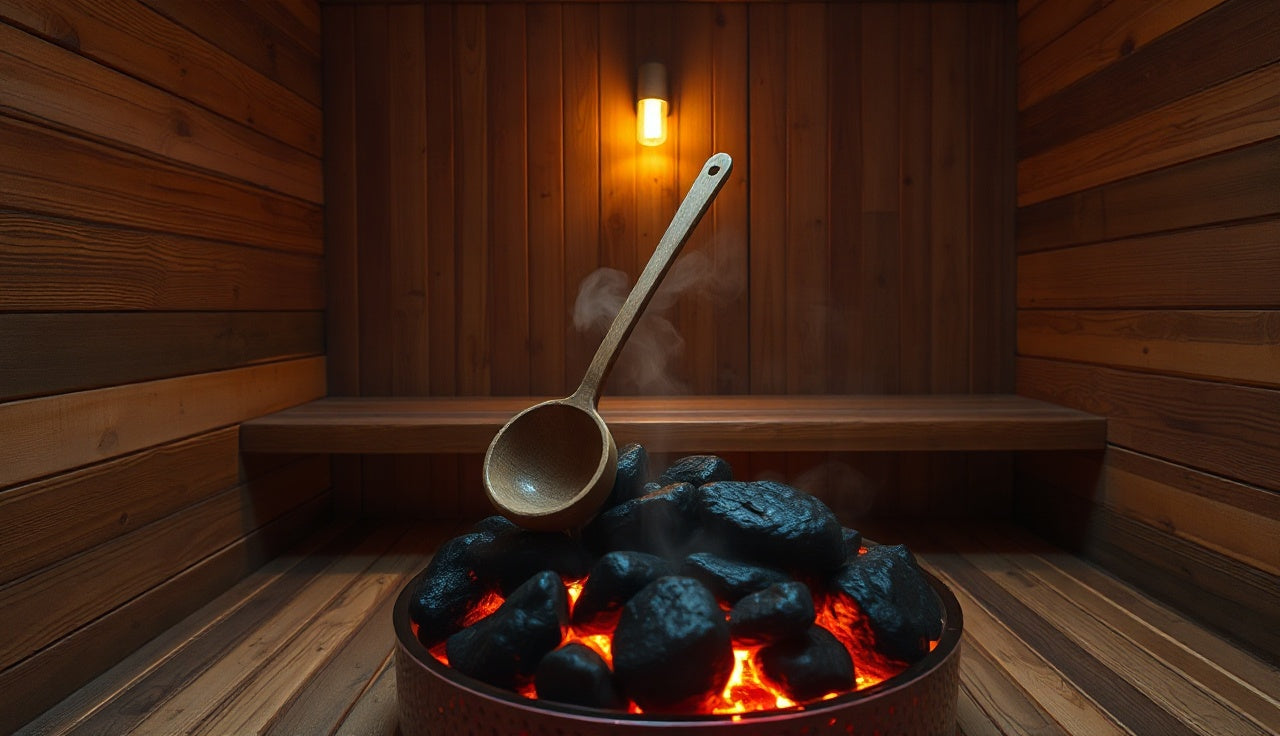
A traditional sauna is a wood-lined room heated by a kiuas, which is either a wood-burning or electric stove loaded with igneous rocks (typically peridotite or diabase). The rocks store heat. The heater warms the air, and the air warms you. Pour a ladle of water over those rocks and you get a burst of steam called löyly, which spikes the humidity briefly and makes the heat feel more intense without raising the thermometer much.
The operating range is real: Finnish bath culture and most sauna manufacturers put the target air temperature at 150 to 195°F (65 to 90°C), with humidity typically between 10 to 20% when dry and spiking to 40 to 60% after adding water [1]. Your body responds the same way it does to vigorous exercise: heart rate climbs, skin blood flow increases sharply, and you sweat. A lot.
This is not the same physics as an infrared sauna. Traditional saunas heat the air first, then the air heats your skin by convection and conduction. Infrared saunas skip the air and emit radiant wavelengths that warm tissue directly, which is why they can operate at lower air temperatures (usually 120 to 140°F) and still produce sweating. Neither approach is cheating; they're just different mechanisms with different sensory experiences.
The word "sauna" itself is Finnish, and Finland has roughly 3 million saunas for a population of 5.5 million people [2]. That cultural baseline matters because most of the good long-term health data comes from Finnish cohort studies tracking real people who used traditional saunas weekly for decades.
What temperature does a traditional sauna reach, and is hotter better?
Most traditional saunas are set between 150°F and 185°F (65 to 85°C) for general use. Competitive Finnish sauna enthusiasts sometimes push past 200°F (93°C), but at that point you're in a very short tolerance window before it becomes physically dangerous. The sauna is not a place to prove anything.
Is hotter better? The research gives a partial yes. The Finnish KIHD (Kuopio Ischemic Heart Disease) cohort, tracking 2,315 middle-aged men for an average of 20 years, found that men who used the sauna 4 to 7 times per week had a 40% lower risk of all-cause mortality compared to once-weekly users [3]. Session duration and frequency mattered more than exact temperature, but all study participants used traditional saunas in the 176 to 212°F range, not infrared.
Practically speaking, 160 to 175°F is a sweet spot for most people: hot enough to drive a significant cardiovascular response and meaningful sweating, cool enough to sit comfortably for 15 to 20 minutes. Push past 185°F and session duration usually drops, which may cancel out the heat gain.
One more variable: where you sit. The temperature at head height in the upper bench of a typical sauna is 15 to 30°F hotter than at foot level. That's a lot of range inside one small room.
Traditional sauna vs infrared sauna: which one is actually better?
This is the most-searched comparison in the category, and the honest answer is: it depends on what you want out of it.
| Feature | Traditional sauna | Infrared sauna |
|---|---|---|
| Air temperature | 150 to 195°F | 120 to 140°F |
| Humidity | 10 to 60% (adjustable) | 10 to 20% |
| Heat mechanism | Convection (air first) | Radiant (tissue direct) |
| Preheat time | 30 to 60 min | 10 to 20 min |
| Long-term human research | Extensive (Finnish cohorts) | Limited, shorter studies |
| Session duration | 10 to 20 min per round | 30 to 45 min typical |
| Installation complexity | Moderate to high | Lower (plug-in options) |
| Typical home cost | $3,000, $8,000+ | $1,500, $5,000 |
The research advantage clearly goes to traditional saunas. Almost every major cardiovascular, mortality, and cognitive outcome study used traditional Finnish-style saunas [3][4]. Infrared saunas have shorter follow-up studies and smaller sample sizes. That doesn't mean infrared is ineffective; it means we have less certainty about magnitude and duration of benefits.
The experience advantage is more personal. Traditional saunas feel more intense. The löyly (steam hit) is something infrared simply can't replicate. Many people who have used both describe infrared as more tolerable for longer sessions but less satisfying in the ritual sense.
If you're buying for health outcomes and you can fit and afford a traditional setup, the research base favors it. If space, cost, or heat tolerance is a limiting factor, a quality infrared unit is not a consolation prize; it's a legitimately different product that still drives sweating and likely many of the same short-term physiological effects. For a deeper comparison, see our sauna guide.
| Once per week (reference) | 0% |
| 2–3 times per week | 24% |
| 4–7 times per week | 40% |
Source: JAMA Internal Medicine, Laukkanen et al., 2015
What do studies actually say about traditional sauna benefits?
Start with cardiovascular outcomes. The KIHD cohort found that frequent sauna use (4 to 7 sessions per week) was associated with a 63% lower risk of sudden cardiac death and a 37% lower risk of cardiovascular disease mortality compared to once-weekly use [3]. Those are large numbers for an observational study, though correlation doesn't prove causation; healthier people may sauna more.
On blood pressure: a 2018 systematic review in the Journal of Human Hypertension found that a single sauna session acutely lowers both systolic and diastolic blood pressure and that regular sauna bathing was associated with reduced hypertension risk [11]. The mechanism appears to be vasodilation: heat causes blood vessels to widen, which drops peripheral resistance.
Cognitive outcomes are newer territory. The same Finnish cohort found that men who used the sauna 4 to 7 times per week had a 66% lower risk of dementia and a 65% lower risk of Alzheimer's disease compared to once-weekly users, after adjusting for lifestyle variables [5]. The researchers note that the mechanisms aren't fully established; heat stress, improved cardiovascular health, and social aspects of sauna culture all likely contribute.
For athletes, the relevant mechanism is heat acclimation. Research from the University of Oregon found that post-exercise sauna use increased plasma volume and red blood cell count over three weeks, which in theory improves endurance performance [6]. The study was small (n=10), so treat it as promising rather than definitive.
The conservative summary: regular traditional sauna use is associated with meaningful cardiovascular and possibly cognitive benefits, especially at higher frequencies (4+ sessions per week). Nobody has good data on minimum effective dose or whether 2 sessions per week for 5 years produces half the benefit of 4 sessions. The field is active but not yet precise. For a full rundown of the evidence, see our sauna benefits guide.
How long should you stay in a traditional sauna?
The Finnish bathing tradition uses rounds, not one long continuous session. A typical round is 10 to 20 minutes inside, followed by a cool-down of 5 to 15 minutes (cold shower, cool room, or cold plunge), then back in for another round. Most people do 2 to 4 rounds per session.
The KIHD study participants averaged around 14 minutes per session [3], and the greatest risk reduction was seen at the 19-minute mark in some analyses. More is not always better beyond a point: prolonged extreme heat exposure raises the risk of dehydration and hyperthermia, particularly for people with cardiovascular conditions.
A practical protocol for a beginner: start with one 10-minute round at a moderate temperature (around 150 to 160°F), exit, cool down for 10 minutes, drink water, and then decide whether to go back in. Your body's response tells you more than any timer. If you feel dizzy, faint, or nauseated, you've gone too long. That's not a badge; it's a warning.
Pairing your sauna session with a cold plunge or ice bath after each round is called contrast therapy. It's popular among athletes and very likely helps with the subjective recovery feeling, though the controlled evidence is mixed on whether it adds measurably to what the heat alone accomplishes.
What are the different types of traditional sauna heaters and wood choices?
The heater is the heart of a traditional sauna. Two main options: wood-burning and electric.
Wood-burning stoves are the original. They take 45 to 90 minutes to reach temperature, require a chimney and proper ventilation, and cannot be used in many urban settings due to fire codes. The payoff is an incomparable ritual: the smell of burning wood, the crackle, and the particular quality of heat that many purists argue feels softer than electric. If you're building an outdoor sauna, wood-burning is worth the extra planning.
Electric heaters are what most home installations use. They heat the rocks electrically, reach temperature in 30 to 60 minutes, and are controlled by a simple thermostat. Most home electric heaters range from 3 kW to 9 kW depending on the size of the room. A rough rule of thumb: 1 kW per 45 cubic feet of sauna space. An 8-by-10-foot sauna with an 8-foot ceiling is 640 cubic feet, so you'd want at least a 6 to 7 kW heater.
Wood selection for the sauna structure matters too. Nordic white spruce and western red cedar are the most common because they resist warping, don't splinter, and have low thermal conductivity (meaning the bench stays warm but not scalding). Aspen and alder are popular in Scandinavian traditions for their almost odorless profile when wet. Avoid pine with high resin content; it gets sticky and can off-gas unpleasantly at high temperatures.
Sauna rocks deserve a mention. Use specifically rated sauna rocks (usually sold by heater manufacturers). Random river rocks can crack explosively when water hits them at high temperature.
What does it cost to build or buy a traditional sauna at home?
Costs split into three categories: pre-built outdoor cabins, indoor modular kits, and custom builds.
Pre-built outdoor barrel saunas or cabin saunas from established brands typically run $4,000, $12,000 for the structure alone, before electrical work or delivery. A basic 2-person barrel sauna with a decent electric heater starts around $3,500, $4,500. Larger 6-person cabin models with premium wood and a quality heater push past $10,000 easily.
Indoor modular kits (pre-cut panels you assemble in a spare room or basement) run $2,000, $6,000 for a 4-by-6-foot to 5-by-7-foot room. Add $500, $1,500 for a good electric heater (Harvia, HUUM, or Finnleo are the established Finnish brands), plus electrical installation, which typically requires a 240V dedicated circuit and costs $200, $800 depending on your panel's capacity and the electrician's rates.
Custom builds are the most variable. A professional sauna contractor building a cedar room from scratch in your basement can run anywhere from $8,000 to $25,000+ depending on size, materials, and regional labor costs. That's a wide range because local code requirements, framing complexity, and finishing details vary enormously.
For a home sauna buying guide with specific product recommendations, that article goes deep on what to prioritize at each price point. One number to keep in mind: the heater and bench wood quality matter more than the size of the room. A well-heated 4-by-4-foot sauna with a proper Finnish heater will outperform a large, underheated room with a cheap heating element every time.
Is a traditional sauna safe, and who should avoid it?
For most healthy adults, traditional sauna use is safe when done sensibly. The Finnish population has used these rooms for centuries with no evidence of widespread harm, and the epidemiological data from cohort studies doesn't flag significant adverse events at normal frequencies and durations.
That said, certain groups need real caution or should avoid it entirely.
People with unstable cardiovascular disease, recent myocardial infarction, or uncontrolled hypertension should talk to a physician first. The sauna induces acute cardiovascular stress similar to moderate exercise. If your heart isn't up for moderate exercise, it may not be up for a sauna.
Pregnant women are generally advised to avoid high-temperature sauna sessions, particularly in the first trimester. A Finnish study published in Teratology found elevated core temperatures early in pregnancy are associated with neural tube defects [7]. The Finnish Sauna Society itself recommends caution and consultation with a provider during pregnancy.
Alcohol and sauna is a genuinely dangerous combination. Finnish fatal sauna accidents are disproportionately associated with alcohol use [8]. Alcohol impairs thermoregulation and judgment about when to get out. Skip the beer until after.
Dehydration risk is real. Plan to drink 16 to 24 oz of water before entering and replace fluid losses (typically 0.5 to 1 liter per session) afterward. Electrolytes matter for longer multi-round sessions.
The Consumer Product Safety Commission doesn't publish sauna-specific injury data as a discrete category, but heat-related illness data generally applies: the majority of heat stroke cases in saunas involve dehydration, alcohol, or users who ignored early warning signs like dizziness and nausea [9].
How do you set up a traditional sauna at home, step by step?
The order of operations matters because mistakes here are expensive.
First, pick your location. An indoor sauna needs a room that can handle heat and humidity: waterproofed walls and floor, ideally a floor drain, and access to a 240V outlet. An outdoor sauna needs a level pad (concrete, gravel, or pressure-treated wood), clearance from property lines (check your local zoning ordinance), and either a buried electrical run or a generator setup.
Second, size it honestly. Most home saunas are 4-by-6 to 6-by-8 feet. Bigger sounds appealing until you realize it takes longer to heat and costs more in electricity. For 1 to 3 regular users, a 4-by-6 is usually plenty.
Third, choose and size your heater. Use the 1 kW per 45 cubic feet rule. Don't undersize it; a heater running at max capacity continuously wears out faster and never quite reaches temperature.
Fourth, think about ventilation. A traditional sauna needs an intake vent (low, near the heater) and an exhaust vent (opposite wall, higher up). Without proper airflow, CO2 builds up and the experience becomes uncomfortable. This is not optional.
Fifth, hire a licensed electrician for the 240V hookup. This is not a DIY moment. A sauna heater pulling 6 to 9 kW on a poorly wired circuit is a fire hazard.
Sixth, season your sauna before first use. Run it empty at medium temperature for an hour or two to off-gas any residual wood treatments and let the materials settle.
SweatDecks carries a range of traditional sauna heaters and sauna kits if you want to compare options without trawling through a dozen manufacturer sites.
How does a traditional sauna compare to a steam room?
People mix these up constantly. They're different rooms with different physics.
A traditional sauna runs 150 to 195°F with low to moderate humidity (10 to 60%). A steam room runs at a much lower air temperature (100 to 115°F) but with 95 to 100% humidity, which is why both feel intensely hot despite the thermometer gap. High humidity means your sweat can't evaporate, so your body can't cool itself normally, which drives up perceived heat stress even at lower temperatures.
The experience differs meaningfully. Traditional saunas feel drier and hotter; breathing is easier. Steam rooms feel dense and suffocating to some people; breathing can feel difficult, especially for those with asthma. The steam room's high humidity is generally considered gentler for respiratory passages and skin hydration.
From a research standpoint, traditional saunas have the bigger evidence base. Steam rooms are associated with similar short-term cardiovascular responses (heart rate elevation, vasodilation, sweating) but have fewer long-term cohort studies.
For home installation, traditional saunas are more practical: a steam room requires a steam generator, fully waterproofed ceiling and walls with no wood exposed, and a sealed door. Traditional saunas are forgiving by comparison.
How often should you use a traditional sauna for health benefits?
The KIHD data offers the clearest dose-response relationship available. Men using the sauna 4 to 7 times per week showed significantly better cardiovascular outcomes than those using it 2 to 3 times per week, who in turn showed better outcomes than once-weekly users [3]. The study author Jari Laukkanen noted in a 2018 Mayo Clinic Proceedings paper that the association was consistent across subgroups after adjusting for age, BMI, smoking, alcohol use, and physical activity [4].
The practical floor for noticeable benefit in most fitness and recovery contexts is probably 3 to 4 sessions per week. Once a week is better than nothing, but the research suggests the cardiovascular and mortality associations really start to separate at 4+ sessions.
For athletic recovery specifically, the timing relative to training matters. Some coaches and athletes use sauna immediately post-training; others separate it by 6 to 12 hours. The honest state of the evidence is that nobody has run a large enough trial to define optimal timing precisely. The University of Oregon heat acclimation study [6] used post-exercise sauna (30 minutes immediately after training), and saw improvements in plasma volume and run time after three weeks, but that was n=10. Take it as a signal, not a prescription.
If your goal is simply the ritual and the heat experience rather than maximum health optimization, any frequency that keeps you coming back consistently is the right frequency.
Frequently asked questions
What is the difference between a traditional sauna and an infrared sauna?
A traditional sauna heats the air to 150 to 195°F using a rock-loaded stove, then the hot air warms your body. An infrared sauna emits radiant wavelengths that heat tissue directly at lower air temperatures (120 to 140°F). Traditional saunas produce more intense heat and a steam option (löyly); infrared saunas preheat faster (10 to 20 min vs 30 to 60 min) and are easier to install. Most long-term health research used traditional saunas.
How long should you sit in a traditional sauna?
Most people do 10 to 20 minutes per round, followed by a 5 to 15 minute cool-down, for 2 to 4 rounds per session. The Finnish cohort study that found the strongest cardiovascular benefits averaged around 14 minutes per session. Beginners should start with one 10-minute round, hydrate, and judge from there. Dizziness or nausea means exit immediately.
Is a traditional sauna better than an infrared sauna for weight loss?
Neither is a meaningful weight-loss tool on its own. Both produce significant sweating, which is water weight that returns when you rehydrate. The calorie burn from a sauna session (estimated 100 to 300 kcal from cardiovascular elevation) is modest compared to exercise. If you're choosing between them for weight management, the difference between traditional and infrared is negligible. Diet and exercise still drive the bus.
Can you pour water on the rocks in an infrared sauna?
No. Infrared saunas use heated panels or emitters, not rocks. Pouring water on them would damage the heating elements and potentially create an electrical hazard. The löyly experience (steam burst from water on hot rocks) is specific to traditional Finnish saunas with a rock-loaded kiuas heater.
What wood is best for a traditional sauna?
Western red cedar and Nordic white spruce are the most common choices because they resist warping, dry quickly, and have low thermal conductivity so benches don't burn skin. Aspen and alder are popular in Scandinavian traditions for being nearly odorless when wet. Avoid resinous pine species; they get sticky at high temperatures and can produce unpleasant off-gassing.
How much does a traditional sauna cost to run per month?
A typical 6 kW electric heater running for 1 hour heats the sauna and consumes roughly 6 kWh of electricity. At a U.S. average residential rate of about $0.17 per kWh (EIA, 2024), that's about $1.00 per session. Four sessions per week runs roughly $16, $20 per month in electricity. Wood-burning saunas shift the cost to firewood instead, typically $30, $80 per cord depending on region.
Do traditional saunas detoxify your body?
The detox marketing claim is mostly overblown. Sweating does excrete small amounts of certain heavy metals and some environmental compounds, but your liver and kidneys handle the vast majority of metabolic waste. No peer-reviewed evidence supports sauna use as a meaningful detoxification protocol for the general population. The cardiovascular and stress-reduction benefits are where the real evidence sits.
How long does it take to heat up a traditional sauna?
Electric heaters typically take 30 to 60 minutes to bring a well-insulated room to 160 to 175°F. Wood-burning stoves take 45 to 90 minutes. The exact time depends on heater wattage, room volume, insulation quality, and starting temperature. Undersized heaters and poor insulation are the two most common reasons a sauna takes forever to heat up or never quite reaches temperature.
Can you use a traditional sauna every day?
Yes, for most healthy adults. The Finnish population data includes people who sauna daily or near-daily with no evidence of harm and positive health associations. The main risks of daily use are dehydration (manageable with adequate fluid intake) and skin dryness in some people. If you have a cardiovascular condition, check with your doctor before making it a daily practice.
What is löyly in a traditional sauna?
Löyly (pronounced roughly "loo-lu") is the Finnish term for the burst of steam created when water is poured onto the hot rocks of a sauna stove (kiuas). It spikes the humidity briefly, making the heat feel more intense without raising the air temperature much. The quality of the löyly (gentle and enveloping vs. sharp and harsh) depends on rock mass, rock temperature, and water amount.
Is a traditional sauna safe during pregnancy?
Most guidelines advise caution, especially in the first trimester. Research published in Teratology linked elevated maternal core temperature early in pregnancy to increased risk of neural tube defects. The Finnish Sauna Society recommends consulting a physician. Many pregnant women in Finland do use saunas at lower temperatures for shorter durations, but this is a conversation to have with your provider, not a personal call to make based on an article.
How does a traditional sauna differ from a steam room?
A traditional sauna runs 150 to 195°F with 10 to 60% humidity. A steam room runs 100 to 115°F with nearly 100% humidity. Both feel intensely hot because high humidity prevents sweat evaporation and normal cooling. Traditional saunas are drier and easier to breathe in; steam rooms provide more skin hydration. Traditional saunas have the larger long-term research base for cardiovascular outcomes.
Do I need a permit to install a traditional sauna at home?
Usually yes, for the electrical work at minimum. A 240V dedicated circuit requires a permit in most U.S. jurisdictions. If you're building a separate structure outdoors, you'll likely need a building permit and must comply with setback rules in your local zoning code. Requirements vary widely by city and county, so check with your local building department before starting.
What is the best traditional sauna brand or heater?
Finnish brands dominate the quality tier: Harvia, HUUM, and Finnleo (Tylo-Helo group) are the most consistently recommended for home use. Harvia is particularly popular for its wide wattage range and reliability. For North American buyers, these brands are widely available through sauna specialty retailers. Avoid no-name heaters with thin rock beds; they struggle to hold temperature and the löyly is weak.
Sources
- Finnish Sauna Society – Sauna traditions and temperature guidelines: Traditional sauna operating temperatures are 150–195°F (65–90°C) with humidity between 10–20% dry and up to 40–60% after adding water to rocks.
- Visit Finland / Business Finland – Sauna culture facts: Finland has approximately 3 million saunas for a population of 5.5 million people.
- JAMA Internal Medicine – Sauna bathing and fatal cardiovascular and all-cause mortality (Laukkanen et al., 2015): Men using sauna 4–7 times per week had 40% lower all-cause mortality and 63% lower risk of sudden cardiac death vs once-weekly users in the KIHD cohort of 2,315 men over 20 years.
- Mayo Clinic Proceedings – Cardiovascular and other health benefits of sauna bathing (Laukkanen et al., 2018): Regular sauna bathing was associated with reduced hypertension risk; acute sessions lower systolic and diastolic blood pressure via vasodilation.
- Age and Ageing – Sauna bathing and risk of dementia and Alzheimer's disease (Laukkanen et al., 2017): Men using sauna 4–7 times per week had 66% lower risk of dementia and 65% lower risk of Alzheimer's disease compared to once-weekly users after lifestyle adjustment.
- Journal of Science and Medicine in Sport – Post-exercise sauna bathing improves endurance (Scoon et al., University of Oregon, 2007): Post-exercise sauna use for 3 weeks (30 min sessions) increased plasma volume and red blood cell count and improved run time to exhaustion in a small study (n=10).
- Teratology – Elevated maternal body temperature and neural tube defects: Elevated core body temperature in early pregnancy is associated with increased risk of neural tube defects, supporting caution with high-temperature sauna use during first trimester.
- Duodecim Medical Journal / Finnish Medical Society – Sauna fatalities and alcohol association: Fatal sauna accidents in Finland are disproportionately associated with alcohol use, which impairs thermoregulation and the ability to recognize overheating.
- U.S. Centers for Disease Control and Prevention – Heat stress and heat-related illness: Heat stroke and heat-related illness involve dehydration and failure to respond to early warning signs including dizziness and nausea, consistent with documented sauna overexposure incidents.
- U.S. Energy Information Administration – Average U.S. residential electricity rate: Average U.S. residential electricity rate is approximately $0.17 per kWh as of 2024, used to calculate monthly sauna operating costs.
- Journal of Human Hypertension – Sauna bathing and blood pressure (systematic review, 2018): A systematic review found that a single sauna session acutely lowers both systolic and diastolic blood pressure.

Share:
Sauna house: what it is, what it costs, and how to build one
Home sauna: everything you need to know before buying