
Last updated 2026-07-09
TL;DR
The Plunge Original is a plug-and-play cold plunge tub that chills water to 39°F (3.9°C) using a built-in chiller, filter, and UV sanitation system. It starts at $4,990, fits most indoor and outdoor spaces, and runs on a standard 110-volt outlet. Setup takes under 30 minutes for most buyers.
What exactly is The Plunge Original?
The Plunge Original is a freestanding cold plunge tub sold as a true all-in-one system: the tub, the chiller, the filtration, and UV-C sanitation come packaged together. You fill it, plug it in, and the machine does the rest.
Most cold plunge options at lower price points are passive. That means you add ice by hand or bolt on an external chiller you buy separately. The Plunge Original skips all of that. The chiller is built into the cabinet on one end of the unit, so there are no exposed hoses snaking across your patio or dangling from a separate cooler.
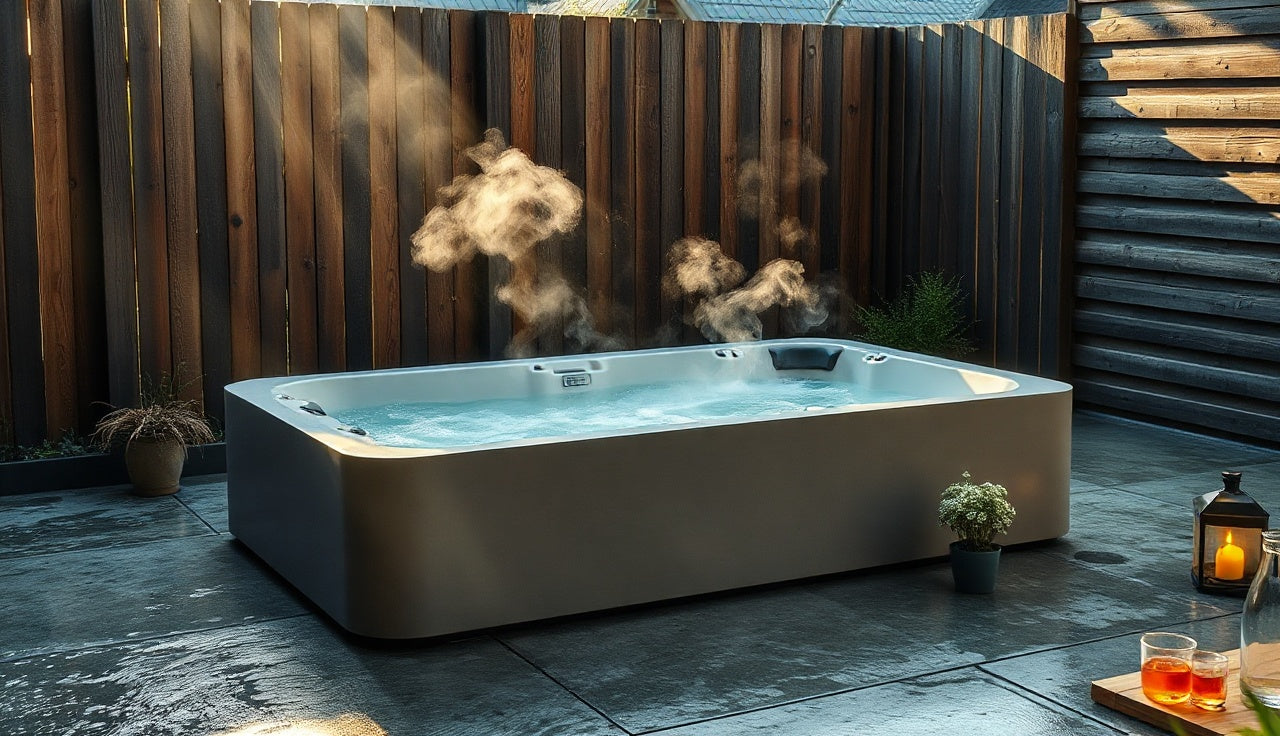
The tub body is a hard acrylic shell. It holds roughly 95 gallons (360 liters) of water, enough to submerge an average adult to shoulder height in a seated position. The exterior casing is powder-coated stainless steel or a marine-grade foam-core panel depending on the configuration you pick. The base version runs on a standard 110-volt/15-amp household outlet, which is a real convenience advantage over competitors that demand a 240-volt dedicated circuit.
This is not a glorified stock tank. That distinction matters because the chiller, filtration, and sanitation system let you hold water at temperature for weeks without draining and refilling constantly. Ice baths and basic tubs cannot do that.
How cold does The Plunge Original actually get?
The Plunge Original is rated to chill water down to 39°F (3.9°C) [1]. That is cold enough for any practical cold exposure protocol you are likely to follow.
For context: most cold exposure research uses water temperatures between 50°F and 59°F (10°C to 15°C) as the active range. A 2023 study in PLOS ONE examining cold water immersion and physiological response found meaningful changes starting at water temperatures around 57°F (14°C) and below [2]. Getting to 39°F is colder than most protocols actually require, but the headroom matters on hot summer days when ambient air warms the water faster.
The chiller uses a compressor-based refrigeration system, the same underlying technology as a window air conditioner. The Plunge says the unit reaches target temperature in 12 to 24 hours from a full fill of warm tap water. Cold tap water gets there faster. On a hot day with the tub sitting in direct sun, the chiller works harder to hold temperature, so shade placement helps.
The unit also has a heating mode that can warm the water to 104°F (40°C), which makes it usable as a warm soak when you want contrast therapy without a separate hot tub. That dual mode adds genuine utility if you are doing heat-cold contrast work alongside your cold plunge practice.
What are the dimensions and weight of The Plunge Original?
The Plunge Original measures approximately 87 inches long, 33 inches wide, and 30 inches tall (221 cm x 84 cm x 76 cm). The internal soaking area is around 63 inches long and 23 inches wide.
Those dimensions work for most adults up to about 6 feet 4 inches tall in a seated recline. A very tall person (6 feet 5 inches and above) may find their knees bent more than they would like. The unit ships as a single assembled piece, so getting it through a standard 36-inch doorway takes careful maneuvering. A 32-inch doorway is not going to happen.
Filled with 95 gallons of water, the total weight runs close to 900 pounds (408 kg). That is the number to check with your deck contractor or flooring engineer before placing it anywhere other than a concrete slab or reinforced deck. A typical residential deck is rated for 40 to 60 pounds per square foot [3]. At 900 pounds spread over roughly 20 square feet of footprint, you are at the edge or above the limit for a standard deck, depending on its specific load rating.
Shipping weight (empty unit) is around 275 pounds. The Plunge ships via freight, and the delivery crew brings it to your door but usually not inside your home unless you arrange white-glove delivery at extra cost.
How much does The Plunge Original cost and what does the price include?
The base Plunge Original starts at $4,990 as of mid-2025. The Plunge Cold and Hot version, which adds the heating function, is listed at $5,990. Prices have shifted over the past two years as the company updated its lineup, so confirm current pricing directly with the manufacturer before you budget.
That price includes the tub, the integrated chiller, filtration (a reusable filter cartridge), UV-C water sanitation, the cover, a control panel, and a one-year parts and labor warranty with a separate three-year warranty on the compressor.
What it does not include: the optional ozone sanitizer add-on (around $200 extra at the time of this writing), any delivery beyond curbside, and installation beyond the unit itself. Delivery can add $150 to $300+ depending on your location. A cedar enclosure or upgraded exterior finish changes pricing entirely.
For comparison, building a comparable DIY chilled plunge using a quality standalone glycol chiller, a stock tank, hoses, and a pump typically runs $2,500 to $4,000 in parts alone, plus your time. You get more control but more failure points. The Plunge Original's premium is the integrated design, the warranty, and the support line.
| Configuration | Approx. Price | Min. Temp | Outlet Required |
|---|---|---|---|
| Plunge Original (cold only) | $4,990 | 39°F / 3.9°C | 110V/15A |
| Plunge Cold + Hot | $5,990 | 39°F / 3.9°C | 110V/15A |
| Plunge Pro (commercial) | $8,990+ | 37°F / 2.8°C | 240V |
These are approximate figures based on publicly listed pricing. Verify with the current manufacturer listing before purchasing.
What are the ongoing electricity and maintenance costs?
The Plunge estimates the Original draws about 0.5 to 1.5 kWh per hour while the chiller is actively running [1]. How often the compressor cycles depends heavily on ambient temperature, how well you use the cover, and your target water temperature.
In a moderate climate (70°F ambient) with the tub kept at 50°F and the cover on between uses, real-world owners report monthly electricity costs of $20 to $50. In hot climates, or with the tub sitting in summer sun without shade, that can climb to $75 to $100 per month. The U.S. average residential electricity rate was about 16 cents per kWh in 2024 [4], so run your own math: if the chiller runs 4 hours per day at 1 kWh, that is about $19 per month at the national average.
Filter cartridges need replacement every one to four months depending on usage frequency and bather load, and they cost around $40 to $60 each. UV-C bulbs (if your unit has a replaceable lamp) last roughly one to two years.
The biggest maintenance task is the simplest: keep the cover on. The cover cuts heat gain in summer and heat loss in winter, which shortens compressor run time significantly. The Plunge includes a fitted cover with every unit.
| Cool climate, cover used, 50°F target | $22 |
| Moderate climate, cover used, 50°F target | $38 |
| Hot climate, partial shade, 50°F target | $62 |
| Hot climate, direct sun, no cover, 39°F target | $97 |
Source: U.S. Energy Information Administration, Electric Power Monthly 2024; The Plunge product specs
Is The Plunge Original good for outdoor use?
Yes, with some conditions. The Plunge Original is designed to work outdoors, and most owners place it on a covered patio, deck, or concrete pad. The powder-coated stainless steel exterior handles rain and humidity well.
Cold climates are where you need to read carefully. The chiller is a refrigeration unit, so it has a minimum safe operating ambient temperature. The Plunge recommends the unit not operate in ambient temperatures below 40°F (4.4°C). To use it year-round in a cold climate, place it in a space that stays above freezing, such as a garage, a covered and partially enclosed patio, or an indoor room. Running the chiller in sub-freezing air can damage the compressor.
Direct sun exposure is the other issue. UV radiation degrades the acrylic tub over time, and sun-warmed water forces the chiller to work harder and longer. A shade sail, pergola, or covered patio extends the life of the unit and cuts electricity costs meaningfully.
If you are planning a dedicated outdoor cold plunge space alongside an outdoor sauna, The Plunge Original works well as the cold side of that setup, as long as you plan the enclosure with ambient temperature limits in mind.
How does The Plunge Original compare to competing cold plunge tubs?
The market for integrated chiller-tub combos has grown fast since 2020. The Plunge Original sits in what the industry calls the prosumer tier: above DIY and basic ice baths, below commercial medical-grade units.
The closest direct competitors are the Blue Cube (starting around $6,500 to $10,000 for entry models), the Renu Therapy Cold Rush (around $4,500 to $6,000), and the CryoSpa Sport from Ice Science (sold through spas and clinics, typically $8,000 and up). The Plunge Original's 110-volt operation is a genuine differentiator, since most competitors at similar price points require 240-volt service, which means an electrician and added installation cost.
The main trade-offs versus the Blue Cube are aesthetics and materials. Blue Cube uses fiberglass and a higher-quality finish, while The Plunge uses acrylic. The Plunge is easier to install and lighter to ship. The Blue Cube arguably has better build quality for the money, but it costs more and needs dedicated electrical.
Cedar cold plunge tubs (wood-sided soaking tubs paired with a separate external chiller) offer a different look, and many buyers prefer the feel of a cedar cold plunge tub for outdoor installations. Cedar is naturally antimicrobial and does not need painting or staining the way pine does. A wood-sided tub with a separate chiller is generally two purchases and two installation points. See our cold plunge guide for a broader look at what is on the market.
For an ice bath or pure manual approach, The Plunge Original is overkill. If you are adding ice to a bucket a few days a week, a $200 chest freezer conversion or a basic stock tank serves the same physiological purpose. The Plunge is for people who want a permanent, easy, maintenance-light setup at home.
What do buyers actually say after owning The Plunge Original?
A few consistent themes come up across verified purchase reviews and forum discussions (Reddit's r/coldplunge, Trustpilot, and product Q&A sections).
Positives that show up repeatedly: setup is genuinely fast, the 110-volt plug-in is convenient, the water stays clean without constant draining, and the chiller actually hits its rated temperature. The cover fits well. Customer service is described as responsive, especially within the warranty period.
Complaints show up too. The chiller is audible. It sounds roughly like a window air conditioner, so if the unit sits under a bedroom window or near a neighbor, the compressor noise can be noticeable. The unit is large, and buyers who measure their space in two dimensions sometimes underestimate the total footprint including the chiller cabinet on one end. The acrylic shell shows scratches over time if you are not careful with cleaning. Never use abrasive cleaners on acrylic.
One real engineering limitation worth knowing: the filtration system is designed for one or two users. If you run this for a household of four people who each plunge daily, your filter replacement frequency increases and you need to stay on top of water chemistry (pH, sanitizer levels) more actively than a one-user household would.
Nobody has published a rigorous long-term durability study on this specific product. The company has been selling units since around 2021, so five-year ownership data is only just starting to accumulate in user communities.
Does cold plunge therapy actually do anything? What does the research say?
This is the question that matters most, and the honest answer is that the evidence is promising but incomplete, especially for the specific protocols most people follow at home.
What the research is reasonably solid on: cold water immersion causes a rapid catecholamine response, specifically a large increase in norepinephrine and epinephrine [2]. A 2022 study in the European Journal of Applied Physiology found that even brief cold water immersion (up to 15 minutes at 59°F / 15°C) produced measurable reductions in perceived fatigue [5]. A Cochrane systematic review found cold water immersion effective at reducing delayed-onset muscle soreness (DOMS) compared to passive rest [6].
What the research is less settled on: long-term mood and mental health benefits from regular cold exposure, optimal temperature and duration combinations, and whether the performance recovery benefits beat active recovery. The data there is genuinely mixed.
One nuance matters for people combining cold plunging with strength training. A study in the Journal of Physiology (2015) by Roberts et al. found that cold water immersion after resistance training blunted muscle protein synthesis and satellite cell activity compared to active recovery [7]. The authors concluded that cold water immersion "attenuated long-term gains in muscle mass and strength." If building muscle is your primary goal, time your cold sessions away from immediately post-strength training. This is not a reason to avoid cold plunging. It is a reason to think about timing.
For cold plunge benefits in more detail, including the cardiovascular and mental health angle, that guide covers the literature in depth.
Is The Plunge Original worth the money?
For buyers serious about making cold plunging a daily or near-daily habit, yes, the premium over a DIY setup is justified. The friction reduction is real: you do not add ice, you do not drain and refill constantly, and you do not troubleshoot a mismatched chiller and hose setup at 6 a.m.
For buyers who are curious but not yet committed, no. At $4,990, this is a purchase for someone who has already tried cold exposure through cheaper means (ice baths, cold showers, a chest freezer conversion) and decided they want a permanent, convenient setup.
The 110-volt plug-in requirement is a genuine advantage over competitors. If you rent, or if your outdoor space has no 240-volt outlet, The Plunge Original may be your only viable plug-and-play option at this quality level. That matters.
SweatDecks carries a range of cold plunge tubs across price points if you want to compare the Original against other options before deciding. Looking at physical dimensions and outlet requirements side by side across models is the most practical starting point before you spend at this level.
One honest caveat: if your main interest is combining sauna and cold plunge work together, and you have not bought your sauna yet, budget for both. A home sauna and a cold plunge at this quality level together represent a meaningful investment, and there are lower-cost cold plunge options that are more than good enough if the sauna is eating most of the budget.
What should you know before buying The Plunge Original?
A few practical things that experienced buyers wish they had checked first.
Electrical load: Even though it runs on 110V, the chiller draws meaningful current. The Plunge recommends a dedicated 15-amp circuit, not a shared circuit with other high-draw appliances. If you run it off a shared garage outlet with a refrigerator and power tools, you may trip breakers or cause compressor issues over time.
Floor load: As noted above, 900 pounds fully filled over a 20-square-foot footprint is close to or above the live load rating of most residential decks. Have an engineer or qualified contractor confirm your deck can handle it before delivery day. Moving a filled tub is not a realistic option.
Water source: The Plunge connects to a standard garden hose for filling. If your area has very hard water (high calcium and magnesium content), you will need to monitor and manage scale buildup inside the chiller's heat exchanger over time. A water softener line or descaling treatment helps.
Warranty registration: Register the product promptly after delivery. The company's warranty terms require registration, and the customer service experience during the warranty period is generally better than out-of-warranty support, based on forum reports.
Finally, if you want to pair this with sauna sessions, the cold plunge and sauna combination is often called contrast therapy. There is a reasonable body of research on cardiovascular benefits from alternating heat and cold, and the Finnish sauna tradition has practiced it for centuries. For more on sauna benefits and how they interact with cold exposure, that is worth reading before you finalize your setup.
Frequently asked questions
What is the minimum temperature The Plunge Original can reach?
The Plunge Original is rated to chill water to 39°F (3.9°C). That is colder than most research-backed cold exposure protocols require, which typically use water between 50°F and 59°F. The extra headroom is useful in hot climates where ambient heat works against the chiller during summer months.
Does The Plunge Original require a 240-volt outlet?
No. The base Plunge Original runs on a standard 110-volt, 15-amp household outlet, which is a meaningful advantage over most competitors at this price point. The Plunge does recommend a dedicated circuit rather than a shared one to avoid tripping breakers or stressing the compressor.
How long does it take The Plunge Original to cool down to temperature?
The Plunge estimates 12 to 24 hours to reach target temperature from a full fill of warm tap water. Starting with cold tap water cuts that time. The unit maintains temperature continuously once set, so you typically only experience the long initial chill time once after the first fill.
How often do you need to change the water in The Plunge Original?
With the built-in filtration and UV-C sanitation running properly, most owners report changing the water every one to three months depending on usage frequency. A single daily user with good hygiene habits (showering before use) can go longer between full drains. High-use households need more frequent changes.
Can The Plunge Original be used outdoors year-round in cold climates?
Not without protection. The manufacturer recommends the unit not operate in ambient temperatures below 40°F (4.4°C), since the compressor can be damaged by freezing conditions. In cold climates, place the unit in a covered, temperature-controlled space like a garage or enclosed patio during winter months.
Is The Plunge Original loud?
The chiller compressor produces noise comparable to a window air conditioner, which owners consistently note in reviews. It is not silent. If you plan to place it near a bedroom window, under a deck adjacent to a neighbor's yard, or in a small enclosed space, factor the compressor noise into your placement decision before delivery.
How does The Plunge Original compare to a cedar cold plunge tub?
A cedar cold plunge tub is typically a wood-sided soaking vessel paired with a separate external chiller, sold as two components. Cedar is naturally antimicrobial and popular outdoors. The Plunge Original is a single integrated unit with acrylic interior and powder-coated steel exterior. The cedar option often costs more in total once you add an external chiller, but it can look better in a natural outdoor setting.
Does cold plunging after weight training hurt muscle gains?
Possibly, if done immediately post-session. A 2015 study in the Journal of Physiology by Roberts et al. found cold water immersion after resistance training reduced long-term muscle mass and strength gains compared to active recovery. Timing cold sessions away from immediately after strength training, or on non-lifting days, is a common practical workaround.
What is the weight of The Plunge Original when full?
Fully filled with its roughly 95 gallons of water, The Plunge Original weighs approximately 900 pounds (about 408 kg). This figure matters for deck placement. Standard residential decks are typically rated for 40 to 60 pounds per square foot, and the unit's footprint of roughly 20 square feet means you need to verify your specific deck's load rating before installation.
Can The Plunge Original also be used as a hot tub?
The Plunge Cold and Hot version (priced around $5,990) can heat water up to 104°F (40°C), making it usable for warm soaks and contrast therapy. The base Plunge Original (cold only, $4,990) does not have a heating function. Confirm which version you are ordering before purchase, since the product pages can be easy to confuse.
What does the warranty on The Plunge Original cover?
The Plunge offers a one-year parts and labor warranty and a separate three-year warranty on the compressor. Warranty coverage requires product registration after delivery. Based on user reports, in-warranty customer service is generally responsive. Out-of-warranty compressor repairs can be expensive, so the three-year compressor coverage is worth noting when comparing to competitors.
How much does it cost per month to run The Plunge Original?
Most owners in moderate climates report $20 to $50 per month in electricity costs, assuming the cover is used between sessions. In hot climates or with the unit in direct sun, costs can reach $75 to $100 per month. Filter replacements add $40 to $60 every one to four months depending on usage. Total annual operating cost is typically $400 to $1,000 for a single daily user.
What cleaning products are safe to use on The Plunge Original?
The interior acrylic shell should only be cleaned with non-abrasive cleaners. Abrasive pads or harsh chemical cleaners will scratch and cloud the acrylic over time. The Plunge recommends their branded cleaning products, though mild dish soap and a soft cloth work for routine interior cleaning. Monitor pH and sanitizer levels in the water regularly, especially with multiple users.
Sources
- The Plunge, product specifications page: Minimum water temperature of 39°F and estimated electricity draw of 0.5 to 1.5 kWh per hour while chilling
- Yankouskaya et al., PLOS ONE (2023), cold water immersion and mood/physiological response: Significant norepinephrine and epinephrine increases from cold water immersion at temperatures around 57°F (14°C) and below
- International Residential Code (IRC), Section R301, structural load requirements: Standard residential decks are typically designed for 40 to 60 pounds per square foot live load
- U.S. Energy Information Administration, Electric Power Monthly, average retail electricity prices 2024: U.S. average residential electricity rate was approximately 16 cents per kWh in 2024
- Machado et al., European Journal of Applied Physiology (2022), cold water immersion and fatigue: Cold water immersion up to 15 minutes at 59°F (15°C) produced measurable reductions in perceived fatigue
- Bleakley et al., Cochrane Database of Systematic Reviews, cold water immersion for muscle soreness: Cold water immersion was effective at reducing delayed-onset muscle soreness (DOMS) compared to passive rest
- Roberts et al., Journal of Physiology (2015), cold water immersion and resistance training adaptations: Cold water immersion attenuated long-term gains in muscle mass and strength compared to active recovery after resistance training
- U.S. Consumer Product Safety Commission, hot tub and spa safety guidance: General safety thresholds for water temperature and electrical safety in residential water immersion products

Share:
Combination hot tub cold plunge: the complete buyer's guide
Mayo Clinic sauna benefits, risks, how long, and temperature