
Last updated 2026-07-09
TL;DR
Sweathouz is a wellness studio chain running contrast therapy sessions that cycle between sauna heat and cold plunge immersion. Sessions run 60 to 90 minutes, usually three or four rounds. Sports science backs the short-term recovery effect: a 2022 Sports Medicine meta-analysis found cold immersion cut muscle soreness at 24, 48, and 72 hours. You can copy the same protocol at home.
What is Sweathouz and what does a contrast therapy session actually involve?
Sweathouz is a sauna and cold plunge studio chain with locations across the United States, including a Riverton, Utah location and a South Broadway location in Denver, Colorado. Their core offering is guided contrast therapy: structured rounds of heat in a sauna followed immediately by cold water immersion in a plunge pool, repeated in cycles.
A typical session at most Sweathouz locations lasts 60 to 90 minutes. You check in, get a short orientation if it's your first visit, then follow a heat-cold rotation. Most locations use infrared saunas, though some offer traditional Finnish-style dry heat rooms. The cold plunge pools are chilled, usually between 45 and 55 degrees Fahrenheit depending on the location and the day.
Contrast therapy is not new. Athletic training rooms have alternated hot and cold water immersion for decades. What studios like Sweathouz add is access without owning equipment, plus amenities like towels, showers, and sometimes guided timing so you're not puzzling out the protocol alone on your first visit.
For a deeper look at how cold plunge immersion works on its own, read that before your first session. The cold phase is where most first-timers underestimate the adjustment period.
How does contrast therapy work physiologically?
The basic mechanism is vascular. Heat opens peripheral blood vessels, pushing blood toward the skin and away from deeper tissue. Cold clamps those vessels down, driving blood back toward the core. Alternate the two and you get a pumping effect sometimes called a "vascular flush," though that term is informal and the research on what it actually accomplishes is still developing.
What the evidence supports is more modest and specific. A 2015 systematic review in the British Journal of Sports Medicine found that cold water immersion reduced delayed-onset muscle soreness (DOMS) more effectively than passive rest, with a moderate effect size [1]. Contrast water therapy showed similar benefits to cold-only immersion in that review, though the authors noted effect sizes varied a lot across studies and that blinding is impossible in this research area.
The heat phase has its own studied effects. Repeated sauna use (Finnish-style, 80 to 100 degrees Celsius) has been tied to cardiovascular adaptations in work from the University of Eastern Finland, where researchers followed 2,315 middle-aged men and found that sauna use four to seven times per week was associated with reduced cardiovascular disease mortality compared to once-weekly use [2]. That study is observational, so causality isn't proven, but the proposed mechanisms, including reduced arterial stiffness and lower resting blood pressure, are plausible.
For contrast therapy specifically, a 2012 Cochrane review noted that contrast baths improved short-term recovery of muscle function compared to passive rest, though the reviewers flagged low study quality [3]. Nobody has perfect data here. The honest summary: the evidence is real but not conclusive, and most of the strongest findings apply to athletes carrying heavy training loads rather than general wellness users.
Read more about sauna benefits if you want the full breakdown of the heat side.
What is the typical contrast therapy protocol used at studios like Sweathouz?
The most commonly recommended structure is three to four rounds of heat followed by cold, with brief rest between cycles. A round usually looks like this: 10 to 15 minutes in the sauna, 2 to 5 minutes in the cold plunge, then 5 to 10 minutes of rest at room temperature.
The rest phase matters more than people expect. Your body needs time to drift back toward baseline before the next heat exposure is genuinely stimulating rather than just draining. Skip the rest and go straight from cold back to heat, and you shorten the session artificially and risk feeling lightheaded.
| Phase | Typical Duration | Target Environment |
|---|---|---|
| Heat (sauna) | 10-15 min | 150-190°F (65-88°C) dry or 120-140°F infrared |
| Cold immersion | 2-5 min | 45-55°F (7-13°C) |
| Rest | 5-10 min | Room temperature, seated |
| Rounds total | 3-4 per session | Complete session: 60-90 min |
Some practitioners argue for ending on cold because it reduces residual inflammation and leaves you more alert. Others end on heat because it feels better and settles you down. The research doesn't decide this. I'd end on cold if the goal is recovery from training, and on heat if the goal is relaxation and sleep.
Hydration is non-negotiable. Plan on 16 to 24 ounces of water during a full session, more if you're sweating heavily in a high-temperature dry sauna.
| Cold water immersion (24h post) | 0.55 |
| Cold water immersion (48h post) | 0.66 |
| Cold water immersion (72h post) | 0.58 |
| Contrast water therapy (24h post) | 0.45 |
| Passive rest (baseline) | 0.0 |
Source: Sports Medicine, Moore et al. 2022 meta-analysis (Citation 9)
What do Sweathouz South Broadway Denver reviews actually say?
The Sweathouz South Broadway location in Denver has collected reviews across Google and Yelp since opening, and the pattern that shows up most is positive feedback about facility cleanliness and cold plunge temperature. Guests regularly say the staff keep the plunge pools cold enough to be genuinely hard, which sounds like a small detail but matters if you've been to other studios where the cold pool creeps up to 60 degrees and loses most of its point.
Negative feedback in Denver reviews clusters around two things: session availability during peak hours (weekend mornings especially) and a membership pricing structure some reviewers find opaque next to simple drop-in pricing. A few reviews mention that the infrared saunas don't get as hot as a traditional Finnish sauna, which is accurate and worth knowing if you're used to dry heat above 180°F.
The Riverton, Utah Sweathouz location draws similar patterns. Members in Riverton reviews note the convenient location for the south Salt Lake Valley and praise the lounge space between rounds. First-timer feedback at both locations consistently says the staff orientation on your first visit is genuinely helpful for anyone who's never done structured contrast therapy.
One thing no review source tells you well: the actual water temperature on a given day. That varies. If you're booking specifically to push cold adaptation, calling ahead to confirm the plunge temperature is reasonable.
How much does a Sweathouz session cost, and is a membership worth it?
Drop-in pricing at Sweathouz locations typically runs between $30 and $55 per session as of 2024, though it varies by market. Denver sits at the higher end relative to smaller markets. Membership tiers, which Sweathouz sells as monthly subscriptions, generally bring the per-session cost down to $20 to $35 depending on how many sessions per month you get.
Whether a membership pays off comes down to frequency. Go twice a month and the math rarely beats drop-in pricing. Four or more visits a month is where a monthly membership starts to make sense.
Now compare that to building your own contrast setup at home. A quality barrel sauna or home sauna runs $3,000 to $10,000 installed. A serious cold plunge unit with active chilling costs $3,000 to $8,000. The upfront number is real. If you go to Sweathouz twice a week for a year, you'll spend $3,000 to $5,000 in session fees before any membership discount. The home economics work out within two to three years for frequent users, but that upfront cost is a genuine barrier.
If you want the cold plunge experience specifically, an ice bath setup is the cheapest entry point and costs under $200 for a basic chest freezer conversion.
Is contrast therapy safe, and who should avoid it?
For healthy adults, contrast therapy at the intensities studios use is generally considered safe. The American Heart Association hasn't issued a specific position paper on contrast therapy for wellness, but its guidance on sauna use notes that acute cardiovascular events during sauna use are rare and most commonly occur in people with underlying heart disease who are drinking alcohol at the same time [4].
The cold plunge phase carries its own risk. Sudden cold water immersion triggers the cold shock response: an involuntary gasp reflex, a fast heart rate jump, and a spike in blood pressure. In people with cardiovascular disease or uncontrolled hypertension, that spike can be dangerous. Work by Mike Tipton and colleagues at the University of Portsmouth, published in the British Journal of Sports Medicine, documents this response clearly [5].
Practical contraindications for contrast therapy sessions:
- Uncontrolled high blood pressure or known heart disease
- Pregnancy (heat exposure above 102°F / 39°C is generally discouraged based on CDC guidance) [6]
- Recent surgery or open wounds
- Active Raynaud's disease (cold immersion can trigger severe vasospasm)
- Autonomic neuropathy (impaired thermoregulation)
If any of those describe you, talk to your doctor before booking. Studios like Sweathouz will have you sign a health disclosure waiver, but the waiver protects them legally, not you medically.
Alcohol and contrast therapy deserve a flag of their own. Both sauna heat and cold immersion change how your cardiovascular system regulates itself. Add alcohol and you impair thermoregulation and your judgment about when to get out. Don't do it.
How does Sweathouz compare to building your own contrast therapy setup at home?
The honest comparison comes down to three variables: how often you'll use it, how much space you have, and how much upfront capital you can put down.
A studio like Sweathouz gives you professional-grade equipment somebody else maintains, no installation headaches, and a social environment some people find motivating. The downside is scheduling, commute time, and per-session cost that stacks up.
A home setup gives you access on demand, no commute, and long-term cost efficiency. The downside is the upfront bill and the fact that maintenance is now your job.
For the cold side: a dedicated cold plunge unit with active chilling and temperature control is the most reliable home option. Chest freezer conversions work but ask for more DIY patience. If you want the full range of home cold options, the cold plunge benefits guide covers what the research says about immersion temperatures and exposure times.
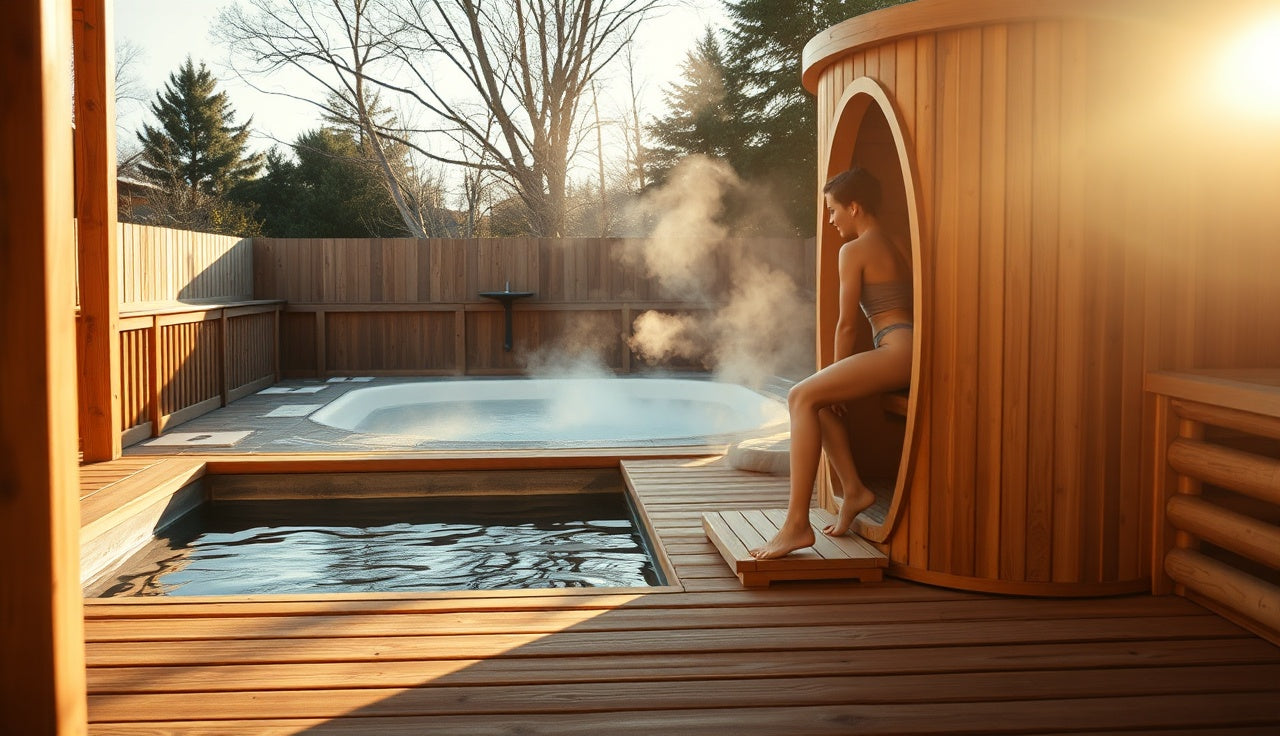
For the heat side: outdoor sauna installations are popular because they skip interior renovation, and a barrel sauna in the backyard can sit steps from a cold plunge tank for a complete contrast setup. Indoor options exist but need ventilation planning.
SweatDecks carries home sauna and cold plunge equipment for people ready to move past studio visits. At the research stage, comparing per-session studio cost against equipment amortization over two to three years usually makes the decision clear for frequent users.
One thing studios do better: temperature calibration and maintenance. Consumer-grade infrared saunas often top out at 140°F, while a well-maintained commercial traditional sauna runs 160 to 190°F. If you want the higher-end dry heat, you need a quality home traditional sauna (not infrared), and those cost more.
What should you do before and after a contrast therapy session?
Before: eat a light meal at least 60 to 90 minutes ahead. A full stomach plus serious heat divert blood to competing systems (digestion versus temperature regulation) and can leave you nauseous. Hydrate well before you arrive, more than you'll drink during. Skip alcohol for at least 24 hours before a serious session.
During: drink water between rounds, more than at the end. The sauna phase drives fluid loss that's easy to shrug off when you're bracing for the cold plunge. Some people add electrolytes, which is reasonable for sessions over 60 minutes, but plain water works fine for most.
After: the post-session window is where most of the perceived recovery benefit seems to land. Your body sits in a parasympathetic-dominant state after the final round, especially if you ended on heat. Good time to eat a protein-containing meal if training recovery is the goal. Research on post-exercise nutrition timing suggests a 30 to 60 minute post-workout window is effective for muscle protein synthesis, though the specific interaction with contrast therapy hasn't been studied well [7].
Sleep after evening contrast sessions comes up constantly in gym communities. Sauna heat raises core body temperature, and the drop as you cool afterward promotes sleep onset, the same mechanism behind warm baths before bed studied by researchers at UT Austin, who found bathing in warm water 1 to 2 hours before sleep improved sleep onset by an average of 10 minutes [8]. Cold immersion before bed hits some people differently: the alerting effect of the cold shock response can delay sleep if done too close to bedtime. Two hours before sleep is a reasonable minimum for the cold phase.
Does contrast therapy actually speed up muscle recovery?
This is the most studied question in this space, and the answer is: probably yes, with caveats that matter.
A 2022 meta-analysis in Sports Medicine reviewed 32 randomized controlled trials on cold water immersion and found statistically significant reductions in muscle soreness at 24, 48, and 72 hours post-exercise compared to passive recovery [9]. The effect sizes were small to moderate. Real, but not dramatic.
The caveat for anyone in a long-term training block: some researchers, including Cas Fuchs and Luc van Loon at Maastricht University, have found evidence that regular post-exercise cold water immersion may blunt the anabolic signaling that drives muscle growth over time [10]. The proposed mechanism is that inflammation in muscle tissue after exercise is part of the adaptation signal, and cold immersion tamps that inflammation down, potentially costing you long-term gains.
That sets up a real tension. Cold immersion seems to help you feel better and perform sooner after a hard session, but during a hypertrophy-focused phase, frequent post-workout cold plunging may work against your goal. The recommendation most sports scientists land on: use contrast therapy and cold immersion during competition or heavy performance blocks when short-term recovery matters most, and pull back on frequency in dedicated muscle-building phases.
For endurance athletes the tradeoff looks different. The proposed growth-blunting mechanism matters less, and the recovery benefit for repeated endurance performance is better supported.
How does infrared sauna at Sweathouz compare to traditional Finnish sauna for contrast therapy?
Most Sweathouz locations use infrared saunas rather than traditional Finnish-style wood-burning or electric-stone saunas. That difference matters for anyone researching the heat side of contrast therapy.
Infrared saunas run at lower ambient temperatures, typically 120 to 140°F (49 to 60°C), compared to traditional saunas that run 160 to 195°F (71 to 90°C). Infrared radiation penetrates tissue more directly, and some advocates claim you get an equivalent physiological effect at lower air temperatures, but the research base for infrared is thinner than for traditional sauna. Most of the epidemiological work linking regular sauna use to long-term cardiovascular outcomes, including the Finnish studies, used traditional saunas [2].
For contrast therapy, the heat phase needs to raise core body temperature enough to drive meaningful vasodilation. A 10-minute infrared session at 130°F does this, just less aggressively than 15 minutes at 185°F in a traditional sauna. Both produce sweating and cardiovascular response. The difference is degree, not kind.
If you want to weigh sauna vs steam room as a third option, steam rooms add humidity that changes how the body perceives heat and sweats, a separate variable worth understanding.
For home buyers deciding between infrared and traditional, the home sauna guide covers the practical installation and cost differences in detail.
Can you replicate the Sweathouz contrast therapy experience at home?
Yes, and plenty of people do. The protocol needs no proprietary equipment. You need a heat source that gets your core body temperature up (a sauna, a very hot bath, or even a steam room) and a cold immersion vessel that holds water at 50°F or below for 2 to 5 minutes.
The minimum viable home setup most people start with: a basic electric portable sauna or a barrel sauna outdoors, plus a chest freezer converted into a cold plunge by drilling a drain, sealing it, and filling it with water the freezer keeps cold. Total cost for a basic version: $500 to $1,500. Not as polished as a studio, but the physiological protocol is identical.
A mid-tier setup with a proper two-person barrel sauna and a purpose-built cold plunge unit with temperature display and filtration runs $7,000 to $15,000 installed, depending on location and sauna type.
The thing home setups can't copy: the forced structure of a studio session. At home it's easy to cut the cold phase short or skip a round. The studio creates external accountability that some people genuinely need to get through the harder parts of the protocol. That's not a trivial advantage.
For anyone at the equipment research stage, SweatDecks covers home sauna and cold plunge gear built for contrast setups, with options at several price points.
Frequently asked questions
What is Sweathouz contrast therapy and how does a session work?
Sweathouz contrast therapy cycles between sauna heat and cold plunge immersion in structured rounds. A session runs 60 to 90 minutes and typically includes three to four rounds of 10 to 15 minutes in the sauna followed by 2 to 5 minutes in a cold plunge pool chilled to 45 to 55°F, with rest periods between each round. Staff provide orientation for first-time visitors.
Where are Sweathouz contrast therapy studios located?
Sweathouz has locations across multiple states. Two commonly searched ones are the Sweathouz Riverton contrast therapy studio in Riverton, Utah, serving the south Salt Lake Valley, and the Sweathouz South Broadway contrast therapy studio in Denver, Colorado. The chain has been expanding, so checking their website for the current location list is the most reliable way to find the nearest studio.
What do Sweathouz South Broadway Denver reviews say about the experience?
Denver reviews on Google and Yelp most often highlight clean facilities and consistently cold plunge temperatures. Common criticisms include peak-hour booking difficulty on weekends and pricing transparency. Several reviews note that the infrared saunas at South Broadway don't reach the temperatures of a traditional Finnish sauna, which is accurate and worth knowing if you're used to 180°F-plus dry heat.
How cold is the cold plunge at Sweathouz?
Sweathouz cold plunge pools are typically kept between 45 and 55°F (7 to 13°C), though the exact temperature varies by location and can drift with usage volume. If you're booking specifically to train cold tolerance or push cold adaptation, calling ahead to confirm the current plunge temperature is reasonable. Higher-traffic sessions can let the water warm slightly.
Is contrast therapy safe for people with high blood pressure?
Contrast therapy carries meaningful cardiovascular stress for people with uncontrolled hypertension. Cold water immersion triggers an acute blood pressure spike through the cold shock response. The American Heart Association flags underlying heart disease as a risk factor for adverse events during heat exposure. Anyone with diagnosed cardiovascular disease or uncontrolled hypertension should consult their physician before doing contrast therapy sessions.
How often should you do contrast therapy to see benefits?
The research doesn't prescribe a universal frequency. For recovery from training, once or twice per week after hard sessions is the most common protocol in the sports science literature. For general cardiovascular and wellness effects, the Finnish sauna research showing the strongest associations used four to seven sessions per week, though those were sauna-only, not full contrast sessions. Two to three contrast sessions per week is a reasonable starting point.
Does contrast therapy help with muscle soreness after workouts?
Yes, with modest effect sizes. A 2022 meta-analysis in Sports Medicine found cold water immersion significantly reduced delayed-onset muscle soreness at 24, 48, and 72 hours compared to passive rest. The effect is real but not large. A separate caveat: some research suggests frequent post-workout cold immersion may reduce long-term muscle growth by blunting adaptive inflammatory signals, so heavy cold plunging during muscle-building phases may be counterproductive.
What should you eat and drink before a contrast therapy session?
Eat a light meal at least 60 to 90 minutes before your session. A full stomach combined with heat exposure can cause nausea. Hydrate well before arriving, then keep drinking water between rounds during the session. For sessions over 60 minutes, adding electrolytes is reasonable. Avoid alcohol for at least 24 hours beforehand. Both sauna heat and cold immersion alter cardiovascular regulation, and alcohol compounds those effects unpredictably.
Can contrast therapy help with sleep?
The heat phase of contrast therapy likely helps sleep onset. A 2019 meta-analysis from UT Austin researchers found that warming the body with water 1 to 2 hours before bed improved sleep onset by an average of 10 minutes, through the mechanism of a core temperature drop after warming. The cold phase close to bedtime can have an alerting effect that delays sleep for some people, so finishing a cold-ending session at least two hours before bed is a reasonable guideline.
How does infrared sauna at Sweathouz differ from a traditional sauna?
Infrared saunas run at 120 to 140°F, well below the 160 to 195°F of traditional Finnish saunas. Infrared radiation penetrates tissue directly, and proponents argue you get similar physiological benefit at lower air temperatures. The research base for traditional saunas is larger and longer. Most epidemiological studies linking regular sauna use to cardiovascular health outcomes used traditional Finnish-style saunas, not infrared units.
How much does it cost to build a home contrast therapy setup?
A basic home setup with a portable or entry-level barrel sauna and a chest freezer cold plunge conversion runs $500 to $1,500. A mid-tier setup with a quality two-person outdoor barrel sauna and a purpose-built cold plunge unit with active chilling and filtration costs $7,000 to $15,000 installed. For frequent users going two or more times per week to a studio, the home economics typically break even within two to three years.
Is it better to end a contrast therapy session on heat or cold?
The research doesn't settle this definitively. Ending on cold leaves you more alert, reduces residual inflammation, and is generally recommended for recovery-focused sessions after training. Ending on heat promotes relaxation and may improve sleep onset if the session is in the evening. Your goal matters more than any universal rule. Most sports performance protocols end on cold; most wellness and relaxation protocols end on heat.
Who should not do contrast therapy?
People who should avoid contrast therapy or get medical clearance first: those with uncontrolled high blood pressure, known heart disease, pregnancy (heat above 102°F is discouraged by the CDC), active Raynaud's disease, autonomic neuropathy, or recent surgery. The cold shock response from sudden cold immersion causes an acute blood pressure and heart rate spike that can be dangerous in vulnerable cardiovascular conditions.
What is the difference between contrast therapy and just using a sauna or cold plunge separately?
Contrast therapy combines both modalities in alternating cycles, creating repeated vascular dilation and constriction that neither produces alone. The standalone cold plunge is better studied for immediate soreness reduction. The standalone sauna is better studied for long-term cardiovascular and heat adaptation benefits. Combining them is thought to amplify circulation effects, but direct head-to-head research comparing combined versus isolated protocols is limited and mostly in athletic populations.
Sources
- British Journal of Sports Medicine, Hohenauer et al. 2015 systematic review on post-exercise cold water immersion: Cold water immersion reduced delayed-onset muscle soreness more effectively than passive rest, with a moderate effect size; contrast water therapy showed similar benefits.
- JAMA Internal Medicine, Laukkanen et al. 2015, University of Eastern Finland sauna frequency and cardiovascular mortality study: Sauna use four to seven times per week in 2,315 middle-aged Finnish men was associated with reduced cardiovascular disease mortality compared to once-weekly use.
- Cochrane Database of Systematic Reviews, Bleakley et al. 2012, cold water immersion for preventing and treating muscle soreness after exercise: Contrast baths improved short-term recovery of muscle function compared to passive rest; reviewers flagged low study quality as a limitation.
- American Heart Association, scientific guidance on sauna use and cardiovascular events: Acute cardiovascular events during sauna use are rare and most commonly occur in people with underlying heart disease who use alcohol concurrently.
- British Journal of Sports Medicine, Tipton MJ, University of Portsmouth, cold shock response physiology: Sudden cold water immersion triggers an involuntary gasp reflex, rapid heart rate increase, and elevated blood pressure known as the cold shock response.
- CDC, Pregnancy and Heat Stress guidance: Heat exposure above 102°F (39°C) is generally discouraged during pregnancy based on CDC guidance.
- Journal of the International Society of Sports Nutrition, Kerksick et al. 2017, nutrient timing position stand: A 30 to 60 minute post-exercise window is effective for muscle protein synthesis when protein intake is consumed after training.
- Sleep Medicine Reviews, Haghayegh et al. 2019, UT Austin, warm bath or shower before sleep and sleep onset: Bathing in warm water 1 to 2 hours before sleep improved sleep onset latency by an average of 10 minutes via post-warming core temperature drop.
- Sports Medicine, Moore et al. 2022, meta-analysis of cold water immersion and muscle soreness: Cold water immersion produced statistically significant reductions in muscle soreness at 24, 48, and 72 hours post-exercise versus passive recovery; effect sizes were small to moderate.
- Journal of Physiology, Fuchs et al. 2020, Maastricht University, cold water immersion and muscle hypertrophy blunting: Regular post-exercise cold water immersion may blunt anabolic signaling and reduce long-term muscle hypertrophy by reducing post-exercise inflammation.
- National Institutes of Health, MedlinePlus, hyperthermia and fever safety thresholds: Core body temperature above 104°F (40°C) constitutes heat stroke; heat exposure protocols in wellness contexts are designed to stay below this threshold.

Share:
Almost Heaven barrel sauna review: models, sizes, and what to know before buying
Recommended sauna temperature: what actually works by sauna type