
Last updated 2026-07-09
TL;DR
Sauna sessions and cold plunges each carry study-backed benefits. Sauna use 4-7 times per week cut fatal cardiovascular risk by about 50% in a 20-year Finnish cohort, and cold water immersion reliably reduces post-exercise muscle soreness. Run back-to-back as contrast therapy, the two produce circulatory and nervous system effects neither hits alone. Timing, temperature, and sequence all decide the result.
What are the main benefits of using a sauna and ice bath together?
Heat and cold shove the body in opposite directions, and that shove appears to do more than either stimulus alone.
Heat opens blood vessels, drives up core temperature, and triggers a flood of heat shock proteins plus a sharp rise in plasma volume. Cold reverses all of it, clamping vessels shut and firing the sympathetic nervous system. Done back-to-back, the two make what researchers call contrast therapy, and the circulatory effect gets described as a "vascular workout" because your vessels open and close on repeat.
Here's the honest part. Nobody has run a large randomized trial comparing sauna-plus-cold-plunge against sauna alone in healthy adults over years. What we have is strong epidemiological data on sauna, solid short-term RCT data on cold water immersion for recovery, and a growing pile of mechanistic studies on contrast therapy. The picture is encouraging. It is not settled.
The benefits people actually feel are three. Muscle soreness clears faster after hard training. Mood lifts hard from norepinephrine and endorphin release. Sleep comes easier, especially when the cold plunge lands last. The sauna benefits and cold plunge benefits each hold up on their own. Stacked, the effects seem to add rather than cancel.
What does the science say about sauna health benefits on their own?
The strongest sauna data comes from Finland, where roughly 99% of households have used saunas for generations [1]. The KIHD study (Kuopio Ischemic Heart Disease Risk Factor Study) followed 2,315 middle-aged Finnish men for up to 20 years. Men who used a sauna 4-7 times per week had a 50% lower risk of fatal cardiovascular disease than men who went once a week [1]. That is a big effect, and it held after adjusting for age, BMI, smoking, alcohol, and physical activity.
The same dataset showed a 66% lower risk of dementia in frequent users versus infrequent ones, published in Age and Ageing in 2016 [2]. The mechanism is still open. Candidates include better vascular function, less inflammation, and heat-driven upregulation of brain-derived neurotrophic factor (BDNF).
Sauna also produces a measurable hormonal response. A single session at 80°C raises growth hormone anywhere from 2-fold to 5-fold above baseline, and the size depends on duration and how often you go [3]. Interesting for recovery, but the burst is short and the link to actual muscle gain stays unclear.
On cardiovascular function, a 2018 review in Mayo Clinic Proceedings concluded that "frequent sauna bathing is associated with reduced risk of hypertension" and noted acute blood pressure drops similar to those after moderate aerobic exercise [4]. A typical Finnish sauna runs 80-100°C air temperature with 10-20% relative humidity, which is a different animal from a steam room. The sauna vs steam room breakdown sorts that out separately.
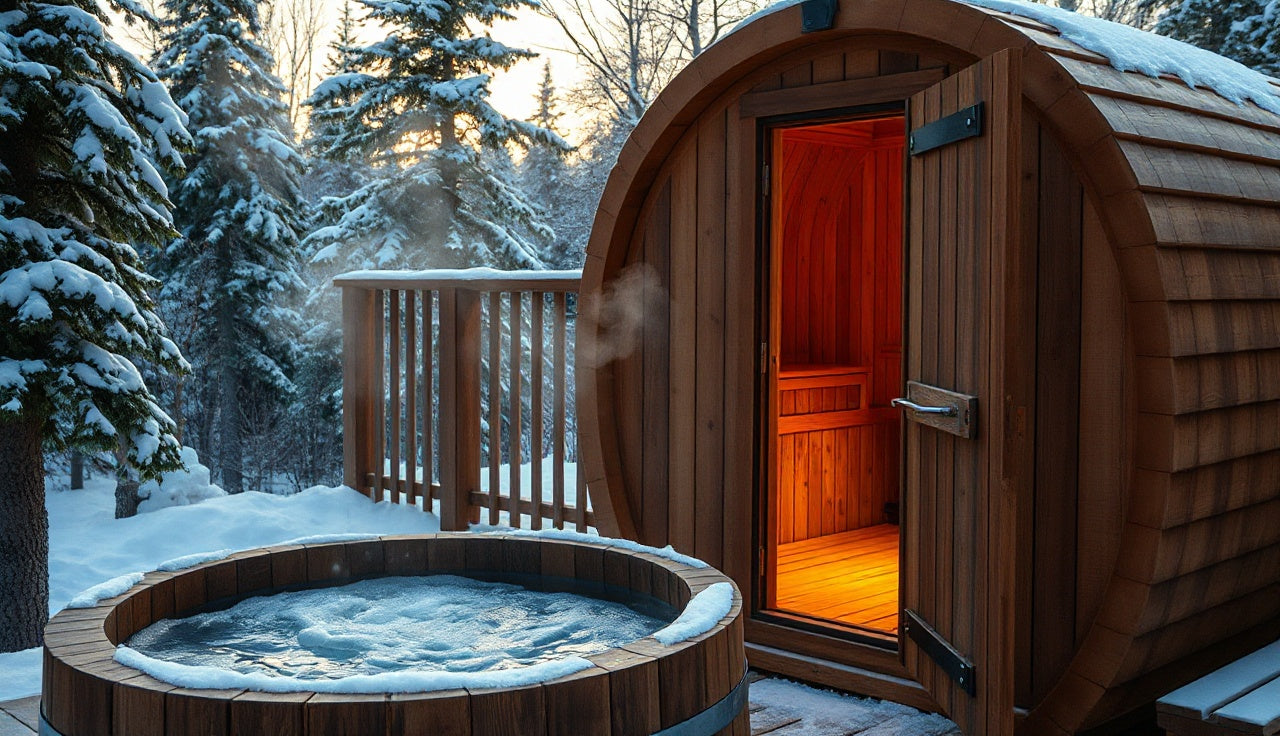
For a home setup, home sauna prices run wide, from barrel saunas around $3,000-$8,000 to prefab indoor units.
What are the benefits of cold water immersion and ice baths?
Cold water immersion (CWI) research took off around 2010, mostly in athletic recovery. The clearest finding: CWI cuts delayed-onset muscle soreness (DOMS) and perceived fatigue after exercise, and it does so reliably enough to show up across meta-analyses [5].
A 2012 Cochrane review by Bleakley et al. pooled 17 small trials and found CWI reduced DOMS versus passive recovery at 24, 48, 72, and 96 hours post-exercise [5]. Effect sizes were moderate, not huge, but consistent. The effective range ran 10-15°C (50-59°F) with immersion of 10-15 minutes.
The norepinephrine story is real and large. Cold water immersion at 14°C raised norepinephrine by 300-400% above baseline and dopamine by roughly 250% [6]. Those are the same catecholamines that antidepressant and stimulant drugs target, which gives the anecdotal mood lift a plausible chemical basis. Shevchuk documented the neuroscience in a 2008 Medical Hypotheses paper that proposed cold showers as a possible depression treatment [6]. That stays hypothetical at the clinical level. It is not a swap for psychiatric care.
There's a real catch on muscle building. CWI after strength training appears to blunt anabolic signaling, specifically satellite cell activation and mTOR activity, for a window after the session [7]. A 2015 Journal of Physiology paper by Roberts et al. found cold immersion after resistance training reduced long-term gains in muscle mass and strength over 12 weeks compared with active recovery [7]. If hypertrophy is the goal, plunge at least 4-6 hours after lifting, or save it for rest days. If you're recovering from endurance work or a competition, that worry mostly fades.
For standalone cold protocols, the ice bath and cold plunge pages cover equipment, temperatures, and safety in more depth.
| 1x per week (baseline) | 0% |
| 2-3x per week | 24% |
| 4-7x per week | 50% |
Source: JAMA Internal Medicine, Laukkanen et al., 2015
How does contrast therapy (sauna then ice bath) compare to each alone?
Contrast therapy studies usually alternate hot and cold water (hot tub versus cold pool), but the principle carries over to sauna-plus-cold-plunge given the similar thermal load.
A 2006 study in the International Journal of Sports Medicine found contrast water therapy reduced muscle soreness more than cold immersion alone or passive rest after team sport exercise [8]. The repeating open-close cycle in the vessels acts like a pump, moving lactate out and cutting interstitial fluid buildup in muscle.
On the nervous system, the combo does something neither temperature manages alone as sharply. Ending on cold fires the sympathetic branch hard while the earlier heat has already raised baseline parasympathetic tone and heart rate variability. The result, reported subjectively in most studies and sometimes tracked by HRV, is high alertness without the jitters. People often call it the clearest their head feels all week.
Contrast therapy also drives bigger acute changes in skin blood flow than either modality alone [9]. That matters for people chasing cardiovascular conditioning or skin effects, though skin blood flow is a surrogate marker, not a hard health outcome.
One practical edge: you don't have to pick between the calm of the sauna and the charge of the cold plunge. You get both in one session. End on cold for alertness (good mornings), end on heat for relaxation and sleep prep (good evenings). Most people run 3 rounds of 10-15 minutes sauna into 2-5 minutes cold, though the ideal protocol is still being studied.
How should you sequence a sauna and ice bath session?
Sauna first, cold plunge second, optional return to sauna. That's the most studied and most common sequence.
Start in the sauna at 80-100°C for 10-15 minutes. Core temperature climbs, vessels open, and you sweat heavily. Get out, rinse if you can, then step into cold water at 10-15°C (50-59°F) for 2-5 minutes. Repeat the cycle 2-3 times. A full 3-round session runs roughly 60-90 minutes.
Most people end on cold for the alertness kick. Doing this in the evening and hoping to sleep? End your last round in the sauna at a lower setting (around 70°C) for 5-10 minutes. The slow drop in core temperature after you exit mimics the pre-sleep cooling the body wants.
Hydration counts more than people expect. You can lose 0.5-1.5 liters of sweat in one sauna session [4], so drink 500ml before you start and another 500ml during or after. Electrolytes help across multiple rounds.
Order matters for safety too. Cold-first then hot is less common and less studied. Cold immersion raises blood pressure acutely, so moving straight from cold into intense heat while already stressed loads the heart harder than going sauna-first. Sauna lifts heart rate and opens vessels; moving to cold then tightens them, which is the point, and it works as a gentler ramp than the reverse.
What temperature and duration actually produce results?
For sauna, the Finnish research used traditional saunas at 80-100°C (176-212°F) air temperature. Sessions ran 5-20 minutes per round, and KIHD participants averaged roughly 15 minutes per session [1]. You don't need the top of that range to benefit. The cardiovascular effects show up at 80°C in most protocols.
For cold, the Cochrane meta-analysis found effective protocols clustered around 10-15°C (50-59°F) for 10-15 minutes total [5]. Below 10°C the safe window shrinks fast. At 5°C, most studies cap immersion at 2-3 minutes. At 15°C, 10-15 minutes is generally fine for healthy adults.
Nobody has a definitive sauna-to-cold ratio. The 3:1 time ratio (15 minutes sauna, 5 minutes cold) is widely used in Finland and among athletes, but it hasn't been run through a dose-response trial. What has been tested: you need enough cold to produce a measurable norepinephrine response, which takes at least 2-3 minutes at 14°C or below [6].
A reasonable beginner start: one round of 10 minutes in the sauna at 80°C, then 2 minutes in cold water at 12-15°C. See how you feel. Build over 2-4 weeks before you attempt 3 full rounds.
Are there real risks or reasons to skip the sauna ice bath combo?
Yes, and they deserve a straight answer.
Symptomatic cardiovascular disease is a genuine contraindication for both intense heat and cold immersion. The American College of Sports Medicine notes cold water immersion acutely raises blood pressure and drives a parasympathetic-to-sympathetic shift that can stress a compromised heart [9]. Uncontrolled hypertension, unstable angina, a history of arrhythmia, or a recent heart attack? Talk to your cardiologist before any thermal stress protocol.
Pregnancy is a clear no on both hot sauna and cold immersion. Core temperature above 38.9°C (102°F) in the first trimester is linked to neural tube defects, and cold immersion carries its own risks [10]. Skip it during pregnancy.
Raynaud's phenomenon, where vessels in the extremities overreact to cold, makes cold immersion painful and potentially harmful. A short cold shower test before full immersion is sensible.
Fainting is the most common non-cardiac risk with sauna alone. Blood pressure can crash when you stand up fast after a long session, worse if you're dehydrated. The fix is easy: sit for 60-90 seconds before standing, exit slowly, and never step straight from a hot sauna into very hot standing water.
Diabetes can impair thermoregulation, and both ends of the temperature range can mask symptoms or produce odd responses. Worth a conversation with your physician before starting.
The cold shock response, that involuntary gasp and hyperventilation on sudden cold contact, is real and can cause drowning if your face goes under during the first 30-60 seconds. Enter cold water calmly, keep your head up, and control your breathing for the first minute.
Does the sauna and ice bath combination help with mental health and mood?
This is one of the more compelling areas and one of the least settled.
The norepinephrine surge from cold immersion (300-400% at 14°C) is well documented mechanistically [6]. Norepinephrine drives attention, mood regulation, and stress response. That's why the post-plunge clarity feels pharmacological. In a real sense it is.
Sauna brings its own chemistry. Beta-endorphin rises during sauna use [3], which feeds the post-sauna euphoria Finnish culture has described for centuries. There's also evidence sauna raises BDNF, tied to depression and anxiety disorders, though most of that work sits in animal models.
On clinical depression, a 2016 study in JAMA Internal Medicine tested a single whole-body hyperthermia session (core temperature to 38.5°C) against a sham in 30 adults with major depressive disorder [11]. The hyperthermia group showed significantly larger drops in depression scores that held for 6 weeks after one treatment. The effect size was large (Cohen's d around 0.5-0.8). Small trial, needs replication, but it's real data, not anecdote.
The sauna-plus-cold-plunge stack for mood is, honestly, a place where practitioner experience outruns the research. People who do this consistently call it one of the most reliable mood tools they own. That subjective signal is worth taking seriously even while the RCTs catch up.
How does the combo affect recovery for athletes specifically?
Athletes are the most-studied population for contrast therapy, and the recovery findings are pretty clear.
For endurance and team sport athletes training on back-to-back days, contrast therapy cuts DOMS, perceived fatigue, and markers of muscle damage more than passive rest [8]. That's useful. Hard session today, another tomorrow? A 30-minute contrast bath probably beats 30 minutes on the couch.
The strength-training caveat is real. The Roberts et al. 2015 study found athletes doing cold water immersion after resistance training gained less muscle and less strength over 12 weeks [7]. The mechanism looks like blunted satellite cell activity and reduced mTOR signaling in the hours right after a cold bath. The pragmatic call from sports scientists: in a hypertrophy block, don't plunge within 4-6 hours of lifting. In-season, when you're chasing recovery for performance over adaptation, the timing rule loosens.
SweatDecks carries cold plunge tubs sized for home athlete setups, including compact ones that fit next to a home sauna in a garage or backyard.
Endurance athletes get a heat-adaptation angle too. Sauna after aerobic training improves plasma volume and sweat rate in a way that mimics altitude acclimatization. A 2007 study by Scoon et al. found 30-minute post-training sauna sessions over 3 weeks improved running time to exhaustion by 32% in trained runners [12]. That is a big return for a non-drug intervention.
What equipment do you actually need to do this at home?
You need two things: a heat source and a cold water vessel. The setups range from almost free to genuinely expensive.
Heat side. A basic infrared sauna panel or a portable sauna tent starts around $200-500. These hit 50-60°C, lower than traditional Finnish temperatures but enough for a real sweat. A proper Finnish barrel or cabin sauna runs $3,000-$12,000 installed for a quality unit (see outdoor sauna options). A higher-end home sauna with a quality Harvia or Helo heater plus custom build can reach $15,000-$25,000.
Cold side. The cheapest route is a chest freezer converted with a water pump and thermometer, as little as $300-500 total, and it holds temperature reliably. A purpose-built cold plunge tub with insulation and a chiller starts around $1,500 for basic models and runs $5,000-$10,000 for quality filtered-and-chilled ones that hold 7-15°C without ice. Daily user? The chiller pays back its ice cost within 6-18 months depending on how often you go.
Some people use cold showers instead of a tub. Cold showers do produce a norepinephrine response, but smaller and shorter than full immersion. For DOMS reduction, immersion wins clearly. For a budget start, a cold shower beats nothing.
A portable sauna plus a chest-freezer plunge is a legitimate way to test the protocol before you commit $10,000+ to a built-in system.
How often should you do sauna and cold plunge to see benefits?
For cardiovascular benefit, frequency matters a lot. Once a week showed far smaller risk reduction than 4-7 times per week in the Finnish data [1]. The dose-response looks real: more sessions per week track with greater risk reduction, at least up to daily use.
For recovery, most sports science protocols use contrast therapy 2-4 times per week, usually on post-training days. Daily use hasn't been shown to be harmful, but it also hasn't beaten every-other-day meaningfully for most people.
For mood, the anecdotal consensus is that even 2-3 sessions a week produces noticeable effects within 1-2 weeks. The neurochemical changes (norepinephrine, endorphins) are acute, happening during and right after each session, so frequency directly sets how often you hit those peaks.
A realistic home protocol for someone new: 3 sessions per week, each 2 rounds of 12 minutes sauna and 3 minutes cold plunge. That's about 30-40 minutes including transitions. After 4-6 weeks, most people go to 3 rounds and bump frequency based on how they feel. There's no established safe upper limit for healthy adults, and daily sessions are normal across Finnish and Nordic populations with no harm signals in the long-term data [1].
Is the sauna ice bath combo safe for older adults?
The Finnish longevity data is most striking in the 50-65 group, where cardiovascular risk is highest and sauna use showed the biggest relative risk reduction [1]. So for healthy older adults, the evidence is if anything more favorable, not less.
Still, thermoregulation gets less efficient with age. Older adults sweat less efficiently, acclimatize to heat slower, and dehydrate more easily. The practical adjustments: shorter opening sauna rounds (8-10 minutes instead of 15), more liberal hydration, cooler sauna (70-80°C rather than 90-100°C), and warmer cold water (12-15°C rather than 7-10°C).
The cold shock response is a bigger concern in older adults with a cardiac history. A sudden plunge raises systolic blood pressure by 20-30 mmHg in healthy adults [9]. Manageable with a healthy heart and clean vessels. Riskier with calcified arteries or a history of stroke. A gradual cold shower as an intermediate step is a smart way to test tolerance before full immersion.
Any older adult on blood pressure meds, diuretics, or cardiac drugs should check with their doctor before starting. Not alarmism. Both heat and cold interact with how those medications work.
Frequently asked questions
Should you do the sauna or ice bath first?
Sauna first is the standard recommendation and the better-studied sequence. Heat dilates vessels and warms the body; cold then creates the vasoconstriction contrast. Starting cold and moving to extreme heat loads an already-stressed system harder. Sauna first is also a gentler entry point and makes the cold plunge easier to tolerate mentally. End on cold for alertness, end on heat for relaxation.
How long should you stay in an ice bath after a sauna?
Two to five minutes is the effective and safe range for most healthy adults at 10-15°C. The norepinephrine response plateaus within the first few minutes, so longer isn't proportionally better. Below 10°C, cap immersion at 2-3 minutes. Beginners should start at 1-2 minutes and build over several sessions. Never stay in to the point of uncontrollable shivering.
Does the sauna and ice bath combo burn more calories or help with weight loss?
Sauna calorie burn is real but modest: roughly a slow walk, about 150-300 kcal per hour depending on body size and temperature. Cold immersion activates brown fat and shivering thermogenesis, burning some calories. Neither is large enough to drive meaningful weight loss alone. The combo helps recovery and cardiovascular health, not fat loss. Don't buy equipment expecting it to replace exercise.
Can the sauna and ice bath combination improve sleep?
Yes, especially when the sauna is the final element. Body temperature drops before sleep onset, and the rapid cooling after exiting a warm sauna mimics and likely speeds that process. Several small studies on passive body heating before sleep show more slow-wave sleep and shorter sleep onset. Ending on cold has an alerting effect, so save that for mornings if sleep is the goal.
Is there a risk of heart attack from alternating sauna and cold plunge?
For healthy adults without cardiovascular disease, the risk is low. For people with existing heart disease, hypertension, or a history of arrhythmia, both extremes carry real risk. The Finnish data shows sauna lowers long-term cardiac mortality, but that's in healthy regular users. Sudden cold immersion does cause acute blood pressure spikes and can trigger arrhythmia in susceptible people. Get medical clearance if you have any cardiac history before starting.
How cold does an ice bath need to be to get the benefits?
The most-studied effective range is 10-15°C (50-59°F). At these temperatures, 10-15 minutes of immersion consistently reduces muscle soreness in trials. The dramatic norepinephrine response is documented at 14°C. Colder (5-10°C) produces stronger acute responses but shortens the safe window to 2-4 minutes. Cold showers at tap temperatures (15-20°C) give some benefit but less than full immersion at the same temperature.
Should strength athletes avoid cold plunges after lifting?
If muscle growth is the main goal, yes, avoid cold immersion within 4-6 hours of a resistance session. A 2015 Journal of Physiology study found post-lifting cold water immersion reduced satellite cell activation and long-term gains in strength and muscle mass over 12 weeks compared with active recovery. If you're prioritizing performance, recovering from competition, or in an endurance phase, the timing restriction matters much less.
What is the ideal sauna temperature for health benefits?
The Finnish epidemiological data, the strongest long-term evidence we have, used traditional saunas at 80-100°C (176-212°F). Most cardiovascular and longevity associations come from studies in that range with 10-20% relative humidity. Infrared saunas run 45-65°C with different humidity; they produce many of the same acute responses, but direct long-term outcome data in infrared-specific populations is thinner.
How many times a week should you do sauna and cold plunge?
For cardiovascular benefit, the dose-response data from Finland shows 4-7 sessions per week clearly outperforms 2-3. For recovery from training, 2-4 sessions per week on post-training days is the common athlete protocol. For mood, even 2-3 sessions per week produces measurable neurochemical effects each time. There's no documented upper limit for daily use in healthy adults based on current data.
Can you do sauna and cold plunge every day?
Finnish and Nordic populations have done this daily for centuries with no documented harm signals, and the KIHD study shows the best cardiovascular outcomes in the 4-7 sessions per week group. Daily use is considered safe for healthy adults. The main practical risks are cumulative dehydration if you don't replace fluids and skin dryness from repeated temperature cycling. Moisturize, drink water, and watch how your body adapts over the first few weeks.
Does contrast therapy help with inflammation?
Yes, acutely. Cold immersion lowers tissue temperature, slows nerve conduction, and reduces local inflammatory mediator activity. Sauna heat raises circulation and may speed clearance of inflammatory byproducts. Cycling between the two appears to flush interstitial fluid better than either alone. Chronic inflammation from systemic conditions is more complex, and thermal therapy is not a treatment for autoimmune or inflammatory disease. The evidence is strongest for exercise-induced, localized inflammation.
What should you eat or drink before and after sauna and ice bath sessions?
Drink 500ml of water before and another 500ml after. You can lose 0.5-1.5 liters of sweat in one sauna session. Avoid a large meal in the 60-90 minutes before; blood diverts to digestion, which competes with thermoregulation and can cause nausea. After a session, a small meal with protein and carbohydrates supports recovery if you trained. Electrolytes help across 3+ rounds or heavy sweating.
Is an infrared sauna as effective as a traditional Finnish sauna for these benefits?
Infrared saunas run lower (45-65°C vs. 80-100°C) and heat the body directly rather than heating the air. They produce sweating and a similar cardiovascular response, and some small studies show comparable acute effects on blood pressure and heart rate. But the long-term epidemiological data, the Finnish mortality studies, came from traditional high-temperature saunas. Whether infrared reaches the same long-term outcomes is genuinely unknown. Those comparison studies haven't been done at scale.
Can women do sauna and cold plunge, and are there any gender-specific considerations?
Yes. The Finnish data includes mixed-sex populations, though the largest cohort studies over-represent men. Women thermoregulate slightly differently: they generally start sweating at a higher core temperature and sweat less per unit of body surface area. The practical takeaway is that women may need slightly longer sauna rounds to reach the same core temperature rise. Cold tolerance is similar. Pregnancy is the clear exception: avoid both hot sauna and cold immersion.
Sources
- JAMA Internal Medicine, Laukkanen et al. 2015, Association Between Sauna Bathing and Fatal Cardiovascular and All-Cause Mortality Events: Men who used a sauna 4-7 times per week had a 50% lower risk of fatal cardiovascular disease vs. once-a-week users in a 20-year Finnish cohort study
- Age and Ageing, Laukkanen et al. 2016, Sauna bathing is inversely associated with dementia and Alzheimer's disease in middle-aged Finnish men: Frequent sauna use (4-7x/week) associated with 66% lower dementia risk vs. once-per-week use in Finnish men over 20 years
- Growth Hormone & IGF Research, Leppäluoto et al. 1986, Endocrine effects of repeated sauna bathing: Single sauna session at 80°C raises growth hormone 2-5 fold above baseline; also documents beta-endorphin rise during sauna exposure
- Mayo Clinic Proceedings, Laukkanen & Laukkanen 2018, Sauna bathing and systemic inflammation: Frequent sauna bathing associated with reduced hypertension risk; sweat loss during sauna estimated at 0.5-1.5 liters per session; acute blood pressure changes comparable to moderate aerobic exercise
- Cochrane Database of Systematic Reviews, Bleakley et al. 2012, Cold-water immersion (cryotherapy) for preventing and treating muscle soreness after exercise: CWI at 10-15°C for 10-15 minutes reduces DOMS at 24, 48, 72, and 96 hours post-exercise compared to passive recovery, across 17 trials
- Medical Hypotheses, Shevchuk 2008, Adapted cold shower as a potential treatment for depression: Cold water immersion at 14°C increases norepinephrine by 300-400% and dopamine by approximately 250% above baseline
- Journal of Physiology, Roberts et al. 2015, Post-exercise cold water immersion attenuates acute anabolic signalling and long-term adaptations in muscle to strength training: Cold water immersion after resistance training attenuated muscle mass and strength gains over 12 weeks compared to active recovery; blunted satellite cell activation and mTOR pathway activity
- International Journal of Sports Medicine, Gill et al. 2006, Muscular damage assessment and the effects of contrast water therapy after rugby league competition: Contrast water therapy reduced muscle soreness more effectively than cold water immersion alone or passive recovery after team sport exercise
- American College of Sports Medicine, Position Stand on Exercise and Hypertension: Cold water immersion acutely elevates blood pressure; triggers sympathetic nervous system activation; contrast therapy produces greater acute changes in skin blood flow than either modality alone; acute systolic BP rise of 20-30 mmHg documented in healthy adults
- Centers for Disease Control and Prevention (CDC), Neural Tube Defects Prevention and Folic Acid guidance: Core temperature elevation above 38.9°C (102°F) in first trimester associated with neural tube defects; pregnancy contraindication for high-temperature sauna
- JAMA Internal Medicine, Raison et al. 2016, Whole-Body Hyperthermia for the Treatment of Major Depressive Disorder: Single whole-body hyperthermia session raising core temperature to 38.5°C showed significantly greater depression score reductions vs. sham, persisting 6 weeks after one treatment; n=30
- Journal of Science and Medicine in Sport, Scoon et al. 2007, Effect of post-exercise sauna bathing on the endurance performance of competitive male runners: 30-minute post-training sauna sessions over 3 weeks improved running time to exhaustion by 32% in trained runners; associated with increased plasma volume

Share:
Mod Tub cold plunge review: what you need to know before buying
Mod Tub cold plunge review: what you need to know before buying