
Last updated 2026-07-09
TL;DR
A portable steam room is a collapsible tent or pod that traps steam from a handheld generator around your body, giving you a 10 to 20 minute wet-heat session at home for $30 to $600+. They heat up in 5 to 15 minutes, reach around 40 to 50°C (104 to 122°F) with near-100% humidity, and are the cheapest way to get a true steam experience without building a tiled room.
What exactly is a portable steam room?
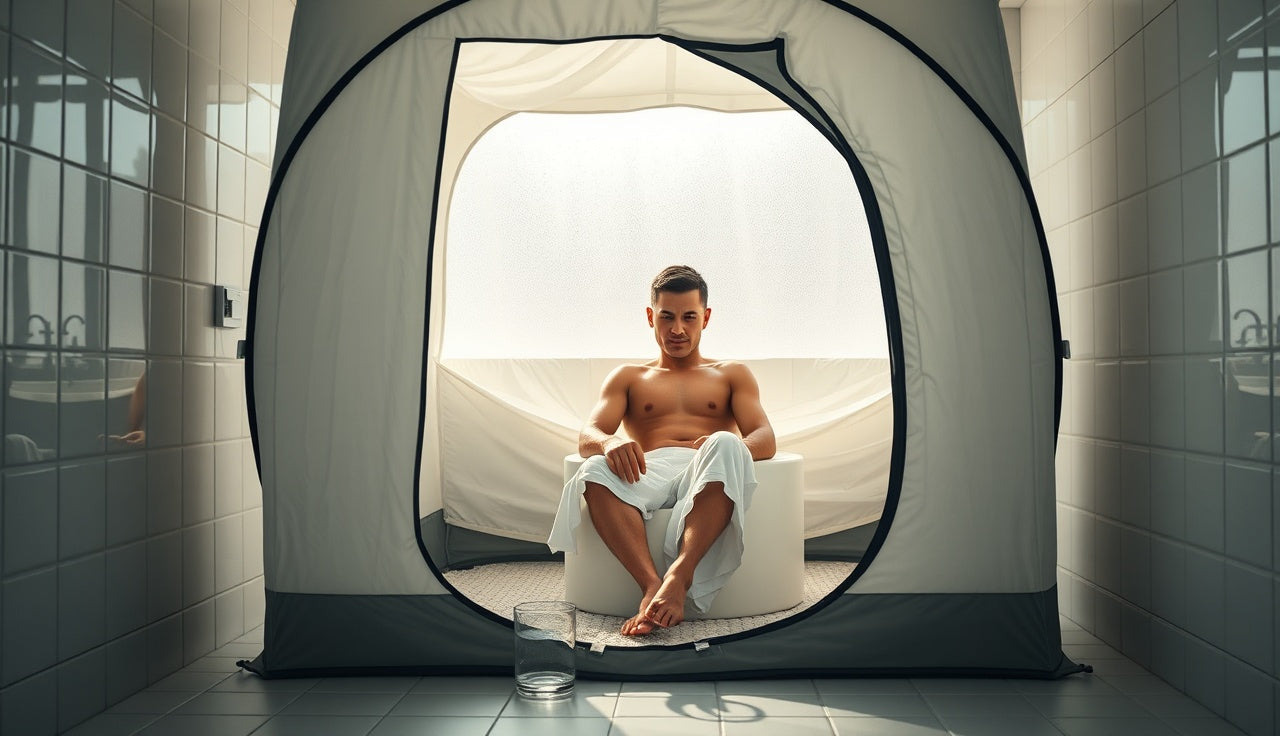
A portable steam room is a fabric or nylon enclosure, usually shaped like a tent or a folding chair pod, that a small electric steam generator fills with hot, humid vapor. You sit inside with your head poking out through a zippered neck hole. The steam builds up inside the tent, your skin temperature rises, you sweat. That's the whole mechanism.
These are not saunas in the traditional sense. A sauna uses dry heat, typically from heated rocks or infrared panels, and humidity stays low (10 to 20%). A portable steam room targets 100% relative humidity at a lower air temperature, usually 40 to 50°C (104 to 122°F), which is why it feels so much more intense than those numbers suggest. Water vapor conducts heat to your skin far more efficiently than dry air does. If you want a direct comparison of the two experiences, the sauna vs steam room breakdown covers that in full.
The basic kit has three parts: the collapsible tent, the steam generator (usually 800 to 1000 watts), and a flexible hose that connects them. Some kits include a folding stool. Higher-end versions add a remote control, a timer, a chair with armrests, and an aromatherapy tray that sits over the steam nozzle. Entry-level models from brands like Durherm, SereneLife, and Gizmo Supply sell on Amazon for $30, $80. Mid-tier options with a built-in chair and better sealing run $120, $300. A small number of purpose-built pod designs, closer to rigid portable cabins, reach $500, $600+.
The tent itself packs down to roughly the size of a duffel bag and sets up in two to five minutes. The steam generator is a separate countertop appliance, about the size of a rice cooker. You fill it with water, plug it into a standard 110 to 120V outlet, and it starts producing steam in roughly eight to twelve minutes [1]. That's the full setup.
How does a portable steam room compare to other home heat options?
Price is the sharpest difference. A home sauna installation, even a prefab kit, runs $3,000, $10,000+ once you factor in the unit, wiring, and any structural work. A tiled wet steam room costs even more, typically $5,000, $15,000 installed, because you need waterproofed walls, a steam generator plumbed into a water line, a drain, and professional tile work [2]. A portable steam room for home use costs $30, $600 and plugs into the outlet you already have.
The trade-offs are real, though. Here's an honest side-by-side:
| Feature | Portable steam room | Home sauna (prefab) | Built-in steam room |
|---|---|---|---|
| Upfront cost | $30, $600 | $3,000, $10,000+ | $5,000, $15,000+ |
| Install time | 2 to 5 min | Hours to days | Days to weeks |
| Temp range | 40 to 50°C (104 to 122°F) | 70 to 100°C (158 to 212°F) | 40 to 50°C (104 to 122°F) |
| Humidity | ~100% | 10 to 20% | ~100% |
| Session length | 10 to 20 min typical | 15 to 30 min typical | 15 to 30 min typical |
| Durability | 1 to 4 years typical | 15 to 30+ years | 20+ years |
| Space needed | Any room with an outlet | Dedicated space | Dedicated bathroom |
Portable home saunas (infrared blankets and tent saunas) are a closer comparison. Infrared tent saunas use dry heat from carbon fiber panels rather than steam, so the feel is different, though the price range overlaps. Some people prefer the steam because the high humidity helps with breathing and skin hydration. Others find it claustrophobic or too humid. Neither is objectively better.
If you already have a portable sauna at home and want the steam experience on top of it, a portable steam kit is a low-risk way to try it. If you're deciding between the two as your only unit, it comes down to whether you want the dry Finnish heat or wet steam, which is mostly personal preference.
What are the real health benefits of steam bathing?
The evidence for heat therapy in general is solid. A 2018 review published in Mayo Clinic Proceedings analyzed observational data from the Kuopio Ischemic Heart Disease Risk Factor Study and found that men who used a sauna 4 to 7 times per week had a 50% lower risk of fatal cardiovascular disease compared to once-a-week users [3]. That study used Finnish dry saunas, not steam rooms, so the direct extrapolation has limits. Portable steam rooms reach lower temperatures, and nobody has run equivalent long-term trials on them specifically.
For steam specifically, a small 2014 study in the Journal of Human Hypertension found that a single 10-minute steam bath reduced blood pressure in hypertensive patients, though the effect was short-term [4]. Steam inhalation is well-established in respiratory medicine for loosening mucus and easing congestion, which is partly why steam rooms have a reputation for helping with sinus issues and mild respiratory discomfort. The steam does reach your airway and upper bronchial passages, unlike a dry sauna where the humidity is too low for that mechanism.
Skin hydration is another plausible benefit. High humidity keeps skin moisture from evaporating as fast during a session, and some dermatologists suggest steam can open pores and soften the surface layer of skin. This is mostly mechanistic reasoning rather than controlled trial evidence.
A few honest caveats. Portable units hit lower temperatures than traditional steam rooms, so the physiological stimulus is milder. Sessions are short, usually 10 to 20 minutes. If you're hoping for the dramatic cardiovascular effects from the Finnish sauna literature, a portable steam room at 45°C is a different stimulus. The closest relevant sauna benefits data comes from higher-heat sessions. That doesn't mean the experience is useless, but keep expectations calibrated.
Anyone with heart disease, uncontrolled hypertension, or who is pregnant should check with a physician before using any heat therapy. This is standard advice from the American College of Sports Medicine, not a legal disclaimer invented for this article.
| Budget portable steam room | $55 |
| Mid-range portable steam room | $200 |
| Premium portable steam pod | $550 |
| Prefab home sauna (kit) | $5,000 |
| Built-in tiled steam room | $10,000 |
Source: Angi/HomeAdvisor cost data, Amazon market pricing, 2024–2025
What should you look for when buying a portable steam sauna?
Generator wattage matters most. An 800-watt generator fills a small tent in about 8 to 12 minutes. A 1000-watt unit is faster and holds temperature better in a drafty room, or if you're a larger person and the tent fits more tightly around you. Go below 800 watts and you'll wait longer, and the tent may not stay hot enough late in a session.
Tent material and seal quality decide whether steam actually stays inside or leaks out around the neck hole, zipper, and base. Look for Oxford nylon or a thicker polyester with a heat-resistant inner lining. The neck hole collar should have a drawstring or elastic that forms a seal around your shoulders without being painful. Read reviews specifically about steam leakage. It's the most common complaint on cheap units.
Stool quality is underrated. You're sitting inside a hot, humid enclosure for 10 to 20 minutes. A wobbly folding stool that comes with a $35 kit is a real fall risk. If you buy a kit with a flimsy stool, swap it for a sturdy plastic step stool rated for at least twice your body weight before your first session.
Timer and auto shut-off are safety features, not luxury features. The steam generator should cut off automatically after a set time. Most units offer 5 to 60 minute timers. The generator gets hot and the water inside can run dry if left on too long, which is a burn and fire risk. Never leave a running generator unattended.
Aromatherapy compatibility is a nice-to-have. Some kits include a small tray that clips over the steam nozzle where you can place eucalyptus oil or other essential oils. This is a legitimate comfort feature, not a gimmick, since steam carrying aromatic compounds does reach your sinuses during a session.
For most people, a mid-tier unit in the $120, $250 range from a brand with consistent Amazon reviews hits the right balance of quality and price. Spending $30 gets you a thin tent and a weak generator. Spending $600 on a rigid pod buys durability and looks you probably don't need for home use.
How do you set up and use a portable steam room safely?
Setup is genuinely simple, but the safety steps are worth taking seriously because you're combining hot steam, an electrical appliance, and a confined space.
Find a surface that can get wet. Bathrooms are ideal because the floor is waterproof and there's ventilation. A bedroom works, but put a towel or mat under the tent base because condensation drips down from the inside and pools at the bottom. Hardwood floors can warp if they stay wet.
Fill the generator with distilled or filtered water if you can. Tap water works, but minerals build up on the heating element over time and shorten its life. Most generators take 1 to 2 liters. Never fill past the max line; steam pressure builds up and you want the unit working as designed.
Plug the generator into a GFCI-protected outlet if possible. In a bathroom, this is standard by code in most US states under NEC 210.8, which requires GFCI protection for all bathroom receptacles [5]. If you're using it in a bedroom without GFCI, use a GFCI outlet adapter, which costs about $15 and is worth it near steam.
Let the generator run for a minute before you get in so the hose and nozzle inside the tent are warm. Step in, zip up, adjust the neck collar so it seals around your shoulders. Set your timer. Start with 10 minutes if it's your first session. You'll know when you're done because you'll be sweating heavily and possibly feeling a little lightheaded. That lightheadedness is a sign to get out.
Have water next to you before you start. A full 16 to 24 oz of water before a session and more after is a reasonable baseline. The steam itself doesn't hydrate you. You're still sweating and losing fluid.
After the session, open the tent and let it air dry completely before folding it. Mold grows fast in damp nylon. Wipe the interior if you can reach it, and leave it unzipped for a few hours.
How long should a portable steam room session be?
Ten to twenty minutes is the standard recommendation from most manufacturers, and it matches the durations used in most heat therapy research. The 2018 Finnish study that showed cardiovascular benefits used 15 to 30 minute sessions in 80°C+ dry saunas, a higher thermal load than a 45°C steam tent. Nobody has established a specific optimal duration for portable steam rooms.
Start with 10 minutes for your first few sessions. Your cardiovascular system adapts to heat stress over repeated exposure, and some people feel dizzy or nauseated after their first session even at short durations. That response is normal and typically fades after a few uses.
If you want to combine steam with contrast therapy, a cold shower or cold plunge afterward can amplify the sensation of recovery. The evidence for contrast therapy specifically is moderate, but athletes report subjective benefits consistently. Alternating 10 minutes of heat with 1 to 2 minutes of cold water, repeated 2 to 3 times, is one common protocol used in sports recovery research [6].
Frequency matters more than session length for building a habit. Three sessions per week is a reasonable starting point. Daily use is fine for most healthy adults, though giving your body a rest day or two per week is sensible.
Are portable steam rooms safe for everyone?
For healthy adults, the risk profile is low when basic precautions are followed. The main risks are dehydration, hypotension (blood pressure drop when you stand up quickly), and burns from contact with the steam nozzle or generator housing.
Some populations need to be more careful. The American Heart Association notes that extreme heat causes vasodilation and drops blood pressure, which can be dangerous for people with cardiovascular disease, heart failure, or arrhythmias [7]. Pregnant women are generally advised to avoid high-heat environments because core temperature increases above 39°C (102.2°F) have been associated with fetal neural tube defects in animal studies, and the human evidence, while not definitive, is enough to recommend caution [8].
People on certain medications, including antihypertensives, diuretics, and some antipsychotics, can have exaggerated responses to heat. If you take daily medication, ask your prescriber before starting regular steam sessions.
Children under 12 have less efficient thermoregulatory systems and should not use adult steam tents. Older adults can use them but should start with shorter, lower-temperature sessions and always have someone nearby for the first few uses.
The electrical safety point deserves emphasis. Keep the generator outside the tent, never inside. Keep the generator cord away from water puddles. Don't leave it running unattended. These rules aren't overcautious. They're basic.
What are the best portable steam saunas actually worth buying in 2025?
There's no single best unit for everyone because the market runs from $35 disposables to $600 pods, and the right choice depends on what you need. Here's an honest look at the categories.
Budget ($30, $80): Durherm, Zonemel, and similar generic brands dominate this space. The tents are thin, the generators are weak (600 to 800W), and the stools are borderline unsafe. These are fine for occasional use if you reinforce with a better stool and manage expectations. Don't expect them to last more than a year of regular use.
Mid-range ($120, $300): This is where value peaks. Units from brands like SereneLife, Radiant Saunas, and Health Touch include a proper 800 to 1000W generator, a more substantial tent, a built-in chair or better folding stool, and a remote control. The Radiant Saunas portable steam sauna in this price bracket consistently gets high marks for build quality and steam output in buyer reviews. SweatDecks carries a curated selection of portable saunas for home if you want to see what's available without sifting through hundreds of Amazon listings.
Premium ($300, $600+): A few brands, including Durasage and some imported Euro-style pod units, offer rigid or semi-rigid enclosures with better insulation, sturdier frames, and longer warranties (sometimes 2 to 3 years). These make sense if you'll use the unit daily and want it to last. The Durasage full-body steam sauna, for example, uses a 1000-watt generator and a canvas-over-frame construction that holds its shape better than a pure tent design.
One thing to check regardless of price: the warranty on the steam generator. The generator is the part that fails first. A 1-year warranty is standard; 2 years is better. Some budget kits have no warranty at all, which tells you something about expected lifespan.
If your goal is steam specifically and not a tent setup, some people buy a standalone personal steam inhaler and combine it with a sweat suit or simply sit in a very humid bathroom. That's a different experience, but it's even cheaper.
Can a portable steam room help with weight loss or muscle recovery?
The weight loss question comes up constantly, and the honest answer is that the number on the scale drops after a steam session because you lost water weight, not fat. You can lose 0.5 to 1.5 kg (1 to 3 lbs) of fluid in a 20-minute session depending on body size and temperature. That weight comes back the moment you rehydrate, which you should do immediately. Steam rooms are not a fat-loss tool in any meaningful physiological sense.
Muscle recovery is a more nuanced story. Heat increases local blood flow, which could theoretically speed the delivery of oxygen and nutrients to fatigued muscle tissue. A 2021 review in the International Journal of Environmental Research and Public Health found that passive heat therapy post-exercise reduced delayed onset muscle soreness (DOMS) in some protocols, though effect sizes were modest and varied by study design [9]. The heat also activates heat shock proteins, which are involved in cellular repair, though most of the direct HSP research uses higher temperatures than a portable steam room reaches.
Contrast therapy, alternating heat with cold, has better evidence for recovery than heat alone. A 2016 meta-analysis in the British Journal of Sports Medicine found that cold water immersion and contrast water therapy both significantly reduced DOMS compared to passive rest [10]. If you combine a portable steam session with even a cold shower or a full ice bath, you're using a protocol that has actual trial support. Contrast bathing is one of the reasons people pair heat tools with cold plunge setups.
The subjective feeling of recovery after heat, the muscle relaxation and reduced tension, is real even if the mechanism is partly neurological rather than purely physiological.
How do portable steam rooms handle maintenance and longevity?
The steam generator is the weak link. Mineral deposits from tap water accumulate on the heating element and inside the reservoir, cutting efficiency and eventually causing failure. Descaling every 4 to 8 weeks extends generator life significantly. Mix equal parts white vinegar and water, run it through the generator for 20 to 30 minutes (with the hose going into a bucket, not the tent), then rinse with clean water twice. Most manufacturers recommend this; some include descaling solution in the box.
The tent fabric grows mold if stored damp. Let it air dry completely, every time. If mold does develop, a diluted white vinegar spray (1:1 with water) applied and then dried in sunlight usually handles it. Bleach works but can degrade nylon over time.
Zippers fail on cheaper tents, usually within 6 to 12 months of regular use. You can extend zipper life by keeping them clean and occasionally rubbing candle wax or zipper lubricant along the teeth.
Overall lifespan varies a lot by price tier. Budget units typically last 1 to 2 years with 2 to 3 sessions per week. Mid-range units last 3 to 5 years with proper maintenance. The generator usually gives out before the tent does. Replacement generators are often sold separately if the same brand makes them.
If you want the long-term steam room experience without the maintenance headache, eventually a purpose-built steam room addition makes more sense economically. But for most people testing whether they even like steam bathing, a portable unit that lasts 2 to 3 years at $150 is a reasonable entry point before committing to a permanent installation.
Where can you use a portable steam room at home?
Anywhere you have a standard outlet and a floor surface that can handle moisture. The bathroom is the obvious choice: drain nearby, GFCI outlets, no furniture to worry about. The main limitation is space. The average portable steam tent footprint is about 90 x 90 cm (roughly 3 x 3 feet). Most bathrooms have that room.
Bedrooms work well if you put a waterproof mat or old towel under the tent. Condensation drips and pools; it's unavoidable. A yoga mat works well as a base layer.
Outdoor use is possible in warm weather. A shaded patio or deck works if you have an outdoor outlet. Wind is the main problem because it cools the tent exterior and makes the generator work harder. An 800-watt generator struggling against a breeze will lose. Outdoors in cool weather is impractical.
Apartment living is one of the best use cases for portable steam rooms, precisely because the setup requires no permanent space. Set it up in a bathroom or bedroom, use it, break it down, store it in a closet. That's genuinely not possible with any permanent sauna option.
One thing people don't always think about: ventilation. Steam raises the humidity in whatever room you're in. Run a bathroom fan or crack a window so the room itself doesn't become a mold risk after repeated sessions. The tent controls where the steam goes during the session, but some escapes around the neck hole and adds ambient humidity to the room.
Frequently asked questions
How much does a portable steam room cost?
Entry-level kits with a basic tent and steam generator run $30, $80. Mid-range units with better build quality, a proper chair, and a remote control cost $120, $300. Premium rigid or semi-rigid pod designs reach $500, $600+. For most home users, the $120, $250 range delivers the best balance of durability and steam performance. Replacement generators, when sold separately, typically cost $30, $70.
Is a portable steam room as good as a real steam room?
No, but it's close enough for many people. A built-in tiled steam room is better insulated, reaches more consistent temperatures, and lets you move around freely. A portable unit works well for a seated session but can't fully replicate the environment of a permanent room. The core steam experience, hot humid air, sweating, relaxed muscles, is genuinely similar. The hardware quality and longevity are not.
How long does it take a portable steam room to heat up?
Most 800 to 1000 watt generators produce usable steam in 8 to 12 minutes. Cheaper 600-watt units can take 12 to 18 minutes and may struggle to hold temperature through a session. Running the generator for a full minute before entering so the hose and nozzle inside the tent pre-warm is a good habit and makes the perceived heat-up time shorter.
Can you use essential oils in a portable steam room?
Yes, on units that include an aromatherapy tray or cup that sits over the steam nozzle, not inside the generator. Never put essential oils directly into the water reservoir. Oil in the reservoir coats the heating element, accelerates mineral buildup, and can void the warranty. A few drops of eucalyptus, lavender, or peppermint oil on the tray is the correct method. It works because the steam carries the aromatic vapor into the tent.
Can you use a portable steam room every day?
Most healthy adults can use one daily without harm. The main practical limit is hydration: you lose fluid through sweating and need to replace it. Daily 10 to 15 minute sessions are far below the thermal load that concerns medical literature. If you experience persistent dizziness, fatigue, or skin irritation, cut back. Three to four sessions per week is a reasonable starting point before increasing.
What is the difference between a portable steam room and a portable infrared sauna?
A portable steam room uses a steam generator to fill a tent with hot humid vapor, reaching 40 to 50°C at near-100% humidity. A portable infrared sauna uses carbon fiber or ceramic heating panels to warm your body directly with infrared radiation, at 45 to 60°C but very low humidity. Steam feels more intense at the same temperature because humid air transfers heat to skin more efficiently. Infrared penetrates tissue more deeply in theory. Both are very different from a traditional Finnish sauna.
Are portable steam rooms safe for people with high blood pressure?
Heat causes vasodilation and can temporarily lower blood pressure, which sounds beneficial but can cause a dangerous drop in people on antihypertensive medications or with unstable blood pressure. A small 2014 study in the Journal of Human Hypertension found blood pressure reductions after a single steam session. Anyone with hypertension should consult their physician before regular heat therapy use. Start with shorter sessions and avoid standing up quickly afterward.
How do you clean and store a portable steam room?
Air-dry the tent completely before folding it. Wipe the interior with a dry cloth and leave it unzipped for 2 to 3 hours after each session. Descale the generator every 4 to 8 weeks using a 50/50 vinegar and water solution run through the unit for 20 to 30 minutes, then flushed twice with clean water. Store the tent in its carry bag only when fully dry. Most units store in a closet or under a bed.
Can I use a portable steam room if I'm pregnant?
No, this is generally not recommended. Raising core body temperature above 39°C (102.2°F) during pregnancy has been associated with increased risk of neural tube defects based on animal studies, and medical guidelines from the American College of Obstetricians and Gynecologists advise pregnant women to avoid environments that significantly raise core temperature. Consult your OB or midwife before any heat therapy during pregnancy.
What size portable steam room do I need?
Most standard tents fit people up to about 6 feet (183 cm) tall and 250 to 300 lbs. If you're taller, look for units specifically marketed as XL or full-body tents, typically 10 to 15 cm taller and wider. The tent should be tall enough that the neck hole sits comfortably at your shoulder level when seated. A tent that's too small will let steam escape around the neck hole constantly.
Can a portable steam room help with sinus congestion or colds?
Steam inhalation is a well-established method for loosening nasal mucus and easing sinus pressure. A portable steam room delivers humid air to your airways during a session, which mechanically can help with congestion. A 2013 Cochrane review on steam inhalation for the common cold found mixed evidence for symptom relief, noting some benefit but also risks of burns from poorly designed steamers. The evidence supports short-term symptom relief, not treatment of the underlying infection.
Do portable steam rooms work for weight loss?
They cause temporary water weight loss from sweating, typically 0.5 to 1.5 kg per session, which returns immediately when you rehydrate. There is no credible evidence that steam room sessions produce meaningful fat loss. Caloric burn during a 15-minute session is modest, comparable to light walking. Steam rooms are a recovery and relaxation tool, not a fat-loss intervention. Anyone telling you otherwise is overstating the evidence.
What voltage and outlet type does a portable steam room need?
Nearly all consumer portable steam rooms in the US are designed for standard 110 to 120V, 15-amp outlets, the same outlet used for a hair dryer or kitchen appliance. No special wiring is needed. For safety, use a GFCI-protected outlet, which is standard in bathrooms by US electrical code (NEC 210.8). Do not use an extension cord rated below 15 amps, and do not use a multi-socket power strip with other high-draw appliances.
How do portable steam rooms compare to steam saunas at a gym?
Commercial gym steam rooms run at 40 to 50°C with industrial generators keeping humidity and temperature consistent across a much larger space. A portable unit reaches similar temperature ranges but in a much smaller volume, so heat-up time is shorter and the experience is more personal. The main gym advantage is that you can stand and move freely. The home unit advantage is privacy, convenience, and no membership fee.
Sources
- Radiant Saunas product documentation and general portable steam generator specifications: Most 800–1000W portable steam generators reach usable steam output in 8–12 minutes from a cold start
- HomeAdvisor / Angi: Steam Room Installation Cost Guide: Built-in tiled steam room installation costs typically $5,000–$15,000 including waterproofing, generator, tile work, and labor
- Laukkanen JA et al., Mayo Clinic Proceedings 2018: Association Between Sauna Bathing and Fatal Cardiovascular and All-Cause Mortality Events: Men who used a sauna 4–7 times per week had a 50% lower risk of fatal cardiovascular disease compared to once-a-week users in the Kuopio cohort
- Shin K et al., Journal of Human Hypertension 2014: Effects of a single session of steam bath on blood pressure in hypertensive patients: A single 10-minute steam bath reduced blood pressure in hypertensive patients, though the effect was short-term
- National Fire Protection Association, NFPA 70 (NEC) 2023, Section 210.8: NEC 210.8 requires GFCI protection for all bathroom receptacles in residential construction
- Bieuzen F et al., PLoS ONE 2013: Contrast Water Therapy and Exercise Induced Muscle Damage: Contrast water therapy (alternating hot and cold immersion) was associated with reduced post-exercise muscle damage markers in multiple studies
- American Heart Association: Extreme Heat and Cardiovascular Health: Extreme heat causes vasodilation and drops blood pressure, which can be dangerous for people with cardiovascular disease, heart failure, or arrhythmias
- American College of Obstetricians and Gynecologists (ACOG): guidance on exercise and heat exposure during pregnancy: Core temperature increases above 39°C during pregnancy have been associated with fetal neural tube defects; ACOG advises avoiding environments that significantly raise core temperature during pregnancy
- Petrofsky J et al., International Journal of Environmental Research and Public Health 2021: The Effect of Moist Heat on Delayed Onset Muscle Soreness: Passive heat therapy post-exercise reduced delayed onset muscle soreness in some protocols, though effect sizes were modest
- Machado AF et al., British Journal of Sports Medicine 2016: Cold water immersion and contrast water therapy for DOMS: Cold water immersion and contrast water therapy both significantly reduced delayed onset muscle soreness compared to passive rest
- National Center for Complementary and Integrative Health (NIH): common cold and steam inhalation: Steam inhalation is mechanically effective at loosening nasal mucus and reducing sinus pressure
- Singh M, Das RR, Cochrane Database of Systematic Reviews 2013: Steam inhalation for the common cold: A 2013 Cochrane review found mixed evidence for steam inhalation reducing common cold symptoms, with some benefit but burn risks noted

Share:
Outdoor infrared sauna: the complete buyer's guide
Outdoor infrared sauna: the complete buyer's guide