
Last updated 2026-07-09
TL;DR
Portable steam saunas are fabric tents with a plug-in steam generator. They cost $40 to $300, reach 110 to 130°F at near-100% humidity in about 10 minutes, and give you a real sweat session in a studio apartment. They do not replace a wood sauna. For anyone short on space or budget, they are a legitimate option.
What is a portable steam sauna, exactly?
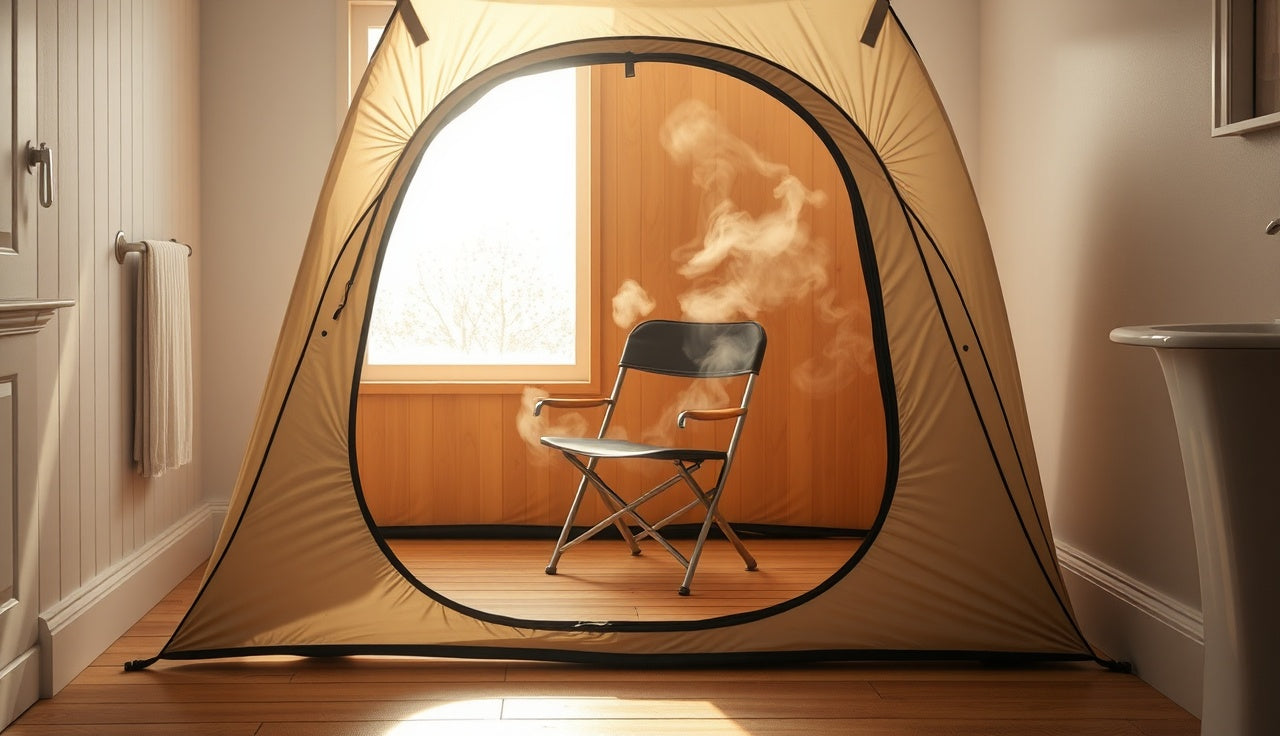
A portable steam sauna is a seated tent, usually nylon or polyester, paired with a separate steam generator that plugs into a standard 110V outlet. You sit inside with your head poking out the top, the steam floods the enclosed space, and you sweat for 15 to 30 minutes. The whole thing folds into a bag when you finish.
That is the core product. Portable infrared saunas exist too, using radiant heat panels instead of steam, and portable barrel saunas run larger and need outdoor space. This article stays on the steam variety because it is the most searched, the cheapest, and the most misunderstood.
The steam generator does all the work. Most budget units run 800 to 1000 watts and hold roughly 1.5 to 2 liters of water. A 1.5-liter tank gives you about 30 to 45 minutes of continuous steam before a refill, which covers most sessions. The tent itself is dumb by design. Its only job is trapping humid air around your body.
How hot does a portable steam sauna actually get?
Most portable steam saunas reach 110 to 130°F (43 to 54°C) at humidity close to 100%. That is a different animal from a traditional Finnish sauna, which runs 160 to 200°F (71 to 93°C) at 10 to 20% humidity [1]. High humidity makes lower temperatures feel much hotter, because your sweat can't evaporate to cool you.
Skin and core temperature responses are what matter physiologically, not the number on the ambient thermometer. Research in the journal Temperature found that moist heat environments can produce cardiovascular responses similar to drier, hotter saunas when session length is matched [2]. The physiology is comparable even when the thermometer reads lower.
Anyone used to a 185°F Finnish sauna will find a portable steam tent noticeably milder. The feel is closer to a steam room than a wood sauna. Chasing intense dry heat? A steam unit will let you down. Chasing a comfortable, sustained sweat with the respiratory kick of steam? It delivers.
Heat-up is quick. Most units produce meaningful steam within 5 to 10 minutes of switching on. That beats home saunas, which take 30 to 60 minutes to reach temperature [3].
What does the research say about steam bathing and health?
The sauna research base is large and mostly Finnish, built on traditional dry saunas. Applying it directly to portable steam units takes some caution, because the temperature and humidity profiles differ. Here is what the evidence actually says.
Cardiovascular effects: A 2018 study in Mayo Clinic Proceedings found that frequent sauna use (4 to 7 sessions per week) was associated with reduced risk of cardiovascular events in a cohort of over 2,300 Finnish men [4]. The mechanism appears to involve heat-driven increases in heart rate and cardiac output that resemble moderate aerobic exercise. The study authors wrote: "sauna bathing is a safe activity for healthy adults and may be considered a lifestyle factor associated with cardiovascular health." [4] That was a dry-sauna cohort. Steam-specific data is thinner.
Respiratory effects: Steam inhalation is well-documented for temporary relief of nasal congestion. A Cochrane review on steam inhalation for upper respiratory infections found modest symptomatic benefit without clear evidence of shortening illness duration [5]. Warm humid air loosens mucus. That is real, even if it isn't a cure.
Recovery and muscle soreness: Heat therapy has decent evidence for reducing delayed-onset muscle soreness (DOMS). A 2013 trial in the Journal of Clinical Medicine Research found that moist heat packs applied after exercise reduced soreness more than dry heat at 24 and 48 hours post-exercise [6]. A portable steam sauna delivers whole-body moist heat, which works by a similar mechanism.
Nobody has great data specifically on portable steam tents. The closest proxies are steam room studies and moist heat trials. Stay skeptical of anyone promising dramatic health transformations from a $70 tent.
| Portable steam sauna | 120 |
| Portable infrared sauna | 140 |
| Steam room (commercial) | 115 |
| Traditional Finnish sauna | 180 |
| Barrel/wood sauna (home) | 175 |
Source: NIH NCCIH and Mayo Clinic Proceedings, 2018
What is the X-VCAK portable steam sauna, and is it worth buying?
The X-VCAK portable steam sauna (also styled X VCAK) is one of the most searched portable steam tent brands on Amazon, usually listed in the $60 to $90 range. It follows the standard format: a polyester tent, a 1000-watt steam generator with a digital timer, a folding chair, and a foot-massage mat that doubles as a floor.
What sets X-VCAK apart from generic competitors is mostly cosmetic. The zipper-front design makes getting in and out easier than side-zip models, and the steam generator has a visible water level window. That window is genuinely useful, because running a generator dry burns out the heating element. The foot-massage mat is a gimmick. Nobody's feet are getting massaged by a rubber pad.
Is it worth buying? Yes, as a low-stakes way to test steam therapy before committing to a real steam room or a pricier infrared unit. At $70 to $90, the downside is small. The failure modes belong to the whole category: the tent fabric doesn't breathe, so the exterior gets wet and slippery, the zipper can snag, and the generator timer maxes out at 60 minutes on most units, which is fine for one session but annoying if you forget to reset it.
Comparing X-VCAK to another generic brand at the same price, the differences are minor. Look for a generator with safety auto-shutoff, water capacity of at least 1.5 liters, a zipper you can work from inside, and enough headroom to sit upright. X-VCAK checks those boxes. So do several rivals.
For how this category sits relative to proper home saunas, see our portable sauna guide.
Portable steam sauna vs. infrared sauna: which is better for home use?
These are two different products with different strengths.
| Feature | Portable steam sauna | Portable infrared sauna |
|---|---|---|
| Typical price | $40, $200 | $150, $500 |
| Temperature range | 110 to 130°F | 120 to 160°F |
| Humidity | Near 100% | Low (ambient) |
| Heat-up time | 5 to 10 min | 15 to 30 min |
| Respiratory benefit | Yes (steam inhalation) | Minimal |
| Pore-clearing steam | Yes | No |
| Setup complexity | Low | Low-medium |
| Session feel | Steam room | Sauna-adjacent |
| Durability | Lower (fabric, zippers) | Slightly higher |
Got respiratory issues, sinus congestion, or a soft spot for steam rooms? The steam version is the clear pick. Prefer dry heat and want something closer to a traditional sauna? Infrared fits better.
Neither replaces a proper home sauna. A full barrel or cabin sauna reaches 180°F and up, delivers the well-studied Finnish experience, and lasts 15 to 20 years. A portable tent might last 2 to 4 years of regular use before the fabric or generator quits. Different economics, different experience, different research base.
See the full sauna vs steam room breakdown for a deeper comparison of heat types.
How do you use a portable steam sauna safely?
Safe use is simple, but a few rules are worth taking seriously.
Hydration comes first. You lose fluid fast in a high-humidity environment. Drink 16 to 24 ounces of water before your session and keep water within reach during it. The American College of Sports Medicine recommends starting exercise sessions well-hydrated, and the same logic carries over here [7].
Session length matters. For beginners, 10 to 15 minutes is plenty. Experienced users can push to 20 to 30 minutes. Never fall asleep in a portable steam tent. The confined space, high humidity, and lack of airflow make overheating a genuine risk. Set a timer on your phone, separate from the unit's built-in timer.
Don't use a portable sauna right after intense exercise, when your core temperature is already elevated. Wait 20 to 30 minutes. Skip alcohol before or during a session too. Heat plus alcohol accelerates dehydration and wrecks thermoregulation.
The tent needs a flat, non-slip surface. The wet exterior slides on hardwood or tile. Put a towel or yoga mat underneath.
People with cardiovascular conditions, pregnancy, or heat sensitivity should talk to a physician before using any sauna product. The American Heart Association notes that sudden large temperature shifts can transiently alter heart rate and blood pressure [8]. That is no reason to avoid saunas if you're healthy. It's a reason to get clearance if you're not.
Don't add essential oils or anything else directly to the generator's water reservoir. Oils clog and corrode the heating element. Some units have a separate aromatherapy compartment. Use that.
What should you look for when buying a portable steam sauna?
Most portable steam saunas on the market are functionally alike. The differences that matter sit in the steam generator and the tent geometry.
Steam generator wattage: 800 to 1000 watts is the sweet spot. Units under 800 watts can struggle to hold steam in a cold room. Units over 1000 watts are rare at this price and would mean checking your circuit load.
Water tank size: 1.5 liters minimum. Smaller tanks force more mid-session refills. Some generators have a fill tube that lets you add water without opening the unit, which is a real convenience.
Auto-shutoff: The generator should cut off automatically when the water runs out. Running dry burns out the element. This is the most common failure in budget units, and most reputable brands include the safety feature. Verify it before buying.
Zipper placement and operation: A front zip you can open from inside matters. Some designs need someone outside to help, which defeats the purpose for solo use.
Chair height and tent height: Measure your seated height. Many portable steam tents are built for people under 6 feet. If you're taller, check the interior dimensions before you buy.
To see how portable options stack up against entry-level permanent units, the costco sauna guide covers the common mass-market buys.
SweatDecks carries a curated selection of home sauna and steam options, including portable units, if you want vetted picks in one place.
How do you set up and clean a portable steam sauna?
Setup takes 5 to 10 minutes. Most units arrive with the tent folded, a steam generator, a connecting hose, a chair, and some accessories. Unfold the tent, set the chair inside, run the hose from the generator through the tent's port, fill the generator with distilled or filtered water, and plug it in. That's it.
Use distilled water if you can. Tap water works but leaves mineral deposits in the heating element over time, shortening the generator's life. Mineral buildup is the second most common failure after dry-running the tank.
Cleaning the tent: Wipe the interior with a damp cloth after each use and leave the zipper open to air dry. Mold is a real risk in any high-humidity fabric enclosure. Never store the tent folded while wet. Once a month, wipe the interior with a diluted white vinegar solution (1 part vinegar to 10 parts water) to head off mildew.
Descaling the generator: Every 1 to 3 months, depending on water hardness, fill the generator halfway with a 1:10 white vinegar solution, run it for 5 to 10 minutes, then flush twice with clean water. This strips mineral scale and adds real life to the heater.
Can a portable steam sauna help with weight loss?
The weight you drop in a sauna session is water, and you get it back the moment you rehydrate. It is not fat loss.
A 30-minute session can produce roughly 0.5 to 1.5 pounds of sweat loss depending on your body size and the ambient temperature [9]. That fluid shows up on the scale right away and vanishes once you drink. Athletes sometimes use this for short-term weight cutting before weigh-ins, but that practice carries dehydration risk and is no sustainable fat-loss plan.
Caloric burn during a session is modest. Heart rate climbs, which burns some calories, but the numbers stay small. One estimate based on heart rate data puts a session at roughly 1.5 to 2x resting metabolic rate, which for 30 minutes might mean 50 to 100 extra calories above baseline [9]. Meaningful if you compound it over months. Not a dramatic fat-loss mechanism on its own.
Portable steam saunas are a recovery tool and a comfort product. Selling them as weight-loss devices is marketing hype. The sauna benefits article covers what saunas actually do well, without the noise.
How does contrast therapy work with a portable steam sauna?
Contrast therapy means alternating heat and cold, usually cycling between a sauna and a cold plunge or ice bath. The practice is well-established in sports medicine and used by athletes to speed recovery, reduce inflammation, and move blood [10].
A portable steam sauna can anchor a contrast protocol at home. The most-studied sequence is 10 to 15 minutes of heat, then 1 to 3 minutes of cold immersion, repeated 2 to 4 times. You don't need a dedicated plunge. A cold shower or a tub of cold water and ice works fine.
The cold component is arguably more demanding than the heat. Cold water immersion fires up the sympathetic nervous system, triggers norepinephrine release, and produces a measurable drop in muscle soreness markers in controlled trials [10]. Heat dilates blood vessels and raises blood flow. Cold constricts them. Cycling between the two creates a pumping effect that may help clear metabolic waste from muscle.
Building a home recovery setup and already own a portable steam sauna? Adding a basic cold plunge or even a chest freezer conversion makes the whole system far more useful. See the ice bath guide for practical cold setup options.
Start conservative with contrast therapy if you're new to cold. One round of heat plus cold is enough in the first week. The cold shock response hits hard, and building tolerance slowly is safer and more sustainable.
What are the main downsides of portable steam saunas?
Honest answer: several.
The experience isn't the same as a real steam room or sauna. You're sitting in a nylon bag with your head sticking out. It works, but it isn't comfortable the way a cedar-lined steam room is comfortable. Some people love it. Some try it once and feel boxed in.
Durability is limited. Budget generators have heating elements that fail within 1 to 3 years of regular use. Tent fabric, zippers, and seams break down under constant moisture. Expect to replace or repair parts. These are not lifetime purchases.
The floor of the tent gets wet. Hot condensed steam pools at the bottom. Sitting on a folding chair inside, this is a nuisance. On any hard floor, the wet exterior turns into a slip hazard.
You can't really dial in the temperature. The generator has a steam output setting, but the actual temperature inside shifts with room temperature, how tightly the tent seals, and where you sit. It's imprecise next to a sauna with a proper thermostat.
If you can budget $500 to $1500, a small indoor infrared cabin or a proper steam room module delivers a much better experience. Portable steam tents are the lowest rung of the ladder, not the destination.
Frequently asked questions
How long should you stay in a portable steam sauna?
Beginners should start with 10 to 15 minutes per session. Experienced users can extend to 20 to 30 minutes. Do not exceed 30 minutes in one session without exiting to cool down. Set a phone timer separate from the unit's built-in timer. Drink water before, and keep water nearby during the session. Overheating in a low-ventilation steam tent is a real risk if you ignore the clock.
Can you use a portable steam sauna every day?
Yes, daily use is generally safe for healthy adults based on patterns from Finnish sauna research, though that research studied dry saunas rather than portable steam units. A 2018 Mayo Clinic Proceedings study found the most cardiovascular benefit correlated with 4 to 7 sessions per week. Give yourself at least one rest day per week initially, and stay well-hydrated.
Do portable steam saunas really work for detoxification?
The 'detox' framing is overstated. Sweating excretes small amounts of certain heavy metals, but your liver and kidneys handle the vast majority of waste removal. What sweating does reliably is open pores and clear skin-surface debris. Steam inhalation loosens nasal mucus. These are real, modest benefits. Be skeptical of any portable sauna marketed mainly as a detox device.
What is the difference between a portable steam sauna and a portable infrared sauna?
A portable steam sauna uses a wet steam generator to create near-100% humidity at 110 to 130°F. A portable infrared sauna uses radiant heat panels to warm your body directly at 120 to 160°F with ambient humidity. Steam saunas suit respiratory comfort and mimic a steam room. Infrared units feel closer to a traditional sauna. Steam units cost less; infrared units tend to be slightly more durable.
Is the X-VCAK portable steam sauna worth buying?
The X-VCAK is a reasonable entry-level option at $60 to $90. Its front-zip design and visible water level window are practical advantages over some generic competitors. Like all budget portable steam tents, expect a generator lifespan of 1 to 3 years with regular use. It is worth it as a low-cost trial of steam therapy. If you use it consistently, upgrade to a better unit or a permanent steam solution.
Can you add essential oils to a portable steam sauna?
Not directly to the water reservoir. Oils clog and corrode the steam generator's heating element. Some units include a separate aromatherapy compartment or tray near the steam output, which is the right place for essential oils. Alternatively, set a bowl of hot water with a few drops of eucalyptus or peppermint oil inside the tent near your feet, separate from the generator.
How much electricity does a portable steam sauna use?
Most portable steam generators run 800 to 1000 watts. A 30-minute session at 1000 watts consumes 0.5 kWh. At the U.S. average residential rate of roughly 16 cents per kWh in 2024, that is about 8 cents per session. Daily use for a month costs roughly $2.50 in electricity. Energy cost is not a meaningful factor in the decision.
What water should you use in a portable steam sauna generator?
Distilled water is best. Mineral deposits from tap water build up on the heating element over time, cutting output and eventually causing failure. If you use tap water, plan to descale the generator every 1 to 3 months with a diluted white vinegar solution. In hard-water areas, distilled water is worth the $1 to $2 per gallon to add real life to the generator.
Can a portable steam sauna help with muscle soreness?
Moist heat therapy has moderate evidence for reducing delayed-onset muscle soreness (DOMS). A 2013 Journal of Clinical Medicine Research trial found that moist heat applications reduced soreness more than dry heat at 24 and 48 hours post-exercise. A portable steam sauna delivers whole-body moist heat, which works by a similar mechanism. Pairing it with cold water exposure afterward (contrast therapy) may add to the recovery effect.
Are portable steam saunas safe for people with heart conditions?
Not without physician clearance. Heat exposure transiently increases heart rate and alters blood pressure, which the American Heart Association notes requires careful consideration for people with cardiovascular conditions. Healthy adults tolerate sauna exposure well in the research literature, but anyone with a diagnosed heart condition, arrhythmia, or uncontrolled hypertension should get specific guidance from their cardiologist before using any sauna.
How do you prevent mold in a portable steam sauna tent?
Leave the zipper open after every session and let the tent air dry completely before folding. Never store it damp. Once a month, wipe the interior with a diluted white vinegar solution (1 part vinegar to 10 parts water) and let it dry fully. In humid climates, drying time matters more. Mold is the main reason portable steam tents develop an unpleasant smell over time; consistent drying prevents it.
What is the best portable steam sauna under $100?
There is no objectively best unit under $100, because most are built on identical or very similar factory designs. Look for a steam generator with auto-shutoff when water runs dry, a water tank of at least 1.5 liters, a front-zip design you can operate from inside, and interior dimensions that fit your height. X-VCAK and similar brands meet these criteria. Read recent reviews specifically about generator longevity.
Can you use a portable steam sauna during pregnancy?
No. Elevated core body temperature during pregnancy is associated with neural tube defects and other fetal risks, particularly in the first trimester. The American College of Obstetricians and Gynecologists advises pregnant women to avoid hot tubs, saunas, and similar heat environments that raise core temperature above 102.2°F (39°C). Portable steam saunas can reach those temperatures. Avoid them during pregnancy entirely without explicit clearance from an OB.
How does a portable steam sauna compare to a sauna suit?
A sauna suit traps body heat to induce sweating during exercise or rest. A portable steam sauna generates external heat via a steam generator. Both raise skin temperature and induce sweating, but the mechanisms differ. Steam saunas offer respiratory benefits from humidified air that sauna suits do not. Sauna suits are more portable and cheaper but carry higher overheating risk during exercise.
Sources
- National Institutes of Health, National Center for Complementary and Integrative Health – Sauna: Traditional Finnish saunas run 160–200°F at 10–20% humidity, contrasting with steam saunas at lower temperatures and near-100% humidity
- Taylor, N.A.S. & Machado-Moreira, C.A. (2013), Temperature journal – moist vs dry heat cardiovascular responses: Moist heat environments can produce cardiovascular responses similar to drier, hotter saunas when session length is matched
- U.S. Department of Energy – Energy Efficiency of Saunas and Steam Rooms: Traditional home saunas typically require 30–60 minutes to reach operating temperature
- Laukkanen, J.A. et al. (2018), Mayo Clinic Proceedings – Sauna bathing and cardiovascular outcomes: Frequent sauna use (4–7x/week) was associated with reduced cardiovascular event risk in 2,300+ Finnish men; authors stated sauna bathing 'may be considered a lifestyle factor associated with cardiovascular health'
- Singh, M. & Singh, M. (2013), Cochrane Database of Systematic Reviews – Steam inhalation for upper respiratory infections: Steam inhalation provides modest symptomatic relief for nasal congestion without clear evidence of shortening illness duration
- Mayer, J.M. et al. (2013), Journal of Clinical Medicine Research – Moist vs dry heat for delayed onset muscle soreness: Moist heat packs reduced DOMS more than dry heat at 24 and 48 hours post-exercise
- American College of Sports Medicine – Position Stand on Exercise and Fluid Replacement: ACSM recommends starting exercise sessions well-hydrated, guidance applicable to sauna use
- American Heart Association – Sauna Use and Cardiovascular Health: Sudden large temperature shifts can transiently alter heart rate and blood pressure, relevant for individuals with cardiovascular conditions
- Pilch, W. et al. (2013), Journal of Human Kinetics – Fluid and caloric changes during sauna bathing: A 30-minute sauna session can produce 0.5–1.5 pounds of sweat loss; caloric burn is approximately 1.5–2x resting metabolic rate
- Versey, N.G. et al. (2013), Sports Medicine – Contrast water therapy and recovery from exercise: Alternating heat and cold immersion reduces muscle soreness markers and is associated with improved recovery in athletes
- American College of Obstetricians and Gynecologists – Committee Opinion on Sauna and Hot Tub Use in Pregnancy: Pregnant women should avoid environments that raise core body temperature above 102.2°F, including saunas and hot tubs
- U.S. Energy Information Administration – Average Retail Electricity Price 2024: U.S. average residential electricity rate was approximately 16 cents per kWh in 2024

Share:
How cold is an ice bath, and how cold should it actually be?
Ice bath facial: what it does, how to do it, and whether it works