
Last updated 2026-07-09
TL;DR
A portable sauna tent is a foldable fabric enclosure that traps heat around your body from a steam generator or an infrared heating panel. They cost $50 to $500, set up in five minutes, and fold into a closet. They get you sweating and raise your core temperature, but they don't match a full home sauna on heat quality or durability.
What is a portable sauna tent and how does it work?
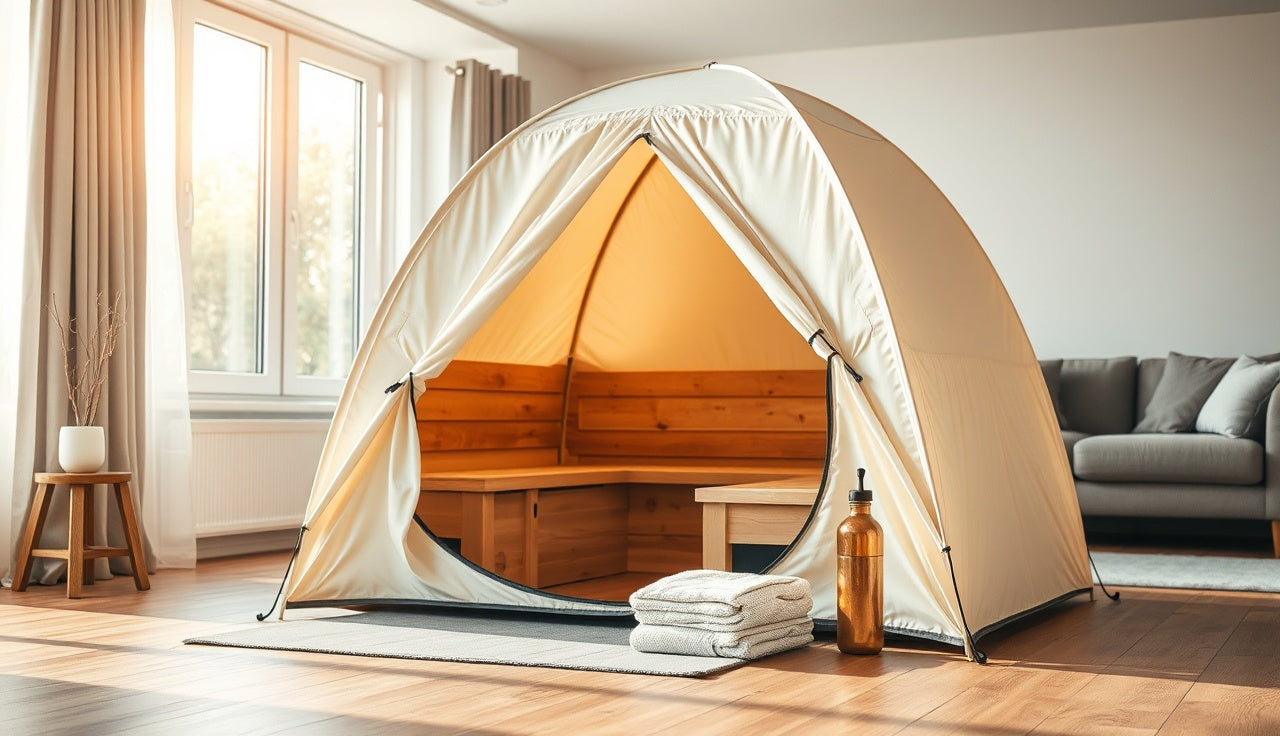
A portable sauna tent is a collapsible enclosure, usually polyester or Oxford nylon, that you sit inside up to your neck while heat builds around your body. A zipper opening keeps your head out so you can breathe normally. The heat source sits outside the tent: either a steam generator that pumps hot vapor through a hose, or an infrared panel sewn into the walls.
The principle is the same as any sauna. Trap heat close to your skin, raise skin and eventually core temperature, get you sweating. The tent just swaps permanent wood walls for fabric. Setup takes five to ten minutes. The whole rig folds down to about the size of a duffel bag.
Steam models heat the air and your skin at once. Infrared models emit radiant heat that skin absorbs more directly, in theory at lower air temperatures. Both get you sweating. Neither hits the 80 to 100°C air of a traditional Finnish sauna [1], but a steam tent can reach 40 to 55°C (104 to 131°F) inside fairly quickly.
For a fuller picture of how saunas work in general, see our overview on sauna types and heat mechanics.
What types of portable sauna tent are there?
Four main configurations sell right now.
Steam sauna tents use a separate steam pot, usually 1.5 to 2 liters, that you fill with water and plug into the wall. The generator runs between 800 and 1,800 watts. A hose feeds steam into the tent floor or side. Most budget models ($50 to $150) fall here. The environment is genuinely humid, which many people find more satisfying, and it's closer to what you'd get in a steam room.
Infrared sauna tents use carbon or ceramic panels built into the walls, run by a separate controller. They cost more ($200 to $500) and produce dry heat at lower air temperatures (roughly 35 to 50°C). Some people find the dry heat gentler on breathing. The research on far-infrared at consumer wattages is thin. Don't believe claims that a $200 tent replicates a clinical infrared cabin.
Combination units pack both a steam generator and infrared panels. Mostly premium. A few brands add a foot heating plate.
Chair sauna enclosures are a subset built to drape over a chair so you sit upright. Others use a camp-style folding stool. Comfort varies a lot. Plan to sit longer than 15 minutes and the chair matters more than most buyers expect.
One smaller category worth naming is the sweat suit sauna, a wearable garment version of the same idea. Different experience, same sweat-producing goal.
How much does a portable sauna tent cost?
Prices cluster into three bands.
| Tier | Price range (USD) | What you get |
|---|---|---|
| Budget | $50 to $120 | Steam tent, basic polyester, 800 to 1,000W generator, folding stool, no temperature display |
| Mid-range | $120 to $250 | Thicker fabric, digital timer/temp control, better steam pot (1,800W), some infrared models |
| Premium | $250 to $500 | Infrared panels, remote control, foot heater, better stitching, longer warranty |
The Brookstone portable sauna tent, one of the most searched names in this category, has historically sat in the $100 to $150 range and is a steam model. It shows up at major US retailers and sometimes on sale at Brookstone's own site. The quality tracks the price: fine for casual use, not built for daily sessions.
Australian buyers ask about portable infrared sauna tent price a lot. In AUD, expect roughly $80 to $200 for steam models and $300 to $700 for infrared tents, depending on import costs and retailer markup. GST applies. Brands available there include SereneLife, Durherm, and a handful of unbranded Chinese-made units through Kogan or Amazon AU. Currency swings move these ranges, so check current listings.
Compare that to a permanent home sauna (typically $3,000 to $10,000+ installed) and the tent's appeal is obvious for anyone on a small budget or in a rental. You give up durability, heat quality, and the feel of being fully enclosed.
| Portable steam tent | $100 |
| Portable infrared tent | $350 |
| Infrared sauna cabin (home) | $3,500 |
| Traditional Finnish sauna (home) | $7,000 |
| Outdoor barrel sauna | $4,500 |
Source: Market price ranges compiled from US retail listings, 2025–2026
What are the actual health benefits of using a sauna tent?
Here's where honesty beats hype. Most of the good research on sauna benefits used traditional Finnish saunas at 80 to 100°C, not portable tents [1]. Don't assume a $100 steam tent delivers the same physiological effects.
That said, the core mechanism is heat stress and sweating, and both happen in a well-used tent. A 2018 review in Mayo Clinic Proceedings found that "sauna bathing is associated with reduced risk of cardiovascular events," drawing largely on the Kuopio Ischemic Heart Disease study in Finland, which tracked over 2,300 men [2]. That study used traditional saunas. The pathway, higher heart rate and dilated blood vessels, can plausibly occur at lower temperatures too. Nobody has run equivalent long-term trials on portable tents.
Shorter-term effects you can reasonably expect from a tent:
- Sweating and transient water weight loss (real, but temporary; rehydrate)
- Muscle relaxation from heat
- Mild cardiovascular stimulation (heart rate rises like light exercise at enough heat)
- Perceived stress reduction and a mood lift
For a broader read on what the literature actually supports, our sauna benefits article walks through the studies. None of this is a medical promise. If you have a cardiovascular condition, talk to your doctor before regular sauna use of any kind [10].
On infrared: some researchers use far-infrared saunas in clinics, and a review in the Journal of Complementary and Integrative Medicine reported some evidence for blood pressure reduction and better cardiovascular function [3]. Those were purpose-built clinical units, not consumer tent panels.
Is a portable sauna tent safe to use?
Generally yes, with real caveats. The risks match any sauna: dehydration, overheating, fainting, and interactions with certain medications or conditions.
The U.S. Consumer Product Safety Commission has issued general sauna safety guidance, noting that alcohol use before or during sauna bathing raises the risk of accidents [4]. That applies here. Don't use a tent after drinking.
Risks specific to tents that differ from permanent saunas:
Electrical safety. You have a heating device and water (steam) in the same space. Reputable brands build in overheat protection and auto-shutoff. Cheap units sometimes don't. Check that the steam generator carries a UL or ETL listing (US) or a relevant CE/SAA mark (Australia/Europe) [7]. Don't run extension cords through water.
Burn risk from steam. The steam hose outlet gets hot. Keep it aimed at the tent floor, never at your skin. Keep children and pets away.
Overheating. Your head is outside the tent, so you can underestimate how hot your core is getting. Most manufacturers cap sessions at 15 to 20 minutes, especially when you're new to heat. Dizzy or nauseated? Stop.
Tent stability. Some chair-based designs tip if you lean. Test the frame before you climb in.
People who should not use any sauna without medical clearance: pregnant women, people with uncontrolled hypertension, anyone with a recent cardiovascular event, and anyone on medications that impair thermoregulation.
How does a portable sauna tent compare to a traditional or infrared sauna?
A side-by-side is the honest way to handle this.
| Feature | Portable tent | Infrared sauna cabin | Traditional Finnish sauna |
|---|---|---|---|
| Cost | $50 to $500 | $1,500 to $6,000 | $3,000 to $15,000+ |
| Setup time | 5 to 10 min | 1 to 3 hrs (assembly) | Days (construction) |
| Max air temp | 40 to 55°C | 50 to 65°C | 80 to 100°C |
| Full-body enclosure | Head out | Full body | Full body |
| Humidity control | Steam: humid. IR: dry | Dry | Dry (can add water to rocks) |
| Durability | 1 to 4 years typical | 10 to 20 years | 20+ years |
| Storage | Closet/bag | Dedicated room | Dedicated room |
| Resale value | Near zero | Moderate | Good |
The head-out design is the biggest practical difference. Your face, ears, and scalp never feel the heat. Some people like that. Others feel it kills the experience. Traditional saunas heat your whole body, head included, which is part of why the cardiovascular stimulation runs higher.
Against a full outdoor sauna or a permanent indoor build, the tent wins on portability and price. Everything else goes to the permanent unit.
In the portable sauna category, tents sit at the very entry level. Barrel saunas, pod saunas, and trailer saunas are "portable" in spirit but cost and feel much closer to permanent builds.
What should you look for when buying a portable sauna tent?
A few things matter more than the marketing bullets.
Wattage of the steam generator. 800W generators heat up slowly and produce less steam. 1,500 to 1,800W models reach temperature faster. In a cold or drafty room, generator power matters.
Fabric quality. Look for reinforced Oxford polyester or ripstop nylon with sealed seams. Thin fabric bleeds heat and degrades fast under steam. Reviews mentioning fabric that delaminates after 20 to 30 uses are a red flag.
Timer and temperature control. A programmable timer matters for safety. Some cheap models have no auto-shutoff. Skip those.
Foot opening or heating. Some tents have a small bottom opening; if the steam hose enters there, your feet get heat. Some premium models add a foot-heating mat. For full-body use, that's a genuine plus.
Chair or stool included. Most come with a folding plastic or bamboo stool. A few expect you to bring your own chair. Test that the stool holds your weight before your first real session.
Certifications. US market: UL or ETL listing on the electrical parts [7]. Australia: SAA or RCM mark on the steam generator [8]. This is your main protection against an electrical fault, not paperwork theater.
SweatDecks carries a curated set of portable sauna options if you want to compare specs before buying.
Warranty length. Most budget tents ship with 1 year. A few mid-range brands offer 2 years on the generator. Expect the fabric to be warrantied separately, if at all.
How do you set up and use a portable sauna tent?
Setup is genuinely simple. The tent unfolds and pops into shape like a camping shower enclosure. Most use a metal or fiberglass frame that snaps into place. Once you've done it twice, setup runs under five minutes.
Step-by-step for a typical steam tent:
1. Unfold the tent and pop the frame into position. 2. Place the folding stool inside. 3. Fill the steam generator with clean water (distilled is better for longevity, but tap works). 4. Connect the steam hose to the tent inlet, usually at the bottom or side. 5. Plug in the generator and set the timer (15 to 20 min for beginners). 6. Undress and sit inside, zipping the top closed around your neck. 7. Wait 3 to 5 minutes for steam to build. A warm room speeds this up. 8. When you're done, unzip, rehydrate, and towel off.
Cleaning: let the tent dry fully before folding. Wipe the interior with a diluted vinegar solution weekly if you use it often. Empty and rinse the steam pot after every session, since mineral deposits build fast and cut heating efficiency. Descale the generator monthly with a citric acid solution if you use tap water.
Storage is easy. Fold the tent to bag size, coil the hose, and store the generator with the lid off so any leftover moisture evaporates.
Can a portable sauna tent be used for contrast therapy?
Yes, and it's one of the more practical uses for anyone in an apartment or small home. Contrast therapy, alternating heat and cold, has decent short-term evidence for cutting delayed-onset muscle soreness and improving perceived recovery [5].
The tent gives you the heat side without a permanent install. A cold shower, a cold plunge tub, or a cold bath handles the cold. The most commonly studied protocol runs 10 to 15 minutes heat, 1 to 3 minutes cold, repeated 2 to 4 cycles.
The catch with tent-based contrast is transition time. Climbing out of a tent, re-dressing, and walking to a bathroom takes longer than stepping three feet from a sauna bench to a cold plunge. That gap matters, because part of the effect comes from the abrupt temperature swing. Position a cold plunge or ice bath tub in the same room as your tent and the protocol works much better.
For what the cold side actually does, our cold plunge benefits breakdown covers the Cochrane review and NSCA evidence.
What are the downsides of a portable sauna tent nobody talks about?
The marketing sells convenience. The actual experience has friction.
Condensation mess. Steam tents throw off a lot of moisture. The floor around the tent gets wet. The interior drips. No towel or mat underneath means you're mopping after every session.
Sitting in one position. You can't stretch out, lie down, or move the way you can in a full sauna. Fifteen minutes bolt upright on a plastic stool is less pleasant than it sounds.
Heat inconsistency. Open a door, catch a draft, or shift the tent so the zipper gaps, and heat drains fast. Fabric doesn't insulate well. In a cold room, cheap tents fight to hold temperature.
The head-out design. Some people love it. Others find a cool head over a hot body strange and less relaxing. It also caps how high your core temperature can realistically climb.
Longevity. Constant steam degrades polyester fabric and zippers. Honest users report 100 to 300 sessions before real wear shows up: zipper failures, fabric discoloration, weakening seams. At three sessions a week, that's one to two years.
The descaling problem. Neglect it and the generator dies in months. The tent may well outlast the steam pot.
None of these are dealbreakers. All of them are worth knowing before you buy.
Where can you buy a portable sauna tent, and which brands are reliable?
The most widely available US brands right now: SereneLife, Durherm, Radiant Saunas, and Brookstone. SereneLife and Durherm have the largest footprint on Amazon and the most reviews. Brookstone sells through its own retail and online channels, with occasional holiday sales.
In Australia, SereneLife and various unbranded units ship through Amazon AU and Kogan. A few local retailers like Costco AU stock them occasionally. Check our costco sauna article for what Costco typically carries, which sometimes includes portable options.
Where to buy:
- Amazon (US and AU): widest selection, easy returns, verified reviews
- Walmart / Target (US): in-store pickup on some models, good for hands-on inspection
- Costco: occasional stock, generous return policy if you decide you hate it
- Brookstone retail stores / brookstone.com: for the Brookstone-branded unit
- Specialty sauna retailers: SweatDecks and similar stores that focus on sauna and recovery gear tend to carry better-vetted mid-range and premium options
Avoid unfamiliar sellers with no returns policy. The steam generator is an electrical appliance. If it arrives damaged or dies in week two, you need a path to return or replace it.
One practical tip: read the one-star reviews first. The common failure points tell you the most about durability, namely zipper quality, generator longevity, and whether customer service actually responds.
Frequently asked questions
How long should you sit in a portable sauna tent?
Start at 10 to 15 minutes per session until you know how your body handles the heat. Most manufacturers cap sessions at 20 to 30 minutes. If you feel dizzy, lightheaded, or nauseated at any point, exit right away. Drink water before and after. Most regular users settle at 15 to 20 minutes as their comfortable length.
Can you use a portable sauna tent every day?
Daily use is fine for healthy adults, but the strongest cardiovascular associations came from the Finnish Kuopio cohort, where 4 to 7 sessions per week showed the best outcomes with traditional saunas. Start at 2 to 3 times per week, let your body adapt, then increase if you want. Daily use also speeds wear on the tent fabric and steam generator.
Do portable sauna tents actually make you lose weight?
They cause water weight loss from sweating, which reverses the moment you rehydrate. No credible evidence supports fat loss beyond the modest calorie burn from an elevated heart rate. Treat any drop on the scale after a session as temporary water loss, not fat reduction. Real weight change comes from diet and exercise, not a steam tent.
What is the Brookstone portable sauna tent, and is it worth buying?
The Brookstone portable sauna tent is a steam-based tent in the $100 to $150 range, sold through Brookstone's own retail and online channels. It's a mid-budget steam model with a reasonable generator and basic digital controls. It's a fine starter for casual use, but the fabric and zippers aren't built for daily heavy use. Nothing wrong with it, nothing special either.
How much does a portable sauna tent cost in Australia?
In Australia, steam tent models typically run AUD $80 to $200 and infrared tent models run AUD $300 to $700, depending on retailer and import costs. GST applies. Brands like SereneLife and Durherm sell through Amazon AU, Kogan, and occasionally Costco AU. Prices move with currency swings and stock, so treat these as rough current ranges.
What is the difference between a steam sauna tent and an infrared sauna tent?
A steam tent pumps hot humid vapor into the enclosure, raising air temperature and humidity together. An infrared tent uses radiant panels in the walls that emit far-infrared wavelengths the skin absorbs directly, at lower air temperatures (35 to 50°C vs 40 to 55°C for steam). Steam feels more like a traditional sauna or steam room. Infrared is drier. Most budget tents are steam; infrared costs more.
Can pregnant women use a portable sauna tent?
No, not without explicit clearance from their OB. Raising core body temperature during pregnancy carries a risk of neural tube defects in the first trimester and fetal distress later on. The same warning applies to every sauna type, tents included. Most obstetric guidelines advise avoiding any activity that significantly raises core temperature during pregnancy.
How do you clean and maintain a portable sauna tent?
Let the tent air dry completely after every session before folding and storing it. Wipe the interior weekly with a diluted white vinegar solution if you use it often. Empty and rinse the steam generator after every use. Descale the generator monthly with a citric acid solution to stop mineral buildup, especially with tap water. That one maintenance step does the most to extend generator life.
Can you use a portable sauna tent outdoors?
You can, but it's not ideal. Wind pulls heat through the fabric and the gaps around the zipper. The generator needs a grounded outdoor outlet or a heavy-duty outdoor-rated extension cord. Keep it on a flat, dry surface away from puddles. Rain makes the electrical parts a serious hazard. Covered patio use in mild weather works okay; open-field use in wind doesn't.
Is a portable sauna tent good for muscle recovery?
Heat therapy has decent short-term evidence for reducing muscle soreness and improving perceived recovery. A 2012 study in the Journal of Science and Medicine in Sport found post-exercise heat application lowered DOMS ratings [9]. A tent delivers consistent heat to your torso and limbs. Pairing it with a cold plunge for contrast therapy may help more, though the tent-to-cold transition is slower than a dedicated setup.
How do portable sauna tents compare to infrared sauna blankets?
Infrared sauna blankets are a different form factor: you lie down inside a zippered blanket instead of sitting in a tent. Blankets enclose your full body including your legs, which tents don't do as well, and they store smaller. Tents let you sit upright, which some people find more comfortable for longer sessions. Prices overlap. The choice mostly comes down to posture preference and storage.
What temperature does a portable sauna tent reach?
Steam tents typically reach 40 to 55°C (104 to 131°F) inside. Infrared tents run 35 to 50°C air temperature, though surface skin temperature can be higher from radiant absorption. Neither hits the 80 to 100°C of a traditional Finnish sauna. If a product claims temperatures that high, be skeptical; consumer-grade fabric tents can't safely reach traditional sauna temperatures.
Do portable sauna tents use a lot of electricity?
Most steam generators run 800 to 1,800 watts, in the range of a large hair dryer or a small space heater. A 1,500W generator running 20 minutes uses 0.5 kWh. At the US average electricity rate of about $0.17/kWh in 2024, that's under $0.10 per session [6]. Even daily use costs under $3 a month in electricity.
Are portable sauna tents safe to leave unattended?
No. Never run a steam generator or electric heating tent unattended, even with an auto-shutoff timer. The mix of heat, steam, and electricity inside a fabric enclosure needs someone present. If the timer fails or the hose springs a leak, you have to be there to respond. Set your timer and stay nearby. This is not a set-and-forget appliance.
Sources
- Finnish Sauna Society, sauna temperature guidance: Traditional Finnish saunas operate at 80–100°C air temperature
- Mayo Clinic Proceedings, Laukkanen et al. 2018, Cardiovascular and Other Health Benefits of Sauna Bathing: Sauna bathing is associated with reduced risk of cardiovascular events; study based on 2,300+ men in the Kuopio Ischemic Heart Disease cohort
- Journal of Complementary and Integrative Medicine, review on far-infrared sauna therapy: Far-infrared saunas in clinical settings showed some evidence for blood pressure reduction and improved cardiovascular function
- U.S. Consumer Product Safety Commission, sauna safety guidance: Alcohol use before or during sauna bathing significantly raises risk of accidents; CPSC general sauna safety guidance
- Journal of Science and Medicine in Sport, Cochrane review evidence on contrast water therapy and DOMS: Contrast water therapy has short-term evidence for reducing delayed-onset muscle soreness and improving perceived recovery
- U.S. Energy Information Administration, Electric Power Monthly, 2024: US average residential electricity rate approximately $0.17/kWh in 2024
- Underwriters Laboratories (UL), product safety certification standards: UL and ETL marks indicate third-party electrical safety testing for US market appliances
- Standards Australia, RCM (Regulatory Compliance Mark) for electrical products: SAA/RCM mark required for electrical appliance compliance in the Australian market
- Journal of Science and Medicine in Sport, Vaile et al. 2012, heat application and DOMS: Heat application post-exercise reduced DOMS ratings in study subjects
- Centers for Disease Control and Prevention, heart disease and physical activity guidance: People with cardiovascular conditions should consult physicians before starting activities that stress the cardiovascular system

Share:
Indoor Sauna Buying Guide: Room, Power, Moisture, Ventilation, and Cost
Clearlight sauna review: what you actually get for the price