
Last updated 2026-07-09
TL;DR
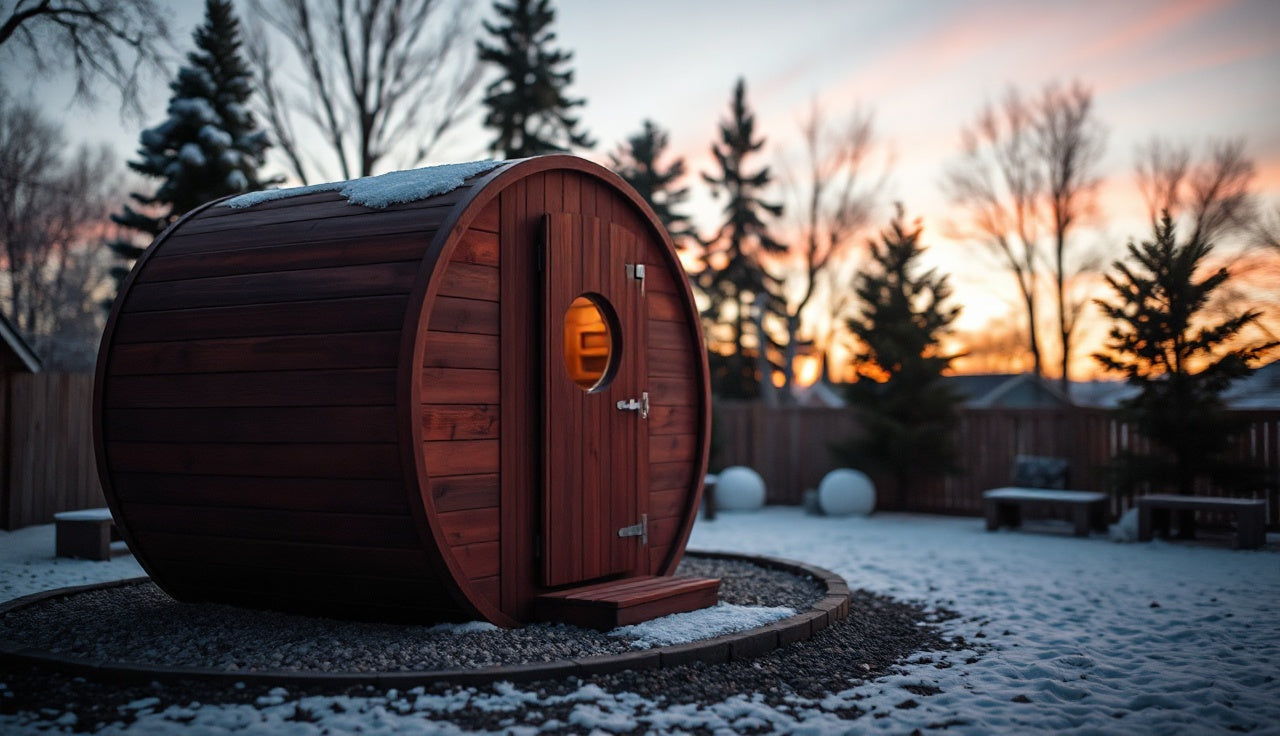
Northern Lights Industries makes some of the best-regarded cedar barrel saunas in North America. Models run from the 4-foot Scout to the 7-foot Grand, priced roughly $2,500 to $7,500 depending on size and heater. They use tight-grained Western red cedar, ship as flat-pack kits, and most people assemble one in a weekend with no special tools.
What is Northern Lights Industries and who makes these saunas?
Northern Lights Industries is a Canadian company that has built barrel saunas, steam rooms, and sauna accessories since the 1980s. The factory is in Delta, British Columbia. They sell direct and through a dealer network across the United States and Canada, which is why the same barrels show up under several retailer names.
The brand matters because barrel saunas are not all built the same. Northern Lights uses clear-grade Western red cedar, the wood that actually belongs in an outdoor sauna. It resists moisture, resists rot, and takes the repeated heat-and-cool cycles that would split cheaper wood in a season or two. The stave joints use a tongue-and-groove fit with stainless steel banding, so the barrel tightens as the wood swells instead of leaking.
They are not the only credible option. Dundalk LeisureCraft (also Canadian) and a handful of Finnish importers compete in the same space. But Northern Lights has the widest dealer network in North America and the longest documented record for outdoor residential use, which is why it keeps landing at the top of buyer research. If you are comparing brands, the outdoor sauna guide covers what to look for across all of them.
What sizes does Northern Lights offer and which one should you buy?
Northern Lights sells barrel saunas in five diameter classes, from a 4-foot personal model to a 7-foot commercial-grade unit. Diameter drives how many people sit comfortably and how fast the space heats up.
| Model name | Barrel diameter | Interior bench space | Typical capacity | Approx. kit price (USD) |
|---|---|---|---|---|
| Scout | 4 ft | 1 bench tier | 1 to 2 people | ~$2,500 to $3,200 |
| Pinnacle | 5 ft | 2 bench tiers | 2 to 4 people | ~$3,500 to $4,800 |
| Tranquility | 6 ft | 2 bench tiers | 4 to 6 people | ~$4,800 to $6,200 |
| Grand | 7 ft | 2 to 3 bench tiers | 6 to 8 people | ~$5,500 to $7,500 |
Prices shift with length (you can add extension rings), door and window choices, and whether you pick a wood-burning or electric heater package. These are street prices as of mid-2025 and vary by dealer.
For one person or a couple who want a fast daily driver, the 5-foot Pinnacle is the sweet spot. It hits temperature in 30 to 45 minutes with a properly sized heater, seats two adults with room to stretch, and the smaller thermal mass burns less wood or electricity per session. The 4-foot Scout is genuinely cramped for two adults. It works as a solo recovery tool but feels tight for anything social.
Hosting four or more people regularly? Jump straight to the 6-foot Tranquility. The 7-foot Grand earns its price for commercial use or large families, but for most homeowners it is more sauna than you need, and the longer heat-up time adds up over years of daily use.
Wood-burning vs. electric heater: which makes more sense for a barrel sauna?
This decision shapes your daily experience more than barrel size does.
Wood-burning heaters, usually a Kuuma or Harvia stove sized 8 to 18 kW depending on barrel volume, throw a different quality of heat than electric. The temperature gradient is steeper, the air moves more, and loading birch or cedar splits is part of why people love barrel saunas at all. If you can source dry hardwood and you enjoy the process, wood is the right call.
The downsides are real. You start the fire 45 to 60 minutes before you want to use the sauna. You clean ash. Your municipality may restrict outdoor wood-burning appliances, so check your local fire code before you order. In California, the Air Resources Board regulates wood-burning devices and some air districts require permits or restrict burn days [1].
Electric heaters are simpler. A 6 or 9 kW unit like the Harvia KIP or Sawo Helius connects to a 240V/40A or 240V/50A circuit, and you can preheat from your phone with a timer or app-connected relay. Heat-up runs about 30 to 45 minutes for a 5-foot barrel. At the US average residential rate of $0.17 per kWh (EIA, 2024), a session (45-minute preheat plus a 30-minute soak) costs roughly $0.85 to $1.50 [2].
Most homeowners who plan to use the sauna four or more times a week should go electric. Wood is better for weekenders or anyone who values the ritual over the convenience. The sauna guide breaks down heater types and what they actually cost to run.
| Scout (4 ft) | $2,850 |
| Pinnacle (5 ft) | $4,150 |
| Tranquility (6 ft) | $5,500 |
| Grand (7 ft) | $6,500 |
Source: Northern Lights Industries dealer pricing, 2025
How hard is it to assemble a Northern Lights barrel sauna kit?
Harder than the marketing implies, easier than building a deck. Plan on one to two full days with two people.
The kit ships as numbered cedar staves, pre-cut frame pieces, stainless steel banding hardware, a pre-hung door assembly, and a bench kit. Northern Lights includes printed instructions and posts video walkthroughs. The sequence: set the cradle legs on a level surface, lay the first stave course, work around the circumference adding staves, tighten the bands, install the end panels and door, then set the benches and heater.
The most common mistake is not leveling the cradle legs before you start. Once two-thirds of the staves are in place, correcting a twist in the base is miserable. Spend 20 minutes with a level and a tape measure up front and you will save yourself an afternoon.
Tools you actually need: a rubber mallet, a ratchet strap (to compress staves while you tighten bands), a drill with a Phillips bit, a level, and a helper. No carpentry skills required.
Electrical connection for an electric heater is a separate job. You need a dedicated 240V circuit run to the sauna by a licensed electrician. Budget $300 to $800 depending on distance from your panel [3].
What foundation does a barrel sauna need?
The barrel rests on two curved wooden cradles that ship with the kit. Those cradles need something flat, stable, and well-drained underneath.
The common options are concrete pavers, a gravel pad, a concrete slab, or pressure-treated deck boards. Gravel is the best choice for drainage. A 4-inch layer of compacted crushed stone under the cradles lets water drain away and keeps the wood out of pooled moisture after rain. A slab works too, but add a treated 2x4 spacer under each cradle so air can circulate.
A gravel pad needs no permit. A concrete slab, an electrical sub-panel, or the structure itself may need one depending on your jurisdiction. Many counties treat detached accessory structures under 120 square feet as permit-exempt, but barrels are round and the square-footage math is ambiguous in some codes. Ask your local building department before you install. Section R105.2 of the International Residential Code lists common permit exemptions for accessory structures [4].
Leave at least 3 feet of clearance around the barrel for airflow and maintenance, and keep the door side clear enough to get in and out without climbing over landscaping.
How long does a cedar barrel sauna actually last outdoors?
Western red cedar carries a natural durability rating of Class II to Class III under ASTM D2016, meaning untreated heartwood resists decay for 15 to 25 years in outdoor exposure [5]. In practice, Northern Lights owners on sauna forums report 20-plus-year lifespans with basic upkeep. The barrels that fail early almost always share one of two problems: cradles rotting because they sit in standing water, or an unsealed exterior that checked badly after a few freeze-thaw cycles.
Maintenance is light. Once a year, inspect the stainless steel bands and tighten if needed. Sand any rough interior bench surfaces and wipe them with food-grade mineral oil or a sauna-specific cedar oil. Never paint or varnish the interior. Finish products off-gas at high temperatures. The exterior can weather to a silver-gray on its own, or you can apply a penetrating exterior wood finish every two to three years to hold the warm color.
The heater usually needs attention before the wood does. Electric heating elements and sauna stones have a 5 to 10 year service life depending on how often you run them [6].
What temperature and humidity do barrel saunas reach?
A properly set-up Northern Lights barrel with a correctly sized heater reaches 160 to 195°F (71 to 90°C) at bench level, the traditional Finnish dry sauna range. The cylinder helps here. There are no cold corners, and the curved ceiling keeps heat circulating instead of stratifying the way it does in a rectangular box.
Humidity in a dry barrel sits around 10 to 20% relative humidity at operating temperature. A ladle of water on the rocks (löyly) spikes it briefly to 30 to 40%, which softens the air and raises perceived heat. That steam flash is why rock capacity matters. More rocks hold more thermal mass and give you a longer löyly.
These temperatures run higher than a steam room, which usually sits at 110 to 120°F and 100% humidity. If you are torn between the two formats, the sauna vs steam room comparison is worth reading.
On the wellness side, a 2018 study in Mayo Clinic Proceedings found that sauna bathing at 174°F (79°C) for sessions of 5 to 20 minutes was associated with reduced cardiovascular disease risk in Finnish men over a median 20-year follow-up [7]. The researchers noted the association was dose-dependent: four to seven sessions a week showed a stronger effect than one. That is an observational study, not a controlled trial, so read it as interesting evidence rather than a health guarantee.
Is a barrel sauna worth the cost compared to a traditional box sauna?
For outdoor installation, yes. The barrel shape has real structural advantages over a rectangular sauna shed. The curved roof sheds rain and snow without a separate roofing system. The stave construction holds heat better than standard wall panels because there is no framing lumber acting as a thermal bridge. And a barrel looks better in a backyard than a plywood shed, which matters if you care about your property.
The honest tradeoff is interior space. A barrel's curved walls turn the lower portions of the interior into dead space. In a 6-foot barrel, you effectively use the top 18 to 24 inches of the cylinder for seating. A 6x8-foot rectangular outdoor sauna at a similar price gives you more usable bench area for the same head count.
For indoor installation, a traditional home sauna is almost always the better call. Barrels are built for outdoors. Putting one in a basement or garage is awkward and wastes the visual appeal that justifies the shape.
If budget is the whole story, a portable sauna runs under $500, but the experience is not close. The barrel is a real sauna.
SweatDecks carries a curated selection of outdoor barrel saunas and accessories if you want to line Northern Lights models up against other top brands.
Can you pair a barrel sauna with a cold plunge for contrast therapy?
Yes, and for a lot of people the plunge is what turns the barrel from a nice backyard feature into a recovery tool they use every day.
The protocol most often cited in sports medicine research alternates 10 to 15 minutes of sauna heat with 1 to 3 minutes of cold immersion, repeated two to three cycles [8]. The reasoning: heat drives peripheral vasodilation and raises core temperature, cold immersion triggers vasoconstriction and fires the sympathetic nervous system, and swinging between the two produces a vascular pumping effect that may speed recovery from exercise-induced muscle damage. Nobody has strong randomized-trial data on the ideal protocol yet. Most of the evidence comes from small studies.
For setup, put the cold plunge within 10 to 15 feet of the sauna door so the transition is quick. A dedicated cold plunge tub with active chilling holds 50 to 59°F, the range most cold-water immersion research uses. A stock tank with ice works in a pinch, but holding a steady temperature is harder.
To understand the full evidence base for cold exposure, the cold plunge benefits article covers what the studies show and what is still speculative.
Are there any safety rules or regulations for outdoor barrel saunas?
A few worth knowing before you order.
Electrical: any 240V heater install must be done by a licensed electrician and comply with your local electrical code, which in most US jurisdictions adopts the National Electrical Code. NEC Article 680 does not specifically cover saunas, but Article 424 covers fixed electric space heating and applies to sauna heaters [9]. The heater needs a dedicated circuit with a GFCI breaker in a wet or outdoor setting.
Setbacks: many municipalities require accessory structures to sit 5 to 10 feet from property lines and sometimes 10 to 20 feet from the main dwelling. Barrel saunas usually fall under the same rules as sheds or gazebos. Check your zoning ordinance.
Fire safety for wood-burning models: your stove flue must extend at least 3 feet above the highest point of the barrel and 2 feet above any structure within 10 feet, per the chimney clearance rules in NFPA 211 [10]. Never use accelerants to start a sauna fire, and keep a fire extinguisher within reach.
Health and hydration: the CDC and other health agencies advise that people with cardiovascular conditions, pregnant women, and those on certain medications talk to a physician before using saunas [11]. Alcohol plus sauna is a documented risk combination. Drink water before and after sessions.
How do Northern Lights barrel saunas compare to other top brands?
Three brands come up over and over when people research cedar barrel saunas at this price point.
| Brand | Country of origin | Price range (5-ft equiv.) | Wood type | Heater included? | Warranty |
|---|---|---|---|---|---|
| Northern Lights Industries | Canada | $3,500 to $4,800 | Western red cedar | Optional add-on | 5 yr structural |
| Dundalk LeisureCraft | Canada | $3,800 to $5,200 | Western red cedar | Optional add-on | 5 yr structural |
| Finlandia Sauna | USA/Finland | $3,000 to $4,500 | Western red cedar | Optional add-on | 3 yr |
| Thermasol (barrel line) | USA | $4,500 to $6,000 | Western red cedar | Included | 1 yr |
Dundalk is the most direct competitor, and many buyers treat it as interchangeable with Northern Lights on quality. The practical difference is dealer availability in your region. Finlandia is good, but the shorter warranty is worth noting. Thermasol's barrel line is newer and leans premium on price.
If a big-box price point appeals to you, the Costco sauna options are worth a look for comparison, though construction quality generally tracks the lower price.
For most North American buyers doing outdoor residential installs, Northern Lights or Dundalk are the safe picks. Both have 30-plus-year records, replacement parts you can actually get, and reseller networks that mean service is reachable.
What are the real sauna health benefits backed by evidence?
The research here is more interesting than most product pages admit.
The strongest evidence is for cardiovascular health markers. The Laukkanen et al. study in JAMA Internal Medicine (2015) followed 2,315 Finnish men over 20 years and found that men who used a sauna four to seven times per week had a 40% lower risk of all-cause mortality than once-a-week users [12]. That is observational data with confounders (Finnish sauna users also tend to be more active and healthier overall), but the association is large and holds across multiple Finnish cohort studies.
For recovery, a review in the Journal of Human Kinetics found that post-exercise contrast therapy reduced delayed-onset muscle soreness scores in several small trials [8]. Effect sizes were modest. No barrel sauna is going to replace sleep or nutrition in a recovery plan.
Mental health: a 2018 cross-sectional study found an association between regular sauna use and lower self-reported depression and anxiety scores, but you cannot pull causation out of that kind of data [7].
The sauna benefits article goes deeper on the evidence for specific claims if you want the primary studies before buying. Honest read: the cardiovascular signal is real and worth taking seriously. The rest is promising but not settled.
Frequently asked questions
How much does a Northern Lights cedar barrel sauna cost?
Kits start around $2,500 for the 4-foot Scout and run to about $7,500 for the 7-foot Grand with extensions. The 5-foot Pinnacle, the most popular residential size, typically lands at $3,500 to $4,800 depending on the dealer and heater package. Shipping adds $200 to $600 by location, and electrical installation adds another $300 to $800.
How long does it take to assemble a Northern Lights barrel sauna?
Two adults with basic mechanical skills assemble the barrel itself in 6 to 10 hours, spread over one or two days. The kit uses numbered pre-cut staves, a pre-hung door, and stainless steel banding hardware. No special carpentry experience is required. Electrical hook-up for an electric heater is a separate job that takes a licensed electrician 2 to 4 hours.
What heater size do I need for a Northern Lights barrel sauna?
Northern Lights recommends roughly 1 kW of heating power per 45 cubic feet of interior space as a starting point. The 5-foot Pinnacle typically needs a 6 kW electric heater or a comparable wood stove rated for small-to-medium rooms. Going slightly oversized is fine. Undersizing means long heat-up times and disappointment. Always match the heater to the cubic footage listed for your barrel model.
Do I need a permit for a barrel sauna?
Usually yes for the electrical circuit, sometimes for the structure itself. Most US counties exempt detached accessory structures under 120 square feet from building permits, but barrel saunas sit in a gray area because they are cylindrical. Electrical work for a 240V heater almost always requires a permit. Check with your local building and zoning department before ordering; requirements vary a lot by municipality.
Can a Northern Lights barrel sauna stay outside in winter?
Yes, that is what they are built for. Western red cedar handles freeze-thaw cycles well. The main precaution is letting the barrel dry fully between sessions instead of leaving standing water inside. In heavy snow climates, Northern Lights recommends tightening the stainless steel bands in fall, since the wood dries and contracts slightly as temperatures drop.
How often do you need to maintain a cedar barrel sauna?
Once a year is enough for most owners. Inspect and tighten the steel banding, lightly sand any rough bench surfaces, and apply food-grade mineral oil or a cedar sauna oil to the interior benches. Never apply finish, paint, or varnish to interior surfaces. The exterior can gray naturally or take a penetrating UV-resistant oil every two to three years.
What is the difference between a barrel sauna and a traditional box sauna?
The barrel shape sheds precipitation without a separate roof, has no thermal-bridge framing lumber at the walls, and heats more evenly because the curved ceiling circulates air instead of letting it stratify. A rectangular box sauna gives you better interior space efficiency per square foot of footprint. Outdoors the barrel wins on durability and looks; indoors a traditional box sauna is almost always more practical.
How hot does a Northern Lights barrel sauna get?
At bench level, expect 160 to 195°F (71 to 90°C) with a correctly sized heater, the standard Finnish dry sauna range. Adding water to the rocks briefly raises perceived heat through steam. The cylindrical geometry and absence of corner dead zones means the barrel heats more evenly than a rectangular room of the same cubic footage.
Is Western red cedar safe to use in a sauna?
Yes. Western red cedar is the traditional North American sauna wood. Its natural oils resist moisture and inhibit mold and bacteria. The one caveat: a small share of people are sensitive to cedar's natural thujaplicins, so if you have a known cedar allergy, test exposure before buying. Interior benches should never be finished with paint, stain, or polyurethane, which off-gas toxic compounds at sauna temperatures.
How many people fit in a Northern Lights barrel sauna?
The 4-foot Scout seats 1 to 2 people snugly. The 5-foot Pinnacle holds 2 to 4 comfortably. The 6-foot Tranquility seats 4 to 6. The 7-foot Grand handles 6 to 8. These are comfortable session figures, not fire-code maximums. If you regularly host four adults and want everyone to stretch out, the 6-foot is the minimum to consider.
Where can I buy a Northern Lights cedar barrel sauna in the United States?
Northern Lights sells through authorized dealers across the US and Canada, and its website has a dealer locator. Several online sauna retailers also carry the line and ship kits directly to your home. Compare total delivered cost including freight, since barrel sauna kits are heavy and shipping rates swing meaningfully by region.
What foundation do I need under a barrel sauna?
The barrel sits on two curved wooden cradles that ship with the kit. Those cradles need a flat, stable, well-drained surface: compacted crushed gravel (4 inches deep), concrete pavers, or a concrete slab all work. Gravel drains best. Avoid direct soil contact, which speeds up cradle rot. You generally do not need a permit for a gravel pad, but a concrete slab may require one locally.
Can I add an outdoor shower or cold plunge next to my barrel sauna?
Yes, and it is one of the best upgrades you can make. A cold plunge or outdoor shower within 10 to 15 feet of the sauna door enables contrast therapy, the alternating heat-and-cold protocol many athletes use for recovery. Keep a non-slip surface between the two. Put the plunge on a separate electrical circuit from the sauna heater.
Are Northern Lights barrel saunas good for resale value?
A permanent cedar barrel sauna with an electrical connection generally adds value, though appraisers treat it as a personal-property amenity rather than a structural improvement, so the dollar-for-dollar return varies. Saunas in good shape photograph well and draw buyers in colder climates. The key is professional electrical installation and a clean, well-kept exterior that does not look neglected.
Sources
- California Air Resources Board, Wood-Burning Devices: California CARB regulates outdoor wood-burning devices and some air districts restrict burn days or require permits
- U.S. Energy Information Administration, Electric Power Monthly – Average Retail Price of Electricity: Average US residential electricity rate approximately $0.17 per kWh as of 2024
- HomeAdvisor / Angi, Cost to Wire a 240V Outlet: Licensed electrician cost to run a 240V dedicated circuit typically $300–$800 depending on panel distance
- International Residential Code, Section R105.2 – Work Exempt from Permit: IRC Section R105.2 lists permit exemptions for accessory structures including common square-footage thresholds
- USDA Forest Products Laboratory, Wood Handbook – Wood as an Engineering Material (decay resistance of Western red cedar): Western red cedar heartwood is rated resistant to very resistant to decay, supporting a 15–25 year outdoor service life
- Harvia Sauna Heaters, Sauna Heater Service Life and Stone Replacement Guidelines: Electric sauna heating elements and sauna stones have a typical service life of 5–10 years depending on use frequency
- Laukkanen et al., Mayo Clinic Proceedings 2018 – Sauna bathing and risk of psychotic disorders, depression, and anxiety: Cross-sectional study found association between regular sauna use and lower self-reported depression and anxiety scores; also references cardiovascular findings
- Versey et al., Journal of Human Kinetics 2013 – Effect of contrast water therapy duration on recovery of cycling performance: Post-exercise contrast therapy including heat and cold immersion reduced delayed-onset muscle soreness in small trials
- National Fire Protection Association, NFPA 70 National Electrical Code, Article 424 – Fixed Electric Space-Heating Equipment: NEC Article 424 governs fixed electric space-heating equipment including sauna heaters; requires dedicated circuit and GFCI in wet/outdoor settings
- National Fire Protection Association, NFPA 211 – Standard for Chimneys, Fireplaces, Vents, and Solid Fuel-Burning Appliances: NFPA 211 specifies flue must extend at least 3 feet above the highest point of roof penetration and 2 feet above any structure within 10 feet
- Centers for Disease Control and Prevention, Extreme Heat – Health Effects: CDC advises people with cardiovascular conditions, pregnant women, and those on certain medications to consult a physician before sauna use
- Laukkanen et al., JAMA Internal Medicine 2015 – Association Between Sauna Bathing and Fatal Cardiovascular and All-Cause Mortality Events: Men using sauna 4–7 times per week had 40% lower all-cause mortality risk compared to once-a-week users over 20-year follow-up in cohort of 2,315 Finnish men

Share:
Why are barrel saunas bad? The real problems explained
Why are barrel saunas bad? The real problems explained