
Last updated 2026-07-09
TL;DR
The LiVup portable sauna tent is a fabric steam sauna that fits one person sitting upright. It heats to around 130 to 140°F in 10 to 15 minutes using a plug-in steam generator, and costs roughly $100 to $160. It folds into a carry bag and stores in a closet. It's a real sweating tool, not a stand-in for a wood-panel sauna, but it does the job for heat exposure on a budget.
What is the LiVup portable sauna tent and how does it work?
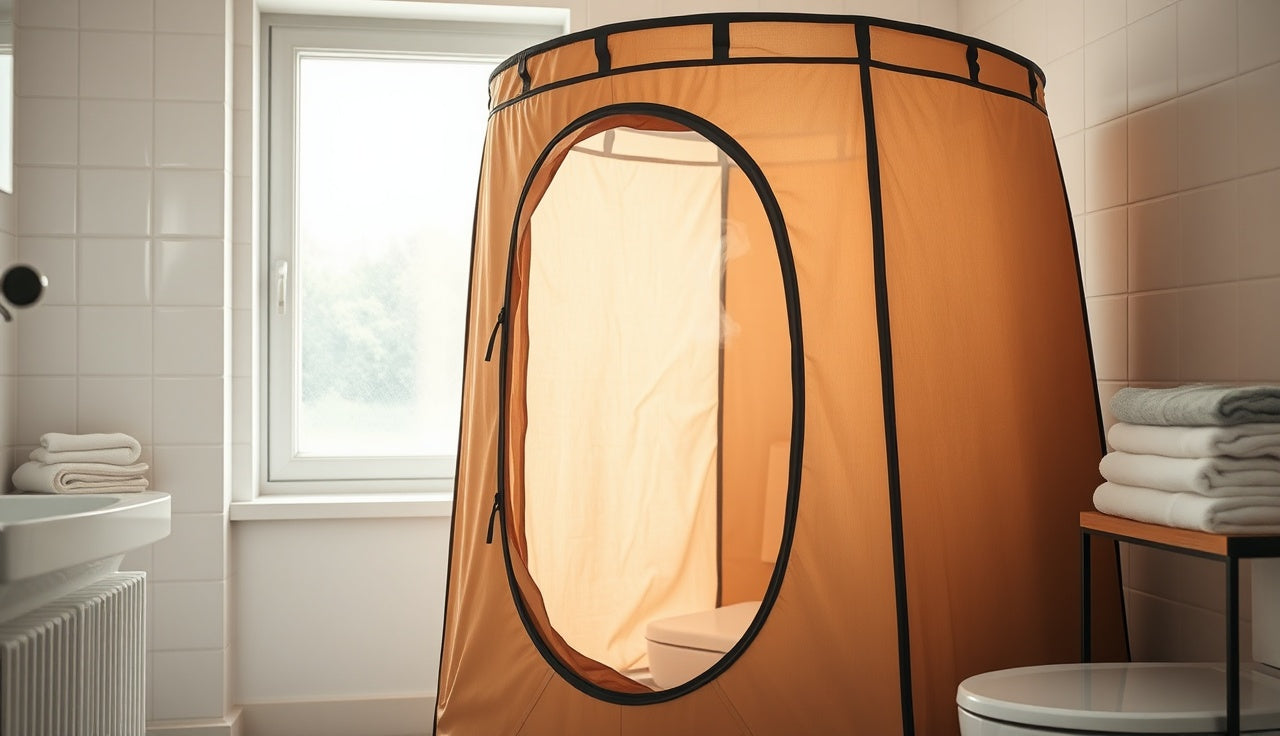
The LiVup is a single-person portable steam sauna tent. A collapsible fabric enclosure, usually Oxford cloth or polyester, wraps around your seated body while your head stays outside through a zippered neck opening. A standalone steam generator, typically 800 to 1000 watts, pumps hot steam through a hose into the tent. You sit on a foldable stool inside and sweat.
The heating method is the part that trips people up. This is not a dry Finnish sauna. It's a wet steam environment, closer to a steam room than a wood-panel sauna. Temperatures inside typically reach 115 to 140°F (46 to 60°C) depending on your room temperature and how long you let it run. Humidity climbs toward 100%. That combination drives sweat at temperatures lower than a dry sauna needs, because humid air transfers heat to your skin more efficiently than dry air. [1]
The tent folds flat in minutes. The frame uses fiberglass or aluminum poles, and most LiVup models weigh 6 to 10 lbs total including the steam unit. You can set one up in a bathroom, bedroom, or living room in under five minutes. That speed is honestly one of the best things about it. No installation, no electrician, no permits.
Here's the core trade-off against a full portable sauna rig or a fixed home sauna: you give up the wood-fired ritual and the high dry heat, and you get a unit that stores in a closet and costs less than most gym memberships.
What does a LiVup portable sauna tent actually cost?
On Amazon and the LiVup brand site, the tent runs $100 to $160 depending on the kit. The base model (tent, steam generator, folding stool, remote) usually lists around $110 to $130. Upgraded versions with larger enclosures or higher-wattage generators push toward $150 to $160.
That's low next to almost any other sauna option. A prefab outdoor barrel sauna runs $2,000 to $8,000 before installation. A traditional indoor cedar sauna kit starts around $1,500 and can hit $10,000 once you add wiring and a dedicated electrical circuit. [2] Even a mid-tier infrared sauna blanket runs $200 to $400.
Operating cost is tiny. The steam generator draws roughly 0.8 to 1.0 kW. At the U.S. average residential electricity rate of 16.3 cents per kWh in early 2025 [3], a 30-minute session costs around 7 to 9 cents. That's genuinely nothing.
The thing nobody talks about is replacement cost. On budget tent saunas, the steam generator is usually the first thing to die. Mineral buildup from tap water can cut generator life to 1 to 2 years with regular use. Distilled water extends that a lot. Replacement generators for LiVup-compatible units run $20 to $40 on Amazon, so it's not a catastrophic repair, but it's worth knowing before you buy.
| Option | Typical price range | Installation needed? | Avg session cost |
|---|---|---|---|
| LiVup tent sauna | $100 to $160 | No | ~$0.08 |
| Infrared sauna blanket | $200 to $400 | No | ~$0.05 |
| Prefab indoor infrared cabin | $1,200 to $4,000 | Minor electrical | ~$0.20 |
| Prefab outdoor barrel sauna | $2,000 to $8,000+ | Yes, significant | $0.40 to $1.00+ |
| Custom home sauna | $5,000 to $20,000+ | Yes, major | Varies |
What are the actual health benefits of using a steam sauna tent?
Here's where honesty beats marketing. The research base for sauna use is real but mostly built on traditional Finnish dry saunas, not personal steam tents. Nobody has run a randomized controlled trial on LiVup units. What we can do is look at what the heat exposure itself does, since the physiological trigger, raising core temperature, works similarly across sauna types. [1]
The most replicated benefit is cardiovascular. A 2018 review in Mayo Clinic Proceedings analyzed Finnish cohort data and found men who used a sauna 4 to 7 times per week had a 50% lower risk of fatal cardiovascular disease than once-weekly users. That's observational data, and lifestyle confounders can't be fully ruled out. [4] Researchers tie part of the effect to the cardiac output increase during heat exposure, which resembles moderate aerobic exercise.
Core temperature elevation also triggers heat shock proteins, which help cells handle oxidative stress. A 2021 review in the International Journal of Hyperthermia noted that repeated heat exposure raises heat shock protein 70 expression, with downstream effects on inflammation and cellular repair. [5]
Post-exercise recovery has reasonable support too. Muscle blood flow rises in the heat, which may speed clearance of metabolic waste. A 2015 study in the Journal of Human Kinetics found post-exercise sauna sessions cut delayed-onset muscle soreness scores compared to passive rest, though the sample was small. [6]
Better sleep is a common anecdotal report with some mechanistic backing. The drop in core temperature after you exit a hot environment triggers drowsiness through thermoregulatory pathways. That should work with a steam tent the same way it does with a traditional sauna.
What the steam tent won't do: it can't replicate the smoke sauna, the löyly of throwing water on hot stones, or the social and meditative side of a proper sauna. Those matter to some people more than others. For the full sauna benefits picture, start there.
| LiVup steam tent | $130 |
| Infrared sauna blanket | $300 |
| Prefab infrared cabin (small) | $2,500 |
| Outdoor barrel sauna (prefab) | $5,000 |
| Custom built-in home sauna | $12,000 |
Source: U.S. Dept of Energy & market pricing data, 2025
How does the LiVup compare to other portable sauna tents on the market?
The portable steam tent category is full of near-identical products. Most come from a handful of OEM factories in China and get sold under different brand names including LiVup, SereneLife, Durasage, and Zonemel. LiVup differentiates mainly on steam generator quality and the fabric weight of its enclosure.
Here's what actually separates one tent from another.
Steam generator wattage. 800W generators heat slowly and struggle in cold rooms. 1000W units heat faster and hold temperature better. LiVup's standard kit uses a 1000W generator, which is on the better end for the price.
Fabric. Thicker Oxford cloth holds heat better than thin polyester. If you've ever sat in one that drops temperature every time you shift, it was probably thin fabric. LiVup uses 210D or heavier Oxford cloth on most models.
Chair included. Some packages skip the stool. A stable, comfortable seat changes whether you actually use the thing.
Footprint. Most single-person tents run roughly 35 x 35 x 65 inches. LiVup's standard model fits that. If you're large-framed or want to stretch your legs, look for the 40 x 40 inch base models.
I wouldn't pay a premium for extras like LED lighting inside the tent. They do nothing physiologically and add failure points. The remote control for the steam generator is worth having, since you can't easily reach the unit once you're zipped inside.
For a wider look at steam formats, the sauna vs steam room breakdown is useful context.
Is a portable sauna tent safe to use at home?
For most healthy adults, yes. But a few safety points are real, more than legal boilerplate.
Hydration comes first. You can lose 0.5 to 1.0 liter of fluid in a 20-minute steam session. Drink 16 to 24 oz of water before you start and keep water within reach during the session. Dehydration headaches are the most common bad experience people report.
Session length. Start with 10 to 15 minutes. Experienced users often go 20 to 30, but there's no benefit to pushing past discomfort. The American College of Sports Medicine advises leaving any hot environment right away if you feel dizzy, nauseous, or notice a pounding heart. [7]
Cardiovascular conditions. People with uncontrolled hypertension, a history of heart disease, or arrhythmias should get medical clearance before regular sauna use. The cardiovascular load during a 15-minute steam session is comparable to light-to-moderate exercise. If you can't walk briskly, don't sauna without physician input.
Pregnancy. The FDA and most obstetric guidelines advise pregnant women to avoid raising core temperature above 101°F (38.3°C), which a steam tent can exceed. [8] Skip it during pregnancy.
Electrical safety. The steam generator runs on household 110 to 120V current. Keep it on a dry surface, away from standing water. Don't run extension cords under carpets or near water. The unit draws around 8 to 9 amps, so a standard 15-amp circuit is fine.
Kids. Most manufacturers set 18 as the minimum age for steam sauna use. Children's thermoregulation is less efficient, and their core temperature rises faster in the same environment.
The tent itself is not a fire hazard under normal use. The fabric doesn't touch the heating element, and the steam keeps interior temperatures well below ignition thresholds.
How do you set up a LiVup portable sauna tent?
Setup genuinely takes under five minutes once you've done it twice.
Unfold the frame. The poles pre-attach with elastic cord (like a camping tent), so you click them into the corner sleeves on the fabric enclosure. The structure stands without tools. Place the folding stool inside.
Fill the steam generator reservoir. It holds roughly 1.5 to 2 liters. Use distilled water if you want the generator to last. Fill to the max line, not above it.
Connect the steam hose from the generator to the inlet port on the tent's lower panel. It's a simple friction fit or screw collar depending on the model.
Plug in the generator. Set temperature and time on the control panel or remote. 45 to 50°C (113 to 122°F) is a good starting point. The unit takes 5 to 10 minutes to heat and fill the tent with steam.
Get in, zip the collar around your neck, and sit down. Keep a towel on the stool for comfort and to catch dripping condensation.
After your session, unplug the generator and let it cool. Drain any leftover water from the reservoir, because sitting water invites mineral deposits and mold. Wipe the tent interior with a dry cloth and leave it open for 30 minutes to air out before folding. This step is easy to skip, and skipping it means musty smells within a few weeks.
Folding the tent back down takes about two minutes. The poles pull apart and the fabric rolls or folds flat. The whole kit stores in a bag roughly the size of a large duffel.
What do real users say about the LiVup sauna tent: pros and cons
Pulling from verified purchase reviews across Amazon and third-party retailer sites, the pattern is consistent enough to summarize honestly.
What people like: The heat output is real. Users report good sweating within 15 minutes. Setup is as fast as advertised. At around $120, it's easy to try without a big financial hit. The portability actually works, and people move it between rooms or pack it for vacation rentals.
What people complain about: The included stool is often flimsy. Plenty of reviewers upgraded to a sturdier folding stool. The steam generator can leave white mineral deposits on the tent interior if you use hard tap water. The neck collar works, but it gets uncomfortable past 25 minutes because it rests on your shoulders with no padding. And the enclosure feels claustrophobic to some people, especially broad-shouldered users.
The honest durability picture: Most users get 1 to 3 years of regular use before the steam generator acts up. The fabric enclosure usually outlasts the generator. Treat this as a $120 appliance with a 2-year lifespan and the math still works for most people, around $5 per month of ownership.
I wouldn't buy this expecting it to feel like a high-end outdoor sauna. It doesn't. The ambiance is closer to sitting in a humid closet. But the heat stress on your body is physiologically real, and that's the point.
To browse tent and portable sauna options side by side, SweatDecks has a portable sauna section where you can compare specs without hunting across retailer pages.
How does a steam tent compare to a sauna blanket or infrared sauna?
Three formats own the personal heat therapy market under $500: steam tents, infrared sauna blankets, and small infrared cabin saunas. They heat the body differently and carry different practical trade-offs.
A steam tent heats through convective moisture. Humid air at 120 to 140°F transfers heat to your skin fast. You sit upright, your head is free, and it feels like a steam room.
An infrared sauna blanket uses far-infrared radiation directly on your skin while you lie zipped inside a padded blanket. Temperatures run lower (typically 80 to 120°F), and proponents argue the infrared reaches deeper into tissue. The research on far-infrared specifically is thinner than for traditional heat sauna. A 2015 study in the Journal of the American College of Cardiology found far-infrared sauna sessions improved endothelial function in heart failure patients [9], but general population data is limited. You can't easily read or use a phone in a blanket, and some people find lying inside one claustrophobic.
A compact infrared cabin sauna (the wood-panel box that fits two people) costs $1,200 to $4,000, takes up permanent floor space, and usually needs at least a 20-amp dedicated outlet. The experience is much closer to a real sauna.
For pure budget and portability, the steam tent wins. If you want to lie down and prefer drier heat, look at the infrared blanket. If you have the space and budget, a cabin infrared unit gives you a more durable long-term setup.
For athletes pairing heat with cold, a steam tent plus a cold plunge tub or ice bath setup gives you contrast therapy at home for under $500 total. The cold plunge benefits evidence keeps building, and heat plus cold on the same day is what most contrast protocols use.
Can you use a portable sauna tent for weight loss?
You'll weigh less on the scale right after a steam sauna session. It's water weight. A 20 to 30 minute session can drop 0.5 to 1.5 lbs of fluid through sweat. You get it all back the moment you rehydrate, usually within a few hours.
There's no credible mechanism by which passive sweating burns meaningful body fat. Metabolic rate does climb a bit in the heat, by roughly 1.5 to 2x resting rate by some estimates, but a 30-minute session at that rate might burn an extra 30 to 60 calories above baseline. That's a small number.
Sauna weight-loss marketing constantly conflates water weight with fat loss. They are not the same thing. If someone tells you they lost 5 lbs in their sauna tent, they lost 5 lbs of water.
The indirect benefits are more honest. Better sleep and lower stress, both linked to heat exposure, may help weight management over time by dialing down cortisol-driven appetite. But that's a second-order effect, not a direct calorie burn.
The sweat suits sauna category leans even harder into this water-weight framing. Worth reading before you spend money chasing numbers on a scale.
What should you look for in the best portable sauna tent for home use?
If you're shopping beyond LiVup and want the best portable sauna tent for your situation, here's what actually matters.
Generator wattage. 1000W minimum. 1200W if your space is cold or large.
Reservoir size. 1.5 liters gives you about 30 minutes of continuous steam. Want longer sessions without refilling? Look for 2-liter units.
Fabric weight. 210D Oxford cloth or heavier. It's rarely in headline specs but often in the product description. Thicker fabric means less heat loss.
Neck collar design. A padded, adjustable collar beats a plain zippered hole by a lot. If you plan sessions past 20 minutes, this matters.
Footprint and height. Standard is 35 x 35 x 65 inches. Taller than 6'1" or broad-shouldered? Look for a larger base and taller peak.
What to ignore. Ozone generation features (some budget tents add this; ozone can irritate airways at concentrations above 0.07 ppm, and the EPA advises against indoor ozone generators [10]). Aromatherapy trays are fine but not worth paying extra for. LED lights inside are a gimmick.
For most people at home, the LiVup at $110 to $130 hits the right balance of heat output, build quality, and price. If you later want a more permanent home sauna setup, the steam tent gives you a real trial run to learn whether regular sauna sessions become a habit you keep before you spend thousands.
Does the LiVup sauna tent require any permits or special electrical setup?
No permits. No special wiring.
The LiVup steam generator runs on standard 110 to 120V household current. It draws around 8 to 9 amps at full power, well inside the capacity of any standard 15-amp outlet. You plug it in and go.
That's a sharp contrast with fixed sauna installations. A traditional wood-panel sauna heater typically draws 4 to 8 kW and needs a 240V, 30 to 60 amp dedicated circuit. That means a licensed electrician and, depending on local code, a permit and inspection. The National Electrical Code (NEC) Article 424 governs fixed resistance heating, and many municipalities require permits for any new circuit. [11]
With a portable tent, none of that applies. You're running a small appliance on a standard outlet.
Renters, this one's for you: you can use a LiVup in any apartment with no landlord permission, since you're not modifying anything. You take it with you when you move. That portability is badly undervalued by people who own their homes and think only in terms of permanent builds.
If you eventually go permanent, a home sauna or outdoor sauna build does involve permits in most places. Worth knowing before you start.
How does contrast therapy work with a portable steam tent?
Contrast therapy means alternating heat and cold. The most-studied protocol uses 10 to 20 minutes of heat followed by 2 to 5 minutes of cold, repeated 2 to 4 times.
The mechanism runs on blood vessels. Heat drives rapid vasodilation (vessels open, peripheral circulation rises). Cold drives vasoconstriction (vessels tighten, blood pushes back to the core). That repeated pumping is sometimes called a vascular workout.
A portable steam tent pairs well with a cold shower, a chest freezer cold plunge, or a dedicated cold plunge tub. The tent heats you up in 15 minutes. You exit, step into cold water, then return. The full contrast setup at home can run under $300 if you use a basic cold plunge tub or a chest freezer conversion.
The evidence is real, though most studies are small. A 2016 meta-analysis in the British Journal of Sports Medicine found contrast water therapy reduced muscle soreness more effectively than passive rest after exercise, with a moderate effect size. [12] The rationale is solid even though the big randomized trials don't exist yet.
For anyone serious about recovery, this heat-cold pairing is where the portable tent earns its keep most clearly. It turns a $120 purchase into the heat half of a full contrast therapy rig.
Frequently asked questions
How long does it take for the LiVup portable sauna tent to heat up?
The LiVup steam generator takes roughly 5 to 10 minutes to fill the tent with effective steam at room temperature. In a cold room (below 60°F), add a few minutes. The tent reaches 115 to 130°F inside within that window. Most users start their session once they feel consistent steam output rather than waiting for a specific temperature reading.
How long should a session in a portable sauna tent be?
Start with 10 to 15 minutes for your first few sessions. Most regular users settle at 20 to 30 minutes. There's no documented benefit to sessions past 30 minutes in a personal steam tent, and longer sessions raise dehydration risk. Exit right away if you feel dizzy, nauseous, or notice a rapid heartbeat.
Can you use a LiVup sauna tent every day?
Yes for most healthy adults, as long as you stay well-hydrated. The Finnish population studies that found cardiovascular benefits used sauna 4 to 7 times per week as the highest-use group. Daily use of a steam tent at 15 to 20 minutes per session sits within that range. Take a rest day if you feel fatigued or notice signs of heat stress.
What is the difference between a steam sauna tent and a dry sauna?
A dry sauna (traditional Finnish style) runs at 170 to 195°F with 10 to 20% humidity. A steam tent runs at 115 to 140°F with near-100% humidity. Both elevate core temperature, which drives the main benefits, but the feel differs a lot. Steam feels hotter at lower temperatures because moist air transfers heat faster. Dry saunas allow higher temperatures that some people find more comfortable.
Is the LiVup portable sauna tent worth it compared to a gym sauna?
If you have reliable access to a gym sauna, the gym is probably better: higher temperatures, dry air, no assembly, no cleanup. The tent makes sense if your gym has no sauna, your schedule makes gym visits a hassle, or you want post-workout recovery at home without driving back. At $110 to $130, you break even against a gym membership add-on within a few months.
Can a portable sauna tent help with cold or sinus congestion?
Steam inhalation is a traditional remedy for sinus congestion with some evidence support. A Cochrane review found steam inhalation gave short-term relief of nasal symptoms in some cold sufferers, though results across trials were inconsistent. The steam tent produces a lot of facial steam since your head sits above the collar, which may give similar relief. This is comfort relief, not a treatment for infection.
How do you clean and maintain a LiVup sauna tent?
Wipe the interior with a dry towel after each session and leave the tent open for 30 minutes to air dry before folding. Use distilled water in the steam generator to prevent mineral deposits. Drain the reservoir completely after each use. Every few weeks, run the generator with a diluted white vinegar solution (1 part vinegar, 3 parts water) to descale, then flush with clean distilled water before your next real session.
Does a portable sauna tent actually make you sweat as much as a real sauna?
Yes, though the character of the sweat differs. In a steam tent at 120 to 130°F, most users report heavy sweating within 10 minutes. Sweat rate depends on your physiology, hydration, and room temperature, but studies show steam environments at these temperatures produce comparable sweat volume to dry saunas at higher temperatures, because humid air blocks the evaporative cooling that normally limits skin temperature.
What accessories should I buy with a LiVup sauna tent?
A sturdier folding stool if the included one feels flimsy (a $20 to $30 padded camp stool works well). A gallon of distilled water to protect the generator. A small towel for inside the tent. A water bottle to keep outside within reach. That's genuinely everything useful. Sauna aromatherapy oils, special towels, and accessories sold in tent bundles are optional and mostly cosmetic.
Can two people use a LiVup portable sauna tent at the same time?
No. The standard LiVup is a single-person tent. The interior fits one adult seated on the included stool. There are larger two-person portable sauna enclosures from other brands, but they need a more powerful steam generator and are much bulkier. For couples or household sharing, you take turns, which is the norm with personal tent saunas.
Where is the best place to set up a portable sauna tent at home?
A bathroom is ideal. The steam and condensation dripping off the tent won't damage tile or vinyl floors, and you have a shower nearby for a post-session rinse. A bedroom or living room works fine on hardwood or laminate if you put a waterproof mat under the tent to catch drips. Avoid carpet without a mat. Make sure the room has at least one outlet on a 15-amp circuit.
Does the LiVup sauna tent help with stress or anxiety?
Heat exposure reliably lowers subjective stress in the short term, likely through increased beta-endorphin and norepinephrine release during and after sessions. A 2016 study in Complementary Medicine Research linked regular sauna bathing to reduced anxiety and better mood. The steam tent delivers similar heat stress, so the same mechanism applies, though the quieter, low-stimulation setting of a traditional sauna probably helps mood more than a tent in a busy living room.
What is the warranty on the LiVup portable sauna tent?
LiVup generally offers a 12-month warranty on the steam generator and a 6-month warranty on the tent enclosure through their Amazon listings, though terms vary by purchase channel. Check the specific listing before buying. Third-party retailers may offer different terms. Keep your receipt and the original packaging for any warranty claim.
Sources
- Harvard T.H. Chan School of Public Health, The Nutrition Source: Saunas: Humid air transfers heat to skin more efficiently than dry air at the same temperature, driving similar core temperature elevation at lower steam sauna temperatures.
- U.S. Department of Energy, Energy Saver: Home Energy Audits and Improvements: Home electrical sauna installations require a dedicated 240V circuit, similar to major appliances, adding installation cost beyond the sauna unit price.
- U.S. Energy Information Administration, Electric Power Monthly (Table 5.6.A, Average Retail Price of Electricity, February 2025): U.S. average residential electricity rate was approximately 16.3 cents per kWh in early 2025.
- Mayo Clinic Proceedings, 2018: Association Between Sauna Bathing and Fatal Cardiovascular and All-Cause Mortality Events (Laukkanen et al.): Men who used a sauna 4–7 times per week had a 50% lower risk of fatal cardiovascular disease compared to once-weekly users in a Finnish cohort study.
- International Journal of Hyperthermia, 2021: Heat shock proteins and repeated heat exposure in human physiology: Repeated heat exposure increases heat shock protein 70 (HSP70) expression, which has downstream effects on inflammation and cellular repair.
- Journal of Human Kinetics, 2015: Post-exercise sauna bathing and recovery from exercise: Post-exercise sauna sessions reduced delayed-onset muscle soreness scores compared to passive rest in a small controlled study.
- American College of Sports Medicine, ACSM's Guidelines for Exercise Testing and Prescription: ACSM advises exiting any hot environment immediately if you experience dizziness, nausea, or rapid heartbeat.
- U.S. Food and Drug Administration, MedWatch Safety Communications: Hot Tub Safety: FDA and obstetric guidelines advise pregnant women to avoid raising core body temperature above 101°F (38.3°C).
- Journal of the American College of Cardiology, 2015: Far Infrared Sauna and Endothelial Function in Heart Failure (Kihara et al.): Far-infrared sauna sessions improved endothelial function in patients with chronic heart failure in a randomized controlled study.
- U.S. Environmental Protection Agency, Indoor Air Quality: Ozone Generators That Are Sold as Air Cleaners: The EPA advises against the use of indoor ozone generators; ozone can irritate airways at concentrations above 0.07 ppm.
- National Fire Protection Association, NFPA 70: National Electrical Code (NEC) Article 424: NEC Article 424 governs fixed resistance heating appliances, including sauna heaters, which typically require dedicated 240V circuits and permit inspection.
- British Journal of Sports Medicine, 2016: Contrast Water Therapy Meta-analysis (Bieuzen et al.): Contrast water therapy reduced muscle soreness more effectively than passive rest after exercise, with moderate effect size, in a 2016 meta-analysis.

Share:
Steam room guide: what it is, how it works, and whether it's worth it
What is the perfect sauna temperature for your session?