
Last updated 2026-07-09
TL;DR
The LifeTrend Solitude is a single tub that chills water for cold plunging and heats it for a hot soak. It targets home users who want contrast therapy without buying two products. Prices run $3,500 to $6,000. It fits small spaces well, but switching between cold and hot takes hours, so it suits people who plunge one day and soak another.
What is the LifeTrend Solitude and what does it actually do?
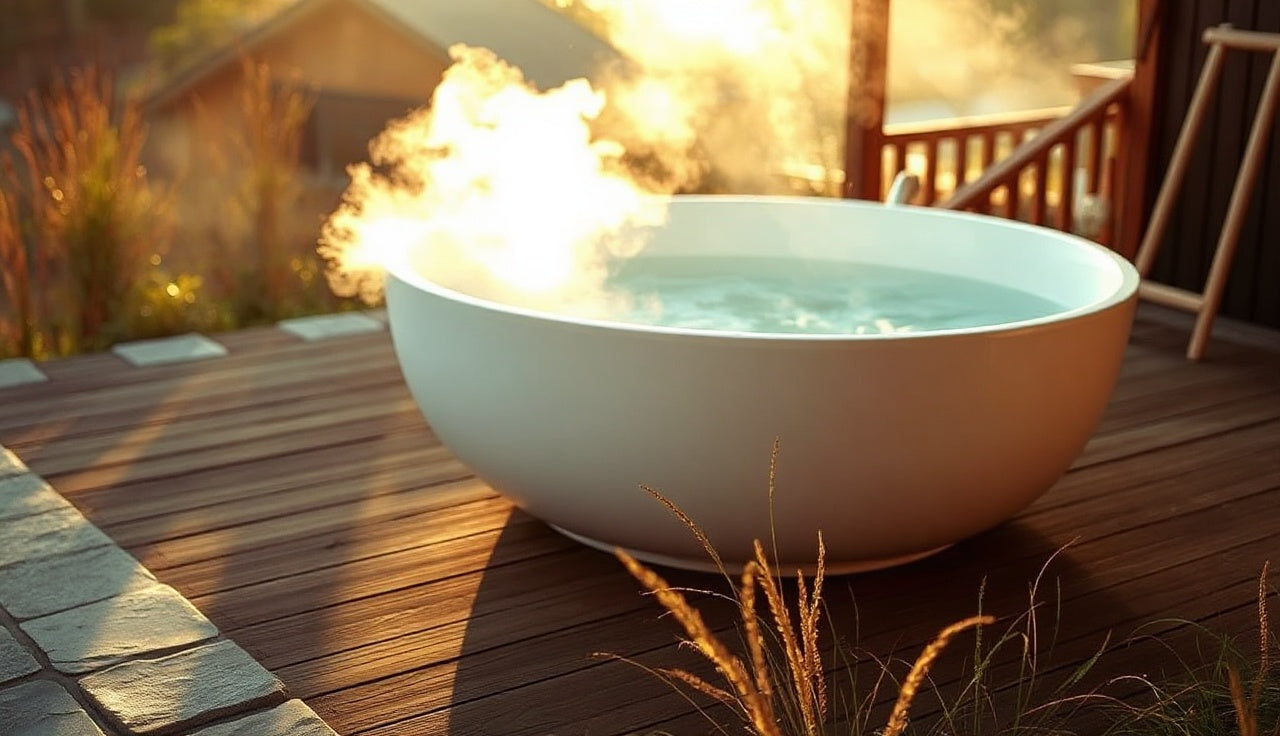
The LifeTrend Solitude is a freestanding tub that runs both cold and hot water therapy from one shell. Set it cold for an ice bath, then flip it to hot for a soak, without owning two pieces of equipment. That is the pitch.
In practice it is a single-person acrylic or composite tub paired with a refrigeration and heating system. The cold side targets somewhere between 39°F and 60°F (roughly 4°C to 15°C), depending on ambient conditions and how long it has run. The heat side climbs to around 104°F (40°C). Both ranges sit inside the windows researchers most often use for cold water immersion and hot water immersion studies, which is reassuring.
This is not an ice bath in the chest-freezer-full-of-cubes sense. It runs a refrigeration compressor, like a purpose-built cold plunge. No hauling bags of ice. The trade is noise, an electricity draw, and a compressor that eventually needs servicing.
A single-footprint machine is genuinely attractive if you have been researching contrast therapy. A standard contrast protocol alternates hot immersion around 100°F to 104°F with cold immersion around 50°F to 59°F, and doing that at home usually means two tubs, two sets of plumbing, and a lot of floor. The Solitude tries to fold all of that into one shell.
What are the key specs and dimensions of the Solitude tub?
LifeTrend does not publish one permanent spec sheet I can point to with a stable URL, so the numbers below come from product and distributor listings as of mid-2025. Treat them as a confirmed starting range, not guaranteed final figures, and verify with LifeTrend or an authorized dealer before you buy.
| Spec | Typical range |
|---|---|
| Interior length | 55 to 60 inches |
| Interior width | 23 to 26 inches |
| Interior depth | 22 to 26 inches |
| Cold temp range | 39°F to 60°F (4°C to 15°C) |
| Hot temp range | Up to 104°F (40°C) |
| Compressor noise | Approximately 50 to 60 dB at 3 feet |
| Electrical requirement | 110V/15A standard or 220V depending on model |
| Weight (filled) | 600 to 800 lbs estimated |
| Filtration | Ozone or UV + mechanical filter (varies by build) |
The interior is tight by hot tub standards. Fine for contrast therapy. If you picture lounging for 30 minutes the way you would in a spa, this is not that. It is closer to a deep soaking tub than a hot tub.
The electrical requirement matters more than people expect. The 110V version plugs into a standard 15-amp outlet, but it runs the compressor slowly and may struggle to hold the coldest temperatures in warm climates. If you live in Arizona or Florida and want 45°F reliably, plan for the 220V model and budget the wiring, which typically adds $200 to $600 depending on your panel location [1].
Filled weight matters for anyone eyeing an elevated deck or an upper floor. At 700 lbs you are asking a floor to hold about the load of four adults standing shoulder to shoulder. A structural engineer consult runs $200 to $500 and is worth every cent if you have any doubt [1].
How long does it take to switch between cold and hot modes?
Here is the limitation nobody talks about enough. Switching from cold to hot, or back, takes hours. Not minutes.
Going from roughly 50°F to 104°F means raising the water about 54 degrees Fahrenheit. A resistance heater in a unit like this moves water at roughly 1°F to 3°F per hour, depending on wattage, insulation, and starting ambient temperature. Plan on 2 to 4 hours for a full cold-to-hot transition [2].
The other direction, hot to cold, leans on the compressor. Compressors are generally more efficient at their job than heaters are at theirs, but even a good one takes 60 to 90 minutes to pull a full tub from 104°F down under 60°F.
What that does to your routine: you cannot run a traditional contrast protocol with rapid alternation in the same tub. If you want 11 minutes cold, then 11 minutes hot, then back again (as some protocols suggest), you need two vessels. The Solitude suits people who plunge some days and soak others, or who have a separate shower or hot tub for the warm phase.
A common workaround is to keep the tub cold and use a hot shower for the warm segment. That works fine physiologically and erases the transition problem entirely.
What does the research actually say about contrast water therapy?
The evidence for cold and hot immersion is real but narrower than the marketing suggests. Cold helps short-term recovery from hard exercise. Hot immersion shows genuine cardiovascular signals. Doing both is probably better than neither.
A 2022 meta-analysis in the British Journal of Sports Medicine reviewed cold water immersion across 52 studies and found it reduced muscle soreness and perceived fatigue compared to passive recovery, mostly in the 24 to 72 hours after exercise [3]. Real, but modest, a few points on standard soreness scales.
Contrast water therapy, alternating hot and cold, showed similar or slightly better results for delayed-onset muscle soreness than cold-only protocols in several trials, though the effect sizes were not dramatically different [4]. Reviewers noted that water temperature, immersion time, and the number of alternations varied a lot between studies, which makes firm dosing advice hard to give.
On the heart side, regular hot water immersion has been linked to better vascular function and lower blood pressure in observational work [5]. A study in the BMJ journal Heart found that frequent bathing was associated with a 28% lower risk of cardiovascular disease in a Japanese cohort. That is observational data from a culture where bathing habits differ sharply from typical Western use, so read it with skepticism [5].
The Solitude does not change any of that math. What it changes is convenience at home, and consistency drives outcomes more than any single session. If you want the cold side in more depth, the cold plunge benefits page covers the mechanisms.
How much does the LifeTrend Solitude cost, and what are the total ownership costs?
The base unit runs roughly $3,500 to $6,000 as of 2025, depending on tier and seller. That range is consistent across distributor listings, but LifeTrend does not publish a fixed MSRP in a way that is easy to confirm, so check current pricing before you assume these numbers hold. First-year all-in cost is realistically $4,500 to $7,500 once you add setup and operation.
Here is where the money actually goes.
Electrical installation: $200 to $600 for a 220V dedicated circuit if you need one, parts and labor. Some models run on 110V, with the temperature limits noted above [1].
Delivery and placement: These ship freight, not standard parcel. Freight to your door typically adds $150 to $400. Moving it from the driveway to its final spot, especially indoors, often takes extra labor or equipment.
Water chemistry: You maintain sanitizer whether the tub is cold or hot. Bromine holds up better than chlorine across the wide temperature swings this unit sees. Budget $20 to $50 per month for chemicals and test strips.
Electricity: A cold plunge compressor running continuously in a warm climate draws 500 to 1,000 watts. At the US average residential rate of $0.16 per kWh (Energy Information Administration, 2024), continuous operation at 750 watts costs roughly $87 per month [6]. Insulating the shell and keeping it shaded or indoors cuts that a lot.
Servicing: The compressor is the failure point. Expect a professional service call every 2 to 3 years at $150 to $300, plus eventual compressor replacement after 8 to 12 years depending on use.
After year one, ongoing costs run $600 to $1,500 depending on electricity and repairs.
| Integrated unit, 750W compressor, warm climate | $87 |
| Integrated unit, 500W compressor, cool climate | $58 |
| Dedicated cold plunge, 750W, warm climate | $87 |
| Dedicated cold plunge, 500W, cool climate | $58 |
| Ice-based cold plunge (ice cost, not electricity) | $120 |
Source: U.S. Energy Information Administration, 2024
How does the Solitude compare to buying a separate cold plunge and hot tub?
This is the question that decides whether the Solitude is a good buy for you. The short version: if your space is small and you use one mode per session, it is competitive. If you want true rapid contrast, buy two vessels or pair a cold plunge with a sauna.
| Option | Upfront cost | Footprint | Contrast within one session | Maintenance complexity |
|---|---|---|---|---|
| LifeTrend Solitude (integrated) | $3,500 to $6,000 | One tub | Requires hours between modes | One system |
| Separate cold plunge + hot tub | $5,000 to $20,000+ | Two units | Yes, immediately | Two systems |
| Cold plunge + portable sauna | $2,000 to $6,000 | Two footprints | Yes, within minutes | Two systems |
| Cold plunge + hot shower | $1,500 to $4,000 | One tub + existing shower | Yes, immediately | One extra system |
With a small patio, a limited budget, and a single-mode-per-session routine, the Solitude holds its own. You get a purpose-built cold plunge with a bonus hot soak in roughly the footprint of a bathtub.
For rapid contrast, a dedicated cold plunge paired with a sauna or hot tub wins. Plenty of people find the sauna-to-plunge protocol more comfortable than hot-water-to-cold-water anyway, partly because the transition is faster and partly because a sauna gives you a harder heat dose in less time than a hot soak.
The Solitude's sweet spot is the apartment dweller with a good patio, the homeowner who wants one tidy machine, or someone who genuinely uses cold and hot on different days.
Is the LifeTrend Solitude safe, and what safety precautions should you take?
Cold and hot immersion both carry real physiological risks, and an integrated unit stacks both of them into one product. That is not a reason to avoid it. It is a reason to know what you are doing.
The main acute cold risk is the cold shock response: a sudden gasp reflex and hyperventilation that can cause aspiration if your face goes under, plus a fast jump in heart rate. The American Red Cross notes that cold water shock can incapacitate a person in water as warm as 60°F [7]. At plunge temperatures (40 to 59°F), never submerge your face, and enter slowly so your body adapts over the first 30 to 60 seconds.
People with cardiovascular disease, Raynaud's phenomenon, cold urticaria, or hypertension should talk to a physician before using any cold plunge. Same for anyone on blood pressure medication, since cold immersion causes vasoconstriction and a temporary blood pressure spike [8].
Hot immersion brings the opposite failure modes: hyperthermia and low blood pressure on exit. Water at 104°F dilates your peripheral blood vessels. Stand up fast and your blood pressure can drop enough to cause dizziness or fainting, especially in older adults. Exit slowly, sit on the tub edge for 30 seconds, and stand only when you feel steady.
Pregnancy is a contraindication for extended hot immersion above 101°F. The CDC warns that raising core body temperature significantly in the first trimester carries fetal risk [9]. Cold plunge mode is separately off-limits during pregnancy because of the cardiovascular stress.
Wire it right. The unit belongs on a GFCI-protected circuit. National Electrical Code Article 680 requires GFCI protection for underwater lighting and receptacles near water-containing equipment [10]. Any licensed electrician knows this. Confirm it is done before first use.
How do you maintain and clean the Solitude tub?
Maintenance runs a bit more complex than either a dedicated cold plunge or a dedicated hot tub, because this water lives at both extremes over its life cycle. The core issue is biofilm and bacteria.
Warm water speeds bacterial growth. Cold water slows it but does not stop it. A tub that cycles between 45°F and 103°F without good sanitation can grow Pseudomonas aeruginosa and other pathogens in the filter and plumbing, the same organisms behind hot tub folliculitis [11].
A practical routine:
- Test water chemistry every 2 to 3 days. Target pH 7.2 to 7.8, bromine 3 to 5 ppm (bromine beats chlorine because it stays effective across a wider temperature range).
- Shock weekly with a non-chlorine oxidizer or a small chlorine dose.
- Clean the filter cartridge every 2 to 4 weeks, replace it every 3 to 6 months depending on use.
- Drain and fully refill every 60 to 90 days, sooner if the water looks hazy or smells off.
- Wipe the shell with a mild tub cleaner on drain days.
The ozone or UV systems some Solitude builds include cut the chemical load but do not replace baseline sanitizer. Treat them as helpers.
One note on water use. Draining a 300 to 400 gallon tub every couple of months sounds wasteful, but at the US average residential water rate of about $0.004 per gallon [6], a 350-gallon refill costs about $1.40. Negligible. The real cost is your time.
Where can you buy the LifeTrend Solitude and how do you evaluate a seller?
LifeTrend sells through its own website and a network of authorized dealers. As of 2025 it is a smaller specialty brand, not a Home Depot shelf item, so your experience depends heavily on which dealer you pick.
Before you hand over a card for a unit in this price range, check four things.
Warranty terms. A legitimate warranty on an integrated cold-hot unit should cover the compressor and heater for at least 1 to 2 years and the shell for 3 to 5 years. Get it in writing, not as a verbal promise.
Return policy. Freight items are expensive to send back. Many dealers charge restocking fees of 10 to 20% plus return shipping, which can easily run $300 to $500. Know the policy before you buy.
Technical support. Ask who handles warranty service calls in your area. If the answer is "ship it back to the manufacturer," that is a serious hassle for a 700-lb filled unit.
Dealer stability. Small wellness brands and their dealers come and go. Search the dealer name plus "BBB" and "reviews" first. The Better Business Bureau complaint database (bbb.org) is a useful first filter [12].
SweatDecks carries a selection of cold plunge and contrast therapy options if you want to line the Solitude up against other integrated or standalone units. Seeing several side by side tends to clarify which features actually matter for your situation.
If the integrated format turns out not to fit, the cold plunge and home sauna pages cover standalone alternatives in detail.
Who is the LifeTrend Solitude actually right for?
After the specs, the research, and the real ownership costs, the honest answer is that it fits a narrower group than the marketing implies.
It makes good sense if you:
- Have limited outdoor or indoor space and cannot fit two units.
- Use cold and hot therapy on different days, not in the same session.
- Accept 2 to 4 hour transition times between modes.
- Want a finished, purpose-built look rather than a chest freezer or a stock tank.
- Have a budget of $4,000 to $7,000 all-in for a first-year setup.
It is probably the wrong buy if you:
- Want true rapid contrast therapy (hot to cold to hot inside one 30-minute session). Buy two units or pair a cold plunge with a sauna.
- Live somewhere with brutal summer heat (above 100°F) and want temperatures below 45°F reliably. The 220V model helps, but compressors work harder in hot air.
- Are mostly a cold plunge user. A dedicated cold plunge without the heater costs less, chills faster, and has fewer parts to fail.
- Have unlimited space and budget. A proper hot tub plus a dedicated cold plunge is a better setup at a similar or higher total cost.
For the person who genuinely fits the first list, the Solitude is a sensible product in a category with very few direct competitors. The integrated format is a real convenience trade, not a gimmick. Go in clear-eyed about what the transition time means for how you will use it week to week.
What should you ask before buying any integrated cold-hot tub?
Whether you end up with the Solitude or a competitor, these questions save you from surprises. They take 15 minutes to ask and can save thousands of dollars.
1. What is the minimum temperature it can reliably hold in my climate? Get it in writing for your summer ambient temperatures, not the spec sheet number measured in a climate-controlled warehouse.
2. What is the electrical requirement? 110V or 220V, amperage draw, and whether a dedicated circuit is required. Your electrician needs this before running wire.
3. How long does hot-to-cold and cold-to-hot transition actually take? Ask the dealer to confirm with the manufacturer rather than quoting the spec sheet.
4. What does the warranty cover and for how long? Compressor, heater, shell, plumbing. In writing.
5. Who does warranty service in my area? A name and contact, not a general customer service number.
6. What filtration system does it include? Ozone, UV, mechanical filter, or a combination. And what do replacement filters cost and how often?
7. What is the drain setup? Does it gravity drain to a floor drain, or does it need a pump? Where does the drain outlet sit on the unit?
8. What does the floor need to support it? Get the filled weight, then have a contractor or structural engineer confirm your slab, deck, or joists can handle it.
Still weighing the sauna side of contrast therapy? The sauna benefits page covers the heat-side research, and ice bath covers cold immersion protocols specifically.
Frequently asked questions
What temperature range does the LifeTrend Solitude reach for cold plunging?
The Solitude typically reaches between 39°F and 60°F (4°C to 15°C) on cold. The lower end needs the 220V model and is harder to sustain in hot climates. Most cold water immersion research uses 50°F to 59°F as its target, so the unit covers the scientifically relevant window even if it does not always hit the absolute minimum.
Can you use the LifeTrend Solitude for a full contrast therapy session in one sitting?
Not practically. Switching cold to hot takes 2 to 4 hours; hot to cold takes 60 to 90 minutes. For rapid alternation within one session, you need two vessels. The Solitude works better for people who plunge one day and soak another, or who pair it with a sauna or hot shower for the warm phase.
How much electricity does the LifeTrend Solitude use per month?
Running a cold plunge compressor continuously at around 750 watts in a warm climate costs roughly $87 per month at the US average residential rate of $0.16 per kWh (EIA, 2024). Insulating the unit, shading it, or placing it in a cooler indoor space cuts that a lot. The hot soak mode fires the heater only on demand, so it adds less to monthly costs than continuous cold operation.
Is the LifeTrend Solitude suitable for outdoor use year-round?
Generally yes, with caveats. In freezing climates you have to protect the plumbing and shell against frost, and the compressor must be rated for cold ambient operation. In hot climates the compressor works harder to hold cold temperatures. Verify your specific climate conditions with the dealer before an outdoor install.
What is the weight of the Solitude when filled, and do I need to reinforce my deck?
A filled Solitude typically weighs 600 to 800 lbs. A standard residential deck is often engineered for 40 to 60 lbs per square foot of live load, which may or may not be enough depending on the tub's footprint and your deck's span. A structural engineer consult costs $200 to $500 and is strongly advisable before placing any water-filled unit on an elevated structure.
How often do you need to change the water in the Solitude?
Plan to drain and refill every 60 to 90 days with normal single-person use, sooner if clarity degrades or chemistry gets hard to hold. With proper filtration and regular dosing (pH 7.2 to 7.8, bromine 3 to 5 ppm), most users hit the full 90-day interval. A water change takes the tub offline for a few hours while it refills and returns to temperature.
Does the LifeTrend Solitude require professional installation?
Plumbing installation is not required for most setups since it fills from a garden hose and drains by gravity or a pump. Electrical installation is required if you need a 220V dedicated circuit, which must be done by a licensed electrician. The unit itself is typically placed and connected by the delivery team, or by the homeowner with a second person, given the weight.
What sanitizer works best in a tub that switches between cold and hot temperatures?
Bromine is the preferred sanitizer for integrated cold-hot tubs. Unlike chlorine, bromine stays effective across a wide temperature range, including the cold settings a plunge runs. Target 3 to 5 ppm bromine and pH 7.2 to 7.8. Add a non-chlorine shock weekly. UV or ozone systems reduce but do not eliminate the need for baseline chemical sanitation.
Is cold water immersion safe for people with heart conditions?
Cold water immersion causes a rapid heart rate increase and a spike in blood pressure from vasoconstriction. People with cardiovascular disease, hypertension, or arrhythmias should consult a physician before using any cold plunge. The American Red Cross notes cold water shock can incapacitate a person in water as warm as 60°F. No cold plunge, the Solitude included, substitutes for medical clearance in high-risk individuals.
How does the LifeTrend Solitude compare to a dedicated cold plunge tub in terms of cooling performance?
A dedicated cold plunge with a compressor sized purely for cooling generally reaches lower temperatures faster and holds them more consistently than an integrated unit splitting its engineering between heating and cooling. The Solitude trades some peak cold performance for the hot soak. If you mostly use cold and rarely use hot, a dedicated cold plunge is likely the better value.
What is the typical warranty on the LifeTrend Solitude?
LifeTrend does not publish a single standardized warranty document in a permanent public location, so terms vary by dealer and model year. As a baseline for this category, look for at least 1 to 2 years on the compressor and heater and 3 to 5 years on the shell. Get full terms in writing from your dealer before purchase, not as a verbal assurance.
Can two people use the Solitude at the same time?
The interior, typically 55 to 60 inches long by 23 to 26 inches wide, is built for one person. Two adults can squeeze in for a brief soak, but it is tight and the tub is not rated or marketed as a two-person product. For dual use, you want a larger vessel or two separate units.
Does hot water immersion in a tub like the Solitude have the same benefits as a sauna?
There is real overlap, but they are not identical. Both raise core body temperature and trigger cardiovascular responses. A study in the BMJ journal Heart found associations between frequent bathing and lower cardiovascular disease risk. Saunas, especially Finnish dry saunas, reach higher ambient temperatures and have a larger research base. For heat exposure, a sauna is generally more efficient. The Solitude's hot soak is better framed as a recovery and relaxation tool than a sauna substitute.
Where can I buy the LifeTrend Solitude in the United States?
The Solitude sells through LifeTrend's own website and a network of authorized wellness and spa dealers. It is not typically stocked in big-box stores. When buying through a third party, confirm they are an authorized reseller so warranty coverage holds. Compare pricing across at least two dealers, since margins in specialty wellness vary a lot.
Sources
- Engineering ToolBox, Water Heating Calculator: Heating water at typical residential heater wattages raises temperature at approximately 1°F to 3°F per hour for volumes of 300 to 400 gallons
- British Journal of Sports Medicine, 2022 meta-analysis on cold water immersion: Cold water immersion reduced muscle soreness and perceived fatigue compared to passive recovery, particularly 24 to 72 hours post-exercise, across 52 studies
- Cochrane Database of Systematic Reviews, contrast water therapy review: Contrast water therapy showed similar or slightly better results for reducing delayed-onset muscle soreness compared to cold-only protocols, though effect sizes were modest and dosing protocols varied widely
- Heart (BMJ journal), study on bathing frequency and cardiovascular risk in Japan: Frequent bathing was associated with a 28% lower risk of cardiovascular disease in a large Japanese cohort; the association was observational
- U.S. Energy Information Administration, Electricity Explained: Prices and Factors Affecting Prices: Average US residential electricity rate was approximately $0.16 per kWh in 2024; average residential water rate is approximately $0.004 per gallon
- American Red Cross, Water Safety: Cold water shock can incapacitate a person in water as warm as 60°F
- Mayo Clinic: Cold immersion causes vasoconstriction and a temporary blood pressure spike; people with cardiovascular disease or hypertension should consult a physician before use
- U.S. Centers for Disease Control and Prevention, National Institute for Occupational Safety and Health: Raising core body temperature significantly in the first trimester of pregnancy carries fetal risk; extended hot water immersion above 101°F is contraindicated during pregnancy
- National Fire Protection Association, NFPA 70 National Electrical Code, Article 680: The National Electrical Code requires GFCI protection for underwater lighting and receptacles near water-containing equipment
- U.S. Centers for Disease Control and Prevention, Healthy Swimming: Pseudomonas aeruginosa in inadequately sanitized hot tubs and water-containing equipment causes hot tub folliculitis; proper sanitizer levels prevent this
- Better Business Bureau, Business Search and Complaint Database: The BBB complaint database is a standard first-filter reference for evaluating dealer reliability before making large purchases

Share:
Contrast therapy tub: how it works, what to buy, and is it worth it
Contrast therapy tub: how it works, what to buy, and is it worth it