
Last updated 2026-07-09
TL;DR
Kohler's cold plunge tub (sold under the Kohler Spas line) chills water down to roughly 39°F, holds one adult comfortably, and retails between $1,500 and $1,800 depending on configuration. It sits in the mid-range of home cold plunge options. It looks clean and installs fairly easily, but it lacks some features that dedicated recovery brands offer at similar price points.
What is the Kohler cold plunge tub, exactly?
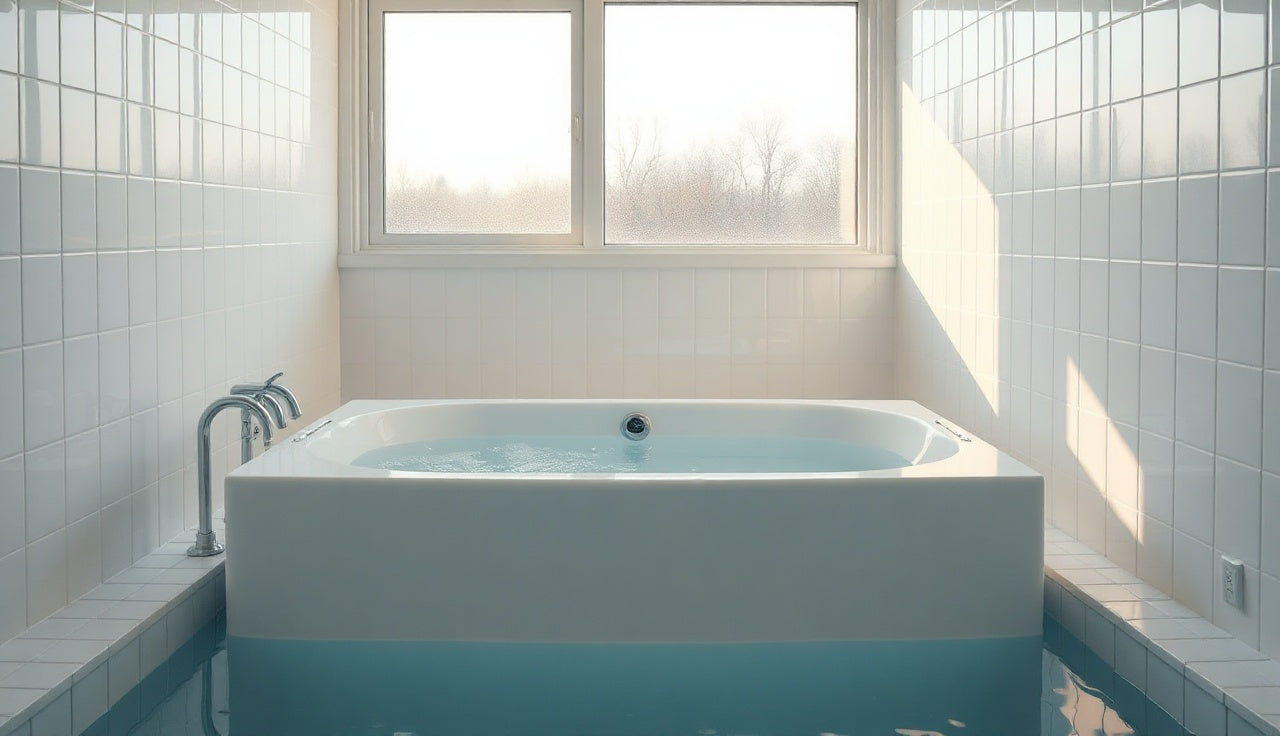
Kohler makes a cold plunge tub as part of its broader wellness bath lineup. The unit is a freestanding acrylic or composite shell with a built-in chiller and circulation system, designed to sit indoors or in a covered outdoor space. It targets homeowners who want a polished, furniture-grade look rather than the industrial aesthetic of many dedicated recovery brands.
The core product is sometimes marketed alongside Kohler's larger relaxation portfolio, which includes soaking tubs, steam generators, and whirlpool systems [1]. The cold plunge itself is not a massive tank. It holds roughly 80 to 100 gallons and is sized for one person seated or reclined with legs extended. That matters because it affects both the chiller's workload and how quickly the water returns to target temperature after you get out.
One thing people often miss: Kohler's distribution runs through plumbing showrooms and big-box home improvement retailers, not specialty fitness or recovery stores. That affects lead times, warranty service, and who you call when something breaks.
How much does the Kohler cold plunge cost?
Pricing on the Kohler cold plunge sits in the $1,500 to $1,800 range at major retailers as of mid-2025, though showroom pricing can run higher depending on local dealer markup [2]. That puts it in the lower-middle tier of cold plunge tubs with integrated chillers. For context, entry-level cold plunge tubs with active cooling from dedicated recovery brands start around $1,200 to $2,500, while premium options from brands like Plunge or Morozko run $3,000 to $5,000 or more.
The Peloton cold plunge tub comparison comes up a lot in search because Peloton briefly announced recovery hardware, but Peloton has not released a standalone cold plunge product as of this writing. Any search result pairing "Peloton cold plunge tub" is either speculative or referencing Peloton's broader recovery programming rather than a physical product you can buy.
Installation adds cost. If you need a dedicated 120V or 240V circuit, expect $200 to $600 in electrician fees depending on your panel's location and local labor rates [3]. A plumber to handle drain connections typically adds $150 to $400 more. So all-in, a Kohler cold plunge can realistically cost $2,000 to $2,800 installed.
What temperature does the Kohler cold plunge reach?
The Kohler cold plunge chills water to approximately 39°F (roughly 4°C) at the low end, with a ceiling around 104°F if you want to use it as a warm soak. That 39°F floor is competitive. Most entry and mid-range cold plunge units with active chillers target 39°F to 50°F, and getting consistently below 50°F is where passive ice baths struggle [4].
Cool-down time from ambient temperature to target temperature matters more than most buyers realize. A 100-gallon tank starting at 70°F ambient water takes anywhere from 4 to 8 hours to reach 40°F on a typical 1/3 to 1/2 horsepower residential chiller, depending on ambient air temperature and insulation quality. Kohler does not publish exact chiller horsepower specs prominently, which is a minor frustration when comparing units side by side.
For most cold exposure protocols used in peer-reviewed research, water at 50°F to 59°F (10°C to 15°C) for 11 to 15 minutes per week is the range associated with the studied benefits around norepinephrine release and cold-shock adaptation [5]. You do not need 39°F water to get that. The lower temperature option is there if you want it, but chasing the coldest possible number is often more marketing than physiology.
| DIY chest freezer / stock tank | $250 |
| Ice Barrel 400 (passive) | $1,199 |
| Kohler Cold Plunge | $1,650 |
| Plunge Original | $2,990 |
| Morozko Forge (entry) | $4,990 |
Source: Retailer and manufacturer listings (citations 2, 6, 12), 2025
How does the Kohler cold plunge compare to other home cold plunge options?
Here is a direct comparison across the most commonly cross-shopped units at a similar price tier:
| Unit | Price (approx.) | Min Temp | Tank Volume | Chiller HP | Warranty |
|---|---|---|---|---|---|
| Kohler Cold Plunge | $1,500, $1,800 | ~39°F | ~80 to 100 gal | Not published | 1 yr parts |
| Plunge Original | $2,990 | 39°F | 100 gal | 1/2 HP | 1 yr parts/labor |
| Ice Barrel 400 (passive) | $1,199 | Ice dependent | 105 gal | None | 1 yr |
| Polar Recovery Tub | $499, $699 | Ice dependent | 100 to 150 gal | None | 90 days |
| Morozko Forge | $4,990, $6,990 | 32°F | 175 gal | Commercial | 2 yrs |
Prices are approximate retail as of mid-2025 and shift with promotions [2][6].
The Kohler's advantage is brand familiarity and showroom access. If you want to see and touch a cold plunge before buying, Kohler's dealer network makes that easier than most dedicated recovery brands. The disadvantage is that Kohler's core business is plumbing fixtures, not cold exposure recovery hardware, and that shows in the depth of filtration and ozone/UV sanitation options. Dedicated cold plunge brands typically offer more sophisticated water maintenance systems at the same price, which matters a lot when you're soaking in the same water daily.
If you're comparing against a broader cold plunge category, the honest answer is that Kohler is a reasonable choice for someone who prioritizes aesthetics and brand reliability, but not the top pick if recovery optimization is the primary goal.
What are the real benefits of cold plunge tubs at home?
The research base on cold water immersion is genuinely interesting, though it gets overstated constantly. What the evidence supports with reasonable confidence: cold water immersion activates the sympathetic nervous system, raises norepinephrine significantly (one controlled study measured increases of 200% to 300% after immersion at 14°C for one hour) [5], and reduces delayed onset muscle soreness (DOMS) in the 24 to 72 hours after exercise. A 2012 Cochrane review found cold water immersion more effective than passive rest for reducing DOMS, though the effect size was modest [7].
What's less settled: the long-term adaptations, the optimal protocol, and whether cold plunging immediately after resistance training blunts muscle hypertrophy gains. A 2021 study in the Journal of Physiology found that post-exercise cold water immersion reduced satellite cell activity and signaling pathways linked to muscle growth [8]. If you're in a hard strength-building phase, plunging within an hour of lifting is probably not the move. If you're prioritizing recovery and performance across a training week rather than maximal hypertrophy, the calculus changes.
For a deeper look at what the research actually says, the cold plunge benefits guide covers the primary studies in detail.
Having a home unit changes behavior. The people who benefit most from cold plunging are the ones who do it consistently, and walking to your backyard is a much lower barrier than driving to a facility.
Is the Kohler cold plunge good for home use?
For most homeowners, yes, with a few honest caveats.
The form factor works well inside a bathroom addition, a finished basement, or a covered patio. Kohler makes attractive hardware and the finish quality on their acrylic shells is solid. If matching a bathroom's visual aesthetic matters to you, Kohler's design language fits better than most dedicated recovery brands, which lean industrial.
The electrical requirements are real. Most units need either a standard 120V 20-amp dedicated circuit or a 240V circuit depending on the chiller. The Kohler product documentation should specify which; make sure you confirm before installation because 240V work requires a licensed electrician in most jurisdictions and permit requirements vary by municipality [3].
Maintenance is where some owners get surprised. Cold water at 39°F to 50°F slows bacterial growth, but it doesn't stop it. Filtration, sanitization, and regular water changes are not optional. A tub sitting at 50°F with no sanitation system is a warm (relatively speaking) petri dish. Kohler's basic filtration handles the basics, but if you're using the tub daily, you'll want to understand the water care routine before you buy.
For contrast therapy pairing a cold plunge with a sauna, the setup works well. The typical protocol of 10 to 20 minutes of heat followed by 2 to 5 minutes of cold, repeated two to three times, is used in both athletic training and general wellness contexts [9]. If you're building a home recovery setup, check out home sauna and sauna benefits as companion reads.
Does Kohler make a cold plunge with a built-in chiller?
Yes. The Kohler cold plunge includes active refrigeration. This separates it from passive cold plunge tubs that require you to add ice manually or pre-chill water in a separate container. An active chiller maintains a set temperature continuously, which means the water is always ready without any prep work on your part.
The compressor-based chiller on the Kohler unit is similar in concept to what window air conditioners use: a refrigerant loop extracts heat from the water and exhausts it into the surrounding air. This means placement matters. In a hot garage or a non-air-conditioned space in a warm climate, the chiller works harder and takes longer to hit target temperatures. In a climate-controlled indoor space, it performs significantly better.
Kohler's published cool-down times are not prominently featured in their standard marketing materials, which is an honest gap in their documentation. If precise performance data matters to your purchase decision, ask your dealer for the spec sheet before ordering.
What electrical and plumbing requirements does a Kohler cold plunge need?
Electrical is the bigger variable. Most cold plunge units with active chillers require a dedicated circuit because the compressor draw on startup can trip a shared breaker. Kohler's units typically run on 120V/15A or 120V/20A dedicated circuits for smaller models, but always verify against the specific model's installation guide [3].
For drain, you need a nearby floor drain or the ability to pump water out. Cold plunge tubs hold 80 to 100 gallons; that's heavy (roughly 700 to 800 pounds when full) and needs a structurally sound floor if you're placing it indoors on an upper level. Ground floor or basement placement is straightforward. Second-floor or deck installations should involve a structural assessment.
Water fill is simple: a standard garden hose connection works. You're not plumbing it to a continuous water supply the way a toilet is. You fill, treat, maintain, and drain on a schedule of every few weeks to a few months depending on usage and your sanitation approach.
Local permits sometimes apply to outdoor installations depending on your municipality. A freestanding cold plunge tub is typically treated more like a portable spa than a permanent fixture, which often means no permit required, but check with your local building department before assuming.
How does a cold plunge compare to just using an ice bath?
This is the most practical question for most buyers, and the answer depends on how you weigh convenience against cost.
A basic ice bath setup, meaning a chest freezer or stock tank filled with cold water and ice, can achieve the same water temperatures as any chilled unit for $100 to $400 upfront. The cost per use is ongoing (ice costs money, especially if you're plunging daily), and the setup isn't ready until you've spent 30 minutes adding ice and waiting. But the physiological effect of 45°F water is identical whether that water was chilled by a $5,000 unit or $8 worth of bagged ice.
What a chilled unit like the Kohler provides is consistency and convenience. The water is always at the right temperature, there's no ice buying, and the habit loop becomes frictionless. Behavioral research on habit formation consistently shows that reducing friction increases consistency, and consistency is what actually produces training and recovery effects over time.
The Kohler cold plunge is a reasonable middle ground: it costs less than the premium recovery brands, installs without a contractor for most configurations, and is backed by a large company with actual customer service infrastructure. It's not the best unit at its price point on pure performance specs, but it's a defensible purchase for someone who values reliability and aesthetics alongside recovery function.
SweatDecks carries a curated selection of cold plunge tubs if you want to compare the Kohler side by side with dedicated recovery brands before deciding.
What should you watch out for before buying the Kohler cold plunge?
A few things that don't show up in the glossy product shots.
First, the warranty. Kohler's standard limited warranty on cold plunge products covers manufacturing defects for one year on parts. Labor coverage varies by retailer and dealer. Compare this to dedicated recovery brands that sometimes offer two to three years on the chiller specifically, which is the component most likely to need service.
Second, parts availability down the road. Kohler is a century-old company and parts generally stay available longer than startups. That's a genuine advantage over some recovery-focused brands that may not exist in five years.
Third, water sanitation. Kohler's basic filtration system is adequate for occasional use. If you're plunging daily, consider whether the unit supports add-on ozone or UV sanitation. Daily use in a 100-gallon tank with weak sanitation means more frequent full water changes, which wastes water and takes time.
Fourth, the customer experience channel. Kohler's support infrastructure is built around plumbing fixtures sold through home improvement retailers. Recovery-specific questions, protocol guidance, and technical troubleshooting on cold plunge units may route through a general bath products support line rather than someone who specializes in cold plunge hardware. That's a minor friction point but worth knowing.
If you're also considering pairing this with a home sauna, the sauna guide and outdoor sauna section cover the layout and installation considerations that affect how the two work together in a real home.
Is the Kohler cold plunge worth the money?
For a specific type of buyer, yes. If you want a cold plunge that looks like it belongs in a high-end bathroom rather than a gym recovery room, and you're comfortable with Kohler's service network, the price is reasonable for what you get.
For pure recovery value per dollar, dedicated brands at the same price point often deliver better filtration, more detailed performance specs, and support teams that understand cold exposure protocols specifically. The Plunge Original at $2,990 has a more developed filtration and sanitation setup and clearer specs, for example, though it costs $1,000 to $1,500 more [6].
Honest verdict: the Kohler cold plunge is a B+ product from an A+ brand. It won't disappoint you, but it won't be the best cold plunge at its price point either. If aesthetics and brand reliability matter more than the latest recovery hardware, buy it. If you're primarily optimizing for recovery performance per dollar, look at dedicated recovery brands or a well-maintained chest freezer hack first.
SweatDecks.com carries several alternatives worth comparing before you commit.
Frequently asked questions
What temperature does the Kohler cold plunge reach?
The Kohler cold plunge cools water to approximately 39°F (4°C) at the low end. It can also warm water up to around 104°F for use as a hot soak. Most cold exposure research uses water in the 50°F to 59°F range, so the 39°F capability gives you a wide buffer. Actual cool-down time from ambient temperature depends on room temperature and insulation.
How much does the Kohler cold plunge cost?
The Kohler cold plunge retails for roughly $1,500 to $1,800 at major home improvement retailers and plumbing showrooms as of mid-2025. Installation costs including a dedicated electrical circuit and any plumbing work typically add $350 to $1,000 depending on your home's existing infrastructure and local labor rates. Total installed cost is commonly $2,000 to $2,800.
Does Kohler make a cold plunge with a built-in chiller?
Yes. The Kohler cold plunge includes an active refrigeration chiller, meaning you do not need to add ice. The compressor maintains your set temperature continuously. This is different from passive tubs that require manual ice. The chiller performs best in a climate-controlled indoor space; hot ambient air makes it work harder and slows cool-down times.
Is the Kohler cold plunge better than the Plunge Original?
Depends on your priorities. The Plunge Original costs roughly $1,200 to $1,500 more but offers more detailed filtration specs, clearer chiller performance data, and a support team focused specifically on cold plunge recovery. The Kohler wins on aesthetics and access to a national dealer network for showroom visits and in-person service. For pure performance specs, dedicated recovery brands generally edge out Kohler at comparable prices.
Does Peloton make a cold plunge tub?
As of this writing, Peloton has not released a standalone cold plunge product for purchase. Searches for 'Peloton cold plunge tub' typically surface speculative articles or references to Peloton's recovery programming content rather than a physical product. Before assuming a Peloton cold plunge is available, verify directly on Peloton's official website.
What are the electrical requirements for a Kohler cold plunge?
Most Kohler cold plunge models require a dedicated 120V circuit, typically 15A or 20A depending on the specific unit. You should confirm the exact requirements in the installation documentation for your model before purchasing. Using a non-dedicated circuit risks tripping breakers on startup due to the compressor's power draw. In many cases, a licensed electrician is required for the dedicated circuit installation.
Can you use the Kohler cold plunge outdoors?
The Kohler cold plunge is designed primarily for indoor or covered outdoor use. Direct exposure to rain, sustained freezing temperatures, or extreme heat can affect chiller performance and longevity. A covered patio or enclosed space works well. Check your local building codes before placing any freestanding spa-type product outdoors, as some jurisdictions have setback or permit requirements.
How do you maintain a Kohler cold plunge tub?
Regular water care includes checking and adjusting sanitizer levels (typically bromine or chlorine-based products compatible with cold water), cleaning the filter cartridge every two to four weeks, and doing full water changes every four to eight weeks depending on usage frequency. Daily users need more frequent sanitation checks. Cold water slows but does not stop bacterial growth, so consistent maintenance is not optional.
How often should you use a cold plunge for recovery benefits?
The most commonly cited research protocol involves roughly 11 minutes total per week of cold water immersion, split across multiple shorter sessions at water temperatures around 50°F to 59°F. Daily cold plunging of 2 to 5 minutes is a common practical approach. Avoid cold water immersion immediately after resistance training if muscle growth is a priority, since some studies show it can blunt hypertrophy signaling.
How does the Kohler cold plunge compare to a DIY ice bath setup?
A DIY setup using a chest freezer or stock tank achieves identical water temperatures for $100 to $400 upfront but requires manual ice management and has no automatic temperature control. The Kohler cold plunge costs significantly more but is always ready, requires no ice buying, and fits better aesthetically in a home environment. For daily users who value convenience, the chilled unit wins. For occasional users, the DIY route is hard to beat on value.
What warranty does the Kohler cold plunge come with?
Kohler's standard limited warranty on cold plunge products covers manufacturing defects for one year on parts. Labor coverage depends on the retailer and dealer terms. This is shorter than what some dedicated recovery brands offer on their chillers, which can run two to three years. Extended warranty options may be available through dealers; ask explicitly before purchasing.
Can cold plunging be dangerous?
Cold water immersion carries real risks for people with cardiovascular conditions. Sudden cold exposure triggers a cold shock response that elevates heart rate and blood pressure sharply, which can be dangerous for people with heart disease, uncontrolled hypertension, or arrhythmias. Hypothermia is also a real risk with prolonged immersion. Anyone with cardiovascular or circulatory health concerns should consult a physician before starting any cold immersion practice.
Does a cold plunge help with muscle soreness?
Yes, with modest effect sizes. A 2012 Cochrane review found cold water immersion more effective than passive rest for reducing delayed onset muscle soreness in the 24 to 96 hours following exercise. However, the same cold exposure may reduce the signaling pathways for muscle hypertrophy if used immediately after resistance training. Timing matters: cold plunging is better suited for endurance or sport recovery than post-weightlifting recovery during a muscle-building phase.
What size is the Kohler cold plunge tub?
The Kohler cold plunge holds approximately 80 to 100 gallons and is sized for one adult, either seated upright or reclined with legs extended. It is not a large soaking tub or a two-person setup. For reference, 100 gallons of water weighs roughly 835 pounds, so floor load capacity is a real consideration for any non-ground-floor installation.
Sources
- Kohler Co. -- Wellness Baths product overview: Kohler markets cold plunge and wellness bath products as part of its broader bathing and relaxation portfolio
- The Home Depot -- Kohler cold plunge product listings: Kohler cold plunge tubs retail in the $1,500 to $1,800 range at major home improvement retailers
- U.S. Consumer Product Safety Commission -- Home Electrical Safety: Dedicated circuits are recommended for large appliances including those with compressor motors; electrician costs for circuit installation vary by region
- PubMed -- Bleakley C et al., Cold-water immersion for preventing and treating muscle soreness after exercise, Cochrane Database 2012: Cold water immersion at 50°F to 59°F range is consistent with protocols studied in controlled trials on recovery
- Søberg S et al., Nature Metabolism 2021 -- Winter swimming study citing norepinephrine increases: Cold water immersion at approximately 14°C was associated with norepinephrine increases of 200% to 300%; approximately 11 minutes per week total was the protocol associated with studied effects
- Plunge.com -- Plunge Original product page: The Plunge Original retails at approximately $2,990 with 1/2 HP chiller and 100-gallon capacity
- Cochrane Library -- Bleakley CM et al., Cold-water immersion (cryotherapy) for preventing and treating muscle soreness after exercise, 2012: The Cochrane 2012 review found cold water immersion more effective than passive rest for reducing delayed onset muscle soreness, with modest effect sizes
- The Journal of Physiology -- Fuchs CJ et al., Post-exercise cold water immersion attenuates acute anabolic signalling, 2020: Post-exercise cold water immersion reduced satellite cell activity and muscle hypertrophy signaling pathways
- PubMed -- Briner WW, Contrast water therapy and exercise induced muscle damage, Journal of Athletic Training 1995: Contrast therapy protocols alternating heat and cold are used in athletic training contexts for recovery
- U.S. Department of Energy -- Residential electrical panel and circuit requirements guidance: Electrical circuit work including dedicated circuits for appliances is subject to local building codes and permit requirements in most U.S. jurisdictions
- American College of Sports Medicine -- Cold and Heat Illness position stand: Cold water immersion carries cardiovascular risk including cold shock response with elevated heart rate and blood pressure for people with underlying conditions
- Ice Barrel -- Ice Barrel 400 product specifications: Ice Barrel 400 retails at approximately $1,199 as a passive cold plunge requiring manual ice addition

Share:
6 person barrel sauna: what to know before you buy
6 person barrel sauna: what to know before you buy