
Last updated 2026-07-09
TL;DR
Just the Tub is a PVC barrel-style cold plunge sold for around $150-$300 that uses no built-in chiller. You fill it with cold water or ice, climb in, and soak. It gets you cold fast and cheaply, but holding temperature without a chiller requires constant ice or a cold climate. Best for beginners and budget buyers testing cold therapy before committing to a $3,000-$10,000 chilled unit.
What is Just the Tub and how does it work?
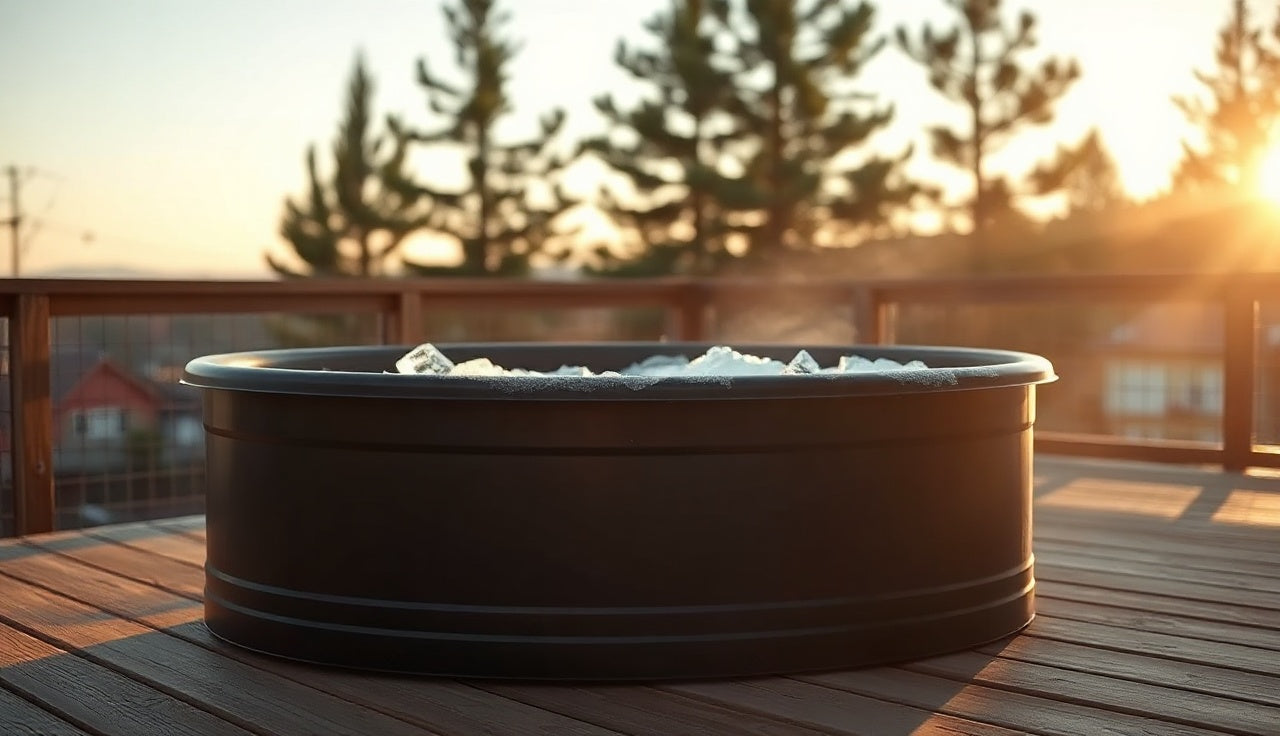
Just the Tub is a PVC barrel-style cold plunge tub marketed under the Dynamic Cold Therapy brand. The core idea is dead simple: it is a watertight barrel you fill with cold water, add ice if needed, and sit in up to your chest. No pump. No chiller. No electrical connection required.
The barrel is made from food-grade PVC, which is lightweight, UV-resistant, and flexible enough to set up on most flat surfaces. Most configurations ship with a lid or cover to slow heat gain between sessions, and some kits include a basic drain plug for emptying. The design borrows from the wooden whiskey-barrel aesthetic that has become common in the cold plunge market, but uses PVC instead of cedar or pine staves, which is why it costs a fraction of what wood barrel tubs run.
Dynamic Cold Therapy positions this as an entry point into the cold plunge space. The pitch is that you do not need to spend thousands of dollars to start a cold exposure practice. That pitch is mostly true, with some real caveats about temperature maintenance that matter a lot once you get past your first few sessions.
Water temperature is the whole game in cold therapy. Most research on the physiological effects of cold water immersion uses water in the range of 10 to 15 degrees Celsius (50 to 59 degrees Fahrenheit) [1]. Just the Tub gets you there, but only as long as your water stays cold. In warm weather or a heated garage, a tub with no chiller will climb out of that range in a matter of hours. In winter, outdoors, it barely needs any ice at all.
What are the real specs: dimensions, material, and weight?
The standard Just the Tub PVC barrel measures roughly 30 inches in diameter and 30 to 32 inches in height. Those dimensions fit most adults for a seated soak with water covering the torso, which is the standard cold immersion position used in most research protocols [1]. Taller users (over 6 feet 2 inches) will find that their knees sit above the waterline unless they adopt a tucked position.
Empty weight is typically around 15 to 20 pounds depending on the configuration. Filled to a useful depth, you are looking at roughly 60 to 80 gallons of water, which weighs approximately 500 to 670 pounds. That matters for deck and floor planning. A standard residential deck rated at 40 pounds per square foot can handle the weight across the barrel's footprint, but you should confirm your specific deck load rating before placing any filled tub on it. The American Wood Council publishes residential load tables if you want to verify [2].
The PVC material handles outdoor temperatures reasonably well. PVC begins to deform at temperatures above approximately 140 degrees Fahrenheit, so sun exposure in summer is not a structural concern [3]. Cold does make PVC more brittle, which is worth knowing if you live somewhere that gets below negative 10 degrees Celsius regularly. Storing the tub empty and indoors during hard freezes is the safe call.
Here is a quick spec comparison to put Just the Tub in context against common alternatives:
| Tub Type | Approx. Price | Water Temp Control | Setup Time | Weight (filled) |
|---|---|---|---|---|
| Just the Tub PVC Barrel | $150-$300 | Ice / ambient only | 15-30 min | ~500-670 lbs |
| Stock tank (galvanized) | $100-$250 | Ice / ambient only | 30-60 min | ~600-800 lbs |
| Inflatable ice bath | $50-$200 | Ice / ambient only | 5-15 min | ~400-600 lbs |
| Chilled cold plunge unit | $2,500-$10,000+ | Active chiller, 39-60°F | 1-4 hrs first fill | ~400-900 lbs |
| Wood barrel cold plunge | $500-$2,000 | Ice / ambient only | 30-90 min | ~500-750 lbs |
How cold does it actually get and how long does it stay cold?
This is the question that decides whether Just the Tub fits your actual life. The honest answer depends almost entirely on your climate, the starting temperature of your tap water, and how much ice you add.
In most of the continental United States, tap water runs between 50 and 75 degrees Fahrenheit year-round, with the colder end in winter and the warmer end in summer [4]. If you fill Just the Tub in January in Minnesota, your tap water might already be close to the 50 to 59 degree range researchers use. If you fill it in August in Georgia, you are starting at 70 degrees or warmer and need a significant amount of ice to get into range.
A rough rule of thumb: one 20-pound bag of ice lowers roughly 100 gallons of water by about 10 degrees Fahrenheit, though the math varies with starting temps and ambient air temperature. A 70-gallon tub at 70°F needs approximately 3 to 4 bags of ice to reach 50°F. At $2 to $4 per bag, that is $6 to $16 per session in warm months, which adds up fast.
Temperature hold time without a chiller is typically 2 to 6 hours depending on ambient temperature and whether the lid is on. The lid is not optional in summer. Without it, solar gain and warm air can raise the water temperature 5 to 10 degrees in under an hour on a hot day.
If you want consistent 50 to 55 degree water every single morning without thinking about it, Just the Tub is the wrong tool. A dedicated cold plunge unit with an active chiller is the right answer, even if it costs ten times as much. If you want to try cold immersion for a few months and see if it sticks before making that investment, Just the Tub is a perfectly reasonable way to start.
| 1 bag (20 lbs ice) | 3 |
| 2 bags (40 lbs ice) | 6 |
| 3 bags (60 lbs ice) | 9 |
| 4 bags (80 lbs ice) | 12 |
| 5 bags (100 lbs ice) | 15 |
Source: USGS National Water Information System (citation 4) and general calorimetry principles
What does cold water immersion actually do for your body?
Cold water immersion research has grown substantially over the past decade. The physiological mechanisms are reasonably well understood even where the clinical outcome data is still patchy.
When you immerse in cold water, your body triggers a suite of responses: peripheral vasoconstriction (blood shunts away from the skin and limbs toward the core), a spike in norepinephrine (a neurotransmitter and hormone involved in alertness and mood), and an increase in heart rate followed by a slower heart rate as the cold exposure continues [5]. The norepinephrine response is one of the most cited mechanisms for the mood and energy effects people report. A 2022 paper published in PLOS ONE found that a structured cold water swimming protocol was associated with improvements in mood and wellbeing in a community sample, though the study design could not isolate cold exposure from the social and exercise components [6].
For athletic recovery, the picture is genuinely mixed. Cold water immersion does reduce perceived muscle soreness after exercise, and some studies show reduced markers of inflammation in the short term. But a 2015 study in the Journal of Physiology found that regular post-exercise cold water immersion blunted long-term strength and muscle mass gains compared to active recovery, a finding that has been replicated in follow-up work [7]. The current practical consensus among sports scientists is that cold immersion is useful for competition-heavy periods when you need to recover fast between efforts, but it is probably not ideal after every resistance training session if hypertrophy is your primary goal.
Read more about the evidence behind cold exposure on the cold plunge benefits page, which covers the research in more depth.
Heat-and-cold contrast therapy, where you alternate between a sauna and a cold plunge, has its own body of research suggesting circulatory benefits from the repeated vasodilation and vasoconstriction cycle. If that interests you, the sauna benefits page has the relevant citations.
How do you set up Just the Tub step by step?
Setup is genuinely simple, which is one of the product's real selling points over more elaborate systems.
First, pick your location. You want a flat, level surface that can handle the filled weight (roughly 500 to 670 pounds as noted above). A concrete patio, a solid deck, or a garage floor all work. Grass works if the ground is firm and level. Avoid sloped surfaces where a filled barrel can tip.
Second, unfold and position the barrel. PVC barrels are flexible and fold for shipping. Unfolding takes a few minutes. Some come with a support frame or internal structure that needs to be set before filling. Read the included instructions here because the frame sequence varies by configuration.
Third, seat the drain plug firmly before adding any water. This sounds obvious but it is the single most common setup mistake. A loose plug and 70 gallons of water on your garage floor is a bad afternoon.
Fourth, fill with a garden hose to your desired depth. Most people fill to about 4 to 6 inches below the rim, which gives you a comfortable seated soak with water at chest level. Filling to that depth takes 15 to 30 minutes depending on your hose flow rate.
Fifth, add ice if needed to hit your target temperature. Use a thermometer. Guessing water temperature is unreliable and the difference between 45°F and 65°F is significant both physiologically and in terms of how the session feels.
Sixth, put the lid on if the tub sits in the sun or if ambient temperature is above 65°F. Lid on, plunge when ready.
Total setup time from unboxing to first use: roughly 45 minutes to an hour, mostly waiting for the hose.
What are the real pros and cons of a PVC barrel cold plunge?
Let's be direct here because this is the section that actually helps you decide.
The genuine pros: Price is the obvious one. At $150 to $300, Just the Tub costs less than a month's worth of cryotherapy sessions at most clinics, so the payback period for a frequent user is fast. Setup requires no plumbing, no electrical work, and no contractor. The PVC material is easy to clean with a mild bleach solution or hot tub sanitizer, and it does not rot or splinter the way wood can. Portability is real. You can deflate or collapse it, move it to a new location, or store it in a closet between uses. That matters for apartment dwellers with outdoor space or people who want a seasonal setup.
The real cons: Temperature maintenance without a chiller is the fundamental limitation. Every session in warm weather costs ice money and planning. The PVC aesthetic is not for everyone. If you want something that looks like a spa investment in your backyard, a PVC barrel is not going to give you that. Capacity is also a consideration: the 30-inch diameter is tight for larger-framed adults, and there is no way to comfortably share the tub with a partner the way you could with a larger stock tank or a dedicated cold plunge pool. Durability over multi-year outdoor use with UV exposure and freeze-thaw cycles is an open question, since the product category is relatively new and long-term field data is sparse.
One honest comparison point: a galvanized stock tank (the livestock water trough kind, available at farm supply stores) costs about the same and holds more water, but it is heavier, requires more space, and has no lid or drain by default. Both are legitimate entry-level options.
SweatDecks carries a range of cold plunge options at different price points if you want to compare the PVC barrel against chilled units side by side.
How does it compare to other budget cold plunge options?
The under-$500 cold plunge market has three real categories: inflatable tubs, PVC or hard-shell barrels like Just the Tub, and repurposed stock tanks. Each has a genuine use case.
Inflatable tubs are the cheapest and most portable option, often under $100. They work fine but puncture risk is real, and thin walls mean faster temperature rise. Good for travel or occasional use, not for daily sessions outdoors.
PVC barrels like Just the Tub sit in the middle on price and durability. The rigid structure holds its shape without inflation, which makes it easier to get in and out of safely. The barrel form factor also means a smaller footprint than a stock tank. The main trade-off versus inflatables is that PVC barrels are harder to store since they do not fold as flat.
Stock tanks, typically galvanized steel, have a long track record as cold plunge tubs in the fitness community. They come in sizes from 100 to 300 gallons, cost $100 to $350 at Tractor Supply Co. or similar farm stores, and last decades. The downsides are weight, no built-in drain, and the aesthetic. If you are fine with a cattle trough on your patio and you want maximum volume and durability, a stock tank probably edges out Just the Tub on pure value.
Against chilled units, the comparison is not really about quality, it is about lifestyle fit. A chilled unit at $3,000 to $10,000 gives you consistent temperature at any time of year with no ice cost. For daily users who plunge year-round in warm climates, the math on ice alone can push toward a chiller within two to three years. For seasonal users or beginners, a $200 PVC barrel is the right starting point.
If you are also thinking about pairing cold therapy with heat, see the ice bath and sauna pages for context on how people combine both practices.
What does Just the Tub cost and where can you buy it?
Just the Tub PVC barrel cold plunges generally retail between $150 and $300 depending on the configuration. Base models with a simple drain and lid are at the lower end. Kits that include accessories like a thermometer, cleaning supplies, or an insulating cover run higher.
The brand sells directly through its own website and through third-party marketplaces including Amazon. Pricing on Amazon tends to match or slightly exceed the direct price, and shipping is often free on Prime-eligible listings. Lead times are usually short, often 3 to 7 business days, since the product ships compressed and does not require freight delivery the way large chilled units do.
One thing worth knowing: because the cold plunge market has grown fast, there are now dozens of similar PVC barrel products from different brands at very similar price points. Just the Tub has name recognition in the Dynamic Cold Therapy branding, but if you are comparison shopping on Amazon or Google, you will find near-identical products from other brands at similar prices. The meaningful differences to compare are wall thickness, included accessories, lid design, and the return policy. A tub that arrives damaged or leaks at the drain fitting is a real inconvenience, and a good return window matters.
For context on the broader cold plunge market and what different price points actually buy you, the cold plunge benefits page includes a breakdown of what the research says about frequency and temperature, which affects how much tub you actually need.
How do you maintain and clean a PVC barrel cold plunge?
Water hygiene in a cold plunge is a genuine concern that often gets glossed over in marketing. Cold water does not kill bacteria the way hot water does. Sitting in an unmanaged tub of cold water that has been standing for a week is not a recovery protocol, it is a potential skin and respiratory exposure risk.
The simplest approach for occasional users is to drain, rinse, and refill before each session. Fresh water each time eliminates the water quality problem entirely. This works fine if you have easy hose access and do not mind the setup time.
For people who want to maintain a standing fill between sessions, the approach mirrors hot tub chemistry in reverse. You want to keep pH between 7.2 and 7.8 and use a sanitizer like bromine or chlorine at levels appropriate for a cold-water environment. The CDC publishes guidance on healthy swimming water chemistry that applies to small fill tubs [8]. You will also want to wipe down the interior walls weekly to prevent biofilm buildup, which can form faster in a tub without a circulation pump.
A cover is important for keeping debris, insects, and UV radiation out of the water between sessions. UV degrades both the sanitizer chemistry and the PVC material faster than ambient temperature does.
Filter and pump add-ons exist for some barrel designs that allow you to run continuous filtration without a full chiller unit. These typically cost $100 to $300 extra and are worth considering if you want to maintain a standing fill for more than a day or two between changes.
Is Just the Tub safe, and who should avoid it?
Cold water immersion carries real physiological risks that apply regardless of what tub you use. The most significant is cold shock response, which is the rapid gasping, hyperventilation, and blood pressure spike that happens in the first 30 to 90 seconds of cold immersion. For healthy adults, this is uncomfortable but manageable. For people with certain cardiac conditions, it can trigger arrhythmias [9]. The American Heart Association recommends that people with heart disease consult a physician before beginning any cold water immersion practice [9].
Hypothermia is a secondary risk for people who stay in too long. At 50 to 59°F, most healthy adults can safely soak for 10 to 15 minutes, but individual cold tolerance varies significantly. Standard guidance in most cold water immersion protocols used in research is to start with 1 to 3 minutes and build gradually over weeks [1]. There is no performance or health benefit to shivering uncontrollably or losing fine motor control.
People who should be especially cautious or who should get medical clearance first: those with cardiovascular disease, Raynaud's phenomenon, peripheral artery disease, hypertension that is not well controlled, or pregnancy. Children and elderly adults have less thermoregulatory reserve and should approach cold immersion conservatively.
Safety setup basics: never plunge alone if you are new to cold exposure, make sure you can exit the tub easily and quickly, and have a warm environment and dry towels within reach before you get in. A barrel-style tub requires stepping over the rim, which can be awkward on cold, wet legs. A small step stool helps.
The Consumer Product Safety Commission does not have specific regulations for portable cold plunge tubs as of mid-2026, but general pool and spa safety guidelines about covers and drain design are worth following [10].
What is the best protocol for using Just the Tub?
The research does not give you a single universal answer on optimal cold exposure dose, but it does give you a useful range. A 2022 systematic review in Sports Medicine found that cold water immersion durations of 10 to 20 minutes at temperatures between 10 and 15°C were most commonly associated with positive recovery outcomes [1]. Most practical guidance from sports science matches this: 10 to 15 minutes in 50 to 59°F water is a solid target session for recovery purposes.
For general wellness and mood benefits (as opposed to athletic recovery), shorter exposures appear to be sufficient. The protocol used in several norepinephrine studies involved immersions of 2 to 5 minutes [5]. If your goal is the alertness and mood response rather than post-exercise recovery, you do not need to stay in for 15 minutes.
Timing relative to workouts matters if you care about muscle building. As noted above, cold immersion immediately after resistance training may blunt hypertrophy adaptations [7]. If you train for strength or muscle mass, waiting 4 to 6 hours after lifting before your cold plunge, or saving cold immersion for days when you have not done heavy resistance work, is the more conservative approach supported by current evidence.
Morning cold plunges before coffee have become a popular habit partly because the norepinephrine and alertness spike is a useful functional effect at the start of a day. There is no specific research comparing morning versus evening cold exposure for non-athletic outcomes, so this is genuinely a lifestyle preference call.
Contrast therapy, alternating hot and cold, is a separate protocol entirely. If you have access to a sauna or home sauna and are thinking about combining heat and cold exposure, the typical pattern is 2 to 4 rounds of heat (10 to 20 minutes) followed by cold (1 to 5 minutes), with brief rest periods. This is common in Finnish sauna culture and in several Scandinavian research protocols, though the specific optimal parameters are still being studied.
Who is Just the Tub actually right for, and who should skip it?
Buy Just the Tub if you are: a beginner to cold therapy who wants to test the practice before committing real money, someone who lives in a climate that naturally keeps outdoor water cold for much of the year, a person with limited outdoor space who needs a compact footprint, or someone who wants portability and easy storage between uses.
Skip it if you are: a daily cold plunger in a warm climate who will spend more on ice than the tub costs within a few months, someone who cares deeply about consistent precise temperature, a larger-framed adult who needs more internal volume to be comfortable, or someone who wants a backyard setup that looks polished. For that last group, a wood barrel or a well-designed chilled unit is worth the extra investment.
The honest middle path: buy Just the Tub, use it for three months, and see whether you are actually plunging consistently. The dropout rate on cold therapy habits is high. A lot of people who buy $5,000 cold plunge units use them enthusiastically for six weeks and then stop. If Just the Tub costs you $200 and proves that you will consistently plunge four or five times a week, you have justified the upgrade to a chilled unit with real data from your own behavior.
SweatDecks carries cold plunge options across the price range if you get to that point. The cold plunge collection page is a reasonable place to compare what chilled units look like at different budgets.
Frequently asked questions
How long does Just the Tub stay cold without ice?
Without ice and without a chiller, water temperature in Just the Tub will rise toward ambient air temperature over time. In cool weather (50 to 60°F air), a filled tub stays in therapeutic range (under 60°F water) for several hours. In warm weather (above 70°F air), expect the water to climb out of the therapeutic range within 2 to 4 hours even with the lid on. Ice is required for warm-weather sessions.
How much ice does Just the Tub need?
A rough estimate: 3 to 5 bags of ice (20 pounds each) are needed to bring a 70-gallon tub from 70°F tap water down to around 50°F. That is $6 to $20 per session in warm months depending on local ice prices. In cooler climates or seasons, tap water may already be cold enough that little or no ice is needed. A thermometer is essential for knowing where you actually are.
Can you use Just the Tub indoors?
Yes, with caveats. You need a floor that can handle 500 to 670 pounds of static load. You need a way to drain it, either by carrying water out in buckets or by running a hose to a floor drain or outside. And you need ventilation, since a cold wet tub in an enclosed space can add moisture to the air. A garage with a floor drain is the most practical indoor setup.
Is Just the Tub the same as Dynamic Cold Therapy?
Just the Tub is a product line sold under the Dynamic Cold Therapy brand. Dynamic Cold Therapy makes or markets several cold immersion products, and Just the Tub is their entry-level PVC barrel model. The brand name and product name appear together on the packaging and product listings, which creates some confusion, but they refer to the same tub.
What is the difference between Just the Tub and a stock tank cold plunge?
A galvanized steel stock tank costs roughly the same ($100 to $350), holds more volume, and arguably lasts longer with proper care. Just the Tub offers a more compact footprint, an included lid and drain on most configurations, and slightly easier transport. For pure volume and durability, stock tanks have the edge. For ease of setup, portability, and a tidier look, Just the Tub wins. Both require ice or a cold climate to maintain therapeutic water temperatures.
How do I keep the water clean in Just the Tub between uses?
The easiest method is drain and refill before each session. For a standing fill, maintain pH between 7.2 and 7.8 and use a cold-water-compatible sanitizer like bromine. Keep the lid on between sessions. Wipe down the interior weekly to prevent biofilm. A submersible pump and filter add-on extends the time between full water changes significantly. CDC healthy swimming guidelines provide the relevant water chemistry targets.
Can cold water immersion in Just the Tub help with muscle recovery?
Research supports cold water immersion for reducing perceived muscle soreness and some inflammatory markers after exercise. A 2015 Journal of Physiology study found that regular post-exercise cold immersion blunted long-term strength and muscle mass gains compared to active recovery. The practical consensus: cold plunging is useful for recovery during competition blocks when fast turnaround matters, but is probably not ideal after every resistance training session if building muscle is the primary goal.
Is Just the Tub safe for people with heart conditions?
Cold water immersion triggers cold shock, a rapid increase in heart rate and blood pressure in the first 30 to 90 seconds of immersion, which can provoke arrhythmias in susceptible individuals. The American Heart Association advises people with heart disease to consult a physician before cold water immersion. Anyone with cardiovascular disease, uncontrolled hypertension, or a history of arrhythmia should get medical clearance before using any cold plunge product.
How long should a beginner stay in Just the Tub?
Start with 1 to 3 minutes and build gradually over several weeks. Most cold therapy research protocols and practical sports medicine guidance target 10 to 15 minutes at 50 to 59°F as an effective dose for recovery, but that range is not appropriate on day one. Never push through loss of fine motor control or intense shivering. Exiting the tub safely while your limbs are cold takes practice and a good step or platform.
Does Just the Tub come with a cover or lid?
Most Just the Tub configurations include a cover or lid. The specific included accessories vary by the configuration purchased, so check the product listing carefully. A lid is important for temperature maintenance in warm weather and for keeping debris out between sessions. If your version does not include a cover, a pool cover or custom-cut foam insulation panel works as a substitute.
Can you add a chiller to Just the Tub later?
Portable chillers designed for small cold plunge tubs exist and can be paired with Just the Tub, though this is not officially part of the Just the Tub product ecosystem. Third-party portable chiller units that connect via a standard hose fitting cost roughly $300 to $800. They add complexity and a power requirement but eliminate the ice dependency. At that combined price point, it is worth comparing the total cost against purpose-built chilled cold plunge units.
How does cold plunging pair with sauna use?
Contrast therapy (alternating sauna heat with cold plunge) is common in Finnish and Scandinavian wellness traditions and is used by athletes for recovery. A typical pattern is 10 to 20 minutes in the sauna followed by 1 to 5 minutes in cold water, repeated 2 to 4 times. The physiological rationale is the cardiovascular stimulus from alternating vasodilation and vasoconstriction. See the sauna benefits and home sauna pages for more on heat protocols.
What temperature should the water be in Just the Tub?
Most cold water immersion research uses temperatures between 10 and 15 degrees Celsius (50 to 59 degrees Fahrenheit). This range consistently produces the physiological responses studied, including norepinephrine release and vasoconstriction. Colder water (below 50°F) is not meaningfully more effective for most wellness goals and increases risk. Warmer water (above 60°F) reduces the stimulus. A simple waterproof thermometer, costing $10 to $20, is worth having.
How durable is PVC for an outdoor cold plunge tub?
Food-grade PVC is UV-resistant and handles outdoor temperatures well in most climates. It begins to deform above roughly 140°F, which is not a concern in normal outdoor use. Extreme cold below roughly negative 10 degrees Celsius can make PVC brittle, so storing the tub empty indoors during hard freezes is the cautious approach. Multi-year outdoor durability with UV and freeze-thaw exposure is an open question because the product category is relatively new.
Sources
- Sports Medicine, Machado et al. 2016 systematic review on cold water immersion: Cold water immersion at 10-15°C for 10-20 minutes is the most studied protocol for post-exercise recovery outcomes
- American Wood Council, residential deck load tables: Standard residential decks are typically designed for 40 pounds per square foot live load; structural verification needed before placing heavy filled tubs
- U.S. EPA, chemical data on PVC thermal properties: PVC begins to deform at temperatures above approximately 140 degrees Fahrenheit under sustained heat
- USGS National Water Information System, groundwater and tap water temperature data: Tap water temperature in the continental United States ranges from approximately 50 to 75 degrees Fahrenheit depending on season and geography
- European Journal of Applied Physiology, Srámek et al. 2000, cold water immersion and norepinephrine: Cold water immersion produces a significant norepinephrine spike, with increases of up to 300% reported in some protocols
- PLOS ONE, van Tulleken et al. 2022, cold water swimming and wellbeing: A structured cold water swimming protocol was associated with improvements in mood and wellbeing in a community sample, though the design could not isolate cold exposure from social and exercise components
- Journal of Physiology, Roberts et al. 2015, cold water immersion and muscle adaptation: The study concluded that 'cold water immersion attenuated long-term gains in muscle mass and strength' compared to active recovery after resistance training
- CDC Healthy Swimming, water chemistry guidelines for pools and small fill tubs: CDC recommends pH between 7.2 and 7.8 and appropriate chlorine or bromine levels for recreational water to prevent waterborne illness
- American Heart Association, cold water and cardiovascular risk guidance: The American Heart Association advises people with heart disease to consult a physician before cold water immersion due to cold shock response risks including arrhythmia
- U.S. Consumer Product Safety Commission, pool and spa safety: CPSC publishes pool and spa safety guidelines covering drain entrapment and cover safety; no specific portable cold plunge tub regulation exists as of mid-2026
- International Journal of Sports Physiology and Performance, Leeder et al. 2012, meta-analysis on cold water immersion: Meta-analysis found cold water immersion reduced delayed onset muscle soreness by a moderate effect size compared to passive recovery

Share:
Contrast therapy protocol: how to do it right at home
High end cold plunge tubs: what you actually get for the money