
Last updated 2026-07-09
TL;DR
Joe Rogan runs his sauna at 180 to 220°F (82 to 104°C) for 20 to 30 minutes, usually followed by a cold plunge. He leans on Dr. Rhonda Patrick's heat-stress research. Most of what he does tracks with peer-reviewed sauna literature, though the top of his temperature range is harder to verify and no place for a beginner.
What temperature does Joe Rogan use in his sauna?
Rogan runs his sauna at roughly 180 to 220°F, and 200°F (93°C) is the number he lands on most. He has talked about it on dozens of JRE episodes. In a 2019 conversation with Dr. Rhonda Patrick he described sessions where the air climbs past 200°F and he stays in for 20 to 30 minutes. That is a real temperature. Most traditional Finnish saunas run between 160°F and 212°F (71 to 100°C), so he sits toward the hot end of a normal range, not in some superhuman zone.
Humidity is the wrinkle. He uses a barrel sauna and throws water on the rocks, which spikes the perceived heat without moving the air temperature much. That matters. A few ladles of water at 180°F can feel more punishing than 200°F of bone-dry air. So when he says "200 degrees," he might mean 200°F dry, or 180°F with steam. The distinction is real but it barely changes the practical advice.
Here's the honest answer. Expect 180 to 220°F based on everything he has said publicly, in 20 to 30 minute sessions. That is the protocol worth thinking about.
What kind of sauna does Joe Rogan own?
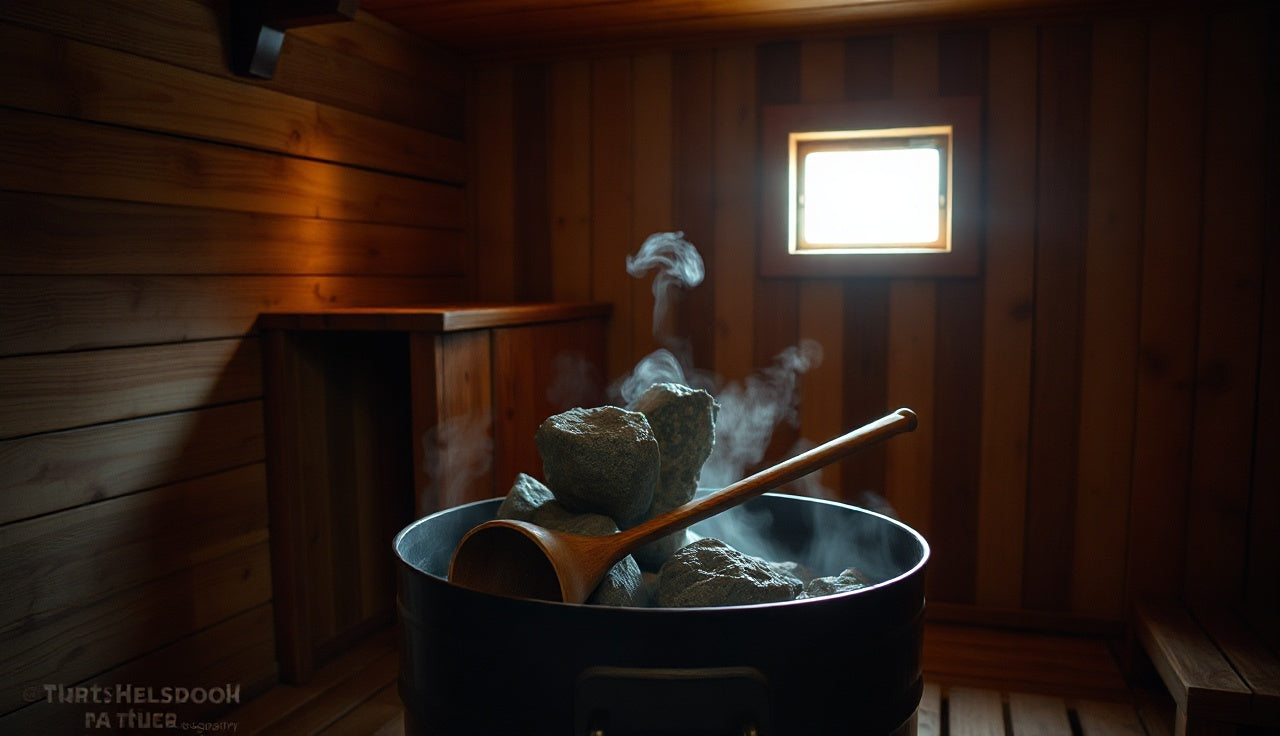
Rogan uses a traditional Finnish-style barrel sauna with a rock heater. He has referenced both wood-burning and electric setups at different times, and it may have changed over the years. Barrel saunas hit high temperatures fast and hold heat evenly, because the curved walls push warm air back down instead of letting it pool at the ceiling.
He keeps a cold plunge right next to it for contrast therapy after the heat. The hot-cold sequence is the point of what he does, not the sauna on its own. If you want to copy the routine, a sauna without a cold plunge gets you halfway there.
For comparison, a quality home sauna that reaches 200°F usually runs a heater rated at 6 to 9 kW for a 2-3 person cabin. Rogan's barrel looks like a one or two person unit, which heats fast and holds temperature well.
Where did Rogan's sauna habits come from? The Rhonda Patrick connection
The biggest influence on Rogan's sauna use is Dr. Rhonda Patrick, a researcher with a PhD in biomedical science who has appeared on JRE several times. Patrick has published on heat shock proteins and summarized the Finnish population data extensively on her own platform, FoundMyFitness. Her credentials are real and so is the cohort research she cites.
The Finnish study she and Rogan return to most is the 2015 JAMA Internal Medicine paper by Laukkanen et al. It followed 2,315 middle-aged Finnish men for an average of 20 years and found that men using the sauna 4 to 7 times a week had a 40% lower risk of all-cause mortality than once-a-week users [1]. Those sessions ran at roughly 174°F (79°C), which is cooler than what Rogan describes. That gap is worth sitting with.
Patrick has also covered heat shock protein induction, cardiovascular adaptation, and growth hormone response. Rogan runs all of it through his own filter, which is why his advice lands somewhere between Finnish epidemiology and gym-floor intensity. The underlying science holds up. The specific temperature he pushes sits at the aggressive edge of what the studies actually used.
| 1x per week (reference) | 0% |
| 2–3x per week | 24% |
| 4–7x per week | 40% |
Source: Laukkanen et al., JAMA Internal Medicine, 2015
How long does Joe Rogan stay in the sauna?
Twenty to thirty minutes per session is what Rogan describes most consistently. On contrast days he does multiple rounds, stepping out to the cold plunge and coming back. A typical session looks like 20 minutes at 200°F, cold plunge, rest, then repeat once or twice.
That duration matches the research. The Laukkanen et al. cohort showed sessions of at least 19 minutes tied to the largest cardiovascular risk reduction compared to shorter ones [1]. The Finnish Sauna Society recommends 10 to 20 minute rounds with breaks, a touch more conservative than Rogan but not by much [2].
For anyone new to high-temperature saunas, 20 to 30 minutes at 200°F is too much on day one. Start at 170°F for 10 to 12 minutes and build from there. You still get real heat stress and you stay safe. Nobody starts where Rogan is now.
What does the research actually say about sauna temperature and health?
The most cited work comes from Finnish cohort studies, mainly the Kuopio Ischemic Heart Disease Risk Factor Study. The 2015 JAMA Internal Medicine paper found frequent sauna use (4 to 7 sessions per week) tied to a 40% reduction in all-cause mortality and a 63% reduction in sudden cardiac death over 20 years, compared to once-weekly use [1]. Those sessions averaged 15 minutes at about 174°F (79°C).
A 2018 review in Mayo Clinic Proceedings by Laukkanen and colleagues concluded that "regular sauna bathing is associated with reduced cardiovascular and all-cause mortality," and noted gains in blood pressure, arterial compliance, and left ventricular function [3]. The review did not pin down a single best temperature, but it flagged the traditional Finnish range of 80 to 100°C (176 to 212°F) as where most of the benefit data comes from.
Heat shock proteins are another mechanism Rogan talks about. A study in the Journal of Applied Physiology found that passive heating enough to raise core body temperature by roughly 1°C triggers heat shock protein 70 (HSP70) expression, which may help repair cellular damage from exercise [4]. The air temperature matters less than whether your core actually rises, which is why duration and humidity both count.
Growth hormone comes up too. A 1988 study in Acta Endocrinologica found sauna bathing produced a two-fold rise in growth hormone, with bigger increases at higher temperatures and longer durations [5]. That data is real but old, and nobody should be sitting in a sauna expecting muscle gain from a growth hormone bump.
Here's the honest summary. The research supports regular sauna use for cardiovascular and mortality outcomes. Rogan's temperatures fall inside the studied range, though most trials used the lower end of it. Hotter is not automatically better, and extreme heat without acclimatization carries real risk.
Joe Rogan sauna and cold plunge: how does he combine them?
Rogan's full protocol is contrast therapy: heat, then cold, often repeated. He goes from the sauna straight into a cold plunge set somewhere between 40°F and 50°F (4 to 10°C). This hot-cold cycling is sometimes called Nordic contrast therapy, and it has a long history in Scandinavian wellness culture.
The cold side adds its own set of responses: norepinephrine release, lower inflammation markers, and cardiovascular stimulation from the cold shock reflex. A 2022 study in Nature Metabolism found cold exposure raises norepinephrine by 200 to 300% [6], though the exact temperature and time matter. Rogan references this often.
Want the cold side broken down on its own? The cold plunge benefits piece covers the mechanism and the evidence separately. If you are weighing an ice bath at home instead of a purpose-built plunge, the differences in temperature control and cost are meaningful.
Contrast timing is debated. Some sports science suggests waiting at least an hour after strength training before cold immersion, because acute cold may blunt anabolic signaling [7]. Rogan doesn't always draw that line on the podcast. If you train for size, it's a caveat worth keeping.
Is 200°F safe? What are the risks at Rogan's preferred temperatures?
A 200°F (93°C) air temperature is hot but not dangerous for a healthy, heat-acclimatized adult who stays hydrated and reads their own body. Finns have used saunas at these temperatures for centuries. The danger sits elsewhere: dehydration, cardiovascular conditions that cut heat tolerance, alcohol, and staying in past the point of discomfort.
The American College of Sports Medicine advises against sauna use for people with unstable angina, recent heart attack, or uncontrolled hypertension [8]. For healthy people the practical risks at high heat are heat exhaustion from long sessions, low blood pressure and dizziness when you stand, and dehydration. All manageable.
One fact worth holding onto. The wall thermometer doesn't tell the whole story. Core body temperature is what changes your physiology, and it takes 10 to 15 minutes at any high temperature before your core starts climbing meaningfully. Infrared saunas, which Rogan has also used, run at far lower air temperatures (120 to 150°F / 49 to 65°C) but warm tissue directly instead of heating the air [9]. The research base for infrared is smaller and newer than for traditional Finnish saunas.
Practical rules: drink 16 to 24 oz of water before you go in, get out if you feel dizzy or nauseous, sit lower if you want it cooler (heat rises, so the floor runs meaningfully cooler than the top bench), and skip alcohol before or during a session.
How does Rogan's sauna temperature compare to other protocols?
Here's an honest look at how Rogan's reported protocol stacks up against common benchmarks:
| Protocol | Temperature | Duration | Source |
|---|---|---|---|
| Joe Rogan (reported) | 180 to 220°F (82 to 104°C) | 20 to 30 min | JRE episodes |
| Finnish Laukkanen cohort | ~174°F (79°C) | ~15 min avg | JAMA Internal Medicine 2015 [1] |
| Finnish Sauna Society recommendation | 176 to 212°F (80 to 100°C) | 10 to 20 min per round | Finnish Sauna Society [2] |
| Mayo Clinic Proceedings review range | 176 to 212°F (80 to 100°C) | 5 to 20 min | Mayo Clinic Proceedings 2018 [3] |
| Typical US health club sauna | 150 to 175°F (65 to 80°C) | 10 to 15 min | General industry practice |
| Infrared sauna | 120 to 150°F (49 to 65°C) | 20 to 45 min | NCCIH guidance [9] |
Rogan's temperatures sit on the warm end of the traditional Finnish range, but inside it. Nothing exotic. His session length runs longer than the average in the mortality research, which could mean more benefit or more risk depending on the person. The research does not currently let us say that 200°F for 25 minutes beats 175°F for 15 minutes.
Can you replicate Rogan's sauna protocol at home?
Yes, and it doesn't take a celebrity budget. A barrel or traditional Finnish-style home sauna with a good rock heater reaches 180 to 200°F without a fight. Look for a heater rated at 6 kW or more for a small cabin or barrel, kiln-dried softwood or Nordic spruce construction, and a well-insulated door. Most good residential units hit 180°F in 30 to 45 minutes of warm-up.
An outdoor sauna in a barrel or cabin format is the closest match to what Rogan uses, and it keeps the heat out of your living space, which most experienced users prefer. Tight on space or budget? A portable sauna gets you some of the benefit for a fraction of the price, though the temperature ceiling and the ability to steam the rocks vary by model.
Our sauna collection covers traditional, barrel, and infrared options across price points, so if you are comparing setups it's a fair place to look. The protocol itself doesn't care what brand you buy. Get the temperature up, stay hydrated, and read your body.
For the full cost picture and the things worth watching out for, sauna benefits walks through the evidence so you can decide if the investment fits your goals.
Does Rogan use infrared or traditional sauna?
Rogan mainly uses a traditional Finnish-style sauna with heated rocks. He has mentioned infrared saunas on the podcast and knows the difference, but his main setup and the temperatures he quotes (180 to 220°F) are consistent with traditional dry heat, not infrared. Infrared units usually can't push past 150 to 160°F.
The sauna vs steam room question is related but separate. Steam rooms run at lower temperatures (110 to 120°F) with 100% humidity, which creates intense perceived heat at a low thermometer reading. Rogan doesn't talk about steam rooms much. Traditional dry heat with the occasional splash of water on the rocks is his thing.
If you're shopping and stuck on which type to buy, the honest answer is that traditional saunas have the most research behind them, they reach the temperatures Rogan describes, and they let you control humidity by adding water to the rocks. Infrared has some supporting evidence, a thinner research base, and a fundamentally different heat mechanism [9].
What should beginners know before trying Rogan's temperature and duration?
Do not start at 200°F for 30 minutes. That's the end point of a years-long practice, not a first session.
A reasonable progression: start at 150 to 170°F for 10 minutes per session, three to four times a week. After two to four weeks, push duration to 15 minutes and temperature to 175 to 185°F. By week 8 to 12, if sessions feel comfortable, you can reach for 190 to 200°F at 20 minutes. Most people find an upper limit somewhere in that range and settle there.
Hydration is the thing most people underestimate. A 20-minute session at 180°F can cost you roughly 0.5 to 1 liter of fluid through sweat, depending on body size and acclimatization [8]. Replacing that with water before and after matters more than any temperature target.
The NCCIH (National Center for Complementary and Integrative Health) notes that people with heart disease, low blood pressure, or kidney disease should talk to a physician before regular sauna use [9]. Pregnant women are advised to avoid high-temperature saunas. These aren't rare edge cases. Know them before you start.
Frequently asked questions
What temperature does Joe Rogan keep his sauna at?
Rogan describes using his sauna at roughly 180 to 220°F (82 to 104°C), with 200°F coming up most often. That sits at the hot end of the traditional Finnish range but stays within normal bounds for an experienced user. He typically stays in for 20 to 30 minutes per session.
What sauna protocol does Joe Rogan follow?
Rogan's usual approach is 20 to 30 minutes in a traditional Finnish-style sauna at 180 to 220°F, followed straight away by a cold plunge at roughly 40 to 50°F. He sometimes repeats the cycle two or three times. He credits Dr. Rhonda Patrick's summaries of Finnish cardiovascular research as the main influence on his routine.
What does Dr. Rhonda Patrick recommend for sauna temperature and frequency?
Patrick points to the Finnish cohort data, which used sessions averaging around 174°F (79°C) for roughly 15 minutes, four to seven times a week, tied to a 40% reduction in all-cause mortality versus once-weekly use. She recommends sessions hot enough to produce genuine heat stress, with regular frequency as the most important variable.
Is 200°F too hot for a sauna?
Not for a healthy, heat-acclimatized adult. Traditional Finnish saunas regularly reach 176 to 212°F, and Finns have used this range for generations. The risk isn't the temperature itself but dehydration, pre-existing cardiovascular conditions, alcohol, or staying in past signs of distress. Beginners should start much lower and build up.
How long should you stay in a sauna at 200°F?
For experienced users, 15 to 25 minutes is reasonable at 200°F. The Finnish research showing mortality benefits used average sessions of about 15 minutes at slightly lower temperatures. Rogan reports 20 to 30 minutes. Beginners should not start here; 8 to 12 minutes at a lower temperature is safer until you know how your body responds.
Does Joe Rogan use an infrared sauna or a traditional sauna?
He mainly uses a traditional Finnish-style barrel sauna with heated rocks, not infrared. The temperatures he describes (180 to 220°F) are only reachable in traditional convection saunas. Infrared units typically top out around 150 to 160°F. He has mentioned infrared on the podcast, but his personal setup is traditional.
What are the health benefits Rogan claims from sauna use?
Rogan cites cardiovascular benefits, heat shock protein activation, growth hormone response, and mental clarity. The cardiovascular evidence is strongest, backed by long-term Finnish cohort data. Heat shock protein induction is real but less quantified in terms of practical outcome. Growth hormone spikes from sauna are documented but modest and short-lived.
How many times a week does Rogan use the sauna?
He has described using it most days, often five to six times a week. That frequency matches the Finnish research showing the greatest mortality benefit at four to seven sessions weekly. Daily use is safe for most healthy adults with adequate hydration and reasonable session length.
Can a home sauna reach the temperatures Joe Rogan uses?
Yes. A traditional home sauna with a 6 kW or larger rock heater reaches 180 to 200°F in 30 to 45 minutes. Barrel saunas and Finnish cabin-style saunas both handle this. The key is adequate insulation and a heater sized to the room volume. Infrared saunas can't reach these temperatures by design.
What are the risks of using a sauna at Rogan's preferred temperatures?
The main risks are dehydration, low blood pressure and dizziness when standing, and heat exhaustion from long sessions. People with unstable angina, recent heart attack, uncontrolled hypertension, or certain medications should not use high-temperature saunas without medical clearance. Alcohol before or during a session raises these risks sharply. For healthy adults, the risks are manageable with common sense.
What did the Finnish sauna study that Rogan references actually find?
The 2015 Laukkanen et al. study in JAMA Internal Medicine followed 2,315 Finnish men for 20 years and found that sauna use four to seven times a week was associated with a 40% lower risk of all-cause mortality and a 63% lower risk of sudden cardiac death compared to once-weekly use. Sessions averaged around 174°F and 15 minutes.
Should beginners try Joe Rogan's sauna temperature?
No. Beginners should start at 150 to 170°F for 8 to 12 minutes and build gradually over several weeks. Jumping to 200°F for 30 minutes without acclimatization is uncomfortable at best and genuinely risky at worst, especially with any underlying cardiovascular issue you don't know about. Work up to Rogan's protocol over two to three months.
Does Rogan's sauna temperature actually match what research uses?
Mostly yes. The Finnish cohort studies used sessions around 174°F, and Rogan's reported 180 to 220°F overlaps with that range while pushing toward the top. The research doesn't clearly show hotter is better within this range; frequency and duration appear to be bigger drivers of benefit than squeezing out extra degrees above 180°F.
Sources
- Laukkanen et al., JAMA Internal Medicine, 2015: Men using sauna 4–7 times per week had a 40% lower all-cause mortality and 63% lower sudden cardiac death risk vs once-weekly users; average session ~174°F (~79°C) and ~15 minutes
- Finnish Sauna Society: Recommended sauna temperature range of 80–100°C (176–212°F) with 10–20 minute rounds and rest breaks
- Laukkanen et al., Mayo Clinic Proceedings, 2018: Review concluded 'regular sauna bathing is associated with reduced cardiovascular and all-cause mortality' and noted improvements in blood pressure and arterial compliance
- Kregel KC, Journal of Applied Physiology, 2002: Passive heating raising core body temperature triggers HSP70 expression, potentially aiding cellular repair after exercise stress
- Kauppinen K, Acta Endocrinologica (now European Journal of Endocrinology), 1988: Sauna bathing produced approximately a two-fold increase in growth hormone levels, with greater responses at higher temperatures and longer durations
- Søberg et al., Nature Metabolism, 2022: Cold water immersion raises norepinephrine by 200–300% above baseline
- Roberts et al., Journal of Physiology, 2015: Cold water immersion after resistance training attenuated muscle hypertrophy and strength gains, potentially by blunting anabolic signaling
- American College of Sports Medicine: Advises against sauna use for people with unstable angina, recent MI, or uncontrolled hypertension; fluid losses during sauna can reach 0.5–1 liter per 20-minute session
- National Center for Complementary and Integrative Health (NCCIH), NIH: Infrared saunas operate at lower temperatures than traditional saunas; people with heart disease, low blood pressure, or kidney disease should consult a physician before use; pregnant women advised to avoid
- Laukkanen JA et al., European Journal of Preventive Cardiology, 2017: Sauna frequency and session duration were independently associated with cardiovascular risk reduction; effects were dose-dependent
Share:
Portable wooden sauna: everything you need to know before buying
Standard sauna temperature: what's normal and what's right for you