
Last updated 2026-07-09
TL;DR
Contrast therapy, alternating heat with cold immersion, has solid evidence for cutting delayed-onset muscle soreness, lowering perceived fatigue, and speeding short-term recovery in athletes. Its effects on cardiovascular health and chronic inflammation look promising but stay unsettled. Most healthy adults tolerate it well. People with heart conditions, pregnancy, or Raynaud's disease should clear it with a doctor first.
What is contrast therapy, exactly?
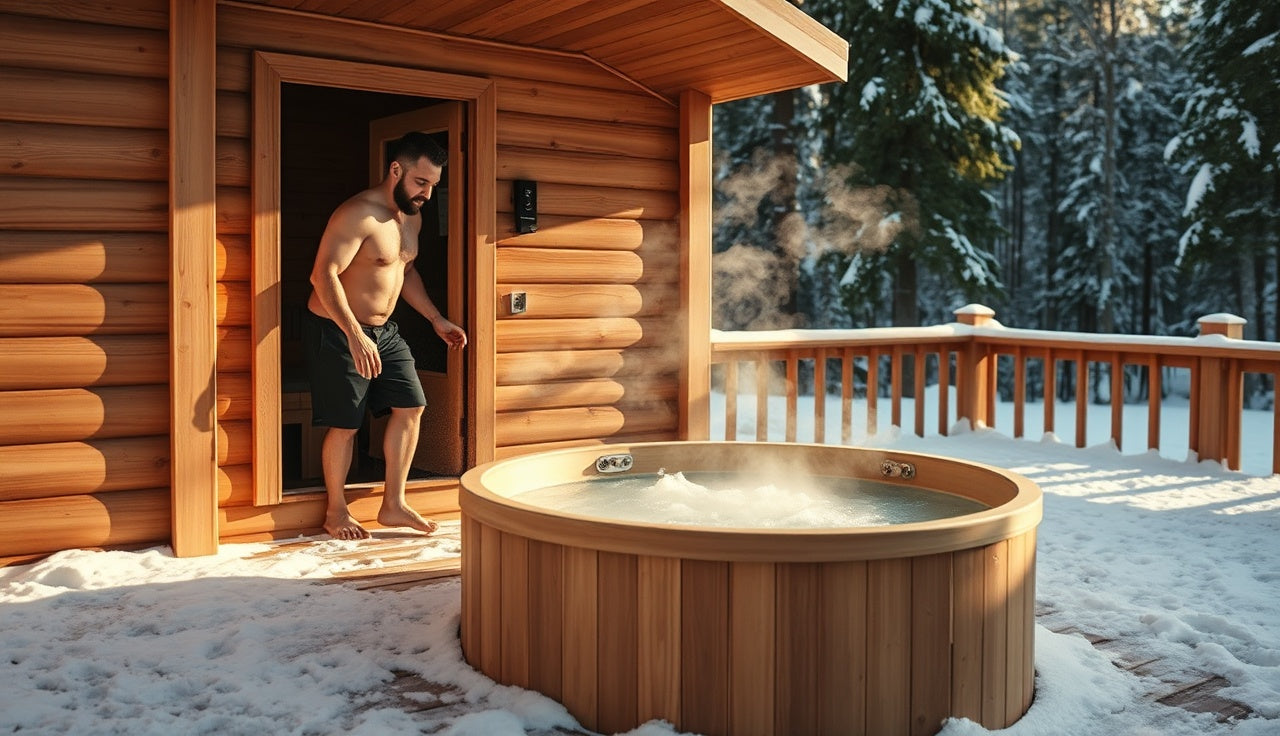
Contrast therapy is the deliberate alternation of heat and cold on the body, usually by moving between a sauna or hot bath and a cold plunge, ice bath, or cold shower. Heat causes vasodilation (blood vessels expand). Cold causes vasoconstriction (they tighten). Cycling between the two creates something like a pumping effect on circulation.
The practice is old. Scandinavian and Finnish cultures have combined sauna bathing with cold-water immersion for hundreds of years, and contrast hydrotherapy has been a physical therapy tool since at least the early 20th century [1]. What's new is the controlled research trying to pin down what it actually does inside the body.
A typical session looks like this: 10 to 20 minutes in a sauna or hot tub at roughly 80 to 100°C (176 to 212°F), then straight into a cold plunge or cold shower at 10 to 15°C (50 to 59°F) for 1 to 3 minutes, then repeat two to four times. Ratios and temperatures vary a lot across protocols. That variability is one reason the research is hard to compare directly.
What does the research say contrast therapy actually does?
The most consistent finding across multiple randomized controlled trials is that contrast therapy reduces delayed-onset muscle soreness (DOMS) and perceived fatigue after hard exercise. A 2022 meta-analysis in the British Journal of Sports Medicine pooled 99 randomized trials and found cold-water immersion and contrast water therapy ranked among the most effective recovery methods for reducing soreness 24 to 96 hours after exercise, beating passive rest [2].
A 2017 systematic review in the Journal of Strength and Conditioning Research looked specifically at contrast water therapy and found statistically significant drops in DOMS and in blood markers of muscle damage (creatine kinase, lactate dehydrogenase) versus passive recovery [3]. The effect size was moderate, not enormous. Worth saying that plainly up front.
Cardiovascular effects are messier. Heat alone, especially in a traditional Finnish sauna, has a reasonably strong evidence base for heart benefit [4]. Cold adds a separate stress on the heart. The combination looks safe for healthy people, but the data on the combined protocol specifically is thinner than the DOMS data.
There's also evidence that contrast therapy can speed heart rate variability (HRV) recovery after exercise, a proxy for how fast the autonomic nervous system bounces back. One study in the International Journal of Sports Medicine found better HRV recovery in athletes using contrast water therapy versus passive rest, though sample sizes in these studies tend to be small [5].
How does contrast therapy work physiologically?
The vascular pump hypothesis is the most cited mechanism. Heat dilates vessels near the skin and in muscle, drawing blood toward the periphery. Cold constricts them, pushing blood back toward the core. Repeat several times and you get cycles of flushing and refilling in muscle tissue, which in theory helps clear metabolic waste like lactate and dampen inflammatory mediators.
That makes intuitive sense. The research hasn't confirmed it's the main driver of benefit. Some researchers argue the effect is neurological rather than circulatory: cold immersion triggers a strong sympathetic nervous system response, releasing norepinephrine [6], and the alternation may blunt the inflammatory response to muscle damage without shutting it down the way deep ice baths can.
This matters practically. Sports science has a real concern that heavy cold immersion right after strength training can blunt anabolic signaling (how muscles grow and adapt to training) [7]. Timing and depth of cold matter. A short contrast session that ends with heat is probably a different animal, physiologically, than a long cold soak straight after training. Nobody has clean data on the ideal ratio yet.
| Cold-water immersion | 0.83 |
| Contrast water therapy | 0.7 |
| Compression | 0.53 |
| Active recovery | 0.38 |
| Passive rest | 0.0 |
Source: British Journal of Sports Medicine meta-analysis of 99 RCTs, 2022 [2]
Does contrast therapy help with muscle soreness and recovery?
Yes. This is the most evidence-backed benefit. The 2022 British Journal of Sports Medicine meta-analysis found contrast water therapy cut muscle soreness at 24 hours post-exercise with a standardized mean difference of roughly 0.7, a moderate-to-large effect in that literature [2].
Here's the practical version. You did a hard leg day or a long run this morning and you train again tomorrow. A contrast session that afternoon will likely leave you less beat up by morning. That's not a cure, and it doesn't speed actual tissue repair much, but less soreness means you train again sooner and harder.
For strength athletes the picture gets complicated. A study in the Journal of Physiology found cold-water immersion after resistance training blunted long-term muscle growth and strength gains compared to active recovery [7]. If building muscle is your main goal, cold immersion every single session is a bad idea. Contrast therapy saved for competition recovery or high-frequency training blocks (where soreness management beats adaptation) is the pragmatic middle ground a lot of coaches now use.
Endurance athletes face less of this tradeoff. Their adaptation isn't as tied to local inflammatory signaling in muscle. For runners, cyclists, and triathletes, post-session contrast therapy looks like a cleaner win.
What are the other potential health benefits?
Past muscle recovery, a few other benefits have decent evidence or at least credible early-stage support.
Mood and mental health: Cold immersion drives a big norepinephrine release, as much as a 2 to 3x jump in a frequently cited study by Šrámek et al. in the European Journal of Applied Physiology [6]. Norepinephrine is linked to attention, energy, and mood. Sauna use is also tied to fewer depressive symptoms in observational data, though the mechanisms there likely run through different pathways including heat shock proteins and cardiovascular conditioning [4].
Sleep quality: Some sauna and contrast therapy users report better sleep, and there's plausible biology behind it. Core body temperature drops as part of normal sleep onset, and the rebound cooling after heat may speed that process. The evidence is mostly observational and self-reported. No large RCT has tested contrast therapy against sauna alone for sleep outcomes.
Metabolic effects: Repeated cold exposure activates brown adipose tissue (BAT), which burns energy to make heat. Regular cold exposure can grow BAT volume and activity, nudging metabolic rate and insulin sensitivity up a little [8]. Heat has separate effects on insulin sensitivity and cardiovascular function [4]. Whether the combined protocol stacks metabolic benefits or just gives you one set, nobody has tested rigorously.
Immune function: Some data suggests moderate thermal stress can briefly ramp up immune cell activity. The evidence is preliminary and inconsistent enough that overstating it would be a mistake. You'll see bold claims online. The actual studies are smaller and more hedged than the summaries.
What are the risks and who should avoid it?
For most healthy adults, contrast therapy is low-risk done sensibly. The main risks are cardiovascular. The sudden jump from heat to cold spikes heart rate and blood pressure. For a healthy 30-year-old that's a manageable, expected stress. For someone with existing heart disease, arrhythmia, or uncontrolled hypertension, it's a real concern.
The American Heart Association notes that hot tub and sauna use raises heart rate to levels comparable to moderate-intensity exercise, and the added cold amplifies that transiently [9]. Anyone with a known cardiac condition should talk to their physician before starting.
Other groups who should be cautious or steer clear:
- Pregnant women: both extreme heat and cold immersion are generally advised against during pregnancy. Core temperature above 39°C (102.2°F) in early pregnancy carries a risk of neural tube defects [10].
- People with Raynaud's disease or cold urticaria: cold immersion can trigger vasospasm or allergic reactions.
- People with peripheral artery disease: impaired circulation makes the vascular stress harder to handle.
- Anyone with open wounds or skin infections in the treatment area.
Physical therapy clinics also skip contrast therapy in the acute phase of injury (the first 48 to 72 hours after a severe sprain or muscle tear), because the extra blood flow from heat can worsen swelling early on. That's a real clinical distinction from post-exercise recovery in healthy athletes.
How do you do contrast therapy at home?
You need two things: a heat source and a cold source. The best and most enjoyable home setup pairs a home sauna with a dedicated cold plunge. It's also the priciest path. A barrel sauna or indoor Finnish sauna plus a cold plunge tub runs anywhere from $4,000 to $20,000 and up, depending on size, materials, and whether you need installation.
Budget alternatives work fine. A portable sauna (the pop-up tent or infrared box style, typically $200 to $800) plus a stock tank or chest freezer cold plunge ($200 to $400 for DIY) gets you a working contrast setup for under $1,500. The experience isn't as good as a full sauna, but the thermal protocol holds up.
If you want the best cold side, SweatDecks carries both freestanding cold plunge tubs and sauna options built for home use. Compare specs before you buy, because chiller quality on cold plunges varies enormously between models.
A reasonable beginner protocol:
1. Shower and dry off. 2. Enter the sauna at 80 to 90°C for 10 to 15 minutes. 3. Move to the cold plunge at 10 to 15°C for 1 to 2 minutes. 4. Return to the sauna for another 10 minutes. 5. Repeat the cold-hot cycle two to three more times. 6. End with cold if you want the alert, energized feeling. End with heat if you want relaxation and better sleep that night.
The "end with cold" versus "end with heat" choice is a real one and depends on timing. Post-workout earlier in the day, end cold. Evening session aimed at sleep, end warm.
How does contrast therapy compare to cold plunge alone or sauna alone?
This is one of the better-studied comparisons in the recovery literature, and the answer is: it depends on the goal.
For acute DOMS reduction, the British Journal of Sports Medicine meta-analysis found cold-water immersion alone and contrast water therapy both beat passive rest, with cold immersion holding a slight edge in some analyses [2]. Sauna alone is less studied for acute DOMS but has stronger evidence for cardiovascular and longevity-adjacent outcomes [4].
For mood and mental state, contrast therapy has a subjective edge that almost everyone who practices it reports, even though the studies are small. Heat relaxation followed by cold alertness creates a distinct psychological effect that neither modality alone matches as strongly.
For lifters chasing maximum muscle growth, sauna alone after training (and well removed from the session) is probably a smarter choice than contrast therapy involving deep cold close to training.
For cold plunge benefits specifically, standalone cold immersion is more studied for metabolic and norepinephrine effects. Adding heat before and after may soften the cold shock and make sessions bearable for beginners who find cold immersion alone brutal.
| Protocol | DOMS reduction | Cardiovascular evidence | Muscle growth impact | Accessibility |
|---|---|---|---|---|
| Cold plunge alone | Strong | Moderate | May blunt | Hard for beginners |
| Sauna alone | Moderate | Strong | Neutral (timed well) | Easy |
| Contrast therapy | Strong | Moderate | Mixed (timing matters) | Moderate |
| Passive rest | Baseline | Baseline | Best | Trivial |
How often should you do contrast therapy?
There's no perfect frequency set by research. Most studies that find benefit use 2 to 5 sessions per week during training blocks [3]. Some athletes do it daily through competition periods. That's probably safe for healthy people, but long-term daily use hasn't been studied specifically.
A practical framework most coaches and sports medicine practitioners seem to land on, though no definitive trial proves it's optimal:
- Hard training days (2 to 4x per week): contrast therapy post-session if recovery speed matters more than maximizing adaptation.
- Easy or technique days: skip the cold. Sauna alone or no thermal work.
- Deload weeks: daily contrast therapy is fine and probably enjoyable.
- Pre-competition: daily for the 3 to 5 days before a major event to clear accumulated soreness.
There's a real risk of over-medicalizing this. Contrast therapy feels good and works as a ritual, which carries its own health value through stress reduction and deliberate time away from screens. You don't need a hyper-optimized protocol to benefit from doing it regularly.
Does contrast therapy reduce inflammation, or is that the wrong way to think about it?
"Reduces inflammation" is one of the most overused phrases in wellness marketing, so let's be precise about what the evidence shows.
Acute post-exercise inflammation is not purely bad. It's the signal that starts repair and adaptation. Wiping it out with heavy NSAID use or prolonged cold immersion can actually slow recovery and adaptation. The goal of contrast therapy isn't to eliminate inflammation. It's to modulate it: knock down the excessive, symptomatic side (swelling, pain, stiffness) while leaving enough signal intact to drive adaptation.
Studies measuring inflammatory biomarkers like IL-6, CRP, and creatine kinase after contrast therapy show reductions versus passive rest, but the changes are often modest and not always statistically significant across every marker [3]. The consistent finding is less subjective soreness, which may be neurological as much as inflammatory.
Chronic systemic inflammation is a different question. Sauna use at four or more sessions per week is associated with lower CRP levels in observational data from the Kuopio Ischemic Heart Disease study, a large Finnish cohort [4]. Whether contrast therapy specifically beats sauna alone for chronic inflammation hasn't been tested. Honest answer: probably helpful over time, but the evidence is observational and the mechanism isn't fully proven.
Can contrast therapy help with mental health and stress?
This is one of the more genuinely interesting research areas, even with studies smaller than you'd want.
Cold water immersion causes a rapid, large norepinephrine release. Šrámek et al. found immersion in 14°C water for one hour caused a 530% increase in norepinephrine levels [6]. Even shorter exposures produce meaningful jumps. Norepinephrine ties to focus, energy, lower pain perception, and mood lift.
Sauna use is linked to endorphin release and, in longer-term users, lower rates of depression and anxiety in self-report data. A study in Complementary Therapies in Medicine found regular Waon therapy (a form of repeated infrared heat exposure) improved depressive symptoms in a clinical population, though the sample was small [11].
The psychological effect of contrast therapy as a practice, the commitment, the controlled discomfort, the ritual, is also real even if harder to measure. Research on deliberate cold exposure suggests that voluntarily entering discomfort and managing a stress response may train the brain's response to stress more broadly. Andrew Huberman's lab has discussed this framework, though the human trial data on that generalization is still limited.
For general stress, mild anxiety, or low energy, a consistent contrast therapy practice is a reasonable, low-risk thing to try alongside standard approaches. It doesn't replace professional mental health care.
What equipment do you actually need, and what does it cost?
The setup cost range is genuinely wide, which helps to understand before deciding.
At the low end, a cold shower counts technically, though the experience is very different from full immersion and the thermal load is much smaller. Add a budget portable sauna tent and you have a basic but functional contrast setup for around $300 to $500 total.
A mid-range setup, an outdoor barrel sauna (around $2,000 to $4,000 for a good one) plus a chest freezer cold plunge DIY conversion ($200 to $400 in materials) or an entry-level manufactured cold plunge ($1,500 to $2,500), runs $3,500 to $6,500 all-in installed.
A premium setup, a full-size indoor or outdoor sauna paired with a chiller-equipped cold plunge that holds temperature automatically, costs $8,000 to $25,000 and up depending on sauna size, materials (cedar, hemlock, thermally modified wood), and whether you need electrical work.
The cold plunge chiller matters more than most buyers realize at first. A bucket of ice water works but means constant ice runs or re-chilling. A dedicated chiller holds 50 to 59°F (10 to 15°C) with no daily effort and pays for itself over time versus commercial ice. Cold plunge buyers should look hard at chiller BTU rating and the manufacturer's claim about minimum achievable temperature, because marketing numbers don't always match real-world performance.
SweatDecks stocks both sauna and cold plunge options if you're comparing setups. Bundled sauna-plus-plunge deals can save money versus buying separately.
| Setup type | Estimated cost | Heat source | Cold source |
|---|---|---|---|
| Budget/DIY | $300-$1,500 | Portable tent sauna | Cold shower or stock tank |
| Mid-range | $3,500-$7,000 | Barrel or outdoor sauna | Chest freezer plunge or entry chiller |
| Premium | $8,000-$25,000+ | Full-size indoor/outdoor sauna | Chiller-equipped plunge tub |
Frequently asked questions
Is contrast therapy safe for people with high blood pressure?
Probably not without medical clearance. Both heat and cold cause significant cardiovascular stress, heat by raising heart rate and dilating vessels, cold by constricting them and spiking blood pressure transiently. The combination amplifies that variability. The American Heart Association notes sauna raises heart rate to moderate-exercise levels. If your blood pressure is currently uncontrolled or you're on antihypertensives, talk to your doctor before starting any contrast protocol.
How long should you stay in the cold during contrast therapy?
Most research protocols use 1 to 3 minutes of cold immersion at 10 to 15°C (50 to 59°F) per round. Shorter exposures of 60 to 90 seconds are fine for beginners. There's no strong evidence that longer cold phases produce better recovery, and prolonged cold after strength training may blunt muscle adaptation. Start short and stay consistent rather than pushing duration.
Can contrast therapy help with arthritis pain?
There's some clinical use of contrast hydrotherapy for rheumatoid and osteoarthritis symptoms, and physical therapy settings have used it for joint pain for decades. The evidence is modest and mostly from small studies. Heat loosens stiff joints and increases range of motion; cold reduces acute swelling and pain signaling. People with inflammatory arthritis should check with a rheumatologist, since heat can worsen active flares.
Should you do contrast therapy before or after a workout?
After is much better supported. Pre-workout heat can raise core temperature and heart rate before you've started, which may hurt performance. Pre-workout cold can blunt muscle activation. Post-workout contrast, especially in the 30 to 120 minutes after training, is where the DOMS-reduction and recovery data comes from. If building muscle is your main goal, waiting 4 to 6 hours after strength sessions before using cold immersion is a reasonable compromise.
Is contrast therapy the same as hot-cold hydrotherapy?
Yes, same thing by different names. Contrast water therapy, contrast hydrotherapy, and hot-cold therapy all describe alternating between hot and cold water or thermal environments. Physical therapists typically call it contrast bath therapy. In the wellness and biohacking world it's usually contrast therapy. The research literature uses all three terms, which is one reason searching the evidence base takes some cross-referencing.
Can you do contrast therapy with just a cold shower instead of a cold plunge?
Yes, though the effect is meaningfully smaller. Full cold immersion exposes more skin at once and produces a stronger cold shock response, including a bigger norepinephrine release, than a shower. Cold showers are a reasonable starting point or travel substitute. If recovery from hard training is the goal, cold immersion to at least waist level (covering the legs and lower back) produces better outcomes in the research than shower-only protocols.
Does contrast therapy help with sleep?
Anecdotally and mechanistically, yes, especially when you end with heat. Core body temperature drops during sleep onset, and the rebound cooling after a sauna session may help this along. Observational data on sauna users reports better sleep quality. Ending a session with cold, especially close to bedtime, may fight sleep by raising alertness via norepinephrine. For evening sessions aimed at sleep, end warm and allow 60 to 90 minutes before bed.
How cold does a cold plunge need to be for contrast therapy?
Most research protocols use 10 to 15°C (50 to 59°F). Below 10°C raises cold shock risk and discomfort without clear extra benefit for most goals. Above 18°C starts to feel like a cool bath and produces a weaker response. Beginners can start around 15°C and work down to 10 to 12°C over several weeks. You don't need ice-bath temperatures for meaningful contrast therapy benefits.
Is contrast therapy good for weight loss?
It's not a weight loss intervention on its own. Cold exposure activates brown adipose tissue, which burns calories to make heat, and repeated cold can grow BAT volume slightly, nudging metabolic rate up at the margin. Sauna use burns some extra calories via higher heart rate. Neither effect is big enough to drive real fat loss without diet and exercise. Contrast therapy may support metabolic health over time, but expecting direct weight loss is an overreach.
How is contrast therapy different from cryotherapy?
Cryotherapy usually means whole-body cryotherapy chambers that use extremely cold air (minus 110°C to minus 140°C) for 2 to 3 minutes. Contrast therapy uses water, which transfers heat far more efficiently than air at the same temperature. Cold water at 10°C is physiologically more intense than cold air at much lower numbers. The research bases are separate, and most recovery data comes from water-based contrast therapy rather than air cryotherapy, which has weaker evidence overall.
Can beginners start contrast therapy, or is it advanced?
Beginners can start, but build up gradually. The cold is the hardest part at first. Starting with contrast showers (hot then cold) and working toward full cold immersion over two to four weeks is a sensible ramp. Use a thermometer so you know your actual water temperature. Sauna temperatures of 70 to 80°C are more manageable than the 90 to 100°C experienced users prefer. One safety rule: never go from extreme heat straight into cold alone without someone nearby for the first few sessions.
Is an infrared sauna as good as a traditional sauna for contrast therapy?
Infrared saunas heat the body differently, using radiant heat rather than hot air, and typically run at 50 to 60°C rather than 80 to 100°C. Core body temperature does rise with infrared use, but the peripheral skin-temperature effect is different. Most contrast therapy research uses traditional Finnish saunas or hot water immersion. Infrared saunas can work as the heat component, but the vasodilation effect may be somewhat less intense.
Does ending with hot or cold matter?
Yes, and it depends on your goal. Ending cold leaves you alert, with elevated norepinephrine and lower skin temperature, good for a daytime session before activity or work. Ending warm leaves you relaxed, with peripheral vasodilation and a sense of ease, better before sleep or when deep muscle relaxation is the goal. Neither is more therapeutic for DOMS reduction. The research doesn't show a strong outcome difference; this is about the subjective state you want to carry out of the session.
Sources
- National Center for Biotechnology Information, PMC: History of hydrotherapy in sports medicine: Contrast hydrotherapy has been used in physical therapy and sports medicine settings since at least the early 20th century
- British Journal of Sports Medicine, Bleakley et al. 2022 meta-analysis of 99 RCTs on recovery modalities: Cold-water immersion and contrast water therapy were among the most effective recovery modalities for reducing muscle soreness at 24-96 hours post-exercise, outperforming passive rest
- Journal of Strength and Conditioning Research, systematic review of contrast water therapy and recovery: Contrast water therapy produced statistically significant reductions in DOMS and blood markers of muscle damage (creatine kinase, lactate dehydrogenase) compared to passive recovery
- JAMA Internal Medicine, Laukkanen et al. 2018, Kuopio Ischemic Heart Disease study on sauna frequency and cardiovascular outcomes: Frequent sauna use (4-7 times per week) was associated with significantly lower cardiovascular mortality and reduced CRP levels in a large Finnish cohort
- International Journal of Sports Medicine, study on contrast water therapy and heart rate variability recovery: Athletes using contrast water therapy showed improved HRV recovery post-exercise compared to passive rest
- European Journal of Applied Physiology, Šrámek et al. 2000, cold water immersion and norepinephrine: Immersion in 14°C water caused a 530% increase in norepinephrine levels; cold exposure triggers a significant sympathetic nervous system norepinephrine release
- Journal of Physiology, Roberts et al. 2015, cold-water immersion attenuates acute anabolic signaling and long-term adaptations to strength training: Cold-water immersion after resistance training attenuated long-term muscle hypertrophy and strength gains compared to active recovery
- Cell Metabolism, Cypess et al. 2009, cold activation of brown adipose tissue in humans: Cold exposure activates brown adipose tissue in humans, which burns energy to generate heat; repeated cold exposure can increase BAT volume and metabolic rate
- American Heart Association, sauna and cardiovascular health guidance: Hot tub and sauna use raises heart rate to levels comparable to moderate-intensity exercise, representing a meaningful cardiovascular stress
- Centers for Disease Control and Prevention, folic acid and neural tube defects, heat exposure in pregnancy: Core temperature elevation above 39°C (102.2°F) in early pregnancy carries a risk of neural tube defects; heat immersion is generally advised against in pregnancy
- Complementary Therapies in Medicine, Masuda et al., Waon therapy and depressive symptoms: Regular infrared heat (Waon) therapy improved depressive symptoms in a clinical population in a small controlled study

Share:
Brookstone portable sauna: what it is, what it costs, and whether it's worth buying
Brookstone portable sauna: what it is, what it costs, and whether it's worth buying