
Last updated 2026-07-09
TL;DR
An infrared sauna uses infrared light panels to warm your body directly, rather than heating the surrounding air. Cabin temperatures typically run 120 to 150°F, well below the 170 to 195°F of a traditional Finnish sauna. Studies show regular use may improve cardiovascular markers, reduce muscle soreness, and support relaxation, though the evidence is promising rather than conclusive.
What is an infrared sauna and how does it work?
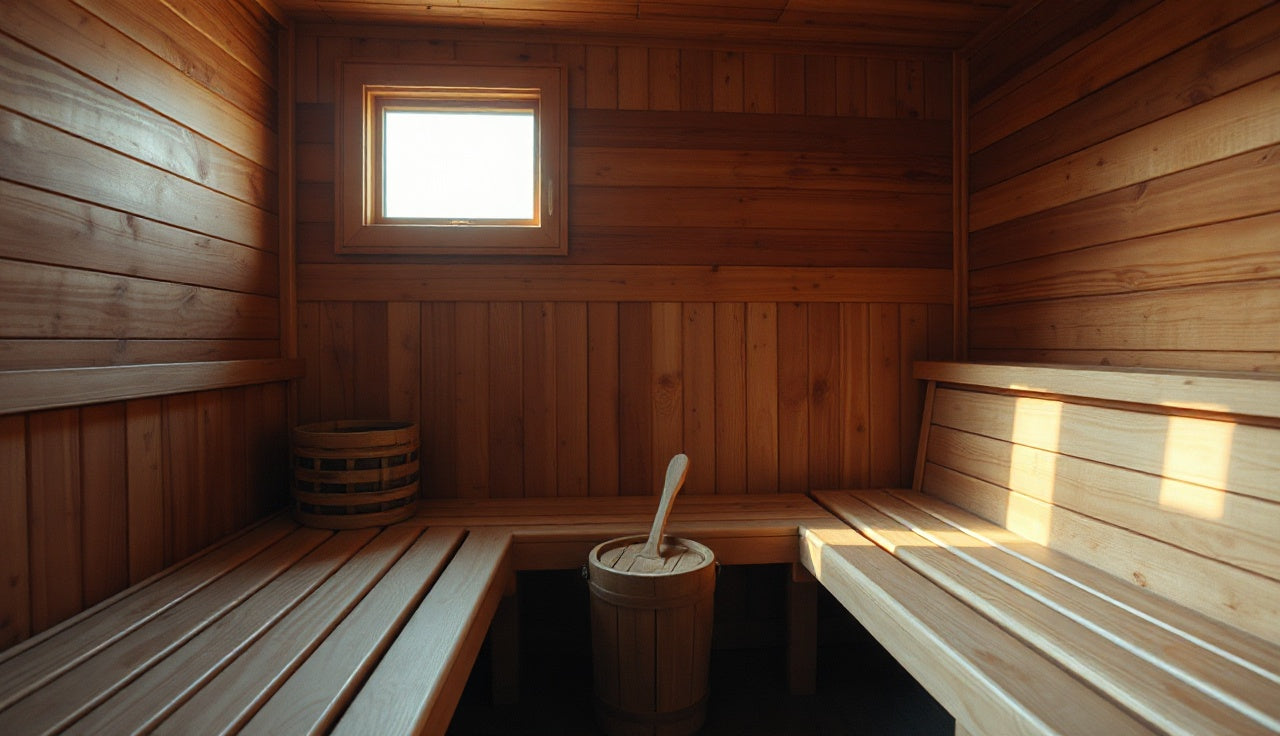
An infrared sauna is an enclosed wood cabin fitted with infrared light-emitting panels rather than a traditional rock heater or steam generator. Those panels emit electromagnetic radiation in the infrared spectrum, roughly 700 nanometers to 1 millimeter in wavelength, and that radiation is absorbed directly by your skin and underlying tissue. Your body heats from the inside out, not because the air around you is scorching hot.
This is physically different from a Finnish-style sauna, which heats the air to 170 to 195°F and relies on convection and radiant heat from the rocks to warm your skin. An infrared cabin typically runs at 120 to 150°F, sometimes as low as 110°F. The air itself stays relatively mild. That lower ambient temperature is why some people who find conventional saunas oppressively hot can tolerate infrared sessions without trouble.
The three sub-types you'll see marketed are near-infrared (NIR), mid-infrared (MIR), and far-infrared (FIR). Far-infrared accounts for the overwhelming majority of consumer products. FIR wavelengths sit around 5 to 15 micrometers and are absorbed well by water-containing tissue, which is most of your body. Near-infrared panels run hotter and are sometimes pitched for skin and cellular benefits, but the consumer research on NIR is thinner than the FIR literature. Mid-infrared is rarely sold as a standalone product.
For a broader look at all sauna types side by side, the sauna overview is a good starting point.
How is an infrared sauna different from a traditional sauna?
The core difference is where the heat comes from. A traditional Finnish sauna heats the air; an infrared sauna heats you. Everything else follows from that one fact.
Because the air in an infrared cabin stays cooler, you sweat at a lower ambient temperature and can typically stay in longer without discomfort. Sessions of 30 to 45 minutes are common. In a traditional sauna at 190°F most people are done in 10 to 15 minutes per round.
Humidity is another gap. Traditional saunas can generate steam by pouring water over the rocks, pushing relative humidity as high as 30 to 40%. Infrared cabins are dry by design, usually running at 10 to 20% humidity. If you like the sensation of steam, an infrared unit won't replicate it. For a direct comparison with the steam experience, sauna vs steam room covers that angle.
Power requirements differ substantially too. A traditional sauna heater draws 6 to 9 kilowatts and almost always needs a dedicated 240V circuit. Many infrared cabins draw 1.4 to 2.4 kilowatts and can plug into a standard 120V household outlet, which makes installation far simpler for most homeowners.
Preheat time is shorter for infrared: 10 to 15 minutes versus 30 to 45 minutes for a good rock heater. That matters if you want a spontaneous session after a workout rather than planning ahead.
| Feature | Infrared sauna | Traditional Finnish sauna |
|---|---|---|
| Air temperature | 110 to 150°F | 170 to 195°F |
| Humidity | 10 to 20% | 10 to 40% (variable) |
| Typical power draw | 1.4 to 2.4 kW | 6 to 9 kW |
| Typical circuit | 120V or 240V | 240V dedicated |
| Preheat time | 10 to 15 min | 30 to 45 min |
| Session length | 20 to 45 min | 10 to 20 min per round |
| Heat mechanism | Direct infrared absorption | Convection from hot air |
What does the research actually say about infrared sauna benefits?
The honest answer: the evidence is interesting but not ironclad. Most human studies are small, lack control groups, and often mix FIR sauna protocols with other interventions. That said, a few findings are consistent enough to take seriously.
Cardiovascular markers get the most attention. A 2018 review in Mayo Clinic Proceedings analyzed Finnish cohort data and found that men who used a sauna 4 to 7 times per week had a 40% lower risk of all-cause mortality compared to once-weekly users, though that data came from traditional saunas, not infrared [1]. Infrared-specific cardiovascular studies are smaller. A 2005 study published in the Journal of the American College of Cardiology found that daily far-infrared sauna sessions for 2 weeks improved vascular function in patients with chronic heart failure [2]. Those are not the same as healthy adults, and the mechanism isn't fully understood.
Muscle recovery is another area with some signal. Heat in general increases blood flow to muscle tissue, and infrared sessions produce meaningful core temperature rises even if ambient temp is lower. A 2015 paper in Springerplus found that far-infrared radiation reduced delayed onset muscle soreness markers in a small group of athletes, though the sample sizes were too small to draw firm conclusions [3].
Relaxation and sleep quality come up consistently in survey data. Nobody has great randomized trial data on this; the closest evidence is from general heat therapy literature showing that passive body heating before sleep can shorten sleep onset time by about 10 minutes, per a 2019 meta-analysis in Sleep Medicine Reviews [4].
Blood pressure shows modest improvement in some trials. A 2012 study in the Journal of Human Hypertension reported reductions in systolic blood pressure after repeated infrared sessions in Stage 2 hypertensive patients [5]. The reductions were real but modest: around 6 mmHg systolic. Worth knowing, but no replacement for prescribed treatment.
For the fuller picture on what regular sauna use does to your body, the sauna benefits article covers the research across both sauna types.
| Infrared sauna air temp (°F) | 135 |
| Traditional sauna air temp (°F) | 185 |
| Infrared power draw (kW) | 1.8 |
| Traditional sauna power draw (kW) | 7.5 |
| Infrared preheat time (min) | 12 |
| Traditional preheat time (min) | 38 |
Source: Published manufacturer specifications; operating cost based on U.S. EIA average residential rate, 2024 [12]
How much does an infrared sauna cost?
Prices span a genuinely wide range depending on size, wood quality, panel technology, and brand positioning.
At the low end, two-person portable or semi-portable infrared units start around $300 to $600. These are collapsible fabric enclosures with a foot pad and a head opening; they're real infrared products but the experience is limited. Entry-level wood cabin units for one to two people run $800 to $1,800.
Mid-range two- to three-person cabins, which is what most home buyers settle on, typically cost $2,000 to $4,500. This tier gets you decent hemlock or cedar construction, full-spectrum or carbon panel emitters, and basic Bluetooth audio.
Premium four-person cabins with chromotherapy lighting, medical-grade emitters, and furniture-quality wood run $5,000 to $10,000 or more. A handful of brands sell units above $15,000, though at that price you're largely paying for looks and branding.
Installation cost is usually minimal if the unit runs on 120V, since no electrician is required. If you need a 240V circuit added, budget $200 to $500 depending on panel proximity. The home sauna guide breaks down total cost of ownership in more detail, including operating cost per session.
For an outdoor install, wood selection matters more because of moisture exposure. The outdoor sauna piece covers what to look for there.
Are infrared saunas safe? Who should avoid them?
For most healthy adults, infrared sauna sessions are well tolerated. The lower air temperature reduces the risk of heat stroke compared to traditional saunas, but it does not eliminate it. Your core temperature still rises, and dehydration is a real concern in every session.
The general guidance from most clinicians is to keep sessions to 20 to 30 minutes at first, drink 16 to 24 ounces of water beforehand, and avoid alcohol in the hours before use. None of that is controversial.
People who should talk to a doctor before using an infrared sauna include those with: low blood pressure (heat vasodilates vessels and can cause dizziness or fainting), active inflammatory conditions during a flare, implanted devices such as pacemakers or certain insulin pumps (though most modern devices are heat-rated, the FDA recommends checking), and pregnant women (elevated core temperature in the first trimester carries documented fetal risk) [6].
Some medications interact badly with heat. Diuretics, beta-blockers, and anticholinergics all affect either sweating or cardiac response to heat stress. If you're on any of these, the conversation with your prescriber is worth having.
Children and older adults need shorter sessions and closer monitoring. The physiological ability to thermoregulate declines with age, and older adults are more likely to be on medications that complicate the heat response.
The Consumer Product Safety Commission does not specifically regulate infrared sauna panels as medical devices, but FIR emitters intended for therapeutic use can fall under FDA oversight depending on marketing claims [7].
What should you look for when buying an infrared sauna?
Panel type is the first real decision. Carbon panels distribute heat across a larger surface area and run at a lower surface temperature. Ceramic rod emitters run hotter at the surface and heat up faster but can create hot spots. The industry debates which is better, and the honest answer is that both can produce effective sessions; surface temperature uniformity matters more than the label.
Wood species affects price, durability, and off-gassing. Canadian hemlock and western red cedar are the most common. Cedar is naturally antimicrobial and smells pleasant. Some cheaper units use basswood or eucalyptus; neither is a deal-breaker, but check that the wood is kiln-dried and free of formaldehyde-based adhesives. Low-VOC construction matters because you're sitting in an enclosed space for 30 to 45 minutes.
EMF output comes up in almost every infrared sauna conversation. EMF stands for electromagnetic field, and because infrared panels operate on AC power, they do produce low-level EMF. Many brands advertise "low EMF" or "ultra-low EMF" panels. The International Commission on Non-Ionizing Radiation Protection sets public exposure guidelines for electric and magnetic fields [8]; reputable manufacturers measure and publish their EMF readings. Ask for the third-party test report before buying if this concerns you.
Size matters practically. A one-person cabin takes up roughly 3x4 feet of floor space. A three-person unit is closer to 5x6 feet. Measure your intended space including door swing and clearance for ventilation before ordering.
Warranty terms reveal build quality honestly. Look for at least 3 years on panels and 1 year on wood. Some premium brands offer lifetime heater warranties, which is a real signal of confidence in the emitter longevity.
For buyers considering a more budget-conscious path, the costco sauna article reviews what that tier actually delivers.
How long should an infrared sauna session be?
The most commonly cited protocol in the published literature is 15 to 30 minutes per session, 3 to 5 days per week. That comes from the cardiovascular studies, not from any FDA-approved treatment protocol. There is no official governing body setting sauna session lengths.
If you're new to infrared, start at 15 minutes and 110 to 120°F. Your body needs a few sessions to acclimate to the heat stress. After two to three weeks of regular use most people comfortably extend to 25 to 35 minutes.
For muscle recovery specifically, some athletes use 20-minute post-workout sessions. For relaxation or sleep benefits, evening sessions 1 to 2 hours before bed seem to work better than morning sessions based on the passive heating and sleep literature [4].
There's no strong evidence that sessions longer than 45 minutes add proportional benefit, and the dehydration risk rises meaningfully past that mark. More is not always more here.
Can you use an infrared sauna for weight loss?
This is probably the most overstated claim in infrared sauna marketing. Yes, you sweat during a session, and yes, the scale reads lower right afterward. That weight loss is almost entirely water. You'll regain it when you rehydrate, which you should do immediately.
Could there be a small caloric expenditure from the elevated heart rate and thermogenesis during a session? Plausibly. A 2009 paper in the Journal of the American Medical Association estimated that a 30-minute infrared session could generate a caloric expenditure of roughly 300 to 600 calories based on cardiac output measurements, though that estimate has been widely criticized for methodological issues and has not been replicated in later work [9].
The more defensible position is that infrared sauna is not a meaningful weight loss tool on its own. It may support a broader recovery routine that keeps you training consistently, and consistent training does affect body composition. The direct sauna-to-fat-loss pathway is not established.
Anyone selling an infrared sauna primarily as a weight loss device is overpromising.
Does pairing an infrared sauna with cold therapy improve recovery?
Contrast therapy, alternating heat and cold, is an old practice with a growing research base. The idea is that heat dilates blood vessels and cold constricts them, creating a pumping effect that clears metabolic waste from muscle tissue faster than either alone.
The evidence for contrast therapy improving subjective soreness and perceived recovery is reasonably consistent across several meta-analyses. A 2012 Cochrane review of cold water immersion for recovery found it reduced soreness more than passive rest [10]. The added effect of doing infrared sauna before a cold plunge specifically is less studied, but the physiological logic is sound and the practice is widely used by professional athletes.
If you already have or are considering both modalities, cold plunge benefits covers what the cold side of the equation actually does. The cold plunge guide walks through equipment options.
A typical contrast protocol looks like this: 20 to 25 minutes in the infrared sauna, then 2 to 3 minutes in cold water at 50 to 60°F, repeated two to three times. Ending on cold is thought to reduce inflammation more; ending on heat may feel more comfortable. The research doesn't clearly favor one endpoint, so personal preference is a legitimate guide here.
For a look at the cold-only recovery side, the ice bath article is worth reading.
What are the best infrared sauna brands and which should you avoid?
A few brands appear consistently in independent reviews and have enough of a track record to evaluate: Sunlighten, Clearlight (Jacuzzi brand), HealthMate, and Dynamic Saunas are the most commonly compared in the mid-to-premium tier. Sunlighten and Clearlight both publish third-party EMF test results and have used consistent panel technology for over a decade, which matters for post-purchase support.
Dynamic Saunas sits in the $800 to $2,500 range and represents the best-documented value option for a real wood cabin. The construction quality is a step below the premium tier but reviews are broadly positive for the price.
Brands to approach carefully are the unbranded or rapidly rotating white-label units sold under changing names on Amazon. Warranty claims can be difficult to enforce, replacement parts often don't exist, and EMF data is frequently absent or self-reported.
SweatDecks carries a curated selection of infrared cabins with published specs for panels and EMF if you want to compare models in one place without hunting through a dozen manufacturer sites.
Don't let the wood finish be the deciding factor. Panels, warranty support, and EMF documentation matter more than whether the cabin is cedar or hemlock. A pretty sauna with bad panels is still a bad sauna.
Can you build or install an infrared sauna at home yourself?
Most infrared cabin kits are designed for DIY assembly. The panels arrive pre-wired inside the wall sections; you connect the sections, plug in the control unit, and that's largely it for 120V models. Assembly typically takes two adults 1 to 3 hours.
For 240V units, you need a licensed electrician for the circuit unless you hold the appropriate electrical license yourself. Running a new 240V circuit without permits is both a safety risk and a problem for homeowner insurance coverage.
Indoor placement needs adequate ventilation. The cabin itself doesn't produce combustion gases, but the wood will off-gas when new, and humidity from sweating needs somewhere to go. A room with a window or exhaust fan is enough. Placing an infrared sauna in an unfinished garage is common and works well as long as the floor is level and dry.
Outdoor installation requires a model rated for outdoor use or at minimum a covered structure protecting the unit from direct rain and UV degradation. Standard indoor cabins will deteriorate quickly if left exposed.
If you're still deciding between a permanent cabin and a simpler option, the portable sauna article covers the tradeoffs honestly.
How do you maintain an infrared sauna?
Maintenance is genuinely low. The main tasks are wiping the interior with a damp cloth after each session to remove sweat residue, and occasionally sanding lightly stained bench wood with fine-grit sandpaper if the surface discolors.
Avoid chemical cleaners inside the cabin; they leave residue that volatilizes during the next session. A diluted white vinegar solution works for deeper cleaning and doesn't linger.
Sauna towels on the bench extend the time between cleanings and protect the wood from repeated sweat contact. Skip them and you'll be sanding the bench more often.
Panel maintenance is essentially nil. FIR carbon panels have no moving parts and typical rated lifespans of 20,000 to 30,000 hours. At three sessions per week, 30 minutes each, that's roughly 380 years of panel life. Realistically the wood will age before the panels fail.
Check electrical connections once a year as part of any general home electrical inspection. The control boards in cheaper units are occasionally the failure point; a five-year warranty on the control unit is worth asking about specifically.
Frequently asked questions
What temperature does an infrared sauna reach?
Most infrared cabins max out between 130°F and 150°F. Some models cap at 140°F by design. This is meaningfully cooler than a traditional Finnish sauna, which typically runs 170 to 195°F. The lower air temperature is tolerable for longer but still produces significant body heating and sweating, since the infrared radiation warms tissue directly rather than relying on the surrounding air.
How long does it take to feel benefits from infrared sauna use?
Most people notice immediate relaxation and muscle loosening after a single session. For cardiovascular markers and more meaningful physiological changes, the published studies generally used protocols of at least 2 to 3 weeks of regular sessions, typically 3 to 5 times per week. There's no evidence that occasional use produces lasting cardiovascular benefits, though it can still feel good and support recovery on an as-needed basis.
Is a far-infrared sauna the same as a regular infrared sauna?
Essentially yes, for consumer products. The vast majority of infrared saunas sold for home use are far-infrared (FIR), meaning they emit wavelengths in the 5 to 15 micrometer range. When a product is simply called an infrared sauna without further specification, it is almost certainly far-infrared. Near-infrared and full-spectrum units exist but are a smaller slice of the market and typically cost more.
Does an infrared sauna help with chronic pain?
Some small trials have shown reductions in pain perception with regular far-infrared use, particularly in rheumatoid arthritis and fibromyalgia patients. A 2009 Dutch study published in Clinical Rheumatology found that 8 weeks of infrared sauna sessions reduced pain and fatigue scores in patients with those conditions. The sample sizes were small and effects were modest; it should not replace prescribed pain management but may be a useful adjunct for some people.
Can you use an infrared sauna every day?
Daily use appears safe for most healthy adults based on available data. The Finnish cohort studies showing cardiovascular benefits included men using saunas 4 to 7 times per week. The main practical risk of daily use is cumulative dehydration if you're not replacing fluids consistently. If you feel lightheaded, fatigued, or notice dark urine, reduce frequency and increase water intake before the next session.
Do infrared saunas really detox your body?
The detox claim is heavily marketed and lightly supported. Sweat contains trace amounts of heavy metals and BPA, and some studies have found that sauna-induced sweating increases excretion of these compounds. However, your liver and kidneys handle the overwhelming majority of metabolic waste. Sweating is not a primary detox organ. The word detox in sauna marketing is usually doing more work than the science supports.
How much electricity does an infrared sauna use?
A typical two-person infrared cabin draws 1.4 to 2.0 kilowatts during a session. A 30-minute session at that draw uses roughly 0.7 to 1.0 kWh. At the U.S. average residential electricity rate of about 16 cents per kWh in 2024, that's roughly 11 to 16 cents per session. At five sessions per week, annual operating cost runs around $30 to $40, which is genuinely low and much less than a traditional sauna heater.
What is the best wood for an infrared sauna?
Western red cedar and Canadian hemlock are the most widely used and best documented. Cedar is naturally resistant to mold, has a pleasant aroma, and handles repeated heat cycles without warping. Hemlock is odorless and a better choice for people sensitive to wood scents. Both are stable choices. Avoid units built with MDF panels or wood types not rated for elevated temperature, as off-gassing in an enclosed hot space is a legitimate concern.
Can two people use an infrared sauna at the same time?
Yes, if you buy a two-person or larger unit. A genuine two-person cabin gives each occupant roughly 12 to 16 inches of bench width, which is workable but cozy. If you plan to use it regularly with a partner, a three-person cabin is a meaningfully more comfortable experience and typically costs only $300 to $600 more. Solo buyers who want to lie down should also consider a two-person unit for the extra bench length.
Are infrared saunas good for skin?
Infrared heat increases circulation, which delivers more oxygen and nutrients to skin cells, and the sweating that follows can help clear pores. Some small studies suggest FIR exposure improves skin tone and collagen density over time, but the data is thin. Near-infrared wavelengths are studied more specifically for photobiomodulation effects on skin. For most people, the glow after a session is real but the long-term skin claims are ahead of the science.
Is an infrared sauna worth it compared to a gym sauna?
It depends on how often you'd actually use it and what you value. A quality two-person home infrared cabin costs $2,000 to $4,500 upfront but then costs almost nothing per session and is available whenever you want it. A gym membership with sauna access might cost $50 to $100 per month. If you'd use a home unit three or more times per week, the math typically favors ownership within two to three years. The convenience alone makes many people use it far more consistently.
What should I do after an infrared sauna session?
Rehydrate immediately with at least 16 ounces of water. Many people prefer to let sweat continue for a few minutes before showering, then rinse with a cool or lukewarm shower rather than immediately hot water. Eating a light snack with electrolytes (sodium, potassium) helps if you've had a long session. Avoid alcohol for at least an hour afterward. Evening sessions followed by a cool shower and then sleep are a common protocol for relaxation benefits.
How do EMF levels in infrared saunas compare to household appliances?
A typical household hairdryer at 6 inches produces about 300 milligauss (mG) of magnetic field. Most low-EMF infrared sauna panels advertise readings below 3 mG at sitting distance, and several independent tests have confirmed readings in the 1 to 3 mG range for panels marketed as low-EMF. The ICNIRP public exposure guideline for 50-60Hz magnetic fields is 2,000 mG. Reputable manufacturers publish third-party test certificates; ask for one before purchasing.
Can I put an infrared sauna in my bathroom?
You can, provided the floor can bear the weight (most two-person units weigh 300 to 500 lbs), there's enough clearance for the door and ventilation, and the electrical outlet matches the unit's requirements. Bathrooms with existing 20-amp circuits can often power 120V sauna units without modification. High bathroom humidity can slightly affect wood over time, though the sauna itself will seal most interior surfaces. A bathroom install is less common but works if the space fits.
Sources
- Mayo Clinic Proceedings, Laukkanen et al. 2018 – Sauna bathing and all-cause mortality: Men using a sauna 4–7 times per week had 40% lower all-cause mortality compared to once-weekly users in Finnish cohort data.
- Journal of the American College of Cardiology, Kihara et al. 2005 – Repeated sauna treatment improves vascular endothelial function in patients with chronic heart failure: Daily far-infrared sauna sessions for 2 weeks improved vascular function in chronic heart failure patients.
- Springerplus, Mero et al. 2015 – Infrared sauna bathing and recovery from strength and endurance sessions: Far-infrared radiation reduced delayed onset muscle soreness markers in a small group of athletes.
- Sleep Medicine Reviews, Haghayegh et al. 2019 – Before-sleep passive body heating by warm shower or bath to improve sleep quality: Passive body heating before sleep can shorten sleep onset time by about 10 minutes.
- Journal of Human Hypertension, Crinnion 2012 – Sauna as a valuable clinical tool for cardiovascular, autoimmune, toxicant-induced and other chronic health problems: Repeated infrared sessions reduced systolic blood pressure by approximately 6 mmHg in Stage 2 hypertensive patients.
- U.S. FDA – Pregnancy and heat: Elevated core temperature in the first trimester of pregnancy carries documented fetal risk.
- U.S. FDA – Radiation-emitting products overview: FIR emitters intended for therapeutic use can fall under FDA oversight depending on marketing claims.
- ICNIRP – Guidelines for limiting exposure to electromagnetic fields: The ICNIRP sets public exposure guidelines for electric and magnetic fields; the 50-60Hz magnetic field guideline is 2,000 milligauss for the general public.
- Journal of the American Medical Association, Beever 2009 – Far-infrared saunas for treatment of cardiovascular risk factors: A 30-minute infrared session was estimated to generate roughly 300–600 calories of expenditure based on cardiac output; this estimate has faced methodological criticism.
- Cochrane Database of Systematic Reviews, Bleakley et al. 2012 – Cold-water immersion (cryotherapy) for preventing and treating muscle soreness after exercise: Cold water immersion reduced muscle soreness more than passive rest in a systematic review.
- Clinical Rheumatology, Oosterveld et al. 2009 – Infrared sauna in patients with rheumatoid arthritis and ankylosing spondylitis: Eight weeks of infrared sauna sessions reduced pain and fatigue scores in patients with rheumatoid arthritis and fibromyalgia.
- U.S. Energy Information Administration – Average retail electricity prices by state: U.S. average residential electricity rate was approximately 16 cents per kWh in 2024.

Share:
Infrared sauna vs dry sauna: which one is right for you?
Infrared sauna vs dry sauna: which one is right for you?