
Last updated 2026-07-09
TL;DR
A high end infrared sauna costs $3,000 to $15,000+, uses full-spectrum or far-infrared emitters at 120 to 150°F, and comes with real wood interiors, low-EMF heaters, and proper warranty coverage. The price gap between mid-range and premium is real, but not every expensive model earns its cost. Know the specs before you spend.
What makes an infrared sauna 'high end' in the first place?
The phrase gets thrown around loosely. Every brand selling a $1,500 cedar box calls itself premium. So let's be direct: a genuinely high end infrared sauna is defined by heater quality, wood species, construction tolerances, EMF levels, warranty depth, and how it actually feels to use over years, not months.
Heaters are the core. Cheap units use carbon panel heaters that spread heat broadly but often inconsistently. Better units use carbon-ceramic hybrids or full ceramic emitters that hit higher surface temperatures and hold them more steadily. The best units, from manufacturers like Sunlighten, Clearlight, and Health Mate, have proprietary emitter designs tested against standardized EMF and ELF limits. This matters because infrared heaters sit close to your body. Low EMF (under 3 mG) and low ELF (under 200 V/m) are meaningful targets, not marketing noise [1].
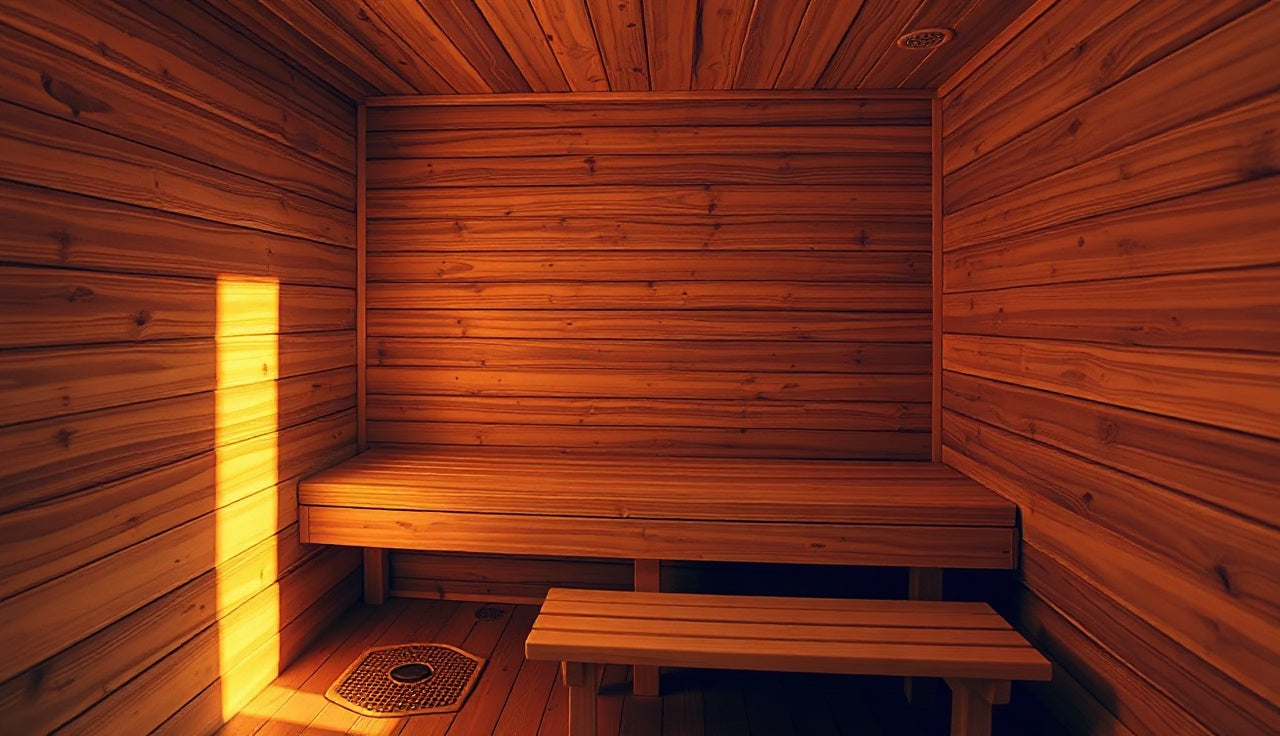
Wood is the second differentiator. Canadian Western Red Cedar and Basswood are the most common in premium builds. Some high-end brands use Hemlock or Eucalyptus. Cedar is naturally antibacterial, smells good, and handles moisture without warping the way cheaper pine or poplar will. If a sauna advertises "real wood" but won't name the species, that's a tell.
Then there's fit and finish. Whether the tongue-and-groove joinery is tight. Whether the bench holds 300+ lbs without flex. Whether the door seals so heat doesn't bleed out at the frame. You notice the difference on day one.
What temperature does a high end infrared sauna reach?
A high end infrared sauna typically reaches 120 to 150°F, with some high temperature infrared sauna models pushing to 165°F on their top settings [2]. That's the spec buyers get wrong most often. Infrared saunas run at fundamentally lower air temperatures than traditional Finnish-style saunas, which sit at 150 to 195°F.
The lower air temperature is not a flaw. Infrared radiation penetrates 1.5 to 2 inches into tissue directly, so your body heats from the inside out rather than relying on convection from hot air. The result is a comparable or heavier sweat response at a lower ambient temperature. A 2018 study in Complementary Medicine Research found that a 45-minute infrared session at 131°F produced cardiovascular responses similar to a 20-minute traditional sauna at 185°F [3].
If you specifically want a high temperature infrared sauna experience closer to a Finnish sauna, look for models with both infrared panels and a small resistance rock heater as a secondary element. Some Finnleo and Clearlight Sanctuary models offer this combination. You get radiant infrared heat plus the option of hotter ambient air when you want it.
One practical note. Infrared saunas take 15 to 30 minutes to pre-heat, compared to 30 to 60 minutes for a traditional wood-burning or electric sauna. That's a real convenience advantage for daily home use. A traditional sauna trades that wait for higher heat.
Full-spectrum vs. far-infrared: which type should you buy?
Far-infrared alone does the job for cardiovascular benefits, relaxation, and sweat-based detoxification based on current evidence. Full-spectrum adds cost, and the extra benefit from mid- and near-infrared in a sauna cabin is genuinely unclear. Buy full-spectrum only if the upgrade is small or you have a specific reason.
Infrared light exists on a spectrum. Far-infrared (FIR) runs roughly 5.6 to 1000 micrometers, mid-infrared (MIR) from 1.5 to 5.6 micrometers, and near-infrared (NIR) from 0.7 to 1.5 micrometers. Most consumer infrared saunas use far-infrared because it's the cheapest to generate at scale and it's what most of the published human studies used [4].
Full-spectrum saunas add near- and mid-infrared emitters to the mix. Near-infrared has its own research thread around wound healing and skin photobiomodulation, mostly from red light therapy studies run at wavelengths between 630 and 850nm. The NIR emitters in a sauna cabin are not the same as a dedicated red light therapy panel, so be careful about brands that overstate NIR benefits in a sauna context. Some real photobiomodulation happens, but the dosing differs from a purpose-built device.
If the full-spectrum upgrade is a few hundred dollars on an otherwise excellent unit, fine. If it's $2,000 extra, I'd skip it. For how infrared stacks up against steam, see our sauna vs steam room breakdown.
| Budget (thin panels, no EMF data) | $1,500 |
| Mid-range (solid build, basic warranty) | $3,500 |
| High end (verified EMF, lifetime warranty) | $7,000 |
| Ultra-premium (custom, commercial-grade) | $13,000 |
Source: Angi/HomeAdvisor Infrared Sauna Cost Guide, 2024
How much does a high end infrared sauna cost?
True high end starts around $4,500 and runs past $15,000 for large, custom-configured, or commercial-grade units [5]. Below that, budget units run $800 to $2,000 and are mostly imported, often with thin paneling and inconsistent heaters. Mid-range runs $2,000 to $4,500 and is where most solid, reliable home units live.
Here's what drives cost up legitimately:
- Heater count and quality: more emitters, better coverage, higher EMF testing standards
- Wood thickness and species: 1.5" Cedar vs 0.75" Hemlock
- Interior size: 1-person units vs 3-4 person units
- Electrical requirements: 120V plug-and-play vs 240V hardwired (which adds $200 to $800 in electrician costs)
- Brand warranty: 5-year vs lifetime on heaters and wood
- Built-in features: chromotherapy lighting, Bluetooth audio, app control
The $6,000 to $10,000 range from brands like Sunlighten (mPulse series), Clearlight (Sanctuary series), and Health Mate (Enrich series) is the sweet spot for home buyers who want something that lasts 10+ years without heater replacements or panel delamination. Above $10,000 you're largely paying for custom sizing, specialty woods, or commercial build specs.
If budget is a real constraint, our home sauna guide covers the full price landscape from entry level up. And if an outdoor sauna setup fits your space better, read that before you commit to any unit.
What specs actually matter and which are marketing fluff?
Buy on heater quality, EMF data, wood, and warranty. Everything else on the spec sheet is mostly noise. Here it is spec by spec.
EMF and ELF ratings: These matter. Ask for third-party test data, not brand claims. The standard reference is IEEE C95.1, and the International Commission on Non-Ionizing Radiation Protection (ICNIRP) guidelines set occupational and general public limits for electromagnetic fields [1]. Under 3 mG for EMF and under 200 V/m for ELF are reasonable targets. Most premium brands publish these numbers. If a brand can't produce them, walk away.
Wattage: A single-person sauna typically runs 1,200 to 1,750 watts. A three-person unit might pull 2,400 watts or more. What matters is how efficiently the wattage spreads across the panels, not the raw number. A 1,500-watt unit with good emitter placement beats a 2,000-watt unit with a single poorly positioned panel.
Wood certification: Look for FSC-certified wood, or at minimum confirmation that the wood is free of formaldehyde-based binders. Cheap units use MDF or glued composites that off-gas in a hot, enclosed space. That's the opposite of what you want.
Control panels: A good interface is nice, but don't let a slick app decide your purchase. The heater quality affects you every session. The app will annoy you twice when the Bluetooth drops, and then you'll stop using it.
Chromotherapy (color light therapy): The real effect is mild and based on general phototherapy research rather than specific sauna studies. It's a relaxing add-on, not a medical feature. Don't pay a premium for it as a health claim.
Warranty: Underrated. Heaters are the most expensive component to replace. A lifetime heater warranty from a brand that's been in business 15+ years is worth real money. A 1-year warranty from a brand that launched last year is worth very little.
What does the research say about infrared sauna benefits?
The evidence base for infrared sauna is real but smaller than many brands suggest. Most studies have small sample sizes and short durations. The strongest signal is cardiovascular.
A 2018 systematic review in Mayo Clinic Proceedings (Laukkanen et al.) found that regular sauna use, including infrared, was associated with reduced risk of cardiovascular disease events and all-cause mortality. The association was dose-dependent: four to seven sessions per week showed the strongest effect [6]. That review covered traditional Finnish saunas primarily, and the infrared-specific data is a subset.
For muscle recovery, a small but well-designed 2015 study in the Journal of Athletic Training found far-infrared sauna sessions reduced delayed onset muscle soreness (DOMS) and helped maintain strength compared to control conditions [7]. The mechanism is thought to be improved blood flow and lower inflammatory markers, not a direct anti-inflammatory drug effect.
For blood pressure, a 2009 review in the Journal of the Canadian Chiropractic Association (Beever) reported reductions in systolic blood pressure after infrared sauna protocols. The underlying trials were small, so treat the direction of effect as consistent with the broader cardiovascular literature rather than settled [8].
Nobody has good long-term data on infrared sauna specifically and longevity. The closest thing is the Finnish population cohort data, but most of that cohort used traditional high-heat saunas, not infrared. Be skeptical of longevity claims from infrared brands that cite Finnish data directly. For what regular use does and doesn't do, the sauna benefits article goes deeper.
How do high end infrared saunas compare to each other?
Here's a direct comparison of the major premium brands based on publicly available specs and independent reviews.
| Brand | Model Tier | Price Range | Heater Type | EMF Rating | Warranty |
|---|---|---|---|---|---|
| Sunlighten | mPulse series | $5,000 to $10,000 | Full-spectrum carbon/ceramic | <0.2 mG (claimed) | Lifetime |
| Clearlight | Sanctuary series | $4,500 to $9,000 | True Wave carbon-ceramic | <1 mG (third-party verified) | Lifetime |
| Health Mate | Enrich/Enliven series | $3,500 to $8,000 | Tecoloy ceramic | <0.1 mG (claimed) | Lifetime |
| Finnleo | Kelo series | $5,000 to $12,000 | Carbon panels + optional rock heater | Varies by model | 5 years |
| Sauna Space | Faraday series | $3,500 to $5,000 | Tungsten NIR bulbs | Near-zero (no carbon panels) | 5 years |
Sauna Space takes a completely different approach: near-infrared tungsten bulbs instead of carbon or ceramic far-infrared panels. This produces a more targeted, higher-intensity radiant heat at shorter wavelengths, and the company positions it around photobiomodulation. Whether that approach beats FIR for any given outcome is unsettled science. It is genuinely low-EMF, because tungsten bulbs don't generate electrical fields the way large carbon panels do.
Clearlight and Health Mate are the most independently reviewed brands and score well for EMF verification and build quality. Sunlighten has the most sophisticated app interface and the widest range of programming options. Finnleo is the legacy Scandinavian brand and builds some of the best hybrid units if you want both infrared and traditional heat.
How do you install a high end infrared sauna at home?
Most one- and two-person high end infrared saunas install without a contractor. They arrive as flat-pack panels and assemble with Allen keys and panel connectors in 1 to 3 hours for two people. Instruction quality varies. Clearlight and Health Mate tend to have the clearest assembly guides.
Electrical is the main decision point. Smaller units (1 to 2 person, under 1,750 watts) run on a standard 120V, 15A outlet. Larger units (3 to 4 person, 2,400+ watts) almost always need a dedicated 240V, 20A or 30A circuit. That circuit installation runs $200 to $800 depending on your panel location and local electrician rates [12]. Don't DIY it unless you're a licensed electrician.
Floor requirements are simple. Infrared saunas don't use water, so you don't need a drain. Any flat, level floor rated for the unit weight (most run 200 to 500 lbs fully assembled) works, including carpet, hardwood, concrete, and tile. Ventilation is minimal compared to traditional saunas. A small vent near the floor and one near the ceiling usually comes built into the unit.
Indoor placement is most common, but many premium units are rated for covered outdoor use if protected from direct precipitation. For full outdoor exposure, a purpose-built outdoor sauna structure beats taking a home unit outside.
SweatDecks carries a curated selection of high end infrared saunas with specification sheets and EMF data available before you buy.
What's the difference between a high end infrared sauna and a portable sauna?
The gap is significant. A portable sauna is typically a fabric tent with a single carbon panel beneath a seat, priced $100 to $400. Your head stays outside the tent. Heat-up time is fast, EMF tends to run high (tent units rarely publish testing data), and the experience is nothing like sitting in a full cabin.
A high end infrared sauna cabin surrounds your entire body with panels at distances calibrated for even heat. The wood absorbs and re-radiates some of it. The session feels different in relaxation, sweat response, and comfort. This isn't preference. It's what the two products physically do.
For someone genuinely curious about infrared sauna before spending $5,000+, a portable unit is a cheap way to test whether you like the heat modality. But there's no honest comparison on experience, EMF safety data, or durability.
Is a high end infrared sauna worth the money?
It depends entirely on how often you use it. A $6,000 infrared sauna used four times a week for five years works out to roughly $5.77 per session, cheaper than most gym sauna access and close to the cost of a recovery session at a spa. Used once a week, that same math produces about $23 per session, which is hard to justify on economics alone.
The honest answer: the premium over a mid-range unit, say $2,500 more for a Clearlight Sanctuary versus a solid mid-range carbon panel unit, buys better EMF data, better wood, a lifetime warranty, and a build that probably lasts 15 years instead of 8. If you'll use it regularly, that math works. If you're not sure you'll stick with it, start mid-range.
One thing worth knowing: high end infrared saunas pair well with cold contrast protocols. Many athletes and recovery-focused users alternate heat sessions with cold plunges. If that's part of your routine, or something you want to build, the cold plunge and cold plunge benefits articles are worth reading alongside this one.
The final word. Buy on heater quality and warranty, not on features you'll drop in a month. The brands around 15+ years that publish verified EMF data and back their heaters for life earn the premium. The rest of the spec sheet is mostly noise.
Are there any safety concerns with infrared saunas?
Infrared saunas are generally safe for healthy adults at the temperatures they produce (120 to 150°F). The main risks are dehydration and overheating, which apply to any sauna type. The American College of Sports Medicine advises staying well-hydrated before and after sessions and limiting single sessions to 15 to 20 minutes when starting out [9].
Some people should consult a physician before using any sauna, infrared or otherwise: those with cardiovascular disease or a history of heart failure, people on medications that affect thermoregulation (certain antipsychotics, beta-blockers, diuretics), pregnant women, and anyone with a fever or active infection.
EMF exposure is a genuine concern worth addressing rather than dismissing. The WHO's International Agency for Research on Cancer (IARC) classified extremely low frequency electromagnetic fields as Group 2B, "possibly carcinogenic to humans," in 2002, based on childhood leukemia studies [10]. That classification covers everyday electrical fields at levels far below what a well-designed quality infrared heater produces, but it does mean the subject isn't fully closed scientifically. Buying from a brand that publishes third-party EMF measurements is a reasonable precaution.
Alcohol and infrared sauna is a combination to avoid. Alcohol impairs thermoregulation and cardiovascular response, and several case reports document heat-related illness in people who used saunas after drinking. This is not theoretical.
How does infrared sauna compare to ice baths and contrast therapy?
Infrared sauna and ice baths sit at opposite ends of acute physiology, and pairing them is where a lot of serious recovery setups land. Infrared heat dilates peripheral blood vessels, raises heart rate, and lifts core temperature. Cold immersion constricts peripheral vessels, slows heart rate, and drops skin temperature fast. Alternating the two, contrast therapy, drives a pumping effect on the circulatory system that many athletes say speeds recovery [11].
The research on contrast therapy is stronger than on either modality alone for acute recovery. A 2022 meta-analysis in the British Journal of Sports Medicine found cold water immersion effective for reducing muscle soreness after exercise, and some of the stronger protocols combined it with heat exposure [11]. For the sauna side, far-infrared is a gentler and more accessible starting point than a traditional high-heat sauna for most people.
If you're building a home recovery setup, a high end infrared sauna plus a proper ice bath or cold plunge is the combination most serious athletes settle on. The infrared session first raises core temperature and promotes sweating, then the cold plunge drives a vasoconstriction-vasodilation cycle. Most protocols run 15 to 20 minutes infrared, then 3 to 10 minutes cold, repeated 2 to 3 times.
Frequently asked questions
What is the best high end infrared sauna brand?
Clearlight and Health Mate consistently rank highest among independent reviewers for verified low-EMF ratings, build quality, and lifetime heater warranties. Sunlighten is strong on technology and app integration. The right brand depends on your size needs and budget, but any of these three from an authorized dealer is a sound buy compared to lesser-known imports.
How hot does a high end infrared sauna get?
Most high end infrared saunas reach 120 to 150°F. Some models with combination heaters, where a resistance element supplements the infrared panels, can reach 165°F. That's much lower than a traditional Finnish sauna (150 to 195°F), but the radiant heat still produces comparable sweat and cardiovascular response because it heats tissue directly rather than relying on hot ambient air.
How long should a session in a high end infrared sauna last?
Most people start with 15 to 20 minutes and work up to 30 to 45 minutes per session as they acclimate. At 130 to 145°F, 45 minutes is a reasonable upper limit for healthy adults. Drink 16 to 24 oz of water before, and rehydrate with water and electrolytes after. If you feel dizzy or nauseous, exit immediately and cool down.
Is a high end infrared sauna worth the cost over a mid-range model?
For daily or near-daily users, yes. The premium buys better EMF testing, thicker and safer wood, and a lifetime warranty covering the most expensive components. For occasional users, a quality mid-range unit in the $2,500 to $3,500 range delivers most of the health benefits. The gap between mid-range and premium is real. The gap between premium and ultra-premium above $12,000 is mostly size and custom finishes.
What EMF level is safe in an infrared sauna?
There's no universally agreed safe threshold, but most independent testers and consumer advocates target under 3 mG for EMF and under 200 V/m for ELF. Premium brands like Clearlight, Health Mate, and Sunlighten publish third-party verified measurements well below these levels. Always ask for the actual test data, not a brand claim.
Can I use a high end infrared sauna every day?
Daily use is common among regular sauna users and appears safe for healthy adults based on population studies. The Finnish cohort data linked to the strongest cardiovascular benefits involved four to seven sessions per week. Start with three or four sessions and build from there. Keep sessions under 45 minutes and stay well hydrated.
Do I need a special electrical outlet for a high end infrared sauna?
It depends on the unit's wattage. One- to two-person saunas under 1,750 watts typically run on standard 120V, 15A circuits. Larger units (3 to 4 person, 2,400+ watts) require a dedicated 240V, 20A or 30A circuit, which costs $200 to $800 to install. Confirm electrical requirements with the manufacturer before buying, and always have a licensed electrician do 240V work.
What's the difference between full-spectrum and far-infrared in a premium sauna?
Far-infrared (FIR) is what most of the human clinical research used, and it covers the main benefits: cardiovascular, recovery, and relaxation. Full-spectrum adds near- and mid-infrared wavelengths, which have supporting research in wound healing and skin photobiomodulation at specific dosing levels. Whether those add-on wavelengths materially improve a sauna session is genuinely unclear. Don't pay a large premium for full-spectrum unless you have a specific reason.
How much space does a high end infrared sauna need?
A one-person unit typically needs a footprint of about 35" x 35" to 39" x 39" with 7 feet of ceiling height. A two-person unit is usually around 47" x 39". Add at least 18 inches on all sides for access and ventilation. Most units fit a basement, bedroom corner, or spare room without structural changes, as long as the electrical is in place.
Can a high end infrared sauna help with weight loss?
Infrared sauna sessions do burn calories, mostly through the cardiovascular work of keeping your body temperature regulated. A 30-minute session burns roughly 200 to 300 calories in most studies, similar to moderate-intensity exercise. Sweat-based water weight loss is temporary and returns when you rehydrate. As a standalone weight loss tool it's modest. As part of an active lifestyle with good nutrition, it's a reasonable complement.
Is cedar or basswood better for a high end infrared sauna?
Cedar is the traditional choice: naturally antibacterial, aromatic, moisture-resistant, and durable. It can trigger sensitivities in some people because of its oils and scent. Basswood is hypoallergenic, lighter in color, and odor-neutral, which some people prefer. Both are solid in a premium build. The bigger concern is wood thickness and whether it's solid or a composite. Avoid anything described vaguely as 'real wood' without a species named.
How long does a high end infrared sauna last?
A well-built unit from a reputable brand should last 15 to 20 years with normal use. The heaters usually need attention first; quality ceramic and carbon-ceramic elements last 10,000 hours or more. Brands offering lifetime heater warranties, like Clearlight and Health Mate, have the most confidence in their longevity. Cheap units may need heater replacements in 3 to 5 years.
Does a high end infrared sauna help with recovery after exercise?
There's reasonable evidence it does. A 2015 study in the Journal of Athletic Training found far-infrared sauna sessions reduced delayed onset muscle soreness and helped maintain strength output compared to control. The mechanism is likely better circulation and reduced inflammation rather than any direct chemical effect. For athletes under high training loads, 20 to 30 minute infrared sessions on recovery days have a plausible benefit, though it won't replace sleep and nutrition.
Can I combine infrared sauna with a cold plunge?
Yes, and many athletes consider this combination the most effective recovery protocol available at home. The typical sequence is 15 to 20 minutes of infrared heat followed by 3 to 5 minutes of cold immersion, repeated 2 to 3 rounds. The alternating vasodilation and vasoconstriction creates a circulatory response neither modality alone fully replicates. Make sure you're fully cooled and stable before re-entering the sauna.
Sources
- ICNIRP, Guidelines for Limiting Exposure to Electromagnetic Fields: EMF and ELF exposure limits used as reference standards for infrared sauna heater safety ratings
- U.S. Consumer Product Safety Commission, Sauna and Spa Safety: Infrared saunas operate at lower air temperatures (120–150°F) than traditional saunas (150–195°F)
- Complementary Medicine Research, 2018, infrared vs traditional sauna cardiovascular comparison: A 45-minute infrared session at 131°F produced similar cardiovascular responses to a 20-minute traditional sauna at 185°F
- NASA Science, Electromagnetic Spectrum: Infrared Waves: Far-infrared wavelength range defined as approximately 5.6 to 1000 micrometers on the electromagnetic spectrum
- Angi (HomeAdvisor), Infrared Sauna Cost Guide: High end infrared sauna pricing ranges from approximately $4,500 to $15,000+ depending on size and features
- Mayo Clinic Proceedings, 2018, Laukkanen et al., Sauna bathing and cardiovascular risk: Four to seven sauna sessions per week associated with strongest reduction in cardiovascular disease risk and all-cause mortality
- Journal of Athletic Training, 2015, far-infrared sauna and DOMS: Far-infrared sauna sessions reduced delayed onset muscle soreness and helped maintain strength compared to control conditions
- Journal of the Canadian Chiropractic Association, 2009, Beever, Far-infrared saunas for cardiovascular risk factors: Infrared sauna use associated with reductions in systolic blood pressure in small controlled trials
- American College of Sports Medicine, Heat and Hydration Guidelines: ACSM advises staying well-hydrated before and after sauna use and limiting initial sessions to 15–20 minutes
- World Health Organization / IARC, Extremely Low Frequency Fields Monograph, Vol. 80: IARC classified extremely low frequency electromagnetic fields as Group 2B, possibly carcinogenic to humans, based on childhood leukemia studies (2002)
- British Journal of Sports Medicine, 2022, Cold water immersion meta-analysis: Cold water immersion effective for reducing muscle soreness after exercise; stronger protocols combined cold with heat exposure
- U.S. Department of Energy, Energy Saver: Home Electricity: Electrical circuit requirements for high-wattage home appliances including 240V dedicated circuit installation guidance
Share:
Recommended sauna temperature: what actually works by sauna type
Viking cold plunge: what it is, what it costs, and is it worth it