
Last updated 2026-07-11
TL;DR
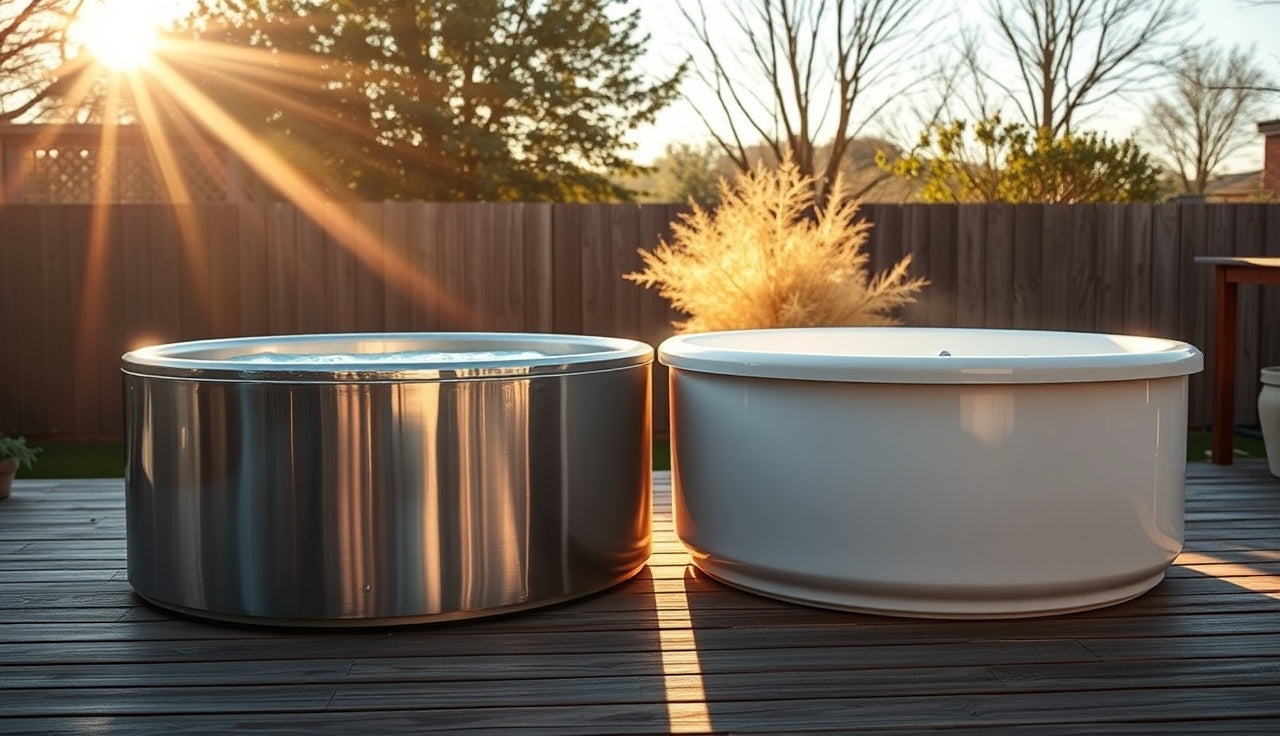
Stainless steel cold plunges typically last 20-plus years with minimal maintenance and resist physical impact better than fiberglass. Fiberglass units cost less upfront, around $1,500-$4,000 vs $3,000-$10,000+ for stainless, but are vulnerable to UV degradation, surface cracks, and gel-coat wear over time. For outdoor, year-round use, stainless steel wins on durability. For indoor, budget-conscious setups, fiberglass is a reasonable trade-off.
What are the core durability differences between fiberglass and stainless steel cold plunges?
Durability comes down to three things: how the material handles water chemistry, how it holds up against physical stress, and how it ages over years of sun, temperature swings, and chlorine or salt exposure.
Stainless steel, specifically 304 or 316 grade, is a dense, non-porous metal alloy. It does not flex, it does not delaminate, and it does not absorb bacteria or chemical residue into its surface. A properly welded stainless tank can realistically last 20 to 30 years with nothing more than periodic rinsing and water chemistry management [1]. The main enemy is chloride-induced pitting corrosion, which is why the grade of steel matters enormously. 316-grade stainless contains molybdenum, which gives it significantly better resistance to chlorides and salt than 304-grade [2].
Fiberglass is a composite: glass fibers embedded in a polyester or vinyl ester resin matrix, usually finished with a gel coat on the surface. That gel coat is what you actually see and touch. The problem is that gel coat is relatively thin, typically 0.5mm to 1mm, and it starts showing wear in high-UV outdoor environments within 5 to 10 years without upkeep [3]. Once the gel coat oxidizes or cracks, water can work its way into the fiberglass laminate itself, which leads to osmotic blistering. Osmotic blistering is not cosmetic. It weakens structural integrity and is expensive to fix.
So at the five-year mark, a well-maintained stainless steel plunge looks nearly identical to the day it was installed. A fiberglass unit in the same outdoor, sun-exposed environment will likely show chalking, minor surface crazing, or at minimum dullness unless it has been re-waxed or re-coated periodically.
How long does a fiberglass cold plunge actually last?
Honest answer: 10 to 20 years, with a pretty wide range depending on how it is used and where it lives.
Indoors, away from UV and wide temperature swings, a fiberglass cold plunge can hold up for 15 to 20 years without major structural issues. The resin and fiberglass laminate themselves are chemically stable in that environment. You might need to refinish the gel coat surface somewhere in the 8-12 year window, which typically costs $300 to $800 for a professional gel-coat repair, but the shell stays sound.
Outdoors is a different story. UV radiation is the primary accelerant of degradation in fiberglass composites. The American Composites Manufacturers Association notes that UV exposure breaks down the polymer chains in unsaturated polyester resins over time, leading to surface chalking and eventual micro-cracking [3]. In a sunny climate, that process can begin visibly in 5 to 7 years. If you park a fiberglass cold plunge on a deck in Arizona or Florida with no shade cover, plan on a gel-coat restoration at the 7-year mark and factor that into your true cost of ownership.
Fiberglass also does not love freeze-thaw cycles. Water trapped in micro-pores or existing cracks expands when it freezes, widening those cracks. If you live somewhere with hard winters and your plunge water is not heated or drained in the off-season, hairline cracks can become structural cracks within a few seasons.
The upside: fiberglass is repairable by a skilled technician or even a handy DIYer. Unlike a cracked weld in a stainless tank (which requires a professional welder), a fiberglass crack can be ground out and relaminated with materials you can buy at a marine supply store for under $100.
How long does a stainless steel cold plunge last?
A quality stainless steel cold plunge built from 316-grade steel is effectively a lifetime purchase for most homeowners. Commercial brewing and food processing tanks made from 316 stainless regularly operate for 25 to 40 years in far harsher chemical environments than a cold plunge [2].
The realistic risk factors for stainless cold plunges are few but worth knowing. First, weld quality matters more than the base material. Poor welds create crevices where water collects and stagnates, and crevice corrosion can pit through a weld in a fraction of the time it would take to affect solid plate. Always ask manufacturers whether welds are passivated after fabrication. Passivation is an acid wash process that restores the chromium oxide layer on the steel surface disrupted during welding, and a reputable manufacturer will do this as standard practice [4].
Second, if you use high concentrations of chlorine-based sanitizers (above about 3 ppm free chlorine long-term) and you have 304-grade rather than 316-grade steel, you may see pitting at the waterline over several years. 316-grade stainless resists chloride pitting significantly better. The molybdenum content in 316 (roughly 2-3%) is specifically what provides that resistance [2].
Third, stainless does not handle hard impacts gracefully. A dropped heavy object can dent the sidewall. Dents are mostly cosmetic, but a sharp dent can create a crevice. Fiberglass, oddly, may fare slightly better against blunt impact because it has some flex before failure.
For a homeowner who wants to buy once and never think about structural integrity again, stainless steel is the clear answer.
Which material handles water chemistry and sanitizers better?
This question matters a lot because you will be running a cold plunge at temperatures where bacteria thrive (50-60°F is actually ideal for many microorganisms), so proper sanitization is non-negotiable.
Stainless steel is chemically inert to most sanitizers used in cold plunge applications: hydrogen peroxide, ozone, UV, low-level chlorine, and bromine. Its non-porous surface means sanitizer does not need to penetrate anything; it just needs to maintain contact with the water. The stainless itself harbors essentially no biofilm if the surface finish is smooth (a brushed or electro-polished interior is ideal).
Fiberglass with a sound gel coat is also reasonably chemically resistant, but the gel coat introduces two problems. First, if the surface has any micro-porosity or existing crazing, biofilm can establish in those recesses and become difficult to clear with standard sanitizers. Second, high concentrations of oxidizing sanitizers (especially high-dose chlorine shock treatments) can bleach and degrade the gel coat surface over time, accelerating the wear cycle.
Ozone and UV systems are increasingly popular in cold plunges because they reduce the need for chemical sanitizers. Both work well with stainless and fiberglass, but the longer-term surface integrity of stainless means ozone-treated water in a stainless tank stays cleaner because there is less surface area for biofilm to hide. The CDC recommends maintaining a free chlorine residual in treated water even when supplemental systems are in use [5], which is relevant for homeowners who think they can skip all chemicals with an ozone unit.
If you are using a bromine-based sanitizer, know that 304-grade stainless can be vulnerable to bromide ion attack at elevated concentrations. 316-grade handles it better. Fiberglass gel coats are generally more tolerant of bromine than of high chlorine concentrations.
What does each material cost, and how do repair costs compare over time?
Purchase price ranges vary considerably by size, filtration system, and brand, but here are honest brackets based on what is actually sold in the market:
| Type | Entry price | Mid-range | Premium |
|---|---|---|---|
| Fiberglass cold plunge | $1,500 | $2,500-$4,000 | $5,000+ |
| Stainless steel cold plunge | $3,000 | $5,000-$8,000 | $10,000-$20,000+ |
| DIY NAS (stock tank, galv. steel) | $200-$500 | N/A | N/A |
| Converted chest freezer | $300-$600 | N/A | N/A |
Fiberglass wins the upfront cost comparison by a significant margin. But the 10-year total cost of ownership is closer than the purchase price suggests.
A gel-coat restoration on a fiberglass tub runs $300 to $800 if done professionally, and most outdoor units will need at least one in a 10-year span. Structural crack repair, if it gets to that point, runs $500 to $1,500 depending on extent. Refinishing the entire interior surface: $800 to $2,500. Add those to the purchase price and a mid-range fiberglass unit that cost $3,000 could realistically cost $4,500 to $5,000 over a decade.
A mid-range stainless unit that cost $6,000 at purchase will likely need nothing structurally in that same decade. Maybe a weld touch-up if a fitting shows corrosion; a competent welder charges $75 to $150 per hour for a job that takes an hour or two. Realistically, you might spend $200 in maintenance over 10 years.
That math makes stainless look much more competitive on a 10-year basis, though the higher upfront cost is still a real barrier for many buyers. If you are planning to move, rent the property, or are genuinely uncertain whether cold plunging will stick as a habit, the lower fiberglass entry cost makes more sense.
| Fiberglass (purchase) | $3,000 |
| Fiberglass (10yr maintenance) | $1,800 |
| Stainless 304 (purchase) | $6,000 |
| Stainless 304 (10yr maintenance) | $400 |
| Stainless 316 (purchase) | $7,000 |
| Stainless 316 (10yr maintenance) | $200 |
Source: PHTA, BSSA, and market price survey 2024-2025
How does outdoor exposure affect each material differently?
Outdoor use is where the gap between fiberglass and stainless becomes most pronounced.
Sunlight is the main differentiator. UV radiation in the 290-400nm range is particularly effective at degrading the polymer matrix in fiberglass composites. A study published in Polymer Degradation and Stability found that UV exposure causes progressive loss of mechanical properties in glass fiber reinforced polyester laminates, with measurable tensile strength reduction beginning after approximately 500 hours of continuous UV exposure [6]. For context, a cold plunge sitting outdoors in a sunny climate might accumulate that exposure in a single summer.
Stainless steel is essentially unaffected by UV. There is no organic polymer component to degrade.
Temperature cycling matters too. Fiberglass and stainless have different thermal expansion coefficients. Fiberglass composites expand and contract more with temperature change than stainless steel does. In environments with wide daily or seasonal temperature swings, that movement can stress fittings, plumbing connections, and the gel coat surface over time. Stainless is more dimensionally stable.
Rain and standing water are non-issues for stainless. For fiberglass, standing water on the exterior of the shell (underneath a unit on a deck, for instance) can accelerate gel-coat moisture absorption if the outer surface is compromised.
If you're setting up an outdoor cold plunge and want zero maintenance anxiety, stainless is genuinely the better fit. If you're in a mild climate with covered outdoor space, a quality fiberglass unit with proper UV-protective waxing annually is a reasonable choice and will likely look fine for 10-plus years. You can also read more about cold plunge setups generally before committing to either material.
Does fiberglass or stainless steel feel better to use?
This is underrated in most durability comparisons, but it matters for daily habit formation.
Fiberglass is warmer to the touch. The composite material has lower thermal conductivity than steel, so the walls of a fiberglass tub do not feel as bitterly cold when you brace against them. This is a real comfort advantage during longer sessions.
Stainless steel walls conduct heat rapidly. That means when you first lower yourself in, the walls feel colder than the water temperature momentarily, because they are drawing heat away from any body part in contact. Some users report bruised-feeling skin after long contact with stainless sidewalls in very cold water. Others don't notice or don't care.
Fiberglass gel coat surfaces can be smooth and pleasant or slightly rough depending on the finish quality. A high-quality gel coat with a good mold polish is genuinely nice to sit on. A worn or poorly finished gel coat can feel abrasive, which is something worth asking about before you buy, specifically the interior mold finish quality.
Stainless interiors are typically brushed or polished. A brushed 316 interior is smooth and easy to clean. An electropolished interior is even better, essentially eliminating microscopic surface crevices.
Neither material has a clear comfort win for everyone. Heavier people who press hard against the walls during cold immersion often prefer fiberglass for its warmer feel. People who care most about hygiene and easy cleaning consistently prefer stainless.
Which is easier to repair if something goes wrong?
Fiberglass wins on repairability. This is one of its genuine advantages that gets lost in durability conversations.
A crack or gouge in a fiberglass cold plunge can be repaired with materials available at any marine or automotive supply store. The repair process involves grinding out the damaged area, applying fiberglass mat and resin to rebuild structure, sanding smooth, and applying gel coat to restore the surface finish. A skilled DIYer can do a functional repair in an afternoon. A professional marine fiberglass technician can make the repair essentially invisible.
This is why the boat-building industry has used fiberglass for decades despite its UV and impact limitations: it is forgiving and field-repairable.
Stainless steel damage is a different situation. A significant crack or failed weld requires a certified welder with TIG welding capability, ideally someone who has worked with 316-grade stainless specifically. TIG welding stainless requires clean prep, appropriate filler rod (316L filler for 316 base metal), and post-weld passivation to restore corrosion resistance. This is not a DIY job for most people, and in rural areas, finding a mobile welder who will come to your backyard can be harder than expected.
Dents in stainless are essentially permanent without panel beating. Minor surface scratches can be addressed with stainless polishing compounds, but a deep gouge is there forever.
For a homeowner who values self-sufficiency and the ability to address damage themselves, fiberglass is more forgiving. For someone who never wants to think about repairs in the first place, the lower probability of damage in a stainless unit offsets the higher complexity if something does go wrong.
What about weight and installation differences?
Weight affects both where you can put a cold plunge and how hard it is to deliver and position.
Fiberglass shells are light. A typical two-person fiberglass cold plunge shell weighs 60 to 120 lbs empty. A solo unit can weigh as little as 40 lbs. This makes delivery and positioning genuinely easy, and it means you can place one on an elevated deck or second-story patio without structural concerns in most cases (always verify local deck load ratings with a structural engineer or your building department before adding any water feature; filled water weight dominates total load).
Stainless steel units are substantially heavier. A solo stainless cold plunge tank might weigh 150 to 300 lbs empty, and larger units with integrated chillers and filtration can exceed 400 lbs. Moving a stainless unit into a finished basement or onto a rooftop deck requires planning, possibly equipment rental, and definitely more hands.
For indoor installation in a finished space, fiberglass is frequently easier to maneuver through doorways and down stairs. Stainless units with fixed fittings and rigid walls can be genuinely awkward in tight spaces.
Filled with water, both types weigh similarly per gallon (water is water). A 200-gallon cold plunge holds about 1,667 lbs of water regardless of shell material. The shell weight difference is almost irrelevant once filled. What matters structurally is the combined filled weight relative to your floor or deck capacity. That number is the same for both materials at the same volume.
Are there any health or safety differences between the two materials?
Neither fiberglass nor stainless steel poses a meaningful health risk in normal cold plunge use, but there are a few nuances worth knowing.
Fiberglass gel coat, when intact, is chemically inert in contact with cold water. The concern arises if the gel coat is damaged or if the underlying fiberglass laminate is exposed to water. Styrene, a residual monomer from polyester resin cure, can leach from uncured or damaged fiberglass into water at low levels. This is primarily a concern in new fiberglass vessels that have not been properly post-cured, and in damaged units where the laminate is exposed. The EPA classifies styrene as a possible human carcinogen, and the agency has set a drinking water advisory at 100 micrograms per liter [7]. In a cold plunge you are not drinking the water, but it is still a reasonable consideration if you notice any chemical smell from a new fiberglass unit. Running and draining it several times before first use is a common recommendation from pool industry installers.
Stainless steel in the 304 or 316 grades is widely used in food and beverage contact applications precisely because it leaches essentially nothing into water under normal conditions [4]. The FDA and NSF both recognize 304 and 316 stainless as acceptable food-contact materials [9].
From a slip and fall perspective, both materials can be slippery when wet. Fiberglass gel coat with a slightly textured finish may provide marginally better grip than a polished stainless interior. Some stainless units include anti-slip mat inserts.
Cold immersion itself carries real physiological risks independent of the material. The American Heart Association notes that cold water immersion can trigger cardiac responses, and anyone with cardiovascular conditions should consult a physician before starting a cold plunge practice [8]. The cold plunge benefits literature is genuinely interesting but does not change the need for basic medical screening.
So which should you buy for long-term home use?
Here is my honest take after working through the evidence.
If you are setting up outdoors and plan to use the cold plunge year-round for five or more years, buy stainless steel. The UV durability, freeze-thaw resistance, hygiene surface, and near-zero structural maintenance make it the right call. Yes, it costs more upfront. Over a 10-year horizon the cost-per-year gap narrows significantly, and you will never find yourself dealing with gel-coat restoration or osmotic blistering.
If you are setting up indoors (basement, garage, covered spa room), fiberglass is a legitimate option. The UV degradation issue mostly disappears. You get a lighter unit that is easier to install and costs meaningfully less. The comfort advantage (warmer walls) is real for daily use. The repairability advantage is real too.
If budget is the primary constraint, a quality fiberglass unit beats an entry-level stainless unit in the sense that the entry-level stainless units sometimes have weld quality issues that undermine the durability advantage. A poorly welded budget stainless tank can develop corrosion problems faster than a quality fiberglass shell. Brand and fabrication quality matter more than material alone at the lower price tiers.
SweatDecks carries both fiberglass and stainless options; if you want to compare specific units side by side, the cold plunge collection page is a reasonable place to start.
For athletes doing daily contrast therapy (alternating sauna and cold plunge), the wear from frequent use makes stainless the more sensible long-term investment. Pair it with a quality home sauna and you have a setup that should outlast any other piece of fitness equipment you own.
What questions should you ask a cold plunge manufacturer before buying?
This section exists because marketing copy for cold plunges is often vague on exactly the details that matter most for durability. Here are the specific questions worth asking, and what the answers tell you.
For stainless units: What grade of stainless steel is the shell? (304 or 316, and demand written confirmation.) Are welds passivated after fabrication? What is the wall thickness? (Under 1.5mm is thin for a cold plunge; 2mm or thicker is better.) What is the warranty on structural integrity?
For fiberglass units: Is the resin system vinyl ester or polyester? (Vinyl ester is significantly more water-resistant and blister-resistant than polyester; it is worth paying extra for.) What is the gel-coat thickness? Is UV-resistant gel coat used? What is the warranty against osmotic blistering?
For both: What sanitization systems are included or compatible? What filtration rate does the pump provide? (For a 200-gallon plunge, full turnover in 30 minutes or less is a reasonable standard.) What is the warranty period and what specifically does it cover?
Manufacturers who cannot answer the stainless grade question or the resin system question confidently in writing are a warning sign. These are not obscure technical details; they are fundamental to the product they built.
If you are deciding between an ice bath approach (essentially a temporary tub you fill with ice) and a permanent plunge installation, the material question only matters for the permanent installation. For occasional use, an ice bath costs almost nothing and there is nothing to degrade.
Frequently asked questions
Does fiberglass crack easily in cold plunge use?
Fiberglass does not crack easily under normal use, but it is vulnerable to impact damage and to freeze-thaw cycling if water infiltrates existing micro-cracks. In outdoor environments with hard winters, draining the unit in the off-season prevents freeze-expansion damage. Hairline gel-coat crazing can appear over years, especially with UV exposure, but structural cracks are uncommon in a quality unit that is properly maintained.
Will stainless steel rust in a cold plunge?
316-grade stainless steel will not rust in normal cold plunge conditions. 304-grade stainless is more susceptible to pitting corrosion if chloride concentrations are high or chlorine-based sanitizers are used at elevated doses over time. The fix is to specify 316-grade steel (sometimes called marine-grade) and keep free chlorine below about 3 ppm. Surface discoloration that looks like rust is often iron contamination from tap water, not corrosion of the steel itself.
Is fiberglass or stainless steel easier to clean?
Stainless steel is easier to clean consistently, especially over years of use. Its non-porous surface resists biofilm adhesion, and there is no surface coating to protect while cleaning. Fiberglass gel coat requires more care; abrasive cleaners scratch the surface and accelerate wear. For fiberglass, mild pH-neutral cleaners and soft cloths are recommended. Both materials benefit from regular water chemistry management to minimize buildup.
How much does a fiberglass cold plunge cost compared to stainless?
Fiberglass cold plunges generally run $1,500 to $5,000 depending on size and included filtration. Stainless steel units start around $3,000 for basic tanks and climb to $10,000 or beyond for integrated chiller-filter systems with premium fabrication. The price gap narrows on a 10-year total cost basis when you account for fiberglass maintenance and refinishing costs that stainless largely avoids.
Can a fiberglass cold plunge be used outdoors year-round?
Yes, but with conditions. UV-resistant gel coat and annual protective waxing extend the surface life significantly. In climates with freezing winters, the unit should be drained or kept heated (most built-in chiller units allow this) to prevent freeze-expansion cracking. Fiberglass without UV protection in a sunny outdoor environment will show surface degradation within 5-7 years. A covered location meaningfully extends service life.
What grade of stainless steel is best for a cold plunge?
316-grade stainless steel is the preferred choice for cold plunge applications, especially if you use chlorine-based sanitizers or live in a coastal area with airborne salt. Its molybdenum content provides substantially better chloride pitting resistance than 304-grade. 304-grade is acceptable for well-maintained indoor units with ozone or UV sanitization and minimal chlorine use, but 316 is worth the modest price premium for outdoor or heavily used installations.
How do I know if my fiberglass cold plunge has osmotic blistering?
Osmotic blistering appears as raised bubbles or dome-shaped bumps on the submerged interior surface, typically ranging from small pinpoints to dime-sized formations. When punctured they release a watery fluid that may smell acidic. Blistering indicates that water has permeated the gel coat into the laminate. Early-stage blistering can be repaired by drying the laminate thoroughly, grinding out affected areas, and applying epoxy filler and new gel coat. Extensive blistering may require professional laminate work.
Do cold plunge manufacturers warranty fiberglass against structural defects?
Warranty terms vary significantly. Quality fiberglass cold plunge manufacturers typically offer 1 to 5 years on structural integrity and may separately warrant the gel coat surface for 1-2 years. Some exclude osmotic blistering as a warranty item if improper water chemistry is suspected. Always get the warranty in writing and ask specifically whether blistering and delamination are covered. Stainless steel units commonly carry longer structural warranties, sometimes 5 to 10 years.
Is a stainless steel cold plunge worth the extra cost for a home user?
If you will use it daily outdoors for 5 or more years, yes, the math works out close enough that stainless is worth it. If you are an occasional user, plan to move, or are setting up indoors with no UV exposure, a quality fiberglass unit is a sensible choice. The premium for stainless is essentially buying long-term peace of mind: no refinishing, no surface degradation tracking, no UV damage. Whether that peace of mind is worth $2,000-$4,000 extra depends entirely on your situation.
Can you convert an old hot tub or pool shell (fiberglass) into a cold plunge?
Technically yes, and many people do it. The concerns are surface condition (existing gel-coat wear, any blistering), plumbing compatibility with a cold water chiller, and whether the insulation (if any) works against you, since you want to maintain cold temperatures efficiently. A used fiberglass hot tub shell that has been outdoors for 10 years will likely need a full interior refinish before use as a cold plunge. The economics often work out better than buying a dedicated entry-level unit.
How does stainless steel cold plunge durability compare to acrylic?
Acrylic is a third common material, often used in combination with fiberglass (acrylic surface backed by fiberglass structure). Pure acrylic is even more UV-sensitive than fiberglass gel coat and can yellow and craze faster in outdoor conditions. Stainless outlasts acrylic on every durability dimension for outdoor long-term use. Acrylic has a comfort and aesthetic advantage (very smooth, warm to touch, available in colors) but is the least durable of the three in direct comparison.
What maintenance does a stainless steel cold plunge need?
Very little. Drain and rinse every 1-4 weeks depending on use frequency and sanitization system. Maintain water chemistry (pH 7.2-7.6, appropriate sanitizer level). Inspect fittings and welds annually for any signs of pitting or discoloration. Polish out surface scratches with stainless steel polishing compound if aesthetics matter. That is realistically the full maintenance list for a 316-grade unit. No refinishing, no recoating, no surface treatments required.
Does the cold plunge material affect how quickly water chills?
Yes, but the chiller system dominates the timeline far more than shell material. Stainless conducts heat faster than fiberglass, which means a stainless shell with no insulation loses cold temperature to the environment faster on a hot day. Many stainless cold plunges include foam insulation on the exterior. Fiberglass has natural insulation properties. In practice, with a properly sized chiller running, both materials maintain target temperatures comparably. Without a chiller, an insulated fiberglass unit may hold temperature slightly longer.
Sources
- NACE International (now AMPP), Corrosion Basics: Stainless Steel: Properly maintained 316-grade stainless steel fabrications routinely achieve 20-30 year service lives in water contact applications
- British Stainless Steel Association, Selection of Stainless Steels for Handling Water: 316-grade stainless contains 2-3% molybdenum which provides substantially better chloride pitting resistance than 304-grade; 304-grade is vulnerable to pitting in chloride-containing environments
- American Composites Manufacturers Association (ACMA), Fiberglass Material Properties: UV exposure degrades polymer matrix in fiberglass composites, causing surface chalking and micro-cracking; this is a primary weathering failure mode for outdoor FRP structures
- NSF International, NSF/ANSI 51 Food Equipment Materials standard: 304 and 316 stainless steel are recognized food-contact materials that meet NSF/ANSI 51 requirements; passivation after welding is specified to restore corrosion-resistant chromium oxide layer
- CDC, Healthy Swimming: Chlorine and pH in Pools and Hot Tubs: CDC recommends maintaining a free chlorine residual even when supplemental disinfection systems (ozone, UV) are in use to ensure continuous microbial protection
- Polymer Degradation and Stability, UV aging of glass fiber reinforced polyester composites (published in Elsevier journal): UV exposure causes measurable reduction in tensile strength of glass fiber reinforced polyester laminates beginning after approximately 500 hours of continuous exposure
- U.S. EPA, Styrene Drinking Water Health Advisory: EPA classifies styrene as a possible human carcinogen and has set a drinking water health advisory at 100 micrograms per liter
- American Heart Association, Cold Water Immersion and Cardiovascular Risk: Cold water immersion can trigger significant cardiovascular responses including cold shock response; the AHA advises persons with heart conditions to consult a physician before cold immersion practices
- U.S. FDA, CFR Title 21 Part 177 - Indirect Food Additives: Polymers: FDA regulations governing food-contact polymers and metals recognize 304 and 316 stainless steel as acceptable for food and beverage contact applications
- Pool and Hot Tub Alliance (PHTA), Standard for Above Ground / On Ground Pools (ANSI/APSP-4): Industry standards for residential water vessel maintenance include pH range of 7.2-7.6 and guidance on compatible sanitizer concentrations by vessel material type

Share:
Cold plunge tub on a second floor deck: structural requirements explained
Stainless steel cold plunge tub gauge thickness: what you actually need