
Last updated 2026-07-09
TL;DR
The Eagle Peak 1-2 person far infrared sauna is a budget indoor unit using carbon fiber heating panels rated below 3 milligauss EMF. It heats to roughly 140°F, runs on a standard 120V outlet, and fits most apartments or small rooms. It's a reasonable entry point, but you give up build quality and heater longevity compared to mid-range competitors.
What exactly is the Eagle Peak 1-2 person far infrared sauna?
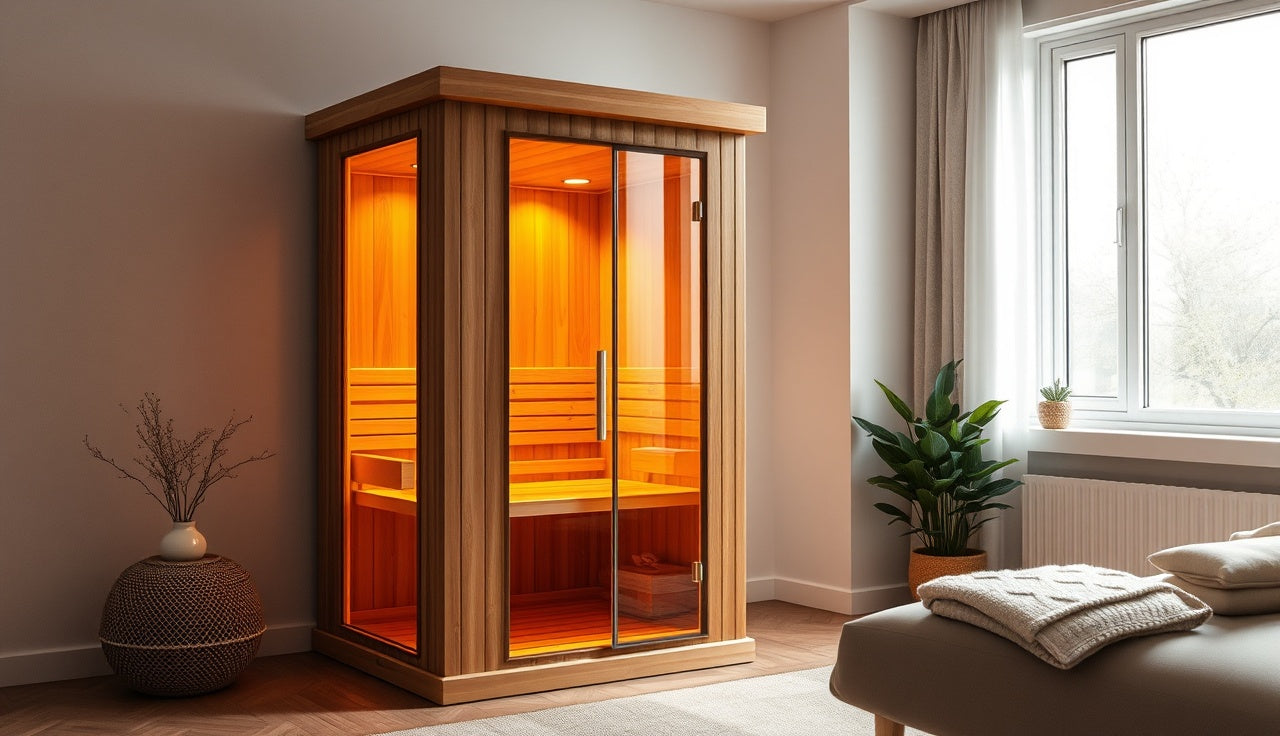
Eagle Peak is a budget home sauna brand sold mostly through Amazon and a handful of online retailers. The 1-2 person model is their most popular size, built to fit one adult comfortably or two people who don't mind being cozy. The cabinet is Canadian hemlock or basswood depending on the production run, assembled with tongue-and-groove panels that need no tools beyond an Allen key.
The heating system is far infrared. That means electric panels emit radiant heat in the 5-15 micron wavelength range instead of heating the air with a rock stove. Far infrared heat penetrates a few millimeters into skin tissue rather than just warming the air around you [1]. The panels in the Eagle Peak are carbon fiber, a step above the older ceramic rod style in surface area and heat spread.
This is a plug-and-play unit. It draws somewhere between 1,400 and 1,750 watts depending on the configuration, which fits inside a standard 15-amp household circuit. No electrician, no dedicated circuit, no 240V outlet. That's one of the main reasons people buy it.
For more context on how far infrared fits the broader category, the home sauna buying guide covers the full spectrum from infrared to traditional Finnish-style.
How low is 'low EMF' and does it actually matter for this sauna?
EMF stands for electromagnetic field. It's measured in milligauss (mG) for the magnetic component or volts per meter (V/m) for the electric component. Eagle Peak markets this unit as 'low EMF' and lists emissions below 3 mG in its product materials, the threshold most infrared sauna brands use for that claim.
The FCC sets limits for consumer devices, and the International Commission on Non-Ionizing Radiation Protection (ICNIRP) publishes reference levels for public exposure. For magnetic fields in the frequency range from household appliances, the ICNIRP general public reference level is 200 mG at 50-60 Hz [2]. Under 3 mG sits well below that. Worth knowing: those readings are usually taken at the panel surface, and the field drops off with the square of distance. Sitting 12 inches from a panel puts you much closer than you sit to most everyday appliances.
Here's the honest position. The research on low-level EMF exposure from consumer saunas specifically is thin. Most major epidemiological concern around EMF has focused on radiofrequency radiation from phones and towers, not the extremely low frequency fields from heating panels [3]. If you're particularly sensitive to this topic, brands like Sunlighten and Clearlight publish independent lab reports. Eagle Peak does not publish third-party test results I can find, which is a gap.
For most buyers, the 'low EMF' label is reassuring marketing. It probably reflects a real design choice toward lower-emitting panels, but don't confuse the claim with independent certified testing unless you see the documentation.
What temperature does the Eagle Peak far infrared sauna reach?
Eagle Peak lists a maximum temperature of 140°F (60°C) for the 1-2 person unit. In practice, user reports and the general behavior of carbon fiber panel infrared saunas suggest it reliably reaches 120-130°F under normal room conditions.
That's cooler than a traditional Finnish sauna, which typically runs 160-200°F [4]. The gap matters if you're used to a gym sauna and want to replicate that feel. Infrared advocates argue the lower air temperature is beside the point because the radiant heat acts differently on the body. If you're chasing the hot-air punch, this won't give you that.
Preheat time runs 15-20 minutes to operating temperature in a climate-controlled indoor room. In a cold garage or basement, expect 25-30 minutes minimum. The digital control panel on most Eagle Peak versions sets time and temperature, and there's a Bluetooth audio option on some SKUs.
The 140°F ceiling shapes the experience. Research on cardiovascular responses to sauna bathing often uses 80°C (176°F) in traditional Finnish protocols [5]. The physiological response at 60°C is real but milder, so pulling the strongest health outcomes from Finnish sauna studies onto this unit is an overreach.
What wood is used and how does it hold up over time?
Eagle Peak uses Canadian hemlock as the primary wood, with some production runs using basswood. Both are non-aromatic softwoods, which is the right call for a sauna because aromatic woods like cedar can off-gas compounds when heated.
Hemlock is a reasonable choice. It's light, dimensionally stable when dried properly, and has a clean pale look. It's softer than cedar and more prone to surface scratches, but that's mostly cosmetic in a sauna. Basswood is even softer and lighter.
The weak point in budget saunas like Eagle Peak usually isn't the wood. It's the joinery and the wood treatment. The tongue-and-groove panels have to seat tightly or you get heat leakage, which hurts efficiency and cuts session time. Several verified Amazon reviews mention panel gaps on assembly, which tracks with the production variability you see at this price.
Long-term durability rides on moisture management. Far infrared saunas produce no steam, so interior humidity stays lower than a traditional sauna. The wood still sees repeated heat and sweat cycles. If the panels aren't sealed well at the factory, warping over two or three years is a real possibility. Eagle Peak carries a limited 1-year warranty on the cabin and 3 years on heaters, about average for this price category but shorter than premium brands offering 5-7 year coverage.
How does the Eagle Peak compare to other 1-2 person infrared saunas at a similar price?
The honest competitive set for Eagle Peak sits in the $600-$900 range. The alternatives you'll see cross-shopped are Dynamic Saunas, SereneLife, and Radiant Saunas. JNH Lifestyles sits slightly above. Clearlight and Sunlighten are in a different world entirely at $3,000-$6,000+.
Here's how the specs actually stack up:
| Model | Price Range | Max Temp | Wood | Heater Type | Warranty |
|---|---|---|---|---|---|
| Eagle Peak 1-2P | $650-$850 | 140°F | Hemlock/Basswood | Carbon fiber | 1yr cabin / 3yr heater |
| Dynamic Avila | $700-$900 | 140°F | Hemlock | Carbon MXT | 1yr cabin / 3yr heater |
| SereneLife 1-2P | $550-$750 | 130°F | Hemlock | Carbon fiber | 1yr |
| JNH Lifestyles Joyous | $900-$1,100 | 150°F | Basswood | Carbon fiber | 3yr cabin / 5yr heater |
| Radiant Sauna 1-2P | $600-$800 | 141°F | Hemlock | Carbon fiber | 1yr cabin / 3yr heater |
Eagle Peak and Dynamic are closely matched. Dynamic has slightly better documented customer service infrastructure. JNH is the step-up buy if you can stretch the budget, mainly for the 5-year heater warranty and marginally higher max temp. SereneLife is cheaper, but the thinner panels show up in session quality.
If you want context on the broader market, the sauna category overview covers the full range from portable units to permanent outdoor cabins.
Is the Eagle Peak sauna actually big enough for two people?
Technically yes. Practically, it depends on the people.
The interior runs roughly 35 inches wide by 35 inches deep by 75 inches tall, varying slightly by SKU. Two average-size adults fit, but you're touching shoulders. If you're doing solo sessions four days a week, it's genuinely comfortable. If you pictured a relaxed sauna with your partner and an actual conversation without being elbow-to-elbow, you'll want the 2-person version or a competitor's 2-person with more bench depth.
Heater placement matters here too. With two people, one sits closer to the side panel heaters and one to the back panel. Heating isn't perfectly uniform, so whoever sits on the ends gets more radiant exposure from the angled panels. Not dangerous. Just uneven.
For a solo buyer who occasionally has a guest, the 1-2 person label is accurate. For couples who sauna together regularly, size up.
What does the installation process actually look like?
Eagle Peak ships in multiple boxes. Most buyers report 3-5 boxes weighing a combined 150-200 lbs. You want two people to carry and assemble. One person can technically do it, but the panels are awkward alone.
Assembly takes 45-90 minutes for most people following the included instructions. The tongue-and-groove system snaps together, and the tools you need are an Allen wrench (included) and sometimes a rubber mallet if panels seat tight. The roof panels go on last and house most of the wiring for the control panel and roof chromotherapy lights if included.
Electrical connection is a standard 120V plug into a regular outlet. The unit draws up to 1,750 watts, so put it on a circuit that isn't already carrying a heavy load. The manual recommends a dedicated 15-amp circuit, which in most rooms means an existing outlet that isn't shared with a refrigerator or HVAC unit.
Floor placement matters. The unit needs a level, stable surface. Hardwood, tile, and concrete all work fine. Thick carpet can cause instability and traps heat underneath in ways that stress the base panels over time. A small waterproof mat under the unit is a good idea.
If you want to compare this format to a different approach, read about the portable sauna options, which skip the assembly entirely but deliver a very different experience.
What health benefits does far infrared sauna use actually have?
The research base for far infrared sauna specifically (as opposed to traditional sauna) is growing but still smaller. A 2015 review in Complementary Medicine Research examined far infrared sauna therapy and found evidence for improvements in pain, fatigue, and mood in small trials, with methodological limitations noted [6]. The more cited body of research from Finnish cohort studies covers traditional sauna, not infrared, so applying those findings wholesale to the Eagle Peak isn't clean science.
What the evidence does support at a reasonable confidence level: regular sauna use (2-3 sessions per week, 15-20 minutes each) is associated with lower cardiovascular event rates in observational data. The largest dataset comes from the Kuopio Ischemic Heart Disease study, which followed over 2,000 middle-aged Finnish men. Those using sauna 4-7 times per week had a 63% lower risk of sudden cardiac death compared to once-weekly users [5]. That was a traditional sauna cohort.
For far infrared specifically, a 2009 study in the Journal of Cardiac Failure found daily 15-minute far infrared sessions improved cardiac function and exercise tolerance in patients with chronic heart failure [7]. That's a specific patient population and shouldn't be generalized, but it does show the modality has real physiological effects.
The conservative read: regular use of any sauna, including this one, probably provides some cardiovascular, musculoskeletal, and mental relaxation benefit. Nobody should buy this expecting clinical outcomes. For a fuller picture of what the evidence says, the sauna benefits guide is the right place to go.
Health claims stay conservative here for a reason. No sauna at any price replaces medical treatment.
How much does it cost to run the Eagle Peak sauna per session?
Running cost is simple math. The Eagle Peak 1-2 person unit draws about 1,500 watts at typical operating load. A 30-minute session uses 0.75 kilowatt-hours.
The national average residential electricity rate in the U.S. was about 16 cents per kilowatt-hour as of early 2024, per the U.S. Energy Information Administration [8]. That puts a 30-minute session at roughly 12 cents. An hour runs about 24 cents.
Use it daily for a year and you're at about $44 at the national average rate. In high-cost states like California or Hawaii, where rates can top 30 cents/kWh, daily use runs $80-$90 a year. These aren't costs worth worrying about.
The bigger running consideration is heater lifespan. Carbon fiber panels typically last 5,000+ hours before meaningful degradation, which at daily 30-minute sessions is over 27 years of theoretical use. In practice, cheaper units sometimes see heater failure earlier from manufacturing variance, and replacement panels for Eagle Peak can be hard to source because the brand lacks the dealer infrastructure of larger competitors.
| Eagle Peak far infrared sauna (1,500W) | $44 |
| Mid-range infrared sauna (1,750W) | $51 |
| Cold plunge chiller (500W) | $29 |
| Electric hot tub (5,000W) | $146 |
| Traditional electric sauna (6,000W) | $175 |
Source: U.S. Energy Information Administration, 2024 residential average rate
What do owners actually complain about with the Eagle Peak sauna?
Pulling from verified purchase reviews on Amazon and a few sauna forums, the common complaints follow a pattern.
Panel gaps on assembly show up in maybe 15-20% of reviews. Some gaps seal over time as the wood adjusts. Others don't. A bead of high-temperature silicone on interior seams fixes most of them.
Control panel quality comes up a lot. It works, but the touchpad feels fragile, and a handful of users report it going unresponsive within the first year. Bluetooth audio is a nice touch, though the speakers are predictably modest.
The aromatherapy cup is included but useless in a far infrared context because the temps aren't high enough to volatilize essential oils effectively. It's a marketing checkbox.
On the positive side, assembly is genuinely manageable, heat-up time is acceptable, and the chromotherapy lighting (colored LEDs) works fine for what it is. Owners who use it 3-5 times a week for pure relaxation are generally satisfied.
What you're not getting at this price: the near-infrared spectrum (which some wellness protocols target separately), a heavy-duty build, or any real after-sale support network. SweatDecks keeps a curated selection of home saunas at various price points if you want to compare what the step-up options look like side by side.
For a sense of how far infrared compares to the steam-based experience, the sauna vs steam room guide covers the physiological differences clearly.
Is the Eagle Peak 1-2 person sauna worth buying, or should you spend more?
Here's the real answer: it depends on what failure would cost you.
If you're testing whether you'll actually use a home sauna consistently, and you'd rather risk $750 than $3,500, the Eagle Peak is a defensible choice. Most people who buy a home sauna use it heavily for 2-3 months, then taper off. If that's you, the Eagle Peak is far less painful to resell or discard.
If you're confident you'll use it 4+ times a week for years, the math shifts. Spending $1,500-$2,500 on a JNH, Sunlighten Solo, or similar mid-range unit gets you meaningfully better heater longevity, tighter construction, and actual customer support. That money difference amortized over five years of heavy use is roughly 50 cents per session.
The 'low EMF' marketing shouldn't be your deciding factor either way. Every major infrared sauna brand makes this claim. What varies is whether they back it with independent testing, and most budget brands can't.
If you're pairing your sauna with cold therapy, which shows up more and more in recovery routines, the cold plunge and ice bath guides explain what that contrast routine actually involves and what equipment makes sense at different commitment levels.
My honest take: if $750 is genuinely comfortable for you, the Eagle Peak works and you'll probably enjoy it. If you're stretching to hit that number, save another few months and buy something with a real warranty.
Frequently asked questions
Does the Eagle Peak far infrared sauna require any special wiring or electrical work?
No. The Eagle Peak 1-2 person unit plugs into a standard 120V household outlet. It draws up to 1,750 watts, so the manual recommends using a circuit that isn't already loaded with other high-draw appliances. You don't need a 240V line or an electrician. Using a dedicated 15-amp circuit is the safe approach if you have an available one.
How long does the Eagle Peak sauna take to heat up?
Expect 15-20 minutes to reach operating temperature in a typical climate-controlled indoor room at 65-72°F. In a cold basement, garage, or during winter, 25-30 minutes is more realistic. The digital controller lets you set a session timer so it's warm when you're ready. Preheating while you do something else nearby is the workflow most owners settle into.
Can I use the Eagle Peak sauna every day?
Yes, daily use is within normal parameters for far infrared saunas. The hardware is rated for continuous residential use. From a health standpoint, staying well hydrated is the main practical precaution; sauna sessions cause meaningful fluid loss through sweat. People with cardiovascular conditions, pregnancy, or certain medications should consult a physician before regular sauna use, which applies to any sauna regardless of brand.
What is the EMF level of the Eagle Peak sauna and how does it compare to safety guidelines?
Eagle Peak rates the unit at under 3 milligauss EMF. The ICNIRP general public reference level for magnetic fields at 50-60 Hz is 200 milligauss [2], so the stated output is well below regulatory thresholds. The caveat is that Eagle Peak doesn't publish independent third-party lab reports, unlike some premium brands. The claim is plausible given carbon fiber panel design, but it's self-reported.
How much space does the Eagle Peak 1-2 person sauna take up?
The exterior footprint is approximately 39 inches wide by 39 inches deep, with a height around 75 inches. You also need at least 6-12 inches clearance on sides and back for air circulation and heat dissipation. Realistically, plan for a floor area of about 4 feet by 4 feet plus the clearance. It fits in most bedrooms, spare rooms, or a finished portion of a basement.
What wood is the Eagle Peak sauna made from?
Eagle Peak uses Canadian hemlock as the primary material, with some production batches using basswood. Both are non-aromatic softwoods appropriate for sauna environments. Hemlock is lightweight and stable when properly dried. Neither is as naturally aromatic or visually rich as cedar, but cedar isn't ideal for infrared saunas anyway because its oils can off-gas at sauna temperatures.
How does the Eagle Peak far infrared sauna differ from a traditional Finnish sauna?
The biggest differences are heat source and temperature. Traditional Finnish saunas use a rock stove heated by electricity or wood, producing air temps of 160-200°F. The Eagle Peak tops out around 140°F using radiant infrared panels. The far infrared model produces almost no steam and much lower humidity. Some people find infrared more comfortable because of the lower air temperature, others miss the intense heat of a proper löyly.
Does the Eagle Peak sauna come with chromotherapy lighting?
Most SKUs of the Eagle Peak 1-2 person sauna include a chromotherapy LED light package in the roof panel. This provides colored ambient lighting during sessions. The evidence for therapeutic benefit from chromotherapy specifically is weak; it functions mostly as an ambiance feature. The speakers included for Bluetooth audio are functional but modest in quality.
What warranty does the Eagle Peak sauna carry?
Eagle Peak offers a 1-year warranty on the cabin structure and a 3-year warranty on the heaters, based on their standard product listings. This is roughly average for the budget segment but shorter than mid-range competitors like JNH Lifestyles, which offers 3 years on the cabin and 5 years on heaters. Getting warranty service can be slow; document everything and buy from a retailer with a good return policy.
Can two adults actually use the Eagle Peak 1-2 person sauna comfortably?
Two adults fit, but it's snug. The interior bench is roughly 35 inches wide, which seats two people side by side with shoulders touching. For occasional shared use it's fine. If you plan to use it with a partner regularly, the 2-person models with wider interiors are a better experience. The 1-person designation is the more honest use case for this size.
Is far infrared sauna safe for people with heart conditions?
People with cardiovascular conditions should consult a cardiologist before starting any sauna routine. Some research suggests far infrared sauna may benefit certain heart failure patients under medical supervision [7], but that research used specific clinical protocols. Using a consumer infrared sauna is not the same as a supervised clinical intervention. Do not use sauna if you have uncontrolled hypertension, recent cardiac events, or are on medications that affect heat tolerance.
How does the Eagle Peak compare to a Costco sauna or other big-box options?
Costco periodically sells Dynamic and similar brand infrared saunas in roughly the same price range and construction tier as the Eagle Peak. The specs are nearly identical because many of these units share the same overseas manufacturing source. Costco's return policy is often more generous than direct-to-Amazon brands, which is a real advantage. The costco sauna comparison covers that market in more detail.
Does the Eagle Peak sauna work for muscle recovery after workouts?
Heat therapy after exercise increases blood flow to muscle tissue and is associated with reduced delayed-onset muscle soreness in some studies. The mechanism is plausible and the Eagle Peak's operating temperature of 120-140°F is enough to induce meaningful sweating and elevated core temperature. Whether far infrared specifically outperforms traditional heat for recovery hasn't been definitively established. It's a reasonable recovery tool; don't expect magic.
What should I put under the Eagle Peak sauna to protect my floor?
A waterproof mat or rubber sauna mat under the unit protects hardwood and tile floors from sweat drip and heat. Avoid thick carpet underneath because it can trap heat at the base and stress the bottom panels over time. A simple interlocking foam mat or dedicated sauna floor mat works well. The Eagle Peak typically includes a small rubber mat for the interior but not for under the exterior.
Sources
- National Institutes of Health, National Center for Complementary and Integrative Health: Sauna: Far infrared saunas emit radiant heat in the far infrared wavelength range rather than heating surrounding air, a distinction from traditional sauna formats.
- ICNIRP: Guidelines for limiting exposure to electromagnetic fields (2020): ICNIRP general public reference level for magnetic fields at 50-60 Hz is 200 milligauss, the benchmark used for evaluating low EMF claims.
- World Health Organization: Electromagnetic fields and public health (ELF): Major EMF health research has focused on radiofrequency radiation; evidence for harm from extremely low frequency fields at household appliance levels remains inconclusive.
- Finnish Sauna Society: Sauna traditions and temperature guidelines: Traditional Finnish saunas operate at temperatures of 80-100°C (176-212°F), significantly higher than far infrared units.
- JAMA Internal Medicine: Association Between Sauna Bathing and Fatal Cardiovascular and All-Cause Mortality Events (2015, Laukkanen et al.): Men using sauna 4-7 times per week had a 63% lower risk of sudden cardiac death versus once-weekly users in the Kuopio Ischemic Heart Disease cohort.
- Complementary Medicine Research: Far-infrared saunas for treatment of cardiovascular risk factors (2015): A 2015 review found evidence for improvements in pain, fatigue, and mood from far infrared sauna therapy in small trials with methodological limitations.
- Journal of Cardiac Failure: Waon therapy improves global LVEF and LV end-diastolic volume (2009, Kihara et al.): Daily 15-minute far infrared sauna sessions improved cardiac function and exercise tolerance in patients with chronic heart failure in a 2009 clinical study.
- U.S. Energy Information Administration: Electricity explained, use of electricity: The U.S. national average residential electricity rate was approximately 16 cents per kilowatt-hour as of early 2024.
- Consumer Product Safety Commission: Electric sauna heaters: The CPSC oversees safety standards for electric sauna heating equipment sold in the U.S. consumer market.

Share:
Titan cold plunge review: is it worth the price in 2025?
Does sauna help with a cold? What the evidence actually says