
Last updated 2026-07-11
TL;DR
Cold plunge tubs typically resell for 20 to 50% of their original purchase price, depending on brand, condition, and whether the unit is portable or built-in. High-end stainless steel chillers from brands like Plunge or Ice Barrel hold value better than cheap inflatable tubs. Proper maintenance and keeping original documentation can meaningfully improve what you recover.
What is the resale value of a cold plunge tub?
Most cold plunge tubs sell on the used market for somewhere between 20% and 50% of their original retail price. A tub that cost $5,000 new might fetch $1,000 to $2,500 used. One that cost $500 might go for $100 to $200. Neither number is guaranteed.
The range is wide because the cold plunge market is still young and secondhand demand is scattered. Unlike a used car, there's no Kelley Blue Book for ice baths. Prices are set by whoever finds the listing first, what else is on Marketplace that week, and how desperate the seller is. That's the honest picture.
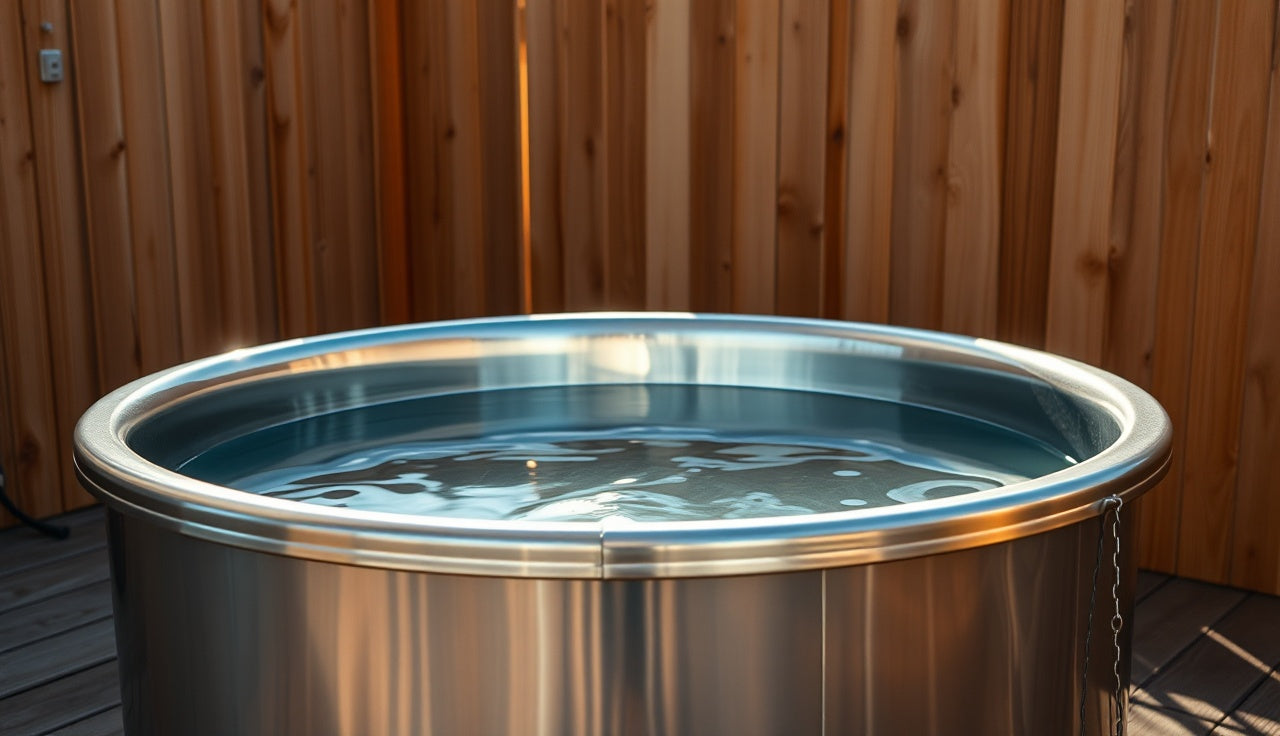
Built-in, chiller-equipped units hold the top of that range better. A stainless steel plunge pool with an integrated refrigeration system is harder to replace cheaply, so buyers will pay more. Soft-sided, inflatable, or basic barrel tubs drift toward the low end fast, because new versions of those are always available at retail for close to what used ones fetch.
The single biggest thing you can do to protect resale value is keep the chiller unit in working order and document it. A chiller that's been serviced, doesn't leak refrigerant, and comes with its original manual can add several hundred dollars to what a private buyer will offer.
Do cold plunge tubs add value to a home?
For most homes, a cold plunge tub does not add measurable dollar-for-dollar value at appraisal the way a finished bathroom or a new roof does. Appraisers use comparable sales to set home value, and "comps" with cold plunge tubs are still rare enough that most appraisers will note the feature but apply little or no numerical premium.
That said, there are exceptions. A well-installed, permanent cold plunge that is integrated into a backyard wellness setup (alongside, say, an outdoor sauna or steam room) can appeal strongly to a specific buyer pool. In high-income markets where buyers actively search for wellness amenities, it can tip a decision without necessarily showing up in a formal appraisal number.
The National Association of Realtors surveys buyer preferences periodically. Their 2023 "What Home Buyers Really Want" study found that health and wellness features broadly ranked higher in buyer priorities post-2020, though the report did not break out cold plunge specifically [1]. That's a signal, not a guarantee.
Portable tubs, inflatables, and any unit that can simply be removed are treated as personal property, not real property, in almost every jurisdiction. They add exactly zero to an appraisal and you take them with you when you leave, which is actually the better outcome for resale purposes.
Which types of cold plunge tubs hold their value best?
Type and materials are the biggest predictors of secondhand value. Here's how the main categories stack up:
| Tub Type | Typical New Price | Typical Resale % | Notes |
|---|---|---|---|
| Inflatable/soft-sided | $100, $500 | 10 to 25% | Perishable materials, always available new |
| Hard plastic barrel | $500, $1,500 | 20 to 35% | Holds shape, still easy to find new |
| Fiberglass shell (no chiller) | $1,500, $4,000 | 25 to 40% | Moderate demand, condition-sensitive |
| Stainless steel (no chiller) | $2,000, $5,000 | 30 to 45% | Durable, appeals to commercial buyers too |
| Chiller-equipped (any material) | $3,500, $10,000+ | 35 to 55% | Chiller condition is everything |
| Plunge pool (built-in, permanent) | $15,000, $50,000+ | Varies with home | Treated as real property, appraiser-dependent |
The data above is based on aggregated private-sale listings observed on Facebook Marketplace, Craigslist, and OfferUp in 2024. These are ranges, not guarantees.
Chiller-equipped units earn the premium because the refrigeration technology is the hard part. Anyone can buy a barrel. Not everyone can afford a new chiller system. Buyers know this, and they'll pay for a working one.
Stainless steel holds up physically better than fiberglass or plastic. It doesn't crack, doesn't yellow, and is easier to sanitize, which matters to buyers who are thinking about sitting in water someone else sat in for months. Material credibility is underrated in resale.
| Inflatable / soft-sided | 18% |
| Hard plastic barrel | 28% |
| Fiberglass shell (no chiller) | 33% |
| Stainless steel (no chiller) | 38% |
| Chiller-equipped unit | 45% |
Source: SweatDecks analysis of Facebook Marketplace and OfferUp sold listings, 2024
What factors hurt cold plunge tub resale value the most?
Four things kill secondhand value faster than anything else.
First: a broken or unreliable chiller. If the cooling unit doesn't hold temperature, you're selling a very expensive bathtub. Chiller repairs can run $500 to $2,000+ depending on the problem, and most private buyers won't take on that risk at full price [2].
Second: visible wear from improper chemical use. Over-chlorinated water stains stainless steel and degrades seals faster than regular use. Cracked fiberglass from freeze-thaw cycles or sun exposure is even worse. These problems are usually visible on inspection, and buyers will walk or lowball hard.
Third: no documentation. If you can't show the original purchase receipt, warranty card, or user manual, buyers assume the worst about the unit's history. It sounds minor but it genuinely shifts negotiating power.
Fourth: buying a cheap unit in the first place. A $200 inflatable tub is a consumable, not an asset. If your goal includes any kind of resale recovery, the math only works at mid-tier price points and above. The floor for meaningful resale value is roughly $1,500 to $2,000 at original retail.
Location matters too. Cold plunge tubs sell faster in markets where outdoor wellness culture is strong (Pacific Northwest, Colorado, parts of the Northeast) and sit unsold longer in markets where the concept is still unfamiliar. If you're in a secondary market, expect a longer wait or a bigger discount.
How does cold plunge tub value compare to sauna resale value?
Saunas, particularly barrel saunas and traditional Finnish-style units, tend to hold resale value somewhat better than cold plunge tubs. A few reasons explain this.
Saunas have been mainstream consumer products for longer. The used-sauna market is more established, which means there are more buyers familiar with the product and more reference points for pricing. A used home sauna has clearer comparables than a used cold plunge tub.
Saunas also have fewer mechanical failure points. A traditional wood-burning or electric sauna is mostly a well-insulated room with a heater. The heater can fail, but replacement heaters are relatively affordable ($300 to $800 for most residential units). A cold plunge chiller system is more complex and more expensive to repair, which makes buyers more cautious.
That said, high-end cold plunge units from established brands are closing the gap. As more people have owned these products for 3 to 5 years and begin reselling, the market is getting more efficient. Prices are becoming less random.
If you're weighing the two as investments, a cold plunge is harder to resell than a sauna of equivalent original price. If you can only have one and resale matters to you, the sauna is the safer bet financially. If you want both, the combination actually helps resale, because wellness-focused buyers searching for a complete setup will pay a premium to get both at once.
How can you maximize your cold plunge tub's resale value?
A few practical steps make a real difference at sale time.
Keep the water chemistry right throughout ownership. The CDC's healthy swimming guidelines recommend pH between 7.2 and 7.8 and free chlorine of at least 1 ppm for small water features [3]. Staying in those ranges prevents the corrosion and staining that visibly damages units and cuts offers.
Service the chiller annually if your unit has one. A dated service receipt showing the refrigeration system was inspected is the single most credible thing you can hand a prospective buyer. It signals the unit was owned by someone who took care of it.
Keep the original packaging or at least the manual and warranty paperwork. If your unit came with a cover, keep it. Tubs stored with proper covers last significantly longer and arrive at resale in better shape.
Take photos before heavy use and periodically throughout. This sounds odd, but being able to show a buyer "here's what it looked like when new, here's what it looks like now" removes the biggest unknown they have.
When you list it, choose your platform carefully. Facebook Marketplace and Craigslist get the most eyeballs for large household items, but you'll wade through lowballers. eBay's completed-listings search (filter by "sold") is the best free tool available for checking what units like yours actually sold for, more than what sellers are asking [4].
Price it at the high end of your range and be patient. Cold plunge buyers are self-selected for health awareness and tend to have disposable income. They aren't always the most price-sensitive buyers on the market.
Does a cold plunge tub qualify for any tax benefits that affect its financial value?
This is a question worth taking seriously before you buy, because the answer affects total cost of ownership, which is the real basis for judging an investment.
For most residential buyers, a cold plunge tub is a personal wellness purchase with no federal tax deduction available. The IRS does not categorize a cold plunge as a medical device under Section 213 (medical expense deductions) unless a licensed physician prescribes it for a specific medical condition, and even then, deductibility is not guaranteed and the threshold for itemized medical deductions is 7.5% of adjusted gross income [5].
A small number of buyers legitimately deduct cold plunge expenses as a business expense: for example, a physical therapist who uses one in a professional office setting, or a gym owner who makes it available to clients. In those cases, the unit may qualify for Section 179 expensing or bonus depreciation under current IRS rules [6]. Get a tax professional's opinion before assuming this applies to your situation.
Some states offer sales tax exemptions for durable medical equipment, but cold plunge tubs rarely qualify because they are not on standard DME lists. Check your state's department of revenue if you're curious.
For business buyers, being able to depreciate the unit means the effective net cost is lower, which indirectly supports the financial case for buying new over used. For residential buyers, there's no tax angle to optimize.
What do buyers actually look for when buying a used cold plunge tub?
Understanding what buyers check helps you present your unit better and set a realistic price.
Condition of the shell or body is the first visual. Buyers look for cracks, discoloration, rough or corroded edges, and waterline staining. Stainless units that were dried regularly and kept out of direct sun look dramatically better than ones left full and exposed year-round.
The chiller, if present, gets tested immediately. Smart buyers will ask to run it for 30 minutes and confirm it reaches temperature. The EPA's guidelines on refrigerant handling (under Section 608 of the Clean Air Act) mean that a leaking refrigerant system can't legally be refilled by a non-certified technician, which makes a leaking chiller a deal-breaker for informed buyers [7].
Seals and gaskets are inspected for cracking or brittleness. These are usually inexpensive to replace ($20 to $100), but a buyer who spots them will push the price down with it.
Cover condition matters more than sellers expect. A cover in good shape signals the whole unit was cared for. A sun-cracked or warped cover signals neglect, and buyers apply that assumption to everything they can't see.
Finally, buyers increasingly research brand reputation and parts availability before buying used. Units from brands that are no longer in business, or that use proprietary parts not available aftermarket, sell for less because the risk profile is higher. This is worth thinking about when you buy new: choosing a brand with a solid support network protects your future resale position.
If you're researching options before buying, SweatDecks carries a curated selection of cold plunge tubs and can help you think through which units have the best track record for longevity.
How long do cold plunge tubs last, and how does lifespan affect resale value?
Expected lifespan varies significantly by type.
Inflatable and soft-sided tubs have the shortest life, typically 1 to 3 years with regular use before seams or valves start failing. Their resale window is short and the value is low even when new.
Hard plastic and fiberglass shells, well-maintained, can last 10 to 15 years. UV degradation is the main enemy outdoors. A cover and periodic UV protectant application extend life considerably.
Stainless steel units, if made from marine-grade 316L stainless, can last 20 years or more. The grade of steel matters: 304 stainless is common and fine for most uses, but 316L has better chloride resistance, which matters because pool chemicals are chloride-heavy. Manufacturers don't always specify which grade they use, and it's worth asking before you buy.
Chillers are the mechanical weak link. Compressor life in residential refrigeration equipment averages 10 to 15 years under normal conditions [8]. Hard daily use in temperature extremes (very hot summers, freezing winters) shortens that. A unit that's 8 years old with the original chiller is a different proposition than one that's 3 years old.
For resale purposes, age matters less than condition, but they correlate. A 5-year-old stainless steel unit in excellent condition will out-earn a 2-year-old fiberglass unit with visible damage every time.
The ice bath market, which overlaps with cold plunge, has pushed demand for used equipment higher as more people look for affordable entry points into cold therapy. That demand supports secondhand prices modestly.
Where is the best place to sell a used cold plunge tub?
Local sales almost always beat shipping. Cold plunge tubs, even portable ones, are heavy and awkward. Shipping a 200-pound stainless tub costs $300 to $800+ depending on distance, and damage claims are difficult to win. Buyers who pay for freight expect a steep price discount to offset the risk.
Facebook Marketplace is the dominant platform for used wellness equipment in the U.S. Listing with clear photos (exterior, interior, chiller unit close-up, model number plate) and your asking price generates the most serious inquiries. Be specific about dimensions and weight so buyers know whether it fits their vehicle or requires help.
Craigslist still works in most metro areas, particularly for buyers who want to stay local and transact in cash.
Nextdoor can surface buyers in your immediate neighborhood who may be more comfortable making a purchase sight-unseen because they can verify the seller is a neighbor.
OfferUp and Letgo (now merged with OfferUp) have active markets for fitness equipment.
For high-value units ($3,000+ asking price), consider specialty Facebook groups dedicated to cold plunge and ice bath enthusiasts. These exist and have active communities of buyers who know what they're looking at and won't waste your time asking basic questions.
If you need to sell quickly, local gym owners, physical therapy practices, and CrossFit boxes are legitimate bulk buyers. They may offer 40 to 60% of what a private buyer would pay, but the sale closes in days, not weeks.
SweatDecks doesn't currently run a resale marketplace, but checking the cold plunge benefits page can help you articulate the value proposition when writing your own listing.
Is a cold plunge tub a good financial investment?
Honest answer: no, not in a strict financial sense. Very few personal wellness products are. A cold plunge tub is a depreciating asset, and you should buy one because you'll use it, not because you expect to recover your money.
That said, "investment" has more than one meaning. If cold water immersion becomes a consistent practice in your household and you use it 4 to 5 times per week, the cost per session on a $3,000 unit used over 5 years is about $2.30 per session. A cryotherapy clinic session costs $40 to $80. The financial comparison to alternative services is actually favorable for home ownership over time.
The research on cold water immersion is real, even if the optimal protocols are still being studied. A 2022 meta-analysis in the British Journal of Sports Medicine found that cold water immersion significantly reduced delayed onset muscle soreness compared to passive recovery, with meaningful effect sizes across 52 studies [9]. If better recovery supports your training, the indirect financial value (better performance, fewer missed workouts) is real even if unmeasurable.
If you buy well, meaning a stainless or fiberglass unit from a reputable brand with a working chiller, you'll recover 30 to 50% on resale. If you buy poorly, meaning an inflatable or a no-name unit, you'll recover very little. The delta between a smart purchase and a poor one is larger than most buyers realize before they shop.
For what it's worth, the sauna benefits literature is more developed than the cold plunge literature, and saunas hold resale value better. If you're optimizing purely for financial return on a wellness purchase, a sauna edges out a cold plunge tub. But you can also just have both.
Frequently asked questions
How much can I sell my cold plunge tub for?
Expect to recover 20 to 50% of original retail price, depending on condition and type. A $4,000 chiller-equipped stainless unit in excellent condition might sell for $1,500 to $2,000. A $300 inflatable tub might sell for $50 to $75. Check eBay's completed listings (filter by sold) for models like yours to get a real anchor price before you list.
Do cold plunge tubs increase home value?
Rarely in a formal appraisal sense. Portable units are personal property and add nothing to appraised value. Permanent built-in plunge pools may attract specific buyers in high-income wellness markets but are unlikely to show up as a line item in comparable sales. The feature can help sell a home to the right buyer without necessarily changing the appraisal number.
Which cold plunge tub brands hold resale value best?
Brands with strong customer recognition, available replacement parts, and durable materials hold value better. Plunge, Ice Barrel, and Blue Cube are names that appear frequently in secondhand listings with reasonable price retention. Lesser-known or no-name brands struggle because buyers can't research them and assume more risk. Brand reputation at purchase directly shapes your negotiating position years later.
Is a cold plunge tub worth buying used?
Yes, if you can inspect it in person before buying. Key things to check: run the chiller for 30 minutes and confirm it reaches target temperature, inspect seals and gaskets for cracking, look at the waterline for staining or scale buildup, and ask for the original documentation. A solid used unit at 40% of retail is often a better deal than a cheap new unit.
How do I clean a cold plunge tub before selling it?
Drain completely and wipe down with a diluted white vinegar solution to remove scale and waterline deposits. For stainless steel, a non-abrasive stainless cleaner removes staining without scratching. Rinse thoroughly, dry completely, and photograph before relisting. A clean, dry tub photographs better and signals good ownership to prospective buyers, which directly supports your asking price.
Does a cold plunge tub depreciate quickly?
Yes. The steepest depreciation happens in the first year, often 40 to 60% of retail, because a new alternative is always available. After year one, depreciation slows for well-maintained units, especially chiller-equipped or stainless steel tubs. Inflatables and soft-sided tubs depreciate to near-zero within 2 to 3 years regardless of care.
Can I deduct a cold plunge tub on my taxes?
Not for most residential buyers. The IRS requires a physician's prescription for a specific medical condition and even then, medical expense deductions require itemizing and exceed 7.5% of adjusted gross income. Business owners who use cold plunges in a professional setting may be able to depreciate the cost under Section 179. Get advice from a tax professional before assuming deductibility.
How long does it take to sell a used cold plunge tub?
Typically 2 to 8 weeks on local platforms like Facebook Marketplace, depending on your market and asking price. Wellness-focused metro areas (Seattle, Denver, Austin, Portland) move units faster. Rural or smaller markets take longer. Pricing at the lower end of the realistic range cuts time-to-sale significantly. High-value units over $3,000 routinely take 4 to 10 weeks to find the right buyer.
Should I sell my cold plunge tub locally or ship it?
Local sale almost always makes more sense. Shipping a heavy cold plunge tub costs $300 to $800 or more and creates real damage risk during transit. Buyers requiring freight expect a discount that often offsets any geographic price advantage. List locally first, give it 3 to 4 weeks, then consider freight if you're not getting traction and the unit has enough value to justify it.
What kills cold plunge tub resale value the fastest?
A broken or leaking chiller is the single fastest value-killer. After that: visible corrosion or cracking from improper chemical use, sun-damaged plastic or fiberglass, missing documentation, and no cover. These problems are visible on inspection and give buyers a strong basis to negotiate down. Keeping water chemistry in range and the unit covered when not in use prevents most of them.
Does a cold plunge tub hold value better than a hot tub?
Hot tubs generally have a more established used market and broader buyer pool, which helps price discovery. Cold plunge tubs have steeper first-year depreciation and a narrower buyer audience, so they can be harder to sell quickly. High-end chiller-equipped cold plunge units from recognized brands compete reasonably with mid-range hot tubs on percentage of value retained.
Are permanent in-ground cold plunge pools treated differently for home value?
Yes. A permanent in-ground or built-in cold plunge is treated as real property, similar to a pool, and stays with the home at sale. Appraisers may note it but often apply limited numerical value due to limited comparable sales. In luxury or wellness-focused markets, it can differentiate the home and appeal to a specific buyer segment even if it doesn't change the formal appraisal.
Sources
- National Association of Realtors, What Home Buyers Really Want 2023: Health and wellness features ranked higher in buyer priorities post-2020 in NAR consumer research.
- U.S. Bureau of Labor Statistics, Consumer Price Index for Appliance Repair: Appliance and refrigeration system repairs commonly range from several hundred to over $2,000 depending on component and labor.
- CDC, Healthy Swimming: Residential Pool and Spa Chemistry: CDC recommends pH 7.2 to 7.8 and free chlorine of at least 1 ppm for small recreational water features.
- eBay, Completed and Sold Listings Search: eBay's sold listings filter shows actual transaction prices, more than asking prices, for used consumer equipment.
- IRS Publication 502, Medical and Dental Expenses: Medical expense deductions under Section 213 require expenses to exceed 7.5% of AGI and a physician's prescription for equipment to qualify.
- IRS, Section 179 Deduction Information: Business owners may deduct qualifying equipment costs in the year of purchase under Section 179 or bonus depreciation rules.
- EPA, Section 608 of the Clean Air Act: Refrigerant Management: Under Section 608 of the Clean Air Act, refrigerant handling and recharging requires EPA-certified technicians; venting refrigerant is illegal.
- U.S. Department of Energy, Residential Appliance Lifespans: Residential refrigeration compressors have an average expected lifespan of 10 to 15 years under normal operating conditions.
- British Journal of Sports Medicine, 2022 Meta-Analysis on Cold Water Immersion: A 2022 meta-analysis in BJSM found cold water immersion significantly reduced delayed onset muscle soreness versus passive recovery across 52 studies.

Share:
Can you use antifreeze in a cold plunge? The honest answer
What size cold plunge fits two people?