
Last updated 2026-07-09
TL;DR
The best traditional home sauna for most people is a wood-burning or electric barrel or cabin unit in the 4x6 to 6x8 foot range, priced $2,000 to $6,000 installed. Finnish-style dry heat at 160 to 200°F with a proper kiuas (heater) and löyly (steam from pouring water on rocks) is the authentic experience. Size, heater output, wood quality, and ventilation matter far more than the brand name.
What makes a sauna 'traditional' in the first place?
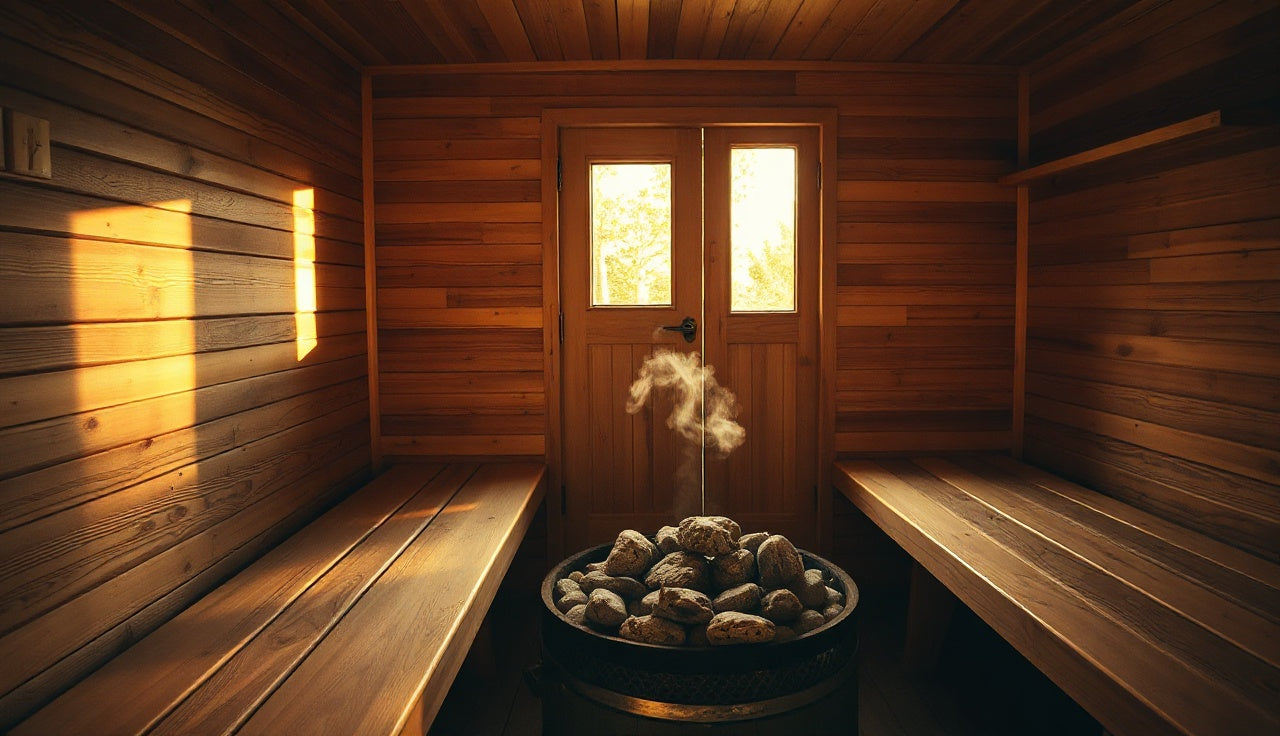
Traditional sauna means Finnish-style dry heat: a wood-lined room, a heater loaded with rocks, and the option to pour water on those rocks to make steam called löyly. That's the whole idea. Temperature runs 160 to 200°F (71 to 93°C) with low relative humidity, usually 10 to 20%. The mix of radiant heat off the walls and hot air moving around you creates the classic sauna feel that infrared panels don't reproduce [1].
The word "traditional" gets stretched by marketing. Some companies slap it on any wood box with an electric coil inside. The real markers are simple: a proper kiuas (rock heater) with enough stones to hold thermal mass, untreated softwood interior (almost always spruce, hemlock, or Nordic white spruce), a two-tiered bench layout so you can pick your heat level, and an airflow design where fresh air enters low and stale air exits high.
Why does this matter before you spend money? A sauna that skips these parts, say one with a thin underpowered heater or no way to make löyly, won't feel like a sauna. It feels like a hot room. That difference separates an $1,800 purchase you use for years from one you sell on Facebook Marketplace in eight months.
For a wider look at the category, the sauna guide covers history, types, and terminology before you settle on a style.
What types of traditional home sauna are available?
There are four setups worth knowing, and each has a real use case.
Barrel saunas are round or oval cylinders, usually 4 to 8 feet in diameter and 6 to 8 feet long. The curved shape kills the dead air corners, so the heater warms the space more evenly with less wattage. They're almost always built for outdoor placement. A good Baltic Pine or Western Red Cedar barrel from a real Finnish or Canadian maker runs $2,500 to $5,500 before shipping and site prep [2]. This is the outdoor traditional sauna most homeowners buy.
Cabin (or room) saunas are rectangular pre-cut or pre-assembled kits for indoor installation in a basement, garage, or dedicated outbuilding. Sizes range from a 2-person, 4x4 foot room up to 6x8 or larger. Indoor cabin kits run $1,500 to $4,000 for the structure. Add $300 to $800 for a decent heater if it isn't included, plus electrical work.
Pre-built outdoor cabin saunas are fully framed structures, often with a changing room, exterior cladding, and a porch. This is the premium end: $4,000 to $12,000 or more, and they need site prep like a gravel pad or deck. Building a backyard setup you plan to keep for decades? This is the category to look at. The outdoor sauna guide covers permits and pad requirements.
Custom-built saunas are framed in place by a contractor or a skilled DIYer. Cost swings a lot, but material-only builds of $3,000 to $7,000 are realistic for a well-insulated 6x8 room. You control every variable: wood species, heater placement, bench layout, vapor barrier, door type.
There's also the portable sauna category. That's a separate animal, and not what most people mean by traditional.
How much does a traditional home sauna cost?
Price ranges vary more than most buying guides admit, so here's an honest breakdown by configuration, drawn from current retail data at major sauna manufacturers and distributors [2][3].
| Configuration | Structure Cost | Heater (if separate) | Install / Site Prep | Total Range |
|---|---|---|---|---|
| Indoor cabin kit (2-person) | $1,500 to $2,500 | $300 to $600 | $200 to $800 (electrical) | $2,000 to $3,900 |
| Indoor cabin kit (4-person) | $2,500 to $4,000 | $400 to $800 | $400 to $1,000 | $3,300 to $5,800 |
| Outdoor barrel (2-person) | $2,500 to $3,500 | often included | $200 to $600 (pad, delivery) | $2,700 to $4,100 |
| Outdoor barrel (4-6 person) | $3,500 to $5,500 | often included | $300 to $800 | $3,800 to $6,300 |
| Pre-built outdoor cabin | $5,000 to $10,000+ | usually included | $500 to $2,000 | $5,500 to $12,000+ |
| Custom in-place build | $3,000 to $7,000 materials | $500 to $1,500 | $1,000 to $4,000 | $4,500 to $12,500 |
Electrical is the cost people forget. A residential sauna heater between 4kW and 9kW almost always needs a dedicated 240V circuit [4]. If you don't already have one near your install spot, budget $300 to $900 for an electrician, depending on the distance to your panel and local rates.
Shipping surprises people too. Barrel saunas are heavy and bulky, and freight for a 6-person barrel can add $300 to $600 depending on your location. Check whether a listed price includes delivery before you compare brands.
For a look at what big-box retail offers here, the costco sauna breakdown weighs the value honestly.
| Indoor cabin kit, 2-person | $2,950 |
| Outdoor barrel, 2-person | $3,400 |
| Indoor cabin kit, 4-person | $4,550 |
| Outdoor barrel, 4-6 person | $5,050 |
| Pre-built outdoor cabin | $8,750 |
| Custom in-place build | $8,500 |
Source: Dundalk LeisureCraft and Almost Heaven Saunas retail pricing, 2024 [2][3]
What size traditional sauna do you actually need?
Sizing comes down to two things: how many people use it at once, and how much heat you want. Bigger rooms need more heater output, which means more electricity and longer warm-up times.
The Finnish Sauna Society recommends roughly 10 to 15 cubic feet of room volume per person for comfortable use [1]. In practical terms:
- 1-2 people: a 4x4 or 4x6 foot room, about 8 feet tall, is plenty
- 2-4 people: 4x6 to 5x7 feet
- 4-6 people: 6x8 to 8x8 feet
Don't overbuy on size. A 1,500-pound barrel that takes 60 minutes to reach 180°F because you paired a 4kW heater with a room that wants 7kW is a frustrating daily experience. Match heater output to room volume, which I cover in the next section.
Ceiling height matters too. A traditional bench layout puts the upper bench 3 to 4 feet below the ceiling. If your ceiling is only 6.5 feet, the upper bench gets cramped. Aim for 7 feet minimum. 7.5 is comfortable.
One honest caveat on the "how many people" question. Most home saunas get used by one or two people 90% of the time. Buying a 6-person sauna for a couple who might occasionally host means paying to heat a room that's usually empty. A 3-4 person barrel is the smarter buy for most households.
What heater output do you need for a home sauna?
The standard industry rule is 1 kilowatt of heater output per 50 cubic feet of room volume. Some manufacturers tighten it to 1kW per 45 cubic feet for rooms with thick glass doors, lots of concrete, or poor insulation [5]. Run the math before you buy anything.
Example: a 6x8 foot room with a 7.5-foot ceiling is 360 cubic feet. Divide by 50 and you need 7.2kW minimum. A 6kW heater in that room will fight to hit 180°F, especially in a cold climate.
Common residential heater sizes and the rooms they suit:
| Heater Output | Room Volume (cubic feet) | Typical Room Size |
|---|---|---|
| 3kW | up to 150 | 4x4x7.5 ft (small 2-person) |
| 4.5kW | up to 225 | 4x6x7.5 ft |
| 6kW | up to 300 | 5x7x7.5 ft or smaller 4-person |
| 8kW | up to 400 | 6x8x7.5 ft |
| 9 to 12kW | 400 to 600 | large rooms, commercial-grade |
For traditional saunas, look for a large rock capacity, at least 15 to 20 lbs of stone in a home unit. More stone means better thermal mass and a stronger steam response when you pour water. Cheap heaters carry a thin layer of rocks and the löyly feels weak.
Wood-burning heaters (kiuas) are a different calculation. Output depends on the wood you burn and the draft of your chimney. They make sense mainly for detached outdoor structures where running 240V is hard or expensive. Many traditional sauna enthusiasts prefer the quality of heat from wood fire, but you take on chimney installation and local fire code.
Comparing sauna heat to steam room heat? The sauna vs steam room piece covers the real differences in humidity, temperature, and health effects.
What wood is best for a traditional home sauna?
The wood inside a sauna has to survive hard temperature swings, humidity from löyly, and constant skin contact without off-gassing, splintering, or warping. That narrows the field fast.
The woods most recommended for traditional sauna interiors:
Nordic White Spruce (Finnish spruce): The wood used in Finnish saunas for centuries. Low resin, stays cool to the touch even at 190°F, and carries a mild pleasant scent. It's the standard for bench material in authentic Scandinavian builds.
Hemlock: The North American answer to Finnish spruce. Nearly the same properties: low resin, smooth grain, stays cool. Most indoor kits from North American brands use hemlock because it's local and much cheaper than imported spruce.
Western Red Cedar: The premium North American choice, especially for outdoor barrel saunas. Naturally rot-resistant (which matters outdoors), aromatic, and beautiful. It runs warmer to the touch than hemlock or spruce because it's denser, so some people use it for walls and ceiling but not benches. Cedar oils can trigger skin sensitivity in a few people, worth knowing.
Aspen: Very low resin, almost no smell, extremely smooth. Popular in Scandinavian-style saunas as bench material, especially for people who find cedar too aromatic.
Avoid pine (high resin that drips and scorches at sauna heat), OSB or plywood of any kind, MDF, and any treated or painted wood. These are more than looks. They can off-gas formaldehyde and other compounds at sauna temperatures [6].
Exterior cladding on outdoor units can be nearly anything weather-resistant: cedar, spruce, thermowood, even painted pine. The interior is what decides safety and feel.
What should you look for (and avoid) in traditional sauna brands?
The home sauna market has genuine quality makers and a pile of companies importing cheap flat-pack kits from overseas factories with Finnish-sounding branding stapled on. Here's how to tell them apart without industry contacts.
Signs of a quality product:
- Bench boards at least 1 inch thick, ideally 1.5 inch for the sitting surface
- Kiln-dried wood with moisture content under 10% (this prevents warping)
- A heater from a known maker: Harvia, Finnleo, TylöHelo, EOS, or HUUM are the major Finnish and European brands with real engineering behind them [5]
- Pre-drilled, tongue-and-groove or interlocking wall panels that fit without gaps
- A door with a proper sauna seal (it should hold heat, not leak it)
- Clear ventilation specs: where the inlet goes, where the exhaust goes
- Warranty of at least 2 years on the structure, 1 year on the heater
Red flags:
- Heater output not disclosed, or listed only in BTUs with no matching wattage
- No rock capacity listed for the heater
- Interior wood listed as "pine" with no qualifier (Nordic pine is fine, unspecified pine is often resinous lumber)
- Assembly instructions that read like a bad machine translation
- No listed wood thickness on bench boards
- A low room price that hides the heater cost, which turns out to equal the room
None of this asks you to trust a brand's marketing. Get the heater model number from the retailer, look it up on your own, and check that its rated output matches your room volume. A retailer who can't answer that fast is one to skip.
Doing broader product research? SweatDecks lists traditional home sauna units with full heater specs so you can run the numbers yourself before buying.
Do you need a permit for a home sauna?
In most U.S. jurisdictions, yes, some form of permit applies. The specifics depend on your state, county, and whether the sauna sits inside your home, in a detached structure, or as a freestanding outdoor unit.
Indoor saunas usually need an electrical permit for the 240V circuit, and in some places a building permit if you're altering a room. Detached outbuildings almost always need a building permit once the structure passes a size threshold, often 120 to 200 square feet depending on local code [7].
The National Electrical Code, Article 680, covers sauna electrical wiring, including GFCI protection and minimum clearances from the heater. Your inspector will reference it [4]. Skipping permits isn't only a legal risk, it's an insurance risk. A fire or injury in an unpermitted structure can void your homeowner's policy.
For wood-burning saunas in detached structures, you also comply with local fire codes on chimney height, clearance from combustibles, and spark arrestors. The International Residential Code (IRC) Section R1001 covers solid-fuel-burning appliances and is the baseline most jurisdictions use [7].
Do this before you spend a dollar: call your local building department. Ask two questions. Do I need a building permit for a pre-built sauna structure of [X] square feet? Do I need an electrical permit for a 240V dedicated circuit? The answers take five minutes and save you months.
What are the health benefits of traditional sauna use?
The research here is real but retailers often oversell it, so I'll give you what the studies actually say instead of what the marketing claims.
The most cited work is a 2015 prospective cohort study in JAMA Internal Medicine that followed 2,315 Finnish men over roughly 20 years. Men who used a sauna 4-7 times per week had a 40% lower risk of all-cause mortality than once-per-week users [8]. The authors were careful: this is correlation, not causation. It's still the largest longitudinal dataset on sauna use and cardiovascular health.
A 2018 review in Mayo Clinic Proceedings found regular sauna bathing is associated with lower risk of cardiovascular events. The authors flagged the same problem: confounders like an active lifestyle and healthy baseline make causation hard to isolate [9].
For athletic recovery, a 2021 meta-analysis in the Journal of Science and Medicine in Sport found post-exercise sauna use produced moderate reductions in perceived muscle soreness. It also noted heat exposure raises plasma volume and may improve heat tolerance over time [10].
What the evidence does not support: claims that sauna detoxifies the body, cures specific diseases, or replaces exercise. Sweat carries small amounts of heavy metals, but your kidneys and liver do the detox work. Sweating is not a meaningful clinical detox route [6].
Heat stress is real. People with uncontrolled hypertension, heart failure, or who are pregnant should talk to a physician before regular sauna use. The Finnish Sauna Society recommends staying hydrated, limiting sessions to 15-20 minutes at 176°F (80°C) or above, and avoiding alcohol before or during a session [1].
For a full rundown that doesn't oversell, the sauna benefits article covers the research.
How do traditional saunas compare to infrared saunas for home use?
This is probably the most common question in the home sauna category, and the honest answer is that they're genuinely different experiences. The "better" one depends on what you're after.
Traditional saunas heat the air and the room to 160 to 200°F. You absorb heat by convection and radiation. The high temperature is the point. It drives a deep sweat, raises core body temperature meaningfully (roughly 1-2°C in a typical session), and produces the cardiovascular response documented in the Finnish cohort studies [8].
Infrared saunas run at 120 to 150°F, using emitters to heat your body directly instead of the air. They're gentler, cheaper to run, easier to install (many plug into 120V), and faster to warm up (15-20 minutes against 30-45 for traditional). Some people find them easier to tolerate, especially anyone who dislikes high heat.
The catch: most of the long-term health research came out of Finland using traditional saunas. The JAMA Internal Medicine 20-year study used traditional Finnish sauna. Nobody has a comparable long-term dataset for infrared [8]. That doesn't mean infrared does nothing, but the evidence is thinner.
Temperature also decides the löyly question. You cannot pour water on infrared emitters. If the steam ritual and the authentic Finnish feel is what you want, traditional is the only option.
Entry-level cost: basic infrared units start around $800 to $1,500. Traditional indoor kits start around $1,500 to $2,500 before the dedicated electrical circuit. The gap narrows quickly as you move up in quality.
My take: for a primary wellness tool with long-term health goals, I'd take a properly sized traditional sauna. If someone wanted a gentler daily warm-up and easy installation, infrared makes sense.
How do you install and maintain a traditional home sauna?
Installation varies by type, but a few requirements hold across all traditional saunas.
Site requirements:
- A level, stable surface. Outdoor: a gravel pad (4 inches of compacted gravel is the common minimum), a concrete slab, or a properly built deck. Indoor: a level floor that can carry the load (a fully assembled 6-person barrel weighs 1,000 to 1,500 lbs).
- A dedicated 240V circuit within reach. The longer the run from your panel, the higher the install cost.
- Wood-burning units: a chimney with proper clearances from the roof and nearby structures.
Assembly: Most pre-built cabin kits take 4 to 8 hours for two people with basic carpentry skills. Barrel saunas take 3 to 6 hours. Follow the manufacturer's instructions exactly on the vapor barrier and ventilation placement. Those two areas are where DIY mistakes cause long-term damage.
Ventilation: Fresh air enters near the floor (often below or beside the heater) and exits near the top of the opposite wall, or through a ceiling vent. Without it, carbon dioxide builds and the sauna feels suffocating. Most kits include vent placement guidance. Follow it.
Ongoing maintenance:
- Sand and treat bench surfaces once a year with a sauna-specific oil (not standard wood oil, which can smoke at sauna heat)
- Check and clean the heater rocks yearly, and replace any that have cracked (cracked rocks absorb water unevenly and can spit or burst)
- Wipe the interior after each use and leave the door cracked so it dries
- Outdoor units: inspect the exterior cladding and roof yearly for weathering, and treat cedar or spruce every 1-2 years
A well-maintained traditional sauna lasts 15 to 30 years. The heater is usually the first thing to fail, typically after 10 to 15 years of regular use.
Is combining a traditional sauna with a cold plunge worth it?
Contrast therapy, alternating hot sauna sessions with cold immersion, has a real evidence base and is one of the more enjoyable protocols you can build at home. The practice is common in Nordic countries and has been studied for recovery and cardiovascular response.
A 2021 study in the International Journal of Circumpolar Health found repeated sauna-cold immersion cycles produced significant changes in heart rate variability, a marker of autonomic nervous system adaptation [11]. The effect sizes aren't huge, and long-term outcomes need more research. Still, the short-term recovery and mood effects are documented well enough that serious athletes use the protocol regularly.
A sauna plus cold plunge setup at home is very doable. A basic cold plunge tub or a chest freezer conversion sits alongside the sauna, in a garage or on a covered patio. The protocol studied most often: 10-15 minutes in the sauna at 176-195°F, then 2-5 minutes in cold immersion at 50-59°F (10-15°C), repeated 2-3 times.
The cold plunge guide covers the equipment side in detail. The cold plunge benefits article covers the research. If you're planning a home wellness setup and can only fund one piece, I'd put it toward the sauna. Do both if you can, though. The combination is more compelling than either alone.
Browsing traditional home sauna options next to cold plunge setups? SweatDecks carries both, and the product pages show dimensions and specs together, which helps when you're laying out a shared outdoor space.
What are the top things first-time buyers get wrong?
These are the mistakes that actually cost people, based on what buyers regret most.
Underbuying on heater output. The most common error by far. People pick a 4kW heater for a room that needs 6kW to hit 190°F. Every session disappoints. Overbuying output by 10-15% is fine, since you dial it back on the thermostat. Underbuying is structural.
Buying for the max occasion, not the typical use. A couple who wants to invite friends over now and then does not need a 6-person sauna. A 4-person barrel is plenty, and it heats faster.
Ignoring the electrical cost. A 6kW heater running 45 minutes daily costs roughly $0.90 to $1.50 per session at the U.S. average residential rate near $0.16/kWh [12]. That's $30 to $45 a month. At 9kW, you're at $50 to $70 a month. Not ruinous, but not zero.
Skipping the ventilation plan. People install the sauna and forget the fresh air inlet. It feels suffocating and they use it less. The vent goes in before the first session, not after.
Buying on celebrity endorsement or influencer posts. This market runs on paid promotion. Check the actual specs: heater brand, wood species, wood thickness. A gorgeous Instagram sauna with a no-name 3kW heater and half-inch bench boards is a bad buy.
Not budgeting for maintenance. A cedar outdoor barrel that's never treated will gray and crack within 3-4 years. Plan on 2-3 hours and $50-100 a year for exterior maintenance on outdoor units.
One more: some people buy a home sauna without confirming their HOA or local zoning allows detached structures. Check first.
Frequently asked questions
How long does it take to heat up a traditional home sauna?
A properly sized traditional sauna takes 30 to 45 minutes to reach 170 to 190°F. Larger rooms with thicker walls take longer, and outdoor barrel saunas in cold weather can run 50-60 minutes. Wood-burning heaters take slightly longer than electric but produce excellent thermal mass once up to temperature. Preheating before guests arrive is standard practice in Finnish sauna culture.
Can I put a traditional sauna inside my house?
Yes. Indoor sauna kits for basements, garages, or spare rooms are widely available and very common. You need a dedicated 240V circuit, proper ventilation (fresh air inlet plus exhaust vent), a moisture-resistant floor surface, and a vapor barrier behind the interior wood panels. Some jurisdictions require a building permit for interior room modifications, so check local codes before starting.
What is the difference between a Finnish sauna and a traditional sauna?
They're essentially the same thing. 'Finnish sauna' refers specifically to the dry-heat style from Finland, with a rock heater and the löyly ritual of pouring water on hot stones. 'Traditional sauna' is the broader term used in North American retail, but it usually means the same Finnish-style heat. Both operate at 160 to 200°F with low humidity.
How much electricity does a home sauna use per month?
A 6kW electric sauna heater running 45 minutes daily uses about 4.5 kWh per session. At the U.S. average near $0.16/kWh, that's roughly $0.72 per session, or about $22 to $25 a month for daily use. A 9kW heater at the same frequency runs $30 to $40 a month. Actual costs depend on your utility rate and how often you use it.
Do I need a floor drain in my home sauna?
Not strictly required, but strongly recommended for indoor units. Water from löyly steam, sweat, and post-session rinsing needs somewhere to go. Without a drain, you mop after every session. Outdoor barrel saunas use a slatted wood floor over gravel so water drains naturally. Indoor concrete floors should have a tile drain, and wood subfloors need a waterproof membrane.
What temperature should a traditional home sauna be?
Most traditional users target 176 to 194°F (80 to 90°C) at bench level. The Finnish Sauna Society recommends 80°C (176°F) as a comfortable standard. Temperatures above 100°C (212°F) are rare in home saunas and not necessary. Beginners often start lower, around 160°F, and work up as heat tolerance builds. Lower benches run 20 to 30°F cooler than upper benches.
Is a barrel sauna or a cabin sauna better for a backyard?
Barrel saunas suit most backyards better: they install easily (no site-built foundation beyond a gravel pad), heat more efficiently thanks to the curved interior, and tend to cost less all-in. Cabin saunas win if you want a changing room, more capacity, or a look that matches your home. Both are valid, but barrel is the more practical and popular choice for residential use.
Can one person build a sauna kit alone?
Technically possible for smaller indoor kits, but not recommended. Cabin panels are heavy and awkward, and most manufacturers suggest two people minimum. Barrel sauna staves are unwieldy solo, and the hoop tensioning needs coordination. Assembly with one helper typically takes 4 to 8 hours. A solo build doubles the time and raises the odds of misaligned panels or dropped components.
How do I know if a sauna heater brand is reliable?
Stick to Finnish or European makers with decades of production: Harvia, Finnleo, TylöHelo, EOS, and HUUM are the established names with genuine engineering. These brands publish full technical specs, back real warranties, and stock replacement parts. Generic heaters bundled with cheap kits often lack thermal mass in the rock bed and burn out sooner.
What is löyly and why does it matter for choosing a sauna?
Löyly (pronounced 'leu-loo') is the steam created when you pour water on hot sauna rocks. It's central to the traditional Finnish experience: the burst of humidity raises the perceived temperature and the heat feels more intense and enveloping. A heater needs a big enough rock bed (15+ lbs for home use) to make good löyly. Thin rock beds produce weak steam and cool down fast when water hits them.
How does a traditional sauna compare to a steam room for home use?
Traditional saunas run 160 to 200°F with 10 to 20% humidity. Steam rooms run 110 to 120°F at nearly 100% humidity. The heat feels very different: sauna heat is dry and sharp, steam room heat feels heavier and more smothering to some people. Installation differs too. Steam rooms need a sealed, fully waterproof enclosure and a steam generator, while traditional saunas are simpler to build.
Does sauna use after exercise actually help with recovery?
A 2021 meta-analysis in the Journal of Science and Medicine in Sport found post-exercise sauna use produced moderate reductions in perceived muscle soreness. Heat exposure also raises plasma volume and may improve later heat tolerance. The evidence is real but not dramatic. Sauna won't replace sleep, nutrition, or sensible training load, but it's a reasonable addition to a recovery routine.
What is the best wood for sauna benches specifically?
Nordic white spruce and hemlock are the top choices for bench surfaces because they stay cooler to the touch than denser woods, even at high heat. Aspen is also excellent: very smooth, nearly resin-free, and odorless. Western Red Cedar is popular but runs warmer, and its oils occasionally cause skin sensitivity. Pine is not recommended for benches because its resin softens and drips at sauna temperatures.
Sources
- Finnish Sauna Society, official sauna guidelines: Traditional sauna operates at 80-100°C with 10-20% relative humidity; recommended session duration 15-20 minutes; löyly and kiuas are defining features
- Dundalk LeisureCraft, sauna product pricing and specifications: Barrel and cabin sauna price ranges for residential units; common sizes and configurations
- Almost Heaven Saunas, sauna product pricing and specifications: Barrel and cabin sauna retail pricing for residential units; heater inclusion and configuration options
- NFPA, National Electrical Code (NEC) Article 680: NEC Article 680 governs sauna electrical installation including dedicated circuit requirements, GFCI protection, and clearances from the heater
- Harvia, sauna heater sizing guide and product specifications: 1 kW per 45-50 cubic feet room volume sizing rule; rock capacity specifications for residential heaters
- Agency for Toxic Substances and Disease Registry (ATSDR), formaldehyde toxicological profile: Formaldehyde and other VOCs off-gas from treated wood and composite materials at elevated temperatures; kidney and liver are primary detoxification organs, not sweat glands
- International Code Council, International Residential Code (IRC): IRC Section R1001 governs solid-fuel-burning appliances including wood-burning sauna heaters; local jurisdictions typically require permits for detached structures over 120-200 sq ft
- Laukkanen et al., JAMA Internal Medicine, 2015: 20-year Finnish cohort of 2,315 men; 4-7 sauna sessions per week associated with 40% lower all-cause mortality vs once-per-week use
- Laukkanen et al., Mayo Clinic Proceedings, 2018: Regular sauna bathing associated with reduced cardiovascular event risk; authors note confounders including active lifestyle make causation difficult to establish
- Journal of Science and Medicine in Sport, meta-analysis on sauna and exercise recovery, 2021: Post-exercise sauna use produced moderate reductions in perceived muscle soreness; heat exposure increases plasma volume and may improve heat tolerance
- International Journal of Circumpolar Health, sauna-cold immersion contrast therapy study, 2021: Repeated sauna-cold immersion cycles produced significant changes in heart rate variability as a marker of autonomic nervous system adaptation
- U.S. Energy Information Administration, Average Retail Price of Electricity: U.S. average residential electricity rate approximately $0.16 per kWh as of recent reporting period

Share:
Infrared light sauna: how it works and what to expect
How infrared saunas work: the science behind the heat