
Last updated 2026-07-09
TL;DR
A barrel sauna cover is a fitted cap, hood, or wrap that shields the curved ends and sometimes the full body of an outdoor barrel sauna from rain, UV, snow load, and debris between uses. You need one if the sauna sits fully exposed year-round. Prices run from about $80 for a basic wrap to $400 for a custom cedar hood.
What is a barrel sauna cover and what does it actually do?
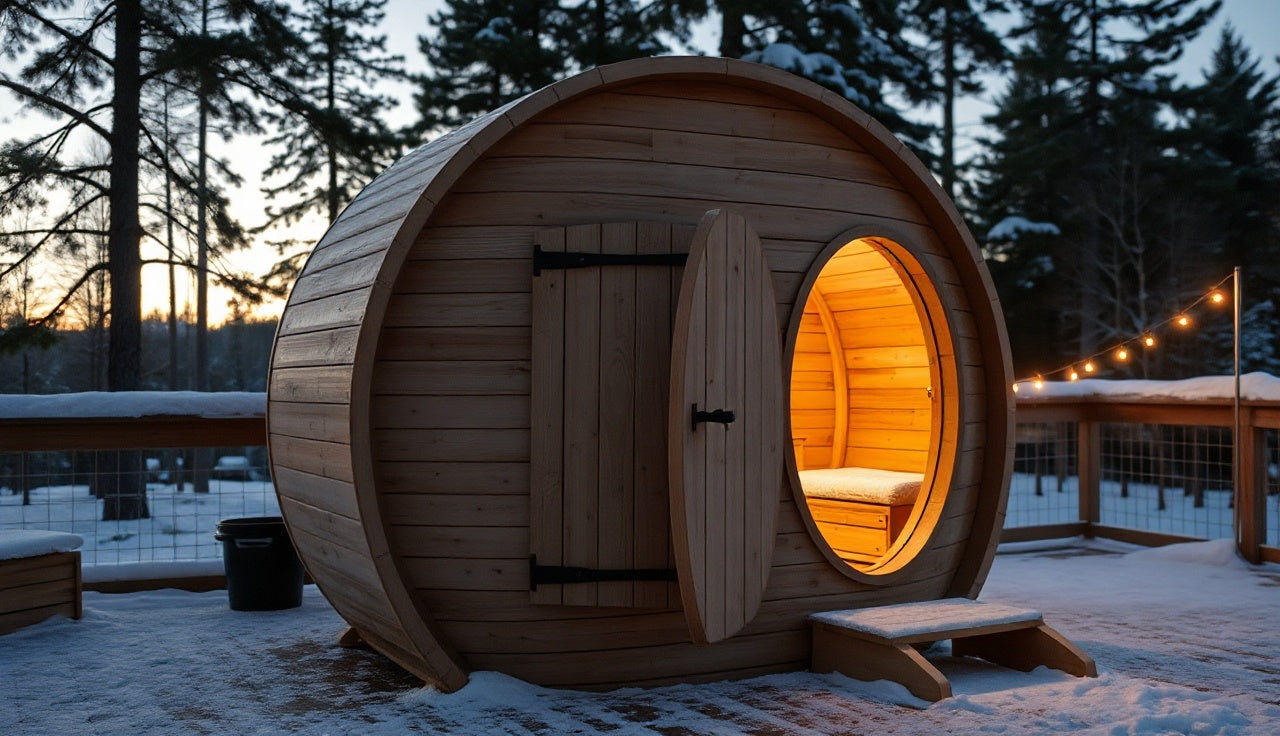
A barrel sauna cover is a protective layer that fits over some or all of a barrel-shaped outdoor sauna between sessions. The job is simple: slow the weathering, stretch out the time between maintenance, and shield the wood from the two things that wreck it fastest, UV radiation and standing moisture.
Most covers fall into one of three categories. End caps are fitted hoods that cover just the circular barrel ends, leaving the stave body exposed. Full-body wraps go over the whole unit like a fitted car cover. Then there are custom cedar or roof-panel covers, which are basically a small lean-to or overhang built right over the sauna, more permanent shelter than removable cover.
The distinction matters because each type solves a different problem. End caps protect the joinery and door hardware, where water infiltration causes the most structural damage. Full-body covers handle snow load and UV across the whole surface. A permanent shelter handles everything but adds real cost and often needs a permit.
None of these replaces proper wood treatment. A cover slows degradation. It does not stop it. If your stave wood is already cracking or greying hard, throwing a cover on without re-oiling first is mostly cosmetic.
Do you really need a barrel sauna cover, or is it optional?
It depends on where you live and how the sauna sits on your property. A barrel sauna under a large roof overhang, in a partly shaded yard, in a mild coastal climate, can go years without a dedicated cover and hold up fine on seasonal oiling alone. Move that same sauna to a Minnesota backyard with no shade, full southern exposure, and 60-plus inches of annual snow, and it will visibly degrade in two to three seasons without protection.
Barrel saunas are usually built from western red cedar or Nordic spruce. Both resist rot naturally, but neither is immune to UV graying and checking (surface cracking from expansion-contraction cycles) [1]. UV drives the graying. Rain alone is less damaging than rain followed by direct sun, because the wet-dry cycling is what stresses the wood fibers [7].
Snow is a separate problem. Manufacturers rate their units for a specific snow load, often between 20 and 40 lbs per square foot depending on build quality. But snow that piles onto a barrel after the heating season ends, with nobody running the stove to melt it from below, can blow past those ratings over a long winter. A cover does not remove that structural risk. It does cut down ice damming at the joints.
Check the warranty fine print. Several brands void weathering-related claims if the unit was not covered or treated on their maintenance schedule. That alone is often reason enough to buy a cover.
For most outdoor setups with full sky exposure, I'd call a cover somewhere between strongly recommended and essential. For shaded or partly covered installs, it's optional but still useful.
What are the different types of barrel sauna covers?
Here are the main options with the honest trade-offs for each.
End-cap covers (hood style) These fit over the two circular ends of the barrel and sometimes extend a foot or so along the sides. They protect door hardware, hinges, the end-grain wood (the most moisture-vulnerable surface), and the glass if your barrel has a glass-panel door. They're cheap, quick to put on and take off, and they don't trap moisture against the stave body the way a full wrap can. The catch: they leave the sides fully exposed.
Full-body fitted covers These work like a car cover. One piece of UV-treated, waterproof or water-resistant fabric fits over the whole cylinder. Good ones have vented panels to stop condensation buildup underneath, tie-down straps or buckles for wind, and reinforced seams at the stress points. Cheap ones trap moisture, grow mold on the wood surface, and sometimes do more damage than no cover at all. Ventilation is the spec to watch.
Permanent shelter or lean-to A pitched roof or pergola built over the sauna kills most of the cover problem outright. It's the priciest path by a wide margin, often $500 to several thousand dollars depending on materials and whether you hire it out, but you can reach the sauna without pulling anything off and it protects nearby equipment too. This is what I'd build if I were designing a dedicated outdoor sauna space from scratch [6].
DIY tarp solutions A heavy-duty polyethylene tarp tied over the barrel is the budget move. It works in a pinch, costs $20 to $50, and won't fit well enough to stay put in serious wind without a lot of rigging. It also pools water at the low points instead of shedding it. Fine as a stopgap between seasons. As a long-term answer, it'll frustrate you.
For a home sauna meant to be a permanent backyard fixture, a full-body fitted cover or a permanent shelter is the better long-term bet.
What materials make a good barrel sauna cover?
The fabric decides how long the cover lasts and whether it helps or hurts the wood underneath. The best outdoor covers use one of three: marine-grade canvas (usually solution-dyed acrylic), heavy-duty polyester with a TPU or PVC coating, or UV-stabilized polypropylene.
Marine canvas breathes a little, sheds water well, and shrugs off UV for years, but it costs more. Coated polyester is waterproof and tough, though the coating can crack in extreme cold and trap condensation without ventilation. UV-stabilized polypropylene (the stuff in many agricultural covers) is cheap, light, and resists UV decently but tears at the seams faster than woven fabrics.
In cold climates, read the temperature rating on any coated fabric. PVC coatings can turn brittle below minus 20 degrees Fahrenheit, a real concern across the northern states and Canada.
Seam construction matters almost as much as the base fabric. Double-stitched, heat-welded, or taped seams outlast plain sewn seams in wet climates by years. Grommets should be brass or stainless, never zinc-plated, because zinc corrodes fast in humid outdoor air.
Ventilation is non-negotiable on a full-body cover. A cover that seals completely traps morning condensation and holds it against the wood all day, which is worse than no cover at all. Look for mesh vent panels at the low ends or along the ridge, even on waterproof covers.
As for the wood itself, a cover works best after the sauna has been treated with a penetrating exterior oil, typically a linseed- or tung-oil-based product made for cedar or thermally modified wood. The USDA Forest Products Laboratory Wood Handbook reports that UV-blocking finishes cut surface checking rates against untreated controls, and that regular re-application matters more than the specific product you pick [1].
How much does a barrel sauna cover cost?
Expect anywhere from $20 for a tarp to $3,000 for a built shelter. Price tracks quality, though not perfectly. For most homeowners the sweet spot is a $150 to $250 fitted polyester cover with real ventilation.
| Cover type | Typical price range | Lifespan (rough estimate) |
|---|---|---|
| Basic tarp/poly wrap | $20, $60 | 1 to 2 seasons |
| Full-body fitted cover, polyester | $80, $160 | 3 to 5 years |
| Full-body fitted cover, marine canvas | $200, $400 | 6 to 10+ years |
| Custom cedar end-cap hood | $150, $350 | 10+ years with maintenance |
| Permanent shelter / lean-to | $500, $3,000+ | 15 to 25+ years |
Sizes vary by barrel diameter and length. Standard barrel saunas run 6 to 8 feet in diameter and 6 to 8 feet long, but measure your unit before ordering. A cover two inches too small won't go on cleanly. A cover four inches too large will catch wind badly.
Brand-specific covers from sauna makers are sometimes available and often worth the premium, because they're cut for the exact geometry. Generic covers sized to the closest standard dimension are fine if you measure carefully.
My call for most people: spend in the $150 to $250 range for a quality vented polyester cover. Going cheap means replacing it every two years, and marine canvas only pays off in a genuinely harsh coastal environment.
| Basic poly tarp ($20–$60) | $40 |
| Fitted polyester cover ($80–$160) | $120 |
| Marine canvas cover ($200–$400) | $300 |
| Custom cedar end-cap ($150–$350) | $250 |
| Permanent shelter ($500–$3,000+) | $1,750 |
Source: USDA Forest Products Laboratory, Wood Handbook (material durability context); retail market survey 2025
How do you fit and secure a barrel sauna cover in wind?
A cover that blows off in a windstorm is useless, and it can wreck the sauna if it flaps and snags on hardware. The fit and the securing system matter more than any marketing copy on the label.
For full-body covers, the standard method is a cinch cord running around the base of the barrel at ground or platform level, with extra straps or buckles connecting underneath or anchoring to the sauna cradle legs. Some covers use bungee loops that hook onto lag screws or eye bolts in the cradle. If your cover doesn't come with an adequate securing system, add stainless eye bolts to the cradle legs and run adjustable straps through them.
End-cap covers usually use elastic banding around the perimeter, like a fitted sheet. The key measurement is the exact diameter of your barrel's end rings. Elastic tension degrades under UV over time, so plan to replace the elastic or the whole cap every few years in sunny climates.
In areas with sustained high winds (coastal regions, open plains, higher elevations), a tethering system with tie-down straps staked to the ground is worth adding even if the manufacturer skips it. Small sandbag weights hung from the cover's lower grommets work well too and don't require drilling anything.
One thing to avoid: never cinch a cover so tight that it holds standing water in a depression on top of the barrel. The stave wood underneath stays wet indefinitely. The cover should shed water clean off the sides or leave a vent path for vapor to escape.
If you run your sauna four or more times a week, you'll be pulling the cover on and off constantly. A quick-release buckle system saves real time, and you're far more likely to actually use the cover if it takes 30 seconds instead of five minutes.
How do you maintain a barrel sauna cover to make it last?
The cover needs more care than the sauna under it. Mold and mildew are the main way stored covers fail.
For fabric covers, rinse with clean water and mild soap two or three times a year to strip off the UV-degrading grit that settles on the surface. Before winter storage (if you pull the cover seasonally) or before putting a stored cover back on, check the seams for delamination and the grommets for corrosion.
Store the cover dry. Fold a damp cover, leave it in a bin for months, and you'll get mold that weakens the fabric and smells foul. If you take the cover off in summer, let it dry fully in the sun before folding.
For cedar or wood end-cap covers, treat them with the same exterior oil you use on the sauna. Untreated wood covers gray and check exactly like untreated sauna wood.
The sauna wood needs maintenance whether or not you use a cover. Most manufacturers and treatment suppliers recommend a penetrating exterior oil on the sauna exterior once or twice a year, with the frequency set by climate. In very sunny or rainy climates, twice annually, before and after the hardest season, makes sense. The USDA Forest Products Laboratory notes that wood finishes degrade mainly from UV exposure and that regular re-application matters more than the specific product chosen [1].
If the cover holds water against the wood after rain, reposition it or add a ridge pole to build a peak that sheds instead of pools. A length of foam pipe insulation works well for this.
Does a barrel sauna cover affect heat-up time or energy use?
Not directly, since you pull the cover off before running the sauna. But dry wood heats faster than damp wood, and a cover keeps the exterior dry, so there's a small indirect effect.
Moisture in the stave wood adds thermal mass in the wrong direction. Cedar that got rained on and never dried out takes more energy to bring up to temperature. In practice this is minor, maybe five to ten minutes of extra heat-up time, but it's real. Keeping the exterior dry with a cover cuts the incidental moisture soaking through the wood.
The bigger energy question for an outdoor sauna is air sealing the door and any gaps at the end rings. That's a separate conversation, but a cover does nothing for a poorly sealed door gasket.
For electric heater users specifically: NFPA 70, the National Electrical Code, requires outdoor electrical equipment including sauna heater wiring to be rated for wet or damp locations depending on exposure [2]. A cover that keeps rain off the exterior doesn't change the wiring requirements, but it does lower the odds of water getting into junction boxes at the heater connection [9].
Can you make a DIY barrel sauna cover, and is it actually worth it?
Sometimes yes, sometimes you'll spend a weekend building something worse than a $120 store-bought cover. It depends on what you're making.
DIY makes the most sense for a permanent wooden shelter, not a fabric cover. Building a simple mono-pitch or gabled roof over a barrel sauna with pressure-treated lumber and metal roofing is a weekend job for anyone comfortable with basic framing, and the result beats any fabric cover. Materials run $200 to $600 depending on size and roofing, well under the cost of hiring it out. Just check whether your municipality treats it as an accessory structure that needs a permit [6].
For fabric covers, the hard part is sourcing the right material and cutting it to the barrel's exact curve. That curved profile means a flat piece of fabric won't drape clean without darts or gussets. Unless you have basic sewing skills and a heavy-duty machine (canvas thickness is beyond a standard home machine), the commercial option is usually cleaner and cheaper once you count your time.
A middle path works well: buy a commercial full-body cover and add DIY tie-downs. Most commercial covers have decent material but weak securing systems. Adding your own stainless hardware to the cradle and running paracord or cam-buckle straps through it takes an hour and makes the cover genuinely wind-resistant.
If you're leaning toward a portable sauna instead, most portable units come with their own storage bag and need no separate cover, which drops this whole question.
What should you look for when buying a barrel sauna cover?
Here are the specs that actually matter, in rough order of importance.
Exact fit for your barrel diameter and length. Measure both before ordering. Standard barrel diameters are typically 4, 5, or 6 feet (exterior), and lengths run 6 to 9 feet. A cover 6 inches too large catches wind like a sail.
Ventilation. At least one vent panel or gap. Non-negotiable. Any cover advertising 100 percent waterproof with no vent is a red flag for wood damage.
UV resistance rating. Look for covers rated to block at least 90 percent of UV-A and UV-B. Some list a UPF rating; above UPF 50 is good. ASTM G155 is the standard test method for UV resistance of outdoor fabrics, so a manufacturer citing it is a good sign [8].
Seam and grommet quality. Taped or heat-welded seams, brass or stainless grommets, double-stitching at stress points.
Wind securing system. Straps, buckles, or a cinch cord that wraps all the way around the base. Check where the attachment points sit and whether you can improve them.
Temperature rating for your climate. In extreme cold, confirm the lower temperature limit on any coated fabric before you buy.
SweatDecks carries outdoor sauna covers and accessories alongside its sauna lineup, so it's a reasonable place to start if you want fit-tested options in one spot.
One spec you can mostly ignore is the advertised water pressure rating (hydrostatic head) unless you live in a monsoon climate. For most residential setups, basic water resistance is plenty if the cover sheds water by geometry rather than leaning on the fabric's impermeability.
How does a barrel sauna cover interact with wood treatment and maintenance schedules?
This is where most owners get the sequence wrong. A cover is not a substitute for wood treatment, and treatment applied under a cover traps solvents and can cure tacky or uneven. Order of operations matters.
Apply exterior oil when the cover is off and the wood is clean and dry. Let it cure fully, typically 24 to 48 hours depending on the product and temperature, before the cover goes back on. Cover treated wood too soon and you trap solvents against the surface, which leaves a sticky residue or a patchy finish.
On the products themselves, penetrating oils (tung oil, raw linseed oil, or oil-based products made for outdoor sauna wood) beat film-forming finishes like varnish or polyurethane on barrel exteriors. Film-formers trap moisture under the film as the wood moves with the seasons, and then they peel. Penetrating oils move with the wood [10]. Several Scandinavian sauna makers explicitly warn against any film-forming exterior finish on their cedar or spruce units.
The maintenance cycle most manufacturers suggest: clean the exterior in spring, inspect for checking or open joints, spot-treat any weathered areas, then apply a full treatment once or twice a year. Use a cover properly and you may stretch the interval between full treatments compared to an uncovered sauna, but you still inspect and treat on schedule.
Here's the practical link to how often you'll handle the cover. The Finnish cohort study published in Mayo Clinic Proceedings (Laukkanen et al., 2018) found the largest cardiovascular risk reduction among people using a sauna four to seven times a week [3]. Use yours that often and you're pulling the cover on and off just as often, which makes the cover's ease of use a real quality-of-life factor.
Check SweatDecks' guide to home sauna maintenance for the full care cycle.
Frequently asked questions
Do barrel saunas need a cover if they're under a porch or overhang?
A roof overhang that fully covers the sauna (extends past it on all sides) dramatically reduces the need for a fabric cover. Rain, snow load, and direct UV are the main threats, and a solid overhead structure handles all three. You'd still oil the wood seasonally and protect the door hardware, but a full cover becomes optional in that situation.
Will a cover cause mold to grow on my barrel sauna?
A poorly ventilated cover that traps moisture against the wood can absolutely promote mold and surface mildew. The fix is choosing a cover with ventilation panels, drying the sauna before covering, and never covering a sauna still warm and steaming from a recent session. Let it cool and dry at least an hour before the cover goes on.
What size cover do I need for a 6-person barrel sauna?
Capacity labels aren't standardized, so measure the actual unit. A 6-person barrel is typically 7 to 8 feet long and 5 to 6 feet in exterior diameter. Confirm both before ordering. Most cover makers list fit ranges; if your sauna falls between sizes, size up rather than down so you can secure the cover without stretching the seams.
Can I leave a barrel sauna cover on year-round?
Yes, with the right cover. It needs adequate ventilation to avoid trapping condensation and should be rated for your climate's full temperature range. In heavy-snow areas, shake or clear a year-round cover after significant snowfall, since the cover itself can hold snow weight that adds to the load on the barrel structure.
How do I keep my barrel sauna cover from blowing off in wind?
The most reliable method is a cinch cord or strap system that loops under the barrel and connects on both sides. Many commercial covers include this; if yours doesn't, add stainless eye bolts to the cradle legs and run cam-buckle straps through them. In very high-wind spots, ground stakes or sandbag weights along the cover's lower edge add another layer of security.
Is it worth buying the cover sold by my sauna's manufacturer, or will any generic cover work?
Manufacturer covers are cut for the exact barrel geometry, which usually means a better fit at the ends and less wind-catching slop around the profile. For custom or unusual diameters, the manufacturer cover is almost always worth the premium. For standard 4, 5, or 6-foot diameters, a well-made generic cover from a reputable outdoor equipment brand works fine if you measure carefully.
What's the difference between a sauna cover and a sauna enclosure?
A cover is removable and used when the sauna is out of service. An enclosure is a permanent or semi-permanent shelter built around or over the sauna, often with walls, a roof, and sometimes a changing room attached. Enclosures protect better but cost substantially more and may require a building permit depending on your municipality.
How often should I replace my barrel sauna cover?
A basic polyester cover in a mild climate lasts 3 to 5 years. Marine canvas in the same conditions can last 8 to 10 years or more with seasonal cleaning. UV exposure is the primary failure driver: colors fade first, then the coating or weave degrades. Check the seams and grommets annually, since seam failure often shows up before fabric failure.
Does covering a barrel sauna affect its warranty?
It depends on the manufacturer. Some warranties require using their branded cover or following specific maintenance protocols to keep structural coverage valid. A few void weathering claims if the sauna was left uncovered in a harsh climate. Read the warranty document before choosing a cover, and keep receipts or photos of your maintenance steps in case you need to file a claim.
What wood treatment should I use before putting a cover on a barrel sauna?
Use a penetrating exterior oil made for cedar or thermally modified wood. Tung-oil or linseed-oil-based products are the most common recommendations from Scandinavian sauna makers. Avoid film-forming finishes like varnish or polyurethane on the exterior staves. Apply when the wood is clean and dry, let it cure fully (24 to 48 hours), then replace the cover.
Can I use a regular tarp instead of a proper barrel sauna cover?
A heavy-duty poly tarp works as a stopgap, usually for one season or less. The problems are poor fit that lets wind under the tarp, water pooling in low spots instead of shedding, and no ventilation, which traps moisture. For long-term use, a fitted cover with ventilation is meaningfully better and usually worth the $80 to $150 difference over a tarp.
Do barrel sauna covers protect against UV damage?
Yes, while the cover is on. UV radiation is the primary driver of the gray weathering and surface checking that show up on outdoor cedar and spruce over time. A cover rated UPF 50 or higher, used consistently between sessions, can stretch the interval between wood treatments. It only works when it's actually on the sauna, which is why ease of installation matters for daily users.
Should I cover my barrel sauna during the winter or just during summer?
Both seasons matter, for different reasons. Winter brings snow load, freeze-thaw cycling at the joints, and prolonged moisture. Summer brings UV and rain-dry cycling that checks and grays the wood. Year-round cover use with seasonal maintenance inspections protects better than covering in just one season.
Can a barrel sauna cover double as a cover for a cold plunge nearby?
Barrel-style cold plunges exist and use similar cylindrical geometry, but the dimensions differ from a sauna barrel, and so do the material needs, since a cold plunge cover handles water contact on the interior side. A sauna barrel cover won't fit a cold plunge well. Purpose-built cold plunge covers are available from most cold plunge equipment suppliers.
Sources
- USDA Forest Products Laboratory, Wood Handbook Chapter 16: Finishing of Wood: UV exposure is the primary driver of surface graying in outdoor wood; penetrating oil finishes reduce checking rates compared to untreated controls; regular re-application matters more than specific product choice.
- NFPA 70, National Electrical Code, Article 680 and Article 424 (sauna heater wiring requirements): Outdoor electrical equipment including sauna heater wiring must be rated for wet or damp locations depending on installation exposure.
- Mayo Clinic Proceedings, Sauna bathing and sudden cardiac death, Laukkanen et al. 2018: Frequent sauna use (4-7 sessions per week) was associated with largest cardiovascular risk reduction in Finnish cohort study, informing typical recommended use frequency.
- U.S. Consumer Product Safety Commission, Sauna Safety Guidelines: CPSC provides guidance on sauna installation and use safety relevant to outdoor sauna equipment maintenance and electrical safety context.
- USDA Forest Products Laboratory, Durability of Wood in Construction: Western red cedar and Nordic spruce have natural decay resistance but are not immune to UV degradation and moisture cycling damage without protective treatment.
- International Code Council, International Residential Code (IRC), accessory structures: Permanent shelter structures over outdoor equipment may require building permits depending on municipal adoption of IRC and local amendments.
- USDA Forest Products Laboratory, Weathering of Wood (General Technical Report FPL-GTR-190): Wet-dry cycling is more damaging to wood fibers than sustained moisture exposure; UV-blocking finishes significantly reduce surface checking rates.
- ASTM International, Standard G155 for UV exposure testing of materials: ASTM G155 is the standard method for evaluating UV resistance of outdoor fabrics and coatings, relevant to cover material ratings.
- National Fire Protection Association, NFPA 70A Electrical Code for One- and Two-Family Dwellings: Grounding and wet-location requirements for outdoor electrical connections apply to sauna heater installations in residential settings.
- Extension.org / University cooperative extension, Wood Deck and Outdoor Wood Maintenance: Penetrating oil finishes are preferred over film-forming finishes for outdoor dimensional lumber applications because they move with seasonal wood expansion and contraction.

Share:
Barrel sauna roof: every option, cost, and fix explained
Barrel sauna roof: every option, cost, and fix explained