
Last updated 2026-07-09
TL;DR
A backyard sauna costs $3,000 to $20,000 installed, depending on type, size, and electrical work. Barrel saunas are the most popular outdoor pick: they heat fast, shed rain, and look good. You'll need a permit for anything hardwired or on a foundation. Most homeowners buy a 6- to 8-person barrel or cabin sauna and use it three to five times a week.
What types of backyard saunas are there, and which one should you get?
Three options make sense for a backyard: barrel saunas, cabin (pod) saunas, and prefab modular saunas. Each has a different shape, a different way of going together, and a different price ceiling.
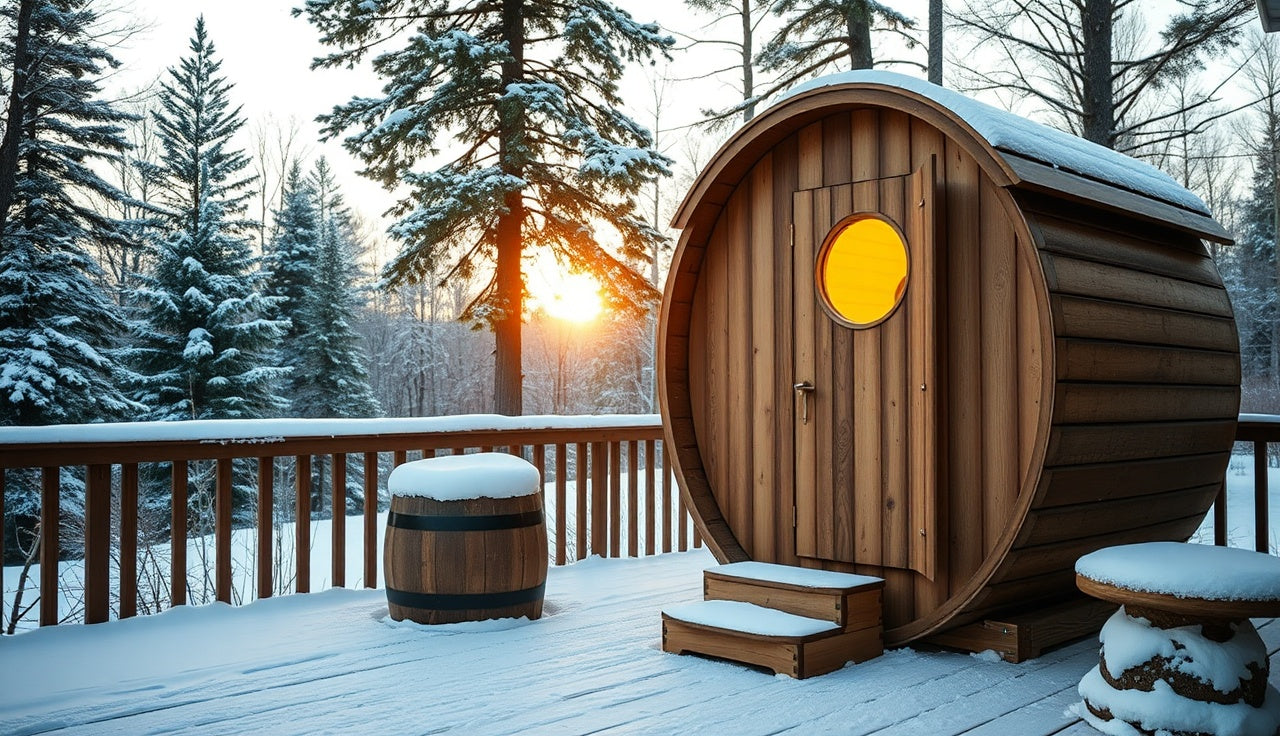
Barrel saunas are cylinders made from stave-cut wood, usually cedar or pine, held together with metal bands. The round shape means no dead corners, faster heat circulation, and rain that runs right off with no flat roof to rot. They outsell the other two outdoor types by a wide margin, and they sit fine on most level-ish surfaces. [1]
Cabin saunas are rectangular, usually 4x6 to 8x10 feet, and read more like a small outbuilding. You get more headroom and more bench per unit. Better for families or anyone who wants a changing room built in. Construction asks more of you: you're framing a small shed.
Prefab modular saunas ship flat-pack and snap together on-site, sometimes in a day. Quality is all over the map. Some are honest, well-insulated structures. Others are thin-walled boxes that give up in a sub-zero winter.
For a single homeowner or a couple who want low-maintenance outdoor heat, a barrel sauna is the right call. For families who want a real separate building with two-level benches and a porch, a cabin sauna earns its extra cost. Renting, or not sure how long you'll stay? A prefab is the only one that moves with you.
There are hybrids too. Some barrel saunas now come with a flat-floor section or a porch attachment, which splits the difference nicely.
How much does a backyard sauna cost, including installation?
Honest range: $3,000 at the floor (a small DIY barrel kit, no electrician) to $25,000 or more for a fully custom cedar cabin with a porch, wiring, and a concrete pad. Most homeowners land between $6,000 and $14,000 all-in. [2]
| Setup type | Unit cost (typical) | Electrical + pad | Total installed estimate |
|---|---|---|---|
| DIY barrel kit (4-person) | $2,800, $4,500 | $800, $2,000 | $3,600, $6,500 |
| Mid-range barrel (6-person) | $4,500, $8,000 | $1,200, $2,500 | $5,700, $10,500 |
| Cabin sauna (prefab, 6 to 8 person) | $7,000, $14,000 | $2,000, $4,000 | $9,000, $18,000 |
| Custom cabin sauna (built on-site) | $12,000, $22,000 | $2,500, $5,000 | $14,500, $27,000 |
Electrical is the cost people underestimate most. A 240V, 40- to 60-amp circuit for a quality heater runs $800 to $2,500, depending on how far the panel sits from the sauna and what your electrician charges. [3] A 120V plug-in unit skips that cost, but you get a weaker heater that takes longer to reach temperature.
The pad is another variable. A 6x8 concrete pad poured by a contractor runs $600 to $1,200. Compacted gravel costs less but needs re-leveling over time. Treated wood decking as a base is common for barrel saunas and usually costs $400 to $900 in materials.
Don't forget the permit. Plenty of homeowners skip it, then eat the headache at resale. Budget $100 to $500 for the permit itself, more if your county makes a licensed contractor pull it.
Wood type moves the number too. Western red cedar costs more than hemlock or Nordic spruce, but it handles moisture better and smells better. If you're spending $6,000 on a sauna, don't cheap out on pine staves.
Do you need a permit for a backyard sauna?
Almost certainly, if the sauna is hardwired or sits on a permanent foundation. Permit rules live at the local level, so one county can look very different from the county next door, but the pattern holds.
Most jurisdictions treat an outdoor sauna like a shed or accessory structure. Cross a certain square footage (often 120 to 200 sq ft, depending on the municipality), sit it on a permanent foundation, or add electrical work, and a building permit is required. [4] Some places want a separate electrical permit for the 240V circuit.
Check your setback requirements next. Setbacks define how close a structure can sit to a property line, a fence, or another building. A common figure is 5 to 10 feet from rear and side lines for accessory structures, but it varies a lot. Your local planning department can settle it in one phone call.
Homeowners associations pile on another layer. Even if the county says yes, your HOA may restrict accessory structures, exterior finishes, or anything visible from the street. Check before you order.
Skipping permits carries real risk. An unpermitted structure can complicate or kill a home sale. Some insurers won't cover fire or electrical damage in an unpermitted structure. And if a neighbor complains, you can be ordered to tear it down. Not worth it.
| DIY barrel kit (4-person) | $5,050 |
| Mid-range barrel (6-person) | $8,100 |
| Prefab cabin sauna (6–8 person) | $13,500 |
| Custom cabin sauna (built on-site) | $20,750 |
Source: Angi cost data, 2024 (citation 2)
How do backyard barrel saunas work, and are they worth the money?
A barrel sauna is a wood-staved cylinder with a heater inside, a door on one end, and sometimes a porch section on the other. The round shape earns its keep: hot air rises off the heater and loops around the interior without pooling in corners, so you get more even heat and faster warm-up than a rectangular box of the same volume. [1]
Most barrel saunas run an electric heater (6 to 9 kW for a 4- to 6-person barrel), though a wood stove is an option if you want the smell and the ritual. Electric is easier to control and meets code more cleanly in most places. Wood-burning setups need a proper chimney flue and more distance from other structures.
A well-made barrel sauna from a reputable supplier hits 170 to 190°F in 30 to 45 minutes. Cheap units with thin staves and loose door seals take longer and can't hold temperature in winter.
Worth it? For anyone who'll use a home sauna three or more times a week, clearly yes. At $30 to $50 per spa visit, a $6,000 to $8,000 installed barrel pays for itself in two to three years. Use it once a month and it doesn't.
The barrel category has filled up with low-end imports. Stave thickness and the quality of the bands and door hardware separate the units that last 15 years from the ones warping after two winters. Look for staves at least 1.5 inches thick, stainless or galvanized bands, and a door with a real gasket.
The Backyard Discovery Paxton (sold as the Paxton outdoor barrel sauna, and a version with a porch) is one of the more widely sold mass-market units here. It's aimed at the family buyer who wants a porch section and a recognizable name on the warranty. Backyard Discovery built its name on swing sets, so judge the sauna on the spec sheet, not the logo.
Where should you put a backyard sauna?
Placement is the decision people underweight, and it drives daily use more than almost anything else.
Start with distance to the house. The closer the sauna sits to your back door, the more you'll actually use it. Trudging 200 feet through wet grass in January sounds romantic until week two. Thirty feet from the house is ideal on most lots. You want to dart out in a towel, not gear up for an expedition.
Think about the electrical run next. Every 50 feet of 240V wire adds cost and voltage-drop math. If your panel sits on the far side of the house from your ideal spot, rethink the location or budget more for the electrician.
Then privacy. A sauna you can use in a towel without your neighbors watching is one you'll use more. A fence, existing trees, or a privacy screen all solve it.
Drainage matters too. The ground around the sauna gets wet from steam, post-sauna rinses, and rain. Steer clear of low spots where water pools. A gravel base under and around the unit helps.
Last, shade versus sun. Full sun isn't a structural problem, but it can bake the porch in summer and bleach untreated wood faster. A spot with afternoon shade stretches the finish life.
For a barrel specifically, a level gravel bed or a treated wood platform is the most common and most practical base. Concrete works too. Bare ground compresses unevenly over time and rots the stave bottoms.
What wood is best for an outdoor sauna?
Western red cedar is the standard for outdoor saunas, and the reasons are solid. Low density means it doesn't soak up and throw back heat the way denser woods do. Natural oils resist moisture and rot. The smell is one most people genuinely like. And it stays dimensionally stable through repeated heat-and-cool cycles. [5]
Nordic spruce is a legitimate alternative, used all over Scandinavian saunas. It's denser than cedar, so it takes a touch longer to heat but holds heat well once there. It lacks cedar's natural rot resistance, so it needs better drainage and airflow around the structure.
Hemlock costs less than cedar and has no natural aroma, which some people prefer (no oils to off-gas). It's fine as interior bench wood but not ideal for the exterior of an outdoor barrel.
Thermo-treated wood (any species heat-treated at 400°F or above) shows up more and more in premium outdoor saunas. The heat changes the cell structure, cutting moisture absorption and improving rot resistance. It costs more and can add real years to the structure.
Woods to avoid: pine and untreated spruce as exterior material without proper sealing, because they soak up moisture and start checking within a few seasons. Pressure-treated lumber should never go inside a sauna where people breathe; the preservatives are not safe at sauna heat.
For interior benches, skip anything that gets too hot to sit on or that splinters. Cedar and aspen are both safe. Aspen is especially good because it has essentially no resins, so no risk of contact burns even at high heat.
What size backyard sauna do you actually need?
The most common mistake is buying too small. People size down to save money, then regret it inside a month.
A 4-person barrel is comfortable for two people who want to stretch out and lie on the bench. It's tight for four adults. A 6-person barrel handles two to three people in real comfort. An 8-person barrel or cabin is genuinely social: four to six adults with room to breathe.
| Stated capacity | Comfortable for (real use) | Typical length | Heater needed |
|---|---|---|---|
| 2-person | 1 to 2 | ~6 ft | 4 to 6 kW |
| 4-person | 2 to 3 | ~7 ft | 6 kW |
| 6-person | 3 to 4 | ~8 ft | 6 to 9 kW |
| 8-person | 4 to 6 | ~10 ft | 9 to 12 kW |
For a single person or couple using it daily for recovery, a 4-person barrel is plenty and heats fastest. For anyone who plans to have friends over, go 6- to 8-person minimum.
Height matters too. Standard barrel saunas run 5.5 to 6.5 feet of interior height at the center. Anyone over 6 feet will feel that on the upper bench. Some makers offer a larger-diameter barrel (8 feet versus the standard 7) that adds real interior height.
For context on sauna benefits and the session habits that should shape your size choice: most regular users do 2 to 4 rounds of 15 to 20 minutes per session. You want enough bench to lie down, more than sit.
How does a backyard sauna affect your home's value?
This question comes with honest uncertainty attached. There's no large peer-reviewed study on sauna-specific home value. What exists is anecdotal reporting from real estate agents and a handful of appraisal-industry discussions.
The general industry read: a well-installed, permitted outdoor sauna adds some value, but rarely dollar-for-dollar with its cost. A $10,000 installed sauna might add $5,000 to $8,000 in appraised value in a market where buyers would actually use it. That means more in cold climates where outdoor saunas are a normal amenity, less in Phoenix. [6]
The permit piece is the bigger issue. An unpermitted structure that has to be disclosed at sale can spook buyers or force the seller to remove it. A permitted, properly installed sauna becomes a listed feature you can market.
For rental properties, a sauna is a real amenity that pulls higher nightly rates on Airbnb and VRBO, especially in mountain and lakeside markets. That's a clearer financial case than the resale argument.
Don't buy a backyard sauna expecting to make money on it. Buy it because you'll use it. Any financial upside is a bonus.
What maintenance does an outdoor sauna need?
Less than most people expect, but not zero.
The wood exterior wants attention once or twice a year. Untreated cedar silvers over time, which is fine structurally but not everyone likes the look. A penetrating outdoor wood oil (not a film-forming sealer, which peels) applied yearly keeps the wood warmer-looking and adds modest moisture protection. Don't cross the streams: interior sauna oil and exterior oil are formulated differently.
Check the door gasket and hinges every year. The temperature cycling that makes saunas great for your body is hard on rubber gaskets and metal hardware. Replace gaskets when they stop sealing clean. It's a $20 to $40 fix that changes heat retention noticeably.
Electric heater elements typically last 5 to 10 years with normal use. Inspect the sauna stones every year or two and replace them when they crack or crumble, because fractured stones can spit hot fragments.
Ventilation keeps the interior wood healthy long-term. Crack the door or open the vent after each session to let moisture out. A sauna left sealed and damp between uses picks up a mildew smell and rots from the inside within a few years.
In heavy-snow country, clear the roof of a cabin sauna regularly. Most barrel saunas shed snow on their own thanks to the curve, one of the real practical wins of the shape.
A well-maintained cedar barrel sauna should last 15 to 20 years without major structural work. A neglected one can fail in five. The difference is mostly just opening the vent.
How does a backyard sauna compare to an indoor sauna or a gym sauna?
Gym sauna: free with the membership, but you share it with strangers, the thermostat is usually set conservatively (around 160°F), and you can't run your own session. You're also driving somewhere.
Indoor home sauna: a home sauna in a basement or spare room is the most convenient because weather and outdoor walks never enter the picture. No outdoor structure, no setback rules, and easier electrical access in most cases. The trade-offs are smell (cedar off-gassing in a closed house), humidity to manage, and a room you give up for good.
Backyard sauna: the outdoor version feels genuinely different. Stepping out of 190°F heat into cold air, especially in winter, hits with a physical immediacy a basement walk can't match. The separation from the house also makes each session feel like more of a ritual, which actually improves how often most people use it. The downsides are weather (some people won't walk out in heavy rain or below-zero cold), the permit process, and the electrical run.
If you've got the yard and the budget, an outdoor sauna beats an indoor one on experience. Setup cost is similar. The permit headache is real but manageable.
If contrast therapy (sauna then cold water) is part of the plan, an outdoor sauna pairs naturally with an outdoor cold plunge, a nearby hose, or a stock tank. Proximity is what makes the protocol easy to actually stick to. That back-and-forth between heat and cold is the part recovery and cardiovascular research finds most interesting, though the evidence base is still building. [7]
What should you look for when buying a backyard barrel sauna?
Stave thickness. Anything under 1.25 inches struggles to hold heat in cold climates and warps more easily. Aim for 1.5 to 1.75 inches as a baseline for a legitimate outdoor unit.
Door quality. The door is the biggest thermal weak point on any barrel sauna. It should be solid wood with a proper high-temperature gasket and a latch that squeezes the gasket evenly. Ask the manufacturer for the door's R-value, or just read reviews from people in cold climates.
Heater brand and warranty. Harvia, Finlandia, and HUUM are Finnish and European heater brands with long track records and easy-to-find replacement parts. Generic imports can work, but you may not source elements in five years. [8] A 2- to 3-year heater warranty is reasonable; 5 years is better.
Wood sourcing and treatment. Western red cedar from North America or Nordic spruce from Scandinavia are the proven picks. Ask where the wood comes from. Some budget units use random softwood stained to look like cedar.
Band material. The bands wrapping the staves will rust if they're mild steel. Galvanized or stainless bands are worth the premium.
Shipping and assembly. Most barrel saunas arrive as a kit needing a few hours of assembly. Check whether the manufacturer gives you real instructions (a video, not a photocopied diagram) and whether support answers the phone. Assembly problems are the most common complaint in negative reviews across every brand.
Warranty. A legitimate outdoor sauna should carry at least a 1-year structural warranty and ideally 2 to 5 years on the wood. Less than that says the maker doesn't expect it to last.
At SweatDecks, the outdoor sauna collection is filtered for units that meet these specs, which saves a lot of research time.
How do you heat a backyard sauna, and what does it cost to run?
Electric heaters are the most common choice and the easiest to live with. A 6 kW heater running one hour at the U.S. average residential rate of about $0.16 per kWh (2024 EIA data) costs roughly $0.96 per session. [9] A 9 kW heater for the same hour costs about $1.44. Use the sauna five times a week and your annual operating cost lands around $250 to $375, depending on heater size and local rates.
Wood-burning stoves cost less to run (the fuel is wood) but need a chimney penetration, proper clearance from combustibles, and hands-on tending. They take longer to heat and can't be started from your phone. Where firewood is cheap or free, they're a real option. In the suburbs, they're usually more hassle than they're worth.
Infrared panels get marketed as the efficient alternative. They work differently from traditional heaters: they warm objects and bodies directly instead of heating the air. The temperature runs lower (typically 120 to 140°F versus 170 to 190°F for traditional), and the feel is different. Traditional purists dislike infrared. Some people prefer it. The draw is lower, roughly 1.5 to 3 kW, so operating cost is lower. Whether it delivers the same physiological effects as high-heat traditional sauna is still an open research question. [10]
A WiFi controller, which most quality heaters now support, lets you preheat from your phone so the sauna's ready when you are. Genuinely useful, not a gimmick.
Frequently asked questions
How long does it take to install a backyard barrel sauna?
A prefab barrel kit takes two to four hours to assemble with two people following the instructions. Add one to three days for electrical work if you need a new 240V circuit run from the panel. Pouring a concrete pad first adds three to five days of curing before you place the sauna. Most people have theirs running within one to two weeks of delivery.
Can a backyard sauna stay outside in winter?
Yes. Quality outdoor saunas are built for freezing temperatures, snow, and ice. Cedar and properly treated Nordic spruce expand and contract without splitting. The main winter risk is water sneaking into a poorly sealed door or roof joint and freezing inside the wood. Keep the vent open between uses, keep the door closed but unlatched when idle, and clear snow off flat-roofed cabin saunas promptly.
What is the Backyard Discovery Paxton outdoor barrel sauna?
The Backyard Discovery Paxton is a mass-market barrel sauna sold through major home improvement and outdoor retailers. It comes with a porch section, handy for cooling down between rounds. Backyard Discovery is best known for children's outdoor play equipment, so judge the Paxton on its own specs, not brand reputation. Check stave thickness, heater quality, and warranty terms before buying.
Do backyard saunas need a foundation?
Not always, but you need something level and stable. Common options are a compacted gravel bed (4 to 6 inches deep), treated wood decking, or a concrete pad. Bare soil compresses unevenly over time and keeps the base wood chronically damp, which causes rot. A gravel bed is the cheapest legitimate option and works well for most barrel saunas. A concrete pad is more permanent and triggers a permit in some jurisdictions.
How far from the house should a backyard sauna be?
Local setback rules govern distance from property lines, but most codes set no standard minimum distance from the house itself. Practically, 10 to 30 feet from the back door is the sweet spot: close enough to use in towels in winter, far enough that steam and the occasional outdoor rinse don't hit your siding or foundation. The farther the sauna sits from your electrical panel, the more the wiring run costs.
Is a wood-burning backyard sauna better than an electric one?
It depends entirely on what you want. Wood-burning saunas produce a particular heat, a smell, and a ritual that many traditional enthusiasts prefer strongly, and they cost less to run if you have wood access. The catches: you can't preheat remotely, setup takes 30 to 60 minutes, and you need a chimney, ash cleanup, and more clearance from structures. Electric is more convenient for daily use. Wood-burning is more satisfying for the enthusiast.
Can you use a backyard sauna for contrast therapy with cold water?
Yes, and it's one of the best setups you can build. A backyard sauna paired with a cold plunge tub, a stock tank, or even a good cold shower gives you a contrast protocol at home. Research on contrast therapy for muscle recovery and perceived soreness is promising, though most studies run small sample sizes. The experience holds up regardless. See our guide on cold plunge benefits for what the current evidence actually shows.
What permits do I need for a backyard sauna in California?
In California, a building permit is typically required for any accessory structure over 120 square feet, or any structure with electrical work. A 240V sauna heater circuit needs an electrical permit in most California jurisdictions regardless of structure size. Some counties draw a line between habitable and non-habitable accessory structures. Check with your local building department before ordering. HOA rules also apply in a governed community. [12]
How long does a backyard cedar barrel sauna last?
A well-built cedar barrel sauna, maintained properly, should last 15 to 20 years. The main failure points are door gaskets (replace every few years), heater elements (5 to 10 years), and the base staves if moisture collects. The metal bands may need tightening or replacement as the wood seasons. Annual exterior oiling and leaving the vent open after sessions are the two highest-impact habits.
What temperature should a backyard sauna reach?
Traditional Finnish-style sauna temperature is 170 to 190°F (77 to 88°C) at bench level. Some users push to 200°F. Infrared saunas run much lower, typically 120 to 140°F. The Finnish Sauna Society recommends roughly 80 to 100°C (176 to 212°F) for authentic conditions. Humidity is controlled by ladling small amounts of water onto the stones, producing löyly and raising perceived heat without moving the thermometer.
Does a backyard sauna require a GFCI breaker?
Most local electrical codes require GFCI protection for outdoor receptacles and structures. A licensed electrician installing a 240V sauna circuit will know your local requirements and fit the right protection. Don't skip this: a sauna combines water, heat, and electricity in ways that make proper grounding and fault protection genuinely important. Always use a licensed electrician for sauna electrical work. [11]
What is a good sauna session routine for a backyard sauna?
A standard approach: preheat 30 to 45 minutes. Enter and stay 10 to 20 minutes at 170 to 185°F. Exit and cool down (outdoor air, cold shower, or cold plunge) for 5 to 10 minutes. Repeat two to three rounds, hydrating between them. Total session runs 60 to 90 minutes. Research on cardiovascular response suggests regular sessions of 20 minutes or more at high temperature are associated with lower cardiovascular risk, though mechanisms are still being studied. [7]
Can I build my own backyard sauna from scratch instead of buying a kit?
Yes. DIY cabin saunas are a real option for anyone comfortable with basic framing and insulation. You'll need kiln-dried framing lumber, proper insulation (foil-faced or mineral wool rated for high heat, not fiberglass batts), a vapor barrier on the interior side of the insulation, interior cedar or aspen paneling and benches, and a quality heater. Materials for a well-built 6x8 DIY cabin run $4,000 to $8,000, not counting electrical. Budget 40 to 80 hours.
Sources
- Finnish Sauna Society, sauna types and design principles: Barrel saunas circulate heat more evenly due to cylindrical geometry; the Finnish Sauna Society documents traditional sauna construction and heat dynamics.
- HomeAdvisor / Angi, cost to build or install a sauna: Average homeowner cost range for installed outdoor saunas is $3,000 to $20,000+ depending on type, size, and electrical requirements.
- U.S. Department of Energy, home electrical upgrades and wiring costs: Running a new 240V circuit for an appliance or outdoor structure typically costs $800 to $2,500 depending on distance from panel and local labor rates.
- International Code Council (ICC), International Residential Code accessory structures: The IRC sets baseline permit requirements for accessory structures, including those with permanent foundations or electrical connections; local jurisdictions adopt and amend these.
- USDA Forest Service, Wood Handbook: Wood as an Engineering Material: Western red cedar has low density, natural decay resistance, and dimensional stability under moisture cycling, making it suitable for outdoor sauna construction.
- National Association of Realtors, remodeling impact report: Accessory outdoor structures rarely return dollar-for-dollar on resale; appraised value added depends on local market and buyer demand.
- JAMA Internal Medicine, Laukkanen et al. 2015, sauna bathing and cardiovascular outcomes: Frequent sauna use (4-7 times per week) was associated with significantly reduced risk of fatal cardiovascular disease in a 20-year Finnish cohort study of 2,315 men.
- Harvia Plc, product and warranty documentation: Harvia is a Finnish sauna heater manufacturer with over 70 years of production history and global parts availability.
- U.S. Energy Information Administration, average retail electricity prices by state 2024: U.S. average residential electricity price was approximately $0.16 per kWh in 2024, used to calculate per-session sauna operating costs.
- Mayo Clinic, sauna health benefits overview: Infrared saunas operate at lower temperatures than traditional saunas and may produce different physiological responses; evidence comparing the two types remains limited.
- National Fire Protection Association (NFPA), NFPA 70 National Electrical Code, outdoor and wet location wiring: NEC Article 680 and outdoor installation requirements mandate GFCI protection for electrical equipment in wet or outdoor locations including sauna structures.
- California Department of Housing and Community Development, accessory structure permit requirements: California requires building permits for accessory structures over 120 square feet or those with electrical connections; electrical permits are required for new circuits.

Share:
Infrared sauna for sale: what to know before you buy
How hot is a sauna? Temperature ranges for every type