
Last updated 2026-07-09
TL;DR
Yes, infrared saunas appear to be good for most healthy adults. Studies link regular use to lower blood pressure, better cardiovascular markers, less muscle soreness, and improved sleep. The evidence is strongest for heart health and relaxation. A few groups should check with a doctor first. The risks are real but manageable if you hydrate and cap sessions at 15 to 30 minutes.
What is an infrared sauna and how does it work?
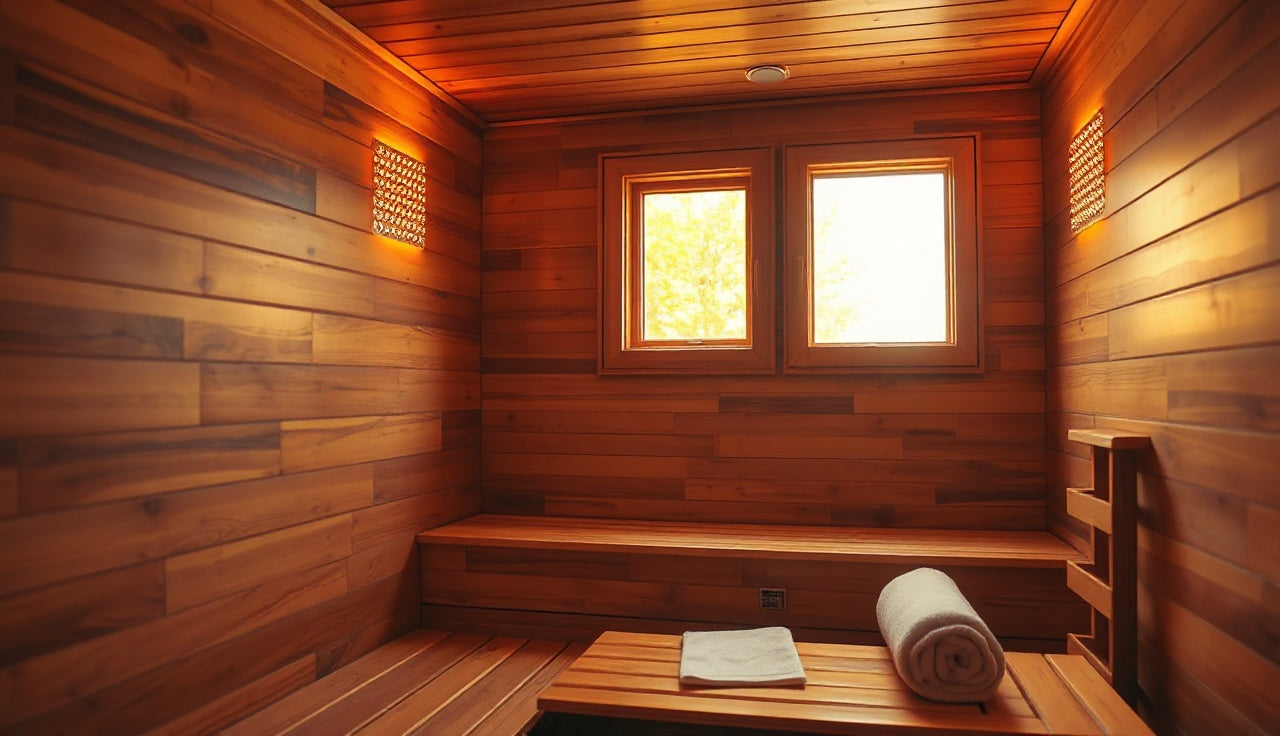
A traditional Finnish sauna heats the air around you, usually to 160 to 200°F, and that hot air heats your body. An infrared sauna skips a step. It uses infrared light panels to emit radiant heat that your skin and tissues absorb directly, without warming the surrounding air first.
So the cabin runs cooler, usually 120 to 150°F, while still producing a strong physiological response. Your core temperature rises. You sweat heavily. Your heart rate climbs. But many people find the lower air temperature easier to sit in, especially anyone who feels boxed in by a traditional sauna.
Infrared comes in three wavelength categories. Near-infrared (NIR) has the shortest wavelength and penetrates the least. Mid-infrared (MIR) reaches deeper into soft tissue. Far-infrared (FIR) has the longest wavelength and is what most consumer saunas rely on, because water molecules in human tissue absorb FIR efficiently and it drives a strong heating and sweating response.
Consumer and commercial units are almost all electric. A decent two-person model costs $1,500 to $4,000; high-end full-spectrum cabins run $6,000 to $10,000 or more. If you're just getting oriented on home options, the home sauna guide covers the full purchase landscape.
One marketing claim gets muddled a lot: the line that infrared heat "penetrates 1.5 inches" deeper than surface heat. It's technically true that FIR is absorbed by tissue below the skin surface, but it does not mean you're cooking your internal organs. The main driver is still the rise in core and skin temperature, same as a traditional sauna, and the cardiovascular and sweating responses look similar. [1]
What does the research say about infrared sauna health benefits?
The honest answer: the evidence is promising but still thin by the standards of clinical medicine. Most studies are small, many lack control groups, and very few tested infrared specifically rather than Finnish-style saunas. The biggest cardiovascular dataset comes from a Finnish cohort that followed more than 2,300 middle-aged men for roughly 20 years and found that four to seven sauna sessions per week correlated with a 63% lower risk of sudden cardiac death compared with one session per week [2]. That study used traditional Finnish saunas, not infrared, but it established the biological plausibility that heat exposure produces cardiovascular adaptations worth studying.
For infrared specifically, the most-cited evidence is about blood pressure. A randomized controlled trial published in the Journal of Human Hypertension found that far-infrared sauna use over three months significantly reduced both systolic and diastolic blood pressure in patients with mild hypertension [3]. The drops were modest, around 4 to 6 mmHg systolic. That's clinically meaningful, but it's no replacement for medication in anyone with moderate or severe hypertension.
A 2009 study of chronic heart failure patients found that repeated far-infrared sauna sessions improved heart function markers and quality of life scores over four weeks [4]. Small studies, specific populations, not healthy adults. Extrapolating too far is unwise.
Recovery and performance have decent short-term evidence. Heat acclimation reliably improves endurance markers, and a 2018 paper in the Journal of Science and Medicine in Sport linked post-exercise infrared sauna use to better neuromuscular recovery [5]. The effects are real and moderate.
Sleep and mood are harder to pin to numbers. Several small studies report better sleep quality and lower fatigue after regular infrared sessions, and the proposed mechanism (core temperature dropping after the session ends, which triggers sleep onset) is physiologically sound. Controlled trial data on infrared and sleep specifically is sparse.
Here's the plain read. Infrared saunas almost certainly do something real for cardiovascular health, blood pressure, and recovery in healthy adults. The effect sizes are moderate. Nobody has proven they add years to your life on their own, and that claim would be an enormous overreach. For a wider look at what saunas in general are linked to, the sauna benefits article runs through the full evidence base.
How do infrared sauna benefits compare to traditional sauna benefits?
This comes up constantly, and the honest answer is we don't have a good head-to-head study comparing the two in the same population using the same outcomes. What we have is two separate bodies of literature.
The traditional Finnish sauna has the larger and older evidence base, especially the Laukkanen prospective cohort data from Finland [2]. Traditional saunas run hotter (up to 200°F versus roughly 140°F for infrared), produce more acute cardiovascular stress per session, and have been used therapeutically for longer.
Infrared saunas may be easier to use consistently, which matters more than most people think. Lower air temperature means most people tolerate longer sessions. Electric infrared units heat up in 10 to 15 minutes versus 30 to 45 for a traditional wood-burning or electric-resistance sauna. For home installation, infrared cabins usually plug into a standard 240V outlet and skip the ventilation infrastructure a traditional sauna needs.
There's no credible evidence that one is dramatically better than the other for any specific outcome. Use either type consistently and you'll probably get similar cardiovascular and recovery benefits. Sit in the one you'll actually use.
| Feature | Traditional Sauna | Infrared Sauna |
|---|---|---|
| Typical air temp | 160-200°F | 120-150°F |
| Heat-up time | 30-45 min | 10-15 min |
| Session length | 10-20 min | 15-30 min |
| Humidity option | Yes (steam/löyly) | Generally no |
| Install complexity | Higher | Lower |
| Evidence quality | Stronger (larger studies) | Decent (smaller studies) |
| Typical cost range | $3,000-$12,000+ | $1,500-$10,000+ |
For a detailed side-by-side on the traditional versus steam question, the sauna vs steam room comparison is worth reading.
| 1x per week (reference) | 0% |
| 2-3x per week | 22% |
| 4-7x per week | 63% |
Source: JAMA Internal Medicine, Laukkanen et al., 2015
Are infrared saunas safe, and who should avoid them?
For most healthy adults, infrared saunas are safe when used correctly. The main risks are dehydration, orthostatic hypotension (dizziness when you stand up), and heat exhaustion if sessions run long without fluids.
Dehydration is easy to manage. Drink 16 to 24 oz of water before a session and replace fluids after. A typical 20-minute infrared session produces roughly 0.5 to 1.5 liters of sweat, depending on the person and the temperature. [6]
These groups should check with a physician first.
People with cardiovascular disease or heart failure. Some small studies actually show benefit in stable heart failure patients, but that's a medical decision, not a wellness one.
Anyone on blood pressure medication. Infrared heat lowers blood pressure. Stack it on top of medication and you can drop into symptomatic territory.
People with multiple sclerosis. Heat reliably worsens MS symptoms for a while, an effect called Uhthoff's phenomenon, because a higher body temperature slows nerve conduction. [7]
Pregnant women. There's no large safety study for infrared specifically, and elevated core temperature in early pregnancy is associated with neural tube defects. Most clinical guidance says avoid any heat source that pushes core temperature above 102°F. [8]
Older adults and young children should use caution, because their thermoregulatory systems work less efficiently.
Alcohol and sauna is a bad pairing. Alcohol blunts your ability to recognize overheating, and several sauna-related deaths in Finland have been tied to alcohol use during or right before sessions. [9]
How long should you stay in an infrared sauna per session?
Most research protocols and manufacturer guidance land at 15 to 30 minutes per session. That's a sound starting point. New to infrared? Start with 10 to 15 minutes at around 120°F and check how you feel getting out.
The ceiling isn't magic. Going 45 minutes doesn't double the benefit, and it does ratchet up dehydration and cardiovascular strain. Sessions past 30 to 40 minutes without enough fluids and at higher temperatures is where heat exhaustion risk climbs.
Frequency matters more than session length at the margins. The Finnish cardiovascular data shows the strongest benefits at four to seven sessions per week [2], which isn't realistic for most people, but two to three sessions per week produces measurable effects across the blood pressure and recovery literature. Once a week beats nothing. It's probably not enough to drive the adaptations the frequent-user studies document.
A simple starting protocol: three sessions a week, 20 minutes each, at 130 to 140°F. Give it four to six weeks before judging whether you feel any different. The adaptations aren't immediate.
Can infrared saunas help with weight loss?
Straight answer: infrared saunas do not cause meaningful long-term fat loss on their own.
You'll weigh less right after a session. Sometimes a pound or more. That's water, and it returns the moment you rehydrate, which you should. Any program or device selling infrared sauna as a fat-burning weight loss tool is misleading you.
There is real caloric expenditure during a session. Your heart rate rises to roughly 100 to 150 bpm in an infrared sauna, and that burns calories above resting rate. Estimates range from 100 to 300 extra calories for a 30-minute session depending on body size and temperature, though precise numbers are hard to pin down because most calorimetry studies used traditional saunas. [10] That's about the same as a light walk. Not nothing, but not a weight loss intervention.
The better question for body composition is whether post-exercise infrared sauna use improves recovery, letting you train harder and more often. There's some evidence it does, particularly for reducing delayed onset muscle soreness. If better recovery means more consistent training, then sauna helps body composition indirectly.
If you're pairing sauna with cold contrast therapy, the cold plunge approach has its own evidence base for recovery and metabolic adaptation.
Do infrared saunas help with inflammation and muscle recovery?
This is one of the stronger uses. Heat therapy in general has decades of evidence for muscle relaxation, less soreness, and better range of motion. Infrared specifically has been studied in a few contexts.
A 2015 study in Springerplus found that far-infrared radiation significantly reduced delayed onset muscle soreness (DOMS) after eccentric exercise compared to no treatment [11]. The likely mechanism is more blood flow to damaged tissue, which speeds clearance of metabolic byproducts.
For chronic pain conditions like fibromyalgia and rheumatoid arthritis, small studies report subjective pain-score improvement after repeated far-infrared sessions. The effects are modest and the studies are small, but given the safety profile, it's a reasonable add-on for people managing chronic musculoskeletal pain.
None of this means skip ice for an acute injury. In the first 24 to 48 hours after a muscle strain or acute joint injury, cold is still the right first move. After that window, heat, and infrared heat especially, applied to recovering tissue has good support. The ice bath and cold plunge benefits resources cover the cold side in detail.
Are infrared saunas good for mental health and stress?
The relaxation response is the most intuitive and probably the most reliably reproducible benefit of any sauna, infrared or traditional. Twenty minutes in a warm, quiet space, sweating, phone left outside, is genuinely calming for most people. That's not a small thing.
Beyond the subjective calm, there's physiological signal. Heat stress triggers the release of beta-endorphins and, in small studies, lowered cortisol in the hour after a session. [12] A 2018 JAMA Psychiatry study found that frequent sauna bathing was inversely associated with risk of psychosis in a Finnish population cohort, though this is an association, not proof of cause. [13]
For anxiety and depression specifically, the evidence is intriguing but thin. A 2016 paper proposed that whole-body hyperthermia (which sauna produces) might act as a mood regulator via the same thermoregulatory pathways implicated in SSRIs, but that's hypothesis-generating research, not clinical practice. Nobody should swap a sauna for treatment of clinical depression.
Here's what's fair to say. Regular infrared sauna use is a legitimate stress-management tool for healthy adults. The ritual, the enforced downtime, the physical warmth: they likely add up to real subjective wellbeing, independent of any single biomarker.
What should you look for when buying an infrared sauna?
A few things actually matter. A lot of heavily marketed things don't.
Heater type matters. Carbon fiber panel heaters are standard in most modern infrared saunas and produce even heat. Ceramic rod heaters are older tech and create more localized hot spots. Full-spectrum saunas add near and mid-infrared emitters alongside far-infrared. The evidence for near and mid-infrared at the doses consumer saunas produce is thinner than for far-infrared, so don't pay a big premium for full-spectrum unless you want to experiment.
EMF emissions are worth checking. Infrared heaters do emit electromagnetic fields, and levels vary a lot by brand and heater design. Reputable manufacturers provide third-party EMF test results. Look for units testing below 3 mG at seated distance, the target most safety-conscious brands aim for, though there's no federal regulatory limit specifically for consumer sauna EMF in the US.
Wood quality affects durability and off-gassing. Cedar, hemlock, and basswood are all solid. Avoid units with particle board interiors or cheap glued panels that off-gas VOCs when heated.
Size for your space and your household. A one-person unit takes roughly 3x4 feet of floor space. A two-person unit needs about 4x5 feet. Most plug into a standard 240V outlet (same as a clothes dryer), which keeps installation simple.
SweatDecks carries a curated selection of infrared and traditional home saunas if you want to see specific units in one place.
If budget is the main constraint, a portable sauna (a fabric tent with an infrared panel insert) runs $150 to $400 and delivers most of the same physiological stimulus, just with less comfort. Worth knowing about before you spend $4,000.
How does infrared sauna compare to cold plunge for recovery?
These two get pitched as rivals, but they're better understood as tools with different timing and different primary effects.
Post-exercise cold immersion (cold plunge or ice bath) reduces acute inflammation and perceived soreness. There's a real trade-off, though: blunting inflammation too hard after strength training can dull the muscle-growth signal. Several studies, including work from the Norwegian School of Sport Sciences, found that post-exercise cold water immersion reduced strength training adaptations over weeks of training. [14] For endurance athletes or anyone chasing recovery over hypertrophy, cold plunge makes more sense right after exercise.
Infrared sauna after exercise, especially the day after a hard session, supports blood flow and tissue recovery without the anti-anabolic worry. A lot of practitioners use cold in the first one to two hours post-workout and sauna the next day, or alternate the two (contrast therapy) to drive repeated circulation cycles.
Contrast therapy, alternating hot and cold, is well established in elite sport. The repeated vasoconstriction and vasodilation cycles improve circulation and, in some studies, reduce soreness better than either alone. Building a home setup? Pairing an infrared sauna with a cold plunge covers both ends of the thermal range.
For overall fitness and health, there's no clear winner. They do different jobs. If you can only pick one, let your recovery goals and preferences decide.
What are the potential downsides and criticisms of infrared saunas?
Be skeptical of some of the claims that float around infrared sauna marketing.
The detox narrative is the most oversold. Claims that infrared saunas flush heavy metals, environmental toxins, or unspecified "toxins" at higher rates than a normal sauna are largely unsupported. Your liver and kidneys handle the overwhelming majority of real detoxification. Sweat carries trace amounts of some heavy metals, but the quantities are small and the evidence that sauna speeds up clinical detox is weak. [6] Genuine heavy metal toxicity is a medical situation requiring chelation or other treatment, not a sauna.
The "passive cardio" framing is partly true and overstated. Yes, your heart rate rises during a session. No, it doesn't replace exercise in any real way. The cardiovascular adaptations from regular aerobic training (increased stroke volume, higher VO2max, vascular remodeling) are not the same as the adaptations from heat stress, even with some physiological overlap.
EMF is a legitimate thing to check at purchase, as noted above, but the level of anxiety around it in some sauna communities is out of proportion to the current evidence. The levels from reputable infrared saunas are generally in line with common household appliances.
The overall picture: infrared saunas are a worthwhile wellness tool with a real, if modest, evidence base. They are not a medical treatment. Anyone selling one as a cure for a specific disease is misrepresenting the evidence. Used consistently by a healthy adult who also sleeps, exercises, and eats reasonably well, they are almost certainly net positive.
Frequently asked questions
How often should you use an infrared sauna to see benefits?
Most studies showing measurable benefits used sessions two to five times per week over at least four weeks. The large Finnish cardiovascular cohort found the strongest associations at four to seven sessions per week, but that's ambitious for most people. Two to three sessions per week, 20 to 30 minutes each, is a realistic and evidence-supported starting target.
Is an infrared sauna better than a traditional sauna?
Neither is clearly better for health outcomes. Traditional saunas have a larger, longer evidence base, especially for cardiovascular health. Infrared saunas run cooler, heat up faster, and install more easily at home. The best sauna is the one you'll use consistently. If a lower air temperature means you sit in it more often, infrared probably wins for you.
Can you use an infrared sauna every day?
Yes, for most healthy adults daily use appears safe when sessions stay in the 15 to 30 minute range and you stay well hydrated. There's no strong evidence of harm from daily use in healthy people. Some competitive athletes and wellness practitioners go daily. If you have cardiovascular disease or any condition affecting heat tolerance, check with a physician first.
Does infrared sauna actually detox your body?
The detox claim is largely marketing. Sweat contains trace minerals and small quantities of certain compounds, but your liver and kidneys handle almost all real detoxification. There's no strong clinical evidence that infrared sauna removes meaningful quantities of heavy metals or environmental toxins compared to normal organ function. Don't choose or avoid a sauna based on detox claims.
Can infrared saunas help with chronic pain?
Small studies in fibromyalgia and rheumatoid arthritis patients report subjective pain-score improvements after repeated far-infrared sessions. The evidence is limited to small trials and the effects are modest. Given the low risk profile, it's a reasonable add-on for people managing chronic musculoskeletal pain, but it should complement, not replace, medical treatment.
What temperature should an infrared sauna be set to?
Most research protocols and manufacturer guidance suggest 120 to 150°F for infrared, with 130 to 140°F a common sweet spot. That's well below a traditional sauna's 160 to 200°F. Beginners should start at the lower end and acclimate over several sessions. The lower temperature is part of what makes longer 20 to 30 minute sessions tolerable for most people.
Can infrared saunas help you sleep better?
Several small studies report better sleep quality scores after regular infrared use. The proposed mechanism is plausible: a session raises core temperature, and the subsequent cooldown can speed sleep onset, similar to a warm bath before bed. Good controlled trial data specifically on infrared and sleep is limited, but the anecdotal and mechanistic evidence is encouraging.
Is infrared sauna safe during pregnancy?
No, not without physician approval. Raising core body temperature above roughly 102°F is associated with fetal neural tube defect risk, especially in the first trimester. Most clinical guidance recommends pregnant women avoid any heat source that can raise core temperature significantly. Infrared saunas fall into that category. This is a non-negotiable check-with-your-doctor situation.
Do infrared saunas help with weight loss?
Not meaningfully as a fat loss tool. You lose water weight per session, but it returns with rehydration. Caloric burn during a 30-minute session is roughly 100 to 300 calories, similar to light walking. Better recovery from sauna use may indirectly support more consistent exercise, which helps body composition, but sauna alone is not a meaningful weight loss intervention.
What is EMF and is it a concern with infrared saunas?
EMF stands for electromagnetic fields, emitted by infrared heater panels. Levels vary by brand and heater design. Reputable manufacturers publish third-party EMF test results and target readings below 3 mG at seated distance. There's no federal regulatory limit specifically for consumer sauna EMF in the US. Ask for test data before buying, and avoid brands that won't provide it.
How long does it take to feel benefits from infrared sauna use?
Relaxation and reduced muscle soreness are often noticeable after just a few sessions. Cardiovascular adaptations, lower resting blood pressure, and better sleep typically take four to six weeks of consistent use to become measurable. Don't judge the practice after one or two sessions. The research protocols that show real benefits generally run at least four weeks.
Can you combine infrared sauna with cold plunge?
Yes, and many athletes do exactly this, alternating heat and cold in what's called contrast therapy. A common protocol is 10 to 15 minutes in the infrared sauna, then 2 to 5 minutes of cold immersion, repeated two to four cycles. The repeated thermal swings drive circulation and, in some studies, reduce soreness more effectively than either alone.
Are portable infrared saunas as effective as cabin-style units?
Physiologically, they can produce similar core temperature increases and sweating if the heater output is adequate. The main drawbacks are comfort (you sit in a fabric tent with your head out) and build quality. For a first-timer or a tight budget, a portable unit costing $150 to $400 is a legitimate way to test the experience before committing to a full cabin.
Sources
- Journal of Photochemistry and Photobiology B: Biology, Vatansever & Hamblin (2012) - Far infrared radiation: biological effects and medical applications: Far-infrared radiation is absorbed by water molecules in tissue and produces physiological heating effects; penetration depth and primary mechanism of action
- JAMA Internal Medicine, Laukkanen et al. (2015) - Association Between Sauna Bathing and Fatal Cardiovascular and All-Cause Mortality Events: Men who used a sauna 4-7 times per week had a 63% lower risk of sudden cardiac death compared with once-per-week users in a 20-year Finnish cohort of over 2,300 men
- Journal of Human Hypertension, Imamura et al. (2001/2005) - Repeated thermal therapy improves impaired vascular endothelial function in patients with coronary risk factors: Far-infrared sauna use over three months significantly reduced both systolic and diastolic blood pressure in patients with mild hypertension by approximately 4-6 mmHg systolic
- Journal of Cardiology, Kihara et al. (2009) - Repeated sauna therapy improves vascular endothelial and cardiac function in patients with chronic heart failure: Repeated far-infrared sauna sessions improved heart function markers and quality of life scores in chronic heart failure patients over four weeks
- Journal of Science and Medicine in Sport, Skorski et al. (2018) - Sauna use as a recovery tool following exercise: Post-exercise infrared sauna use was linked to improved neuromuscular recovery markers
- Archives of Environmental and Contamination Toxicology, Sears et al. (2012) - Arsenic, cadmium, lead, and mercury in sweat: a systematic review: Sweat contains trace amounts of some heavy metals; sweat production during a typical sauna session is roughly 0.5-1.5 liters depending on individual and temperature
- National Multiple Sclerosis Society - Heat and MS (Uhthoff's Phenomenon): Elevated body temperature worsens MS symptoms temporarily (Uhthoff's phenomenon) because it slows nerve conduction in demyelinated fibers
- American College of Obstetricians and Gynecologists (ACOG) - Committee Opinion on Heat Exposure During Pregnancy: Clinical guidance recommends pregnant women avoid heat sources capable of raising core body temperature above approximately 102°F due to fetal neural tube defect risk
- Finnish Institute for Health and Welfare (THL) - Sauna safety and alcohol: Several sauna-related deaths in Finland have been linked to alcohol consumption during or immediately before sauna use; alcohol impairs thermoregulatory response
- European Journal of Applied Physiology, Pilch et al. (2013) - Effect of single Finnish and infrared sauna session on white blood cell count and HSP70 concentration: Heart rate during infrared sauna sessions rises to approximately 100-150 bpm, indicating significant cardiovascular demand and caloric expenditure above resting levels
- Springerplus, Tsai et al. (2015) - Molecular regulation of exercise-induced muscle damage and its recovery: Far-infrared radiation significantly reduced delayed onset muscle soreness after eccentric exercise compared to no treatment
- Psychosomatic Medicine, Kubota et al. (2004) - Relationship between sauna bathing and plasma beta-endorphin and cortisol: Heat stress from sauna sessions triggers release of beta-endorphins and has been linked to reduced cortisol levels in the recovery period following a session
- JAMA Psychiatry, Laukkanen et al. (2018) - Sauna bathing frequency and risk of psychosis: Frequent sauna bathing was inversely associated with risk of psychosis in a Finnish population cohort (association, not proven causation)
- Journal of Physiology, Roberts et al. (2015) - Post-exercise cold water immersion attenuates acute anabolic signalling and long-term adaptations to resistance training: Post-exercise cold water immersion has been shown in multiple studies to attenuate strength and hypertrophy adaptations from resistance training, a relevant trade-off in recovery decisions

Share:
How to construct a sauna: a complete step-by-step guide
Ice bath for sale: what to buy, what to skip, and what it costs