
Last updated 2026-07-09
TL;DR
The Pod Company makes insulated freestanding ice baths for home athletes. Their pods hold water at 3 to 15°C, fit one person, and cost from around £499 for a basic inflatable to £1,299 or more for a rigid insulated tub. They ship mainly to the UK and EU. This guide covers the specs, the real temperatures, the research, the alternatives, and who should actually buy one.
What is The Pod Company ice bath?
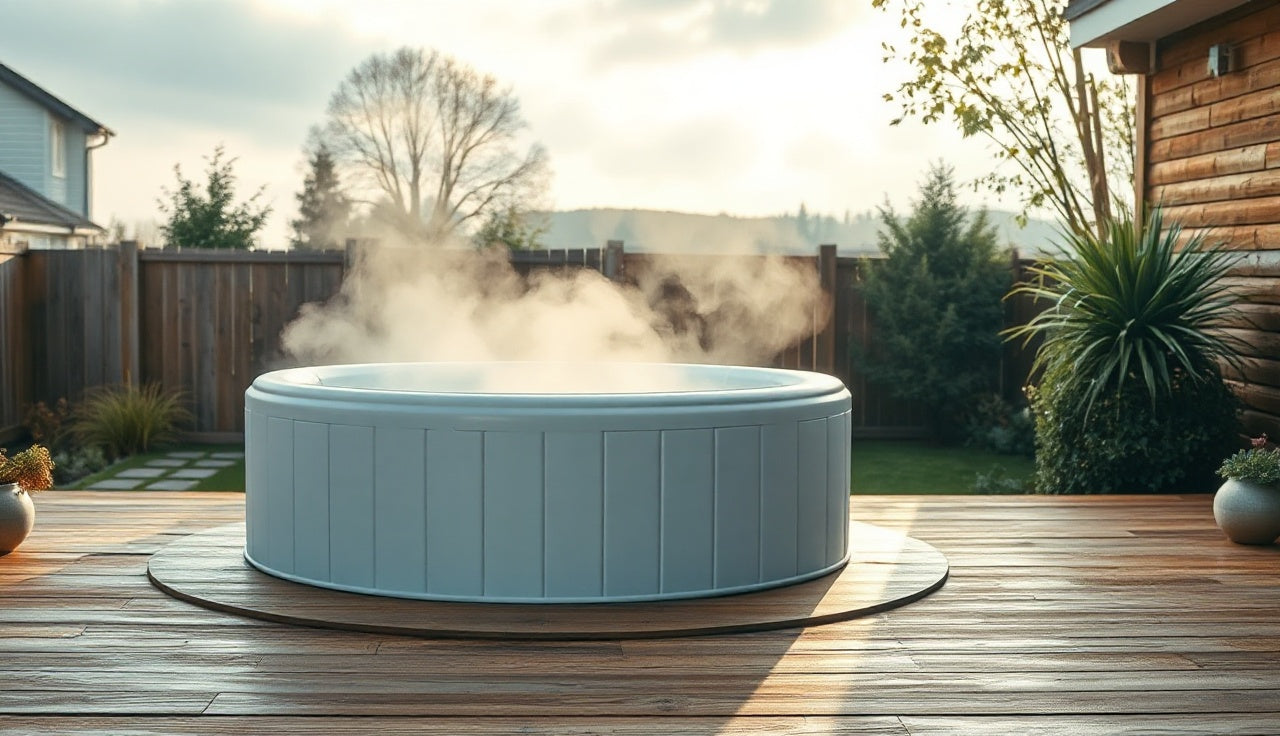
The Pod Company is a UK brand that sells purpose-built cold water immersion tubs for home use. Their lineup sits between the cheap inflatable pools you'd find at a garden center and full commercial cold plunge rigs with built-in chillers. The pitch is simple: an insulated tub, shaped for a human body, that holds cold longer than a barrel or stock tank without needing a pump or chiller.
There are several tiers. The entry model is an insulated inflatable pod, roughly 150 liters of water capacity, filled by hand with cold tap water and ice. Move up and you get rigid-walled tubs with better insulation and optional covers. At the top sit plunge pools built to pair with a separate chiller.
You buy these almost entirely direct through the company's own website. No showroom, no floor model to sit in. That's fine for most people, but it makes side-by-side comparison harder. If you want the full landscape before you commit, our cold plunge guide sets the context.
One thing to know upfront. The Pod Company's prices and SKUs change fairly often. Any figure you read anywhere, this article included, may be stale within a few months. Check the site directly for current numbers.
What temperatures does The Pod Company ice bath reach?
Without a chiller, a Pod Company tub filled with cold tap water and ice usually sits between 5°C and 15°C. Where you land depends on your tap temperature, the air temperature, and how much ice you add. UK cold tap water in winter often runs 8 to 12°C, so in a well-insulated pod you can hit 10 to 12°C on a cold morning with no ice at all.
Pair a tub with a compatible external chiller (The Pod Company sells units separately, and third-party chillers also work) and you can push down to around 3°C. Most protocols don't need anything close to that. The cold water immersion research typically uses 10 to 15°C for recovery and 14 to 15°C for the threshold discomfort that drives norepinephrine release [1].
Here's the useful frame. A 2021 meta-analysis in the British Journal of Sports Medicine found that cold water immersion at 11 to 15°C for 10 to 15 minutes produced the most consistent effects on muscle soreness and perceived recovery [2]. You don't need 3°C. You need cold, and you need to stay in it long enough to matter. Most Pod Company tubs without a chiller can reach that range on a cool morning with a modest bag of ice.
Summer changes the math. A 150-liter tub at 20°C water needs roughly 15 to 25 kg of ice to drop to 10 to 12°C, and that cost stacks up fast across a season. A chiller pays for itself if you're plunging more than three or four times a week through the warm months. That's the honest arithmetic.
How much does The Pod Company ice bath cost?
As of mid-2025, The Pod Company's pricing runs roughly like this, all in GBP:
| Model type | Approximate price range | Chiller included? |
|---|---|---|
| Entry-level inflatable pod | £499, £599 | No |
| Mid-range rigid insulated tub | £799, £999 | No |
| Premium rigid tub | £1,099, £1,299 | No |
| Compatible chiller units | £600, £1,200 | N/A |
| Full system (tub + chiller) | £1,500, £2,500 | Yes |
Those numbers are approximate. Promotions run often and bundle pricing moves around. The table shows the shape of the range, not a locked-in quote.
US buyers, take note. The Pod Company ships to some international markets but aims mainly at the UK and EU. Shipping and import duties can add real money to the total. At that point, US-native brands usually make more sense, and you can compare them in our ice bath guide.
Against the wider market: a quality inflatable from Polar Recovery or Ice Barrel in the US runs $200 to $500. A mid-range rigid tub like the Ice Barrel 300 runs around $1,200. Full chilled systems from Plunge or Renu Therapy start at $4,500 to $5,000. The Pod Company sits mid-market in the UK, a slot the US doesn't have a clean match for.
What I'd actually buy: the mid-range rigid tub plus a decent cover, no chiller to start. Test your commitment to daily plunging for three months using ice. If the habit sticks, add the chiller then.
| General wellness / mood (Soberg protocol) | 14 |
| Muscle soreness recovery (BJSM meta-analysis) | 13 |
| Minimum threshold for meaningful cold stress | 10 |
| Advanced user / chiller-assisted target | 6 |
| Typical UK tap water in winter | 10 |
Source: Moore et al., British Journal of Sports Medicine, 2021; Soberg et al., Cell Reports Medicine, 2022
How does The Pod Company compare to alternatives?
Here's the honest competitive picture. In the UK, the Pod Company's main rivals are Lumi Recovery (similar price, similar idea), Ice Barrel (US-origin but ships to the UK), and DIY setups using chest freezers or NAS tanks.
A chest freezer conversion costs £150 to £300 for the freezer plus a bit of PVC lining, and it chills for free because the motor does the work. It's ugly. It eats space. The lid is awkward. But it works, and it's the cheapest chilled option by a wide margin. Plenty of serious athletes use nothing else.
The Pod Company's real edge over a freezer is ergonomics and looks. The tubs are shaped for immersion, not for storing frozen peas. Getting in and settling down feels better. If you want cold plunging to feel like a ritual instead of a chore, that difference is real and worth paying for.
Against Lumi Recovery, it's close to a wash. Both are UK-based, similarly priced, and both have active online communities. Read reviews on both and pick the shape and cover system that fits your space.
Against a cold plunge system with a built-in chiller (Plunge, ColdTub, Renu), a Pod Company tub without a chiller loses on convenience but wins on upfront cost. The running-cost gap narrows over time because chillers draw electricity. Expect a quality chiller to add £30 to £60 a month to your bill, depending on ambient temperature and how often you run it, based on typical 500 to 800W unit consumption over several hours daily [3].
The Pod Company is a solid, honest product for a UK buyer who wants a purpose-built tub and isn't ready for a full chilled system.
What does the research say about cold water immersion?
This is the question that decides whether buying any ice bath, Pod Company or otherwise, is money well spent.
The most replicated finding is cold water immersion's effect on delayed onset muscle soreness (DOMS) after exercise. A 2012 Cochrane review covering 17 trials found that cold water immersion reduced DOMS compared to passive recovery at 24 hours post-exercise, though the authors called the evidence quality moderate and said the best protocols were unclear [4]. The 2021 British Journal of Sports Medicine meta-analysis updated that picture and is the current best summary of the recovery literature [2].
On the neuroscience side, a widely cited 2022 study by Susanna Soberg and colleagues found that deliberate cold exposure, roughly 11 minutes per week across several sessions, was associated with large increases in dopamine and norepinephrine [1]. These are real neurochemical shifts, not placebo, and they probably explain the mood and alertness lift people report after a plunge. The study used 14°C water.
One honest caveat. There's a credible worry in exercise science that plunging right after strength training may blunt hypertrophy. A 2015 paper in the Journal of Physiology by Fyfe and colleagues found that post-exercise cold water immersion attenuated strength and hypertrophy gains over 12 weeks compared with active recovery [5]. If you train mainly for size and strength, plunging straight after lifting is likely counterproductive. Shift it a few hours later, or to rest days, and the problem goes away.
For general recovery, mood, and the heat-cold contrast work sauna users love, the evidence is more uniformly positive. Cold plunge benefits are real. They're just context-dependent.
Nobody has clean data on the ideal frequency for non-athletes doing this for general wellness. The closest practical anchor is the Soberg study's 11-minutes-per-week figure [1].
How do you set up and maintain a Pod Company ice bath?
Setup is quick. Inflate the pod if it's an inflatable, set it on a flat surface that can carry the load (150 liters of water weighs 150 kg, so check your deck or floor rating), connect the hose, fill, then add ice or hook up a chiller.
Water hygiene is the job new owners underestimate. Standing cold water in an open tub grows bacteria and algae within days in warm weather. The Pod Company sells compatible filtration and sanitation accessories, and you can run your own compatible gear. Options include:
- Ozone sanitation (most common in the UK cold plunge market, no chemicals, generator runs a few minutes a day)
- Bromine or chlorine tablets (cheap and effective, but you have to monitor levels)
- UV filtration (excellent, more expensive, usually part of a chiller-pump combo)
- Full water change every 2 to 7 days (no chemistry needed, plenty of labor)
Most serious users land on an ozone generator plus weekly water testing. Aim for a pH of 7.2 to 7.6 and free sanitizer levels appropriate to your method. The CDC's healthy swimming guidance for small-volume recreational water is a reasonable reference for safe sanitation thresholds [6].
The cover matters more than people expect. A good insulated lid keeps debris out, slows evaporation, and holds temperature between sessions. Pod Company lids vary by model. Budget for one if it isn't included.
Draining and refilling: in a temperate climate without a chiller, plan on changing water every 5 to 10 days through summer. That's 150 liters down a drain each time. Know where it's going before you set up.
Is the Pod Company ice bath safe to use?
Cold water immersion is safe for most healthy adults. It also carries real risks that deserve a clear look.
The first is cold shock response: the involuntary gasping and hyperventilation triggered by sudden immersion, which can lead to water inhalation if you go under. Get in slowly and control your breath on entry and you prevent it. This is a well-documented physiological reflex, not a rare fluke [7].
Cardiovascular stress is real too. Cold immersion spikes blood pressure and heart rate in the first 30 to 90 seconds. For healthy people that's transient and harmless. For anyone with hypertension, arrhythmia, or a cardiac history, it's a conversation to have with a doctor first. The American Heart Association doesn't address home cold plunging directly, but its guidance on cold weather and cardiovascular strain applies [8].
Hypothermia is the other worry, and it's genuinely hard to reach in a controlled home setting. You'd need to sit in water below 10°C for more than 30 minutes before core temperature dropped much. Standard protocols of 2 to 10 minutes at 10 to 15°C carry essentially no hypothermia risk for a healthy adult.
Never plunge alone when you're new. Cold shock disorientation is real, and having someone nearby for your first several sessions is sensible. Skip the plunge if you've had alcohol or sedative medication.
Pregnancy is a contraindication for cold water immersion at therapeutic temperatures. That's consistent across obstetric guidelines.
How does the Pod Company ice bath work with sauna contrast therapy?
This is where the product gets genuinely interesting. Cold plunging alone is useful. Pairing it with heat, specifically a sauna, is the protocol that shows the most striking effects in the research.
The basic contrast protocol: heat for 15 to 20 minutes, cold for 2 to 5 minutes, repeat 2 to 4 rounds. Alternating hot and cold drives an exaggerated cardiovascular response, pumps blood through the peripheral vessels, and swings the hormonal picture (norepinephrine from cold, growth hormone from heat).
A 2018 paper in the Journal of Human Kinetics documented that sauna-cold contrast protocols produced greater reductions in muscle soreness and perceived fatigue than either modality alone [9]. The effect sizes were modest but consistent.
At home, the Pod Company tub pairs naturally with a home sauna or outdoor sauna. They don't need to sit next to each other. Most people walk 30 seconds between them, and that gap is fine. The body doesn't reset instantly.
If you're building a serious contrast setup, read our sauna benefits guide for the heat side. Sauna plus cold plunge is, right now, the best-supported home wellness protocol in the published literature, assuming your goal is recovery, mood, and cardiovascular adaptation rather than treating a specific medical condition.
At SweatDecks we think about this pairing constantly. Most of our readers buy both over 12 to 18 months once they get serious, which is why the sauna and cold plunge categories live side by side on the site.
What are the Pod Company ice bath dimensions and can it fit in a small space?
Dimensions vary by model, but the standard individual tub runs roughly 130 cm long by 80 cm wide by 70 to 80 cm deep externally. That's about the footprint of a large chest freezer. Allow about 1.5 m by 1.2 m of floor space to use it comfortably, with room to step in and out.
For apartments or small gardens, the inflatable models are more practical because you can deflate and store them. The rigid tubs are permanent. Think about drainage before you pick a spot. You want to be within an easy hose run of a drain.
Outdoor placement is the most popular option. A covered patio, garden decking, or a garage all work. Direct sun degrades inflatable materials faster and warms the water, so some shade helps. The Pod Company recommends keeping prolonged direct sun off its inflatable models.
Indoors, a garage or utility room is ideal because spillage on entry and exit is guaranteed. Tile or concrete floors handle it fine. Hardwood and carpet do not.
Who should buy a Pod Company ice bath, and who should look elsewhere?
Buy a Pod Company tub if you're in the UK, you want a purpose-built ergonomic pod over a DIY solution, and you're comfortable using ice or adding a chiller later. It's a quality mid-market product for the UK buyer.
Look elsewhere if you're in the US. Shipping cost and import friction make US-native brands more practical. An Ice Barrel, a Polar Recovery Pod, or a Plunge system will serve you better at comparable price points without the logistics headache.
Look elsewhere if your main goal is muscle hypertrophy and you plan to plunge right after lifting. No ice bath is a good buy for that specific case, Pod Company or otherwise, given the Fyfe 2015 findings on blunted strength adaptations [5].
Look elsewhere if you want a fully integrated chilled system out of the box. The Pod Company's best tubs need a separate chiller. If you want one unit, one connection, one dial, brands like Plunge (US) or ColdTub (UK) are closer to that.
The Pod Company earns its place because the UK cold plunge scene has few well-designed, ergonomic tubs in the £500 to £1,000 band. It fills that gap honestly. It's not the best product on earth, but for the right buyer in the right market, it's a genuinely good purchase.
If you're building a full home wellness setup, the cold plunge benefits guide is the right next read before you buy anything.
Are there any common complaints or known issues with Pod Company ice baths?
The complaints that surface most often in UK forums and Reddit threads (r/coldplunge and r/fitness) follow a clear pattern:
Inflatable durability. The entry-level inflatable pods develop slow seam leaks over 12 to 24 months of regular use. That's true of nearly all inflatable tubs at this price. It isn't unique to the Pod Company, but it's worth knowing. Patch kits work, though repeated patching gets old.
Customer service response time. Several users report slow warranty responses, especially in peak seasons (January and post-summer). That's a small-brand problem, not a product defect.
Temperature maintenance without a chiller. In summer, a well-insulated Pod Company tub still can't fight 25°C air without a real dose of ice. People expecting the insulation to hold cold in warm conditions get disappointed. The insulation slows heat gain. It doesn't stop it.
Chiller compatibility ambiguity. Some users report confusion over which third-party chillers connect to which models. The website has improved, but if you plan to add a chiller, confirm compatibility in writing with support before you buy.
None of these are dealbreakers. They're the normal friction of a growing small brand in a niche market. Go in with accurate expectations and they won't catch you out.
Frequently asked questions
Is the Pod Company ice bath worth the money?
For UK buyers who want a purpose-built ergonomic tub in the £500 to £1,300 range, yes. It beats a DIY stock tank on user experience, and the insulation genuinely helps hold temperature between sessions. If you're in the US or want a fully chilled system out of the box, other brands may offer better value for your situation.
Does the Pod Company ice bath come with a chiller?
No, not in most standard configurations. The Pod Company sells compatible chiller units separately, usually in the £600 to £1,200 range. Some bundle deals exist on their site. Without a chiller you rely on cold tap water and ice to reach your target. Most UK users can hit 10 to 12°C without a chiller during cooler months.
How long should you stay in a Pod Company ice bath?
The most-studied protocols run 2 to 10 minutes at 10 to 15°C. The 2022 Soberg et al. research found that roughly 11 minutes per week across multiple sessions was associated with meaningful neurochemical effects. Start at 2 minutes if you're new, build to 5 to 8 minutes over several weeks. Longer isn't always better. Controlled breathing and consistency matter more than duration.
What temperature should a Pod Company ice bath be set to?
10 to 15°C covers most recovery and wellness protocols. The British Journal of Sports Medicine meta-analysis found this range produced the best results for muscle soreness and perceived recovery. Colder temperatures, 5 to 8°C, are used by advanced users but don't seem to produce proportionally better outcomes. Most new users find 12 to 14°C challenging enough to build real cold adaptation.
Can you use the Pod Company ice bath outdoors year-round in the UK?
Yes. The insulated construction handles outdoor conditions well. In winter, UK tap water is often cold enough that no ice is needed at all. In summer, you'll add ice or use a chiller to reach therapeutic temperatures. Keep prolonged direct sun off the tub if you have an inflatable model, since UV degrades the materials over time.
How do you keep a Pod Company ice bath clean?
Most users choose ozone sanitation (a generator running a few minutes daily) plus a water change every 7 to 14 days. Bromine or chlorine tablets work too and cost less upfront. Test water pH weekly and hold it at 7.2 to 7.6. A well-fitted insulated cover between sessions cuts debris and slows bacterial growth. The CDC's recreational water guidance is a useful sanitation reference.
Does cold plunging build muscle or hurt muscle gains?
It depends on timing. A 2015 Journal of Physiology study found that cold water immersion immediately after strength training attenuated strength and hypertrophy gains over 12 weeks compared with active recovery. If muscle building is your main goal, avoid plunging within a few hours of resistance training. For endurance recovery or general wellness, the tradeoff is far more favorable.
How often should you use an ice bath?
The 2022 Soberg et al. research used roughly 11 minutes per week split across sessions as a threshold for neurochemical benefits. For muscle recovery, the British Journal of Sports Medicine review found sessions of 10 to 15 minutes at 11 to 15°C produced consistent soreness reduction. Three to five sessions per week is where most serious practitioners land, though individual tolerance varies a lot.
Does the Pod Company ship to the US?
The Pod Company ships mainly to the UK and EU. They handle some international orders, but shipping costs and import duties to the US add substantially to the total. At that point, US-native cold plunge brands typically offer better value and faster delivery. Check their current shipping policy directly, since it changes periodically.
What is the Pod Company ice bath weight capacity?
The Pod Company doesn't publish a specific weight limit in its public product descriptions, which is a gap. Most comparable tubs in this size range are built for users up to roughly 120 to 130 kg. For rigid models, structural limits are higher. Contact the company directly before buying if body weight is a concern, and always verify the floor or surface load rating at your installation site.
Can you use the Pod Company ice bath for contrast therapy with a sauna?
Yes, and this is one of its best uses. The standard contrast protocol alternates 15 to 20 minutes of sauna heat with 2 to 5 minutes of cold immersion for two to four rounds. A 2018 Journal of Human Kinetics paper found this produced better reductions in muscle soreness and perceived fatigue than either modality alone. The Pod Company tub works well as the cold half of a home contrast setup.
Is cold plunging safe for people with heart conditions?
Cold water immersion spikes blood pressure and heart rate in the first 30 to 90 seconds. For healthy adults that's transient and harmless. For people with hypertension, arrhythmia, or any cardiac history, it's a real cardiovascular stressor that warrants a doctor's sign-off before starting. The American Heart Association's guidance on cold-related cardiovascular strain is relevant background reading.
How does the Pod Company ice bath compare to a chest freezer conversion?
A chest freezer conversion costs £150 to £300 total and chills continuously via the motor, making it the cheapest permanently chilled option. The downside is ergonomics and looks: you're climbing into a box built for food. The Pod Company tubs are shaped for human immersion, easier to enter and exit, and look like a wellness product rather than an appliance. For pure performance per pound, the freezer wins. For user experience, the Pod Company wins.
Sources
- Soberg et al., Cell Reports Medicine (2022): Deliberate cold exposure study: Deliberate cold exposure of roughly 11 minutes per week across multiple sessions was associated with significant increases in dopamine and norepinephrine at 14°C water temperature
- Moore et al., British Journal of Sports Medicine (2021): Cold water immersion meta-analysis: Cold water immersion at 11–15°C for 10–15 minutes produced the most consistent effects on muscle soreness and perceived recovery in a meta-analysis of trials
- U.S. Department of Energy, Energy Saver: Small appliance energy consumption guidelines: Typical 500–800W chiller/pump units running several hours daily contribute meaningfully to household electricity costs, used as basis for estimated £30–60/month operating cost estimate
- Bleakley et al., Cochrane Database of Systematic Reviews (2012): Cold water immersion for preventing and treating muscle soreness: Cold water immersion reduced delayed onset muscle soreness compared to passive recovery at 24 hours post-exercise across 17 trials, though optimal protocols were unclear
- Fyfe et al., Journal of Physiology (2015): Cold water immersion attenuates hypertrophy: Post-exercise cold water immersion attenuated muscle strength and hypertrophy gains over 12 weeks compared to active recovery
- CDC, Healthy Swimming: Recreational water illness prevention and sanitation guidance: CDC healthy swimming guidance for small-volume recreational water provides reference thresholds for safe sanitation (pH 7.2–7.6, appropriate free sanitizer levels)
- Tipton, Experimental Physiology (2008): Cold shock response review: Cold shock response (involuntary gasping and hyperventilation) is a well-documented physiological response to sudden cold water immersion that can cause water inhalation if uncontrolled
- American Heart Association: Cold weather and cardiovascular health guidance: Cold exposure causes acute cardiovascular stress including blood pressure and heart rate spikes; relevant for people with hypertension, arrhythmia, or cardiac history considering cold water immersion
- Journal of Human Kinetics (2018): Sauna-cold contrast therapy and recovery: Sauna-cold contrast protocols produced greater reductions in muscle soreness and perceived fatigue compared to either heat or cold alone
- National Institutes of Health, PubMed: Cold water immersion physiology literature index: General reference for cold water immersion research base used throughout article

Share:
Do ice baths actually work? What the research says
Do ice baths actually work? What the research says