
Last updated 2026-07-09
TL;DR
Steam rooms use 100% humidity at 100-115°F to warm the body, which can improve circulation, ease breathing, loosen stiff joints, and help you relax. The real downsides are dehydration, overheating risk, skin and respiratory infections from poorly maintained equipment, and limited cardiovascular evidence compared to dry saunas. Know both sides before you commit.
What does a steam room actually do to your body?
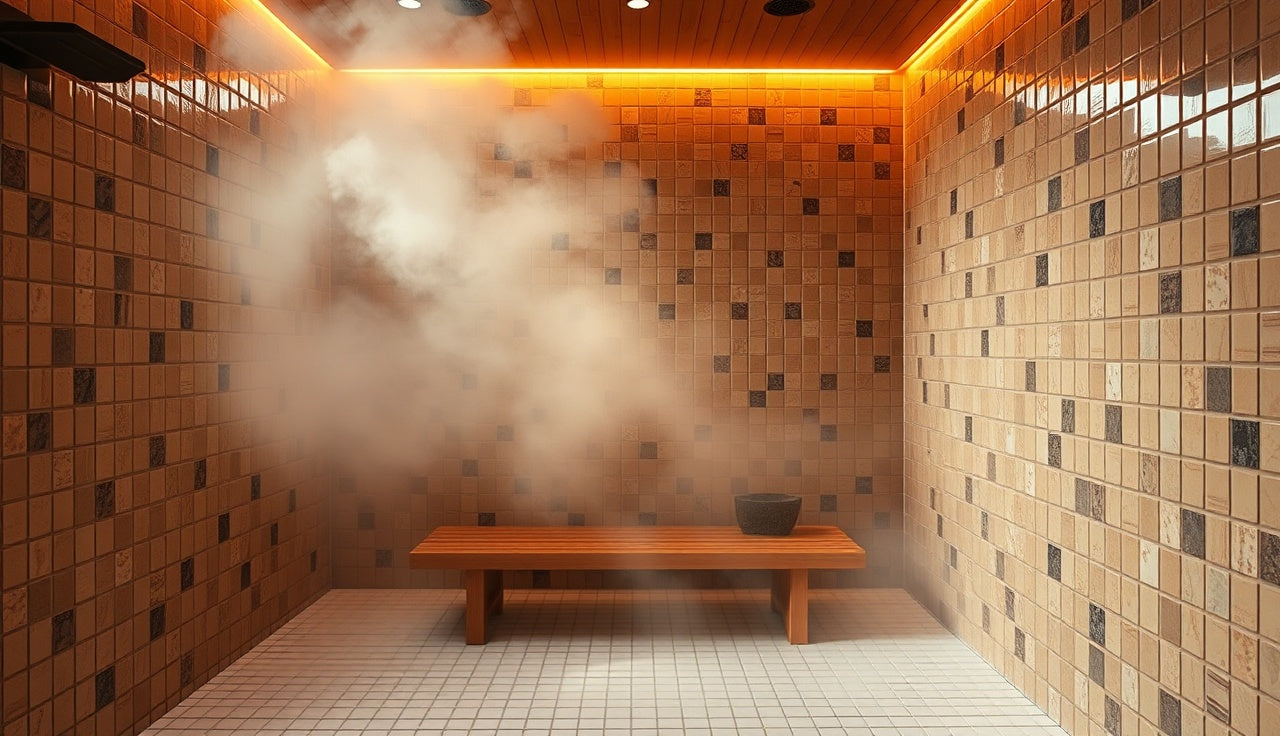
A steam room is a sealed, tiled or acrylic enclosure that holds air at 100 percent relative humidity and somewhere between 100°F and 115°F (38°C to 46°C). The generator keeps injecting steam, so the air never dries out. That thick, wet heat feels warmer than it measures because moist air moves heat to skin far more efficiently than dry air does.
Your body responds the way it responds to any heat stress: core temperature rises, your heart rate climbs to push blood toward the skin surface, sweat glands switch on, and capillaries near the surface dilate so you can radiate heat outward. The difference from a dry sauna is degree, not kind. Dry saunas run 150°F to 195°F, which triggers a more intense cardiovascular response. Steam rooms are milder on the thermometer but feel oppressive because you cannot cool yourself by evaporation. Your sweat just beads and runs off.
The net physiological picture: a moderate rise in heart rate (typically 50 to 75 percent above resting, though this varies a lot between people) [1], dilation of superficial blood vessels, a modest rise in core temperature, and real fluid loss through sweat even when you don't feel it happening. That last point is where most of the risk lives.
What are the proven benefits of using a steam room?
The honest answer is that the evidence base for steam rooms specifically is thinner than most wellness marketing admits. A lot of what gets attributed to steam rooms is borrowed from dry-sauna research, which is far more extensive. Here is what the data actually supports.
Cardiovascular and circulation effects. Passive heat raises heart rate and cardiac output in ways that loosely mimic light aerobic exercise. A 2018 review in Mayo Clinic Proceedings that pooled data from Finnish sauna studies found frequent sauna use associated with reduced risk of sudden cardiac death and cardiovascular disease mortality [2]. Those studies used dry saunas at Finnish temperatures (around 176°F), not steam rooms, so direct translation is imperfect. But the underlying mechanism, passive heat raising cardiac demand, applies to any heat modality. Steam room sessions at lower temperatures produce a softer version of that effect.
Respiratory relief. This one has decent mechanistic support. Inhaling warm, humid air loosens mucus in the upper airways and can temporarily relieve congestion from colds or sinusitis. A 2017 Cochrane review on steam inhalation for upper respiratory symptoms found modest benefit for symptom relief, though no faster recovery [3]. If you're congested, fifteen minutes in a steam room often feels dramatically better. That's real, even if it's not a cure.
Skin hydration and pore opening. Wet heat hydrates the stratum corneum (the outermost skin layer) temporarily, and sweat clears some surface debris from pores. The effect is real but short-lived. Post-steam skin feels softer partly from hydration and partly because vasodilation brings more blood to surface tissue. There is no peer-reviewed evidence that steam rooms clear acne or change skin long-term, despite what spa menus suggest.
Muscle recovery and soreness. Heat therapy reduces delayed-onset muscle soreness (DOMS). A 2015 study in the Journal of Clinical Medicine Research found that moist heat cut DOMS markers more effectively than dry heat in the immediate post-exercise window [4]. Steam rooms are a reasonable way to deliver that moist heat to the whole body, though targeted hot packs or contrast therapy (alternating heat and cold) have more direct evidence behind them. If you want to pair steam with cold, the cold plunge side of contrast therapy is worth reading separately.
Stress and sleep. Heat exposure raises parasympathetic nervous system activity after a session and reliably lowers perceived stress. The mechanism involves the drop in core temperature after you leave the heat, which is the same signal that starts sleep. This is well-documented for sauna, and the principle applies to any heat modality. Nothing steam-room-specific to cite here, but the effect is real, and personally it's one of the most useful things about any heat session.
What are the real disadvantages and risks of steam rooms?
This is the section most articles skip past quickly. Don't.
Dehydration. You sweat in a steam room even though you can't feel it evaporating. A 20-minute session can cost you 500 ml to 1,000 ml of fluid depending on your size and the room's temperature [1]. That's a meaningful fraction of daily intake. Dehydration degrades performance, raises heart rate further, and at the extreme end can trigger heat exhaustion. Drink before, and drink after.
Overheating and heat illness. Steam rooms sit at the milder end of the heat spectrum, but mild doesn't mean safe for everyone. People with uncontrolled hypertension, heart failure, or autonomic dysfunction face real risk. Pregnancy is another clear contraindication: elevated core temperature in the first trimester is associated with neural tube defects in animal studies, and most OBs tell pregnant women to avoid steam rooms entirely [5]. If you have any cardiovascular condition, talk to a doctor before you start regular sessions. This is not a hedge for liability, it's just correct.
Microbial contamination. This is the one that gets underplayed. A warm, humid, tiled surface is a near-perfect growth environment for bacteria, fungi, and certain viruses. Neglected steam rooms harbor Staphylococcus, Pseudomonas, and various fungal species including those that cause tinea (athlete's foot) and nail infections [6]. Public steam rooms that don't drain and disinfect properly carry meaningful infection risk. Wear flip-flops, don't sit directly on benches without a towel, and skip steam rooms if you have any open skin wounds. For home units, cleaning the generator and surfaces after every use is not optional.
Respiratory risk for certain people. The same warm, humid air that soothes a stuffy nose can irritate airways in people with asthma or COPD, especially if the steam room isn't clean. Dirty generators can aerosolize mineral deposits or microbial contaminants. People with reactive airway disease should start with very short sessions (5 minutes or less) and exit at any sign of tightening.
Alcohol and steam rooms don't mix. Alcohol dilates blood vessels and impairs thermoregulation. Combining alcohol with any passive heat raises the risk of syncope (fainting) and, if you're alone, drowning in condensate or simply falling. Facilities that ban alcohol before steam use are doing it right.
Claustrophobia and humidity discomfort. Not a medical risk, but worth naming. A sealed room at 100 percent humidity feels physically oppressive to many people, especially beginners. Some find it triggering. There's nothing wrong with finding steam rooms unpleasant and choosing dry sauna instead.
| Steam room temp (°F) | 107 |
| Dry sauna temp (°F) | 172 |
| Infrared sauna temp (°F) | 130 |
| Steam room humidity (%) | 100 |
| Dry sauna humidity (%) | 12 |
| Infrared sauna humidity (%) | 25 |
Source: Harvard Health Publishing and Mayo Clinic Proceedings (citations 1, 2)
How does a steam room compare to a dry sauna?
The sauna vs steam room question comes up constantly, and the answer depends on what you're after.
| Feature | Steam Room | Dry Sauna |
|---|---|---|
| Temperature | 100 to 115°F (38 to 46°C) | 150 to 195°F (65 to 90°C) |
| Humidity | ~100% | 5 to 20% |
| Cardiovascular intensity | Moderate | Higher |
| Respiratory feel | Moist, soothing | Dry, can irritate sinuses |
| Infection risk | Higher (wet surfaces) | Lower (too dry for most pathogens) |
| Evidence base | Thin | Much stronger (Finnish studies) |
| Skin hydration | Yes, temporarily | Not directly |
| Typical session length | 10 to 20 min | 10 to 20 min |
| Home installation cost | $2,500, $6,000+ | $3,000, $20,000+ |
For cardiovascular benefit, the dry sauna data is much stronger. The Finnish cohort studies that followed tens of thousands of people over decades found dose-response relationships between sauna frequency and cardiovascular mortality [2], and no equivalent body of work exists for steam rooms. If your main goal is that kind of long-term health signal, dry sauna wins on evidence.
For breathing comfort and sinus congestion, steam rooms win. For people who find dry sauna air uncomfortably harsh, steam is often an easier entry point.
For home use, the choice also comes down to practical factors. Steam generators need more maintenance. Tile and waterproofing requirements add construction cost. A home sauna with a wood-lined room and an electric heater is usually simpler to build and maintain than a steam room. If you're weighing both and want side-by-side costs and build considerations, that comparison guide goes deeper.
For people who want the most dramatic recovery contrast, pairing any heat modality with an ice bath or cold plunge afterward has the most mechanistic support for muscle recovery and mood. The heat-to-cold transition drives the biggest autonomic nervous system response.
How long should you stay in a steam room, and how often?
There's no single clinical protocol here because randomized controlled trials on steam room dosing are nearly absent. What exists is a mix of sauna research extrapolation, general heat physiology, and practical safety guidance.
Most sports medicine and thermal therapy guidelines suggest sessions of 10 to 20 minutes, repeated no more than two or three times per visit with real cooling breaks (5 to 10 minutes out of the heat between rounds) [1]. First-timers should start at 5 to 10 minutes and see how they feel. If you feel dizzy, nauseated, or get a headache, leave immediately. Those are early signs of heat stress.
On frequency, the Finnish sauna literature found the strongest associations with cardiovascular outcomes at four or more sessions per week [2]. Whether that extrapolates to steam rooms at lower temperatures is genuinely unknown. Two to four sessions per week seems reasonable for healthy adults chasing recovery or general wellness, but nobody has good prospective data on steam room frequency and outcomes specifically.
Age matters. Older adults and those on blood pressure medications (especially beta blockers, which blunt the heart rate response to heat) need more caution and should ask a physician first. Kids' thermoregulatory systems are less efficient than adults', so pediatric use calls for short sessions and close supervision.
One practical note: the 15-to-20-minute ceiling exists for a reason. Core temperature rises roughly 1°C per 10 to 15 minutes of passive heat exposure at these temperatures. Once core temperature exceeds 38.5°C to 39°C, the risk of heat illness climbs meaningfully. Leaving early is always the right call when your body is telling you something.
Do steam rooms help with weight loss?
This one needs a direct answer because it comes up constantly in marketing: steam rooms do not cause meaningful fat loss.
You will lose scale weight after a steam session. Almost all of it is water. Rehydrate, and the number goes back up. The modest caloric burn from an elevated heart rate during a session (estimates run from 50 to 150 calories for a 20-minute session depending on body size and heart rate response) is real but trivial next to diet and actual exercise [1].
Steam rooms are not a substitute for exercise. They are a recovery and wellness tool. Using them to chase weight loss by dehydrating yourself is counterproductive and can be dangerous. Sweat suits paired with steam rooms to cut weight for competition carry their own risks, which is a separate topic worth understanding if you're in that world.
Where steam rooms do support body composition indirectly: better sleep, lower cortisol, and faster muscle recovery all support better training quality over time. That's the real chain of effects, and it's meaningful, just not direct.
Can steam rooms help with skin conditions?
The evidence here is mixed, and the direction of effect depends entirely on the condition.
For dry skin: short-term benefit is real. Steam hydrates the outermost skin layer and temporarily improves the look of dry, flaky skin. Moisturizing right after a session (while pores are open and skin is warm) amplifies the effect.
For acne: more complicated. Steam opens pores and helps loosen sebum and debris, which is why facials often include steam. But wet, warm conditions also encourage bacterial growth, and if the steam room surfaces aren't clean, you're introducing pathogens straight to open pores. Net effect can go either way. People with moderate to severe acne should approach steam rooms with caution and always wash skin promptly after.
For eczema and psoriasis: heat and humidity generally worsen eczema by raising inflammatory cytokine activity in sensitized skin. Psoriasis patients sometimes report short-term relief from the warmth and hydration, but there's no strong clinical evidence for steam as a psoriasis treatment. A dermatologist familiar with your specific case should weigh in.
For rosacea: avoid steam rooms. Heat is a known trigger for rosacea flares, and the face is the hardest area to protect in a steam environment.
Bottom line: steam rooms aren't a skin treatment. They're a wellness tool with mild, temporary skin effects. If you have an active skin condition, check with a dermatologist first.
Are steam rooms safe for people with high blood pressure or heart conditions?
This is the safety question that matters most, and the answer is genuinely nuanced.
Heat causes vasodilation and a reflex rise in heart rate. In healthy people, this actually tends to lower blood pressure during the session as peripheral resistance drops. After the session, blood pressure may dip further as the body cools. For people with well-controlled, mild hypertension, short steam room sessions may be tolerable or even mildly helpful. A 2018 analysis in Mayo Clinic Proceedings noted sauna bathing was associated with lower rates of hypertension over follow-up in the Finnish cohort [2].
But for people with uncontrolled hypertension, severe aortic stenosis, recent heart attack, heart failure, or arrhythmias, heat stress is a real hazard. The American Heart Association has not issued specific steam room guidelines, but it broadly advises people with heart conditions to discuss any new physical or thermal stressor with their cardiologist before starting [7].
If you take diuretics, ACE inhibitors, or beta blockers, those drugs change how your body handles heat stress. Diuretics increase dehydration risk. Beta blockers blunt the heart rate response, which can mask the normal warning signals of overheating. This doesn't mean you can't use a steam room, but it means you need medical guidance specific to your medications and condition.
The conservative position: if you have any diagnosed cardiovascular condition, get clearance from your physician before regular steam room use. Short sessions (under 10 minutes) with someone present are a reasonable starting point once you have that clearance.
What does it cost to install a home steam room?
Home steam room costs vary a lot depending on whether you're retrofitting an existing shower enclosure or building a dedicated room from scratch.
A prefabricated steam shower unit with a built-in generator runs roughly $2,500 to $6,000 for the unit alone, before installation. Professional installation (waterproofing, generator connection, tile or acrylic work, electrical) usually adds $1,500 to $4,000 depending on complexity and local labor rates [8]. So a complete turnkey home steam room realistically costs $4,000 to $10,000 for a basic setup.
Custom-built steam rooms with high-end tile, larger footprints, and premium generators can run $15,000 to $30,000 or more. The generator size you need scales with room volume: manufacturers typically spec 1 kilowatt per 45 to 50 cubic feet of room space.
Ongoing costs include electricity (a residential generator runs 6 to 10 kilowatts; a 20-minute daily session adds roughly $15 to $40 to your monthly bill depending on local rates), water for the generator, periodic descaling of the generator (hard water areas need this quarterly), and cleaning supplies.
For comparison, a home portable sauna costs $100 to $600 and can be used immediately with no installation. A traditional outdoor sauna barrel or cabin runs $3,000 to $12,000 installed. The steam room isn't necessarily the most expensive option, but it does require more waterproofing infrastructure than a dry sauna, which adds to the build cost and the risk of moisture damage if anything is done wrong.
At SweatDecks, the home sauna and cold plunge inventory leans toward dry heat and cold therapy options, but the comparison pages are worth checking if you're still deciding between modalities.
How do you clean and maintain a steam room properly?
Maintenance is where most home steam room owners fall short, and it matters for both longevity and safety.
After every session: wipe down surfaces with a clean towel or squeegee to clear standing water. Prop the door open so the room dries completely. A steam room that stays wet between sessions is an invitation for mold and bacterial growth.
Weekly (for regular home use): clean tile and grout with a non-abrasive, low-residue cleaner made for your surface. Avoid bleach on colored grout or natural stone. Pay attention to bench surfaces and the floor drain area.
Monthly to quarterly (depending on water hardness): descale the steam generator. Mineral deposits (mostly calcium carbonate) build up inside the generator tank and on the heating element, cutting efficiency and eventually killing the unit. Most manufacturers give a descaling procedure in the manual; it usually means running a diluted white vinegar or citric acid solution through the tank. Skipping this step is the most common reason steam generators fail early.
Annually: inspect the door seal, check that drainage is flowing, and check any electrical connections if accessible. Steam generators in residential settings typically last 5 to 10 years with proper maintenance; neglected units often fail in 2 to 3 years.
For public or commercial steam rooms, the CDC's guidelines on pool and spa environments give relevant pathogen control benchmarks [6]. The principles (proper drainage, regular disinfection, surface inspection) apply to home units too, even though the regulatory requirements don't.
What's the difference between steam rooms and infrared saunas?
These get confused constantly, and they work through completely different mechanisms.
A steam room heats air to near 100 percent humidity and conducts heat to the body through hot, moist air contact. An infrared sauna uses electromagnetic radiation (far or near infrared wavelengths) to heat tissue directly, largely bypassing air temperature. Infrared saunas typically run at 120°F to 140°F with low humidity, which feels much milder than a traditional sauna but still produces heavy sweating because the radiation reaches deeper into skin.
The claimed benefit of infrared saunas is that the lower air temperature is easier to tolerate for longer sessions while still driving physiological responses. The evidence base for infrared specifically is growing but still smaller than the Finnish dry-sauna literature. For muscle recovery and relaxation, infrared has reasonable support. For cardiovascular outcomes, the evidence is weaker than for traditional sauna.
Steam rooms vs. infrared: steam rooms win for respiratory soothing. Infrared is easier to install at home (plug-in units, no waterproofing required), cheaper to run, and less demanding on the body for beginners. If you're mapping the sauna benefits landscape, the modality comparison matters because the mechanisms genuinely differ.
Nobody can tell you one is definitively better because the research hasn't settled that question. Personal preference, health goals, and installation practicalities usually drive the decision more than any clear evidence hierarchy.
Who should avoid steam rooms entirely?
Some contraindications are firm. Others are precautions that call for a doctor's input rather than a hard no.
Firm contraindications: pregnancy (especially first trimester, due to core temperature elevation risk) [5], active fever (adding heat to an already febrile body is dangerous), unstable angina or recent heart attack (within 6 months, per general cardiac rehab consensus), severe aortic stenosis, and open wounds or active skin infections.
Serious precautions requiring physician clearance: uncontrolled hypertension, congestive heart failure, multiple sclerosis (heat can temporarily worsen MS symptoms due to slowed nerve conduction), severe COPD or active asthma, kidney disease (impaired ability to handle fluid and electrolyte shifts), and anyone on dialysis.
Medications that raise risk: diuretics, antihypertensives (especially beta blockers and calcium channel blockers), sedatives, and anticholinergics (which impair sweating).
Practical rule: if you're healthy and under 60 with no cardiovascular history, steam rooms are low risk with basic precautions (hydrate, limit sessions, don't go alone the first time). If you have any condition on the list above, get a doctor's opinion before you start. The wellness benefit from any steam session is not worth a preventable adverse event.
Frequently asked questions
How long should you sit in a steam room for the best results?
Ten to twenty minutes is the range most heat therapy guidelines recommend. Beginners should start with 5 to 10 minutes. Exit immediately if you feel dizzy, nauseated, or develop a headache. Multiple short rounds with 5-to-10-minute cool-down breaks between them are safer and often more comfortable than one long uninterrupted session. There is no strong evidence that pushing past 20 minutes adds meaningful benefit.
Do steam rooms burn calories or help with weight loss?
Not in any meaningful way. You lose scale weight from a steam session, but almost all of it is water weight that returns when you rehydrate. The caloric burn from elevated heart rate during a session is roughly 50 to 150 calories depending on body size. Steam rooms are a recovery tool, not a fat-loss tool. Diet and exercise drive actual body composition change; steam can support recovery quality, which indirectly supports training.
Is it safe to use a steam room every day?
For healthy adults, daily short sessions (10 to 15 minutes) appear to be tolerable based on sauna frequency research. The Finnish cohort studies found four or more sauna sessions per week associated with better cardiovascular outcomes, though those used dry saunas, not steam rooms. Daily steam room use is fine if you stay hydrated, keep sessions short, and maintain the room properly to prevent microbial growth. People with health conditions should consult a physician about frequency.
Can you use a steam room if you have a cold or sinus infection?
A steam room can temporarily relieve congestion and make breathing feel easier during a cold, and a 2017 Cochrane review found steam inhalation provides modest symptom relief for upper respiratory infections. It does not accelerate recovery or kill the virus. If you have a fever, skip it entirely since adding heat to a febrile body raises core temperature further. In a public steam room, using it while actively sick is inconsiderate to other users.
What is the difference between a steam room and a sauna?
A sauna runs at 150 to 195°F with 5 to 20 percent humidity. A steam room runs at 100 to 115°F with 100 percent humidity. Both elevate heart rate and trigger sweating, but saunas drive a more intense cardiovascular response due to higher temperatures. Steam rooms feel hotter than they measure because humid air transfers heat to skin more efficiently. Saunas have a much larger evidence base, especially for cardiovascular benefits.
Are steam rooms good for your skin?
Steam hydrates the outermost skin layer temporarily and may help loosen pore debris. Moisturizing immediately after a session amplifies the hydration effect. Benefits are short-lived and largely cosmetic. Steam rooms do not clear acne in any clinically proven way, and the warm, humid environment can worsen conditions like rosacea or eczema. If you have an active skin condition, check with a dermatologist before making steam rooms a regular habit.
Can you use a steam room after a workout?
Yes, and this is probably the most practical use case. Heat applied after exercise can reduce delayed-onset muscle soreness, and moist heat in particular showed favorable results in a 2015 Journal of Clinical Medicine Research study. Wait until you've cooled down slightly from training before entering, drink fluids before and after, and keep the session to 10 to 15 minutes. Pairing heat with a cold plunge afterward produces a stronger autonomic recovery response than heat alone.
Do steam rooms help with anxiety or stress?
Heat exposure consistently reduces perceived stress and increases parasympathetic nervous system activity after sessions. The post-heat temperature drop also primes the body for sleep, which has downstream effects on stress resilience. These effects are well-documented for heat exposure generally; steam-room-specific studies are rare. The relaxation benefit is real and arguably one of the most reliable effects of any heat modality, but it's not a treatment for clinical anxiety disorders.
How much does a home steam room cost to build?
A prefabricated steam shower unit costs $2,500 to $6,000 before installation. Add $1,500 to $4,000 for professional installation covering waterproofing, tiling, electrical, and generator connection. A realistic total for a basic home steam room runs $4,000 to $10,000. Custom builds with larger footprints and premium finishes can reach $15,000 to $30,000. Ongoing costs include electricity, water, and quarterly generator descaling in hard-water areas.
Are there risks of infection from public steam rooms?
Yes, and it's an underappreciated risk. The warm, wet surfaces of steam rooms support bacterial and fungal growth, including organisms that cause athlete's foot, nail infections, and skin staph infections. Wear flip-flops, bring your own towel to sit on, and avoid steam rooms if you have open skin wounds. Facilities that drain and disinfect thoroughly after each use minimize but don't eliminate the risk. Home steam rooms need rigorous post-session drying and regular surface cleaning.
Can people with high blood pressure use a steam room?
Possibly, but it depends on whether the hypertension is controlled. Heat causes vasodilation and transiently lowers blood pressure during sessions. Finnish sauna research found an association between regular heat use and lower hypertension risk over time. However, people with uncontrolled high blood pressure or those on multiple antihypertensive medications face a less predictable response to heat stress. Physician clearance before starting regular steam room use is the right call for anyone with a cardiovascular diagnosis.
Is a steam room or infrared sauna better for recovery?
Both have evidence supporting muscle recovery and stress reduction. Infrared saunas have the advantage of lower air temperature (making sessions more tolerable for longer), no waterproofing requirement (easier home installation), and growing research support. Steam rooms offer superior respiratory soothing and skin hydration. For cardiovascular benefit over the long term, traditional dry saunas have the strongest evidence. Infrared edges out steam for home practicality; steam edges out infrared for breathing comfort.
Should you shower before or after a steam room session?
Shower before, especially in a public facility. Entering with clean skin removes sunscreen, lotion, and surface bacteria that would otherwise sit in hot humidity on your pores. Shower after to rinse sweat and any surface bacteria off skin promptly. Many heat therapy protocols recommend ending with a cool or cold shower to aid the thermoregulatory response and skin pore closure. Cold contrast after heat also feels subjectively great and has some physiological support for recovery.
Sources
- Harvard Health Publishing, Harvard Medical School – Sauna Health Benefits: Steam room and sauna use raises heart rate and can cause 500–1,000 ml fluid loss per session; cardiovascular and dehydration risk overview.
- Mayo Clinic Proceedings – Sauna Bathing and Risk of Cardiovascular Disease (Laukkanen et al., 2018): Frequent sauna use (4+ sessions/week) associated with significantly lower rates of cardiovascular mortality and sudden cardiac death in Finnish cohort; also associated with lower hypertension risk.
- Cochrane Database of Systematic Reviews – Steam Inhalation for Upper Respiratory Tract Infections (2017): Steam inhalation provided modest symptom relief for upper respiratory infection but did not accelerate recovery.
- Journal of Clinical Medicine Research – Moist Heat vs. Dry Heat for DOMS (2015): Moist heat application reduced delayed-onset muscle soreness markers more effectively than dry heat in the immediate post-exercise window.
- Centers for Disease Control and Prevention – Birth Defects: Neural Tube Defects: Elevated core temperature in the first trimester is associated with neural tube defects; heat avoidance in pregnancy is a standard precaution.
- Centers for Disease Control and Prevention – Healthy Swimming: Hot Tubs and Spas: Warm, wet environments in hot tubs and steam rooms support bacterial and fungal pathogen growth; proper drainage and disinfection protocols are required to minimize infection risk.
- American Heart Association – Physical Activity and Heart Health: People with cardiovascular conditions should discuss any new thermal or physical stressor with their cardiologist before starting.
- HomeAdvisor (Angi) – Steam Room Installation Cost Guide: Professional steam room installation (waterproofing, tiling, generator, electrical) typically adds $1,500 to $4,000 to unit cost; total home steam room projects range $4,000 to $10,000 for basic setups.
- National Institutes of Health, National Center for Complementary and Integrative Health – Sauna: Overview of sauna and steam room research landscape; notes that most cardiovascular evidence is from dry Finnish saunas and direct extrapolation to steam rooms is limited.
- American College of Sports Medicine – Heat Illness Position Statement: Sessions in heated environments should not exceed 20 minutes; core temperature rises approximately 1°C per 10–15 minutes of passive heat exposure; dizziness or nausea are signals to exit.
- Journal of the American College of Cardiology – Passive Heat Therapy and Cardiovascular Function: Passive heat exposure raises cardiac output and heart rate in ways mechanistically similar to light aerobic exercise; applies to both sauna and steam room modalities.

Share:
How much does an electrician cost to install a barrel sauna?
Steam room for muscle recovery: what the science actually says