
Last updated 2026-07-11
TL;DR
Whether you need a sauna permit depends on your state, your city, and how the sauna is built. Most jurisdictions follow the International Residential Code, which requires a building permit for any permanent structure and an electrical permit for new wiring above 120V. Plug-in prefab saunas often skip the building permit. Permanent outdoor and barrel saunas almost always need one. Check locally before you buy.
Why does a sauna trigger a permit at all?
A sauna is a heated box wired for high voltage, and building departments treat it like one. It's not furniture. It's often wired at 240V, sometimes bolted to a house, sometimes sitting on a deck or slab. Electrical work, structural modification, and heat risk are the three things building codes exist to regulate, and a sauna hits all three.
The starting point in almost every U.S. jurisdiction is the International Residential Code (IRC), published by the International Code Council. The IRC is not federal law. States and local governments adopt it, often with their own amendments, on their own schedules. As of 2024, all 50 states have adopted some version of the IRC or its commercial cousin the International Building Code, though adoption dates and local tweaks vary a lot [1].
Under IRC Section R105.1, a permit is required for any work involving construction, reconstruction, alteration, repair, or installation of a building or structure. Electrical work is covered separately under IRC Section E3401 and the National Electrical Code (NFPA 70). A 240V sauna heater circuit almost always clears the threshold for a required electrical permit, whether or not the sauna itself needs a building permit [2].
So your city might let you drop a prefab barrel sauna in the backyard with no building permit. The licensed electrician running a new 60-amp circuit for the heater still pulls an electrical permit. Two separate permits, two separate processes.
Which states require a permit for a home sauna?
No state has a sauna-specific permit law. What changes state to state is how hard the state adopts and enforces the IRC, and how much power local governments have to write their own rules. The permit requirement lands at the city or county level almost everywhere.
Some patterns are clear.
States where local enforcement is strict and permits are essentially always required for permanent saunas:
| State | Notes |
|---|---|
| California | All counties enforce Title 24 building standards; electrical permits mandatory for any new circuit [3] |
| New York | NYC and other cities have their own codes; upstate varies but permanent structures universally need permits |
| Washington | State Building Code Council adopts the IRC; outdoor saunas classified as accessory structures [11] |
| Oregon | ORS Chapter 455 requires permits for all permanent structures and all electrical work above 120V [4] |
| Minnesota | Minnesota Rule 1300 (State Building Code) applies statewide and covers heated enclosures [7] |
| Massachusetts | 780 CMR (State Building Code) covers all municipalities; no local opt-out [8] |
| Florida | Florida Building Code applies statewide; inspection required before energizing any 240V circuit [9] |
| Colorado | Most counties enforce the IBC/IRC; mountain counties especially strict on fire risk |
States where rural areas commonly skip permits:
In Wyoming, Montana, South Dakota, Mississippi, and Alabama, big stretches of unincorporated land fall under county jurisdiction with thin enforcement. A landowner 10 miles past a city limit may face zero permit requirements for a freestanding outdoor sauna. That doesn't make it legal to skip a required permit. It just means enforcement is rare.
Texas is the case worth knowing. Texas has no statewide residential building code [5]. Cities and counties adopt their own. Houston keeps residential permit requirements limited outside flood plain zones. Austin follows the IRC strictly. San Antonio requires permits for any structure over 200 square feet. The same sauna kit can be permit-exempt in one Texas zip code and need two permits three miles away.
Alaska has no statewide residential building code for rural areas either. Anchorage enforces the IRC. Much of the state has no formal code at all.
Here's the honest summary. If you live in a city or a suburb anywhere in the U.S., assume a permit is required for a permanent outdoor sauna or any sauna that needs new electrical service. Then verify it. Don't assume the other way.
What actually triggers the permit requirement?
Four things decide whether your project needs a permit, and none of them is the word "sauna."
1. Permanent vs. temporary structure. Most codes call something permanent when it's attached to the ground, a foundation, or the house. A prefab indoor sauna room that sits on your basement floor and plugs into an existing 240V outlet might skip the building permit. A barrel sauna bolted to a concrete pad in your backyard almost certainly won't.
2. Electrical service. This is the trigger most people miss. The IRC and NEC require a permit for any new electrical circuit, branch or otherwise. A 4-person home sauna typically draws 6 to 8 kW and needs a dedicated 240V/30-60A circuit. That circuit work requires an electrical permit in every jurisdiction that enforces the NEC [2].
3. Square footage thresholds. Many jurisdictions set a size below which accessory structures skip the building permit. Common thresholds are 120, 144, or 200 square feet. A two-person barrel sauna is usually under 100 square feet. A six-person cabin sauna might run 120 to 180. Know your local number.
4. Attachment to the home. An indoor sauna built into a room addition, or a sauna room framed inside an existing garage, triggers a building permit for the structural work and probably a mechanical permit for ventilation. This is the most expensive permit scenario.
A portable sauna like a single-person tent that runs on a standard 110V household outlet generally needs no permit anywhere. Code treats it as an appliance.
What does a sauna building permit actually cost?
Permit fees are set locally and swing wider than most people expect. The ranges below are real, and wide for exactly that reason.
| Permit type | Typical fee range | Who charges it |
|---|---|---|
| Building permit (accessory structure) | $50 to $500 | City or county building dept. |
| Electrical permit (new 240V circuit) | $50 to $350 | City or county electrical inspection |
| Mechanical/ventilation permit | $50 to $200 | Some jurisdictions require separately |
| Plan review fee | $0 to $300 | Required in some cities for structures over threshold |
High cost-of-living cities run higher. San Francisco charges permit fees based on project valuation, so a $10,000 sauna installation could trigger a $400 to $600 permit fee on valuation-based math alone. Rural counties often charge flat fees under $100 for accessory structures.
The permit fee is the small number. The expensive number is inspection and rework. Build without a permit, get caught (common triggers: a real estate disclosure, a neighbor complaint, or a contractor who pulls an unrelated permit), and you may have to permit the work after the fact. That can mean opening walls for inspection, or in the worst case, tearing the thing out.
On a $5,000 to $15,000 sauna project, the permit fee almost always runs under 5% of the total. Pay it.
| Building permit (accessory structure) | $275 |
| Electrical permit (new 240V circuit) | $200 |
| Mechanical/ventilation permit | $125 |
| Plan review fee | $150 |
Source: International Code Council and state building department fee schedules, 2024
Do indoor home saunas need a permit?
Indoor saunas sit in a gray zone that trips up a lot of buyers. The structure itself, if it's a prefab modular unit dropped into an existing room, often does not need a building permit. You're not altering the house's structure. You're installing what code may treat as a large appliance or fixture.
The electrical work almost always does need one. A 6-person indoor sauna with a 9 kW heater needs a 240V/40A or 240V/50A dedicated circuit. Running that circuit from your panel is electrical work, and electrical work requires a permit and an inspection in essentially every city in the country [2].
Building a custom cedar sauna room inside your house is a different animal. Framing new walls, hanging a door, installing vapor barriers and insulation: that's construction, and it needs a building permit.
Here's the simple test. If a licensed electrician says they need a permit for the wiring, they're right, and you should let them pull it. If your sauna plugs into an existing dedicated outlet with no new wiring, you're probably permit-free on both counts. Call your building department to confirm. Most answer this over the phone in under five minutes.
Do outdoor and barrel saunas need a permit?
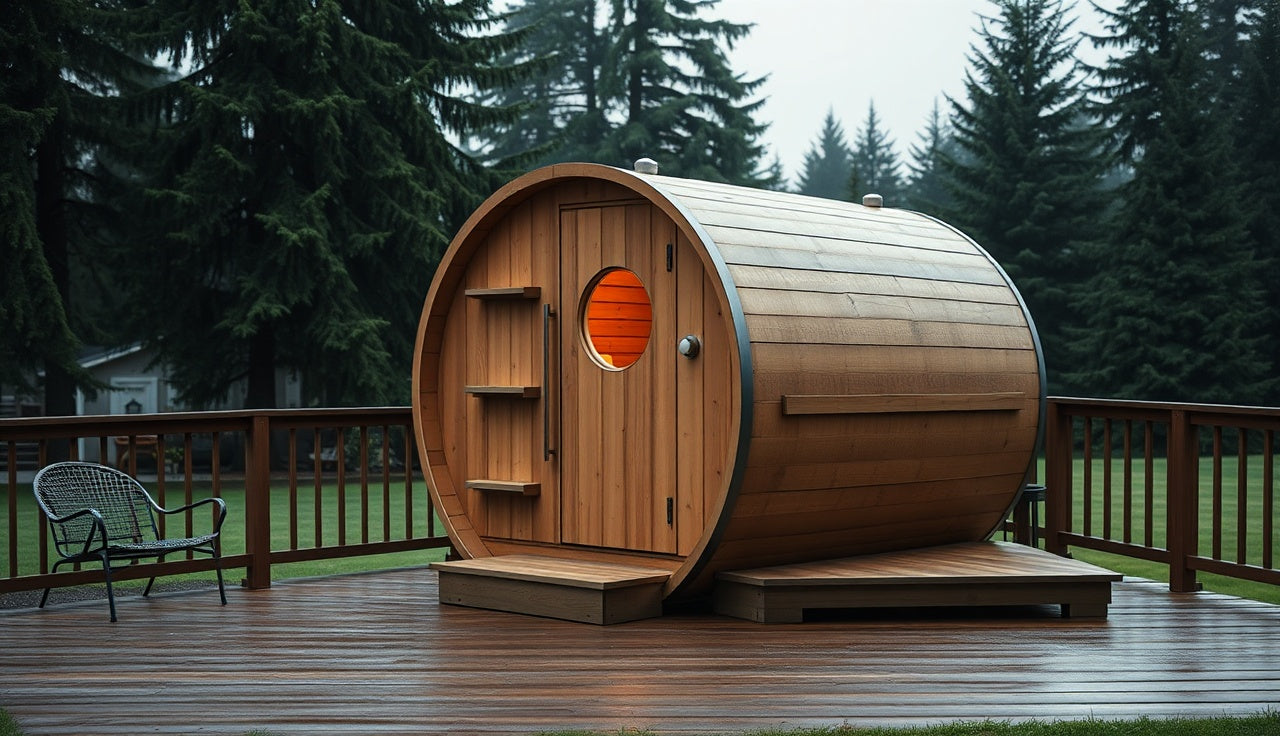
Outdoor saunas, including barrel saunas, pod saunas, and cabin-style units, almost always need at least an electrical permit and frequently a building permit too.
The building permit question turns on footprint and foundation. A barrel sauna on gravel pads or adjustable feet, not anchored to concrete, reads as a temporary structure in some jurisdictions. Anchored to a concrete slab or deck, it's permanent. Permanent means permit.
For what outdoor installation actually involves, the outdoor sauna guide walks through site prep, foundation options, and what inspectors look at.
One thing catches people off guard: setback requirements. Even if the sauna itself skips the building permit in your jurisdiction, your local zoning code sets minimum distances from property lines, fences, and the main house. Residential setbacks for accessory structures commonly run 3 to 10 feet from property lines. Blow the setback and you may have to move the unit. Zoning approval is a separate step from a building permit, and both matter.
Wood-burning saunas add a third layer: fire code. Many municipalities require a fire department review or specific clearance distances from combustibles for any wood-burning appliance installed outdoors. California's fire districts are especially strict, particularly inside high fire hazard severity zones [10].
How do I find out if my city requires a sauna permit?
Three steps, none of them hard.
Step 1: Call or email your local building department. Search "[your city] building permit" and you'll land on the right office. Describe the project in plain detail: "I'm installing a prefab 4-person sauna in my backyard on gravel pads, and I need a new 240V circuit run from my panel." Give them those specifics. They'll tell you which permits apply.
Step 2: Check your zoning for accessory structure rules. Your city's planning or zoning department (sometimes the same office as building) can tell you the size limits and setbacks for accessory structures in your zone. It's public information and takes minutes.
Step 3: Ask your electrician before they start. Any licensed electrician knows whether local code requires a permit for new 240V service. If one tells you no permit is needed for a new 240V circuit, get a second opinion. That answer is almost always wrong.
If you're still shopping, SweatDecks has a sauna installation guide that pairs with this permit research, so you know what you're buying before you dial the building department.
One shortcut: many counties post their permit requirement tables online. Search "[county name] accessory structure permit threshold" and you'll often turn up a PDF or table showing the exact square footage that triggers a permit.
What happens if you build a sauna without a permit?
It depends on how hard your jurisdiction enforces code, but the risks are real and a few are expensive.
Resale problems. When you sell, you disclose improvements. An unpermitted sauna shows up as an unpermitted structure in many title searches. Buyers can ask you to remove it, permit it after the fact, or knock down the price. Retroactive permitting can cost two to three times the original permit, because inspectors may require destructive access to verify wiring and framing.
Insurance gaps. If your home insurer learns about an unpermitted structure after it causes a fire or an injury, they may deny the claim. This isn't hypothetical. Electrical fires in badly wired sauna installations are rare, but they happen, and an unpermitted circuit is a clean opening for a denial.
Stop-work orders and fines. A neighbor complaint or an inspector spotting your work during an unrelated visit can bring a stop-work order. Fines vary by city and commonly run $100 to $500 per day until you comply.
Safety. This one isn't about money. A 240V circuit installed without inspection can carry wiring faults that create genuine fire and shock hazards. That's what inspections are for. A sauna running at 180°F on faulty wiring is a real danger.
Are there any states or situations where no permit is needed?
Yes, genuinely.
A single-person portable sauna tent that plugs into a standard 110V/15A or 20A outlet needs no permit anywhere in the U.S. It's an appliance, same category as a space heater or an electric blanket.
In unincorporated rural areas of states without a statewide residential building code (Texas is the clearest example, but parts of Wyoming, Montana, and Alabama qualify), a freestanding outdoor sauna with no attachment to the home and no new electrical service can legitimately need no permit at all [5]. The catch stays the same: if you sell later or file an insurance claim, that missing permit can come back to bite you.
Some jurisdictions write an explicit accessory structure exemption below a square footage threshold and at or under a certain electrical load. If your sauna footprint is under 120 square feet and the heater runs off an existing outlet, you may genuinely be exempt. Verify it locally anyway.
The honest answer: for a plug-in prefab indoor sauna in an existing room with an existing dedicated outlet, most American homeowners can legally skip the building permit. They cannot legally skip the electrical permit when new wiring is involved.
What do sauna permits actually require you to submit?
For a straightforward prefab install, the paperwork is light. Most jurisdictions ask for:
- A site plan showing where the sauna sits on the property and its distance from property lines and the house
- Manufacturer specs or a cut sheet for the unit (dimensions, heater specs, ventilation requirements)
- An electrical diagram showing the circuit from the panel to the heater (your electrician draws this)
- Proof of ownership, or authorization if you're a contractor
A custom-built sauna room inside a house gets heavier. You may need architectural drawings, structural calculations if walls are moving, and mechanical plans for ventilation. This is where a contractor or architect earns the fee.
Processing time varies. Small cities might issue a permit over the counter in a day. Big cities with review queues can take 2 to 6 weeks. Some jurisdictions now run online permit portals that speed things up a lot.
Inspections usually happen at two stages: rough-in (before walls close, so the inspector can see wiring and framing) and final (after installation). For a prefab sauna with only electrical work, there may be a single inspection once the circuit is done.
Pairing a sauna with a cold plunge? Check whether the plunge plumbing triggers a plumbing permit. It often does when it involves a drain connection to your sewer.
Does a sauna affect my homeowner's insurance or home value?
A permitted sauna, installed right, generally adds to assessed home value and is covered under a standard homeowner's policy as a permanent structure. Appraisers treat it as a recreational amenity, roughly like a hot tub or built-in gym equipment.
The dollar impact on appraisal is inconsistent. In markets where saunas are popular (Minnesota, the Pacific Northwest, luxury markets generally), a high-quality installation can add $3,000 to $10,000 to appraised value, though that leans heavily on local comps and the appraiser's judgment. There is no published national dataset on sauna-specific appraisal impact, so treat any figure you see as a local estimate, nothing firmer.
On insurance: call your insurer before you install. Most want to know about permanent structure additions. Some require a separate rider for structures over a certain value. An unpermitted structure, as covered above, creates a claim risk you don't want hanging over you.
If you're planning the full recovery setup with an ice bath or cold plunge alongside the sauna, the sauna benefits article covers what the research actually says about heat therapy, so you can weigh the spend against the evidence.
Frequently asked questions
Do I need a permit for a sauna I'm putting in my basement?
For a prefab basement sauna that plugs into an existing dedicated 240V outlet, you likely don't need a building permit. But if you're running new wiring or framing a sauna room, both an electrical permit and a building permit are almost certainly required. Call your local building department with specifics. The call takes five minutes and removes the guesswork.
Can I install a sauna myself or do I need a licensed contractor?
Assembling a prefab sauna kit is a DIY job most homeowners can handle. The electrical work is where this gets regulated. Many jurisdictions require a licensed electrician to pull the permit and do the wiring for a new 240V circuit. Some states let homeowners pull their own electrical permits for work on their primary residence. Check your state's electrical licensing rules before touching the panel.
How do I find out the permit rules in my specific city?
Search your city name plus 'building permit accessory structure' or call your city's building and planning department directly. Describe the project: permanent or temporary, outdoor or indoor, square footage, and whether you need new electrical service. Most departments answer this over the phone. Many post permit requirement tables online as PDFs.
Does a wood-burning sauna require different permits than an electric one?
Yes, often. A wood-burning sauna adds a fire code layer that electric saunas don't trigger. Many municipalities require a fire department review or specific clearance distances from combustibles. California's high fire hazard severity zones are especially strict. You still need the building permit for the structure, but wood-burning units often add a mechanical or fire code permit on top.
What's the permit situation for a barrel sauna in my backyard?
A barrel sauna on gravel pads may qualify as a temporary structure in some jurisdictions, potentially skipping the building permit. Anchored to a concrete slab, it's usually classified as permanent and needs a permit. The electrical circuit almost always needs a separate electrical permit. Setback requirements from property lines apply regardless of permit status. Verify both with your local building and zoning departments.
Will an unpermitted sauna cause problems when I sell my house?
It can, yes. Unpermitted structures appear in disclosure documents and title searches. Buyers can ask you to remove the sauna, retroactively permit it, or lower the sale price. Retroactive permits often cost two to three times the original permit fee because inspectors may require opening walls or ceilings to verify wiring and framing. The original permit almost always costs less than fixing this at sale.
Does a plug-in portable sauna tent need any permit?
No. A portable tent sauna that runs on a standard 110V/15A or 20A household outlet is treated as an appliance, the same category as a space heater. No building permit, no electrical permit, no inspections. This is one reason portable saunas appeal to renters or anyone who wants to avoid the permit process entirely, though the experience is quite different from a full-size unit.
Is there a sauna-specific permit, or is it covered under general building permits?
No jurisdiction has a sauna-specific permit. Saunas fall under general building permits (for the structure), electrical permits (for the wiring), and sometimes mechanical permits (for ventilation). In states that adopted the International Residential Code, the IRC's general permit requirements for structures and electrical work are what apply. The sauna label itself doesn't trigger anything; the construction type does.
Do I need a permit if I'm just replacing an old sauna heater?
Replacing a heater on an existing wired circuit is typically classified as like-for-like repair or replacement, which often doesn't need a permit. Upgrading to a larger heater that draws more amperage and requires upsizing the circuit is a different story and likely needs an electrical permit. Check with your building department and let your electrician confirm before touching existing wiring.
What states have the strictest sauna permit requirements?
California, Massachusetts, New York, Washington, Oregon, Florida, and Minnesota consistently enforce building and electrical codes strictly for all permanent structure additions including saunas. California's Title 24 and Oregon's ORS Chapter 455 both require permits for any permanent structure and any new electrical circuit above 120V. These states also have licensed contractor requirements for electrical work that add another layer.
Does a sauna increase my property taxes?
Possibly. A permitted permanent sauna is likely to be added to your assessed property value at your next reassessment, which can raise property taxes. The exact impact depends on your local assessor's methods and your tax rate. An unpermitted sauna won't appear in assessments, but that's not a reason to skip the permit given the other legal and insurance risks involved.
Do HOAs have rules about saunas that are separate from city permits?
Yes, and HOA rules can be more restrictive than city code. Many HOAs require approval for any structure addition, even if the city doesn't require a permit. Some HOAs prohibit outdoor structures entirely or restrict them to specific zones of the lot. Get HOA approval in writing before purchasing or installing. HOA rules and city permits are parallel processes, not substitutes for each other.
Sources
- International Code Council, IRC State Adoption Map: All 50 states have adopted some version of the IRC or IBC; adoption dates and local amendments vary by jurisdiction.
- NFPA, National Electrical Code (NFPA 70) overview: The NEC requires a permit for any new electrical circuit installation; adopted by reference in most U.S. jurisdictions.
- California Department of Housing and Community Development, Title 24 Building Standards: California Title 24 applies statewide; all counties must enforce building standards including permits for permanent structures and new electrical circuits.
- Oregon Building Codes Division, ORS Chapter 455: Oregon Revised Statutes Chapter 455 requires building permits for all permanent structures and electrical permits for all work above 120V.
- Texas Department of Licensing and Regulation, Residential Construction: Texas does not have a statewide residential building code; cities and counties adopt their own codes independently.
- International Code Council, IRC Section R105.1: IRC R105.1 states a permit is required for any construction, reconstruction, alteration, repair, or installation of a building or structure.
- Minnesota Department of Labor and Industry, Minnesota State Building Code: Minnesota Rule 1300 establishes the State Building Code, which applies statewide and covers all permanent structures and heated enclosures.
- Massachusetts Board of Building Regulations and Standards, 780 CMR: 780 CMR (Massachusetts State Building Code) applies to all municipalities with no local opt-out provision for residential construction.
- Florida Building Commission, Florida Building Code: The Florida Building Code applies statewide and requires inspection before energizing any new 240V electrical installation.
- California Department of Forestry and Fire Protection (CAL FIRE), Fire Hazard Severity Zones: CAL FIRE designates high fire hazard severity zones where local fire departments impose additional clearance and permitting requirements for outdoor heating appliances.
- Washington State Building Code Council: Washington State adopts and enforces the IRC statewide; outdoor saunas are classified as accessory structures subject to permit requirements.

Share:
Hot tub vs cold plunge: which is harder to maintain?
HOA rules for a backyard sauna shed: what you need to know