
Last updated 2026-07-09
TL;DR
Home saunas sell from roughly $800 for a basic portable unit to $20,000-plus for a custom outdoor barrel or cabin. The four main types are traditional Finnish, infrared, steam, and smoke. Your decision hinges on space, budget, electrical setup, and how you actually plan to use it. This guide covers every type, real price ranges, and what to watch for.
What types of saunas are actually for sale right now?
The sauna market breaks into four categories, and mixing them up costs people money and regret.
Traditional Finnish saunas burn wood or use an electric heater to get rocks hot, then you pour water over those rocks to generate steam (called löyly). Temperatures typically run 160°F to 200°F with humidity you control yourself. This is what most people mean when they say "sauna." A good read on the broader category is at our sauna guide.
Infrared saunas skip the hot rocks entirely. Ceramic or carbon panel heaters emit far-infrared radiation that warms your body directly rather than heating the air around you. Temperatures stay lower, usually 120°F to 150°F, which some people find more tolerable. The experience feels different: less intense, no steam, no that signature hit when you open the door. Whether the health outcomes match traditional heat is genuinely unsettled. We'll cover that below.
Steam rooms (wet saunas) run much higher humidity, 100% compared to the 5-30% typical in Finnish saunas, at lower temperatures around 110°F to 120°F. These are usually tiled rooms rather than wood cabins and cost significantly more to build.
Smoke saunas (savusauna) are the oldest Finnish form, wood-fired with no chimney, the smoke fills the room and is then ventilated out. They are rare to find commercially and almost entirely custom-built. If you're shopping online, you will not encounter a smoke sauna for sale as a kit.
For most homeowners buying their first unit, the real choice is between a traditional electric sauna and an infrared sauna. Everything else is either a specialty product or a significant construction project.
How much does a sauna cost? Real price ranges by type and size
Prices vary enormously depending on type, material, size, and whether you're buying a prefab kit or building from scratch. Here's an honest breakdown based on what's currently on the market [1][2].
| Type | Entry-level | Mid-range | High-end |
|---|---|---|---|
| Portable infrared (tent) | $800, $1,500 | , | , |
| Indoor infrared cabin (1-2 person) | $1,200, $2,500 | $2,500, $5,000 | $5,000, $10,000 |
| Indoor traditional electric (1-3 person) | $1,500, $3,000 | $3,000, $6,000 | $6,000, $12,000 |
| Outdoor barrel sauna | $2,500, $5,000 | $5,000, $10,000 | $10,000, $20,000+ |
| Outdoor cabin/pod sauna | $4,000, $8,000 | $8,000, $15,000 | $15,000, $30,000+ |
| Custom indoor sauna room | $5,000, $10,000 | $10,000, $20,000 | $20,000, $50,000+ |
Those ranges cover the unit itself. Add installation (often $500, $2,000 for electrical alone), delivery (barrels and cabins commonly run $300, $800 depending on distance), and any site prep like a concrete pad for outdoor units (typically $500, $2,000).
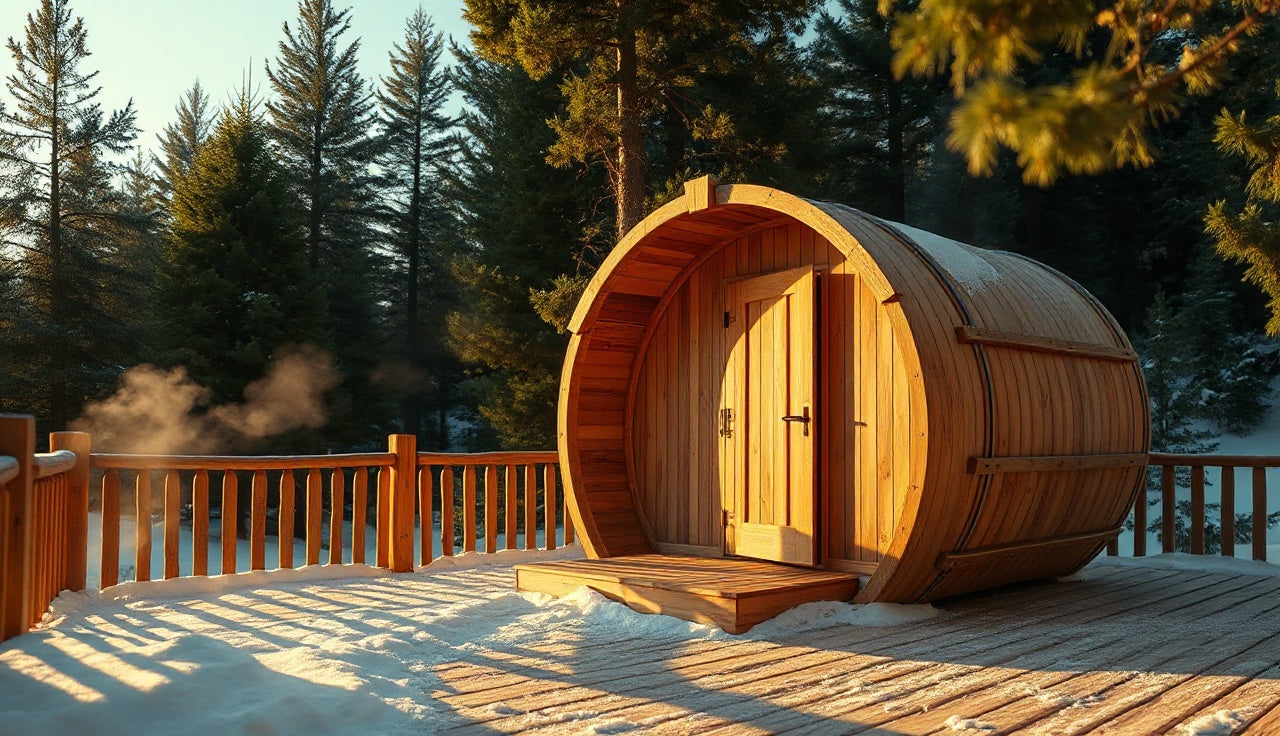
A barrel sauna from a reputable manufacturer in cedar or hemlock will land most buyers in the $4,000, $8,000 delivered range once you add a quality heater. The barrel shape is more than aesthetic: the curved walls circulate heat efficiently and shed rain, which is why it became the dominant outdoor sauna form in North America.
Where people consistently overpay is on infrared units with marketing-heavy "full-spectrum" claims. Full-spectrum means the unit emits near, mid, and far infrared. The actual evidence base for near and mid infrared at sauna temperatures is thin. You are paying for a feature whose clinical benefit is unproven. A quality far-infrared unit from a reputable brand costs less and delivers the core thermal experience [3].
For a deeper look at outdoor sauna options specifically, we have a dedicated guide. If you're comparing big-box options, our Costco sauna breakdown is worth reading before you click "add to cart."
What are the real health benefits of sauna use?
Sauna research has grown a lot over the past decade, and here's the honest summary: the cardiovascular and longevity signals are strong, most other claims need more evidence.
The most-cited data comes from a Finnish prospective cohort study published in JAMA Internal Medicine in 2015 following 2,315 middle-aged Finnish men. Men who used the sauna 4-7 times per week had a 40% lower risk of fatal cardiovascular disease compared to once-weekly users [4]. That is an association from an observational study, not a randomized controlled trial, so causality is not proven. But it has been replicated in follow-up analyses from the same Kuopio Ischaemic Heart Disease Risk Factor Study cohort.
For acute cardiovascular effects, sauna use raises heart rate to levels comparable to moderate aerobic exercise (around 100-150 bpm), and temporarily lowers blood pressure afterward [5]. Reviews describe regular sauna use as associated with reduced blood pressure, improved endothelial function, and lower inflammation, though the authors stop short of prescribing it.
For muscle recovery, the evidence is weaker. Some studies show heat therapy reduces delayed-onset muscle soreness, but effect sizes are modest and study quality is mixed. Nobody has good data on whether 30 minutes in a home sauna three times a week meaningfully speeds athletic recovery versus simply feeling good.
For mental health, a 2018 review found regular sauna bathing associated with lower rates of depression and psychotic disorders in the Finnish population data [3]. The mechanism may be heat-induced release of dynorphins and subsequent upregulation of opioid receptors, which also explains why sauna feels euphoric to regular users.
For the full breakdown with citations, see our sauna benefits guide. If you're also considering cold exposure to pair with heat, our cold plunge benefits article covers what the evidence actually says there.
| Portable infrared tent | $1,150 |
| Indoor infrared cabin (1-2 person) | $3,500 |
| Indoor traditional electric (1-3 person) | $4,500 |
| Outdoor barrel sauna | $7,500 |
| Outdoor cabin/pod sauna | $13,000 |
| Custom indoor sauna room | $22,000 |
Source: Angi/HomeAdvisor Cost Guide and Forbes Home, 2024-2025
Traditional vs. infrared sauna: which one should you actually buy?
This is the question that causes the most confusion online, and frankly, a lot of the content out there is written by people selling one or the other.
Here is the honest comparison.
Traditional Finnish saunas operate at higher temperatures (160-200°F) and deliver the most physiologically studied form of heat therapy. The löyly experience, where you throw water on hot rocks and get a wave of steam, is culturally authentic and deeply satisfying to most users. Electric heaters are reliable, parts are cheap, and a good Harvia, Helo, or Narvi heater will last 20-plus years. Wood-burning heaters need a flue and more airflow planning but cost less to operate.
Infrared saunas operate at lower temperatures and use more electricity per session than a well-insulated traditional sauna (contrary to some marketing claims). They heat up faster, usually 10-15 minutes versus 30-60 minutes for a traditional sauna. They require no steam and no water management. They tend to be cheaper at the entry level.
The claimed advantage of infrared (deeper tissue penetration) is real in a physics sense: far-infrared wavelengths do penetrate tissue slightly more than convective heat. Whether this translates to better health outcomes has not been convincingly demonstrated in head-to-head trials against traditional heat at equivalent core body temperature rises. The JAMA Internal Medicine longevity data was all traditional Finnish sauna use [4].
My honest take: if you want the authentic experience, a traditional electric sauna is the better investment. If you have a tight budget, limited electrical capacity, or very little space, a quality infrared cabin is a reasonable compromise. Don't buy a cheap infrared unit from an unknown manufacturer. The EMF levels from low-quality carbon heaters can be elevated, and the wood on budget units is often poor enough that panels warp or splinter within two years.
For home installation specifics, our home sauna guide goes into room prep, vapor barriers, and electrical requirements in detail.
What electrical and installation requirements do saunas need?
This is where buyers most often get surprised by hidden costs. Get clear on the electrical situation before you buy.
Most traditional electric sauna heaters for residential use require a 240V circuit. A 1-2 person sauna typically uses a 3kW to 6kW heater; a 4-6 person sauna might need 9kW to 12kW. A 240V/30A circuit is often enough for smaller units; larger heaters may need 240V/40A or 240V/60A [7]. If your panel does not have capacity, adding a circuit costs $500, $1,500 depending on your electrician and panel location.
Many infrared saunas plug into a standard 120V/15A or 20A outlet, which is part of their appeal for apartments and smaller homes. But that convenience comes with a ceiling: you cannot get a large, powerful infrared sauna on 120V.
For outdoor saunas, you also need to plan the electrical run to the structure. Running conduit underground to an outdoor barrel or cabin typically adds $300, $800 to the project, sometimes more if the run is long or involves trenching through landscaping.
Wood-burning heaters avoid the electrical question for the heater itself, but you need a proper flue through the roof, a minimum clearance from combustibles (check your local fire code, but 12 inches from walls to unprotected surfaces is a common minimum), and some municipalities require a permit for any wood-burning appliance. Check with your local building department before ordering.
Ventilation matters too. Traditional saunas need an intake vent low on one wall and an exhaust vent higher up to circulate fresh air. Without this, CO2 buildup becomes a safety issue in longer sessions. Most prefab kits include vent placement, but verify this before you finalize a purchase.
What should you look for in an outdoor sauna for sale?
Outdoor saunas face weather, UV, rain, snow, and temperature swings that indoor units never see. Material quality matters far more outside.
Western red cedar is the premium standard for outdoor saunas. It resists rot and insects naturally, handles thermal cycling well, and smells excellent in use. Expect to pay more for genuine western red cedar versus hemlock or Nordic spruce, but the longevity difference is real in wet climates. Hemlock is a fine choice and common in mid-range barrels; just seal the exterior annually in high-rainfall areas.
Roof and wall construction on barrel saunas is worth scrutiny. A double-walled barrel with a 40mm or thicker stave and proper mineral wool insulation between walls will hold heat far better and cost less to operate than a thin-walled unit. Ask the manufacturer what the wall thickness is. If the spec sheet doesn't list it, that tells you something.
Foundation requirements vary. Barrels typically sit on adjustable feet or a pair of pressure-treated beams; a flat gravel bed or concrete pads work well and cost $200, $500 to prepare. A full cabin-style sauna needs a more substantial foundation, either a concrete slab or a properly supported deck structure.
Permitting for outdoor saunas varies by municipality. Many jurisdictions treat them like accessory structures: if they're under a certain square footage (often 120 square feet or 200 square feet depending on location), no permit is required. Check your local zoning ordinance. In some HOA communities, any outbuilding needs board approval regardless of size [8].
For everything specific to the outdoor buying decision, the outdoor sauna guide has more detail on foundation, placement, and winterization.
Where do you actually buy a sauna, and what should you avoid?
You have three main purchasing channels: specialty retailers, big-box stores, and direct-from-manufacturer.
Specialty retailers (online and physical) carry curated selections, give real pre-sale advice, and generally stock better-made units than big-box. They often offer better warranty support because they have ongoing manufacturer relationships. SweatDecks (sweatdecks.com) is one such retailer focused specifically on saunas, cold plunges, and recovery equipment, with a curated selection that cuts out the low-quality units that clutter the broader market.
Big-box retailers like Costco, Home Depot, and Amazon carry saunas, often at attractive price points. The tradeoff is limited selection, minimal expert guidance, and warranty service that can be a headache when a heater element fails two years in. Our Costco sauna review goes into specific models and what you actually get for the price.
Direct-from-manufacturer is worth considering for larger outdoor structures. Companies like Almost Heaven, Dundalk LeisureCraft, and Finnleo sell factory-direct or through authorized dealers. Lead times for custom or large units can run 8-16 weeks; plan accordingly if you have a seasonal deadline.
Things to avoid: any infrared sauna brand that cannot provide third-party EMF test data. Any barrel sauna listing that does not specify wood species, wall thickness, and heater brand. "Sauna kits" on Amazon from unknown Chinese brands with hundreds of reviews but no verifiable manufacturer address. Assembly quality, wood finishing, and hardware on these units are consistently poor based on user reports across home improvement forums, and warranty claims are effectively impossible.
Also avoid buying a used residential sauna without inspecting it in person. Mold inside sauna benches and walls is common in units that were not dried properly after use, and remediation costs more than just buying new.
Does buying a sauna add value to your home?
The honest answer: maybe, and it depends heavily on your market and the buyer pool.
A well-built outdoor barrel sauna or a properly finished indoor sauna room can add perceived value in markets where buyers are health-conscious and have budget for it. Real estate agents in Finnish communities, ski towns, and affluent suburbs report that a quality sauna is a genuine selling point. The National Association of Realtors does not publish specific data on sauna ROI, but a 2020 Houzz survey found that homeowners ranked sauna rooms among the top remodel additions for personal enjoyment, which correlates loosely with buyer desirability [9].
What will not add value: a cheap infrared cabin pushed into a bedroom corner, or a portable tent sauna you fold up and take with you. Buyers do not pay for portable wellness equipment as a home feature.
For tax purposes: a sauna used exclusively for personal use is not deductible. If you have a home-based business with a genuine business use for the sauna (a physical therapy practice, a licensed spa), there may be a deductible portion, but this requires a real business purpose and is a conversation for your CPA, not a wellness website [10].
If you're pairing a sauna purchase with a cold plunge, which is increasingly common for contrast therapy protocols, the combination does more for perceived home value than either unit alone. Our cold plunge guide covers what to look for on that side.
How do you compare sauna brands before buying?
Four things separate quality sauna brands from marketing-heavy mediocrity: heater quality, wood sourcing transparency, warranty terms, and available service network.
For traditional saunas, the heater is the most important component. Finnish manufacturers Harvia, Helo, and Narvi are the benchmark; their heaters run in commercial saunas worldwide and carry 3-5 year warranties on heating elements. A sauna brand that bundles a no-name Chinese heater with their premium wood cabinet is mismatched: the cabinet will outlive the heater by 15 years, and you'll be scrambling for replacement parts.
For infrared saunas, look for Clearlight, Sunlighten, or JNH Lifestyles as brands with documented third-party EMF testing. Clearlight publishes their EMF test results publicly and offers lifetime warranties on heaters [11]. That level of transparency is the bar.
Warranty terms tell you what the manufacturer actually believes about their product. A 1-year warranty on a $6,000 infrared sauna is a yellow flag. A lifetime warranty on the structural components with 5-plus years on heaters is what quality manufacturers offer.
Service network matters for traditional saunas especially. If the heater fails, can you get a technician? Can you order parts? Finnish brands with North American distribution (Harvia has a US office in Alpharetta, Georgia) have actual parts availability. Random brands with no US presence do not.
Check for UL or ETL listing on any electric heater or infrared unit you buy. These are legitimate third-party electrical safety certifications. An unrated heater is a fire and insurance risk; many homeowner's insurance policies will deny a fire claim involving an unlisted electrical appliance [7].
What safety rules apply to home sauna use?
The physiological risks of sauna use are real but manageable with basic precautions. Knowing them before you buy helps you set up good habits from day one.
Core temperature elevation is the mechanism behind both the benefits and the risks. A typical 15-30 minute sauna session raises core temperature by 1-2°C [5]. That same rise can turn dangerous if you enter dehydrated, drink alcohol beforehand, or have uncontrolled cardiovascular disease. The Finnish Sauna Society recommends not using a sauna while intoxicated, and multiple case reports of sauna-related cardiac events involve alcohol, heat, and pre-existing disease together [12].
For healthy adults, 15-20 minute sessions followed by cooling and rehydration are the standard protocol. Harvard Health and other secondary sources recommend limiting sessions to 20 minutes for new users, increasing as tolerance builds. Nobody has published a definitive maximum session length; experienced Finnish users routinely do 3-4 rounds of 10-15 minutes with cooling breaks.
Pregnancy is a genuine contraindication. Multiple obstetric guidelines advise against sauna use in the first trimester due to the risk of neural tube defects from hyperthermia; the evidence base includes both animal studies and population data [13]. The safe position is to avoid sauna during pregnancy and consult an OB before resuming.
Children under about 12 handle heat less efficiently than adults and should use lower-temperature, shorter sessions with adult supervision. No hard age cutoff exists in US regulatory guidance; apply judgment.
For contrast therapy combining sauna and cold water immersion, start conservatively: sauna first, then cold plunge for 1-3 minutes, then rest. Our ice bath guide covers cold immersion protocol and safety in detail.
What are the best sauna options for small spaces or apartments?
Limited square footage rules out barrel saunas and cabin builds, but it does not rule out a sauna entirely.
A 1-person infrared cabin needs as little as 3 feet by 3 feet of floor space and 7 feet of ceiling height. It plugs into a standard outlet. Assembly takes 1-2 hours with two people. These units run $1,200, $3,000 for a quality build and are the practical choice for apartments (with landlord permission), condos, and small spare rooms.
Portable infrared tent saunas are even smaller and fully collapsible. You sit inside a fabric enclosure with your head out; the tent heats your body from 110°F to 130°F using infrared panels. They cost $200, $600 and store in a bag. The experience is stripped-down but the thermal load is real. Our portable sauna guide goes into the best options and what to realistically expect.
For anyone in a rental, a portable unit is the only practical choice unless you own the property. The 1-person infrared cabin technically could move (they disassemble), but the process is tedious and panels can be damaged. Treat an infrared cabin as semi-permanent.
One underrated option for small spaces: a sauna conversion of an existing bathroom. If you have a full bathroom you rarely use, converting it to a dry or wet Finnish sauna with a wall-mounted heater is a legitimate project. Costs vary widely based on tile, wood lining, and heater, but $3,000, $8,000 is a realistic range for a competent contractor in a typical bathroom footprint.
How do you maintain a sauna after you buy it?
Maintenance is simple but people underestimate it before buying and then neglect it, which shortens the life of an expensive purchase.
For traditional wooden saunas, the primary job is keeping the interior dry between uses. Leave the door ajar or cracked after every session until the interior fully dries. Moisture trapped in the wood is how mold and rot start. Wipe benches down with a damp cloth (no soap, which can soak into the wood and off-gas during future sessions). Sand benches lightly once a year if they develop gray discoloration from mineral deposits and sweat.
Do not treat the interior wood with sealers, paints, or stains. The interior gets hot enough to off-gas treated wood, which is both unpleasant and potentially toxic. The exterior of an outdoor sauna should get an exterior wood oil or stain annually to prevent weathering; Sikkens and similar penetrating oil finishes work well on cedar.
Heater rocks (kiuas stones) need replacement when they start cracking or breaking apart, typically every 3-5 years depending on how often you use the sauna. Broken rocks fall through the heater basket and can damage the heating elements. Use rocks specified by the heater manufacturer; not all rocks handle thermal cycling safely.
For infrared saunas, the maintenance is minimal: wipe down interior surfaces, keep the vents clear, and inspect the heater panel connections annually. Most heater failures come from connection corrosion, which is preventable.
For outdoor units in snowy climates, check the roof load capacity before each winter. Barrel saunas handle snow well if the manufacturer specifies the roof load rating; cabin-style saunas need the same attention as any outbuilding. Clear heavy accumulation after major snowfalls.
Frequently asked questions
How much does a good home sauna cost?
A quality 1-2 person infrared cabin runs $2,000, $5,000. A traditional electric sauna of similar size costs $2,500, $6,000. An outdoor barrel sauna installed and ready to use typically falls between $4,000 and $10,000 once you include delivery and electrical work. You can spend more, but those ranges get you a unit built from real wood with a reputable heater.
What is the difference between a traditional sauna and an infrared sauna?
Traditional saunas heat rocks with an electric element or wood fire; you pour water on the rocks to create steam. Temperatures run 160-200°F. Infrared saunas use radiant panels to warm your body directly at 120-150°F with no steam. The cardiovascular health data (lower CVD risk, blood pressure reduction) comes primarily from Finnish traditional sauna studies; head-to-head trials against infrared are limited.
Do I need a permit to install a home sauna?
Usually yes for anything with a 240V electrical connection; an electrical permit is typically required. Outdoor structures may also need a building permit depending on size and local zoning rules. Many jurisdictions exempt accessory structures under 120-200 square feet, but requirements vary. Check with your local building department before purchasing, especially for outdoor barrel or cabin saunas.
Can I put a sauna in my backyard?
Yes, and outdoor barrel saunas are built for it. You need a flat, stable foundation (gravel bed, concrete pads, or a deck), an electrical supply run to the structure, and local zoning compliance. HOA approval may also be required. Western red cedar or hemlock barrel saunas handle outdoor weather well when maintained; expect a 15-25 year lifespan with basic care.
Is sauna good for you? What does the research actually say?
The strongest data is cardiovascular. A 2015 JAMA Internal Medicine study of 2,315 Finnish men found that 4-7 sauna sessions per week were associated with a 40% lower risk of fatal cardiovascular disease versus once-weekly use. Benefits for muscle recovery, mental health, and longevity are plausible from observational data but less definitively proven. Conservative conclusion: regular sauna use appears safe and likely beneficial for most healthy adults.
What size sauna should I buy?
For personal or couples use, a 1-2 person unit (typically 4x4 to 4x6 feet interior) is usually enough and much cheaper to run. If you plan to regularly use it with family or guests, a 4-6 person size makes sense. Bigger saunas need larger heaters and longer heat-up times. For outdoor barrels, a 6-foot diameter barrel seats 4-6 people comfortably.
How much electricity does a sauna use?
A 6kW traditional electric heater running 1 hour uses 6 kWh. At the US average residential rate of about 16 cents per kWh in 2024 (per EIA data), that is about 96 cents per session for the heat-up plus use cycle. Infrared saunas often draw 1.5-3kW and cost less per session but take longer per comparable thermal dose. Annual operating costs for a 3x weekly user are roughly $150-$400 depending on heater size and local rates.
Can you use a sauna every day?
Yes for most healthy adults. Finnish population studies followed people using saunas daily or near-daily with no adverse effects and better health outcomes. The practical limit is hydration: drink 16-24 oz of water per session and replace electrolytes if you're sweating heavily every day. New users should start with 3x per week to build heat tolerance before moving to daily use.
What wood is best for a sauna?
Western red cedar is the premium choice for both interior and exterior applications: it resists moisture, handles temperature swings, and has a low enough resin content that it does not off-gas at sauna temperatures. Hemlock and Nordic spruce are good mid-range choices for interiors. Avoid pine and most resinous softwoods for interior bench and wall surfaces; they drip resin when hot and can cause burns or staining.
What is a good entry-level outdoor sauna for sale?
Entry-level outdoor barrels from Dundalk LeisureCraft or Almost Heaven start around $3,000-$4,500 before delivery and heater. For that money you get genuine hemlock or cedar, a quality Harvia or equivalent heater, and a structure that will last 15-plus years with basic maintenance. Avoid no-name imports at similar prices; wood quality and hardware on those units are consistently inferior.
How long does it take to install a home sauna?
A prefab infrared cabin takes 1-4 hours to assemble. A prefab outdoor barrel sauna takes 4-8 hours for two people to set up on a prepared surface. A traditional indoor sauna room built into an existing space takes 2-5 days for a contractor. Custom outdoor cabins with electrical runs and foundations typically take 1-3 weeks from delivery to first use.
What's the difference between a sauna and a steam room?
A sauna (Finnish-style) runs 160-200°F at 5-30% humidity; you control steam by pouring water on rocks. A steam room runs 110-120°F at near-100% humidity using a steam generator. Steam rooms are usually tiled and cost more to build. Both deliver cardiovascular and relaxation benefits through heat, but the experiences are very different; most people strongly prefer one over the other.
Is pairing a sauna with a cold plunge worth it?
Contrast therapy (alternating heat and cold) is widely used in athletic recovery. The evidence for meaningful physiological benefit beyond either modality alone is mixed; some studies show reduced inflammation markers, others show no significant difference. That said, the subjective experience of moving between a hot sauna and cold plunge is distinctly enjoyable, and adherence to any recovery protocol matters more than marginal physiological differences.
Can a sauna be used in winter outdoors?
Yes, outdoor saunas perform excellently in cold weather. The temperature differential makes the heat feel more intense and the cold plunge or snow roll afterward more invigorating. A well-insulated barrel sauna heats up in 30-45 minutes even in below-freezing temperatures. Wood-burning heaters have an advantage in very cold climates because they put out substantial heat. Keep the exterior wood properly sealed and clear snow from the roof.
Sources
- HomeAdvisor (Angi) — Sauna Installation Cost Guide: Sauna installation costs and price ranges by type for residential buyers
- Forbes Home — How Much Does a Sauna Cost?: Price ranges for indoor and outdoor home saunas including installation costs
- Mayo Clinic Proceedings — Cardiovascular and Other Health Benefits of Sauna Bathing (Laukkanen et al., 2018): Review of sauna health benefits noting traditional Finnish sauna as primary evidence base, association with lower depression rates, and insufficient comparative data on infrared
- JAMA Internal Medicine — Association Between Sauna Bathing and Fatal Cardiovascular and All-Cause Mortality Events (Laukkanen et al., 2015): Men using sauna 4-7 times per week had 40% lower risk of fatal cardiovascular disease compared to once-weekly users in a cohort of 2,315 Finnish men
- American Journal of Physiology — Heart rate and cardiovascular responses to sauna bathing: Sauna use raises heart rate to 100-150 bpm comparable to moderate aerobic exercise and temporarily lowers blood pressure afterward
- National Fire Protection Association — NFPA 70 National Electrical Code: 240V circuit requirements and UL/ETL listing standards for residential electric sauna heaters
- U.S. Department of Housing and Urban Development — Accessory Structure Zoning Guidance: Local zoning and permit requirements for accessory structures including outdoor saunas
- Houzz — U.S. Houzz & Home Study 2020: Homeowners ranked sauna rooms among top remodel additions for personal enjoyment in 2020 survey
- Internal Revenue Service — Publication 587: Business Use of Your Home: Home improvements for personal use are not deductible; business-use deductions require genuine business purpose
- Clearlight Saunas — Third-Party EMF Testing Documentation: Clearlight publishes third-party EMF test results and offers lifetime warranties on infrared heater panels
- Finnish Sauna Society — Sauna Safety Guidelines: Recommendation against sauna use while intoxicated; alcohol plus heat associated with cardiac events
- American College of Obstetricians and Gynecologists — Committee Opinion on Heat Exposure During Pregnancy: Sauna use during first trimester contraindicated due to hyperthermia risk and association with neural tube defects
- U.S. Energy Information Administration — Average Retail Price of Electricity, Residential: US average residential electricity rate approximately 16 cents per kWh in 2024

Share:
Health benefits of sauna: what the research actually shows
Steam room benefits: what the research actually shows