
Last updated 2026-07-11
TL;DR
Prefab sauna kits typically cost $3,000 to $10,000 for the unit plus $500 to $2,500 in installation labor. Custom-built saunas start near $10,000 and usually land between $20,000 and $30,000 once framing, insulation, vapor barrier, benching, and an electrician are all paid. Got a rectangular room and no need for exotic wood? A kit wins on value nearly every time.
What does a prefab sauna kit actually cost?
A prefab sauna kit runs $3,000 to $12,000 for the unit and another $500 to $2,500 once you add assembly and a new electrical circuit. These are factory-assembled panels, usually tongue-and-groove hemlock, cedar, or Nordic spruce, that bolt together in a few hours. You pick a size, a heater, and a control package, and the labor-heavy work is already done in the factory.
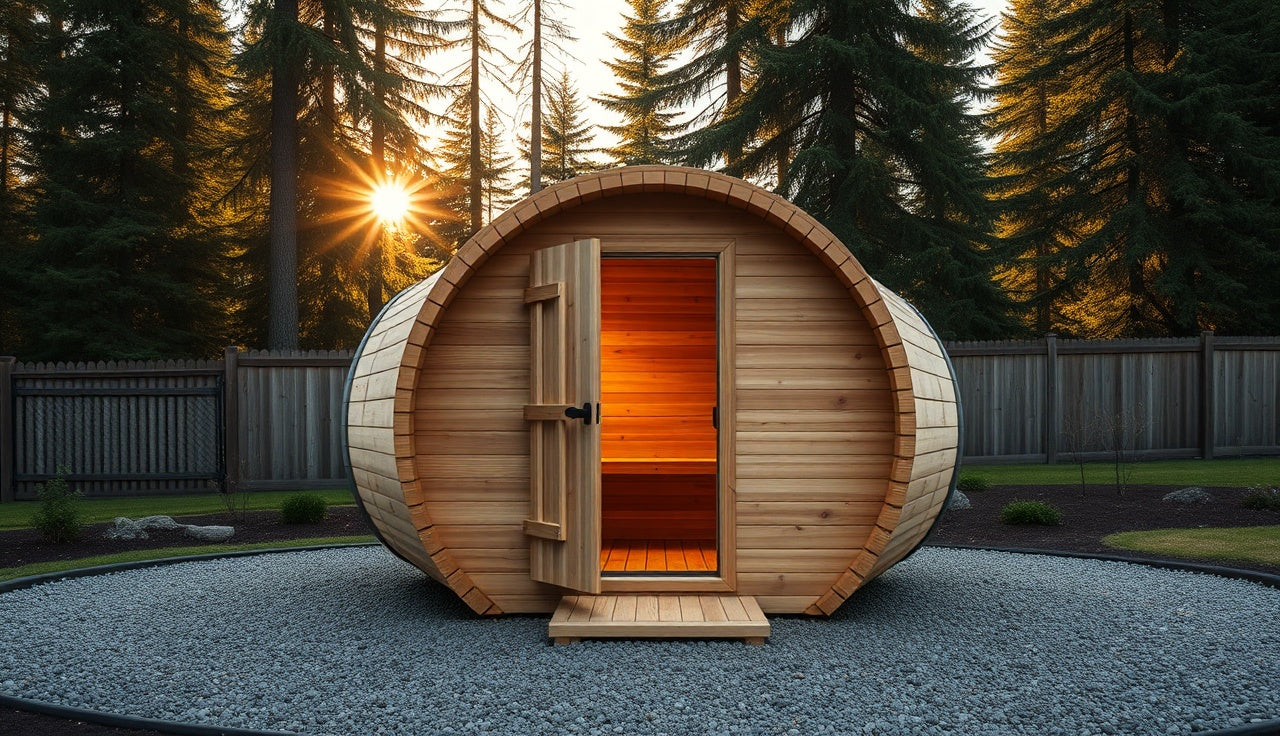
For a two-person indoor barrel or cabinet kit, prices run $3,000 to $6,500 for the unit itself. A four-person kit with a quality Finnish heater and a glass door lands closer to $6,000 to $9,000. Outdoor barrel saunas in red cedar or thermowood start around $4,500 for a compact 6-foot model and can reach $12,000 for a large 8-foot barrel with a changing room end [1].
Installation is two to six hours of work if you're reasonably handy. Hire a handyman or a sauna-specific installer and expect to pay $300 to $800 for a straightforward indoor kit. An outdoor unit on a gravel or deck pad might add $500 to $1,500 in site prep.
The electrical connection is where costs sneak up. Most heaters over 6 kW need a dedicated 240V circuit. An electrician charges $200 to $600 to run that circuit in most U.S. markets. If your panel sits far from the sauna location, conduit and wire alone can push that past $1,000 [2].
Here's an honest all-in number. A prefab kit lands at $4,000 on the low end (small 2-person unit, short electrical run, DIY assembly) and $12,000 on the high end (large outdoor barrel, professional install, new circuit). Most buyers spend between $5,500 and $9,000 total.
What does a custom-built sauna cost?
A custom-built sauna starts around $10,000 for an indoor room and frequently lands between $18,000 and $35,000 for an outdoor cabin. Custom saunas are framed from scratch, usually inside an existing room or in a new structure. You choose every material: the framing lumber, the vapor barrier, the insulation, the interior wood species, the benching layout, the heater, the lighting, the door.
Labor is where the number jumps. A sauna contractor or experienced finish carpenter charges $50 to $120 per hour in most U.S. markets, and a small 6x8-foot custom sauna takes 40 to 80 hours of skilled labor once you count framing, insulation, vapor barrier, interior cladding, bench construction, and finish work. That's $2,000 to $9,600 in labor before a single board is bought [3].
Materials for a 6x8-foot custom sauna in clear western red cedar run $2,500 to $5,000 for the interior. Add a quality Finnish heater (Harvia, Helo, or Finnleo brands run $800 to $2,500 depending on kW), a tempered glass door ($400 to $900), a vapor barrier, insulation, and proper sauna lighting, and your material cost alone hits $5,000 to $9,000 for a mid-range build [4].
Combine labor and materials. A custom indoor sauna in an existing basement room typically costs $10,000 to $20,000. A custom outdoor cabin, built from scratch with its own structure, runs $18,000 to $35,000 or more. High-end builds with thermally modified ash, custom stone heater surrounds, and chromotherapy lighting have no real ceiling. Fifty-thousand-dollar builds exist.
That's not a knock on custom. You get exactly what you want, the dimensions fit your space, and the resale story is better. But you pay for all of it.
How do total costs compare side by side?
Custom builds cost roughly 1.5x to 2.5x more than a comparable prefab kit at every size tier. The table below compares realistic all-in costs for common configurations. These are U.S. market estimates as of mid-2025, drawn from contractor quotes and manufacturer published pricing [1][3][4].
| Configuration | Prefab Kit (all-in) | Custom Build (all-in) |
|---|---|---|
| 2-person indoor, 4x4 ft | $4,000, $6,500 | $9,000, $14,000 |
| 4-person indoor, 6x8 ft | $7,000, $11,000 | $14,000, $22,000 |
| 4-person outdoor barrel, 7 ft | $6,500, $10,000 | N/A (no direct equivalent) |
| 6-person outdoor cabin | $10,000, $16,000 | $20,000, $35,000 |
| High-end custom indoor | $12,000, $18,000 (luxury kits) | $25,000, $50,000+ |
The gap widens at larger sizes because labor hours scale faster than material costs. A bigger room means more square footage to frame, insulate, and clad by hand, and that's all billed hourly.
One honest caveat: these are starting points. Contractor availability, your ZIP code, permit fees, and whether you need an electrical panel upgrade all move the final number. Get at least two contractor bids before you assume where you'll land.
| 2-person indoor kit | $5,250 |
| 2-person indoor custom | $11,500 |
| 4-person indoor kit | $9,000 |
| 4-person indoor custom | $18,000 |
| 6-person outdoor kit | $13,000 |
| 6-person outdoor custom | $27,500 |
Source: HomeAdvisor/Angi sauna cost data and manufacturer pricing, 2025
What drives the cost difference between a kit and a custom build?
The biggest cost driver is labor arbitrage. A prefab kit manufacturer does all the milling, joining, pre-fitting, and quality checking in a factory with specialized equipment and volume purchasing. You pay for that at retail, but it's far cheaper than duplicating it on-site with a local carpenter charging by the hour.
Material waste is second. A contractor cutting cedar boards to fit an oddly shaped room wastes 10 to 20 percent of the material. A factory cutting those same boards to a fixed spec wastes almost nothing.
Permitting sometimes adds cost to custom builds that kits sidestep. A new freestanding outdoor structure (which most custom outdoor saunas are) often needs a building permit in U.S. jurisdictions. Permit fees run $200 to $1,500 depending on the municipality, and some jurisdictions require engineered drawings [5]. A prefab kit placed on an existing deck or in an existing basement room usually avoids that trigger, though rules vary and you should check with your local building department first.
Heater efficiency is nearly identical across both approaches once you've picked the same kW output. Operating cost per session doesn't differ between a kit sauna and a custom sauna of the same size. The difference is purely upfront.
Is a prefab sauna kit as good as a custom build?
For most home users, yes. A well-made prefab kit from a reputable manufacturer reaches 160 to 195°F (71 to 90°C), the functional range for traditional Finnish sauna use [6]. Whether your bench was routed by a craftsman or clicked together from factory panels doesn't change the heat.
Custom wins in specific cases: irregular spaces, very high ceilings, specific wood species (Canadian black spruce, thermally modified alder), integrated AV or lighting, or commercial settings where durability over thousands of sessions matters. If your basement room measures 5.5 x 9.5 feet, no standard kit fits that cleanly, and a custom build makes more sense.
Kits win almost everywhere else. The tolerances on a good prefab kit are tight, the vapor barriers are built into the panel design, and the assembly instructions are tested. A first-time builder trying to replicate all that from scratch has a real learning curve and more room for expensive mistakes. The classic one is an inadequate vapor barrier, which causes wood rot and mold over time.
Resale value is one place custom builds have a real argument. A well-done custom sauna, especially an outdoor cedar cabin, adds more perceived value to a listing than a kit sauna in a basement. That said, nobody has clean data comparing actual appraisal increases. Most realtors treat both as lifestyle upgrades rather than square footage adds.
What are the hidden costs of a prefab sauna kit?
The kit sticker price is rarely the full story. Here are the costs that routinely surprise buyers.
Shipping. Large sauna kits are heavy (250 to 800 lbs) and ship freight. Free shipping offers often mean curbside delivery, and getting the crates from the curb to your basement or backyard can cost $150 to $400 in extra labor or delivery service.
Foundation or platform. Outdoor barrel saunas need a level, draining surface. A concrete pad costs $600 to $1,500 installed. A pressure-treated deck frame costs $400 to $1,000. Skip this step and you get wood rot in the base boards within two to three seasons.
Electrical. A new 240V circuit is almost always needed. Budget $300 to $1,000 and get an electrician quote before you order.
Accessories. Ladle, bucket, thermometer, hygrometer, backrest, and lighting are often left out of base kit prices. Set aside $200 to $400 for these.
Maintenance. Cedar and hemlock interiors benefit from annual light sanding and a food-safe oil treatment on bench surfaces. Not expensive, maybe $50 to $100 a year in materials, but not zero.
All in, a $6,000 kit can realistically total $8,500 to $10,000 once you've paid for everything. That still undercuts most custom builds, but it's a healthier number to plan around.
What are the hidden costs of a custom sauna build?
Custom builds have their own list of surprises, and the numbers tend to be bigger.
Scope creep. Contractors price what you describe, not what you end up wanting. Adding a second bench tier, a window, or an interior wall upgrade mid-build gets expensive because the labor is already on-site at hourly rates.
Vapor barrier mistakes. A contractor who isn't experienced with saunas sometimes under-specs the vapor barrier or puts it on the wrong side of the insulation. Redoing this after the interior cladding is up costs as much as the original work. Ask your contractor exactly how they handle the sauna vapor barrier before hiring.
Electrical and HVAC. Custom outdoor cabins often need their own sub-panel or at minimum a 60-amp disconnect. If the run from your house is long, this runs $1,500 to $4,000.
Permit delays. In some jurisdictions, a custom outdoor structure permit takes four to ten weeks to issue. That doesn't add dollars directly, but it delays your start date, and a contractor may not hold your slot.
Contingency. Standard contractor advice is to budget 15 to 20 percent above the quoted price for a custom project. On a $20,000 build, that's $3,000 to $4,000 in contingency you should have liquid before breaking ground.
How do DIY sauna kits compare to contractor-installed custom builds for cost and difficulty?
DIY assembly of a prefab kit is genuinely accessible for anyone comfortable with basic carpentry and numbered instructions. Most manufacturers rate their kits as a one to two day project for two people. The electrical connection is the one step that always needs a licensed electrician in the U.S., regardless of your DIY comfort. The National Electrical Code (NEC) requires permits and licensed work for new 240V circuits in most jurisdictions [2].
A full DIY custom sauna, where you frame, insulate, vapor-barrier, clad, and bench everything yourself, is a different animal. It's doable, and there are good resources from Finnish sauna societies and North American builders on proper technique [7]. But the learning curve is steep, and errors in vapor barrier placement or insulation R-value lead to moisture damage that erases any savings. A realistic DIY custom sauna might cost $4,500 to $8,000 in materials for a 6x6-foot room, saving $8,000 to $12,000 versus a contractor, but it takes two to four weekends of skilled work and real attention to sauna-specific detail.
Confident builder? DIY custom can be the best value by a wide margin. Not confident? A prefab kit gives you most of the same outcome at a predictable cost with much less risk.
Does a home sauna add resale value, and does the type matter?
A home sauna adds some resale value in most markets, but probably less than it cost you to build, and neither buyers nor appraisers have clean benchmarks for it.
NAR (National Association of Realtors) survey data from 2022 found that outdoor living features, which include saunas, carried a high homeowner satisfaction score but a cost recovery rate around 50 to 80 percent for most outdoor projects [8]. A sauna is unlikely to recover better than that range.
Custom outdoor cedar cabins photograph better and show stronger in listings than basement kit saunas. Real estate agents report that buyers in cold-climate markets (Minnesota, the Pacific Northwest, the Mountain West) respond more warmly to saunas than buyers in hot-climate markets. None of that translates to a dollar figure you can bank on.
A sauna is an amenity, not an investment. Buy it because you'll use it regularly. The sauna benefits that drive regular use, from cardiovascular effects to post-workout recovery, are documented well enough to justify the expense on those grounds. Count any resale value as a bonus, not a reason.
What's the best prefab sauna kit for the money in 2025?
A few configurations consistently deliver good value.
For indoor two-person use, hemlock or cedar panel kits in the 4x4 or 4x6-foot range from established manufacturers (Almost Heaven, Harvia, Finnleo) run $3,200 to $5,500 and are genuinely good products. The heater is often bundled. These fit a bathroom-sized footprint and are the most popular entry point for first-time sauna owners.
For outdoor use, a Nordic spruce or red cedar barrel sauna in the 6 to 7-foot diameter range gives you the best mix of looks, weather resistance, and cost efficiency. The round shape handles thermal expansion better than flat-panel designs, which matters for outdoor temperature swings. Budget $5,000 to $8,500 all-in including site prep and electrical.
Want something larger? A traditional cabin-style outdoor kit in the 8x10 or 8x12-foot range gives you real entertaining capacity. These run $9,000 to $16,000 for the kit and $12,000 to $20,000 fully installed.
For a comparison of portable and low-cost options across budgets, the portable sauna guide covers tent-style and infrared options under $1,000 when full installation isn't feasible. If you're weighing a cold plunge alongside your sauna for contrast therapy, the cold plunge guide walks through costs and options on that side. SweatDecks carries a range of indoor and outdoor sauna kits if you want to see current pricing and configurations in one place.
One thing to check on any kit purchase: confirm the heater warranty (look for at least 2 years, ideally 5) and whether replacement parts are stocked domestically. A heater that fails after three years is an expensive problem if parts ship from Finland on a 6-week lead time.
How do ongoing operating costs compare between kit and custom saunas?
Operating cost is driven by the heater's kW output and your local electricity rate, not by whether the sauna was a kit or custom built. A 6 kW heater running one hour costs roughly $0.60 to $1.20 depending on your utility rate (using the U.S. average residential electricity rate of about $0.16 per kWh as of early 2025, per the U.S. Energy Information Administration) [9].
Typical sessions run 45 to 90 minutes of heater-on time. Real-world cost per session is $0.75 to $2.50 for most setups. Three sessions a week costs $10 to $35 a month in electricity. Annual operating cost runs $120 to $420. That's low enough that efficiency differences between kit and custom setups barely register in the monthly budget.
Maintenance costs differ slightly. A custom cedar interior with tight construction tends to hold up longer before needing bench refinishing or board replacement. Kit saunas with thinner cladding boards (under 1.5 inches) may show surface checking or minor warping sooner, especially in variable-humidity environments. Expect to resand and treat bench surfaces every one to three years, whichever way it's built.
A well-maintained sauna of either type should last 20 to 30 years. The heater is usually the first component to fail, typically after 10 to 15 years of regular use.
Are there financing or tax considerations for a home sauna?
Financing is widely available for prefab kits through manufacturer programs and third-party lenders (GreenSky, Synchrony, and similar). Rates vary a lot. Promotional 0% APR offers exist, but read the fine print for deferred-interest structures, which get expensive if you don't pay off the balance before the promotional period ends.
Custom builds are usually financed through home equity loans, HELOCs, or personal loans. A HELOC tends to offer lower rates than personal loans, and the interest may be tax-deductible if used for home improvement, but deductibility depends on how you use the proceeds and your individual tax situation [10]. Talk to a CPA before assuming anything.
A sauna added to a home's permanent structure may increase your property tax assessment in some jurisdictions. A freestanding outdoor structure above a certain square footage (varies by county) often triggers a reassessment. A portable kit or a unit installed inside an existing room is less likely to affect assessed value, but assessor rules vary enough that you should check with your county assessor's office before building.
Health Savings Accounts (HSAs) can't be used for sauna purchases under current IRS guidance unless a physician specifically prescribes a sauna for a qualifying medical condition, which is rare and requires documentation [11]. Don't count on it.
Where can you buy a prefab sauna kit and what should you look for?
Prefab kits are sold through specialty retailers (online and physical), some big-box home improvement stores, and directly from manufacturers. Quality varies more than price would suggest, so check a few things before buying.
Cladding thickness: 1.5 inches (38mm) is the standard for quality interior boards. Thinner than that and you'll see checking and warping faster.
Heater origin: Finnish and German heaters (Harvia, Helo, Tylö, EOS) have the longest track record for reliability. Budget Chinese heaters may be fine, but parts availability is less predictable.
Assembly manual quality: ask the retailer to send you the assembly manual before purchase. If it's clear and detailed, that's a good sign about the whole product.
Return and warranty policy: a reputable kit retailer will accept returns for damaged or defective components. Clarify this before buying, especially for kits shipped freight.
For outdoor sauna installations, check whether the kit includes a proper exterior finish or whether you need to apply a UV-protective oil or stain yourself. Untreated cedar left outdoors will silver and check within one season.
Still deciding between a sauna and a steam room? The sauna vs steam room breakdown covers the cost, installation, and experience differences in detail. And if you're researching the full home sauna planning process from scratch, that guide covers room selection, ventilation, and sizing before you commit to a purchase.
Frequently asked questions
How much does a 2-person prefab sauna kit cost all-in?
A 2-person prefab sauna kit runs $3,200 to $5,500 for the unit. Add $300 to $800 for professional assembly and $300 to $800 for a new 240V electrical circuit, and your all-in total is typically $4,000 to $7,000. Outdoor placement on a new concrete pad adds another $600 to $1,500.
Is it cheaper to build a sauna yourself or buy a kit?
A full DIY custom build using purchased materials costs $4,500 to $8,000 for a 6x6-foot room, which can beat a comparable kit. But that assumes strong carpentry skills and correct vapor barrier installation. For most people, the risk of a costly moisture mistake makes a prefab kit the better value even though the upfront cost is similar or slightly higher.
How long does it take to install a prefab sauna kit?
Most indoor kit saunas assemble in 4 to 8 hours for two people following the manufacturer instructions. Outdoor barrel saunas take 6 to 10 hours including site prep. The electrical connection adds a separate scheduling step with a licensed electrician, typically 2 to 4 hours of work.
Do you need a building permit to install a prefab sauna kit?
Placing a prefab kit inside an existing room usually doesn't require a building permit, but the electrical work does require a permit in most U.S. jurisdictions under the NEC. An outdoor freestanding sauna structure often triggers a building permit depending on square footage and local codes. Check with your local building department before starting.
What is the average cost of a custom-built outdoor sauna?
A custom outdoor sauna cabin, built from scratch with its own structure, typically costs $18,000 to $35,000 all-in. High-end builds with premium wood species, custom stone heater surrounds, or integrated changing rooms can exceed $50,000. Budget 15 to 20 percent contingency above any contractor quote.
Do prefab sauna kits last as long as custom-built saunas?
A quality prefab kit with 1.5-inch cladding and a reputable heater should last 20 to 30 years with basic maintenance. Custom builds using the same wood species and heater can match that lifespan. The difference is marginal. The biggest longevity risk for any sauna is improper vapor barrier installation, which causes wood rot regardless of how the sauna was built.
Can you put a prefab sauna kit in a basement?
Yes. Basement installations are the most common indoor kit setup. Concrete floors need a raised wood subfloor under the kit for drainage and insulation. Make sure the basement has adequate ventilation and that the sauna's electrical connection complies with local code. Ceiling height should be at least 7 feet for comfortable use.
What is the cheapest way to add a sauna to your home?
A portable tent-style infrared sauna costs $200 to $800 and requires no installation. For a real dry heat sauna experience, a 2-person hemlock kit with a basic electric heater runs $3,200 to $4,500 for the unit, and DIY assembly keeps the total close to that number. These are the lowest realistic costs for a fixed sauna installation.
How much does a sauna add to home value?
There's no clean national figure, but NAR data on outdoor features suggests cost recovery in the 50 to 80 percent range for outdoor projects. A custom outdoor sauna cabin photographs better and shows more strongly in listings than a basement kit sauna, particularly in cold-climate markets. Neither type reliably recovers its full cost at resale.
What size sauna kit should I buy?
For 1 to 2 regular users, a 4x4 or 4x6-foot kit is sufficient. For 3 to 4 people or if you want to lie down, a 6x8-foot size is the practical minimum. Go bigger if you plan to use it socially or want the Finnish tradition of extended sessions with family. Every square foot of interior adds to heat-up time and operating cost, so don't overbuy.
How much does it cost to run a sauna per month?
Using the U.S. average residential electricity rate of about $0.16 per kWh, a 6 kW heater running three sessions per week costs roughly $10 to $35 per month depending on session length and heater efficiency. Annual operating cost for most home saunas runs $120 to $420 in electricity, making it one of the more affordable home wellness appliances to operate.
What's the difference between an infrared sauna kit and a traditional Finnish sauna kit?
Traditional Finnish sauna kits use an electric or wood-burning heater to heat the room to 160 to 195°F with low to moderate humidity. Infrared kits use infrared panels that heat the body directly at lower air temperatures (120 to 140°F). Traditional kits cost more upfront, use more power per session, but deliver the authentic high-heat experience. Infrared kits are cheaper and easier to install but operate at a fundamentally different temperature range.
Can I finance a prefab sauna kit purchase?
Yes. Most major kit retailers offer financing through third-party lenders like GreenSky or Synchrony. Promotional 0% APR offers exist but often carry deferred-interest clauses that charge all interest if the balance isn't cleared before the promotional period ends. Read the terms carefully. Home equity loans and HELOCs are lower-cost options if you have available equity.
Is a wood-burning sauna kit cheaper to operate than an electric one?
Wood-burning kits eliminate electricity costs for heating entirely, which can save $150 to $400 per year at typical U.S. rates. But they require a proper chimney or flue ($500 to $2,000 installed), a firewood supply, and more time to heat up (45 to 90 minutes versus 20 to 40 for electric). They're also restricted or prohibited in some jurisdictions with air quality regulations. Total cost advantage depends heavily on local wood and electricity prices.
Sources
- HomeAdvisor (Angi), sauna installation cost guide: Prefab and outdoor barrel sauna kit pricing ranges from roughly $3,000 to $12,000 for the unit before installation
- National Fire Protection Association, NFPA 70 National Electrical Code overview: New 240V circuits require permits and licensed electrical work under the National Electrical Code in most U.S. jurisdictions
- HomeAdvisor (Angi), sauna installation cost guide: Custom sauna builds typically cost $10,000 to $30,000+ with labor running $50 to $120 per hour for experienced finish carpenters
- Finnleo / TyloHelo, sauna product and materials overview: Quality Finnish heaters retail between $800 and $2,500 depending on kW output and brand
- International Code Council, residential building code overview: New freestanding outdoor structures typically require building permits with fees ranging $200 to $1,500 depending on jurisdiction
- Finnish Sauna Society, sauna bathing guidelines: Traditional Finnish sauna temperature range is 70 to 100 degrees Celsius (160 to 212°F) with typical bathing sessions at 80 to 90°C
- North American Sauna Society, sauna building resources: Proper DIY sauna construction requires correct vapor barrier placement and insulation R-value to prevent moisture damage
- National Association of Realtors, 2022 Remodeling Impact Report: Outdoor Features: Outdoor living features had high homeowner satisfaction scores; outdoor project cost recovery rates typically range 50 to 80 percent
- U.S. Energy Information Administration, Electric Power Monthly, average retail electricity price: U.S. average residential electricity rate approximately $0.16 per kWh as of early 2025
- IRS, Publication 936: Home Mortgage Interest Deduction: HELOC interest may be deductible when proceeds are used for home improvement subject to IRS limitations and individual tax situations
- IRS, Publication 502: Medical and Dental Expenses: HSA funds may be used for medical equipment only when specifically prescribed for a qualifying medical condition; general wellness saunas do not qualify
- Harvia Group, sauna heater specifications and warranty terms: Harvia electric heater warranties range from 2 to 5 years depending on model; heater lifespan typically 10 to 15 years of regular residential use

Share:
Sauna app control systems compared: which one is actually worth it
What tools do you need to build a sauna at home