
Last updated 2026-07-09
TL;DR
Portable saunas split into three types: steam pods ($80-$250, best sweat per dollar), infrared tents ($150-$500+, most comfortable), and infrared blankets ($100-$400, most portable). Steam pods win on price and sweat output. Infrared tents feel closest to a real sauna. Blankets are convenient but least sauna-like. Most buyers should start with a mid-range steam pod.
What types of portable sauna actually exist?
Three products get sold under the "portable sauna" label, and they work nothing alike.
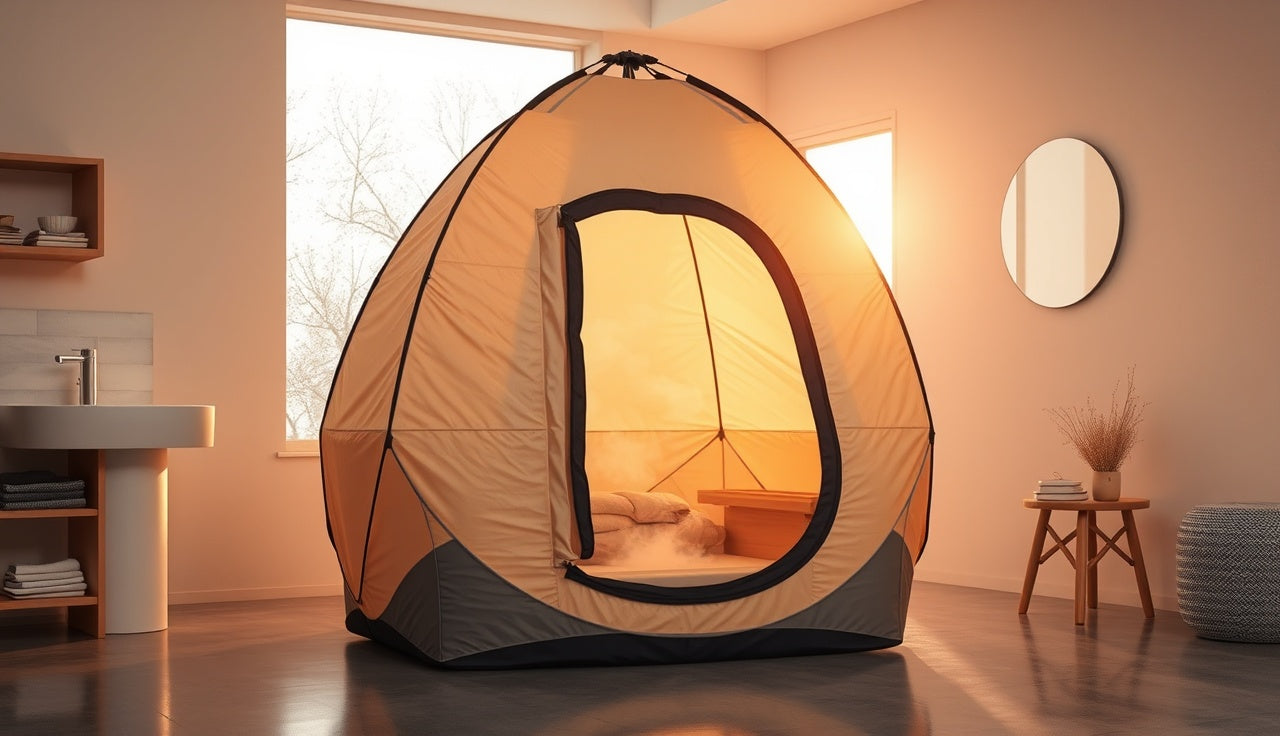
The first is the portable steam pod, sometimes called a steam sauna spa. You sit on a folding stool inside a collapsible fabric tent with your head poking out the top, and a separate generator pumps hot, wet air around your body. These cost the least and produce the highest humidity, which is why they feel closest to a wet steam environment. Internal temperatures usually land between 40°C and 60°C (104°F to 140°F) depending on the unit and run time [1].
The second is the infrared sauna tent. No steam here. Fabric panels lined with carbon or ceramic far-infrared emitters heat your body directly. You sit inside fully, head included, and the air is much drier, usually 30-50% relative humidity. These feel more like a traditional sauna than a steam room, though air temperatures run lower, typically 40°C to 55°C (104°F to 131°F).
The third is the infrared sauna blanket. You lie inside a zippered pouch of waterproof polyurethane with infrared emitters woven into the lining. Blankets store smallest and set up fastest, but your head is always outside, ventilation barely exists, and you can only lie flat. They work. They just don't feel like a sauna.
A fourth micro-category exists: larger collapsible steam rooms you fill from a home steam generator, aimed at people who want something close to a real steam room without the plumbing. They're bulkier and pricier. Most home buyers skip them, and that's the right call.
How does a portable steam sauna spa actually work?
A portable steam sauna spa has three parts: the tent, the stool, and the steam generator. Learn how those three interact and you understand the whole product.
The tent is a collapsible fabric shell, usually water-resistant polyester or nylon, with a zippered front and a neck hole at the top. Most fold flat into a carry bag and set up in two to five minutes. The stool sits inside and keeps you off the tent floor.
The steam generator is a standalone box, roughly rice-cooker sized, that you fill with water and plug into a standard 120V outlet. Most US residential units draw 800 to 1,000 watts. It boils the water and sends steam through a hose into the tent through a small port near the base. You control the heat with the generator's dial or digital pad and by unzipping the neck hole to bleed off excess humidity.
Most of these units hit operating temperature in 8 to 15 minutes. Cheaper models take longer or can't hold a steady heat when the tent fabric is thin.
The neck-out design is the real limitation. Because your head stays outside, you skip the upper-body heat you'd get in a proper indoor or outdoor sauna. Some people find the collar uncomfortable after 15 to 20 minutes. The upside is that the cardiovascular and sweating response can still be strong, and the low price makes this the easiest way into heat therapy without committing real money.
What are the real benefits of portable saunas, and what does the research say?
Here's the honest version: most of the strong evidence for sauna benefits comes from traditional Finnish saunas or medical-grade far-infrared units, not $120 steam pods. Applying that research to a fabric tent takes some humility.
The underlying physiology doesn't care much about the delivery device, though. Core temperature rises, heart rate climbs (typically 100-150 bpm during a session), and you sweat hard. A 2018 systematic review in Mayo Clinic Proceedings by Laukkanen and colleagues found that frequent sauna bathing was associated with reduced cardiovascular risk and lower all-cause mortality, while flagging that the data came from observational cohorts [2]. Whether a steam pod raises core temperature the way a 90°C Finnish sauna does is unknown. It almost certainly doesn't reach the same peak.
On recovery, a 2020 study in the European Journal of Applied Physiology reported that post-exercise sauna use lowered perceived muscle soreness and improved recovery markers in male athletes, though the sessions used whole-body saunas rather than portable units [3]. The sauna benefits literature looks promising. It's also fair to say nobody has run a clean trial on portable saunas specifically.
Here's what portable units clearly do well: relaxation, easy warm-up stretching, and a cheap daily heat habit. A $120 steam pod you actually use four times a week beats a $6,000 home sauna gathering dust. Use is the whole game.
| Portable steam pod (low end) | $80 |
| Portable steam pod (high end) | $250 |
| Infrared sauna tent (low end) | $150 |
| Infrared sauna tent (high end) | $500 |
| Infrared sauna blanket (low end) | $100 |
| Infrared sauna blanket (high end) | $600 |
Source: SweatDecks market survey of listed retail prices, 2025
How do portable steam saunas compare to infrared sauna tents and blankets?
Steam pods produce the most sweat per dollar. Infrared tents feel closest to a real sauna. Blankets travel best. The table below lays out the tradeoffs, then the notes explain why each one lands where it does.
| Feature | Steam pod | Infrared tent | Infrared blanket |
|---|---|---|---|
| Typical price (USD) | $80 to $250 | $150 to $500+ | $100 to $400 |
| Heat type | Moist/steam | Dry far-infrared | Dry far-infrared |
| Typical temp range | 104 to 140°F | 104 to 131°F | 95 to 158°F (surface) |
| Head inside? | No | Yes | No |
| Setup time | 3 to 8 min | 5 to 15 min | 1 to 2 min |
| Storage footprint | Medium | Large | Small |
| Session length (typical) | 15 to 30 min | 20 to 45 min | 20 to 40 min |
| Closest to traditional sauna? | Moderate | Most similar | Least similar |
| Best for | Budget, intense sweat | Comfort, dry heat | Convenience, travel |
Steam pods win on sweat per dollar. The humidity makes the heat feel more intense at a lower air temperature, which is physically accurate: wet air moves heat into your skin faster than dry air at the same reading. If cheap and sweaty is the goal, buy a steam pod.
Infrared tents suit longer sessions better. The neck-in design heats your whole body evenly, and the drier air feels less smothering. The cost is money and bulk. A decent infrared tent runs two to three times a comparable steam pod, and folded it's still a large, awkward package.
Blankets are for people short on space or always on the road. The feel is genuinely different: you lie flat, your core warms while your hands and feet lag, and there's no ambient heat at all. Plenty of people find them useful. Just picture a heated sleeping bag, not a sauna.
For the full steam-versus-dry breakdown, read our sauna vs steam room guide.
What should you look for in portable sauna reviews?
Most portable sauna reviews fail one of two ways: Amazon affiliate lists that test nothing, or five-star manufacturer reviews from people who got a discount code. Read them for five specific things and you'll cut through the noise.
First, look for measured internal temperatures, not the claimed maximum. Many budget steam pods advertise 65°C but can't hold 50°C with the neck hole closed. If a reviewer never mentions putting a thermometer inside, they probably never did.
Second, check how long they used it. One session tells you almost nothing. Reviews that describe what happened to the fabric, zipper, or generator after 30 to 60 sessions are the ones worth trusting.
Third, watch for comments on the steam generator. It fails first, every time. Cheap units use plastic heating elements that calcify fast in hard water. A reviewer in a hard-water area who never mentions descaling isn't showing you what you'll live with six months in.
Fourth, take the neck collar seriously. A stiff or badly shaped collar ends your session early, session after session. You want soft, wide, and adjustable.
Fifth, wattage predicts performance. A 900 to 1,000W generator heats a standard tent faster and holds temperature better than a 600W one. It's the single most useful spec for a steam pod, and the one bad reviews skip most often.
Which portable saunas are worth buying and which should you avoid?
Skip the SKU-by-SKU list. Amazon models change monthly, so here's the honest framework by category, plus a clear list of what to walk away from.
Under $150, the steam pod market is crowded with near-identical products from Serenelife, Durherm, and Zonemel. Same tent designs, same 800-1,000W generators. The differences come down to included accessories and collar shape. None survive more than two to three years of regular use. That's fine if you're testing whether heat therapy fits your life. Serenelife units get steady praise for generator longevity; Durherm units tend to have better tent quality but weaker generators. Buy whichever is cheaper on the day. The gap is small.
For infrared tents in the $200-$400 range, Sunlighten and HigherDOSE are the names serious wellness communities cite most. HigherDOSE's infrared blanket got wide attention after heavy media wellness coverage around 2020-2022. Those blankets use quality infrared emitters and run $500-$600 at full price, which is steep for what you get. SaunaSpace and REVIIV make infrared blankets with solid build quality at similar prices.
What to avoid, plainly: any portable sauna sold mainly through social media ads with no traceable brand history; any fabric tent claiming temperatures above 80°C (176°F), which is structurally implausible and a safety flag; and any infrared unit that won't say whether it uses far-infrared (8-15 microns) or near-infrared emitters, which sit at shorter wavelengths and behave differently.
If you already know you'll use heat regularly and you have the space, jumping to a proper home sauna or an outdoor sauna gives you a much better experience. The portable is a great test, not a destination.
Are portable saunas safe to use at home?
Mostly yes, with reasonable care. The three real risks are dehydration, overheating, and electrical hazards from the steam generator.
Dehydration first: sweating 0.5 to 1 liter in a 30-minute session is normal in any hot environment [4]. Drink 16 oz of water before you start and keep more within reach. This part isn't optional.
Overheating next: most healthy adults handle 15 to 30 minute sessions at the temperatures portable units produce without trouble. Be more careful if you have cardiovascular disease, low blood pressure, are pregnant, or take anything that impairs thermoregulation. The American Heart Association's scientific statement on sauna and cardiovascular health notes that saunas trigger heart rate increases comparable to moderate-intensity exercise [5]. Not dangerous for healthy people, but a genuine load on the body.
Electrical safety matters because steam generators mix water and current in close quarters. Plug into a GFCI-protected outlet, which the National Electrical Code (NFPA 70, Article 210.8) requires in bathrooms and within 6 feet of a sink [6]. Never run the generator through an extension cord that isn't rated for its wattage. Most need a 15-amp circuit at minimum. Keep the unit flat, stable, and clear of standing water.
Children under 12 and older adults should only use portable saunas with direct supervision and shorter sessions. The injury data specific to portable saunas is thin, but burns from direct steam contact and heat stress are the incidents that show up most.
Read the safety sheet that ships with your unit. If it isn't printed in clear English, treat that as a red flag.
How long should a portable sauna session last?
Beginners should aim for 15 to 30 minutes, building toward 20 to 45 as they acclimate. The Kuopio Ischemic Heart Disease study, one of the most cited sauna longevity datasets, used sessions averaging about 19 minutes at roughly 79°C [2]. Portable units run cooler, so matching that cardiovascular stimulus may take a slightly longer session, though nobody has published clean head-to-head data.
A workable steam pod protocol: run the generator 8 to 10 minutes before you climb in, sit for 15 to 20 minutes, then cool down for 5 to 10. If you're not sweating within the first 10 minutes, the tent is too cool or the generator is underpowered.
Pairing heat with cold afterward is worth doing. The contrast therapy effect is well-documented in exercise science [7]. A cold shower, cold plunge, or ice bath after your session can improve circulation response and cut perceived soreness. A typical cycle is 20 minutes of heat, then 2 to 5 minutes of cold, repeated one to three times. Don't chase a number past your tolerance. Sweating hard at 15 minutes beats bailing at 25 because the room is spinning.
How much does a portable sauna cost to run?
Almost nothing, and most reviews never mention it. A 1,000W steam pod running 30 minutes uses about 0.5 kWh per session. At the US residential average of $0.1628 per kWh from the U.S. Energy Information Administration's 2024 data [8], that's roughly $0.08 a session. Five sessions a week costs under $2.50 a month in electricity.
Infrared sauna tents draw more, usually 1,200 to 1,800W across all panels. A 45-minute session runs 0.9 to 1.35 kWh, or about $0.15 to $0.22 at average rates. Still pocket change.
The cost that actually adds up is parts. Steam generator heating elements need descaling every 20 to 30 sessions in hard-water areas, and descaling solution runs $5 to $15. Skip it and the element calcifies until the generator quits. Budget $30 to $50 a year in maintenance for a steam pod you use regularly.
One tax note: a portable sauna bought for home use is generally not deductible as a medical expense under IRS rules unless a physician prescribes it for a specific condition and you use it solely for treatment, per IRS Publication 502 [9]. Don't plan around a write-off.
What's the difference between a portable steam sauna and a portable infrared sauna?
The core difference is how heat gets into your body. Steam moves heat through the air. Infrared radiates it straight at your skin.
A portable steam sauna heats moist air, and that air warms your skin through convection. The humidity makes it feel hotter than the thermometer says: wet air at 50°C feels more intense than dry air at 60°C because your sweat can't evaporate to cool you. That's the same principle behind the wet-bulb temperature used in heat safety, which the OSHA Technical Manual describes as a better measure of heat stress than dry air temperature alone [10].
A portable infrared sauna uses far-infrared radiation (roughly 8-15 microns) to heat your body directly, the way sunlight warms your skin but without the UV. Air temperature inside an infrared tent runs lower than a steam pod, often 40-50°C versus 50-60°C. Advocates argue the radiant heat reaches tissue more deeply than convective heat. The research on that specific claim is mixed and mostly built on medical-grade gear, not fabric tents.
In plain terms: steam pods feel more intense and produce more visible sweat, while infrared tents feel gentler and suit longer sits. Neither is clearly better for wellness outcomes, because the portable-specific trials don't exist. Pick on priorities: budget and intensity (steam), or comfort and dry heat (infrared).
SweatDecks carries a picked selection of portable saunas if you want to line up current models before you buy.
Can you use a portable sauna outdoors?
You can, with real caveats. Wind is the enemy and cold makes it worse.
Steam pods work outdoors in warm, calm weather. Wind pulls heat straight through the tent fabric and forces the generator to work far harder to hold temperature. Most manufacturers don't warranty steam pods for outdoor use. Below about 50°F ambient, a steam pod struggles to reach and keep an effective temperature at all.
Infrared tents handle the outdoors a little better because radiant heat doesn't depend on trapping hot air as tightly, but they still fade in cold or wind. If outdoor sauna sessions are the goal, a real outdoor sauna structure (a barrel or cabin sauna) beats any portable by a wide margin.
The electrical risk climbs outdoors. GFCI protection is required for electrical devices used outdoors in wet conditions under the National Electrical Code [6]. Never plug a steam generator into an unprotected outdoor outlet, and never run a portable sauna in the rain.
A covered patio or a garage is the sensible middle ground. You get some fresh-air feel without the wind and moisture that wreck outdoor performance.
Where should you buy a portable sauna, and what should you spend?
For a first-time buyer, $100-$200 on a steam pod is the right move. You get a real heat experience, you learn whether you'll actually stick with a sauna habit, and you lose little if you decide portables aren't for you.
If you already love sauna and want something that feels premium, $300-$500 buys a quality infrared tent or a high-end blanket. Spending above $500 on a portable is hard to defend. At that price you're bumping into entry-level traditional saunas and used home sauna cabinets.
Amazon dominates portable sauna retail, which is convenient but leaves you leaning on review integrity. Walmart, Costco (often seasonally), and direct-to-consumer wellness brands are the alternatives. Costco saunas (see our Costco sauna guide) sometimes list portable infrared options that beat equivalent Amazon listings on value.
SweatDecks covers portable and full-size options at sweatdecks.com if you'd rather see curated picks than scroll thousands of listings.
One honest note. If you're buying a portable because you want the health benefits of regular sauna use and you have room for something permanent, treat the portable as a test, not a solution. A real sauna hits temperatures and air volumes a fabric tent can't touch. Build the habit on the cheap unit, then upgrade once the habit is proven.
Frequently asked questions
Do portable saunas actually work for weight loss?
Water weight yes, fat loss no. You can lose 0.5 to 1 liter of sweat in a 30-minute session, which shows up as a temporary drop on the scale. It comes right back when you rehydrate. No credible controlled study shows portable sauna use causes meaningful fat loss on its own. The calorie burn during a session is real but modest, roughly comparable to light walking.
How often should I use a portable sauna?
Research on cardiovascular benefits used 4 to 7 sessions a week; recovery protocols use 2 to 3. For a portable unit, 3 to 4 sessions a week is a realistic, evidence-adjacent target. Daily use is fine for healthy adults if you cap sessions at 20 to 30 minutes and stay hydrated. There's no established upper limit, but the returns flatten quickly past daily use.
Is a portable steam sauna good for skin?
Steam opens pores and boosts skin surface circulation, and many people report clearer, softer skin afterward. Controlled clinical research on portable steam saunas and skin is limited. Dermatologists generally view steam as helpful for hydration and pore cleaning when followed by good skincare, though people with rosacea or inflammatory skin conditions may find heat irritating. Ask your dermatologist if you have an active skin condition.
Can I use a portable sauna if I have high blood pressure?
Ask your doctor first. Heart rate and cardiac output rise meaningfully during a session, and blood pressure response varies by person. The American Heart Association notes blood pressure usually drops during and right after sauna bathing due to vasodilation, which can cause dizziness on standing. If medication manages your blood pressure, heat can interact with that. Skip any sauna if your hypertension is uncontrolled and you haven't been cleared.
What's the best portable sauna for small apartments?
An infrared blanket wins on footprint. It stores in a bag about the size of a large sleeping bag and sets up on any flat surface, including a bed or yoga mat. Steam pods fold reasonably flat, but the tent and stool together eat real closet space. For tight quarters the blanket is the practical pick, with the honest caveat that it feels less sauna-like than a steam pod or infrared tent.
How do I clean and maintain a portable steam sauna?
Wipe the tent interior with a damp cloth after each session while it's still slightly warm, then let it air dry fully before folding so it doesn't grow mold. Descale the steam generator every 20 to 30 sessions: fill with a 50/50 mix of white vinegar and water, run 5 minutes, soak 30 minutes, then drain and rinse twice with plain water. Descale more often in hard-water areas. Empty the reservoir between sessions.
Can I use essential oils in a portable steam sauna?
Not in the generator. Adding oils to the water reservoir of most consumer steam generators damages seals, clogs the heating element, and voids the warranty. Some units include a separate aromatherapy tray that sits inside the tent, away from the generator. If yours doesn't, run a diffuser inside the tent or add a few drops of eucalyptus to a small bowl of hot water placed inside. Keep oils out of the water tank entirely.
What's the difference between a portable sauna and a sauna suit or sweat suit?
A sauna suit is worn during exercise and traps body heat from activity to force more sweating. A portable sauna is a static heat environment you sit or lie in. Both produce sweat through different mechanisms. Sauna suits carry a real risk of dangerous overheating during hard exercise, and several athlete deaths have been linked to them. Portable saunas at their rated temperatures are generally safer because you're sedentary and the heat source is controlled.
How does a portable sauna compare to a cold plunge for recovery?
They hit different mechanisms and work well together. Sauna raises core temperature, increases blood flow, and loads the cardiovascular system in a useful way. Cold plunge and ice bath exposure constricts blood vessels, lowers inflammation markers, and triggers norepinephrine release. Combining them (contrast therapy) is supported by exercise science for reducing perceived soreness. Neither is definitively better, and athletes who use both tend to report the best subjective recovery.
Are portable infrared saunas safe for EMF exposure?
Far-infrared emitters produce low-frequency electromagnetic fields. Third-party testing of portable infrared products has measured EMF from near-background to several milligauss, depending on unit quality and distance from the emitters. The World Health Organization's position is that there's no confirmed evidence low-frequency EMF at these levels causes health effects. If EMF concern drives your decision, buy from brands that publish third-party EMF results and favor carbon panel emitters over cheaper ceramic coils, which tend to measure higher.
How long do portable saunas last before needing replacement?
Steam pods used 3 to 4 times a week usually see generator failure or tent seam wear within 2 to 3 years, and the generator almost always goes first. Expect 18 to 24 months from budget units under regular use. Infrared blankets tend to last 3 to 5 years because there are no water parts. Infrared tents fall in between. Paying more doesn't guarantee a longer life here; mid-tier products often match premium ones.
What temperature should a portable sauna reach to be effective?
Traditional Finnish saunas run 70-100°C (158-212°F), which portable units can't match. But meaningful responses like elevated heart rate and heavy sweating happen at far lower temperatures, especially with the humidity boost a steam pod gives you. A steam pod holding 50-60°C (122-140°F) inside produces a real sweat response for most people. If your unit can't hold at least 45°C (113°F), it's underperforming.
Can I use a portable sauna every day?
Daily use is generally safe for healthy adults who stay hydrated and keep sessions to 20 to 30 minutes. Finnish sauna culture treats daily or near-daily use as normal. The cohorts with the strongest cardiovascular associations used saunas 4 to 7 times a week. The main practical risks of daily use are dehydration if you don't replace fluids and faster wear on the unit. There's no evidence daily use harms people without underlying health conditions.
Sources
- National Institutes of Health, National Library of Medicine: 'Sauna Use as a Lifestyle Practice to Extend Healthspan', Evidence-Based Complementary and Alternative Medicine, 2018: Portable steam saunas and traditional saunas produce internal temperatures in the range of 40-100°C depending on design and settings
- Mayo Clinic Proceedings: 'Cardiovascular and Other Health Benefits of Sauna Bathing', 2018, Laukkanen et al.: Frequent sauna bathing was associated with reduced cardiovascular risk and lower all-cause mortality; average session length in the Kuopio study was approximately 19 minutes at ~79°C
- European Journal of Applied Physiology: 'Post-exercise infrared sauna bathing improves recovery in males', 2020: Post-exercise heat therapy reduced perceived muscle soreness and improved recovery markers in athletes using whole-body sauna sessions
- American College of Sports Medicine, Position Stand on Exercise and Fluid Replacement: Sweating 0.5 to 1 liter per 30-minute session in hot environments is common; adequate hydration is required before and after heat exposure
- American Heart Association, Scientific Statement on Sauna Bathing and Cardiovascular Health: Saunas cause significant cardiovascular responses including heart rate increases comparable to moderate-intensity exercise
- National Electrical Code (NFPA 70), Article 210.8: Ground-Fault Circuit-Interrupter Protection for Personnel: GFCI protection is required by the NEC in bathrooms, outdoors, and within 6 feet of sinks; required for steam generator use in these locations
- Journal of Science and Medicine in Sport: research on contrast water therapy and recovery, 2017: Contrast therapy (alternating heat and cold exposure) is supported by exercise science research for reducing perceived soreness
- U.S. Energy Information Administration, Electric Power Monthly, Residential Average Retail Price 2024: US residential average electricity rate was $0.1628 per kWh as of 2024 data
- IRS Publication 502, Medical and Dental Expenses: Home sauna equipment is generally not deductible as a medical expense unless prescribed by a physician for a specific medical condition and used solely for medical treatment
- OSHA Technical Manual, Section III, Chapter 4: Heat Stress: Wet-bulb temperature accounting for humidity more accurately represents heat stress on the human body than dry air temperature alone
- World Health Organization, Electromagnetic Fields (EMF) fact sheet: WHO position: no confirmed evidence exists that low-frequency EMF at consumer product levels causes adverse health effects
- Centers for Disease Control and Prevention, NIOSH: Criteria for a Recommended Standard, Occupational Exposure to Heat and Hot Environments: Dehydration and overheating are the primary physiological risks during heat exposure; heat stroke can occur at elevated core temperatures

Share:
Sauna benefits and disadvantages: what the research actually says
Sauna benefits and disadvantages: what the research actually says