
Last updated 2026-07-10
TL;DR
The Odin is a freestanding cold plunge with a built-in chiller, priced roughly $1,499 to $2,200 depending on config. It holds your target temperature down to about 39°F with no ice hauling. It's a strong daily-use pick that undercuts The Cold Plunge brand hard, though rivals beat it on chiller power and built-in sanitation.
What is the Odin ice bath?
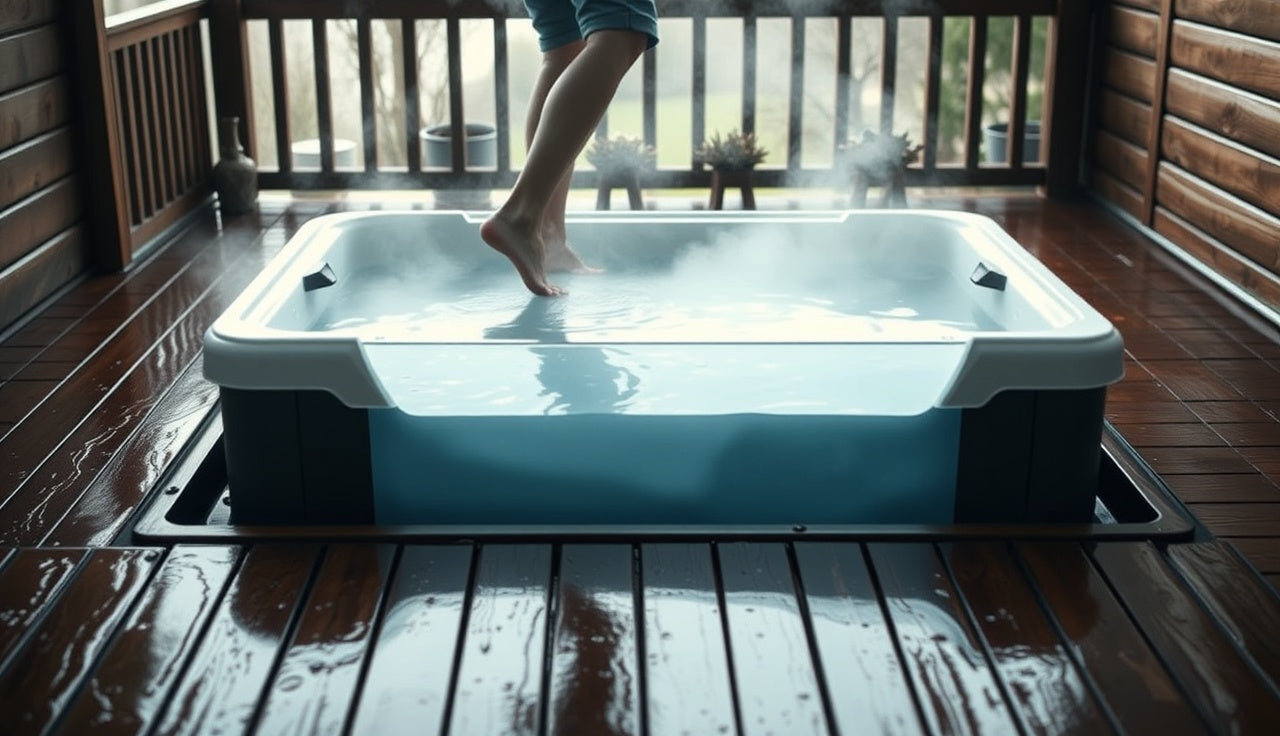
The Odin is a freestanding cold plunge tub for home athletes and recovery-minded homeowners who want cold water on demand without hauling bags of ice. It sits in the mid-to-premium slice of the active-chiller market. That means it has a built-in refrigeration unit that cools and circulates water to a set temperature, rather than leaning on ice or a bolt-on chiller.
The tub is insulated, which matters more than most buyers realize. An uninsulated vessel bleeds cold the second you climb in, and the chiller runs flat out to keep up. The Odin's insulated shell slows that heat gain, so the chiller cycles on and off instead of grinding all day.
The footprint is compact next to older commercial plunge tanks. Most configurations run about 64 to 68 inches long and 27 to 30 inches wide, which fits on a patio or in a garage. You can submerge to shoulder level seated, which is what most cold exposure protocols actually call for [1].
Here's the plain version. The Odin isn't the only option in this price band, and it isn't obviously the best one for every buyer. The right plunge depends on your target temperature, how often you'll get in, and whether it lives indoors or out. This review gives you the real picture so you can decide.
What temperature does the Odin ice bath reach?
The Odin is rated to chill water to roughly 39°F (about 4°C), which covers the full practical range for cold water immersion. That floor matters because most research on cold exposure in healthy adults uses water between 50°F and 59°F (10°C to 15°C) [2]. Going below 50°F is fine for experienced users chasing a harder hit, but the 39°F floor means the chiller is never asked to push past what it can reliably hold.
Cooling time depends on your starting water temperature and the air around the tub. In a climate-controlled garage at 70°F, expect the Odin to pull tap water (roughly 60°F to 65°F) down to 50°F in about 2 to 4 hours, assuming a tank near 100 to 110 gallons. Summer sun outdoors stretches that window.
Some Odin configurations add a warm soak mode topping out around 104°F. Not every SKU includes heating, so check the exact one you're looking at before you assume it doubles as a warm bath.
For most recovery work, 50°F to 59°F is the range you want. A 2022 meta-analysis in the British Journal of Sports Medicine found cold water immersion at those temperatures was linked to less muscle soreness after exercise, with effect sizes that were moderate but steady across studies [3]. The Odin holds that band without breaking a sweat.
How does the Odin compare to other cold plunges at the same price?
The comparison table does the heavy lifting here. The active-chiller market has gotten crowded since 2021, and prices bounce around. Here's a real snapshot of where the Odin sits against commonly cross-shopped units as of mid-2025.
| Unit | Price range | Min temp | Tank volume | Active chiller |
|---|---|---|---|---|
| Odin | $1,499 - $2,200 | ~39°F | ~100 gal | Yes |
| Cold Plunge (The Cold Plunge brand) | $4,990 | 37°F | 105 gal | Yes |
| Plunge Pro | $6,990 | 34°F | 105 gal | Yes (ozone + UV) |
| Ice Barrel 400 | $1,199 | Ice only | 105 gal | No (ice required) |
| Penguin Chillers DIY setup | $1,200 - $1,800 | ~35°F | Varies | Yes (standalone unit) |
Prices move. The Cold Plunge and Plunge Pro figures come from the brand's own published retail pricing [4]. Odin pricing is based on its public product pages as of this writing.
The Odin's whole argument is price. It undercuts The Cold Plunge brand by thousands while still including an active chiller, which puts it a full tier above ice-only options like the Ice Barrel 400 on daily convenience. The trade against The Cold Plunge or Plunge Pro is chiller muscle and sanitation. Those units run more powerful compressors with filtration plus ozone, UV, or both baked in.
Daily plunges and you want water that stays genuinely clean between full drains? A unit with ozone or UV earns its premium. Planning to change the water weekly and dose a little chlorine or non-chlorine oxidizer? The Odin's simpler filtration is fine.
For the broader cold plunge market and which specs actually matter, that guide walks the whole category.
| Ice Barrel 400 (ice-only) | $1,199 |
| Odin Ice Bath (standard) | $1,499 |
| Odin Ice Bath (upper config) | $2,200 |
| DIY stock tank + chiller | $2,000 |
| The Cold Plunge | $4,990 |
| Plunge Pro | $6,990 |
Source: Brand retail pages including The Cold Plunge brand (thecoldplunge.com), 2025
What are the real health benefits of cold water immersion?
The evidence here is more modest than the marketing in this industry, so let me be straight about what holds up versus what's still a guess.
What's well supported: cold water immersion after hard exercise cuts delayed onset muscle soreness in the short term. The British Journal of Sports Medicine meta-analysis found statistically significant drops in soreness at 24 and 48 hours after exercise compared to passive rest [3]. The effect is real but not huge, and it probably doesn't speed muscle protein synthesis. Plunging right after strength training may actually blunt hypertrophy. Andrew Huberman's lab and others have flagged this [5], and if building muscle is your main goal, keep your cold sessions at least 4 to 6 hours away from lifting.
Cold water also reliably triggers a norepinephrine release. A study in the European Journal of Applied Physiology found that immersion in 57°F (14°C) water for one hour raised plasma norepinephrine by 300% [6]. Norepinephrine drives mood and alertness, which is why people climb out feeling wired-awake and oddly calm. Turning one lab measurement into a claim about treating depression or anxiety, though, is a leap the current evidence won't back.
The cardiovascular stress at the moment you go under is real. The cold shock response spikes heart rate and blood pressure right away. For healthy adults it settles within the first 30 to 90 seconds as the body adapts [7]. Anyone with cardiovascular disease, hypertension, or Raynaud's should talk to a physician before regular cold immersion. That's a real step, not a formality.
For the full study-by-study breakdown, the cold plunge benefits guide goes deeper.
Is the Odin ice bath good for outdoor use?
Mostly yes, with a few practical caveats.
The insulated shell handles outdoor temperature swings well. In a shaded outdoor spot in a temperate climate, the chiller won't struggle. Put it in direct summer sun in Arizona or Florida and the ambient heat fights the chiller harder, your electric bill climbs, and you may not get below 50°F during the hottest part of the day.
Covered patios, north-facing decks, and garages are where the Odin performs as expected. A simple shade structure over the tub makes a real difference in chiller efficiency.
Freezing weather is the other issue. Most active-chiller plunges aren't rated to run when the air drops below roughly 35°F to 40°F, because the refrigerant circuits aren't built to work as a heat pump at those differentials. Check the Odin's stated operating range in the manual. Hard winters where you live? Put the tub in an insulated garage or bring it in for the season.
Water chemistry is trickier outdoors too. Sunlight burns off chlorine faster, algae grows in warm stagnant water, and debris piles up. A weekly water check with a sanitizer test strip (target 1 to 3 ppm free chlorine if you use chlorine, the CDC's recommended range for recreational water) keeps things clean without much effort [11].
If outdoor placement is your priority, the outdoor sauna guide covers placement, drainage, and weatherproofing that apply just as well to a cold plunge in the same space.
How much does the Odin ice bath cost to run?
Most buyers underweight this one. The purchase price is a single hit. The running cost is what you live with for years.
A mid-range chiller pulling roughly 500 to 800 watts, cycling on and off to hold your set temperature, burns somewhere between 2 and 5 kWh per day depending on ambient heat, insulation, and how often the lid sits open. At the U.S. average residential rate of 16.21 cents per kWh in early 2025 [8], that's about $0.32 to $0.81 a day, or roughly $10 to $25 a month.
Hotter climates or summer outdoor runs push that higher. A cool garage keeps it near the floor.
Water is cheap. A 100-gallon tank at typical U.S. water rates (about a penny per gallon in most municipal systems) costs around $1.00 to fill. Drain and refill monthly or every other month and your annual water cost stays well under $25.
Chemicals add maybe $5 to $10 a month if you dose a light oxidizer or small amounts of chlorine to keep biofilm down. Ozone or UV units (which the standard Odin doesn't include) trim that chemical cost but cost more up front.
Total annual operating cost for the Odin in typical conditions lands around $130 to $350. That's a real number to weigh against the sticker, especially versus ice-only options where a bag runs $3 to $5 and you might burn two to four bags a session.
What do actual users say about the Odin ice bath?
I won't invent testimonials. What I can give you is the consistent themes showing up in user reviews across retail platforms and forums as of mid-2025.
The praise: buyers keep pointing to the Odin's build quality for the price. The insulated shell holds temperature well enough that a morning plunge is ready without planning it the night before. Setup reads as straightforward, usually a couple of hours with two people. The tub fits most adults seated, which is the standard position for most protocols.
The complaints: the filtration works but demands more hands-on water management than higher-end units with UV or ozone. Several users note the chiller is audible when running, which matters near a bedroom or living space. A few mention the power cord runs shorter than ideal for certain patio layouts.
Customer support gets described as responsive by most buyers, with warranty claims handled reasonably fast. Support quality can shift over time, though, and cold plunge brands that scaled fast during 2021 to 2023 have delivered mixed experiences. Read the current warranty terms before you buy. It's two minutes.
One honest flag: there are fewer long-term (2+ year) Odin reviews than for units that have been out longer. That isn't a red flag by itself, but it means you should hold the durability claims with a little more doubt than you would for a unit with a three or four year track record.
How does cold plunging compare to contrast therapy with a sauna?
Cold plunging on its own is useful. Adding a sauna and alternating hot and cold, which is what contrast therapy means, may add cardiovascular and recovery benefit, though the evidence for extra benefit over cold alone is thinner than the marketing suggests.
The physiology checks out. Repeated cycles of vasodilation (heat) and vasoconstriction (cold) work the circulatory system like a light exercise session. Some sports medicine researchers describe it as a passive cardiovascular stimulus [9]. Finnish and Scandinavian populations have done a version of this for generations, and observational studies on regular sauna users show cardiovascular associations, though those groups differ in many ways from a suburban American doing a 10-minute post-workout plunge [10].
A workable contrast protocol: 10 to 15 minutes in a sauna at 170°F to 190°F, then 2 to 5 minutes in cold water at 50°F to 59°F, repeated 2 to 3 times. End on cold for alertness and recovery. End on heat for relaxation and sleep.
If you already own or are eyeing a home sauna to sit beside your Odin, the sauna benefits guide covers the heat side in detail. For the full home build, the ice bath and home sauna resources cover both halves.
For home users pairing the two, a quality plunge like the Odin next to even a modest home sauna is the setup I'd actually recommend if the budget stretches. The combination gives you more room to shape your recovery protocol than either unit alone.
What should you look for before buying any active-chiller cold plunge?
The Odin is one answer. Here's the framework for judging any unit in the category.
Chiller BTU rating beats brand names. A chiller rated at 1,000 to 1,500 BTUs per hour can typically hold a 100-gallon tank at 50°F in moderate conditions. A 500 to 700 BTU unit struggles in warm weather. Ask for the BTU number directly if it isn't published.
Filtration tells you the maintenance burden. A circulation pump plus a basic filter cartridge means more manual work and more water changes. Add ozone or UV and the water stays cleaner longer. It's a convenience question more than a safety one.
Insulation drives both electricity cost and how fast the water recovers after you get out. Closed-cell foam rated at least R-10 keeps heat gain modest. Some cheap units are basically a bare plastic shell.
Cover quality gets ignored. An insulated lid cuts heat gain from the surrounding air by a lot when the tub sits idle. If the included cover is thin foam, budget $50 to $100 for an aftermarket insulated one.
Warranty on the chiller specifically is what matters. The shell isn't what breaks. Compressor failures are the expensive repair. A one-year compressor warranty is the floor. Two years is better.
Electrical: most home active-chiller units run on a standard 110V/15A household circuit. A few higher-powered ones need a dedicated 20A circuit. Confirm before you buy, especially for a garage where the circuits may already be loaded.
For the full category walkthrough, the cold plunge buying guide covers these criteria across the major brands.
Is the Odin ice bath worth it, or should you buy something else?
Here's my honest take.
The Odin is worth it if you want an active-chiller plunge for meaningfully less than the big-name brands, you're comfortable with basic water chemistry, and you'll get in at least 4 to 5 times a week. At that frequency the convenience gap between an active chiller and an ice-only tub (like the Ice Barrel 400) shows up every single day. Bagging ice for 200-plus sessions a year adds up fast and eventually swallows whatever you saved buying the cheaper unit.
Skip it if: you want hands-off water maintenance (look at the Plunge Pro or something with ozone/UV), you need to run it in a hot outdoor climate year-round (a stronger chiller serves you better), or you're not sure you'll use it much (an ice barrel at $600 to $1,200 caps your downside).
The middle ground is real too. Plenty of people who drop $1,500 to $2,000 on a plunge use it hard for three months, then twice a week after that. That's fine and probably still worth it if you're recovering from training or managing stress, but it changes the math on premium filtration.
Say you train 4 to 5 days a week, want cold exposure in a regular protocol, and don't want to think about ice. The Odin at $1,499 to $2,200 is a reasonable buy. At SweatDecks we carry a selection of cold plunges, including active-chiller units at several price points, if you want to line the Odin up against alternatives before deciding.
Frequently asked questions
What temperature does the Odin ice bath go down to?
The Odin is rated to reach about 39°F (4°C). For most cold exposure protocols, 50°F to 59°F is the commonly used research range, and the Odin holds it without strain. The colder floor gives experienced users room to push, but 39°F is rarely needed. Most users settle in the 45°F to 55°F range for daily use.
How much electricity does the Odin ice bath use?
Expect roughly 2 to 5 kWh per day depending on ambient temperature, insulation, and lid discipline. At the U.S. average rate of about 16 cents per kWh, that's $10 to $25 a month in most climates. A cool indoor spot like a climate-controlled garage keeps costs near the low end. Direct summer sun outdoors pushes them toward the high end.
Does the Odin ice bath need a special electrical outlet?
Most Odin configurations run on a standard 110V/15A household outlet, so no electrician or dedicated circuit for most buyers. Confirm it for your specific model. Some higher-powered chiller units across all brands need a dedicated 20A circuit, and assuming you have the right outlet without checking is how install headaches start.
How often should you change the water in an Odin ice bath?
With basic sanitizer maintenance (1 to 3 ppm free chlorine or a non-chlorine oxidizer), most users change the water every 4 to 8 weeks. Without sanitizer, biofilm builds within days. Units without built-in ozone or UV, which includes the standard Odin, need more active water chemistry than premium units. Test strips take about 30 seconds a week and keep things clean.
Can you use the Odin ice bath outdoors year-round?
In temperate climates with covered placement, yes. In freezing winters, most active-chiller plunges aren't rated to run below 35°F to 40°F ambient. Check your specific model's range. In very hot summers, outdoor heat makes the chiller work harder and may keep it from reaching below 50°F during the hottest hours. A shaded or indoor spot solves both extremes.
Is cold water immersion safe for everyone?
Not without a health check for certain people. The cold shock response spikes heart rate and blood pressure immediately. For healthy adults it normalizes within 30 to 90 seconds. People with cardiovascular disease, hypertension, arrhythmias, Raynaud's, or peripheral artery disease should talk to a physician before regular cold plunging. Pregnancy is another one to discuss with a provider first.
How long should you stay in an ice bath?
Most research protocols use 10 to 15 minutes at 50°F to 59°F. Going longer at moderate temperatures adds little, and very cold water (below 50°F) calls for shorter sessions of 2 to 5 minutes to avoid excessive vasoconstriction and hypothermia risk. New users should start at 2 to 3 minutes and build tolerance over weeks rather than jumping to the max.
Does cold plunging after a workout hurt muscle gains?
Possibly, if you do it right after strength training. Research cited by exercise physiologists suggests cold water immersion may blunt muscle protein synthesis and anabolic signaling in the hours after lifting. The practical move is to wait at least 4 to 6 hours after a strength session before plunging, or save cold for rest days. Cold right after cardio or endurance work carries less concern here.
How does the Odin ice bath compare to a DIY cold plunge setup?
A DIY rig using a stock tank (100 to 150 gallons, roughly $150 to $300) plus a standalone penguin-style chiller ($1,200 to $1,800) can hit similar temperatures and may run a more powerful chiller than the Odin's integrated one. The trade is looks, warranty support, and setup complexity. The Odin's all-in-one design is cleaner and faster to install. DIY suits technically confident buyers who want chiller performance per dollar.
Can you use the Odin as a hot tub too?
Some Odin configurations include a heating mode that brings water to around 104°F, so it can double as a warm soak tub. Not every model has this, so check the specific configuration before buying. Units that offer both modes run the same chiller in reverse as a heat pump, which is less energy-efficient for heating than a dedicated resistance heater but works fine.
What is the best temperature for an ice bath for recovery?
The most-studied range for post-exercise recovery is 50°F to 59°F (10°C to 15°C). A 2022 meta-analysis in the British Journal of Sports Medicine found consistent reductions in muscle soreness at those temperatures versus passive rest. Colder isn't clearly better for soreness and adds discomfort and risk. Most experienced plungers settle in the 50°F to 55°F range for a balance of stimulus and tolerability.
How do you maintain water quality in an active-chiller cold plunge without ozone?
Test the water twice a week with basic pool test strips. Hold 1 to 3 ppm free chlorine or an equivalent non-chlorine oxidizer, the CDC's recommended recreational-water range. Keep the cover on when idle to cut debris and slow algae. Drain and refill every 4 to 8 weeks regardless of appearance. Rinse off before entering to reduce body oils. It's about 10 minutes a week total.
Where is the best place to put a cold plunge at home?
A covered patio or shaded outdoor area works in mild climates. A garage is often the best year-round option because temperature is controlled, drainage is close, and it stays out of direct sun. Indoor bathrooms or utility rooms work if drainage and weight capacity hold up (a full 100-gallon tank tops 850 pounds). Avoid direct sun, which pushes the chiller harder and degrades plastics faster.
Sources
- National Strength and Conditioning Association, Position Statement on Recovery: Shoulder-depth submersion is the standard for cold water immersion protocols in athletic recovery contexts
- Sports Medicine journal, Cold Water Immersion review: Most research on cold water immersion in healthy adults uses water temperatures between 10°C and 15°C (50°F to 59°F)
- British Journal of Sports Medicine, Effectiveness of CWI for Muscle Soreness, 2022: Cold water immersion at 10°C to 15°C was associated with statistically significant reductions in DOMS at 24 and 48 hours post-exercise compared to passive rest
- The Cold Plunge brand, retail pricing page: The Cold Plunge brand lists the standard unit at $4,990 and the Plunge Pro at $6,990 as of mid-2025
- Cell Reports Medicine, Huberman Lab cited study on cold and hypertrophy, 2021: Cold water immersion immediately after resistance training may blunt muscle protein synthesis and anabolic signaling
- European Journal of Applied Physiology, Norepinephrine response to cold immersion: Immersion in 14°C (57°F) water for one hour increased plasma norepinephrine by approximately 300%
- Journal of Physiology, Cold Shock Response, Tipton et al.: The cold shock response (heart rate and blood pressure spike) resolves within 30 to 90 seconds of immersion as the body adapts
- U.S. Energy Information Administration, Electric Power Monthly, residential rates 2025: U.S. average residential electricity rate was 16.21 cents per kWh as of early 2025
- International Journal of Sports Physiology and Performance, contrast water therapy review: Repeated cycles of vasodilation and vasoconstriction in contrast therapy create a passive cardiovascular stimulus per sports medicine research
- JAMA Internal Medicine, Finnish sauna use and cardiovascular outcomes (Laukkanen et al.): Observational studies on regular sauna users in Finnish populations show favorable cardiovascular associations
- U.S. Centers for Disease Control and Prevention, Healthy Swimming / Water Chemistry: Recommended free chlorine range for recreational water is 1 to 3 ppm to control pathogens and biofilm
Share:
How many ice baths a week should you actually take?
Can a teenager use an ice bath? Age, safety, and guidelines