
Last updated 2026-07-09
TL;DR
An ice bath barrel is a vertical, cylindrical cold plunge tub, usually 24 to 30 inches wide and 36 to 48 inches tall, that lets you sit submerged to the shoulders in cold water at home. Good ones run $300 to $1,200. They work for cold water immersion recovery, and a handful of well-designed studies back the core benefits, though the best protocol is still being worked out.
What exactly is an ice bath barrel?
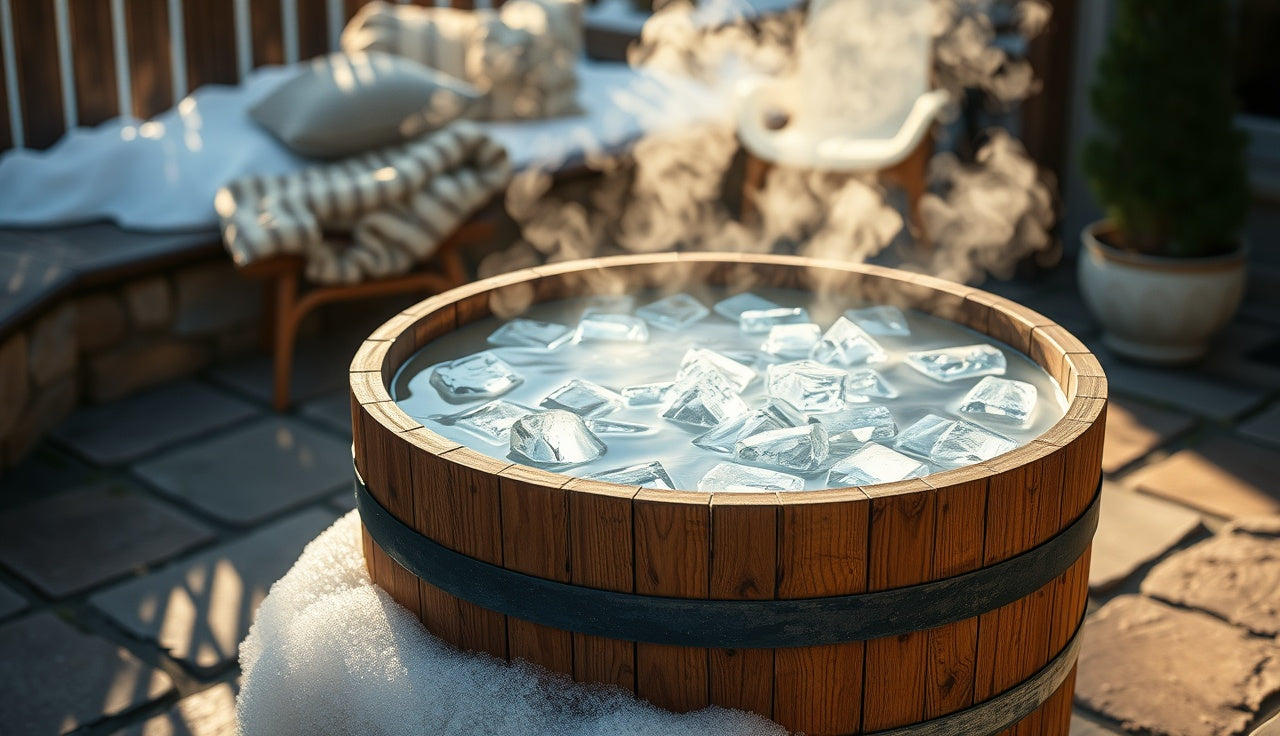
A barrel-style ice bath is exactly what it sounds like: a cylindrical tub, shaped like an old whiskey or rain barrel, sized so an adult can sit inside with water up to the neck or shoulders. Most run 24 to 30 inches wide and 36 to 48 inches tall. The barrel has become the default entry-level cold plunge for home users because it is cheap to make, easy to ship as a flat kit or nested stack, and holds 60 to 90 gallons, enough water to submerge the body without hogging a bathtub.
The original material was wood. Cedar and pine stave barrels are still popular outdoors because they look good on a deck and handle weather well. Cheaper versions use high-density polyethylene (HDPE) or food-grade polypropylene, which works fine. Some newer models add an insulating liner, a drain valve, or a lid. None of that is strictly necessary. A drain valve saves you from bailing the thing by hand, and a lid slows ice melt and keeps debris out overnight.
Think of it as the low-tech, lower-cost cousin of a purpose-built cold plunge tank. A cold plunge with active chilling costs $2,000 to $10,000 or more. A barrel asks you to do the work yourself by adding ice or cold water, and in exchange it costs a fraction of that. If you want to try cold water immersion seriously without betting a fortune on it, the barrel is the right starting point.
What are the actual benefits of cold water immersion in a barrel?
The research is real but thinner than the wellness internet claims. The strongest evidence sits with muscle soreness. A 2012 Cochrane Review of 17 trials found that cold water immersion significantly reduced delayed onset muscle soreness (DOMS) compared with passive recovery [1]. The finding has held up through later work: a short cold plunge after hard training blunts the soreness you feel one to three days out.
Beyond soreness, the mechanisms are at least partly understood. Immersion below about 59°F (15°C) triggers peripheral vasoconstriction, slows nerve conduction, and fires the cold shock response, which includes a sharp norepinephrine spike [2]. Norepinephrine is the chemical most clearly tied to the mood and alertness lift people describe after a plunge. Norwegian cold exposure research has measured whole-body cold raising plasma norepinephrine by 200 to 300% [2].
There is also early work on brown adipose tissue (BAT) activation and on vagal tone and heart rate variability. Interesting, but young. Nobody has clean long-term trial data showing that three barrel plunges a week for a year produce measurable cardiometabolic change in healthy adults. The closest signals come from Scandinavian winter-swimming cohorts, which are observational and confounded, because people who swim in frozen lakes all winter tend to be health-obsessed to begin with.
Here is the practical read. Train hard and want recovery? The DOMS evidence is solid. The mood lift is real for most people and probably norepinephrine-driven. Everything past that, treat as a likely benefit science has not nailed down. The cold plunge benefits breakdown goes study by study if you want the detail.
One caution matters more than the rest. Cold water immersion right after strength training may blunt muscle growth. A 2015 paper in the Journal of Physiology found post-exercise cold water immersion reduced long-term gains in muscle mass and strength compared to active recovery [3]. If building muscle is your main goal, save the barrel for hard endurance days or rest days, not the minutes right after heavy lifts.
How cold does the water need to be, and how long should you stay in?
Most cold water immersion research uses 50°F to 59°F (10°C to 15°C), and that range is the practical target for a home barrel. You do not need 35 to 40°F water to get the reported benefits. Going that cold adds real physiological risk for unclear extra payoff.
A sensible protocol, drawn straight from the ranges in published studies: 50 to 59°F water, 10 to 15 minutes, no more than once daily. Some researchers use shorter soaks (5 to 7 minutes) at colder temps; some use longer soaks warmer. The dose-response curve is not fully mapped, so more is not automatically better. The Cochrane authors noted that most protocols they analyzed ran 10 to 15 minutes at 10 to 15°C (50 to 59°F) [1].
For a barrel with no chiller, hitting 50 to 59°F usually takes about 20 to 40 pounds of ice in 60 to 80 gallons, depending on your tap temperature. In summer your tap might run 65 to 70°F and you will need more ice. In winter, tap water across many northern states comes out at 45 to 55°F and you barely need any. A floating thermometer costs under $10 and stops the guessing.
The cold shock response, the gasping and hyperventilation reflex in the first 30 to 90 seconds, is the main immediate risk [4]. It can force an involuntary inhalation, which matters if your face is near the water. In a barrel your head stays above the surface, so it is less dangerous than open-water immersion, but ease in slowly and never plunge alone if you have any cardiovascular concerns. American Red Cross guidance on cold water safety warns that even brief cold exposure can trigger cardiac arrhythmias in susceptible people [4].
What materials are ice bath barrels made from, and which is best?
Four materials cover the market.
Cedar and pine wood stave barrels look great, and cedar carries natural oils that resist mold and bacteria [10]. They last 10 years or more with basic care. The downside is movement: wood expands and contracts, and cheaply built stave barrels can leak until the wood swells and seals, which takes a few fill-and-drain cycles. Good barrels from dedicated makers seal reliably. Budget $500 to $1,200 for a well-made cedar barrel.
HDPE plastic barrels are the workhorses. Food-grade HDPE is non-toxic, easy to clean, UV-stabilized for outdoor use, and the lightest option going. A 65-gallon HDPE barrel weighs 20 to 30 pounds empty versus 60 to 80 pounds for a comparable wood barrel. Price: $300 to $700.
Polypropylene barrels with insulated walls step up from basic HDPE. The insulation, usually 1 to 2 inches of closed-cell foam between inner and outer shells, slows ice melt hard. If you buy ice instead of relying on cold tap water, it pays for itself in weeks. Budget $400 to $800.
Stainless steel barrels exist but stay niche. They hold temperature and last a long time, but they cost $800 to $1,500 and the cold metal is unpleasant to lean against. They make more sense as gym or commercial gear.
For a home backyard, an insulated polypropylene barrel hits the best practical balance. For looks on a deck or beside a home sauna, cedar wins.
How much does an ice bath barrel cost?
The range is wide. Here is how the market breaks down:
| Type | Typical price range | Ice needed (per session) | Durability |
|---|---|---|---|
| Basic HDPE plastic barrel | $300 to $500 | 20 to 50 lbs | 5 to 8 years |
| Insulated polypropylene barrel | $400 to $800 | 10 to 25 lbs | 7 to 12 years |
| Cedar or pine wood stave barrel | $500 to $1,200 | 20 to 50 lbs | 10 to 20+ years |
| Stainless steel barrel | $800 to $1,500 | Less (holds temp) | 15 to 25+ years |
| DIY barrel conversion (repurposed) | $50 to $200 | 20 to 50 lbs | Varies |
Those prices cover the barrel alone. Add $30 to $80 for a floating thermometer, a cleaning brush, and a lid if it is not included. Go the ice route instead of cold tap water and you take on ongoing cost: a 20-pound bag runs $3 to $6 at most grocery stores, so a daily summer session can run $60 to $120 a month in ice. That math pushes you toward an insulated barrel or a chilled cold plunge unit if you plunge daily year-round.
One shopping trap. "Ice bath barrel" and "cold plunge barrel" mean the same thing to most sellers, but some listings labeled "ice bath tub" are rectangular stock tanks or inflatable pools, not barrels. Check the shape and volume before you pay.
| DIY barrel conversion | $125 |
| Basic HDPE plastic barrel | $400 |
| Insulated polypropylene barrel | $600 |
| Cedar/pine wood stave barrel | $850 |
| Stainless steel barrel | $1,150 |
Source: SweatDecks market survey of barrel product listings, 2025
What size ice bath barrel do you actually need?
Most adults need at least 24 inches of interior width and 36 inches of height to sit comfortably with knees bent and water at shoulder level. Taller than 6 feet or broad in the shoulders? Look for 28 to 30 inches wide and 40 to 44 inches tall.
Volume is the real bottleneck. A 24-inch wide, 36-inch tall barrel holds roughly 60 to 65 gallons. A 28-inch wide, 42-inch tall barrel holds roughly 90 to 100 gallons. More volume means more ice to cool it and more water to move if you drain without a hose nearby. It also means more weight. Sixty gallons of water weighs about 500 pounds, so confirm your deck, pad, or surface can carry it.
One person needs 60 to 75 gallons. Couples who both want to soak are either sharing sessions or buying two barrels. Two-person barrels exist but they are rare in this shape; most are rectangular cold plunge pools.
Height matters more than buyers expect. A 36-inch barrel puts the water line near shoulder height for someone 5'8" sitting on the barrel floor. A 30-inch barrel only reaches your chest, which cuts out a lot of the benefit. Measure from your floor to your armpit while seated if you want to be exact.
Can you use an ice bath barrel outdoors year-round?
Yes, with caveats. In cold climates, outdoor use from fall through spring is easy, because ambient temperatures keep the water cold with little or no ice. In summer you will need ice or a chiller to get below 60°F in most regions.
Wood barrels handle outdoor exposure well if you keep them out of standing water and apply teak oil or a food-safe sealant to the exterior once a year. HDPE and polypropylene are weatherproof by default. Stainless steel is fine outside too.
Freezing is the real hazard. Let temperatures drop below 32°F with the barrel full and the expanding ice can crack wood staves, warp plastic shells, or wreck drain valves. Drain the barrel before a hard freeze, or drop in a small pond heater to keep ice from forming. Most makers mention this in their care guides, and most buyers skim right past it.
For placement beside an outdoor sauna or on a back patio, a wood barrel looks nicer and shrugs off UV and moisture better than a plastic barrel that was never UV-stabilized. Going plastic in full sun? Check for a UV-resistant rating. Fading is mostly cosmetic, but some lower-grade plastics turn brittle after a few seasons in the sun.
How do you keep the water clean in a barrel ice bath?
Treat it like a very small hot tub, not a bathtub you empty after every use. That is the maintenance question most buyers ignore until they are staring at a barrel of cloudy green water. Shower before each plunge to cut body oils and organic gunk, and the water lasts far longer.
The simplest approach is to drain and refill every 5 to 10 sessions. With a drain valve that takes about 10 minutes. Scrub the interior with a long-handled brush and a mild bleach solution (1 tablespoon of unscented bleach per gallon of water) before refilling [5].
To stretch water life, use small amounts of the same products that keep a hot tub clean: a non-chlorine shock oxidizer, or a low-dose chlorine or bromine tablet in a floating dispenser. Hold pH between 7.2 and 7.8 [8]. A pool test strip kit ($10 to $15) is enough to track it. The CDC recommends keeping free chlorine at 1 to 3 ppm for tubs without filtration or heating [5].
A small filter pump is the biggest quality-of-life upgrade a barrel can take. A submersible pump with a 20-micron cartridge filter runs $60 to $150 and keeps the water clear between refills. It does not replace sanitizing, but it pulls out the particulate that feeds bacteria.
Do not leave the barrel full in sunlight without a lid. Algae blooms fast in warm, still water. A neoprene or hard foam lid sits on top and solves most of it.
Ice bath barrel vs. other cold plunge options: which should you buy?
The barrel is one of several ways to do cold water immersion at home. Here is how it stacks up against the main alternatives:
Stock tank (galvanized steel or poly, rectangular): $100 to $400, holds 100 to 150 gallons, lets you stretch out. Hard to insulate, plainer to look at, and galvanized steel corrodes over time (zinc leaching is a legitimate concern for frequent skin contact). A solid budget pick if looks do not matter.
Inflatable ice bath tub: $50 to $200, portable, easy to store. Not durable, barely insulated. Fine for occasional use or travel, weak as a long-term setup.
Chest freezer conversion: $150 to $400 (a used freezer plus basic plumbing). Holds temperature with no ice, which is the whole point. Needs a GFCI outlet, a water pump, and some DIY nerve. Popular with serious athletes. Runs on electricity year-round. The SweatDecks ice bath guide covers this in more detail.
Dedicated cold plunge tub with chiller: $2,000 to $10,000 or more. Holds exact temperature, filters continuously, looks polished. The right call if you will plunge daily and want zero friction. Overkill for a beginner.
Barrel: $300 to $1,200, needs ice or cold tap water, holds temperature poorly without insulation, but looks great, lasts long, and gets you in the water fast. The right starting point for most people.
SweatDecks carries barrel and tub cold plunge options if you want to compare specs side by side after reading this.
Building a full recovery setup with heat and cold? Pairing a barrel with a sauna is the logical next step.
Is contrast therapy (sauna plus ice barrel) worth adding to your routine?
Contrast therapy, alternating heat and cold, has a longer research history than cold-only protocols. Finnish and Scandinavian bathing culture has run this pattern for centuries, and modern sports medicine labs have tested it in controlled trials.
A 2021 review in the International Journal of Environmental Research and Public Health examined multiple contrast protocols and found benefits for perceived recovery and reduced DOMS, though the effect sizes matched cold-only protocols on most outcomes [6]. The felt experience of moving from a hot sauna into a cold barrel is far more intense, and many users report a stronger mood effect. Whether that is physiology or partly psychology is an open question.
The protocol most commonly studied: sauna at 160 to 185°F (71 to 85°C) for 10 to 20 minutes, then a cold plunge at 50 to 59°F for 5 to 10 minutes, repeated 2 to 3 times. Total session: 45 to 90 minutes.
If you already own or are eyeing a home sauna, adding a barrel ice bath for contrast therapy is probably the highest-value upgrade you can make to a home recovery space. The sauna benefits article covers the heat side in detail.
One note. Never go straight from sauna to cold plunge if you feel dizzy or lightheaded. Sit outside the sauna for a minute or two to let your heart rate settle. The cardiovascular stress of a fast temperature swing is real, especially for people with hypertension or heart disease [7].
What should you look for when buying an ice bath barrel?
Once you have settled on material and size, these specs separate a good barrel from one you will regret.
Drain valve placement and size: you want a 1.5-inch or 2-inch threaded drain valve near the base. Smaller valves drain slowly. No valve means buckets or a pump.
Wall thickness: for HDPE barrels, look for at least 0.25 inches. For insulated barrels, a total wall thickness of 1.5 to 2 inches signals real insulation. Makers do not always publish this, so measure it in product photos or ask the seller directly.
Lid or cover: an included lid is a big plus. A tight-fitting lid cuts evaporative heat loss by 30 to 50% and keeps debris and sunlight out. No lid? A piece of rigid foam insulation cut to fit works.
Interior surface: smooth interiors clean easier. Some wood barrels have a rough interior that harbors bacteria in the grain. Cedar's oils help [10], but a food-safe sealant on the interior is worth applying anyway.
Base: barrels need a flat base to sit stably on uneven ground. A wide ring base beats a simple flat bottom on gravel or mulch.
Weight when full: plan for 500 to 750 pounds. Your deck, pad, or surface has to carry it. Standard residential decks are typically rated for 40 to 60 pounds per square foot, so a 3-square-foot barrel footprint carrying 600 pounds of water works out to about 200 lbs per square foot, which blows past most deck ratings without structural reinforcement. Ground-level concrete is the safer bet.
For buying context across the wider cold immersion category, the cold plunge buying guide on SweatDecks covers the full product range.
Are there any risks or safety concerns with ice bath barrels?
The cold shock response is the primary acute risk. In the first 30 to 90 seconds of immersion, most people get involuntary gasping, hyperventilation, and a spike in heart rate and blood pressure [4]. In a barrel, where your head stays above water, drowning risk is low, but the cardiovascular stress is real. People with diagnosed cardiovascular disease, uncontrolled hypertension, Raynaud's disease, or cold urticaria (a hive reaction to cold) should talk to a physician before starting cold water immersion [7].
Hypothermia is not a realistic risk during a well-dosed 10 to 15 minute session at 50 to 59°F. You would have to stay in far longer than is comfortable for core temperature to reach a dangerous level. In practice, the urge to get out arrives long before hypothermia is anywhere near.
Slips deserve attention. The area around a barrel gets wet. A non-slip mat, a wooden duck board, or a rubber-backed bath mat cuts the chance of slipping on entry or exit, which is when most barrel-related injuries happen.
Children: there is no established safe minimum age for cold water immersion, and the cold shock response hits proportionally harder in smaller bodies. Keep children out of ice bath barrels.
Pregnancy: the data here is sparse and the risk is unclear. Standard medical advice is to avoid temperature extremes during pregnancy. Do not use an ice bath barrel while pregnant without specific physician guidance.
Frequently asked questions
How much ice do you need for a barrel ice bath?
For a 60 to 75 gallon barrel with tap water starting at 65 to 70°F, you typically need 20 to 40 pounds of ice to reach 50 to 59°F (10 to 15°C). In winter, tap water in northern states can come out at 45 to 55°F and need little or no ice. An insulated barrel cuts ice use by 30 to 50% versus a basic uninsulated one.
Can you use a regular barrel or whiskey barrel as an ice bath?
Yes, with prep. Used whiskey or wine barrels are usually food-grade and safe, but you must clean and sanitize the interior thoroughly before use. Check that the stave gaps seal when the wood swells. Add a drain valve if there is not one. The residual oak smell is harmless, though some people find it strong. A new cedar stave barrel built for cold plunging is easier to set up and maintain.
How long does ice last in an insulated barrel ice bath?
In an insulated barrel (1.5 to 2 inch foam walls) on an 80°F day, 30 pounds of ice keeps water in the 50 to 60°F range for roughly 4 to 8 hours. A basic uninsulated barrel loses that temperature in 1 to 3 hours under the same conditions. A lid roughly doubles the hold time by reducing evaporative cooling loss.
How do you drain an ice bath barrel?
With a built-in drain valve: attach a garden hose, route it to a drain or the lawn, and open the valve. Gravity finishes the job in 5 to 10 minutes. Without a drain valve: use a submersible pump with a garden hose, or bail it by hand. A basic utility pump ($25 to $60) makes short work of it and is worth buying if your barrel has no valve.
What temperature should an ice bath barrel be for athletes?
Published recovery research most often uses 50 to 59°F (10 to 15°C), and that is the practical target. Water colder than 50°F (10°C) ramps up the cold shock response with no clear added benefit for most people. Water above 60°F (15.5°C) still helps, but the physiological response is weaker. A floating thermometer tells you where you stand.
Can two people use an ice bath barrel at the same time?
Most barrels are sized for one. Interior widths of 24 to 30 inches are snug for a single adult. Two adults would need an unusually large barrel (34 inches or wider), which is rare in this shape. If two people want to plunge together, a rectangular stock tank or a purpose-built two-person cold plunge tub fits better.
Does an ice bath barrel help with weight loss?
Probably not on its own. Cold exposure does activate brown adipose tissue (BAT), which burns calories to make heat, and norepinephrine rises sharply. But the calorie burn from a 10 to 15 minute plunge is small in absolute terms. No controlled trial has shown clinically significant weight loss from cold water immersion alone. It is a recovery and wellness tool, not a weight loss intervention.
How often should you use an ice bath barrel?
Most published protocols use 3 to 5 sessions per week for recovery. Daily use is common among dedicated practitioners and appears safe for healthy adults based on observational data. If muscle growth is a goal, research suggests skipping cold water immersion immediately after strength training, because it may blunt the anabolic response. Rest days or the hours after endurance training are better timing.
Can you put a wood ice bath barrel indoors?
Yes, but plan for water management. A 60 to 75 gallon barrel on hardwood or carpet is a water-damage risk if it ever leaks or overflows. Set it on a waterproof tray or a sealed concrete or tile floor. Ventilation matters too: evaporation from an open barrel raises indoor humidity. Most wood barrels suit covered outdoor spaces better, like a garage, covered patio, or beside a sauna room.
What is the difference between an ice bath barrel and a cold plunge tub?
The barrel is cylindrical, usually passive (no chiller), and lower cost ($300 to $1,200). A cold plunge tub is typically rectangular, often includes active refrigeration to hold an exact temperature without ice, and costs $2,000 to $10,000 or more. Barrels need manual ice or cold tap water; cold plunge tubs manage temperature automatically. The barrel is the right starting point; a chilled tub makes sense once you know you will use it daily long-term.
Is a DIY ice bath barrel safe?
A DIY conversion of a food-grade HDPE or wood barrel is safe if the materials are food-grade, the interior is cleaned and sanitized, and fill and drain access are managed. Avoid galvanized metal barrels for repeated skin contact, since zinc leaching in acidic water is a concern. Automotive or industrial barrels may hold chemical residue and are not appropriate. Stick to food-grade or purpose-built options.
How do you winterize an ice bath barrel?
Drain it completely before sustained freezing arrives. A barrel full of water that freezes can crack wood staves, warp plastic shells, and damage drain valves as the ice expands. After draining, leave the drain valve open and the lid off or loosely placed for airflow. Wood barrels benefit from a coat of food-safe exterior sealant before winter storage. Plastic barrels just need emptying and a sheltered spot.
Sources
- Cochrane Database of Systematic Reviews, Bleakley et al. 2012, 'Cold-water immersion (cryotherapy) for preventing and treating muscle soreness after exercise': Cold water immersion significantly reduced delayed onset muscle soreness compared with passive recovery across 17 trials
- PubMed, Norwegian and Scandinavian cold exposure research on plasma norepinephrine increases with whole-body cold: Short whole-body cold exposure increases plasma norepinephrine by 200 to 300%
- Journal of Physiology, Roberts et al. 2015, 'Post-exercise cold water immersion attenuates acute anabolic signalling and long-term adaptations in muscle to strength training': Post-exercise cold water immersion reduced long-term gains in muscle mass and strength compared to active recovery
- American Red Cross, cold water safety guidance: Cold water shock involves involuntary gasping and hyperventilation in the first 30 to 90 seconds of immersion and can trigger cardiac arrhythmias
- CDC, Healthy Water / Healthy Swimming, recommendations on free chlorine levels and disinfection for small recreational water bodies: CDC recommends maintaining free chlorine at 1 to 3 ppm for tubs without filtration; dilute bleach used for surface disinfection
- International Journal of Environmental Research and Public Health, 2021 review of contrast water therapy for recovery: A 2021 review found contrast therapy benefits for perceived recovery and reduction in DOMS, with effect sizes similar to cold-only protocols
- Mayo Clinic, cardiovascular precautions for cold water immersion and rapid temperature change: People with diagnosed cardiovascular disease, uncontrolled hypertension, Raynaud's disease, or cold urticaria should consult a physician before cold water immersion
- National Swimming Pool Foundation, water chemistry standards for recreational water including pH range 7.2 to 7.8: pH should be maintained between 7.2 and 7.8 for safe recreational water immersion
- International Journal of Sports Physiology and Performance, review of cold water immersion temperature and duration protocols in athlete recovery research: Most published cold water immersion recovery protocols use 10 to 15 minutes at 10 to 15°C (50 to 59°F)
- USDA Forest Products Laboratory, wood durability and natural extractive content of western red cedar: Cedar contains natural oils that resist mold, decay, and bacterial growth, supporting outdoor durability

Share:
Should you take an ice bath the day before a race?
Ice bath therapy: what it does, how to do it, and what the science actually says