
Last updated 2026-07-09
TL;DR
Hot cold contrast therapy alternates between heat exposure (sauna, hot tub, steam) and cold immersion (ice bath, cold plunge) in timed cycles. Most protocols run 3-5 rounds of roughly 10-15 minutes hot and 1-3 minutes cold. Research shows meaningful reductions in delayed-onset muscle soreness and some cardiovascular benefit, though optimal timing is still debated.
What is hot cold contrast therapy, exactly?
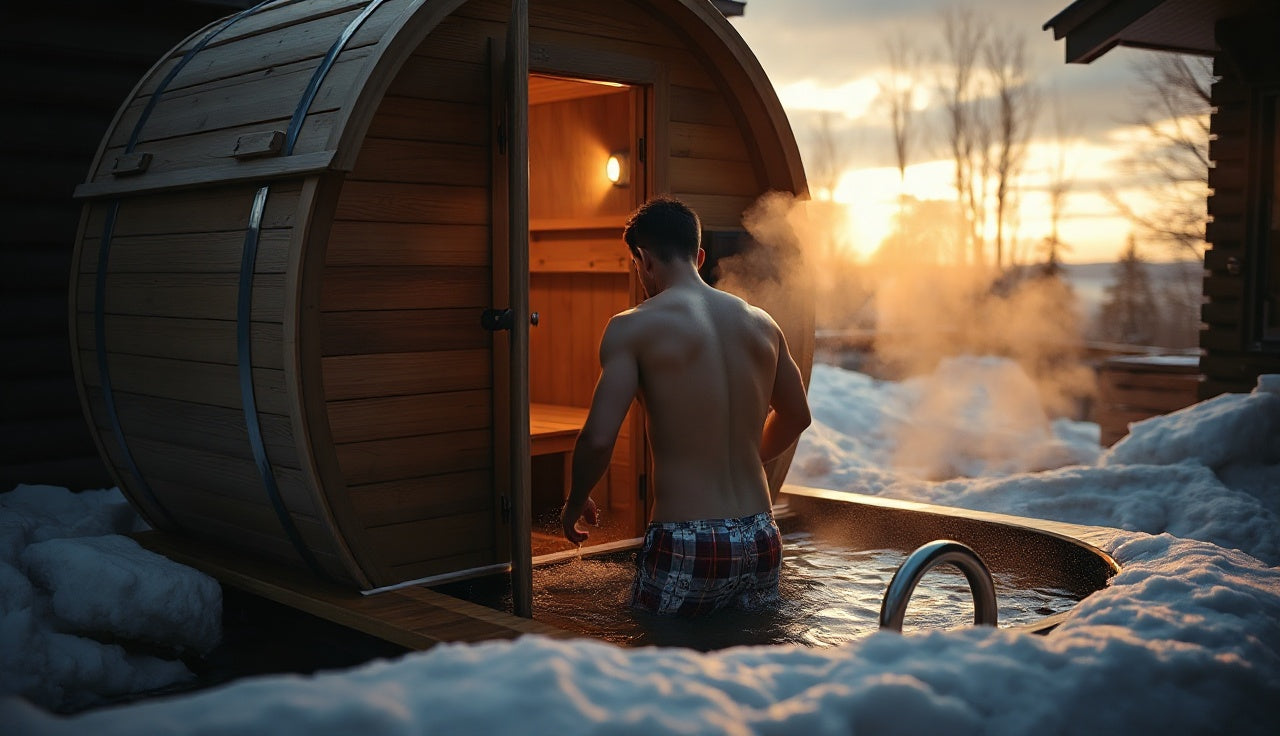
Contrast therapy is the deliberate, repeated cycling between a hot environment and a cold one. You get hot, you get cold, you repeat. That's it. The practice runs deep in Scandinavian and Eastern European bathing culture, going back centuries, and it shows up in modern sports medicine as a structured recovery tool.
The hot phase raises core and skin temperature, dilates blood vessels, and increases blood flow to muscle tissue. The cold phase reverses that: vessels constrict, blood is pushed back toward the core, tissue temperature drops. Cycle them back and forth and you create what physiologists sometimes call a "vascular pump" effect, though the exact mechanism behind any performance benefit is still being worked out [1].
Hot sources typically used: traditional Finnish sauna, infrared sauna, steam room, hot tub, or warm shower. Cold sources: cold plunge tank, ice bath, cold shower, or cold lake. The more extreme the temperature differential, the more pronounced the physiological response, which also means higher risk if you're not careful.
Contrast therapy is not the same as alternating hot and cold packs on a single injury. That's a localized treatment. Contrast therapy, as discussed here, involves full-body or large-limb immersion.
What does the research actually say about contrast therapy benefits?
The most consistent finding in the literature is a reduction in delayed-onset muscle soreness (DOMS). A 2022 systematic review and meta-analysis in the Journal of Strength and Conditioning Research analyzed 13 randomized controlled trials and found contrast water therapy significantly reduced muscle soreness compared to passive recovery at 24, 48, and 72 hours post-exercise [1]. That's a real, replicated finding.
The picture for performance recovery, meaning getting your strength and power back faster, is more mixed. The same body of evidence shows modest improvements in perceived recovery and some markers of muscle damage, but effect sizes are small to moderate. Nobody has a clean answer on whether this translates to measurably better performance in a subsequent training session for most recreational athletes.
Cardiovascular adaptations from regular sauna use are better documented separately. Research from the University of Eastern Finland tracked 2,315 Finnish men over 20 years and found that men who used a sauna 4-7 times per week had a 63% lower risk of sudden cardiac death compared to once-weekly users [2]. That study is observational and cannot isolate contrast therapy specifically, but it's the strongest long-term data we have on heat exposure as a habit.
Cold exposure research, mostly from the Radboud University Nijmegen work on the Wim Hof Method, suggests cold immersion activates the sympathetic nervous system and can increase norepinephrine by 200-300% [3]. Whether that acute spike translates to long-term mood or immune benefit in a healthy person doing contrast therapy twice a week is genuinely unclear. The honest answer: the soreness data is solid, the other claims need more rigorous RCTs.
One thing worth knowing: a 2015 study in the Journal of Physiology found that cold water immersion after resistance training blunted some anabolic signaling pathways compared to active recovery [4]. If your primary goal is hypertrophy, timing matters. Save the cold plunge for after conditioning work, not after your heaviest strength sessions.
What is the best contrast therapy protocol: temperature, timing, and rounds?
There is no single universally agreed protocol. Different sports medicine programs and research trials use different parameters, which makes direct comparison hard. That said, the most commonly studied and used setup looks like this:
| Variable | Common research range | Practical starting point |
|---|---|---|
| Hot temperature | 80-100°C (sauna) or 38-42°C (hot tub) | 80-90°C sauna or 40°C hot tub |
| Cold temperature | 10-15°C | 12-15°C cold plunge |
| Hot phase duration | 8-20 minutes | 10-15 minutes |
| Cold phase duration | 1-5 minutes | 1-3 minutes |
| Number of rounds | 2-5 | 3-4 rounds |
| Total session time | 30-90 minutes | 45-60 minutes |
Most protocols start with heat and end with heat. Starting hot lets your body warm up and promotes initial vasodilation. Ending hot leaves you relaxed rather than shivering. Some protocols end with cold if the goal is alertness rather than rest, but recovery-focused use almost always finishes hot.
The transition time between hot and cold matters more than most people realize. Getting into the cold within 30-60 seconds of leaving the heat preserves the vascular pump effect. Taking a 5-minute rest between stations dilutes it.
If you are new to this, start with water closer to 15°C rather than true ice-bath temperatures, and keep your first cold phases to 60-90 seconds. The adaptation happens over weeks, not in your first session. Trying to start at 2°C for 5 minutes is not dedication, it's a good way to feel terrible and quit.
For home sauna setups, a traditional Finnish sauna paired with a separate cold plunge gives you the most control over both variables. That said, even a portable sauna and a chest freezer converted to a cold tub gets the job done functionally.
| Contrast water therapy | 85 |
| Cold water immersion alone | 75 |
| Active recovery | 55 |
| Compression garments | 50 |
| Passive rest | 30 |
Source: Journal of Strength and Conditioning Research, Bieuzen et al., 2013
Hot or cold first: does the order actually matter?
Yes, but not dramatically for most people. The standard and most-studied order is hot first, cold second, repeat, ending on hot. Here is the reasoning.
Starting hot warms muscles and connective tissue, which reduces the shock of subsequent cold immersion and makes the vasoconstriction response more pronounced when you do enter the cold. Starting cold first, while physiologically possible, is harder to sustain and some subjects in research protocols report more discomfort with worse session adherence.
Ending on cold has specific use cases. Athletes who need to be alert and performing again within a few hours sometimes prefer finishing cold. The norepinephrine spike from cold exposure produces mental sharpness that some people find useful [3]. If you're doing contrast therapy on a Saturday morning and then going back to bed, finishing hot makes more sense.
One scenario where cold-first is sometimes used: immediately after an acute injury or heavy training where inflammation is already high. Some clinicians start with brief cold to reduce acute inflammation before heat. But that is a clinical context, not a standard contrast protocol.
Bottom line on order: hot first, end on hot for recovery and relaxation. Hot first, end on cold for performance alertness. Sticking to one format consistently matters more than which one you pick.
What are the real risks of contrast therapy, and who should avoid it?
Contrast therapy is not high-risk for healthy adults. But the risks that do exist are real and underreported in wellness content.
The biggest acute risk is orthostatic hypotension, basically a sudden drop in blood pressure when transitioning from hot to cold or standing up quickly. Blood pooling in dilated vessels after heat exposure can cause lightheadedness or fainting, especially in older adults or people with cardiovascular conditions. Moving slowly between stations and sitting for a moment before standing reduces this risk substantially.
Sudden cold immersion causes the mammalian diving reflex and a cold shock response: involuntary gasping, hyperventilation, and a sharp spike in heart rate and blood pressure. For most healthy people this resolves in 30-60 seconds. For someone with an undiagnosed arrhythmia or hypertension, it can be dangerous. The American Heart Association notes that cold water immersion carries cardiac risk in people with known heart disease [5].
Dehydration is underappreciated. A single sauna session at 80-100°C can produce 0.5-1.0 kg of sweat loss in 15-20 minutes. Add multiple rounds of heat and you can end up significantly dehydrated without feeling thirsty. Drink water between rounds, not during cold immersion.
People who should consult a physician before starting contrast therapy: anyone with diagnosed cardiovascular disease, uncontrolled hypertension, Raynaud's syndrome, peripheral artery disease, pregnancy, or recent surgery. This is not a blanket warning to scare people off, it's a real checklist. If none of those apply, most healthy adults can start a moderate protocol safely.
Contrast therapy is also not ideal immediately after an acute musculoskeletal injury in the first 24-48 hours. The heat phase can increase bleeding and inflammation in that window. Cold alone is the right tool there.
Does contrast therapy help with muscle soreness and recovery?
For muscle soreness, yes, the evidence is reasonably strong. The 2022 meta-analysis referenced earlier [1] pooled data from over 400 subjects and consistently found lower soreness scores at 24 and 48 hours post-exercise in contrast therapy groups versus passive recovery. The effect size was moderate, meaning it is noticeable but not a dramatic transformation.
For acute swelling and inflammation in limbs (common in team sports), contrast immersion in tanks at 38-42°C alternating with 10-15°C showed measurable reductions in limb volume in studies on ankle injuries [6]. This is why contrast baths have been standard physical therapy practice for decades.
The mechanism likely involves a few things happening at once: the repeated vasodilation/vasoconstriction cycle improves lymphatic drainage, the cold reduces local metabolic activity and perceived pain, and the heat increases oxygen delivery to damaged tissue. They probably work better together than either alone for soreness, though cold alone edges out contrast therapy for pure swelling reduction.
For mental recovery, perceived wellness, and sleep, the data is softer. Many athletes report better sleep after evening sauna sessions. A small Finnish study found sauna use improved self-reported sleep quality [7]. Contrast therapy specifically before bed probably works similarly, though finishing with a cold phase close to bedtime could interfere with sleep onset for some people since cold raises alertness.
If you want to track this honestly for yourself, keep a simple DOMS rating (1-10) for 48 hours after hard training sessions with and without contrast therapy. N=1 data is not science, but it tells you what works for your body, which is ultimately what matters.
How does contrast therapy compare to cold plunge alone or sauna alone?
Each modality has a distinct effect profile. Here is an honest side-by-side.
Sauna alone produces the strongest cardiovascular adaptation signal, the deepest relaxation response, and the best data for long-term heart health outcomes [2]. If someone could only pick one, and their goal was general health and longevity, regular sauna use has more long-term human data behind it than anything else in this category.
Cold plunge alone produces the strongest acute norepinephrine response, the best mood-elevation effect (likely via dopamine mechanisms), and the sharpest reduction in acute inflammation [3]. Cold plunge benefits include mental resilience training that many people find genuinely life-changing for stress management.
Contrast therapy outperforms either alone for the specific outcome of DOMS reduction [1]. It also produces a larger range of cardiovascular stimulus within a single session. If your primary goal is recovery from training, contrast therapy is the right tool.
| Goal | Best tool | Evidence quality |
|---|---|---|
| DOMS reduction | Contrast therapy | Good (multiple RCTs) |
| Long-term heart health | Sauna (regular habit) | Strong (20yr cohort study) |
| Acute mood elevation | Cold plunge | Moderate (mechanism plausible, RCTs limited) |
| Acute inflammation/swelling | Cold water immersion | Good |
| Relaxation/sleep | Sauna | Moderate |
| Mental resilience/stress tolerance | Cold plunge | Anecdotal + limited RCTs |
The honest recommendation for someone who has access to both: use contrast therapy on training days for recovery. Use sauna alone on rest days for the relaxation and cardiovascular benefit without the cold shock. Cold plunge alone works well as a morning alertness tool on days when you are not doing contrast therapy.
For people weighing a sauna vs steam room decision as their heat source, both work for contrast therapy. Traditional dry saunas hit higher temperatures (80-100°C) versus steam rooms (40-50°C), which changes the intensity of the heat stimulus.
What does a home contrast therapy setup cost?
This is where things get real, because the range is enormous depending on what you buy.
The bare minimum functional setup is a barrel sauna or basic outdoor sauna plus a stock tank or chest freezer cold plunge. You can put together a working contrast therapy station for $2,000-4,000 USD in materials if you are handy and willing to DIY the cold side. A barrel sauna kit runs $1,500-3,500 depending on size and wood quality. A 100-gallon galvanized stock tank costs $150-250 and works fine with a small chiller or ice bags.
Mid-range: a proper 2-person indoor/outdoor sauna ($3,000-6,000) paired with a purpose-built cold plunge tub with integrated chiller ($2,000-5,000). Total: $5,000-11,000 installed. This setup gives you temperature control and durability.
High-end: a custom built-in sauna with premium wood and controls ($8,000-20,000+) plus a top-tier cold plunge with filtration, UV sanitation, and digital temperature control ($5,000-15,000). Total can exceed $30,000 for a full purpose-built wellness space.
The single biggest cost driver on the cold side is whether you want a chiller. Ice bags at $5-8 each, resupplied two to three times a week, add up to $40-100/month, which over a year approaches the cost of a basic chiller. If you are doing contrast therapy more than 3 times a week, a chiller pays for itself within 18-24 months.
SweatDecks carries a curated range of sauna and cold plunge setups across these price tiers if you want to compare specific models in one place.
Operating costs also matter. A 2-person sauna running at 80°C for an hour uses roughly 3-6 kWh depending on insulation quality and ambient temperature. At the US average residential rate of about $0.16/kWh [8], that is $0.48-0.96 per session for heat. Minimal against the size of the investment.
What is the Nordic contrast therapy tradition and how does it differ from clinical contrast baths?
Nordic contrast bathing, common in Finland, Sweden, Norway, and Iceland, is contrast therapy practiced as a social and cultural ritual rather than a clinical protocol. The Finnish tradition of sauna followed by a roll in the snow or a plunge into a lake is thousands of years old, and it is the empirical ancestor of modern sports medicine contrast protocols [7].
In the Nordic tradition, sessions tend to be longer, more social, and less rigidly timed. You stay in the sauna until you feel ready to leave, jump in the cold water or snow, recover in a changing room with a drink, and repeat based on feel rather than a stopwatch. Temperatures are often more extreme: Finnish saunas run 80-110°C, and outdoor cold exposure in winter can be near 0°C.
Clinical contrast baths, by contrast, are used in physical therapy for localized limb rehabilitation. They involve alternating a limb between two tubs of water at prescribed temperatures (typically 38-44°C and 10-18°C) for short cycles. Physical therapists have used them for decades for conditions like ankle sprains and hand injuries [6]. This is a narrow, localized application, not a whole-body wellness protocol.
Contrast therapy in Calgary and other Canadian cities (particularly among the growing Nordic spa culture in Alberta) blends both traditions. Nordic spa facilities in Calgary offer programmed circuits with hot pools, cold pools, steam rooms, and rest areas, often in outdoor settings through Canadian winters. That environment, where outdoor air temperatures themselves act as part of the cold stimulus, creates an intensity that is hard to replicate at home and explains why Nordic contrast therapy in Calgary has developed a dedicated following.
The practical difference for a home user: Nordic-style protocols are more forgiving on timing but rely on intuition developed over years. Clinical protocols are more structured but narrower in scope. Most people doing home contrast therapy land somewhere between the two.
How do I start contrast therapy at home if I'm a complete beginner?
Start with less than you think you need. Seriously. The most common beginner mistake is going too cold for too long in round one and having a miserable experience that makes you never do it again.
Week 1-2: Use a hot shower at the hottest comfortable temperature for 5 minutes, then switch to cold water for 30-60 seconds. Repeat 2-3 times. This costs nothing, requires no equipment, and builds the neural pattern of tolerating cold after heat. It is not the full protocol but it is a legitimate starting point.
Once you have access to a sauna and a cold plunge or ice bath, begin with:
- 10 minutes in the sauna at a moderate temperature (70-80°C if you have a dry sauna)
- 60-90 seconds cold immersion at roughly 15°C
- 5 minutes rest outside both
- Repeat 2 times for a total of 3 rounds
- End in the sauna
Over 4-6 weeks, you can extend cold immersion to 2-3 minutes, drop water temperature toward 10-12°C if you want, and add a fourth round. Do not rush this progression. The adaptation is real and it takes time.
Hydration protocol: drink 500ml of water before your session. Have water available between rounds. Do not consume alcohol during contrast therapy. Alcohol impairs thermoregulation and dramatically increases the risk of overheating or dangerous drops in blood pressure.
For anyone in a city with a dedicated Nordic spa (and there are good ones in Calgary, Toronto, Montreal, and Vancouver), doing your first several sessions in a professional facility before building a home setup is genuinely worthwhile. Staff there can give you real guidance, the equipment is dialed in, and you learn what temperatures actually feel like before committing to gear.
Can contrast therapy hurt muscle gains or interfere with training?
This is the question strength athletes and bodybuilders most need answered honestly, and the answer is: cold immersion timed poorly can interfere with hypertrophy signaling.
The key study here is a 2015 paper in the Journal of Physiology that compared cold water immersion (10°C for 10 minutes) immediately after resistance training against active recovery [4]. The cold immersion group showed blunted phosphorylation of mTOR signaling pathways, which are central to muscle protein synthesis. Over 12 weeks of training, the cold immersion group gained less muscle mass than the active recovery group.
The practical interpretation is not "never cold plunge if you lift weights." It is: do not cold plunge within 4-6 hours of a heavy resistance training session if your primary goal is muscle growth. The inflammatory response that cold suppresses is part of the adaptation signal your muscles need after resistance work.
Contrast therapy after aerobic training, conditioning work, or competitive sport where DOMS is the problem does not carry this concern to the same degree. The hypertrophy signaling concern is specific to resistance training.
If you do both strength work and conditioning, a simple rule works: cold on conditioning days, skip it on heavy lifting days, or do your lifting after your contrast therapy session (cold before lifting does not carry the same blunting effect as cold immediately after).
Sauna use after resistance training, without the cold component, does not appear to blunt hypertrophy and may actually support it via heat shock protein responses and growth hormone release [9]. So a sauna session alone after lifting is fine. It is specifically the cold-after-lifting timing that needs managing.
Frequently asked questions
How long should each hot and cold phase be in contrast therapy?
Most research protocols use 10-15 minutes of heat and 1-3 minutes of cold per round. Beginners should start at 10 minutes hot and 60-90 seconds cold and build from there. The heat phase needs to be long enough to raise skin and muscle temperature meaningfully. The cold phase needs to be long enough to cause vasoconstriction but short enough to sustain over multiple rounds without becoming dangerous.
Should I end contrast therapy with hot or cold?
For relaxation and sleep recovery, end on hot. The parasympathetic response after heat promotes rest and calm. For alertness before activity, end on cold. The norepinephrine spike from cold immersion produces mental sharpness that some athletes use before competition. The difference is real but not dramatic. Pick one consistently rather than switching randomly between sessions, as your body adapts to the pattern.
How cold should the water be for contrast therapy?
Effective protocols use water at 10-15°C. That range is cold enough to cause full vasoconstriction and the norepinephrine response without the extreme risk of true ice water near 0-5°C. Beginners should start at 15°C and work down over weeks if they choose to. Most people find 10-12°C is as cold as they ever need to go for full benefit. Colder is not automatically better.
How many rounds should I do in a contrast therapy session?
Three to four rounds is the standard in most research protocols and practical use. Two rounds is still beneficial if you are short on time. Five rounds is appropriate for experienced users with longer sessions. More than five rounds in a single session produces diminishing returns and increases dehydration risk. A 3-round session with 10 minutes hot and 2 minutes cold runs about 40-45 minutes including transitions.
Can I do contrast therapy every day?
You can, but most people do not need to. Two to four sessions per week provides most of the benefit. Daily use is fine for healthy adults who tolerate it well, but daily cold immersion after strength training may interfere with muscle adaptation over time. If you train hard every day, consider alternating full contrast sessions with sauna-only sessions to protect hypertrophy signaling on your heaviest lifting days.
Is contrast therapy safe during pregnancy?
No. Both high-temperature sauna exposure and cold shock from immersion carry real risks during pregnancy. The American College of Obstetricians and Gynecologists advises against sustained core temperature elevation above 39°C during pregnancy due to neural tube and cardiovascular risks to the fetus. Cold shock also triggers significant cardiovascular stress. Pregnant individuals should avoid contrast therapy and consult their OB before using any thermal therapy.
What is the difference between contrast therapy and cryotherapy?
Contrast therapy uses full or large-body water immersion alternating with heat. Whole-body cryotherapy uses extremely cold air (minus 100 to minus 140°C) in a chamber for 2-4 minutes without a paired heat phase. Both reduce perceived soreness; the evidence for cryotherapy is weaker than for contrast water therapy. Cryotherapy also costs significantly more per session and requires commercial equipment. For home recovery, contrast therapy is more accessible and has stronger research support.
Can I use a hot tub instead of a sauna for the hot phase?
Yes, and many people do. Hot tub water at 39-42°C provides substantial heat load. The physiological difference is that sauna air temperatures (80-100°C) heat the body from the outside at a faster rate than water at 40°C, so sauna sessions may produce a more intense cardiovascular stimulus in the same time period. Hot tub contrast therapy works well and is gentler for beginners or people with cardiovascular concerns who want a milder stimulus.
Does contrast therapy help with anxiety or mental health?
Cold immersion produces a reliable, large increase in norepinephrine and a moderate increase in dopamine, neurotransmitters involved in mood and alertness. A pilot RCT found cold shower practice reduced self-reported anxiety and depression symptoms, though sample sizes were small. The sauna component may reduce cortisol over time. These are plausible mechanisms for mood benefit, but controlled RCTs specifically on contrast therapy for anxiety are limited. Do not use it as a substitute for mental health treatment.
What should I eat and drink before and after contrast therapy?
Drink 400-500ml of water before your session and have water accessible between rounds. Avoid heavy meals within 60-90 minutes of starting, as blood is redirected away from digestion during heat exposure and you may feel nauseated. After your session, rehydrate with water or an electrolyte drink. A moderate protein-containing meal or snack after recovery sessions supports muscle repair. Avoid alcohol before, during, and immediately after contrast therapy.
Is there a Nordic contrast therapy experience in Calgary?
Calgary has a growing Nordic spa culture with facilities offering outdoor hot/cold circuits year-round. These typically include hot pools, cold plunge basins, steam rooms, and rest areas in outdoor settings. The Canadian winter climate means outdoor air itself can serve as a cold phase between hot pools, which is true to the Scandinavian tradition. Visiting a professional facility before building a home setup gives you a calibrated sense of temperatures and timing before investing in equipment.
Can contrast therapy reduce inflammation?
Cold water immersion reliably reduces acute local inflammation and swelling, which is why contrast baths have been used in physical therapy for decades. The evidence is strongest for reducing limb swelling after acute injury and for reducing DOMS-related inflammation after hard training. The effect on systemic chronic inflammation is less clear. Some sauna research suggests regular heat exposure may reduce C-reactive protein over time, but contrast therapy specifically has not been well studied for chronic inflammatory conditions.
Do I need professional equipment or can I DIY a contrast therapy setup?
You can DIY a functional setup. A basic barrel or box sauna kit ($1,500-3,500) and a galvanized stock tank ($150-250) with ice or a small chiller gives you full contrast therapy capability. The trade-off is less precise temperature control and more maintenance. Purpose-built cold plunge tanks with integrated filtration and digital chillers cost $2,000-5,000 but hold temperature accurately and require less daily management. For beginners testing the practice, a cold shower paired with any available heat source costs nothing.
Sources
- JAMA Internal Medicine, Laukkanen et al., 2015 (University of Eastern Finland, 20-year sauna cohort study): Men using sauna 4-7 times per week had 63% lower risk of sudden cardiac death compared to once-weekly users over 20 years
- PLOS ONE, Kox et al., 2014 (Radboud University, Wim Hof Method cold exposure and norepinephrine): Cold exposure and breathing techniques increased plasma norepinephrine by approximately 200-300% in subjects practicing cold immersion protocols
- Journal of Physiology, Roberts et al., 2015 (cold water immersion and resistance training adaptation): Cold water immersion at 10°C for 10 minutes after resistance training blunted mTOR signaling and reduced muscle mass gains over 12 weeks compared to active recovery
- American Heart Association, scientific statement on exercise and cardiovascular risk: Cold water immersion carries cardiac risk for individuals with known heart disease due to the cold shock response causing acute increases in heart rate and blood pressure
- Journal of Athletic Training, Janssen et al., 2004 (contrast baths and limb swelling): Contrast baths at 38-42°C alternating with 10-15°C showed measurable reductions in limb volume in subjects with ankle injuries
- Complementary Therapies in Medicine, Laukkanen et al., 2019 (Finnish sauna and sleep quality): Finnish sauna bathing was associated with improved self-reported sleep quality in a study of adult sauna users
- U.S. Energy Information Administration, Average Retail Price of Electricity: Average US residential electricity retail rate used to calculate sauna operating cost per session
- Journal of Science and Medicine in Sport, Scoon et al., 2007 (post-exercise sauna and heat shock proteins): Sauna use after resistance training does not blunt hypertrophy signaling and may support growth hormone release and heat shock protein response
- American College of Obstetricians and Gynecologists, Committee Opinion on Exercise in Pregnancy: ACOG advises against sustained core temperature elevation above 39°C during pregnancy due to fetal neural tube and cardiovascular risks
- PLOS ONE, Buijze et al., 2016 (cold shower RCT and sick leave/mood): Cold shower practice reduced self-reported anxiety and depression symptoms in a pilot randomized controlled trial, though sample sizes were limited

Share:
How long should you ice bath? The evidence-based answer
How long should you ice bath? The evidence-based answer