
Last updated 2026-07-09
TL;DR
Home Depot sells a modest rotating mix of barrel saunas, outdoor cabins, and infrared kits, mostly from Dundalk LeisureCraft, Aleko, and a few white-label brands, priced roughly $800 to $6,500. Selection changes by store and season. The financing and pickup are convenient. The product depth and expert help fall short of dedicated sauna retailers.
What saunas does Home Depot actually sell?
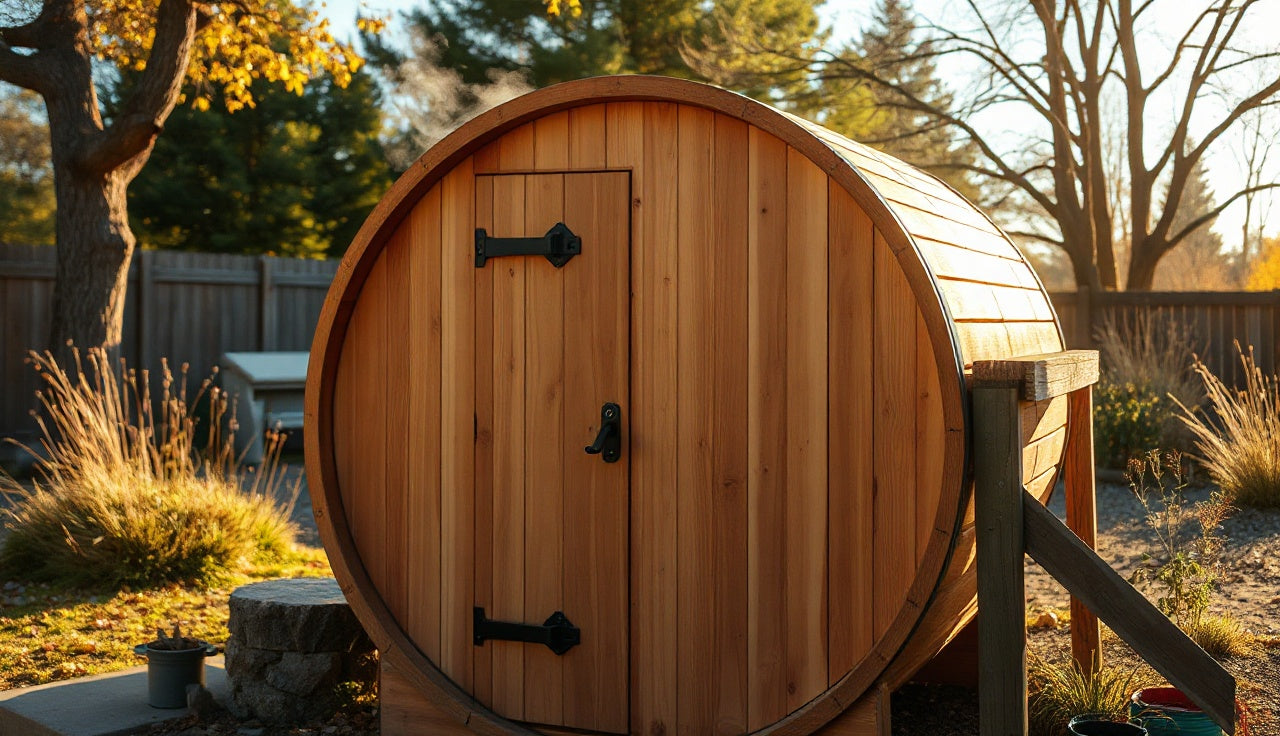
Home Depot's sauna inventory is thinner than most buyers expect. Online you'll find a rotating mix of barrel saunas, small indoor infrared cabins, and the occasional outdoor cabin-style unit. As of mid-2025, the most consistently stocked brands are Dundalk LeisureCraft (a Canadian manufacturer that supplies several big-box and specialty retailers), Aleko, and a handful of white-label units that show up under generic model names. The full selection on homedepot.com typically runs between 20 and 60 SKUs depending on the season, compared with 150 to 300 on dedicated sauna retailers.
Most of what Home Depot lists is in the outdoor barrel sauna or infrared indoor cabin category. You will not find traditional Finnish-built units, premium steam rooms, or high-end wood-burning sauna kits from brands like Helo, Harvia, or Tylo stocked there. Their store associates are home improvement generalists, not sauna specialists, so the in-aisle experience for something this purchase-specific is usually not helpful.
If you just need a basic outdoor sauna box to put in your backyard, Home Depot can get you there. If you want to compare heater specs, wood grades, or EMF ratings on infrared panels, you will need to look elsewhere. That gap matters more than it might seem once you start pricing apples to apples.
How much do saunas at Home Depot cost?
Saunas on homedepot.com run from about $800 for a small two-person infrared cabin kit up to roughly $5,500 to $6,500 for a larger outdoor barrel unit with accessories. The sweet spot for a usable two- to four-person barrel sauna sits around $2,000 to $3,500.
Those numbers cover the structure but usually not the electrical work to wire a 240V outlet (infrared units often run on 120V, but barrel saunas with a standard electric heater need 240V). Electrician costs for a dedicated 240V circuit typically run $200 to $500 depending on your panel's location and local labor rates, though in older homes with complicated panels that number can climb higher [1].
Here is a rough breakdown of what different price tiers look like at Home Depot:
| Price Range | Type | Typical Capacity | What You Get |
|---|---|---|---|
| $800, $1,500 | Small infrared cabin | 1 to 2 person | Carbon or ceramic infrared panels, basic wood box |
| $1,500, $2,800 | Mid-size barrel or cabin | 2 to 3 person | Better wood quality, basic heater included |
| $2,800, $4,500 | Full barrel sauna | 3 to 4 person | Larger footprint, better accessory kit |
| $4,500, $6,500 | Large outdoor unit | 4 to 6 person | More wood, benching, sometimes upgraded heater |
Home Depot does offer 24-month financing through their consumer credit card and project loan products, which can make a $3,000 sauna feel more manageable month-to-month. That's genuinely useful if you're trying to spread cost, but run the math on the interest rate before committing.
For context on how these prices compare to the full home sauna market, dedicated specialty retailers often stock comparable units at similar price points but with more options in each tier and better product documentation.
What brands does Home Depot carry for saunas?
The brand lineup shifts, but a few names appear consistently.
Dundalk LeisureCraft is the most prominent. They're a Canadian company that has built cedar outdoor saunas and barrel saunas for decades, and they supply several major retailers including Home Depot. Their build quality is generally solid for the price, particularly the all-cedar barrel units. Dundalk products on homedepot.com tend to be the more trustworthy options in the lineup [2].
Aleko is a lower-cost brand that makes outdoor products including saunas, gates, and awnings. Their sauna kits are inexpensive and the reviews are mixed. Some buyers report assembly issues and thin wall panels. Not what you want if this sauna is getting serious use year-round.
You'll also see some generic or house-label units that are manufactured overseas and sold under names that don't correspond to established brands. They might look attractive on spec sheets, but warranty support and replacement parts can be difficult to track down two years in.
Notably absent: Finnleo, Almost Heaven Saunas, Harvia, Helo, Dynamic Saunas (a mid-market infrared brand), and most of the names that come up when serious sauna buyers compare options. Home Depot is not where you go for breadth of brand selection.
| Small infrared cabin (1–2 person) | $1,150 |
| Mid-size barrel or cabin (2–3 person) | $2,150 |
| Full barrel sauna (3–4 person) | $3,650 |
| Large outdoor unit (4–6 person) | $5,500 |
Source: homedepot.com product listings, SweatDecks research, 2025
Are Home Depot saunas good quality?
It depends entirely on which unit you're looking at. The Dundalk barrel saunas are legitimately good products. Clear cedar construction, reasonable hardware, and a track record. Plenty of people have bought them from Home Depot and been happy for years.
The lower-priced infrared cabin kits are a different story. Infrared sauna quality has a lot of hidden variation: the type and quality of infrared emitters (carbon panel vs. ceramic rod vs. carbon-ceramic hybrid), the wood used for the frame and benches, how well the panels are sealed, and whether the advertised EMF ratings are independently tested. Home Depot does not provide that level of product detail on most listings, and their staff can't walk you through it.
For infrared specifically, the research base is still developing. A 2018 review in the journal Evidence-Based Complementary and Alternative Medicine noted cardiovascular and relaxation benefits from far-infrared sauna use, but the authors acknowledged that study sample sizes were generally small and protocols varied widely [3]. The point is simple: if you're buying infrared for health reasons, the heater quality matters, and that's exactly what's hard to verify in a Home Depot listing.
Traditional dry heat saunas have a much longer research history. A long-term cohort study from the University of Eastern Finland following over 2,000 men found that frequent sauna use (four to seven times per week) was associated with a 63% lower risk of sudden cardiac death compared to once-weekly use [4]. That research applies to traditional high-heat dry saunas, not necessarily to the lower-temperature infrared boxes commonly sold at Home Depot.
Bottom line: the barrel saunas from established brands like Dundalk are worth considering. The cheapest infrared kits are a gamble.
Can you pick up a sauna at a Home Depot store, or is it all shipped?
Most sauna units on homedepot.com are too large for in-store stock and ship via freight delivery. A few smaller infrared cabinet units might show as available for store pickup at specific locations, but you'll need to check your local store's inventory.
Freight shipping for a large barrel sauna is typically curbside delivery, meaning the carrier drops it at your driveway and you move it from there. Some listings offer threshold delivery (inside your garage) for an upcharge. Lift-gate service is usually included for heavy pallets, but confirm it on the specific listing.
Assembly is on you. Home Depot does offer assembly services through their Home Services program, but sauna installation via that channel varies by market and the technicians may not have experience with sauna-specific assembly. If your unit needs electrical work for a 240V heater, that's a separate licensed electrician visit regardless of where you buy.
Delivery windows through freight carriers can be wide (sometimes a multi-day window), which is worth knowing if you're coordinating an electrician visit around it. That's not unique to Home Depot. It's part of the reality of buying a big-ticket outdoor structure through a big-box retailer.
How does buying a sauna at Home Depot compare to buying from a specialty retailer?
The tradeoffs are real and worth mapping out honestly.
Home Depot advantages: you may already have an account with financing, returns on smaller items are straightforward, and there's a physical store if you need to deal with a dispute in person. For buyers who just want a simple barrel sauna and don't want to fuss with a specialized e-commerce site, that familiarity has value.
Specialty retailer advantages are more numerous for a purchase this size. Better product documentation. Staff who can answer specific questions about heater BTUs, wood moisture content, or EMF levels. More brands and configurations to choose from. Specialty retailers often keep demo units at showrooms, which matters because sitting in a sauna for ten minutes tells you more than any spec sheet.
Warranty support is also worth comparing. Dundalk LeisureCraft offers a standard warranty on their products regardless of channel, but if something goes wrong with a no-name infrared unit purchased through Home Depot, you're dealing with Home Depot's return policy as your primary recourse rather than a brand that stands behind its product long-term.
If you're comparing major retail options, see also our breakdown of the Costco sauna selection, which follows a similar big-box pattern with a different brand mix and their own financing structure.
For anyone seriously weighing options, reading through a dedicated sauna buyer's guide before committing to any retailer is time well spent.
What do you need to install a sauna you bought at Home Depot?
Installation requirements depend on the type.
Barrel saunas with electric heaters need a dedicated 240V circuit. The National Electrical Code (NEC), Article 422, governs fixed appliances including electric sauna heaters and requires that the heater be on a dedicated branch circuit [5]. Most sauna heaters draw between 4.5 kW and 9 kW, which means a 30-amp to 40-amp 240V circuit. Wire gauge and breaker size need to match the heater's rated amperage. This is not a DIY job unless you're a licensed electrician.
Small infrared cabins rated under 1,500W often run on a standard 120V 15-amp outlet. That makes them much easier to place, though you still want to make sure the circuit isn't shared with high-draw appliances.
For outdoor barrel saunas, you also need a level surface, drainage planning if the heater produces condensation, and clearances from structures and property lines per your local building code. Many jurisdictions require a permit for a permanently installed outdoor structure over a certain square footage (thresholds vary, often 120 to 200 square feet, but your local building department sets the rule) [6].
Roof load is a consideration if you're installing in a region with significant snowfall. Most barrel sauna kits spec their roof load rating. Make sure it matches your climate.
Ventilation matters too. Sauna rooms need fresh air intake and exhaust to work correctly and safely. Most kits include a vent, but if you're putting a cabin sauna inside an existing structure, review ventilation requirements before finalizing placement.
Are there Home Depot sauna kits you can build yourself?
Yes, a few. Home Depot sells some barrel sauna kits that ship as pre-cut lumber packages with instructions, designed for assembly over a weekend with basic tools. This is different from a fully pre-built unit that ships ready to assemble from panel components.
True DIY sauna builds (where you're cutting wood and building from plans) are mostly outside Home Depot's catalog. For that approach, you'd source kiln-dried cedar or hemlock from their lumber department and buy a sauna heater separately from a supplier like Harvia or Helo. Home Depot's lumber section can actually work for this: kiln-dried #2 or better Western Red Cedar is the standard material for DIY sauna interiors, and many Home Depot locations stock it.
A fully custom-built DIY sauna can cost $1,500 to $4,000 in materials depending on size, which often comes in below a pre-built kit of equivalent size. The tradeoff is time, skill, and the fact that you're on your own for any structural or code questions.
If the DIY route interests you but you want a simpler starting point, a portable sauna is worth considering before committing to a permanent installation.
What are the health benefits of sauna use that a Home Depot sauna could deliver?
The evidence for sauna benefits is real, and it applies most strongly to traditional Finnish-style dry heat saunas operating at 80 to 100 degrees Celsius (176 to 212 degrees Fahrenheit). The question that decides whether you get those benefits is whether a given unit actually reaches and holds those temperatures.
The most-cited research comes from the University of Eastern Finland's Kuopio cohort. Their 2015 paper in JAMA Internal Medicine, following 2,315 middle-aged Finnish men over roughly 20 years, found that men who used the sauna four to seven times per week had a 40% lower risk of all-cause mortality compared to once-weekly users [4]. The authors stated: "This study found that sauna bathing is a safe activity for most healthy adults and is associated with reduced mortality." These were traditional high-temperature saunas.
For infrared saunas at lower temperatures, the research is more limited but not absent. A small 2001 study in the Journal of the American College of Cardiology found that daily thermal therapy improved endothelial function in patients with coronary risk factors [7]. Sample sizes were small (n=25 in the treatment arm) and the study was not blinded. More research is needed.
Practical benefits most users actually notice: better relaxation and sleep, less muscle soreness after exercise, and stress relief. These aren't trivial. The evidence for cardiovascular benefit is strongest in consistent long-term users, and regular sauna use has also been linked to lower systemic inflammation markers in the same Finnish cohort [11].
Sauna use is not appropriate for everyone. People with certain heart conditions, pregnancy, or who take medications that affect heat tolerance should consult a physician. Finnish Sauna Society guidance suggests hydrating well before and after sessions and limiting initial sessions to 10 to 15 minutes [8].
For a fuller picture of the research, the sauna benefits guide covers the evidence by category.
Should you pair a Home Depot sauna with a cold plunge?
Contrast therapy, alternating between heat and cold, is popular in Nordic traditions and increasingly backed by research. The practice usually means 10 to 20 minutes in a sauna followed by a cold plunge or cold shower, then repeating one to three cycles.
The physiology behind it: heat causes vasodilation and a higher heart rate, while cold causes vasoconstriction and activates the sympathetic nervous system. Alternating these stresses may improve cardiovascular adaptability and recovery. A 2021 study in the International Journal of Environmental Research and Public Health found that contrast water therapy reduced delayed-onset muscle soreness ratings compared to passive recovery [9].
If you're installing a backyard barrel sauna, adding a cold plunge tank nearby is a natural pairing. You don't need a full plunge pool. A chest freezer converted to a cold plunge, a stock tank, or a purpose-built cold plunge unit can all work. Target water temperature for a cold plunge is typically 50 to 59 degrees Fahrenheit (10 to 15 degrees Celsius) for most protocols, though some researchers use ranges as low as 39 degrees.
Home Depot does not sell dedicated cold plunge units, so that part of the setup needs a different source. If you want the full picture before buying, the cold plunge benefits guide is a good companion read.
SweatDecks carries a curated selection of saunas and cold plunges designed to work together if you want to price out both sides of a contrast therapy setup in one place.
One note: some research suggests cold immersion immediately after strength training may blunt muscle protein synthesis. If you're training specifically for hypertrophy, timing matters. The ice bath guide covers the nuance on this.
What should you check before buying a sauna at Home Depot?
A checklist is more useful here than general advice.
First, verify the heater wattage and the voltage it requires. A 240V unit needs electrical work; a 120V unit can plug in but will heat more slowly and to lower peak temperatures.
Second, check the interior temperature rating. Legitimate sauna use typically needs the unit to reach at least 70 to 80 degrees Celsius. Many cheap infrared cabins top out at 55 to 65 degrees Celsius, which is warm but not what most sauna research or traditional practice defines as a sauna.
Third, read the wood spec carefully. Kiln-dried Canadian Western Red Cedar is the gold standard for sauna interiors. Hemlock is acceptable. Generic "solid wood" listings without species names are a red flag.
Fourth, look at the heater brand if it's listed separately. Harvia and Helo are Finnish manufacturers with long track records. A heater from an unnamed OEM might work fine or might not, and replacement parts can be a problem.
Fifth, check the warranty terms. Is it limited to 30 or 90 days? Full structural warranties on quality units often run one to five years.
Sixth, read actual customer reviews about assembly and post-delivery customer service, not general satisfaction. Assembly problems and unresponsive support are the most common complaints in big-box sauna reviews.
Finally, pull your local building department's page and verify whether a permit is required for the installation you're planning. Getting this wrong after delivery is expensive.
Are there better alternatives to Home Depot for buying a home sauna?
Honestly, yes, for most buyers who have done their research.
For barrel and outdoor cabin saunas, Dundalk LeisureCraft sells direct through their own website and through specialty retailers, sometimes at the same price as Home Depot but with better product support. Almost Heaven Saunas (a US brand based in West Virginia) has a strong reputation in the mid-market and sells direct with good documentation. Finnish brands like Harvia and Helo sell heaters and sauna kits through specialty distributors with knowledgeable staff.
For infrared saunas, brands like Sunlighten and Clearlight come up most often in research contexts, and both sell direct with detailed specs on heater types, wood sourcing, and EMF testing. These tend to run more expensive than what Home Depot stocks.
Specialty sauna retailers, including online-focused ones, often provide configuration help, a real phone number, and installation guidance that matters a lot when a $4,000 sauna shows up on a pallet. That service layer is hard to put a dollar value on, but it's real.
Home Depot makes the most sense for buyers who already trust the brand, need the financing, want a simple barrel sauna, and don't mind doing their own research on specs. It's a reasonable option in that narrow case. It's not the best option for buyers who want to compare deeply across brands or who want help dialing in the right configuration.
For a broader look at the full landscape, the home sauna guide walks through all the major options and how to think about the decision. SweatDecks also stocks options across price points if you want to compare brands that don't show up at the big-box stores.
Frequently asked questions
Does Home Depot install saunas?
Home Depot offers installation services through their Home Services program, but availability for saunas varies by location and the technicians may not have specific sauna assembly experience. Electrical work for a 240V sauna heater always requires a separate licensed electrician regardless of who assembles the structure. Call your local store to check what's available in your market before counting on it.
What is the cheapest sauna at Home Depot?
The lowest-priced options on homedepot.com are small one- to two-person infrared cabin kits, which occasionally appear in the $800 to $1,200 range. These units run on 120V, have ceramic or carbon infrared panels, and are made from unspecified wood species. They're functional for occasional use but are the category most likely to have quality and warranty concerns. Check reviews specifically about assembly quality.
Can I return a sauna to Home Depot?
Home Depot's standard return policy allows returns within 90 days with a receipt. However, large freight-shipped items have important exceptions: you may be responsible for return shipping costs, and some large items are final sale once delivered. Read the specific product listing's return terms before purchasing. Assembled units are significantly harder to return than ones still in the original packaging.
Does Home Depot sell outdoor saunas?
Yes. Outdoor barrel saunas and outdoor cabin saunas make up most of Home Depot's sauna selection. Dundalk LeisureCraft barrel saunas are among the most consistently available options. These are designed for backyard installation, built from cedar, and require a dedicated 240V electrical circuit for the heater. Sizes range from roughly 4 to 6 feet in diameter for barrels up to small cabin footprints.
Does Home Depot sell infrared saunas?
Yes. Home Depot stocks far-infrared sauna cabins, mostly in the one- to three-person size range. Most run on 120V power, which makes installation easy but limits peak temperature. The brands available at Home Depot are mostly mid- to low-tier; premium infrared brands like Sunlighten and Clearlight are generally not available through Home Depot and sell direct or through specialty retailers.
Do I need a permit to install a sauna from Home Depot?
Possibly. Permit requirements for outdoor structures and electrical work vary by municipality. Most jurisdictions require a permit for structures over 120 to 200 square feet and for new electrical circuits. Electric sauna heaters must be on a dedicated circuit per the National Electrical Code. Check with your local building department before installation. Skipping permits can create problems with insurance and resale.
What size sauna should I buy from Home Depot?
A two- to four-person barrel sauna (roughly 6 feet in diameter by 6 feet long) is the most popular size for residential use and gives enough bench space for a couple to use comfortably. Larger units heat more slowly and cost more to run. If you're solo, a compact two-person unit is usually more efficient. Measure your planned installation area including clearance on all sides before ordering.
How long does a Home Depot sauna take to ship?
Freight-shipped sauna units from Home Depot typically take two to four weeks from order to delivery, though times can vary by location and season. You'll be contacted by the freight carrier to schedule a delivery appointment, usually within a window of a few hours. Track the order number through both Home Depot and the assigned carrier for the most current status.
What's the difference between a barrel sauna and an infrared sauna at Home Depot?
Barrel saunas at Home Depot use a traditional electric heater to heat rocks, which then radiate heat and create a dry environment at 70 to 100 degrees Celsius. Infrared saunas use panels that emit infrared radiation to heat your body directly at lower ambient temperatures (50 to 65 degrees Celsius typically). Traditional saunas have a longer research history. Infrared saunas are easier to install since many run on 120V. Each has a different feel and different operating costs.
Are Home Depot sauna kits easy to assemble?
Assembly difficulty varies by model. Most barrel sauna kits ship as numbered pre-cut panels and can be assembled by two people in a few hours with basic tools. Cabin-style kits are generally simpler, more like snapping pre-built wall panels together. The biggest variables are the quality of the instructions (inconsistent across brands) and whether all hardware is included. Customer reviews mentioning assembly are the most useful signal.
How much does it cost to run a sauna per month?
A 6 kW electric sauna heater running for one hour costs roughly $0.60 to $1.20 in electricity depending on your local rate (national average is about $0.16 per kWh as of 2024). Using the sauna five times per week for one-hour sessions adds roughly $15 to $25 per month to your electric bill. Infrared units are more efficient, typically 1.5 to 2 kW, costing around $5 to $10 per month at similar usage.
Is a Home Depot sauna good for recovery after working out?
Sauna use after training can help with perceived muscle soreness and relaxation. Research supports reduced soreness with heat exposure post-exercise. Traditional saunas at proper temperatures (80 to 100 degrees Celsius) have the most evidence behind them. One consideration: some research suggests timing cold immersion immediately after strength training may affect muscle growth adaptation, so how you sequence sauna and cold matters if hypertrophy is your goal.
How does the Home Depot sauna selection compare to Costco's?
Both are big-box retailers with limited sauna depth. Costco typically offers a smaller rotating selection (sometimes just two or three models at a time) at competitive prices for members, often with strong Costco-specific warranty backup. Home Depot has a broader ongoing catalog and more consistent availability. Neither offers the brand depth or technical support of a specialty sauna retailer. See the full comparison in our Costco sauna guide.
Sources
- U.S. Department of Energy, Home Electrical Wiring Costs: Electrician costs for a dedicated 240V circuit typically run $200 to $500 depending on panel location and local labor
- Dundalk LeisureCraft, Official Brand Site: Dundalk LeisureCraft is a Canadian manufacturer that builds cedar outdoor and barrel saunas supplied to major retailers including Home Depot
- Masuda A et al., Evidence-Based Complementary and Alternative Medicine, 2018, Far-infrared sauna review: 2018 review found cardiovascular and relaxation benefits from far-infrared sauna use but noted small sample sizes and variable protocols
- Laukkanen T et al., JAMA Internal Medicine, 2015, Association Between Sauna Bathing and Fatal Cardiovascular and All-Cause Mortality: Men using sauna four to seven times per week had 40% lower all-cause mortality and 63% lower sudden cardiac death risk vs. once-weekly users over ~20 years
- National Fire Protection Association, NFPA 70 National Electrical Code, Article 422 (Appliances): NEC Article 422 governs fixed appliances including electric sauna heaters and requires dedicated branch circuits
- International Code Council, International Residential Code: Many jurisdictions require a permit for permanently installed outdoor structures above a square footage threshold, often 120 to 200 square feet, set by the local building department
- Imamura M et al., Journal of the American College of Cardiology, 2001, Repeated Thermal Therapy Improves Impaired Vascular Endothelial Function: Daily thermal therapy improved endothelial function in patients with coronary risk factors in a small trial (n=25 treatment arm)
- Finnish Sauna Society, Sauna Health Guidelines: Finnish Sauna Society guidelines recommend hydrating before and after sessions and limiting initial sessions to 10 to 15 minutes
- Versey N et al., International Journal of Environmental Research and Public Health, 2021, Contrast Water Therapy and Delayed-Onset Muscle Soreness: Contrast water therapy reduced delayed-onset muscle soreness ratings compared to passive recovery
- U.S. Energy Information Administration, Electric Power Monthly: National average retail electricity price approximately $0.16 per kWh as of 2024
- Laukkanen T et al., Mayo Clinic Proceedings, 2018, Sauna Bathing and Systemic Inflammation: Regular sauna use associated with reductions in inflammatory markers in a population cohort study

Share:
Infrared sauna and weight loss: what the evidence actually shows
Ice bath before or after workout: what the research actually says