
Last updated 2026-07-10
TL;DR
A standard chest freezer converts into a working cold plunge for about $300 to $700 in parts. The core build takes one weekend. You need the freezer, a submersible pump, a filter, a GFCI outlet, and basic waterproofing. Expect water temps of 50 to 59°F (10 to 15°C), the same range used in most cold-water immersion research.
What is a chest freezer cold plunge and does it actually work?
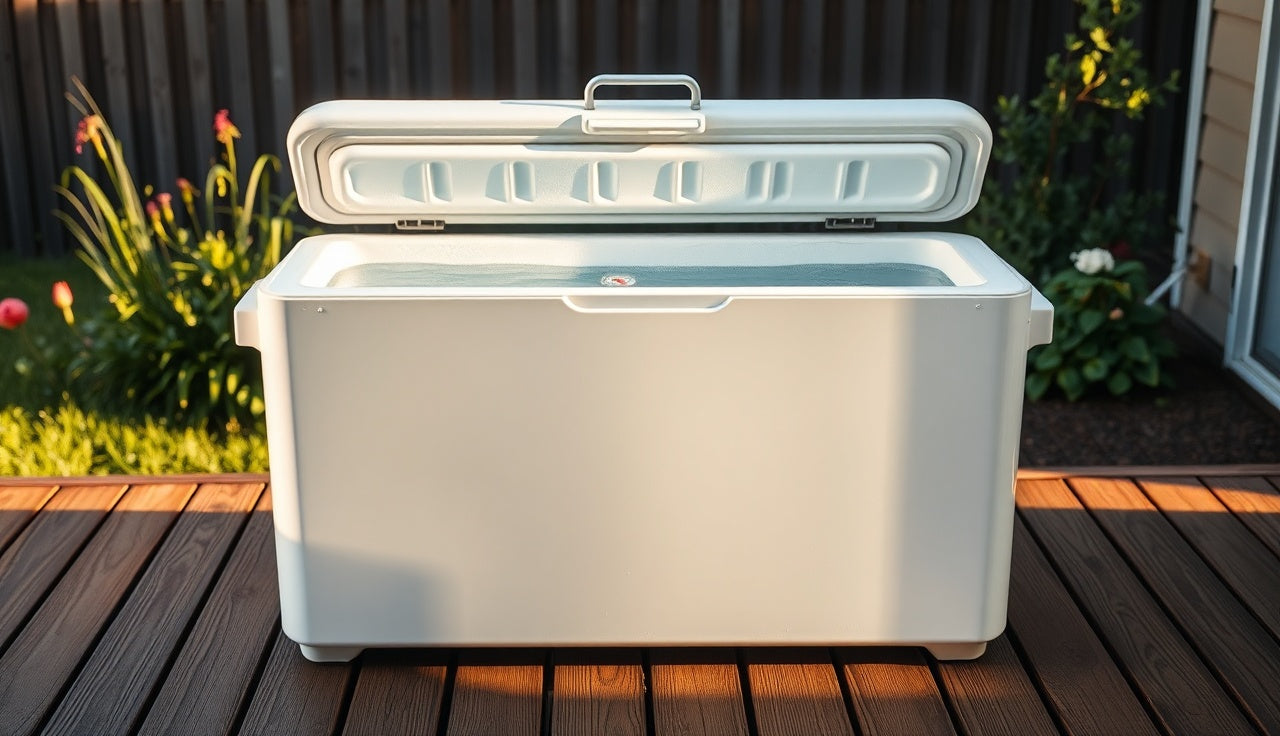
A chest freezer cold plunge is exactly what it sounds like: a standard chest freezer, stripped of any food use, filled with water, and used as a personal cold-water immersion tub. The compressor cools the water instead of the air around frozen food. You sit or crouch inside, submerged to the shoulders, for two to fifteen minutes depending on your protocol.
It works. The compressor on a mid-size chest freezer (7 to 15 cubic feet) holds water at 39 to 55°F (4 to 13°C) depending on ambient temperature and how well the lid seals. That covers the 50 to 59°F (10 to 15°C) window that shows up most often in peer-reviewed cold-water immersion studies [1]. You're not jerry-rigging something marginal. You're repurposing a cheap refrigeration unit that was built to do this exact job.
The main trade-off versus a purpose-built cold plunge is hygiene. Chest freezers have no filtration, no UV, and no circulation pump. You add all of it yourself, and that's most of what this guide covers. Do it right and the water stays clean. Skip it and you're soaking in a petri dish inside a week.
One honest caveat. Chest freezers aren't designed to run in high humidity with a warm human body climbing in weekly. The compressor works harder than it would storing peas. Most units last two to five years in this use before the compressor degrades, versus seven to twelve years in normal food storage. Budget for that.
What materials and parts do you need to build one?
The parts list breaks into four groups: the freezer, the circulation and filtration system, the sanitizer, and the electrical safety gear. Here's what to buy and roughly what each costs as of mid-2025.
The freezer A 7 to 10 cubic foot chest freezer fits one person crouched or seated. A 10 to 15 cubic foot unit lets you stretch your legs. Frigidaire, GE, and Midea sell 7 cu ft units for $180 to $260 new at big-box stores. Used units on Facebook Marketplace run $60 to $120. Interior dimensions matter more than cubic footage. Look for at least 44 inches long, 24 inches wide, and 22 inches deep if you want your legs out straight.
Circulation and filtration A submersible fountain or pond pump (300 to 800 GPH) pushes water through a filter housing. Use a standard Intex or Bestway pool filter housing with a cartridge, or a canister aquarium filter rated for at least 100 gallons. Budget $30 to $60 for the pump and $40 to $80 for the filter. PVC tubing ($10 to $20), barbed fittings, and hose clamps close the loop.
Sanitizer Two approaches dominate. Bromine tablets ($20 to $30 per quarter) work better than chlorine at cold temperatures. Or an inline UV sanitizer ($60 to $150 one-time, near-zero ongoing cost). Chlorine loses sanitizing power below 65°F, which is why bromine wins here. A few people run hydrogen peroxide systems, but dosing is fussier and less forgiving. Pick one and stay consistent.
Electrical safety This part is non-negotiable. You need a GFCI (ground fault circuit interrupter) outlet within reach of the freezer, or a GFCI breaker on the circuit. NEC Article 680 requires GFCI protection for all receptacles within 20 feet of permanently installed pools and spas [2]. A chest freezer cold plunge is close enough to that use that you treat the requirement as mandatory. A GFCI outlet costs $15 to $25. An electrician to run a dedicated 15A or 20A circuit costs $150 to $350 if you don't already have one.
Other supplies A floating thermometer or a cheap waterproof digital probe ($8 to $15), a wooden or foam step stool for safe entry and exit ($15 to $30), and a pool cover or a cut piece of rigid foam for the lid ($10 to $25) to cut heat gain when the unit sits idle.
Total build cost runs from about $300 (used freezer, basic filter, bromine) to $700 (new freezer, UV sanitizer, professional GFCI install, nice step). Most DIY builders land around $450.
How cold does a chest freezer cold plunge actually get?
Three things decide this: the compressor's power, your ambient air temperature, and how long the lid stays open. Get all three right and a standard 7 cu ft freezer holds water in the low 50s all day without breaking a sweat.
Set to its coldest setting, a 7 cu ft chest freezer brings 50 to 60 gallons of water down to 34 to 38°F (1 to 3°C) in 24 to 48 hours with the lid closed and ambient below 75°F. That's colder than most people want. For regular immersion, dialing the thermostat back to hold 50 to 59°F (10 to 15°C) is plenty.
In a hot garage or an outdoor setup in summer (ambient 85 to 95°F), a standard freezer may only hold 45 to 55°F, and it runs the compressor almost continuously. That speeds up wear. If you live somewhere hot and plan to keep the unit outside year-round, step up to a larger unit (15+ cu ft, or a commercial freezer with a 1/3 HP compressor) instead of a consumer 7 cu ft box.
Water holds temperature far better than air. Once it's cold, a 10-minute soak from a 98°F body adds almost no heat load. The real heat source is ambient air pouring in while the lid is open. A foam lid insert cut to fit cuts that gain and reduces how often the compressor cycles.
The range studied most in the literature is 10 to 15°C (50 to 59°F). A 2022 systematic review in PLOS ONE found that protocols reporting measurable physiological responses mostly used water in this range with immersion times of 11 to 15 minutes [1]. You don't need to go colder.
| DIY chest freezer (basic) | $375 |
| DIY chest freezer (upgraded) | $600 |
| Entry-level purpose-built (no chiller) | $1,150 |
| Mid-range with chiller | $3,750 |
| Premium cold plunge | $7,250 |
Source: SweatDecks market research and DIY builder community cost surveys, 2024–2025
How do you keep the water clean and safe?
Water sanitation is where most DIY builds fall apart. Cold water slows bacterial growth compared to a warm tub. It doesn't stop it. Skin cells, sweat, and organic debris pile up fast in 50 to 80 gallons of still water that a warm human climbs into daily.
The minimum viable setup is three things working together: a circulating pump running 30 to 60 minutes a day, a cartridge or canister filter you rinse weekly and replace monthly, and a chemical sanitizer dosed to hold a residual.
For bromine, hold 3 to 5 ppm. Test with a pool/spa strip every two to three days. Bromine beats chlorine in cold water because chlorine's efficacy drops sharply below 65°F. CDC guidance for public whirlpool spas recommends 3 to 8 ppm bromine or 2 to 4 ppm free chlorine [3], and plunge builders usually run the low end of the bromine range since there's no aeration driving the sanitizer off.
For UV, an inline UV-C unit in the recirculation line kills 99.9% of most pathogens on contact. It doesn't replace chemistry (UV leaves no residual in the water), but it cuts the chemical load you have to maintain. Pair it with a low-dose bromine floater.
Drain and refill every four to eight weeks no matter how clean the water looks. Chemical byproducts (chloramines, bromamines) and dissolved solids build up and no filter removes them. A full drain also lets you inspect and scrub the liner and fittings.
Rinse off before you get in. A quick shower strips most of the skin oils, sweat, and sunscreen that would otherwise land in your water. That one habit extends your chemical balance more than anything else you can do.
What are the step-by-step instructions to build it?
Here's the build sequence.
Step 1: Prepare the freezer interior (Day 1, 2 to 3 hours) Clean the interior with a dilute bleach solution (1 tablespoon per gallon), rinse well, and let it dry. Inspect the liner for cracks. Most chest freezer liners are ABS plastic and water-safe. Some older models have exposed foam at the seams. Seal those with food-safe silicone caulk and let it cure 24 hours.
Find the drain plug if the freezer has one (many do, at a bottom corner). That's your drain port. No plug? Drill a 1-inch hole at the lowest interior point and install a bulkhead fitting ($8 to $12) sealed with silicone.
Step 2: Install the filtration loop (Day 1, 1 to 2 hours) Mount the submersible pump in one corner. Run vinyl tubing through the back wall (drill a small port, seal with silicone) to the external filter housing, then back in and down near the drain corner to make a circulation loop. If the filter fits inside, keep it inside. Plug the pump into a timer set for 30 to 60 minutes twice a day.
Step 3: Install GFCI protection (Day 1 to 2, depends on electrician scheduling) If you don't already have a GFCI outlet at the build location, do this before anything touches water. The freezer's cord plugs into the GFCI. The pump's cord, if separate, plugs into a GFCI outlet too. No extension cords in this build. Run a proper outlet where you need it.
Step 4: Fill and cool (Day 2) Fill with a garden hose to about 4 inches below the rim, leaving room for displacement when you get in. Set the thermostat to its midpoint, close the lid, and let it run 24 to 48 hours to hit your target. Check it with the thermometer before you ever climb in.
Step 5: Dose and test water chemistry (Day 3) Once the water is at temperature, add sanitizer. For bromine, start with a shock dose (follow the label, usually 2 to 3x normal for the first dose), circulate for an hour, then test. Adjust to 3 to 5 ppm. After that, test every 2 to 3 days and top up as needed.
Step 6: Add entry and exit safety Set a non-slip step stool next to the freezer. The walls run 18 to 24 inches high, and climbing out on cold-numbed legs is a genuine slip risk. A grab bar or a steady surface nearby helps.
The full build from clean freezer to first plunge takes about two days of wall-clock time and five to six hours of real hands-on work.
Is a chest freezer cold plunge safe to use?
Used correctly, yes. But the risks are real and they deserve plain language.
Electrical hazard. Water and electricity next to each other is the main danger. A GFCI outlet is mandatory. A GFCI trips in as little as 4 to 6 milliseconds when it senses a ground fault, fast enough to prevent electrocution [4]. Inspect every cord and connection before each use. Replace anything cracked or frayed on the spot.
Cold shock and cardiac risk. Sudden cold immersion triggers a gasp reflex, hyperventilation, and a jump in heart rate and blood pressure [10]. For most healthy adults it passes in 30 to 90 seconds as the body adapts. For anyone with uncontrolled hypertension, arrhythmias, or Raynaud's, cold-water immersion carries meaningful cardiovascular risk. UK cold-water swimming guidance recommends medical clearance before starting any regular cold-water immersion practice if you have a heart condition [5]. Ask your doctor if you're unsure.
Hypothermia. You're not getting hypothermic in a 10-minute plunge at 55°F as a healthy adult with body fat. Staying too long or going too cold (below 40°F) before you're adapted raises the risk. Start at 60°F for 2 to 3 minutes and work down in temperature and up in time over several weeks.
Drowning risk. Never plunge alone until you've done it enough times to know exactly how your body reacts. Cold shock can cause sudden disorientation. Keep someone nearby for your first few sessions.
Chemical hazards. Overdosing bromine or chlorine burns skin and eyes. Keep a test kit at the unit and never get in without checking levels.
How much does a DIY chest freezer cold plunge cost vs. buying one?
Here's the comparison most people want before they start collecting parts. A DIY chest freezer build costs $300 to $700 all in, versus $800 to over $10,000 for a purpose-built unit.
| Option | Upfront Cost | Ongoing Cost/Year | Typical Water Temp | Notes |
|---|---|---|---|---|
| DIY chest freezer (basic) | $300 to $450 | $80 to $150 | 45 to 58°F | Used freezer + basic filter + bromine |
| DIY chest freezer (upgraded) | $500 to $700 | $60 to $100 | 38 to 58°F | New freezer + UV + GFCI install |
| Entry-level purpose-built plunge | $800 to $1,500 | $100 to $200 | 50 to 60°F | Often no chiller, ice-based |
| Mid-range purpose-built with chiller | $2,500 to $5,000 | $120 to $250 | 39 to 59°F | Integrated filtration, cleaner look |
| Premium cold plunge (e.g., Plunge, Morozko) | $4,500 to $10,000+ | $150 to $300 | 37 to 50°F | Ozone, UV, warranty, support |
The DIY build wins on upfront cost by a mile. It loses on looks (a white chest freezer in the garage is not a cedar tub), on warranty (none), and on long-term compressor reliability.
Testing whether cold plunging sticks for you? A chest freezer build makes complete financial sense. Been at it a year and want a better experience? A purpose-built cold plunge earns the upgrade. Plenty of people run their chest freezer for three to five years and never switch.
SweatDecks carries purpose-built cold plunge options if you reach that point, from portable tubs to full chiller systems with integrated filtration.
Ongoing DIY costs are mostly bromine or chlorine ($20 to $40 per quarter), replacement filter cartridges ($10 to $20 per month), and electricity. The compressor on a 7 cu ft freezer draws roughly 100 to 150 watts when running [9], adding about $8 to $15 a month to your bill depending on your rate [6].
What are the cold plunge benefits that make this worth building?
The research on cold-water immersion is real, and it pays to be honest about what's settled versus what's still being worked out.
The most consistently replicated finding is reduced delayed-onset muscle soreness after exercise. A 2021 Cochrane review of 17 randomized trials found cold-water immersion significantly reduced muscle soreness and perceived fatigue at 24, 48, and 96 hours post-exercise versus passive recovery [7]. The effect was modest but consistent. That's why athletes use it.
There's decent evidence for better mood and alertness. Cold immersion triggers a large norepinephrine release. A 2008 paper in Medical Hypotheses proposed that this spike, which can climb 200 to 300% with cold exposure, may explain the anecdotal mood reports [8]. The study's design has limits, but the norepinephrine response itself is well-documented.
Evidence for fat loss, immune changes, and metabolic benefits is weaker and more contested. Brown adipose tissue activation with repeated cold exposure is real, but the size of the effect in humans is unclear. I wouldn't build this for weight loss.
For a fuller look at the evidence, see the cold plunge benefits breakdown.
Here's my honest take. The reason most people keep doing it daily is the mental clarity and mood lift in the 60 to 90 minutes after a plunge. Norepinephrine, a sense of accomplishment, or something else, it's consistent enough that a $400 chest freezer pays for itself in motivation alone for the people who actually use it.
Can you use a chest freezer cold plunge outdoors?
Yes, with caveats. In a temperate climate where ambient stays below 80°F most of the year, an outdoor chest freezer cold plunge works well. The compressor isn't fighting constant heat, the unit lives fine on a patio or shaded spot, and drainage is easy. Cover it when idle to keep debris out and slow UV damage to plastic parts.
In hot climates with consistent 90°F-plus summers, the compressor runs hard. Consumer chest freezers aren't built for continuous operation in high ambient heat. Shade helps a lot. A white or reflective cover cuts solar gain. Some builders in hot climates add a small external ice maker to supplement the freezer's cooling, but that's more cost and more fuss.
In freezing winters, the freezer barely needs to run to keep water cold. Some people unplug it entirely and let the weather do the work, then plug back in to keep it from freezing solid. If you let it drop below 39°F (4°C), know that the surface will eventually ice over, and a full freeze can crack the liner. Keep a floating pool thermometer in it through winter.
Electrical weather protection matters outdoors. Use weatherproof outlet covers, keep cords off the ground, and inspect connections each season.
Pairing an outdoor cold plunge with an outdoor sauna for contrast therapy is one of the most popular setups going. The contrast protocol (heat then cold) has its own research around cardiovascular and recovery effects, and having both units outside makes the ritual easy to stick to.
How do you maintain a chest freezer cold plunge long-term?
Maintenance splits into daily, weekly, monthly, and quarterly tasks. Staying on this schedule is the difference between a unit that lasts three years and one that lasts five.
Daily: Check the pump is running. Glance at the thermometer. Rinse off before getting in.
Every 2 to 3 days: Test water chemistry. Adjust sanitizer if bromine is below 3 ppm or above 5 ppm. Check pH and hold it at 7.2 to 7.6. Low pH corrodes the pump impeller and liner over time.
Weekly: Rinse the filter cartridge under a hose. Wipe the interior walls above the waterline where biofilm forms.
Monthly: Replace the filter cartridge. Inspect every hose connection for drips or mineral buildup. Wipe the liner surface to keep scale from forming over the embedded cooling coils.
Every 4 to 8 weeks: Full drain and refill. Before refilling, scrub the interior with dilute bleach or food-grade hydrogen peroxide, rinse completely, and air dry for 30 minutes. Inspect the drain plug and all penetrations for leaks.
Annually: Check the compressor fan (usually at the back) for dust. A clogged fan makes the compressor run hot and cuts its life short. Vacuum it out. Inspect the lid seal for cracks.
The single most common failure in DIY plunge freezers is neglected water chemistry that corrodes the liner or lets biofilm take hold until it won't scrub clean. Stay on the schedule.
What are the most common mistakes people make building a chest freezer cold plunge?
A handful of problems show up again and again in build threads and forums.
Skipping the GFCI. The number one safety mistake. People plug straight into a wall outlet because it's closer. Don't. The hazard is real and GFCI protection is cheap.
Buying too small a freezer. A 5 cu ft unit is miserable to sit in. Most adults need 7 cu ft minimum for a workable seated position, and 10 cu ft to stretch at all. Measure the interior before you buy.
Sanitizer with no filter. Chemical sanitizer kills pathogens but doesn't pull out the particulate, skin cells, and oils that turn water cloudy and rank. You need mechanical filtration alongside chemistry. They work together, not as substitutes.
Forgetting the step or grab bar. Climbing out on numb legs after 10 minutes over a 22-inch wall is genuinely risky. People report falls. A stable step and something to grip makes exit safe.
Cranking the thermostat to max cold. Running a chest freezer flat out in a warm room burns the compressor fast. Set a temperature and let the thermostat cycle. Aim for 50 to 55°F to start.
Not insulating the lid. Leaving the lid open or running the bare original lid means the freezer fights ambient heat nonstop. A cut piece of 1-inch foam board inside the lid slashes heat gain and operating cost.
Starting too cold too fast. First-timers who set water to 40°F and stay in for 10 minutes get a bad experience that ends the whole practice. The research uses 10 to 15°C (50 to 59°F) for a reason: effective and tolerable [1]. Start there.
How does this compare to a dedicated ice bath or purpose-built cold plunge?
The chest freezer sits between a simple ice bath and a purpose-built plunge on every axis: cost, convenience, hygiene, and experience.
A traditional ice bath (a bathtub or stock tank filled with cold water and ice) costs almost nothing to set up, but ice runs $5 to $15 per session and the water hits the drain after every use. It's a one-off tool, not a daily practice. Recovering from a hard training block once a month? Ice in a bathtub is fine. Want a daily protocol? It gets expensive and inconvenient fast.
The chest freezer gives you always-on chilled water you maintain and reuse. That's a real jump in convenience. The downsides versus a purpose-built unit: no warranty, DIY upkeep, the look of a white appliance, and the fact that chest freezers occasionally fail (compressors, liner cracks, thermostats). A purpose-built plunge engineered for this use has integrated filtration, a proper drain valve, and product support.
For most home users who've already committed to a cold-water practice and want the effects covered in the cold plunge benefits research, the chest freezer build is a legitimate long-term solution. Most serious DIY builders who document their setups online report two to four years of use without major issues. That's a long payback on a $450 investment.
If looks matter, if you want the unit in a visible part of your home, or if you want a warranty and support, look at purpose-built options. SweatDecks has a full cold plunge collection at multiple price points if you want to compare.
Frequently asked questions
What size chest freezer do I need for a cold plunge?
Most adults need at least a 7 cubic foot chest freezer for a workable seated plunge. A 10 to 14 cubic foot unit lets you stretch your legs and suits taller people. Check interior dimensions before buying: aim for at least 44 inches long, 24 inches wide, and 22 inches deep. Compact 5 cu ft models are too cramped for most people to use comfortably.
How long does it take to cool the water in a chest freezer cold plunge?
With the lid closed and the thermostat at its midpoint, a 7 cu ft chest freezer brings 50 to 60 gallons of tap water down to 50 to 55°F in roughly 24 to 48 hours. Filling with cold tap water speeds it up. In hot ambient conditions above 85°F, expect 48 to 72 hours. Once at temperature, the unit cycles on and off to hold it with little energy.
Can I use a chest freezer cold plunge every day?
Yes, daily use is feasible and it's how most dedicated cold-plunge practitioners use theirs. The main consideration is hygiene: daily use means more organic load, so test chemistry every two to three days and stay on top of the filter. The compressor runs continuously either way, so daily use doesn't add much wear beyond what the cooling cycle already demands.
How much electricity does a chest freezer cold plunge use?
A standard 7 cu ft chest freezer draws roughly 100 to 150 watts when the compressor runs. Maintaining cold water, expect it to run 50 to 70% of the time, averaging 50 to 100 watts mean draw. At the U.S. average electricity rate near $0.16/kWh, that's about $6 to $12 a month in added cost. Larger units or hot ambient environments push it higher.
Do I need to add chemicals to the water in a chest freezer cold plunge?
Yes. Cold water slows bacterial growth but doesn't stop it. Hold 3 to 5 ppm bromine or 2 to 4 ppm free chlorine, tested every two to three days. Bromine works better than chlorine at cold temperatures. A mechanical filter running daily handles particulate. Drain and refill every four to eight weeks to clear dissolved solids that no chemical treatment removes.
Is it safe to use a chest freezer cold plunge if you have heart problems?
Cold-water immersion causes a fast spike in heart rate and blood pressure from the cold shock response. For people with uncontrolled hypertension, known arrhythmias, or other cardiac conditions, that carries real risk. UK cold-water swimming guidance recommends medical clearance before beginning regular cold-water immersion if you have any heart condition. Consult a physician first, and never plunge alone in your early sessions.
What temperature should I set my chest freezer cold plunge to?
For most people, 50 to 59°F (10 to 15°C) is the target. This range matches most peer-reviewed cold-water immersion studies and produces measurable physiological responses without extreme discomfort. Start at 58 to 60°F for your first two weeks, then lower gradually. Going below 45°F offers minimal added recovery benefit and meaningfully raises cold shock risk for unacclimatized users.
Can I build a chest freezer cold plunge outdoors?
Yes. Outdoors works well in temperate climates where ambient stays below 80°F most of the year. In hot climates, the compressor works harder and wears faster, so shade the unit and use a reflective cover. In freezing winters, unplug and monitor to keep the liner from cracking if water freezes solid. Use weatherproof outlet covers and keep all electrical connections protected from rain.
How long can you stay in a chest freezer cold plunge?
Most cold-water immersion research uses sessions of 11 to 15 minutes at 10 to 15°C (50 to 59°F). Beginners should start at 2 to 3 minutes and build up over several weeks. Staying past 15 to 20 minutes at those temperatures brings diminishing returns and rising hypothermia risk. Blue lips or uncontrollable shivering mean get out immediately, whatever the clock says.
Do I need a pump and filter, or can I just change the water frequently?
You can change water instead of filtering, but it gets wasteful fast. A full drain and refill on a 7 cu ft freezer uses 50 to 65 gallons each time. Plunge daily and change weekly and that's 200 to 260 gallons a month. A pump and filter setup costs $70 to $140 upfront and keeps the same water safe for four to eight weeks. The filter pays for itself quickly.
What are the main differences between a chest freezer cold plunge and a purpose-built cold plunge tub?
A chest freezer build costs $300 to $700 versus $800 to $10,000 for purpose-built units. Purpose-built plunges have integrated filtration, UV or ozone sanitization, proper drain valves, warranties, and better looks. Chest freezers win on cost and prove the practice before you spend more. They lose on durability (compressors last 2 to 5 years under plunge use vs. 7 to 12 in food storage) and on overall experience.
Can I pair a chest freezer cold plunge with a sauna for contrast therapy?
Yes, and it's one of the best uses of the setup. Contrast therapy (alternating heat and cold) is a common recovery protocol. A typical sequence is 10 to 20 minutes in a sauna followed by 2 to 5 minutes in the cold plunge, repeated two to three times. A home sauna and a chest freezer build coexist fine outdoors. Research on contrast therapy for muscle recovery is generally positive, though effect sizes vary by study.
What can go wrong with a chest freezer cold plunge build?
The most common failures: skipping GFCI protection (electrical hazard), neglecting water chemistry until the liner corrodes or biofilm takes over, buying a freezer that's too small, and running the compressor at max cold in high ambient heat until it burns out. Drilled port leaks and pump failures are minor and fixable. Plan for the compressor to last two to five years under regular use and budget for a replacement.
Sources
- PLOS ONE, Moore et al. 2022, 'The Effect of Cold-Water Immersion on the Recovery of Physical Performance and Muscle Damage': Most cold-water immersion protocols reporting measurable physiological responses used water temperatures of 10–15°C with immersion times of 11–15 minutes.
- National Fire Protection Association, NFPA 70 (National Electrical Code) Article 680: NEC Article 680 requires GFCI protection for all receptacles within 20 feet of permanently installed pools and spas.
- U.S. Centers for Disease Control and Prevention, Healthy Swimming: Disinfection and pH: CDC guidelines for public whirlpool spas recommend 3–8 ppm bromine or 2–4 ppm free chlorine.
- U.S. Consumer Product Safety Commission, GFCI Safety: A GFCI trips in as little as 4–6 milliseconds when it detects a ground fault, fast enough to prevent electrocution.
- Outdoor Swimming Society / UK Cold Water Swimming guidance on medical conditions: UK cold-water swimming guidance recommends medical clearance before starting regular cold-water immersion practice for people with heart conditions.
- U.S. Energy Information Administration, Residential Electricity Prices by State: The U.S. average residential electricity rate is approximately $0.16 per kWh as of 2024.
- Cochrane Database of Systematic Reviews, Bleakley et al. 2021, 'Cold-water immersion (cryotherapy) for preventing and treating muscle soreness after exercise': Cold-water immersion significantly reduced muscle soreness and perceived fatigue at 24, 48, and 96 hours post-exercise compared to passive recovery across 17 randomized trials.
- Medical Hypotheses, Shevchuk 2008, 'Adapted cold shower as a potential treatment for depression': Cold-water immersion triggers a norepinephrine spike that can increase 200–300%, which may explain reported mood improvements.
- U.S. Department of Energy, Estimating Appliance and Home Electronic Energy Use: A standard 7 cubic foot chest freezer draws roughly 100–150 watts when the compressor is running.
- American College of Sports Medicine, Position Stand on Exercise and Cold Stress: Cold shock response includes gasp reflex, hyperventilation, and acute spikes in heart rate and blood pressure on sudden immersion.

Share:
Stock tank cold plunge pros and cons: the honest breakdown
How to keep cold plunge water clean without chemicals