
Last updated 2026-07-09
TL;DR
Contrast therapy alternates heat and cold, and it has documented downsides. It can blunt strength and hypertrophy gains by roughly 10-15% when used within a couple hours of resistance training, it loads the cardiovascular system enough to be risky for people with heart conditions, and the best timing, temperature, and duration protocols are still genuinely unsettled in the research.
What is contrast therapy and why do people use it?
Contrast therapy means alternating between heat exposure (a sauna, hot tub, or warm shower) and cold exposure (a cold plunge, ice bath, or cold shower). The theory is that the fast swing from vasodilation to vasoconstriction acts like a pump for the circulatory system, flushing metabolic waste and cutting soreness faster than passive rest does.
Athletes have done some version of this for decades. Finnish sauna culture pairs the steam room with a cold lake or a snow roll, almost as a ritual [1]. Sports medicine clinics and physical therapists adopted contrast water therapy protocols in the 1990s, and the practice moved into consumer wellness after popularization by figures like Andrew Huberman and Wim Hof.
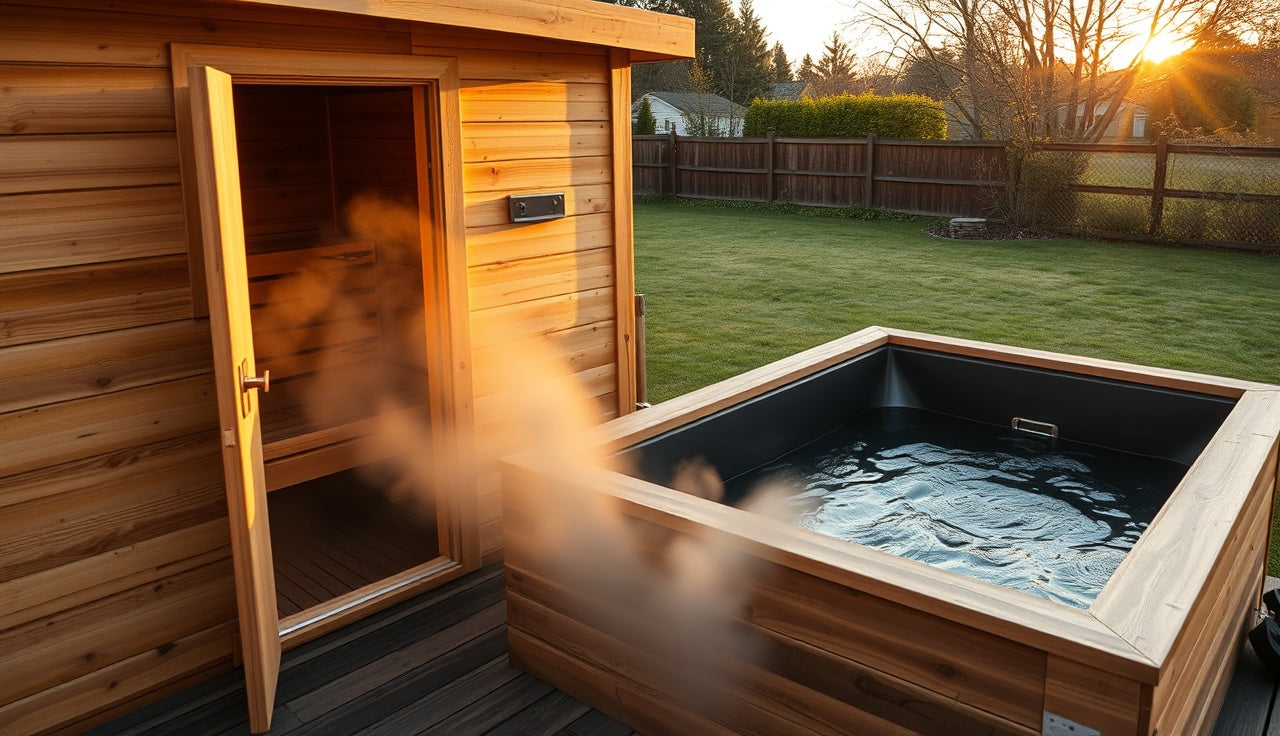
The market followed. You can now buy a dedicated cold plunge and a home sauna side by side and run a daily contrast protocol in your backyard. That convenience is exactly why the downsides matter. A setup like that is a real investment, and the science is messier than the marketing suggests.
This piece is about the disadvantages, risks, and limits. If you want the upside, there's a separate honest look at sauna benefits and cold plunge benefits.
Does contrast therapy blunt muscle growth and strength gains?
This is the best-documented downside, and the one most likely to matter to you. A 2019 meta-analysis in the Journal of Physiology (Fuchs et al.) reviewed the cold-water immersion literature and found that cold immersion after resistance training reduced long-term hypertrophy and strength gains compared to active recovery [2]. The effect sizes weren't trivial. Strength gains dropped by roughly 10-15% across training blocks of 7 to 12 weeks.
The mechanism is the whole problem. Inflammation after resistance training isn't a nuisance you want to erase. It's part of the signaling that drives muscle protein synthesis. Cold immersion (and by extension, moving into cold right after a sauna) blunts that inflammatory response. The mTOR pathway, which governs muscle building, gets specifically suppressed when you cool loaded muscle tissue quickly [2].
The 2019 Fuchs meta-analysis put it plainly: cold water immersion "attenuated long-term gains in muscle mass and strength," tied to interference with acute inflammatory and anabolic signaling after exercise [2].
Here's the practical read. If you're doing contrast therapy within an hour or two of a strength session, you're trading some adaptation for soreness relief. A recreational lifter who cares more about feeling good tomorrow than adding to a 1-rep max might take that trade happily. A competitive athlete in a hypertrophy block should not.
Endurance athletes have less to lose here. Cold immersion seems to interfere less with aerobic adaptation than with strength adaptation, though the evidence is thinner [3]. Most sports scientists suggest waiting at least six hours after resistance training before any cold immersion if hypertrophy is the goal. That window isn't settled. Some researchers argue 24 hours is safer, and nobody has good data on whether the heat portion of contrast therapy (before the cold) softens or worsens the blunting effect.
What are the cardiovascular risks of contrast therapy?
Fast temperature swings load the heart, and that load is measurable. In a sauna, heart rate climbs to 100-150 beats per minute, comparable to moderate aerobic exercise, as the body works to shed heat [1]. Plunge into cold water right after and a competing set of reflexes fires: the cold shock response triggers a sharp gasp, heart rate spikes again briefly, and peripheral vessels clamp down, pushing blood pressure up.
A healthy adult handles this transition. Someone with existing cardiovascular disease, an arrhythmia, hypertension, or an undiagnosed condition may not. A Finnish population study (Laukkanen et al., JAMA Internal Medicine, 2018) found that sudden sauna deaths clustered in people who combined sauna with alcohol and in those with pre-existing cardiac conditions [1]. Contrast therapy stacks a second cardiovascular stressor on top of the sauna one.
Orthostatic hypotension is the other practical risk. After a sauna, blood is pooled in dilated peripheral vessels. Stand up fast to hit the plunge and blood pressure can crash, taking you into dizziness or a faint. This isn't rare in new users. Sitting at the edge of the plunge for a moment before you enter cuts the risk a lot, and it's exactly the step excited beginners skip.
Get physician clearance before starting contrast therapy if you have any diagnosed heart condition, uncontrolled hypertension (consistently above 140/90 mmHg), a current pregnancy, Raynaud's disease or peripheral vascular disease, or a recent surgery or cardiovascular event [4]. That's not legal boilerplate. The stress is real.
Can contrast therapy actually increase injury risk in certain situations?
Cold numbs. Useful for pain, and also a trap. Do contrast therapy right after a workout, feel great, train hard again too soon, and you've muted the feedback signal your body uses to tell you to rest. Acute muscle damage repairs over 48 to 72 hours. Cold-assisted recovery doesn't speed that repair. It reduces the soreness you feel [3]. You can feel ready while tissue is still healing.
Then there's the cold shock response itself. Sudden immersion below about 15 degrees Celsius (59 F) triggers an involuntary gasp and hyperventilation reflex. In a supervised gym, manageable. In a backyard plunge with nobody around, losing muscle control from cold shock in the first 30 to 60 seconds is a drowning risk, especially if the plunge is deep enough to submerge your face [5]. The National Center for Cold Water Safety notes that cold shock incapacitation hits fast and is not something you can will yourself through [5].
For people with muscle or joint injuries, rapid heat-to-cold swings can sometimes aggravate acute inflammation in ways that are hard to predict. Physical therapists generally steer contrast therapy toward delayed-onset muscle soreness rather than acute sprains or strains, where controlled, sustained cold is the better tool.
How does contrast therapy compare to passive rest or other recovery methods?
The honest answer: it's better than doing nothing, but not by as much as the marketing implies. A 2015 systematic review in PLOS ONE (Hohenauer et al.) found cold water immersion reduced soreness more than passive rest at 24 and 48 hours, but the effect was modest, and long-term training adaptations favored passive rest when strength gains were the goal [3].
| Recovery Method | Soreness Reduction (24-48h) | Effect on Hypertrophy | Cardiovascular Demand | Cost (home setup) |
|---|---|---|---|---|
| Passive rest | Low-moderate | No negative effect | None | $0 |
| Cold water immersion only | Moderate-high | Moderate negative (resistance training) | Mild-moderate | $500-$8,000 |
| Contrast therapy | Moderate-high | Moderate negative (resistance training) | Moderate-high | $1,500-$20,000+ |
| Compression/elevation | Low-moderate | No negative effect | None | $50-$300 |
| Active recovery (light cardio) | Low-moderate | No negative effect | Low | $0-$300 |
The table lays the tradeoff bare. You spend more money and take on more physiological stress for a soreness benefit that's real but modest, and you may give back some of the adaptation you trained to build.
For pure performance athletes, the evidence increasingly points toward using cold immersion and contrast therapy selectively rather than daily. Save it for the days recovery speed matters most, like mid-tournament or two-a-day training camps, instead of running it as a default.
| Passive rest – soreness reduction | 20% |
| Passive rest – hypertrophy blunting | 0% |
| Cold water immersion – soreness reduction | 65% |
| Cold water immersion – hypertrophy blunting | 12% |
| Contrast therapy – soreness reduction | 70% |
| Contrast therapy – hypertrophy blunting | 13% |
| Active recovery – soreness reduction | 30% |
| Active recovery – hypertrophy blunting | 0% |
Source: Fuchs et al., Journal of Physiology, 2019; Hohenauer et al., PLOS ONE, 2015; Bleakley et al., BJSM, 2012
Are there specific populations for whom contrast therapy is a bad idea?
Yes, and this list deserves respect.
Pregnant women should avoid both high-heat sauna exposure and cold plunge immersion. Core body temperature above 39 degrees Celsius (102.2 F) in the first trimester is linked to neural tube defects and other fetal developmental risks [4]. The American College of Obstetricians and Gynecologists advises against activities that raise core temperature significantly during pregnancy [4].
Children regulate temperature less efficiently than adults. A larger surface-area-to-body-mass ratio means they heat and cool faster, and their blood volume is smaller. The same swing a healthy adult shrugs off can push a child into danger. Most sauna manufacturers and health authorities advise against sauna use for young children, and contrast protocols extend that concern.
People with multiple sclerosis face Uhthoff's phenomenon, where a rise in body temperature temporarily worsens neurological symptoms [4]. Even if things settle as the body cools, the heat phase of contrast therapy can still trigger it, and that's unsettling.
Medications change the math too. Beta-blockers blunt the heart rate response to both heat and cold, which hides normal feedback. Diuretics cut blood volume, which amplifies the orthostatic hypotension risk during transitions. Anyone on cardiovascular medications should talk to a physician first.
Does contrast therapy actually work for the purposes people use it for?
This is where honest hedging earns its keep. The research base is genuinely thin in some areas.
For delayed-onset muscle soreness: yes. There's reasonably consistent evidence that contrast water therapy cuts perceived soreness 24 to 48 hours after exercise compared to passive rest [3]. The effect is real.
For lowering inflammation markers: mixed. Some studies show drops in creatine kinase and interleukin-6, others don't. The scatter probably comes from differences in temperature, duration, and the exercise that came before.
For next-day performance: weak. A 2013 Sports Medicine review (Versey et al.) found minimal measurable performance benefit the day after contrast therapy compared to cold water immersion alone [6].
For cardiovascular health over time: the longevity data on sauna is solid. Regular Finnish-style sauna use, four or more times per week, is associated with lower all-cause cardiovascular mortality [1]. But that literature is about sauna alone, not contrast therapy. Adding cold immersion doesn't come with the same long-term data.
For mood: cold immersion fires the sympathetic nervous system and releases norepinephrine hard, roughly a 300% jump in one study by Jansky et al. [7]. Whether that becomes lasting mood improvement or just a short alertness spike isn't settled. The closest thing to a controlled trial, van Tulleken et al. in BMJ Case Reports in 2018, showed cold-water swimming improved depression scores, but that was a single case report, not a large trial [8].
The summary: contrast therapy works pretty well for feeling less sore tomorrow. It works far less reliably for the other goals people pin on it, and it carries costs and risks that passive rest simply doesn't.
What are the practical and financial downsides of setting up contrast therapy at home?
A proper home contrast setup costs real money. A quality home sauna runs roughly $3,000 to $10,000 installed, depending on size and type. A dedicated cold plunge or ice bath adds another $500 to $6,000. Want both in the same space, and you're looking at electrical capacity, drainage, and often structural work.
Running costs add up. A two-person barrel sauna at 190 F for an hour uses roughly 3 to 6 kWh per session. At about $0.17 per kWh (the average U.S. residential rate as of 2024, per the EIA), that's $0.51 to $1.02 per sauna session [9]. Sounds cheap, but daily use lands around $150 to $350 a year for the heat alone. A cold plunge with an active chiller draws another 1 to 3 kWh a day just to hold temperature.
Maintenance is its own line item. Cold plunge water needs regular sanitation to keep bacteria out. Sauna wood needs cleaning and inspection. If either unit fails, repairs range from a few hundred dollars for a heating element to over a thousand for a chiller compressor.
A portable sauna is a cheaper way in, but portable units usually top out at lower temperatures with less consistent heat, which limits the intensity of the heat phase. That can actually shrink the contrast effect you're chasing.
SweatDecks keeps side-by-side comparisons of home sauna and cold plunge configurations at sweatdecks.com, worth a look if you're trying to figure out what fits your space and budget before you commit.
Is there a risk of overuse or doing contrast therapy too often?
Yes, and it's underappreciated.
The physiological stress of contrast therapy isn't zero. Repeated hard cardiovascular loading, especially in someone already deep in training, can pile onto fatigue instead of clearing it. Heart rate variability, which athletes lean on as a recovery marker, can actually drop after aggressive cold immersion in already-fatigued athletes (Buchheit et al., European Journal of Applied Physiology, 2009) [10].
The heat phase carries its own overuse risk. Repeated high-temperature sauna sessions without enough hydration feed chronic mild dehydration, which drags down both performance and recovery. A Finnish sauna session can produce 0.5 to 1.0 liters of sweat, sometimes more [1]. Do that daily without replacing fluids and electrolytes and you've built a real stressor.
There's also an adaptation ceiling. Cold immersion keeps firing the sympathetic nervous system, but the body habituates. The norepinephrine release that feels so sharp in the first few weeks fades with repetition [7]. Not harmful, but the subjective payoff flattens even as session count rises. Some people chase the old feeling by going colder or longer, which adds risk without a clear payoff.
For most people, three to four contrast sessions a week is a sensible ceiling. Daily use is probably fine for some and counterproductive for others, and no large study has pinned down an optimal frequency.
How do temperature and duration choices affect the risk profile?
Not all contrast therapy carries the same risk. The extremes carry more.
On the cold side, water below 10 C (50 F) triggers a stronger cold shock response and more risk of cold incapacitation, especially for new users [5]. Most sports medicine protocols use 10 to 15 C (50 to 59 F) for the cold phase. Consumer plunges often default to 50 to 55 F because it's intense enough to work but less likely to cause involuntary muscle failure.
On the hot side, temperatures above 90 C (194 F) in a Finnish sauna, paired with high humidity, can push core temperature up faster than the cardiovascular system handles comfortably during the transition. The sauna studies with the best safety records used Finnish-style dry saunas at 80 to 100 C for 5 to 20 minute cycles [1].
Duration matters as much as temperature. Longer cold immersion isn't better. The soreness-reduction effect plateaus around 10 to 15 minutes of cold; going past that mostly adds cardiovascular stress without extra recovery benefit [3].
The ratio of hot to cold is unsettled too. Common protocols run 3:1 (three minutes hot, one minute cold) or 1:1, with two to four cycles. Best depends on the goal and your tolerance, and no large randomized trial has compared these head to head in a way that names a clear winner.
What should you do instead if these disadvantages put you off contrast therapy?
If the downsides here genuinely apply to you (you're in a hypertrophy-focused block, you have a cardiovascular condition, or the setup is out of budget), there are legitimate alternatives.
For soreness recovery: active recovery (easy cycling, walking, or swimming) has solid evidence for cutting soreness without blunting adaptation [3]. Compression garments have a modest evidence base and zero cardiovascular risk. Sleep is still the most effective recovery tool in any honest ranking.
For the mental reset a contrast session gives you: a sauna alone, no cold immersion, still delivers heat-stress benefits like heart rate elevation, endorphin and growth hormone release, and heat shock protein activation, all without the hypertrophy-blunting concern [1]. Love the heat but wary of the cold? You can keep most of the cardiovascular benefit from the sauna alone.
For relaxation and parasympathetic recovery: closing a sauna with a brief lukewarm or cool shower (not ice cold) appears to nudge the parasympathetic system without the sharp sympathetic spike of a full plunge. The research on this specific tweak is thin, but the physiology holds up.
Still want to try contrast therapy after weighing the tradeoffs? SweatDecks carries purpose-built cold plunge and sauna setups for home use at sweatdecks.com. The honest advice: know exactly what you're buying it for before you build the setup around it.
Frequently asked questions
Can contrast therapy cause a heart attack?
For healthy adults, the risk of a cardiac event from contrast therapy is low but not zero. The cardiovascular load from rapid temperature transitions is real. The Laukkanen 2018 study in JAMA Internal Medicine found sauna-related deaths concentrated in people with pre-existing heart disease, especially combined with alcohol use. Anyone with a diagnosed cardiac condition, arrhythmia, or uncontrolled hypertension should get physician clearance before starting any contrast protocol.
Does contrast therapy help with soreness after lifting?
It reduces perceived soreness at 24-48 hours, but it likely slows muscle growth in the process. The Fuchs 2019 meta-analysis found cold water immersion after resistance training blunted hypertrophy and strength gains by roughly 10-15% compared to active recovery over multi-week training blocks. If maximizing muscle growth is your goal, passive rest or light active recovery is probably a better choice after strength sessions.
Is contrast therapy safe during pregnancy?
No. Both high-heat sauna exposure and cold plunge immersion carry pregnancy-specific risks. The American College of Obstetricians and Gynecologists advises against activities that significantly elevate core body temperature, particularly in the first trimester, due to association with neural tube defects and other fetal developmental risks. Cold shock response from sudden cold immersion also creates cardiovascular stress that is not appropriate during pregnancy.
How soon after a workout can I do contrast therapy?
If hypertrophy and strength are your training goals, most sports scientists recommend waiting at least 6 hours after a resistance training session, with some arguing 24 hours is safer. The cold phase blunts the acute inflammatory signaling that drives muscle protein synthesis. For endurance athletes, the timing restriction appears less critical, though the evidence there is thinner.
Can contrast therapy make inflammation worse?
In most cases, no, but for acute injuries like fresh sprains or strains, the alternating vasodilation-vasoconstriction cycle can behave unpredictably compared to sustained controlled cold application. Physical therapists generally recommend contrast therapy for delayed-onset muscle soreness after exercise rather than for acute traumatic injuries, where targeted, sustained cold application is more appropriate.
What temperature should the cold plunge be for contrast therapy?
Most sports medicine protocols use 10-15°C (50-59°F) for the cold phase. Temperatures below 10°C increase the risk of cold shock response and involuntary muscle incapacitation. Temperatures above 15°C may reduce the physiological stimulus. Consumer cold plunges often default to 50-55°F (10-13°C) as a balance between effectiveness and safety, particularly for newer users.
Can you do contrast therapy every day?
Probably not optimal for most people. Daily cold immersion blunts the norepinephrine response over time through habituation. Daily high-temperature sauna also carries dehydration risk if fluid replacement is inadequate. HRV data from athletes suggests aggressive daily cold immersion can increase rather than decrease cumulative fatigue in heavy training periods. Three to four sessions per week is a more commonly supported ceiling, though large RCTs on frequency are lacking.
Does contrast therapy work for weight loss?
Not meaningfully as a fat-loss tool on its own. Cold water immersion does activate brown adipose tissue and increase metabolic rate briefly, but the caloric burn is modest and the effect diminishes with repeated exposure through thermogenic adaptation. There is no credible RCT showing contrast therapy produces clinically meaningful weight loss when diet and exercise are not already controlled. Claims that cold plunging significantly speeds fat loss are mostly extrapolations from small mechanistic studies.
Is contrast therapy or cold immersion alone better for recovery?
A 2013 Sports Medicine review found minimal measurable performance benefit from contrast therapy over cold water immersion alone the day after exercise. The soreness reduction effects appear comparable. Contrast therapy adds cardiovascular complexity and cost without clearly superior results for most recovery goals. Cold immersion alone is simpler and may carry slightly lower cardiovascular stress during the cold-to-hot transition for most users.
Are there any medications that make contrast therapy dangerous?
Yes. Beta-blockers mask the normal heart rate response to both heat and cold, which removes a key feedback signal. Diuretics reduce blood volume and amplify the orthostatic hypotension risk during transitions between hot and cold. Antihypertensives can interact unpredictably with the blood pressure swings that contrast therapy produces. Anyone on cardiovascular, blood pressure, or neurological medications should consult their physician before starting a contrast protocol.
Can contrast therapy cause fainting?
Yes. Orthostatic hypotension (a sudden blood pressure drop when standing) is a real risk during the transition from sauna to cold plunge. After sauna heat exposure, blood pools in dilated peripheral vessels. Standing up quickly can cause a sudden drop in cerebral perfusion and loss of consciousness. This risk is highest in new users and in people who are dehydrated. Sitting for a moment at the plunge edge before entering dramatically reduces this risk.
Does the type of sauna matter for contrast therapy risks?
It matters somewhat. Finnish dry saunas at 80-100°C have the most studied safety profile. Steam rooms add humidity that raises the apparent temperature and can accelerate core temperature elevation faster than dry heat at the same air temperature, which may increase cardiovascular stress during the hot phase. Infrared saunas operate at lower temperatures (50-60°C typically) and produce less intense cardiovascular loading, which means less contrast effect but also lower risk. You can read more on the differences at the sauna vs steam room guide on this site.
Do the disadvantages of contrast therapy outweigh the benefits for most people?
For recreational exercisers who are not focused on maximizing strength or hypertrophy, and who do not have cardiovascular conditions, the tradeoffs are probably acceptable. The soreness benefit is real. For serious lifters in a strength or hypertrophy phase, the evidence clearly suggests the cost to muscle adaptation is not worth the soreness relief. For anyone with heart disease, pregnancy, MS, or related conditions, the risks likely do outweigh the benefits.
Sources
- Laukkanen JA et al., JAMA Internal Medicine, 2018 – sauna cardiovascular outcomes, Finnish population: Sauna heart rate reaches 100-150 bpm; sauna-related deaths concentrated in those with pre-existing cardiac conditions and alcohol use; regular sauna use 4+ times/week associated with reduced cardiovascular mortality
- Fuchs CJ et al., Journal of Physiology, 2019 – meta-analysis of cold water immersion and resistance training adaptation: Cold water immersion after resistance training reduced long-term muscle hypertrophy and strength by roughly 10-15%; attributed to attenuation of mTOR and acute inflammatory signaling
- Hohenauer E et al., PLOS ONE, 2015 – systematic review of post-exercise cold-water immersion and contrast water therapy: Contrast water therapy reduced DOMS at 24-48h versus passive rest; effect on long-term training adaptation favors passive rest for strength goals; soreness benefit plateaus around 10-15 minutes of cold immersion
- American College of Obstetricians and Gynecologists (ACOG) – exercise and pregnancy guidelines: ACOG advises against activities that significantly elevate maternal core body temperature during pregnancy; core temperature above 39°C in first trimester associated with neural tube defects; also covers Uhthoff's phenomenon in MS and heat-sensitive populations
- National Center for Cold Water Safety – cold shock response and drowning risk: Cold water below ~15°C triggers involuntary gasp and hyperventilation reflex; incapacitation from cold shock can occur in first 30-60 seconds; cannot be willfully overridden
- Versey NG et al., Sports Medicine, 2013 – water immersion recovery for athletes review: Minimal measurable performance benefit from contrast therapy over cold water immersion alone the day after exercise; both superior to passive rest for perceived soreness
- Jansky L et al., European Journal of Applied Physiology, 1996 – norepinephrine response to cold water immersion: Cold water immersion produces approximately 300% increase in norepinephrine; effect diminishes with repeated habituation over time
- van Tulleken C et al., BMJ Case Reports, 2018 – cold water swimming and depression: Case report showed regular cold-water swimming improved depression scores in one patient; acknowledged as preliminary, not a large RCT
- U.S. Energy Information Administration (EIA) – Electricity data and average retail price: Average U.S. residential electricity rate approximately $0.17 per kWh as of 2024; used to calculate sauna operating costs
- Buchheit M et al., European Journal of Applied Physiology, 2009 – cold water immersion and heart rate variability in athletes: Heart rate variability (HRV) can decrease rather than increase after aggressive cold water immersion in already-fatigued athletes, suggesting possible overuse of cold recovery
- Bleakley C et al., British Journal of Sports Medicine, 2012 – cold water immersion for recovery from exercise: Cold water immersion reduces perceived soreness vs passive rest at 24h and 48h; effect modest; long-term training adaptations favored passive rest when strength is the goal
- American Heart Association – warnings on saunas, hot tubs, and extreme temperature exposure for people with cardiovascular disease: People with cardiovascular disease, uncontrolled hypertension, or arrhythmias face elevated risk from rapid temperature swings and should consult a physician before heat and cold exposure

Share:
Are portable saunas safe? What you need to know before buying
Are portable saunas safe? What you need to know before buying