
Last updated 2026-07-09
TL;DR
A cold plunge bathtub is any tub you fill with cold water (typically 39 to 59°F) for deliberate cold immersion. Options range from a repurposed chest freezer ($300, $600) to a dedicated plunge tub with built-in chiller ($2,000, $20,000+). Setup, maintenance, water chemistry, and the actual research on cold water immersion benefits are all covered below.
What exactly is a cold plunge bathtub?
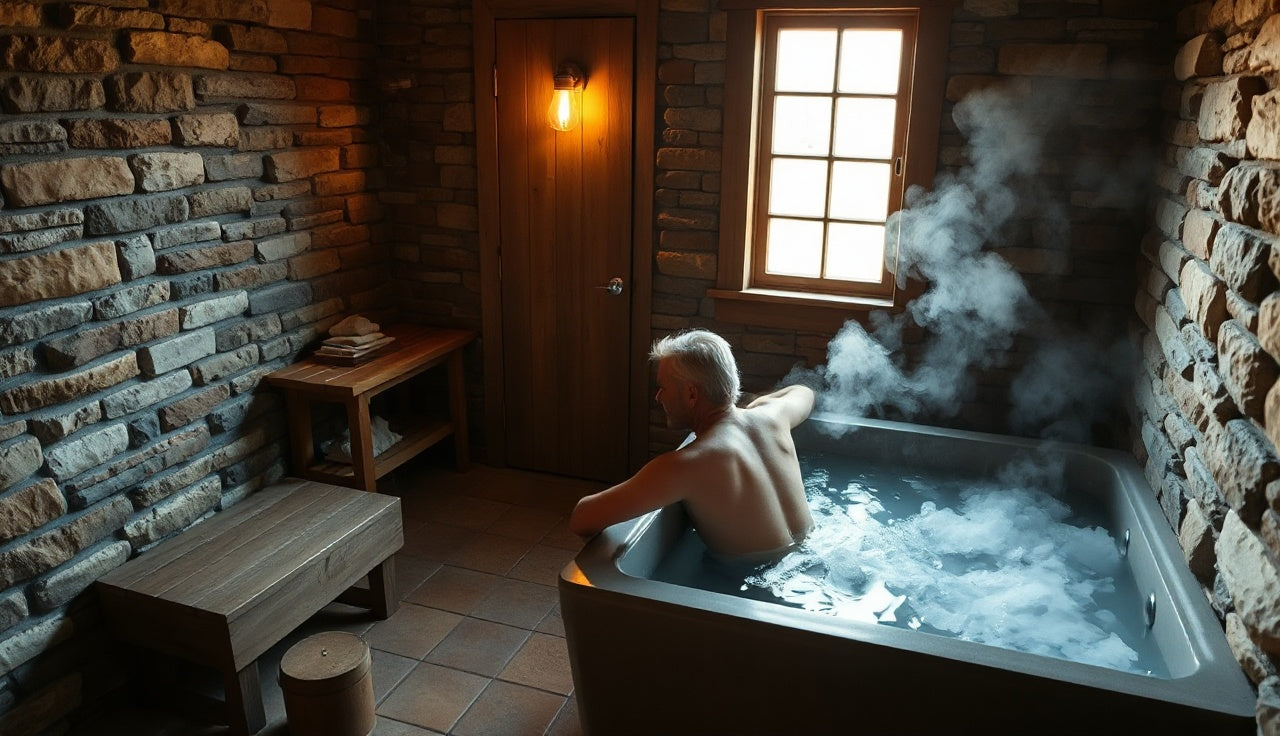
A cold plunge bathtub is a vessel you fill with cold water and sit in intentionally. That's the whole idea. It's not a regular bath you forgot to heat up. The point is sustained immersion at a temperature low enough to trigger a physiological stress response, typically somewhere between 39°F and 59°F (4 to 15°C), for anywhere from one to fifteen minutes depending on your goals and tolerance.
The category is wide. On one end you have a repurposed chest freezer with a water pump and a $5 pool thermometer. On the other end you have a purpose-built acrylic or stainless steel tub with an integrated refrigeration chiller, filtration, ozone sanitation, and a digital thermostat. Both qualify. What makes something a "cold plunge bathtub" is really the intent and the temperature, not the hardware.
People use these for post-workout recovery, general stress management, sleep improvement, and mental resilience training. The evidence on some of those uses is stronger than others, and we'll get into the actual research. But the short version is: the physiology is real, the discomfort is also real, and the hardware choices matter a lot for whether you'll actually use the thing consistently.
If you're comparing this category to a standard ice bath, the distinction is mostly practical. A ice bath typically means a bathtub or large cooler packed with ice for a single session. A cold plunge bathtub, especially a dedicated unit, is designed for repeated daily use without constantly buying bags of ice. That's the main value proposition.
How cold should a cold plunge bathtub actually be?
The research-backed sweet spot for cold water immersion sits between 50°F and 59°F (10 to 15°C). A 2022 meta-analysis published in PLOS ONE reviewing 99 studies on cold water immersion found that water temperatures in this range were the most commonly studied and associated with measurable physiological effects, including reductions in perceived muscle soreness and heart rate recovery [1].
Going colder is not necessarily better. Water at 39 to 45°F (4 to 7°C) increases the risk of cold shock, hyperventilation, and peripheral vasoconstriction severe enough to cause cardiac stress in susceptible individuals. The American Heart Association has noted that sudden cold immersion can trigger potentially dangerous cardiovascular responses, particularly in people with existing heart conditions [2].
For most healthy adults starting out, 55 to 59°F is a reasonable entry point. Many experienced cold plunge users eventually work down to 50 to 54°F. Very few people get meaningful additional benefit below 50°F, and the risk-to-reward ratio gets worse fast.
Session length matters too. Most studies use exposures of two to fifteen minutes. Longer is not automatically better. Staying in past fifteen minutes at temperatures below 55°F runs real hypothermia risk. The National Center for Cold Water Safety recommends always having a clear protocol for exiting, warming up, and not plunging alone [3].
If you have a chiller-equipped unit, you can set your exact target temperature and trust it. If you're using ice or a DIY setup, a reliable waterproof thermometer is not optional. It's the one piece of gear everyone underbuys.
What does the research actually say about cold plunge benefits?
This is where honesty matters. Cold water immersion has real physiological effects that are well-documented. The jump from those effects to specific health promises is where things get murky.
Post-exercise muscle recovery is the strongest evidence category. A 2012 Cochrane Review and a 2021 update both found that cold water immersion reduced delayed onset muscle soreness (DOMS) compared to passive rest, though the effect size was moderate and the clinical significance for recreational athletes is debated [4]. The 2022 PLOS ONE meta-analysis mentioned above found similar results across 99 studies [1].
Norepinephrine and mood effects get a lot of attention online. A frequently cited study by Søberg et al. (2021) published in Cell Reports Medicine found that deliberate cold exposure protocols (both swimming and cold showers) increased norepinephrine by 200 to 300% and dopamine by roughly 250% [5]. Those are real numbers from a real study. What nobody knows yet is whether that hormonal spike produces durable mental health benefits over months and years, because the long-term RCTs simply haven't been done.
Fat-burning via brown adipose tissue activation is the third big claim. Cold exposure does activate brown adipose tissue in humans, and this has been confirmed by imaging studies [6]. Whether a typical home cold plunge session produces metabolically meaningful brown fat activation in already-lean adults is genuinely uncertain. The closest honest answer is: probably some, but probably not enough to move the needle on body composition by itself.
Sleep improvement, stress resilience, immune function. Each of these has some mechanistic plausibility and a handful of small studies. Nobody has good population-level RCT data yet. If cold plunging helps your sleep, it's most likely through the parasympathetic rebound after the sympathetic stress response, not a direct mechanism.
Bottom line: the case for cold plunge as a recovery and mood tool is reasonably well-supported. The case for transformative health outcomes beyond that needs more research.
For a full breakdown, see our cold plunge benefits article.
| Inflatable / soft-sided tub | $300 |
| DIY chest freezer conversion | $500 |
| Purpose-built tub, no chiller | $1,000 |
| Purpose-built tub with chiller (residential) | $4,500 |
| Commercial stainless steel with chiller | $15,000 |
Source: SweatDecks market survey of listed retail prices, 2024
What are the different types of cold plunge bathtubs?
There are four main categories, and they differ significantly in cost, convenience, and long-term usability.
DIY chest freezer conversions cost $300, $700 total. You buy a 7 to 10 cubic foot chest freezer, add a submersible pump to circulate water and prevent bacteria, and set the freezer thermostat to hold water around 50 to 55°F. It works. The downsides are real: no filtration, no sanitation beyond what you add manually, aesthetic limitations, and the compressor is not designed for constant water cooling. Many users report compressor failure within two to three years of daily use.
Inflatable and soft-sided tubs cost $100, $500. These are basically large inflatable pools you fill with cold water or ice. Zero temperature control unless you add ice constantly. Fine for occasional use or for someone testing whether they like cold plunging before committing real money. Not a long-term solution.
Purpose-built cold plunge tubs without chillers cost $500, $1,500. These are properly shaped tubs made of acrylic, fiberglass, or galvanized steel with ergonomic seating and often a drain. You still cool the water manually with ice or by pre-chilling with a separate unit. Better build quality and easier to maintain than a chest freezer, but you're still buying ice regularly.
Purpose-built cold plunge tubs with integrated chillers cost $2,000, $20,000+. This is the category that's exploded since 2020. Brands like Plunge, Ice Barrel, and Blue Cube all operate here. These units have refrigeration systems built in, digital temperature control, filtration, and usually some form of sanitation (ozone, UV, or a small amount of bromine). The most popular residential units sit in the $3,000, $6,000 range. Commercial-grade stainless steel units hit $10,000, $20,000.
For most people who want to use a cold plunge bathtub daily without the friction of buying ice or maintaining a chest freezer hack, a chiller-equipped unit in the $3,000, $5,000 range is the most practical long-term choice. You can browse current options at SweatDecks' cold plunge collection.
Table: Cold plunge bathtub types compared
| Type | Price Range | Temperature Control | Maintenance | Lifespan |
|---|---|---|---|---|
| DIY chest freezer | $300, $700 | Manual (thermostat hack) | High (manual sanitation) | 2 to 4 years typical |
| Inflatable/soft tub | $100, $500 | None (ice only) | Low | 1 to 3 years |
| Purpose-built, no chiller | $500, $1,500 | Manual (ice) | Medium | 5 to 10 years |
| Purpose-built with chiller | $2,000, $20,000+ | Digital, precise | Low-Medium | 7 to 15+ years |
How much does a cold plunge bathtub cost to run each month?
The upfront price gets most of the attention, but operating costs are where the real long-term math lives.
For a chiller-based unit running at 50 to 55°F, electricity is the main ongoing cost. A typical residential cold plunge chiller draws 500 to 1,500 watts while actively cooling, but it cycles on and off to maintain temperature. Real-world energy use for a well-insulated unit is typically 2 to 6 kWh per day. At the U.S. average residential electricity rate of roughly 16 cents per kWh (as of 2024, per the U.S. Energy Information Administration), that's about $10, $30 per month in electricity [7].
Ambient temperature matters a lot here. A unit sitting outdoors in Phoenix in July will run its compressor constantly and cost two to three times more than the same unit in a climate-controlled garage in Minnesota. Good insulation on the tub shell cuts this significantly. Some premium tubs use double-wall construction that makes a real difference.
Water chemistry is the second cost. You need to keep the water clean between changes. Most users add a small amount of bromine or use an ozone/UV system built into the unit. Budget $10, $25 per month for chemicals if you're using a chemical-based sanitation approach. Water changes every four to eight weeks are typical, which is minimal water cost.
For the DIY chest freezer route, you skip the electricity cost of a separate chiller but add the cost of replacement parts (pump, occasionally the compressor), and you spend more time managing water quality manually. Factor in $5, $15 per month in chemicals and the realistic compressor replacement cost every two to three years ($150, $400 for the freezer unit itself).
Ice-based setups have zero electricity cost for cooling but $30, $80 per month in ice if you're plunging daily, which adds up fast.
Can you use a regular bathtub as a cold plunge?
Technically yes. Fill your bathtub with cold water, add ice bags, get in. People have done this for decades. It works for occasional use.
The practical limitations are real though. A standard residential bathtub holds roughly 40 to 80 gallons. Getting that water from tap temperature (55 to 65°F in most climates) down to 50°F requires a meaningful amount of ice. A 10-pound bag of ice dropped into 50 gallons of 60°F water will drop the temperature by roughly 3 to 4°F. To hit 50°F from a 60°F starting point, you're looking at 25 to 40 pounds of ice, which costs $5, $10 per session at retail. That adds up.
The other issue is the shape. A standard bathtub requires you to lie down or curl up awkwardly. Dedicated cold plunge tubs are designed for upright seated immersion, which is more comfortable, safer for rapid exit, and covers a larger body surface area without requiring full submersion. Upright seated immersion to chest level is what most studies use.
If you're testing cold immersion for the first time and own a bathtub, absolutely use it. Buy a bag of ice, add it to cold tap water, and see how you respond before spending any real money. That's the rational starting point.
Where should you put a cold plunge bathtub at home?
Placement is one of the decisions people underplan and then regret. Think through it before you order anything heavy.
Indoor placement is ideal for climate control reasons. A cold plunge unit in a temperature-controlled space (garage, basement, bathroom, gym room) runs cheaper and more efficiently than one outdoors in temperature extremes. A dedicated bathroom or utility room with a floor drain and a GFCI outlet is the best-case scenario. Tubs weigh 300 to 800 pounds when filled with water, so floor load capacity matters, especially for second-floor installations. Consult a structural engineer if you're putting one above grade in an older home.
Outdoor installation works well in mild climates. You need a level, stable surface (concrete pad is ideal), protection from direct sun on the unit (UV degrades most tub materials over time), and weatherproofing for any electrical connections. Outdoor units in freezing climates need a winterization plan, and most chiller manufacturers void warranties for units left outdoors below 32°F without protection.
Proximity to your sauna or shower matters for how often you'll actually use the thing. The friction of walking through a cold house to reach a cold plunge tub in a detached garage in winter is real. If you have a home sauna or are planning one, co-locating the cold plunge nearby turns contrast therapy into a smooth daily habit instead of a logistical chore.
Electrical requirements: most chiller units run on standard 110V/15A circuits. Some higher-powered commercial units require 220V. Check the spec sheet before you plan your outlet situation.
How do you maintain water quality in a cold plunge bathtub?
This is the topic most buyers underresearch and most sellers undersell. Cold water holds bacteria and biofilm just as well as warm water, and you're sitting in it for multiple minutes every day.
The good news is that cold temperatures (below 60°F) do slow bacterial growth compared to a warm hot tub. The bad news is they don't stop it. Without some form of sanitation, the water quality in an unmanaged cold plunge will deteriorate within days to weeks depending on bather load.
Bromine is the most common chemical approach for cold plunge sanitation. Unlike chlorine, bromine remains effective at lower temperatures and lower pH ranges, which makes it better suited to cold water than chlorine is. Target levels are typically 3 to 5 ppm bromine for a cold plunge. The Centers for Disease Control's Healthy Swimming resources on pool/spa chemistry provide the baseline guidance for water sanitation [8].
Ozone systems, which most mid-to-high-end cold plunge units include, inject ozone into the circulating water to oxidize contaminants. Ozone is an effective sanitizer but dissipates quickly, so ozone-only systems usually require a small bromine residual as backup. UV systems work similarly: effective but not a standalone solution.
Practical maintenance routine: test water chemistry two to three times per week using test strips or a digital tester. Check pH (target 7.2 to 7.8), bromine or chlorine level, and total alkalinity. Rinse the filter cartridge weekly. Full water change every four to eight weeks depending on usage frequency. Wipe down the tub interior with a mild non-foaming cleaner during each water change.
If the water looks cloudy or has any odor, change it immediately. Don't try to shock your way out of heavily contaminated cold plunge water. The volume is small enough that a full change is always the right call.
Is a cold plunge bathtub safe? Who should avoid it?
For the majority of healthy adults, supervised cold water immersion in the 50 to 59°F range for two to fifteen minutes is well-tolerated. The physiology is stressful by design, not dangerous by nature, for people who are healthy.
That said, the contraindications are real and worth taking seriously.
Heart disease and hypertension are the primary concerns. Cold immersion causes rapid vasoconstriction and an acute increase in blood pressure and heart rate. The American Heart Association recommends that anyone with cardiovascular disease, hypertension, or arrhythmias consult their physician before starting cold immersion [2]. This is not a formality. Cold shock deaths do occur, primarily in people with underlying cardiac conditions.
Raynaud's disease, peripheral artery disease, and any condition involving poor circulation in the extremities are relative contraindications. Cold immersion can trigger severe vasospastic episodes in people with these conditions.
Pregnancy: no large RCTs exist, and cold water immersion is generally avoided during pregnancy. Consult your OB.
Open wounds, active skin infections, or post-surgical sites should stay out of any shared or recirculating water.
The first few sessions carry the highest risk for any user because the cold shock response is strongest before your body adapts. Start at warmer temperatures (58 to 60°F), start with shorter durations (60 to 90 seconds), and never plunge alone for the first several sessions. Keep a timer and a clear plan for exiting and warming up before you get in.
Nobody should hyperventilate deliberately before a cold plunge. This increases blackout risk significantly.
How does a cold plunge bathtub compare to a cold shower?
Cold showers are free, require zero equipment, and provide a genuine physiological cold stress response. So what does a cold plunge tub actually add?
The core difference is immersion surface area and duration. A cold shower covers your head, shoulders, and back with cold water intermittently. A cold plunge tub immerses your entire lower body and torso simultaneously, which produces a far more intense and consistent cold stimulus. The studies on norepinephrine and dopamine increases (like the Søberg et al. 2021 data) used full immersion, not showers [5]. Nobody knows for certain whether showers produce the same magnitude of hormonal response, but it's reasonable to assume the effect is smaller.
For muscle recovery specifically, the Cochrane Review evidence base is built on immersion studies, not shower studies [4]. Hydrostatic pressure from being submerged also contributes to reduced tissue swelling that a shower can't replicate.
If cost or space is a real constraint, cold showers are a legitimate starting point. They're not a placebo. But if you want to do what the research actually studied, full immersion is the right tool.
The comparison also extends to ice baths: cold plunge tubs are essentially permanent, filtrated, temperature-controlled ice baths. Same stimulus, much less friction.
What should you look for when buying a cold plunge bathtub?
There are five things that separate the cold plunge tubs that people use for years from the ones that collect dust.
Chiller power and ambient temperature rating. Every chiller has a rated capacity at a specific ambient temperature. A chiller rated to reach 39°F at 70°F ambient might only get to 48°F when it's 85°F outside. Ask for the spec sheet, not the marketing claim. Look for units rated to your local summer highs.
Insulation. Double-wall construction or foam-core panels cut your electricity bill meaningfully and help the chiller maintain temperature without constant cycling. This is an underrated spec.
Filtration and sanitation system. A built-in ozone or UV system plus a replaceable filter is the minimum for daily use without constant manual chemical work. Know what consumables you'll need to buy and how often.
Tub material and ergonomics. Acrylic is lightweight and easy to clean but can scratch. Fiberglass is similar. Stainless steel is the most durable and easiest to sanitize but costs more and gets condensation on the exterior. Rotomolded polyethylene (what many barrel-style units use) is durable and affordable. Sit in the tub if you can before buying. The seated position needs to let your shoulders and chest submerge comfortably.
Warranty and serviceability. A two-year warranty on the chiller unit is standard at the mid-range. Five years is better. More importantly, check whether the manufacturer can service the chiller or replace it. Some brands use proprietary chiller units that become expensive paperweights if the compressor fails out of warranty. Others use standard commercial chiller components that any HVAC tech can service.
SweatDecks carries a curated selection of purpose-built cold plunge tubs across price points, including chiller-equipped options worth comparing before you buy.
Can a cold plunge bathtub be used for contrast therapy with a sauna?
Yes, and this is one of the most popular reasons people add a cold plunge to an existing sauna setup.
Contrast therapy means alternating between heat and cold. A typical protocol is three to four rounds of sauna followed by cold plunge. Session structure varies: common versions use 10 to 20 minutes in the sauna followed by 2 to 5 minutes in the cold plunge, repeated two to four times. There is no single universally agreed protocol.
The evidence base for contrast therapy specifically is smaller than for either heat or cold alone. A 2021 systematic review in the British Journal of Sports Medicine found that contrast water therapy reduced muscle soreness more effectively than passive recovery but was not consistently superior to cold water immersion alone [9]. For recovery purposes, cold alone appears to do most of the work. The heat phase adds its own cardiovascular and relaxation benefits (see our sauna benefits article), but the combination doesn't necessarily double the recovery effect.
Where contrast therapy clearly wins is adherence and ritual. People who do sauna and cold plunge together tend to do it more consistently than people doing either alone. The contrast makes both sensations more dramatic and satisfying, which drives habit formation better than solo protocols in many users' experience.
If you have or are planning a home sauna, locating a cold plunge bathtub nearby creates the full contrast therapy setup. This is exactly the use case for which dedicated cold plunge tubs are best suited, because the friction of preparing an ice bath between sauna rounds kills the habit fast.
Frequently asked questions
How long should you stay in a cold plunge bathtub?
Most research uses immersion durations of two to fifteen minutes. Starting with sixty to ninety seconds at 57 to 59°F is reasonable for beginners. Work toward three to five minutes over a few weeks. Staying in past fifteen minutes at temperatures below 55°F is not recommended and does not produce additional benefit. Set a timer before you get in and stick to it.
How often should you use a cold plunge bathtub?
Daily use is common among dedicated practitioners. For muscle recovery purposes, most studies used one to two sessions per day on training days. There's no strong evidence that daily cold plunging causes harm in healthy adults. If you're doing it for recovery, timing matters: some researchers suggest avoiding cold immersion immediately after strength training, as it may blunt muscle protein synthesis in the two to four hours post-workout.
What temperature should a cold plunge bathtub be set to?
The most commonly studied range is 50 to 59°F (10 to 15°C). Start at the warmer end of that range and work down as your cold tolerance improves. Temperatures below 50°F increase risk without clear additional benefit for most users. Most people find 52 to 55°F to be a productive long-term target after a few months of regular use.
How much does a good cold plunge bathtub cost?
Purpose-built cold plunge tubs without chillers run $500, $1,500. Units with integrated chillers and filtration, which are what most daily users want, cost $2,000, $8,000 for residential models. Commercial-grade stainless steel units reach $10,000, $20,000. DIY chest freezer conversions can work for under $700 but require more maintenance and have a shorter compressor lifespan.
Can I use my regular bathtub for cold plunging?
Yes. Fill it with cold water, add 25 to 40 pounds of bagged ice to reach 50 to 55°F, and you have a functional cold plunge for that session. It costs $5, $10 in ice per session, which adds up quickly with daily use. The shape requires lying down rather than sitting upright, which is less comfortable and harder to exit quickly. It's a good way to test cold plunging before committing to a dedicated unit.
Is a cold plunge bathtub the same as an ice bath?
Functionally the same stimulus. The difference is mostly practical. An ice bath is a temporary setup using a tub or barrel packed with ice for a single session. A cold plunge bathtub, especially a chiller-equipped unit, maintains water temperature continuously so you can plunge daily without buying ice. Dedicated cold plunge tubs are also ergonomically designed for seated upright immersion.
How do I keep the water in a cold plunge clean?
Use bromine (target 3 to 5 ppm) or rely on a built-in ozone or UV system if your unit has one. Test water chemistry two to three times per week. Change the water fully every four to eight weeks depending on how often you use it. Rinse the filter cartridge weekly. If the water clouds up or develops any odor, change it immediately rather than trying to chemically correct it.
Does a cold plunge bathtub use a lot of electricity?
A well-insulated residential cold plunge chiller typically uses 2 to 6 kWh per day in normal conditions, which costs roughly $10, $30 per month at average U.S. electricity rates of about 16 cents per kWh. Outdoor units in hot climates run more. Indoor units in climate-controlled spaces run less. Double-wall insulation on the tub shell makes a meaningful difference in operating cost.
Can a cold plunge bathtub be installed outdoors?
Yes, but with caveats. A level concrete pad, a weatherproof GFCI outlet, and protection from direct sun all matter. Most manufacturers void warranties on units left outdoors below 32°F without winterization. Hot ambient temperatures (above 85 to 90°F) reduce chiller efficiency and increase electricity costs. An indoor or climate-controlled space is preferable if available.
Who should not use a cold plunge bathtub?
People with cardiovascular disease, hypertension, arrhythmias, Raynaud's disease, peripheral artery disease, open wounds, or active skin infections should consult a physician before cold water immersion. Pregnant people should avoid it. Everyone, including healthy adults, should avoid plunging alone in early sessions and should never hyperventilate before entering cold water.
Does using a cold plunge bathtub after strength training blunt muscle gains?
This is a real and ongoing debate. Some studies, including work by Roberts et al. (2015) published in the Journal of Physiology, suggest that cold water immersion immediately post-strength training may reduce acute muscle protein synthesis signaling. For athletes prioritizing strength and hypertrophy, waiting at least two to four hours after a strength session before cold plunging is a reasonable precaution. For endurance athletes and general recovery, this concern is less relevant.
What size cold plunge bathtub do I need?
For a single adult, a tub holding 100 to 150 gallons with interior dimensions around 48 to 60 inches long and 24 to 28 inches wide is comfortable for seated upright immersion. If two people will use it simultaneously, or if you want to fully recline, look for 150 to 200 gallon capacity. Bigger tubs cost more to cool and maintain. Match the size to your actual use pattern.
How long does it take a cold plunge bathtub chiller to reach temperature?
Starting from tap water at 60°F, most residential chillers take two to five hours to reach 50 to 55°F, depending on chiller power, ambient temperature, and tub volume. Pre-filling the night before and letting the chiller run overnight is the most common approach. Some higher-powered units with 1/2 to 1 HP compressors can cool 100 gallons to 50°F in three hours or less.
Can I pair a cold plunge bathtub with a sauna for contrast therapy?
Yes, and it's one of the best reasons to own both. A typical contrast protocol alternates 10 to 20 minutes of sauna heat with 2 to 5 minutes of cold plunge, repeated two to four rounds. The combination drives stronger cardiovascular and mood responses than either alone for many users, and the ritual improves long-term adherence. Co-locating the units reduces friction significantly.
Sources
- PLOS ONE, Moore et al. 2022 – 'Cold water immersion for recovery in healthy adults: a systematic review with meta-analysis': 99-study meta-analysis finding water temperatures of 10–15°C most studied and associated with reductions in perceived muscle soreness and heart rate recovery
- American Heart Association – Heart.org, patient safety guidance: Sudden cold immersion can trigger cardiovascular stress responses; people with heart disease or hypertension should consult a physician before cold water immersion
- National Center for Cold Water Safety – coldwatersafety.org: Recommends always having a clear protocol for exiting and warming up, and not cold plunging alone as a beginner
- Cochrane Database of Systematic Reviews – Bleakley et al., 'Cold water immersion (cryotherapy) for preventing and treating muscle soreness after exercise': Cochrane Review found cold water immersion reduced DOMS compared to passive rest, with moderate effect size
- Cell Reports Medicine – Søberg et al. 2021, 'Altered brown fat thermoregulation and enhanced cold-induced thermogenesis in young, healthy, winter-swimming men': Deliberate cold exposure protocols increased norepinephrine by 200–300% and dopamine by approximately 250%
- NEJM / Cell Metabolism – Cypess et al. and related brown adipose tissue imaging studies: Cold exposure activates brown adipose tissue in humans as confirmed by imaging studies
- U.S. Energy Information Administration – Average Retail Price of Electricity: Average U.S. residential electricity rate was approximately 16 cents per kWh as of 2024
- U.S. Centers for Disease Control and Prevention – Healthy Swimming / Healthy Water program: CDC guidance on pool and spa water chemistry, including bromine target levels and sanitation protocols
- British Journal of Sports Medicine – Systematic review on contrast water therapy vs cold water immersion for recovery, 2021: Contrast water therapy reduced muscle soreness more than passive recovery but was not consistently superior to cold water immersion alone
- Journal of Physiology – Roberts et al. 2015, 'Post-exercise cold water immersion attenuates acute anabolic signalling and long-term adaptations in muscle to strength training': Cold water immersion immediately post-strength training may reduce acute muscle protein synthesis signaling

Share:
ColdLife cold plunge review: what you actually get for the price
Benefits of ice baths for weight loss: what the science actually says