
Last updated 2026-07-09
TL;DR
Submerging your face in cold water (50 to 60°F) triggers the mammalian diving reflex, dropping heart rate 10 to 25% within seconds. People use it for stress relief, puffy skin, and pre-competition calm. The science on skin benefits is thin. The autonomic response is well-documented. Thirty seconds is enough. Anyone with a heart condition should ask a doctor first.
What is a cold face plunge, exactly?
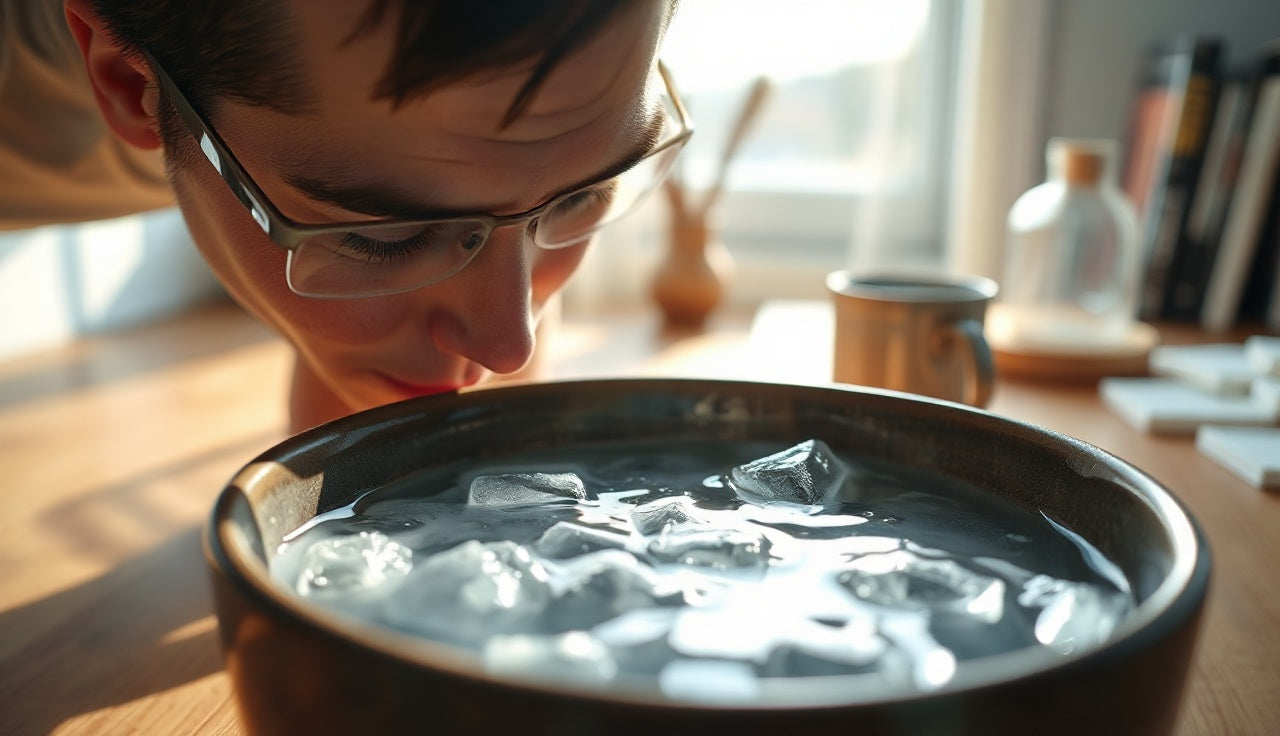
A cold face plunge is what it sounds like: you submerge your face, forehead to chin, in a bowl, sink, or basin of cold water for 15 to 60 seconds. That's the whole protocol. No full-body immersion required.
The practice is sometimes called a "face cold plunge" or, more technically, voluntary facial immersion. It has roots in old athletic and military conditioning, and lately it has spread through recovery and wellness circles as a low-barrier entry to cold therapy for people who aren't ready for a full cold plunge or ice bath.
Most people do it with water between 40°F and 60°F (4 to 15°C). That's the range where the key physiological response, the mammalian diving reflex, consistently fires. Warmer than 60°F and the effect is muted. Colder than 40°F and you're adding frostbite risk to your face without meaningful added benefit [1].
The setup is genuinely simple. A large mixing bowl, a refrigerator water dispenser, or a dedicated cold plunge vessel all work. Ice added to room-temperature water gets you there in a few minutes.
What does cold water on your face actually do to your body?
The central mechanism is the mammalian diving reflex (also called the diving response). Cold water hits the facial skin, specifically the trigeminal nerve branches around the forehead, nose, and cheeks, and your body runs a hard-wired survival program [1].
Heart rate drops. The vagus nerve fires and slows the sinoatrial node. Studies in healthy adults show heart rate reductions of 10 to 25% within 30 seconds of cold facial immersion [2]. Peripheral blood vessels constrict to push blood toward the brain and heart. Blood pressure briefly rises even as heart rate falls, which is worth knowing if yours is already high.
At the same time, your body triggers a large parasympathetic (rest-and-digest) surge. That's the part people describe as the "calm" afterward. Cortisol and sympathetic nervous system activity tick down. This effect is real and measurable, though short-lived: most of the acute heart rate change resolves within a few minutes of removing your face from the water [2].
The cold also causes local vasoconstriction in the skin of your face. Surface vessels tighten. That's why skin looks temporarily less puffy or flushed after a cold dip. The effect fades as skin temperature returns to baseline, usually within 5 to 15 minutes [3].
One thing that gets overstated: the "anti-inflammatory" story. There is evidence that repeated cold exposure modestly lowers systemic inflammation markers [4], but a 30-second face dip is almost certainly not producing clinically meaningful systemic anti-inflammatory effects. The local circulatory change is real. The skin-tone marketing claims deserve real skepticism.
Does the diving reflex actually slow your heart rate that much?
Yes, and the data here is unusually clean for a wellness topic.
The diving reflex is not controversial. It's standard physiology taught in medical schools. Cold water on the face activates trigeminal afferent nerves, which signal the brainstem to increase vagal outflow to the heart [1]. In a 2020 review published in Frontiers in Physiology, researchers confirmed that facial immersion in cold water (18°C / 64°F or below) reliably reduces heart rate and activates parasympathetic tone across study populations [2].
The Frontiers in Physiology review noted: "Facial immersion in cold water elicits a strong autonomic cardiovascular response characterized by bradycardia and peripheral vasoconstriction" [2].
Bradycardia just means slowed heart rate. The 10 to 25% figure is a reasonable range across healthy resting adults. Trained athletes can see larger drops because their vagal tone is already higher, and some studies report drops of 30 to 40 beats per minute in people with strong baseline vagal tone [2].
This is why some athletes use a face plunge before competition or during long rest periods between efforts. It's a fast, no-equipment way to bring heart rate and perceived anxiety down. That use is legitimate. Calling it a full nervous system reset or a permanent change to autonomic function is an overreach.
| 5 seconds | 6% |
| 10 seconds | 12% |
| 15 seconds | 18% |
| 30 seconds | 22% |
| 60 seconds | 24% |
Source: Frontiers in Physiology, autonomic diving reflex review (Citation 2)
What temperature should the water be for a face plunge?
Aim for 50 to 59°F (10 to 15°C). That's cold enough to reliably trigger the diving reflex but not so extreme that you're risking cold injury to facial tissue, which is genuinely sensitive.
Here's a simple reference for what different temperature ranges produce:
| Water Temp | Reflex Strength | Notes |
|---|---|---|
| Above 68°F (20°C) | Minimal | Little autonomic effect |
| 60 to 68°F (15 to 20°C) | Mild | Gentle intro, some response |
| 50 to 60°F (10 to 15°C) | Moderate, Strong | Most protocols target this range |
| 40 to 50°F (4 to 10°C) | Strong | Faster onset, higher discomfort |
| Below 40°F (4°C) | Very strong | Frostbite risk to face increases [3] |
For most people starting out, 55°F is a reasonable target. You can get there with about a pound of ice per gallon of tap water (tap water in most US homes runs 55 to 75°F, so adjust accordingly).
Don't obsess over hitting an exact number. The reflex still fires at 58°F. Your face will tell you it's working.
How long should you keep your face submerged?
Fifteen to thirty seconds is the effective window for most people. The bulk of the heart rate response happens in the first 15 seconds [2]. Extending to 60 seconds doesn't dramatically increase the autonomic effect. It mostly adds discomfort.
Hold your breath for the duration. That's more than comfort. Breath-holding potentiates the diving reflex and amplifies the vagal response [1]. Trying to breathe while submerged is both impossible and counterproductive.
If you want multiple rounds, wait 60 to 90 seconds between dips to let your face rewarm slightly and your heart rate return closer to baseline. Two to three rounds feels like a natural stopping point for most people.
People with strong breath-holding anxiety or any history of panic attacks should go slowly. The mix of breath-holding and cold can feel intense the first time. Start with 10 seconds.
What are the claimed skin benefits of cold face plunging, and which ones are real?
This is where the hype outruns the evidence, so let's be direct.
Real and documented: temporary reduction in puffiness and facial redness. Cold causes vasoconstriction, which tightens blood vessels under the skin. Less blood flow to the surface means less visible flushing and some reduction in fluid pooling. Dermatologists have used cold compresses for inflammation reduction for decades [3]. The face plunge produces this effect more evenly than a compress.
Plausible but poorly studied: reduced appearance of pores. Cold doesn't actually change pore size (pores have no muscle to contract), but tighter surrounding skin can make them look smaller for a while. This is a cosmetic effect, not a structural change.
Overstated or unsupported: long-term collagen production, anti-aging at the cellular level, sustained "glow," and lymphatic drainage claims. None of these have solid controlled trial evidence in the context of brief cold facial immersion. The lymphatic system does respond to temperature changes [5], but attributing meaningful drainage to a 30-second cold dip is speculation.
The closest relevant evidence comes from studies on cryotherapy applied to skin (much colder, much longer than a face plunge), which show some wound-healing and anti-inflammatory tissue effects [4]. Extrapolating that to a cold water bowl is a big jump.
So the skin benefits are real but cosmetic and temporary. Don't buy expensive "cold plunge facial" equipment based on anti-aging claims.
Can a cold face plunge help with anxiety and stress?
This is probably the most legitimate use case outside of athletic performance.
The physiological path is coherent: cold facial immersion increases vagal tone, which is associated with better emotional regulation and lower resting anxiety [6]. People who practice regular vagal nerve activation, whether through cold exposure, breathing exercises, or other methods, tend to show more flexible autonomic responses to stress.
In 2022, researchers reviewing cold water immersion and mood found that whole-body cold exposure produced consistent acute improvements in mood and reductions in perceived stress [4]. Face-only immersion shares the same primary mechanism (trigeminal-vagal reflex), though the magnitude is smaller than full-body cold.
Some people use a face plunge specifically to interrupt a panic response or a high-anxiety state. The logic is sound: you're forcing a parasympathetic response that competes with the sympathetic panic signal. This is a technique used in dialectical behavior therapy (DBT) called "TIP" (Temperature, Intense Exercise, Paced breathing), where the T-step involves cold water on the face [6].
DBT therapists have used this with patients for years. It's not a cure for anxiety disorders, but as an acute interruption tool, the autonomic mechanism behind it is real.
If you're dealing with clinical anxiety, talk to a mental health professional. A face plunge is a useful tool, not a treatment.
Who should not do a cold face plunge?
Most healthy adults can do a face plunge without concern. But there are real contraindications.
People with heart arrhythmias or uncontrolled high blood pressure should talk to a doctor first. The diving reflex causes an abrupt heart rate drop combined with a blood pressure spike. For most people that's fine. If you have a pacemaker or a condition affecting cardiac conduction, the abrupt vagal surge is not trivial [2].
Anyone with Raynaud's syndrome or cold urticaria (hives triggered by cold) should be cautious. Cold urticaria can produce a systemic allergic response even from brief exposure, and facial skin is sensitive territory [7].
People with active facial conditions, open wounds, severe eczema, or rosacea flares should skip it until their skin is stable. Cold can trigger vasodilation rebound when you remove your face from the water, which can worsen rosacea in susceptible people [3].
Don't do a face plunge alone if you're new to it and prone to fainting or vasovagal responses. The strong parasympathetic surge occasionally triggers lightheadedness. Have someone nearby the first few times.
Children: the diving reflex is actually stronger in children than adults [1], which means the heart rate effect is larger. Face plunging isn't recommended for kids without medical supervision.
How does a cold face plunge compare to a full cold plunge or ice bath?
The face plunge and the full-body ice bath share the same core mechanism but differ in scale dramatically.
A full cold plunge activates the diving reflex AND adds the systemic metabolic response to cold: norepinephrine release (reported as high as 300% above baseline in some studies), brown adipose tissue activation, and a much larger acute cortisol and endorphin response [4]. It's a bigger stimulus with more documented systemic effects on recovery, mood, and metabolism.
The face plunge is a fraction of that. You get the vagal response, you get local vasoconstriction, you get the acute calm. You don't get the full-body hormonal cascade or the metabolic cold adaptation that comes with repeated whole-body immersion.
That's fine. The face plunge is genuinely useful for what it is: a fast, low-barrier, no-wet-clothes-required intervention for heart rate and stress. It's a good place to start for people intimidated by a full plunge, or a supplementary tool for people who already plunge but want a quick daytime reset.
If you're researching the broader practice, cold plunge benefits covers the full-body evidence in more detail. And if you're thinking about equipment for home use, there's a real difference between a $15 bowl and a dedicated vessel, which the cold plunge guide covers.
SweatDecks carries dedicated cold plunge tubs for home setup if you get to the point of wanting something more than a mixing bowl.
Cost comparison for doing this at home:
| Setup | Cost | Water Temp Control | Convenience |
|---|---|---|---|
| Large mixing bowl + ice | $15 to 30 | Manual | High |
| Sink with cold tap + ice | $0 to 10 | Manual | Very High |
| Chest freezer conversion | $150 to 400 | Good | Moderate |
| Dedicated cold plunge tub | $500 to 5,000+ | Best | High |
What's the right way to do a cold face plunge step by step?
You don't need a complicated protocol. Here's what works.
Fill a large bowl (at least 2 gallons to fully submerge your face) with cold water. Add ice until you reach roughly 50 to 60°F. A quick-read thermometer helps but isn't required. If it feels shockingly cold when you touch your wrist to the water, you're probably in range.
Take a slow, full breath in. You'll hold it for the entire immersion. Lean forward, close your eyes, and submerge from your hairline to your chin. Your nose and eyes should be fully underwater.
Hold for 20 to 30 seconds. Let the reflex work. Don't fight the initial shock. It passes in about 5 seconds.
Raise your face, exhale slowly, and breathe normally. Notice the heart rate drop. Most people feel it immediately.
Pat dry, don't rub (your skin is cold and more fragile than usual). Wait 60 to 90 seconds and repeat if you want another round.
Morning is a popular time because the alerting effect of cold helps with wake-up, while the vagal rebound provides calm focus rather than jittery stimulation. Post-workout is another good window, especially after training that leaves your heart rate elevated and your nervous system fired up.
Don't assume it's good right before bed, though. Some people find the acute stimulation of cold disrupts sleep onset. If that's you, stick to morning or midday.
Can you combine a cold face plunge with sauna or contrast therapy?
Yes, and this combination is common in Scandinavian and Finnish wellness traditions, where brief cold exposure follows heat sessions.
After a sauna session, your face is flushed, heart rate is elevated, and vasodilation is strong. Plunging your face into cold water at that point creates a sharp contrast response: the vessels that were dilated suddenly constrict, your diving reflex fires against an already-elevated heart rate, and the net result is a particularly strong and rapid deceleration.
Many people report this as one of the most intensely refreshing moments in a contrast therapy session. The gap between the heat state and the cold state is larger than either alone produces.
For contrast therapy at home without full equipment, a face plunge after a portable sauna or steam session is a low-cost way to get some of the same feeling. You can read more about the broader sauna benefits and how heat-cold cycling works in those articles.
One caution: going directly from a very hot sauna (190°F+) to a facial cold plunge can cause a stronger blood pressure spike than either alone. If you're hypertensive, let yourself cool partially before the face plunge.
Are there risks or side effects you should know about?
The risks are real but manageable for most healthy people.
The most common side effect is a headache. Rapid vasoconstriction in the scalp and face can trigger what's sometimes called a "cold stimulus headache" or, colloquially, an ice cream headache. It's typically brief (under 2 minutes) and resolves on its own [8].
Skin irritation is possible if your water is very cold (below 40°F) or if you have reactive skin. Capillary damage (those tiny broken blood vessels under the skin) can happen from extreme cold. Keep water above 40°F to avoid this.
Contact lens wearers should remove them before submerging. Cold water can distort soft lenses and affect corneal health.
The most serious risk is for people with underlying cardiovascular conditions. The combination of a strong vagal surge and peripheral vasoconstriction can in rare cases trigger arrhythmias in susceptible individuals [2]. This is low-probability but not zero. If you have any diagnosed heart condition, get clearance from a cardiologist before regular face plunging.
Hyperventilation before the plunge extends breath-holding capacity but sharply increases the risk of shallow-water blackout, a loss of consciousness that can happen even in a bowl of water [9]. Don't hyperventilate before a face plunge. Take one normal breath, then go under.
Frequently asked questions
How cold should the water be for a face plunge?
Target 50 to 60°F (10 to 15°C) for a meaningful diving reflex response. That's typically a large bowl of cold tap water with a pound or two of ice. Below 40°F adds frostbite risk to facial tissue without significantly better results. Above 65°F and the autonomic response is noticeably weaker. A simple cooking thermometer takes the guesswork out.
How long should I hold my face in cold water?
Twenty to thirty seconds is the sweet spot. Most of the heart rate reduction from the diving reflex happens within the first 15 seconds. Holding longer doesn't compound the effect much. It just adds discomfort. Hold your breath for the full duration. You can do two or three rounds with 60 to 90 seconds of recovery between each.
Does a cold face plunge reduce puffiness?
Yes, temporarily. Cold causes vasoconstriction in facial skin, which reduces blood flow to the surface and can decrease visible puffiness and redness. The effect usually lasts 5 to 15 minutes as your face rewarms. This is a real cosmetic effect but not a structural change. Claims about long-term collagen production or anti-aging from a brief face plunge are not supported by controlled evidence.
Is a cold face plunge safe for people with high blood pressure?
Use caution. The diving reflex drops heart rate but simultaneously constricts peripheral blood vessels, causing a brief blood pressure spike. For mild, controlled hypertension that's likely fine, but for uncontrolled or severe high blood pressure, check with your doctor before making face plunging a regular habit. The full-body version carries more risk than the face-only version, but the effect is not zero.
Can a cold face plunge help with anxiety or panic attacks?
It can interrupt the acute sympathetic response of anxiety or panic. The mechanism is real: cold water on the face triggers vagal nerve activation, forcing a parasympathetic response that competes with the panic signal. Dialectical behavior therapy uses a formalized version of this technique (cold water on the face during emotional flooding). It's a tool, not a treatment. For clinical anxiety, work with a mental health professional.
What is the mammalian diving reflex and how does a face plunge trigger it?
The mammalian diving reflex is a hardwired survival response that conserves oxygen during submersion. Cold water on the facial skin activates the trigeminal nerve, which signals the brainstem to increase vagal outflow to the heart, slowing heart rate 10 to 25% within seconds. It also constricts peripheral blood vessels. You don't need to submerge your whole body. The face has the highest density of cold receptors linked to this reflex.
How is a cold face plunge different from splashing cold water on your face?
Splashing gets a mild version of the effect. Full submersion is stronger because it engages more trigeminal nerve endings at once, especially around the eyes and forehead, and it pairs with breath-holding, which potentiates the vagal response. A full plunge with held breath consistently produces a larger heart rate drop than quick splashing. If you want the acute calming effect, submersion is worth the few extra seconds of commitment.
How often should you do a cold face plunge?
Once daily is reasonable for most people and matches most wellness protocols. There's no known harm in doing it twice. There's also no clear evidence that doing it more frequently produces cumulative autonomic adaptation the way full-body cold immersion might over weeks of practice. Do it when it's useful: after waking, after hard training, or during a stressful afternoon.
Can you do a cold face plunge at home without special equipment?
Completely. A large bowl, cold water, and a few ice cubes is the entire setup. A 2-gallon mixing bowl is ideal to submerge your whole face without water going everywhere. Bring water to your target temperature with ice. That's it. No special equipment needed unless you want consistent temperature control across many sessions, in which case a dedicated cold plunge vessel makes more sense.
Should you do a cold face plunge before or after a sauna session?
After sauna is the classic contrast approach. Your heart rate is elevated, blood vessels are dilated, and the cold shock creates a sharper contrast response. The combination is popular in Finnish and Scandinavian traditions. Going straight from a very hot sauna to an extreme cold face plunge can spike blood pressure significantly, so if you're hypertensive, let your body cool for a few minutes before the plunge.
Does a cold face plunge help with sleep?
Potentially, if timed correctly. The vagal activation and subsequent calm can be useful before bed for some people. But the acute cold shock also releases norepinephrine, which is alerting. Results are mixed: some people find it makes sleep easier when done an hour before bed; others find any cold exposure within a few hours of sleep delays onset. Morning and midday use is safer territory.
Are there any skin care steps to do after a cold face plunge?
Pat dry gently rather than rubbing, as cold skin is temporarily more fragile. Apply a moisturizer while your skin is still slightly damp to lock in hydration, since the temporary vasoconstriction can leave skin feeling dry after it rewarms. Avoid harsh exfoliants or active ingredients like retinol immediately after, as post-cold skin is more reactive. SPF still applies if you're heading outside.
Sources
- NCBI / StatPearls: Diving Reflex: Cold water on the face activates trigeminal afferent nerves, triggering vagal outflow and bradycardia; the reflex is stronger in children than adults
- Frontiers in Physiology: Autonomic Nervous System Responses to Diving: Facial immersion in cold water elicits bradycardia and peripheral vasoconstriction; heart rate reductions of 10–25% within 30 seconds are documented in healthy adults
- American Academy of Dermatology: Cold and heat therapy for skin: Cold causes local vasoconstriction reducing surface blood flow and visible redness; cold urticaria and rosacea can worsen with cold exposure in susceptible individuals
- PLOS ONE: Health effects of voluntary exposure to cold water (Esperland et al., 2022): Cold water immersion produced consistent acute improvements in mood and reductions in perceived stress; whole-body cold exposure raises norepinephrine substantially
- NIH National Cancer Institute: Lymphatic System Overview: The lymphatic system responds to temperature changes; no controlled evidence exists that brief cold facial immersion produces meaningful lymphatic drainage
- Behavioral Tech (Linehan Institute): DBT TIP Skill description: DBT TIP skill uses cold water on the face to interrupt emotional flooding by activating the parasympathetic diving reflex
- NIH MedlinePlus: Cold Urticaria: Cold urticaria can produce systemic allergic response even from brief cold skin exposure; people with this condition should avoid cold facial immersion
- International Headache Society: Cold stimulus headache classification: Rapid vasoconstriction triggered by cold on facial skin can cause cold stimulus headache, typically lasting under two minutes
- NIH PubMed: Shallow water blackout and hyperventilation risk: Hyperventilation before breath-holding significantly increases risk of shallow-water blackout by lowering CO2 without raising O2 meaningfully
- CDC: Extreme Cold safety guidance: Frostbite risk to exposed tissue increases significantly below 40°F (4°C), particularly for facial skin which is thin and highly vascular

Share:
SereneLife portable sauna: honest review and buyer's guide
How long should you stay in a cold plunge?