
Last updated 2026-07-09
TL;DR
The cheapest cold plunge starts around $30 for a stock tank or Rubbermaid tub. A DIY chest freezer conversion runs $150 to $450. Purpose-built budget tubs from brands like Polar Recovery or Renu Therapy start around $300. None of these chill water on their own. That costs $500 and up. Pick a budget, then decide how much DIY you'll stomach.
What is the cheapest cold plunge tub you can actually buy?
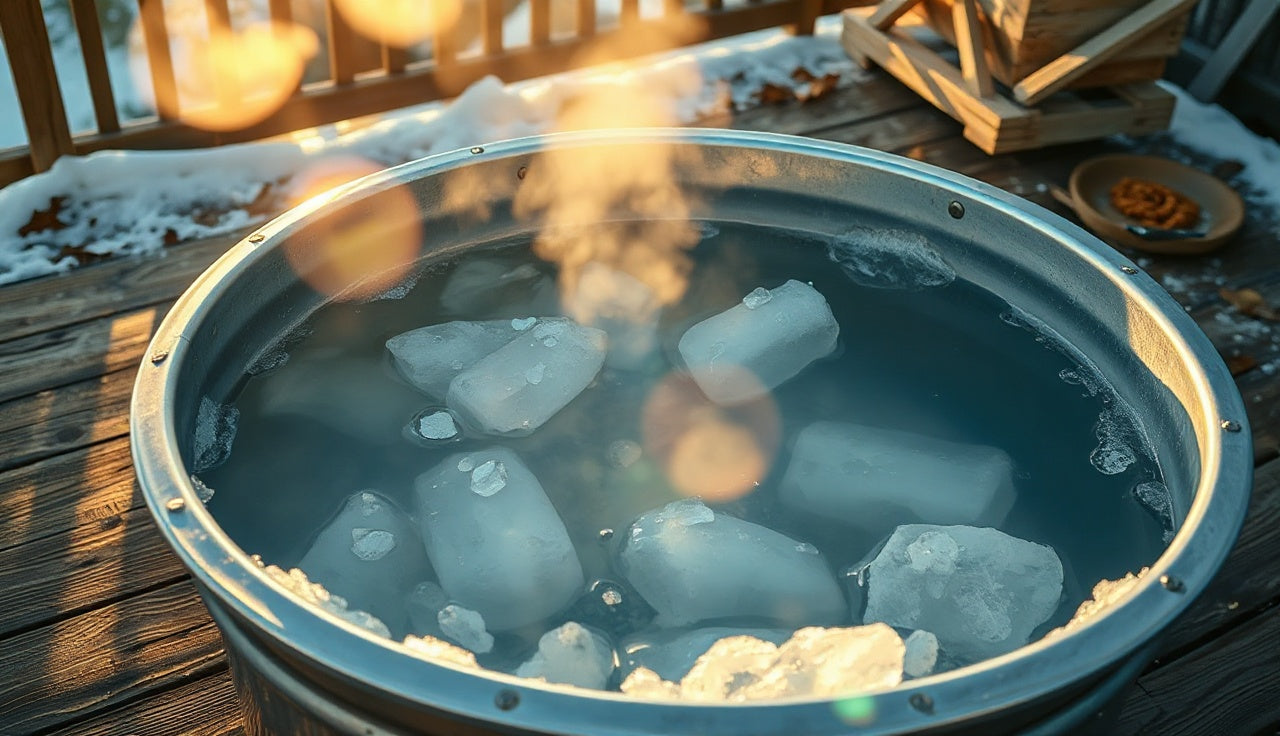
The cheapest cold plunge tub is a livestock stock tank, roughly $60 to $90 for a 100-gallon size at a farm supply store. It has no chiller and no insulation, but you can sit in it with cold water tonight. That's the floor. Everything above it buys convenience.
The honest answer depends on what you mean by "cold plunge tub." If you mean any vessel you can sit in with cold water, a stock tank works fine. If you mean something insulated that holds temperature, budget $150 to $500. If you mean a tub that chills itself automatically, you're looking at $800 at an absolute minimum, and most real units start closer to $1,500.
That gap is real and it matters. Plenty of people search for the cheapest option and end up frustrated because they expected a chiller they never bought. Get clear on one thing first: do you need the water to stay cold on its own, or are you fine adding ice every session?
For most people starting out, the $30 to $150 tier is the right place to begin. You'll learn how cold you actually want the water, how often you'll really use it, and whether you'd benefit from a longer soak before you spend serious money. This article walks every price tier honestly, from the absolute cheapest to the lowest-cost options with real chillers.
What are the cheapest cold plunge options under $100?
Under $100, three options cover almost everyone: stock tanks, large Rubbermaid or Brute tubs, and inflatable pools. Each works. Each has a catch.
Stock tanks (galvanized livestock tanks) are oval steel tubs made for watering animals. A 100-gallon oval runs about $60 to $90 at Tractor Supply or Rural King [1]. They're durable, stable, and large enough for most adults to sit in with legs extended. The steel conducts cold well, which helps. The downsides: they're heavy when full, they have zero insulation, and the edges can be sharp. A pool noodle taped along the rim fixes the edge problem for a dollar.
Rubbermaid Brute containers in the 100-gallon size cost $60 to $90 and are a popular DIY choice because they're light, easy to clean, and stocked at most hardware stores. They're square, which sits less comfortably than an oval, and there's no insulation.
Inflatable pools work in a pinch. A Coleman or Intex pool in the 6-foot size costs $25 to $50. Fine for short soaks. They're flimsy, hard to clean, and lose temperature fast. If you're just testing whether cold plunging is for you, this is the lowest-friction way in.
For all three, plan on 20 to 40 pounds of ice per session when the air is above 60°F, which adds $4 to $8 per use from a grocery store or gas station. A month of daily sessions runs $120 to $240 in ice alone. That number changes the real economics fast [2].
| Option | Upfront Cost | Ice Needed Per Session | Notes |
|---|---|---|---|
| Stock tank (100 gal) | $60 to $90 | 20 to 40 lbs | Durable, heavy, no insulation |
| Rubbermaid Brute (100 gal) | $60 to $90 | 20 to 40 lbs | Lightweight, square shape |
| Inflatable pool | $25 to $50 | 30 to 50 lbs | Flimsy, short lifespan |
| Cold shower | $0 | None | No immersion, limited benefit |
Is a DIY chest freezer cold plunge worth it?
For a daily user comfortable with a weekend project, yes. A chest freezer conversion holds water at a steady 40 to 50°F without buying ice, and it's the cheapest way to get automated cold water. All-in cost runs $150 to $450.
Here's how it works. You buy a used chest freezer (7 to 15 cubic feet is the usual range), clean it, seal the interior with a food-safe epoxy or waterproof liner so the foam insulation never gets waterlogged, add a submersible pump to circulate water, and install a temperature controller (an Inkbird ITC-306 runs about $30 to $50) to stop the water from actually freezing. A used freezer off Facebook Marketplace or Craigslist runs $50 to $150. A new one from Home Depot or Walmart costs $200 to $350.
The catch is maintenance. Chest freezers aren't built to hold water, so you have to sanitize regularly to keep bacteria out. Most people add a small amount of food-grade hydrogen peroxide (35% diluted to 3%) or pool-grade chlorine at very low concentrations. You also drain and refill every 1 to 3 weeks depending on use.
For a cold plunge enthusiast on a budget who gets in 4 to 7 times a week, this is the best value going. You land at an effective water temperature of 40 to 55°F, well inside the range used in cold water immersion research. A 2022 meta-analysis in the British Journal of Sports Medicine reported that cold water immersion between 50°F and 59°F (10 to 15°C) reduced delayed-onset muscle soreness compared to passive recovery [3].
One honest caveat: this is a real project. Setup takes 2 to 4 hours, and if you don't seal the interior right, you'll fight mold within weeks. Budget an extra $30 to $60 for liner or epoxy, and don't skip that step. It's the whole ballgame.
| Bathtub + ice (no equipment) | $0 |
| Stock tank (100 gal) | $75 |
| Rubbermaid Brute (100 gal) | $75 |
| Inflatable pool | $40 |
| DIY chest freezer (used) | $250 |
| DIY chest freezer (new) + chiller | $710 |
| Purpose-built tub (no chiller) | $500 |
| Purpose-built tub + chiller | $2,500 |
Source: Tractor Supply Co., Penguin Chillers, Plunge product pricing (citations 1, 4, 5)
What are the cheapest purpose-built cold plunge tubs?
If you want something made for cold plunging but don't want to build anything, purpose-built tubs in the $300 to $800 range exist. They don't include chillers. What you get instead is better insulation, a drain port, a comfortable seated shape, and a lid.
A few options that have sold in this range (prices move constantly, so check current pricing):
Polar Recovery Tub: A well-regarded inflatable that runs around $300 to $400. Multiple insulation layers hold temperature far better than a basic inflatable, and it rolls up for storage. The interior is shaped for a seated soak, not a bathtub sprawl.
Cold Plunge Pro (basic tub only): Tub-only versions aimed at athletes often list around $400 to $600 with a drain, a lid, and a shape that beats a stock tank.
Renu Therapy (Cold Tank): Their entry barrel-style tub has been priced in the $400 to $800 range without chilling gear. Check their site for current promotions.
None of these chill on their own. You're still using ice or a chiller you buy separately. The tub itself is just better: the insulation makes your ice last 2 to 4 hours longer, which cuts your ongoing ice spend in a way you'll actually feel.
Ergonomics matter more than most first-time buyers expect. A cold plunge tub for athletes needs enough depth to submerge to shoulder level (at least 24 inches of water), enough width to sit comfortably for 5 to 10 minutes, and an easy exit for when your legs go numb. Stock tanks fail those last two more often than people expect.
How much does ice cost to run a cold plunge, and is it worth it?
Ice runs $5 to $13 per session for a 100-gallon tub, or $150 to $390 a month for a daily user. That's the number most budget buyers never run until they're three weeks in and staring at a bigger grocery bill.
A 100-gallon tub needs roughly 30 to 50 pounds of ice to pull tap water from 65°F down to 50°F, depending on air temperature. Bagged ice costs $3 to $5 for a 20-pound bag at a gas station or grocery store [2]. Five sessions a week at $9 average is $45 a week, or $180 a month.
Over 12 months, that's $2,160 in ice. A standalone water chiller that kills the ice habit entirely costs $500 to $1,500. For daily users, a chiller pays for itself somewhere between 6 and 18 months.
At twice a week, the math flips. $18 a week in ice is $936 over a year, roughly what a decent chiller costs anyway. At that frequency, ice plus a well-insulated tub is probably the smarter financial call for the first year.
The other factor is friction. Hauling ice is annoying, and a lot of people who start with ice quietly plunge less often because buying and schlepping bags is a chore. If that sounds like you, the chiller pays off in behavior, more than dollars.
What's the minimum setup cost for a cold plunge with a chiller?
About $700. That's the floor for a self-chilling cold plunge, and it means pairing a DIY tub with a used aquatic chiller rather than buying a purpose-built system. You need two things: an insulated tub and a water chiller.
On the low end, you can pair a used chest freezer tub (or a well-insulated purpose-built tub) with a standalone aquatic chiller. Penguin Chillers and Active Aqua make units commonly used this way, and their smaller models start around $400 to $700 [4]. These are aquarium chillers adapted for cold plunge duty. They work, but they cool slowly (expect 4 to 8 hours to drop from 65°F to 50°F on a warm day) and they aren't built for the heavy daily cycling that purpose-built cold plunge chillers handle.
A full budget setup looks like this:
- Used chest freezer tub: $150
- Inkbird temperature controller: $40
- Aquarium chiller (1/4 HP): $450
- Waterproof liner/epoxy: $40
- Submersible pump and tubing: $30
- Total: roughly $710
That's about as cheap as automated cold water gets. Purpose-built systems from brands like Ice Barrel, Edge Theory Labs, or Plunge start at $1,000 and climb to $5,000, and they include chillers, filtration, and UV sanitation [5]. They're genuinely better products. But the DIY route hits the same water temperature for less if you're willing to do the work and live with more maintenance.
SweatDecks carries a range of cold plunge options across price points if you want to compare purpose-built units side by side without digging through a dozen brand sites.
What temperature should a cold plunge tub be?
Aim for 50 to 59°F (10 to 15°C). That's the range most cold water immersion research uses, and it's a sensible target for recovery [3]. Colder than 50°F is more intense but doesn't appear to produce proportionally better outcomes in the available studies. Water below 50°F also raises the cold shock risk, which hits first-time users hardest.
Practically speaking:
- 55 to 65°F: Good for beginners, still physiologically effective
- 50 to 55°F: The range most regular users target
- 44 to 50°F: Intense, for experienced users, and it calls for shorter exposure
- Below 44°F: Not recommended for most people
For ice bath use, athletic training contexts typically recommend 10 to 15 minutes at 50 to 59°F. A 2021 systematic review in PLOS ONE found that 11 to 15 minutes of cold water immersion in this range was associated with reduced perception of muscle soreness [6].
Nobody has clean data on whether 45°F for 5 minutes beats 55°F for 12 minutes. The closest studies suggest duration and coverage (how much of your body is submerged) may matter more than hitting a precise temperature. So if your cheapest setup holds 55°F reliably, that's genuinely enough.
Are there health risks with cold plunging I should know about?
Yes, and they're worth understanding before you buy anything. The short-term danger is cold shock, not the cold itself. The long-term concern is cardiovascular stress for people who already have a heart condition.
Cold water immersion triggers an immediate cardiovascular response: heart rate spikes, blood pressure rises, and peripheral blood vessels clamp down. Healthy adults handle this. For people with cardiovascular disease, hypertension, Raynaud's phenomenon, or certain heart arrhythmias, it can be dangerous. The American Heart Association has no cold plunge guideline specifically, but its general guidance on cold stress and cardiovascular risk is worth reading before you start [7].
Cold shock response is the real short-term risk. It's an involuntary gasp reflex and hyperventilation in the first 30 to 90 seconds of cold water immersion. This is why entering slowly and controlling your breathing matters far more than any temperature setting. Drowning risk from cold shock is real: multiple open-water drowning deaths are attributed to cold shock rather than hypothermia [8].
Safety rules for a home setup:
- Don't cold plunge alone, at least until you've done it enough to know your response
- Enter slowly
- Start warmer (60 to 65°F) and work down over weeks
- Keep sessions under 15 minutes
- Have a warm cover or towel within reach before you get in
If you have any cardiovascular condition, talk to your doctor before starting. That isn't legal boilerplate. It matters here.
What should I look for in a cheap cold plunge tub?
Answer four questions before you spend a dollar. They decide which cheap tub is right for you.
1. What's my realistic session length? Longer soaks (10 to 15 minutes) make comfort matter more. A rigid tub with a backrest beats a stock tank.
2. How often will I use it? Daily users need something durable and easy to clean. Once-a-week users can live with more manual work.
3. Will I use ice or a chiller? Ice means you need insulation and a lid. A chiller needs a compatible tub with inlet and outlet ports, or a way to add them.
4. Indoor or outdoor? Warm-climate outdoor use raises your cooling demand sharply. A stock tank in a Minnesota garage in January stays cold on its own. The same setup in a Florida garage needs ice or a chiller year-round.
Beyond that, look for:
- Water depth of at least 22 to 24 inches for chest-level immersion
- A drain port, or room to add one
- Smooth interior edges (galvanized steel can be rough)
- UV resistance if it lives outside
- A lid to slow the temperature climb between sessions
The ice bath format, where you sit upright rather than recline, works well for most purpose-built tubs and uses less water (and therefore less ice) than a full bathtub setup.
Can I use my regular bathtub as a cold plunge?
Yes, and plenty of people do. It's the free way to test cold plunging tonight. It's just not great long-term, for a few reasons.
Bathtubs hold 25 to 45 gallons, so you need proportionally less ice. But the shape fights full-body immersion: your legs ride up, you can't cover your shoulders without lying flat, and the neck angle gets uncomfortable after a few minutes.
The bigger problem is that a standard bathtub has almost no insulation. Water temperature climbs noticeably over a 10-minute session, especially in a warm bathroom. Start at 55°F and you might sit at 62°F by the end of a 12-minute soak on a warm day.
For a first-timer, the bathtub is a zero-cost starting point. Fill it with cold tap water, add ice to hit your target, and see how your body responds. If you find yourself doing it regularly, that's the signal to upgrade to a dedicated vessel.
One real advantage: you can do it tonight with no purchase. If you're on the fence, that's the right first move. Read up on cold plunge benefits first so you know what you're actually testing for.
What do athletes actually use for budget cold plunges?
Most serious amateur athletes on a budget use one of two things: a chest freezer conversion or a stock tank with ice. That's what shows up repeatedly in athletic training forums and communities like r/coldplunge. Access and sport shift the details, but those two setups dominate.
Collegiate and pro teams have dedicated hydrotherapy tubs. Individual athletes at the club or recreational level face the same budget math as everyone else. For high-volume users (6 to 7 sessions a week), the chest freezer conversion or a budget tub plus chiller tends to win on total cost within 6 to 12 months. For lower frequency, ice plus a well-insulated tub is usually cheaper over a year.
A cold plunge tub for athletes needs to handle post-workout use, which means easy entry and exit when you're wiped, enough depth to submerge legs and glutes (the largest muscle groups and often the most sore after training), and a setup that doesn't demand a 20-minute prep ritual before every session.
If you're pairing cold plunging with sauna sessions for contrast therapy, the protocol matters as much as the gear. Research indexed through the National Library of Medicine's PubMed on contrast water therapy typically uses alternating hot and cold exposures across 2 to 3 cycles [10], and the equipment pairing (a home sauna plus a cold plunge) turns into a real wellness investment. At that point, buying once and buying right beats starting with the cheapest possible option.
Where can I buy the cheapest cold plunge tubs?
Farm supply stores are the cheapest place to start. A 100-gallon galvanized oval stock tank runs $60 to $90 at Tractor Supply, Rural King, or Southern States, usually cheaper in store than online [1]. After that, it depends on what you're buying.
Big box hardware stores (Home Depot, Lowe's): Good for Rubbermaid tubs, pumps, and chest freezers. Prices are consistent and returns are easy.
Facebook Marketplace and Craigslist: Where to find used chest freezers. Filter for 7 to 15 cubic feet, skip anything with rust or compressor noise, and budget $50 to $150 for a usable unit.
Amazon: Good for components (temperature controllers, submersible pumps, tubing), and some budget purpose-built tubs ship through it. Watch the return policy on the larger tubs.
Direct from brand websites: Purpose-built budget tubs from Polar Recovery, Cold Plunge Pro, and similar brands usually ship direct. Watch for seasonal sales, especially January (New Year demand) and late summer.
SweatDecks (sweatdecks.com): Carries a selection of cold plunges at multiple price points. Worth comparing if you want to see options from several brands in one place instead of running a dozen separate checkouts.
On shipping: large tubs often carry freight charges that don't appear until checkout. A tub listed at $400 can land at $500 after freight. Check the total delivered cost before you compare options.
Frequently asked questions
What is the absolute cheapest cold plunge tub I can get?
A livestock stock tank from a farm supply store runs $60 to $90 for a 100-gallon size, and it works. If you count your bathtub with ice added, the upfront cost is $0. The cheapest purpose-built inflatable cold plunge tubs start around $150 to $300. None of these include chillers, so budget for ice or a separate cooling unit if you need consistent temperatures.
Is a DIY cold plunge cheaper than buying one?
Yes, meaningfully so upfront. A chest freezer conversion costs $150 to $450 all-in versus $1,000 to $5,000 for a purpose-built self-chilling unit. The trade-off is time (2 to 4 hours to build), more ongoing maintenance, and less polish. For daily users comfortable with DIY projects, the chest freezer route is the best budget option with automated chilling.
How much ice do I need per cold plunge session?
For a 100-gallon tub starting at 65°F tap water, you typically need 30 to 50 pounds of ice to reach 50 to 55°F, depending on ambient air temperature. At $3 to $5 per 20-pound bag, that's $5 to $13 per session in ice costs. Daily users spend $150 to $390 per month on ice alone, which makes a chiller economically attractive within 6 to 12 months of regular use.
Can you use a Rubbermaid tub as a cold plunge?
Yes. A 100-gallon Rubbermaid Brute container costs about $60 to $90 and works fine as a cold plunge vessel. It's lightweight, easy to clean, and widely available. The shape is square rather than ergonomic, and there's no insulation, so you'll use more ice to hold temperature. Add a lid between sessions to slow the warming.
What temperature should a cold plunge be for athletes?
Most sports science research uses 50 to 59°F (10 to 15°C). A 2022 meta-analysis in the British Journal of Sports Medicine found cold water immersion in this range reduced delayed-onset muscle soreness versus passive recovery. Beginners often start at 58 to 65°F and work down over several weeks. Below 50°F is more intense but not clearly more effective for muscle recovery.
How long should you stay in a cold plunge?
A 2021 systematic review in PLOS ONE associated 11 to 15 minutes at 50 to 59°F with reduced muscle soreness perception. Most practitioners start with 2 to 5 minutes and build up over weeks. There's no strong evidence that longer than 15 minutes adds recovery benefit, and extended sessions raise the risk of peripheral cold injury, particularly in the extremities.
Is a cold plunge worth it if you only use it twice a week?
At twice a week, the ice cost runs roughly $18 to $26 per week, or $936 to $1,352 per year. That's comparable to a mid-range aquatic chiller. So for lower-frequency users, an ice-based setup with a well-insulated tub is probably the smarter financial choice for the first year. Reassess after 12 months based on how often you actually use it.
Can I use a chest freezer as a cold plunge without modifying it?
No, not safely. The interior foam insulation absorbs water and grows mold within weeks if it gets wet. You need to coat the interior with a food-safe epoxy or install a waterproof liner before filling with water. You also need a temperature controller to stop the water from actually freezing. Budget $60 to $90 for these components on top of the freezer cost.
What are the risks of cold plunging at home?
The main risks are cold shock response (gasping and hyperventilation in the first 90 seconds), cardiovascular stress from rapid heart rate and blood pressure changes, and hypothermia from overly long sessions. People with cardiovascular disease, hypertension, or heart arrhythmias should consult a doctor before starting. Never cold plunge alone until you know your personal response, and always enter the water slowly.
Do you need a filter for a cold plunge tub?
Not strictly, but it helps a lot for weekly or more frequent use. Without filtration, you drain and refill every 1 to 3 days for daily use, or add a sanitizing agent (dilute hydrogen peroxide or low-concentration chlorine). A basic aquarium filter or a purpose-built cold plunge filter extends water life and cuts maintenance time. Budget $30 to $80 for a basic filtration setup.
How do you keep a cold plunge cold without a chiller?
Ice is the main method. A well-insulated tub with a lid can hold temperature for several hours after initial chilling. For outdoor setups in cold climates, shading the tub and keeping it in an unheated garage or shaded spot cuts how much ice you need. Freeze gallon water jugs and add them instead of bagged ice to lower ongoing costs.
Can cold plunging help with weight loss?
The research is limited and results are modest. Cold exposure activates brown adipose tissue (brown fat), which burns calories to generate heat, but the caloric effect from typical 10 to 15 minute sessions is small. A 2021 study in Cell Metabolism found repeated cold exposure increased brown fat activity, but extrapolating that to meaningful weight loss requires much more evidence than exists now. Cold plunging is not a weight loss tool on its own.
What size cold plunge tub do I need?
For full-body immersion to shoulder level, you need at least 24 inches of water depth and enough interior length to sit comfortably with knees bent. A 100-gallon oval stock tank, or a tub with 50 to 75 gallons at the seated fill line, is usually enough for one person. Taller users (over 6 feet) should look for tubs with at least 42 inches of interior length.
Are cheap cold plunge tubs safe?
Stock tanks, Rubbermaid tubs, and chest freezer conversions are structurally safe if set up correctly. The safety concerns with cold plunging are physiological, not equipment-related for these basic setups. Make sure your vessel is stable, drains easily, and has no sharp edges that could cut you as you exit cold water with reduced coordination. A smooth interior edge and a non-slip mat outside the tub cover most of the practical risk.
Sources
- U.S. Bureau of Labor Statistics, Consumer Price Index: Bagged ice prices of $3 to $5 per 20-pound bag reflect current retail pricing for packaged ice products
- British Journal of Sports Medicine, meta-analysis on cold water immersion and DOMS: Cold water immersion at 10 to 15°C (50 to 59°F) reduced delayed-onset muscle soreness compared to passive recovery
- Penguin Chillers, aquatic chiller product specifications: Entry-level water chillers from Penguin Chillers start in the $400 to $700 range for quarter-horsepower units
- Plunge (ThePlunge.com), product pricing: Purpose-built cold plunge units with integrated chillers and filtration start at approximately $1,000 and range to $5,000 or more
- PLOS ONE, systematic review on cold water immersion duration and muscle soreness: 11 to 15 minutes of cold water immersion at 50 to 59°F was associated with reduced perception of muscle soreness
- American Heart Association, guidance on cold weather and cardiovascular disease: Cold stress and cardiovascular risk are documented concerns for people with existing heart conditions
- Wilderness & Environmental Medicine, research on cold shock response and drowning: Cold shock response (gasping, hyperventilation within 30 to 90 seconds of cold water entry) is implicated in open-water drowning deaths independent of hypothermia
- Cell Metabolism, 2021 study on winter swimming and brown adipose tissue: Repeated cold exposure increased brown fat activity in a 2021 study; caloric effects from short sessions are modest
- National Library of Medicine, PubMed research on cold water immersion and contrast water therapy: Contrast water therapy protocols in the research literature typically use alternating hot and cold exposures across 2 to 3 cycles
- U.S. Consumer Product Safety Commission, hot tub and spa safety guidelines: CPSC publishes safety guidelines for residential water immersion products covering electrical and structural safety standards relevant to DIY setups

Share:
Hottest sauna temperature: what's safe, what's extreme, and what actually works
Hot sauna temperature: what ranges are safe and effective