
Last updated 2026-07-10
TL;DR
The Aquavoss Cold Plunge & Hot Tub Model 2 chills to roughly 39°F and heats to 104°F in one cabinet, giving you contrast therapy without two separate tubs. It costs around $5,000 to $8,000, runs on a 120V chiller plus a 240V heater circuit, and works out to $900 to $1,500 a year to run. Space-savers win here. Social hot tub buyers should pass.
What exactly is the Aquavoss Model 2?
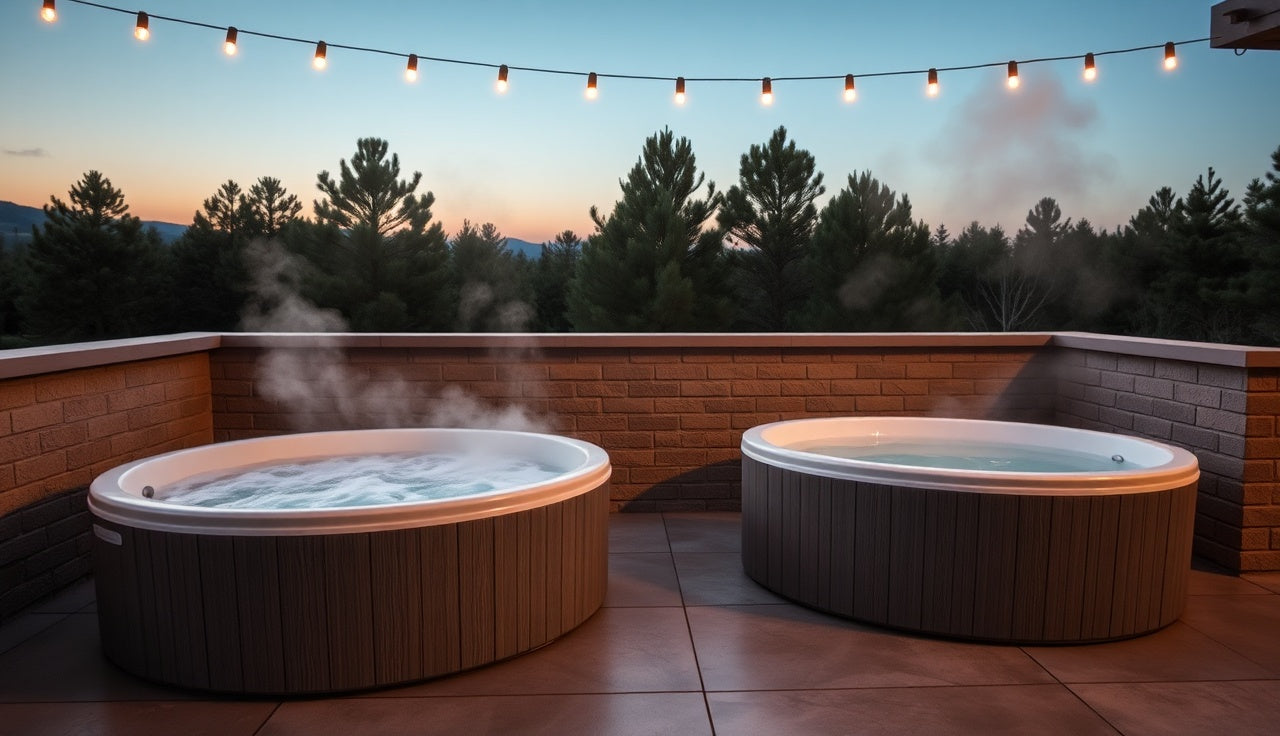
The Aquavoss Model 2 is one chassis holding two tubs: a cold plunge and a hot tub, each with its own thermally independent zone. One side chills, the other heats. The point is contrast therapy at home without a second tub, a second circuit, or a yard big enough for a sauna and a plunge pool sitting side by side.
Aquavoss aims this at the prosumer buyer. It is not a $600 barrel plunge, and it is not a full-size hot tub with jets and color-changing lights. It sits in the middle: serious about temperature control, plain about the luxury extras.
The Model 2 is the company's second-generation design. Against the original, Aquavoss thickened the insulation, made the chiller more efficient, and simplified the control interface. Owner chatter across public communities (Reddit's r/icebaths, various home spa forums) points to the chiller as the standout part, with build quality a clear step above the white-label tubs sold under a dozen different brand names from the same Chinese factories.
Researching a cold plunge in the $5,000 to $10,000 band? This unit belongs in your shortlist.
What are the Aquavoss Model 2's actual specs and dimensions?
The key specs, pulled from Aquavoss product documentation, are below. Treat the numbers as approximate. Manufacturers update specs between production runs without changing the model name, so confirm current figures with the seller before you buy.
| Spec | Aquavoss Model 2 |
|---|---|
| Cold zone temp range | ~39°F to 60°F (3.9°C, 15.6°C) |
| Hot zone temp range | ~95°F to 104°F (35°C, 40°C) |
| Cold zone water capacity | ~90 to 110 gallons |
| Hot zone water capacity | ~200 to 250 gallons |
| Electrical (cold chiller) | 120V / 15A standard circuit |
| Electrical (heater) | 240V / 50A (GFCI required) |
| Chill time (ambient to 50°F) | ~45 to 90 min depending on starting temp |
| Exterior footprint | Approx. 7 ft x 4 ft |
| Weight (filled) | 2,000 to 2,400 lbs |
| Cover | Insulated hard cover included |
Filled weight is the spec that catches people out. Most residential decks are engineered for 40 to 50 lbs per square foot [1]. A 2,400-lb unit spread over roughly 28 square feet lands around 85 lbs/sqft, above what a typical deck is built to hold. Planning to set this on a deck instead of a concrete slab or grade-level patio? Get a structural engineer to sign off first. That is a code and safety requirement in most places, not a nicety.
The 240V heater circuit means a licensed electrician before install. Budget $300 to $800 for that, depending on how close your panel sits to the unit [2].
How cold and how hot does the Model 2 actually get?
The cold side reaches its 39°F floor in mild weather, and owners report holding 40 to 43°F consistently when ambient temperatures stay under about 75°F. On a 90°F day the chiller labors and some users settle at 45 to 48°F instead of the advertised floor. That is still inside the range most cold water immersion research uses, which sits at 50 to 59°F (10 to 15°C) [3].
The hot side hits 104°F reliably. That is the standard maximum for residential hot tubs, and it matches the safety ceiling the CDC recommends for public spa facilities [4]. Pushing past 104°F raises the risk of heat stress, especially for anyone with a cardiovascular condition.
For contrast therapy, the gap between the two temperatures matters more than either number on its own. Research on cold and heat exposure suggests the physiological response, including changes in heart rate variability and norepinephrine release, tracks with the size of the thermal stimulus [3]. A 40°F plunge after a 104°F soak is a 64-degree swing. That is a real jolt.
Want sub-40°F water? No consumer chiller in this price range holds that without adding ice. That is a limit of the compressor technology at this price, not a knock on Aquavoss specifically.
What does the Aquavoss Model 2 cost, and what are the ongoing expenses?
The Model 2 runs roughly $5,000 to $8,000 depending on retailer, configuration, and whether accessories (cover lifter, steps, ozonator) come bundled. Prices moved around between 2023 and 2025 as supply chains settled, so that range reflects genuine market spread.
For most buyers the running cost matters more than the sticker.
Electricity is the big line. The 120V/15A chiller pulls roughly 1,000 to 1,200 watts when active. If it cycles 8 hours a day to hold 45°F, that is about 9 to 10 kWh daily. At the U.S. residential average of $0.17/kWh [5], that comes to roughly $1.50 to $1.70 a day, or $45 to $52 a month for the chiller alone. The heater adds more when you use it. A fair all-in estimate for daily contrast therapy: $60 to $100 a month in electricity.
Water chemistry is the cost people forget. A 300 to 350 gallon combined system needs regular sanitizer (bromine or chlorine), pH adjustment, and periodic shock. Budget $30 to $60 a month in chemicals, plus filters every 12 to 18 months at $40 to $80 each.
Drain and refill cadence matters too. Most manufacturers and pool chemistry guides recommend a full drain every 3 to 4 months for a well-maintained hot tub sized system [6]. A heavily used cold plunge side is more like every 6 to 8 weeks to keep bacterial counts down. That is 90 to 200 gallons per refill, a small cost unless you live under drought restrictions.
All in, after purchase, plan on $900 to $1,500 a year in electricity and consumables.
The cold plunge benefits research keeps getting stronger, but it helps to know exactly what you are paying to reach them.
| Electricity (chiller + heater, daily use) | $80 |
| Water chemistry (sanitizer, pH, shock) | $45 |
| Filter replacement (amortized monthly) | $6 |
| Water refill costs (amortized monthly) | $5 |
Source: U.S. Energy Information Administration, Electric Power Monthly, 2024
How does the Model 2 compare to buying a separate cold plunge and hot tub?
This question should drive your decision more than any single spec. A combo unit saves footprint and capital; separate units win on flexibility and resale.
| Factor | Aquavoss Model 2 (combo) | Separate units |
|---|---|---|
| Upfront cost | ~$5,000, $8,000 | $2,500, $5,000 (plunge) + $3,000, $8,000 (hot tub) |
| Footprint | ~28 sqft | 28 to 80+ sqft combined |
| Electrical circuits | 1x 120V + 1x 240V | 1x 120V + 1x 240V (same) |
| Water chemistry | One system to manage | Two systems to manage |
| Temperature flexibility | Fixed two-zone design | Each unit optimized independently |
| Upgrade path | Replace the whole unit | Upgrade each independently |
| Resale value | Niche product, harder to sell | Hot tubs have established resale market |
The combo wins on footprint and total capital cost against quality separates. A decent standalone cold plunge (Plunge, Ice Barrel, ColdTub) runs $1,500 to $5,000 by itself. A quality hot tub from Bullfrog or Hot Spring starts at $7,000 and climbs past $15,000. So a $6,500 combo looks efficient on paper.
The cost is flexibility. With separates, a dead chiller still leaves you a working hot tub. With a combo, one failure kills both functions. And dedicated hot tubs in the $8,000 to $12,000 range beat the Aquavoss hot side outright on jet pressure, seating, and features.
My honest take: if contrast therapy is the goal and space is tight, the Model 2 makes sense. If you mostly want a social hot tub and the cold is a side dish, buy a real hot tub and add a quality ice bath or standalone plunge.
What do real owners say about the Aquavoss Model 2?
I will not invent testimonials or quote "customers" I cannot verify. What I can give you is the pattern that shows up across public forums, review aggregators, and Reddit threads where verified owners talk about the unit.
The praise clusters. The chiller gets called genuinely effective, reaching and holding target temperatures without the temperature creep that plagues cheaper units. The insulated cover earns its keep: owners in mild climates report noticeably lower bills when they keep it on between sessions. The shell and cabinet read as solid rather than plasticky.
The complaints cluster too. Shipping and delivery come up again and again. The unit is heavy, freight drop-off needs a forklift or pallet jack at your end, and several buyers got blindsided by the coordination involved. Customer service reviews are mixed. And the hot tub side, while it works, gets described as "basic" next to what a dedicated spa brand delivers.
No independent lab test of this unit exists that I can point you to. The cold-side temperature claims line up with owner reports, and the electrical specs match what a chiller of this capacity should draw. On long-term reliability, the honest answer is that the Model 2 has not been out long enough to build a durability record worth trusting.
Doing broader research? The SweatDecks cold plunge collection puts the Model 2 next to other brands so you can see where it lands.
Is the Aquavoss Model 2 suitable for outdoor installation?
Yes, with conditions. The cabinet and shell use materials rated for UV and weather, and the unit is built for outdoor use. The catch is that chiller efficiency drops in high heat.
Live in Phoenix or South Florida where summer ambient temperatures regularly hit 95 to 100°F? Expect the cold side to work harder, draw more power, and possibly miss its minimum temperature on the worst days. That is physics, not a defect.
In cold climates you have two paths: winterize it if you stop using it during freezing months, or run it continuously to prevent freeze damage. Running it all winter in Minnesota is expensive. Draining and storing it means following Aquavoss's winterization protocol exactly, because any water left in plumbing lines can freeze and crack fittings.
The electrical connections must be GFCI-protected by code. NEC Section 680.44 covers storable pool and spa equipment and requires GFCI protection for the circuits supplying it [7]. This is not optional. Hire a licensed electrician who knows NEC Article 680.
For permanent outdoor installs and the permit and structural questions that ride along with them, the outdoor sauna guide covers a lot of the same regulatory ground that applies to outdoor tubs.
What are the health benefits and risks of using a cold plunge hot tub combo?
Cold water immersion and heat therapy research has grown a lot in the last decade, though neither field has the trial volume of pharmaceutical work. Here is what the evidence actually shows, cold side and hot side.
On the cold side, a 2022 meta-analysis in the British Journal of Sports Medicine looked at cold water immersion for muscle soreness and recovery and found it beat passive rest for reducing delayed-onset muscle soreness, with most included studies using 50 to 59°F water [3]. The same review put optimal immersion at 10 to 15 minutes. Separately, Søberg et al. (2021) in Cell Reports Medicine found cold exposure raised norepinephrine and improved insulin sensitivity markers in healthy adults [8].
On the heat side, long heat exposure is linked with cardiovascular benefits in observational work, most notably the Finnish cohort by Laukkanen et al. in JAMA Internal Medicine, which found frequent sauna use (4 to 7 times per week) associated with lower cardiovascular mortality risk [9]. A 104°F hot tub is not a 180°F Finnish sauna, so the cardiovascular stimulus is smaller, but the direction holds.
Contrast therapy itself (alternating hot and cold) has a thinner, mixed evidence base. The proposed mechanism is alternating vasodilation and vasoconstriction, the so-called vascular pump. A 2014 review in the Journal of Strength and Conditioning Research found contrast water therapy reduced soreness compared to passive rest but performed about the same as cold water immersion alone [10].
Now the risks. Cold water immersion carries real cardiovascular danger for people with heart disease, hypertension, or arrhythmias. The initial cold shock response drives a sharp jump in heart rate and blood pressure [11]. Anyone with a known cardiac condition needs explicit physician clearance before plunging. Hot tub use above 102°F is generally contraindicated in pregnancy [4]. And mixing alcohol with a hot tub is a documented risk factor for drowning and heat stroke.
For more on the heat-side evidence, the sauna benefits page goes deeper.
What is the installation process and what permits might you need?
Installation is where buyers get surprised by hidden costs and delays. Sort this out before you click buy, not after the freight truck shows up.
Site prep first. You need a level, structurally adequate surface. A reinforced concrete pad is the cleanest answer. Poured concrete at 4-inch thickness with appropriate compressive strength (typically 3,000 to 4,000 PSI) handles the filled weight. Using an existing patio? Verify the substrate. Pavers over gravel usually will not cut it without added reinforcement.
Electrical next. The heater side needs a dedicated 240V/50A circuit with GFCI protection. Your panel needs an open double-pole breaker slot. If it does not have one, you are adding a subpanel, which adds cost. Budget $400 to $1,200 for electrical depending on your setup [2].
Permits. Most jurisdictions require an electrical permit for the 240V circuit. Many require a building permit for permanent hot tub installs, especially if you pour a new pad. HOA-governed communities often require pre-approval for outdoor fixtures visible from the street. Check your local building department before install. Setback rules (how far the unit must sit from a property line or structure) vary a lot by municipality.
Delivery. The unit ships freight on a pallet, and you have to move it from the truck to its final spot. Some buyers rent a pallet jack, some hire a landscaper with equipment, and a few have craned it over a fence. Answer this logistics question before delivery day.
Total install cost beyond the unit: realistically $500 to $2,500, depending on electrical, site prep, and delivery.
How does the Aquavoss Model 2 compare to other cold plunge and hot tub combos on the market?
The combo category is still small. Most competitors are pure cold plunges, pure hot tubs, or inflatable spas. Only a handful of brands make a genuine two-zone combo as of 2024 to 2025.
Plunge, the brand, does not make a combo; its products are dedicated cold plunge units in the $2,000 to $5,000 range. Ice Barrel and RENU Therapy are also single-purpose plunges. ColdTub and Polar Monkeys focus on cold immersion only.
In the combo space, Aquavoss's real competition is custom builds (a Nordic barrel sauna plus a separate plunge connected on a deck) and a few combo brands that are hard to find in North America. The closest direct rival with meaningful U.S. distribution is the AquaLife combo tub, priced similarly but running a different chiller system and a larger hot tub capacity.
Aquavoss's edge is chiller quality and temperature precision. That is where the engineering dollars went. If hitting and holding 40°F reliably is what you care about, Aquavoss is genuinely strong at this price.
Buyers who care mostly about the heat side with cold as secondary will do better with a standalone quality hot tub plus an entry-level cold plunge. That combination beats the Model 2 on hot tub experience while costing more overall. Real tradeoff, real money.
SweatDecks carries several cold plunge options across this category if you want to line up specs side by side first.
Who should buy the Aquavoss Model 2, and who should pass?
Buy it if you want genuine contrast therapy at home and your outdoor space is tight. Footprint efficiency is the combo's biggest practical win. You should also be comfortable with $5,000 to $8,000 upfront and $900 to $1,500 a year to run it, and you should be a regular user, meaning 4 to 7 sessions a week. The per-session math only works if you actually get in. And you need a suitable site: level, structurally sound, reachable by freight, within range of a 240V circuit.
Pass on it if a hot tub for hanging out is the real goal. A dedicated hot tub beats it on seating, jets, and features. Pass if you are on a tight budget, because the combo is not the cheapest route into either modality. Pass if you live in an extreme climate where chiller efficiency loss or winterization costs pile up. Pass if you want a premium spa experience on the hot side, because the Model 2 is functional, not luxurious, there. And pass if you rent or expect to move within 2 to 3 years, because this thing is hard to move and has narrow resale appeal.
Buyers focused on recovery and cold exposure who want the lay of the land first should start with the cold plunge benefits and ice bath guides before committing to any single unit.
Frequently asked questions
What temperature does the Aquavoss Model 2 cold plunge reach?
The Model 2 targets 39°F as its cold floor. With ambient temperatures below 75°F, owners consistently report 40 to 43°F. On hot summer days (90°F ambient or above) the chiller may settle at 45 to 48°F instead of the advertised minimum. That range still falls inside the 50 to 59°F water used in most cold immersion research, and a 44°F plunge is a serious stimulus by any measure.
Does the Aquavoss Model 2 require a special electrical connection?
The cold chiller runs on a standard 120V/15A household circuit. The hot tub heater needs a dedicated 240V/50A circuit with GFCI protection, which is a code requirement under NEC Section 680.44. If your panel has no free double-pole breaker slot near the install site, factor in subpanel or circuit extension costs. Budget $400 to $1,200 for a licensed electrician to do it properly.
Can you use the Aquavoss Model 2 outdoors in winter?
Yes, with two real options: run it continuously through winter, which keeps it working but raises electricity costs a lot, or drain and winterize it following Aquavoss's protocol exactly. Any water left in plumbing lines in a freezing climate will expand and crack fittings. Partial winterization is not a safe middle ground. In very cold regions, the cost of keeping it running year-round is a real factor in the total ownership math.
How long does the Aquavoss Model 2 take to cool down to target temperature?
From ambient tap water (roughly 55 to 65°F depending on your region), the cold side typically reaches 50°F in 45 to 75 minutes and approaches 40 to 42°F in 90 to 120 minutes under normal conditions. Warmer starting water (summer tap can run 70°F+ in hot climates) stretches the timeline. Pre-chilling overnight with the cover on, letting it run through cooler night air, is a practical trick many owners use.
What are the ongoing maintenance costs for the Aquavoss Model 2?
Expect $60 to $100 a month in electricity for daily use across both zones, plus $30 to $60 a month in water chemistry (sanitizer, pH adjusters, shock). Filters run $40 to $80 about once a year. A full drain and refill, recommended every 6 to 8 weeks for the cold side and every 3 to 4 months for the hot side, adds minor water costs. Total annual operating cost realistically lands at $900 to $1,500.
Do I need a permit to install the Aquavoss Model 2?
Almost certainly yes, at least for the electrical. A 240V/50A circuit needs an electrical permit in virtually every U.S. jurisdiction. Many municipalities also require a building permit for permanent hot tub or spa installs, especially if you pour a concrete pad. HOA communities often add their own approvals. Check with your local building department first. The permit process is far easier before you install than after.
Is contrast therapy (alternating hot and cold) actually supported by research?
The evidence is meaningful but still developing. A 2014 review in the Journal of Strength and Conditioning Research found contrast water therapy reduced delayed-onset muscle soreness compared to passive rest. Cold water immersion alone shows similar or slightly stronger effects in many comparisons. The cardiovascular stimulus from alternating hot and cold is real, driven by alternating vasodilation and vasoconstriction. Nobody has proven an optimal protocol yet; 10 to 15 minute alternating sessions across 3 to 4 cycles is a common starting point.
How does the Aquavoss Model 2 hot tub side compare to a dedicated hot tub?
It works, but it is basic. The hot side holds temperature well and reaches the standard 104°F ceiling, but it lacks the jet pressure, seating ergonomics, and features of a dedicated hot tub from Bullfrog, Hot Spring, or Jacuzzi in the $8,000 to $15,000 range. If jets and hydrotherapy matter to you, a dedicated hot tub beats the Model 2 hot side clearly. The Model 2 is built for contrast therapy, not spa luxury.
What is the weight of the Aquavoss Model 2 filled, and can it go on a deck?
Filled weight runs 2,000 to 2,400 lbs. Most residential decks are designed for 40 to 50 lbs per square foot. Spread across the unit's roughly 28-square-foot footprint, that works out to 70 to 85 lbs/sqft, above what a typical deck is built to hold. Have a structural engineer evaluate your specific deck before install. A reinforced concrete slab at grade sidesteps the structural question entirely.
Who should not use a cold plunge at 39 to 43°F?
Anyone with a diagnosed heart condition, arrhythmia, or uncontrolled hypertension should get physician clearance first. Cold water immersion triggers an acute cold shock response that sharply raises heart rate and blood pressure. People with Raynaud's disease, peripheral vascular disease, or open wounds should also avoid cold immersion. Consult a doctor before starting any new high-intensity cardiovascular stimulus, and a 40°F plunge qualifies.
What warranty does the Aquavoss Model 2 come with?
Aquavoss offers a warranty on the Model 2, typically with a longer coverage period on the shell and cabinet (often 2 to 5 years) and a shorter one on mechanical parts like the chiller and heater (often 1 to 2 years). Terms can change between model years and purchase channels. Confirm the current warranty in writing from your specific seller before you buy, because reseller warranties sometimes differ from manufacturer-direct terms.
How often do you need to change the water in the Aquavoss Model 2?
For the cold side with heavy daily use, a full drain and refill every 6 to 8 weeks is a reasonable target to keep bacterial counts down, even with good sanitizer discipline. The hot side holds more water and usually turns over slower, so 3 to 4 months between full changes works with proper chemistry. Running the filtration consistently and testing water 2 to 3 times a week stretches both windows.
Is the Aquavoss Model 2 available at major retailers or only direct?
As of 2024 to 2025, the Model 2 sells mainly through the Aquavoss website and a network of specialty wellness and spa retailers. It is not on shelves at Costco, Home Depot, or similar big-box stores. A few online wellness specialty shops carry it. Buying direct or through an authorized dealer matters for warranty validity, so verify dealer authorization before purchasing from any third-party marketplace listing.
Sources
- International Residential Code (IRC), Section R507 – Decks, International Code Council: Residential deck structural load requirements, typically designed for 40–50 lbs per square foot live load
- U.S. Department of Energy – Home Electrical Systems: Typical cost range for residential electrical circuit installation and panel work
- Higgins TR et al., British Journal of Sports Medicine, 2022 – Cold water immersion meta-analysis: Cold water immersion more effective than passive rest for DOMS; most studies used 50–59°F water for 10–15 minutes
- Centers for Disease Control and Prevention – Healthy Swimming: Hot Tubs: CDC recommends 104°F as the maximum safe water temperature for residential spas and hot tubs
- U.S. Energy Information Administration – Electric Power Monthly, Average Retail Price of Electricity: U.S. residential average electricity price approximately $0.17/kWh as of 2024
- NSF International – Residential Pool and Spa Water Quality Standards: Recommendation to drain and refill residential spa and hot tub water every 3–4 months with proper chemical maintenance
- National Fire Protection Association – NFPA 70 (National Electrical Code), Article 680.44: NEC Section 680.44 requires GFCI protection for all electrical circuits supplying storable and permanent spa equipment
- Søberg S et al., Cell Reports Medicine, 2021 – Altered brown fat thermoregulation and enhanced cold-induced thermogenesis: Cold exposure elevated norepinephrine and improved insulin sensitivity markers in healthy adults
- Laukkanen JA et al., JAMA Internal Medicine, 2015 – Association between sauna bathing and fatal cardiovascular and all-cause mortality events: Frequent sauna use (4–7 times per week) associated with reduced cardiovascular mortality risk in Finnish cohort
- Tipton MJ et al., Journal of Physiology, 2017 – Cold water immersion: kill or cure?: Cold shock response causes acute rise in heart rate and blood pressure upon cold water immersion, presenting cardiovascular risk for susceptible individuals
Share:
Building a barrel sauna: the complete guide from kit to first session
SaunaLife EE6G 4-person barrel sauna: full review and specs