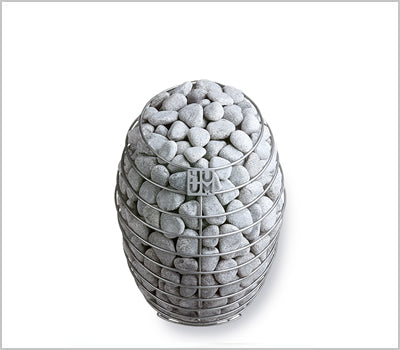
Sauna Heater Installation Tips: What You Need to Know
Installing a sauna heater is the one part of a sauna build where cutting corners can actually be dangerous. Get the electrical wrong and you're looking at a fire risk. Get the clearances wrong and your wall panels scorch. Get the ventilation wrong and your sauna never reaches temperature properly.
Quick Answers
Where should a sauna heater be placed relative to the door?
Mount the heater on the wall nearest the door, usually the front wall or the side wall next to it. This lets cool air enter near the floor by the door, heat up, rise, circulate across the ceiling and benches, then return to the heater, creating natural convection throughout the room.
Can I install a sauna heater myself?
You can mount the heater and load the stones yourself, but the electrical work should be done by a licensed electrician. Most sauna heaters need a dedicated 240V hardwired circuit, and most local codes require a permit, inspection, and a disconnect switch installed within sight of the sauna.
What clearances does a sauna heater need from the walls?
Typical minimums are 4-6 inches from side walls, 2-4 inches from the rear wall with a heat shield (or 6-8 inches without one), 36+ inches to the ceiling, and 6-8 inches from the nearest bench. Always confirm exact numbers in your specific heater's manual.
Does a sauna heater need a special electrical circuit?
Yes. Heaters above 4.5 kW generally require a dedicated 240V circuit, while smaller units up to 4.5 kW can sometimes run on 120V. Circuit breaker size and wire gauge scale with heater size, ranging from a 30-40A breaker with 10 AWG wire up to a 60A breaker with 6 AWG wire for 9+ kW units.
How should sauna stones be loaded onto the heater?
Place larger stones on the bottom and smaller ones on top, leaving small gaps for air to circulate through the heating elements. Don't pack them too tight or exceed the manufacturer's recommended stone weight, and let the stones sit slightly above the heater housing for the best steam.
Whether you're installing a heater in a new build or replacing an old one, these tips will help you get it right the first time.
Shop all heaters at SweatDecks
- Pipe Adapter Wood-Burning Sauna Heater - PIPE ADAPTOR - $169
- Kuru Safety Wall Set - KURU SAFETY WALL SET - $518
Affirm financing available. Free curbside shipping on orders over $5,000. See all all heaters.
Electrical Requirements
Voltage and Amperage
Most sauna heaters above 4.5 kW require a 240V dedicated circuit. Smaller heaters (up to 4.5 kW, suitable for very small saunas) can sometimes run on 120V. Check your heater's specifications - the manual will specify the exact voltage, amperage, and wire gauge required.
Typical electrical requirements by heater size:
| Heater Size | Sauna Size | Voltage | Circuit Breaker | Wire Gauge |
|---|---|---|---|---|
| 3-4.5 kW | Up to 150 cu ft | 120V or 240V | 30-40A | 10 AWG |
| 6 kW | 150-300 cu ft | 240V | 40A | 8 AWG |
| 8 kW | 300-450 cu ft | 240V | 50A | 6 AWG |
| 9+ kW | 450+ cu ft | 240V | 60A | 6 AWG |
Hire a Licensed Electrician
This is not a DIY electrical project unless you're a licensed electrician yourself. A dedicated circuit means running wire from your electrical panel directly to the sauna - no sharing with other outlets. The connection needs to be hardwired (no plug-in for 240V units), and most jurisdictions require a permit and inspection for this work.
The electrician will also install a disconnect switch within sight of the sauna but not inside it. This is code in most areas and lets you shut off power to the heater without going to the breaker panel.
Heater Placement and Clearances
Wall Clearances
Every heater has minimum clearance requirements from walls, benches, and combustible materials. These are not suggestions - they're safety requirements. Typical minimums:
- Side walls: 4-6 inches from each side
- Rear wall: 2-4 inches (with a heat shield) or 6-8 inches (without)
- Ceiling: 36+ inches from the top of the heater
- Benches: 6-8 inches from the nearest bench surface
- Floor protection: Non-combustible surface under and around the heater
Check your specific heater's manual for exact clearance numbers. Wall-mounted heaters save floor space and are the most common for home saunas. Floor-standing models are used for larger commercial saunas.
Where to Mount It
Mount the heater on the wall nearest the door, usually on the front wall or the side wall adjacent to the door. This creates natural convection: cool air enters near the floor by the door, gets heated, rises, circulates across the ceiling and benches, then returns to the heater.
Don't mount the heater directly under a bench or in a corner that restricts airflow around it. The heater needs open air above and around it to function properly.
Ventilation Setup
Proper ventilation is critical for comfort, safety, and heater performance. A sauna needs fresh air intake and exhaust.
- Intake vent: Place near the floor, close to the heater. This feeds fresh air to the heater and the room. Typical size is 4-6 inches in diameter.
- Exhaust vent: Place on the opposite wall from the heater, high on the wall or near the ceiling. This draws stale, humid air out of the room.
Both vents should be adjustable so you can control airflow. Without proper ventilation, oxygen levels drop, CO2 builds up, and the sauna feels stuffy and hard to breathe in. For a complete ventilation walkthrough, see our sauna ventilation guide.
Loading Sauna Stones
How you load the stones matters more than most people realize. Stones that are packed too tightly restrict airflow through the heater, reducing efficiency and straining the heating elements. Stones that are too loose don't retain heat well and create uneven steam.
- Use only stones designed for sauna use (olivine diabase, vulcanite, or peridotite are common)
- Place larger stones on the bottom, smaller stones on top
- Leave small gaps between stones for air to circulate through the heating elements
- Don't exceed the manufacturer's recommended stone weight
- Stones should extend slightly above the top of the heater housing for best steam production
For detailed instructions, read our guide on how to season sauna stones.
Control Panel Placement
Most sauna heaters come with an external control panel that mounts outside the sauna room. This keeps the electronics away from heat and moisture. Mount it at eye level, near the sauna door, on the dry side of the wall.
Some heaters have built-in controls on the unit itself. These are simpler to install but mean you have to be inside the sauna to adjust settings. External controls let you start the heater and set the temperature before you step in.
Safety Checklist Before First Use
- All electrical connections inspected and approved (if required by local code)
- Disconnect switch installed and accessible
- Wall and ceiling clearances meet or exceed manufacturer requirements
- Non-combustible floor protection in place under and around heater
- Stones loaded correctly with proper spacing
- Ventilation intake and exhaust vents functional
- Control panel mounted outside the sauna room
- Timer function tested (most heaters have a maximum run time safety shutoff)
- Thermometer installed at head height to monitor temperature
Common Installation Mistakes
- Undersized heater. A heater that's too small for your sauna will run constantly, struggle to reach target temperature, and burn out prematurely. Calculate your sauna's cubic footage and match it to the heater's rated capacity.
- Oversized heater. Going too big overheats the room, wastes energy, and creates uncomfortable hot spots near the heater.
- Skipping the heat shield. If clearances are tight, a stainless steel heat shield behind the heater reflects radiant heat away from the wall. Don't skip it just because the wall "looks fine."
- Running wire through the sauna interior. Electrical wiring should run through the wall, not exposed inside the sauna room where heat degrades insulation.
If you're still deciding on a sauna setup, check out our outdoor saunas and indoor saunas - many come with heaters pre-matched to the sauna size, which takes the guesswork out of this process.
Browse our expert-tested cold plunge collection.