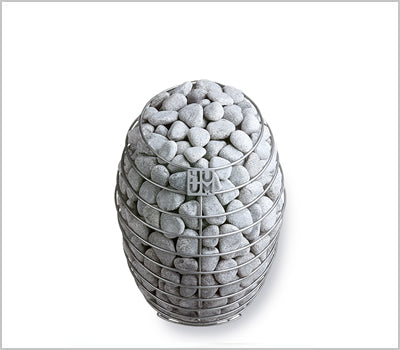
How to Season Sauna Stones for Better Steam and Longer Life
New sauna stones need to be seasoned before they'll produce clean, pleasant steam. Skip this step and your first few sessions will have a dusty, mineral-heavy smell that nobody enjoys. Proper seasoning also helps identify weak stones that should be removed before they crack and potentially damage your heater.
Quick Answers
How do you season new sauna stones?
Rinse the stones in clean water with no soap, then load them into the heater with large stones on the bottom and small ones on top, leaving air gaps. Heat to full temperature for at least 30 minutes without adding water. Then test with a small ladle of water. The steam should be clean, with no gritty smell.
Why do sauna stones need to be seasoned?
Fresh stones carry dust, mineral particles, and surface contaminants from mining and processing. Seasoning burns off these particles so your first real session produces clean steam instead of a gritty, dusty smell. It also stress-tests stones so you can spot and remove any with hidden fractures before they crack during a normal session.
How long does it take to season sauna stones?
The full process takes about one session. Dry-heat the stones for at least 30 minutes at full temperature, then test with a small ladle of water. If the steam still smells dusty, dry-heat for another 15-20 minutes and test again. By the second or third ladleful, steam should be clean.
How do you arrange sauna stones in the heater?
Place the largest stones on the bottom, resting against the heating elements for support and contact. Add medium stones in the middle, and smaller stones on top since they heat faster and catch the water you pour. Leave air gaps throughout, don't pack tightly, and don't stack stones higher than the heater housing.
How often should sauna stones be re-seasoned?
You don't need to repeat the full process regularly, but every 3-6 months you should remove all stones, rinse them, inspect for cracks, and reload. Any new or replacement stones added to the pile need their own dry-heat cycle without water before regular use.
The process is simple and takes one session. Here's how to do it right.
Shop sauna stones at SweatDecks
- SOAPSTONE CUP - $25
- Traditional Sauna Stones - $59
Affirm financing available. Free curbside shipping on orders over $5,000. See all sauna stones.
Why Seasoning Matters
Fresh sauna stones straight from the box carry dust, loose mineral particles, and sometimes surface contaminants from mining and processing. When you pour water on unseasoned stones, that first burst of steam carries all of those particles into the air you're breathing. It's not dangerous in most cases, but it tastes gritty and smells off.
Seasoning also stress-tests the stones. The first heating cycle reveals stones with hidden fractures that will crack under thermal stress. Better to find those stones now and replace them than have them shatter during a regular session, potentially sending fragments into the heater elements.
Step 1: Wash the Stones
Before loading them into the heater, give your stones a good rinse. Put them in a bucket or large container and run water over them while agitating by hand. You'll see cloudy, dusty water running off - that's exactly what you're removing.
Don't use soap or any cleaning chemicals. Just water. Scrub off any visible dirt or loose particles with your hands. Let the stones drain and air dry for a few minutes. They don't need to be completely dry before loading.
Step 2: Load the Heater Correctly
How you arrange the stones in the heater affects heat distribution, airflow, and steam quality:
- Large stones on the bottom. The biggest stones go in first, resting against and around the heating elements. These provide structural support and maximize contact with the heating elements.
- Medium stones in the middle. Fill in the gaps, creating a stable structure with small air spaces between stones.
- Smaller stones on top. The top layer catches the water when you pour and produces steam. Smaller stones heat up faster and create more surface area for water contact.
- Don't pack them tight. Air needs to circulate through the stone pile and around the heating elements. If stones are jammed together with no gaps, the heater works harder, heats unevenly, and elements can overheat.
- Don't overfill. Stones should sit at or slightly above the top of the heater housing. A mountain of stones piled high above the heater looks impressive but blocks airflow and strains the elements.
Step 3: The First Heat Cycle (Seasoning)
Turn on the heater and bring the sauna to full temperature (180-195F for traditional saunas). Don't pour any water on the stones during this first heat-up. Let the stones get fully hot and stay at temperature for at least 30 minutes.
During this first cycle, you might notice a slight smell - mineral dust burning off, natural oils in the stone evaporating. This is normal. Open the sauna door periodically to let fresh air circulate and carry away the initial off-gassing.
Listen for Cracks
As the stones heat for the first time, listen for popping or cracking sounds. Small pops and pings are normal as stones expand. A loud crack or snap usually means a stone has fractured. After the sauna cools down, inspect the stones and remove any that have split or developed visible cracks.
Step 4: First Water Test
Once the stones have been dry-heated for 30+ minutes, it's time to add water. Ladle a small amount of water (2-3 oz) onto the stones. The steam should be clean and clear with no gritty smell or taste.
If it still smells dusty, let the stones dry-heat for another 15-20 minutes and try again. By the second or third ladleful, the steam should be clean and pleasant.
After this, pour water more generously and enjoy a normal session. Your stones are seasoned.
How Often to Re-Season
You don't need to repeat the full seasoning process regularly. However, every time you replace stones or add new ones to the pile, those new stones should go through a first-heat cycle without water before regular use.
Every 3-6 months, remove all stones, rinse them to wash away accumulated mineral deposits, inspect for cracks, and reload. This maintenance step keeps steam quality high and prevents mineral buildup from affecting heater performance. For full details on when stones need replacing, see our guide on when to replace sauna stones.
Choosing the Right Stones
Not all rocks belong in a sauna heater. Sauna stones need specific properties:
- High heat tolerance. They must handle rapid temperature changes without shattering. Volcanic and igneous rocks are best.
- Non-porous. Porous stones absorb water, which turns to steam inside the stone and causes explosive fracturing.
- No harmful minerals. Some rocks release sulfur or other compounds when heated. Use only stones sold specifically for sauna use.
Common Sauna Stone Types
| Stone Type | Heat Retention | Durability | Steam Quality |
|---|---|---|---|
| Olivine Diabase | Excellent | Very High | Excellent - soft steam |
| Vulcanite | Very Good | High | Good |
| Peridotite | Excellent | Very High | Excellent |
| Granite | Good | Moderate | Good (can be sharp) |
Never use river rocks, limestone, sandstone, or any sedimentary rock. These can contain trapped water or air pockets that cause them to explode when heated rapidly.
Quick Reference
- Rinse stones in clean water, no soap
- Load large stones on bottom, medium in middle, small on top with air gaps
- Heat to full temperature for 30+ minutes without water
- Listen for cracks, remove damaged stones after cooling
- Test with a small ladle of water - steam should be clean
- Every 3-6 months, remove, rinse, inspect, and reload
Looking for a new sauna setup? Browse our outdoor saunas and indoor saunas, all of which include heaters matched to the sauna size. Check our sauna accessories for replacement stones and heater supplies.
Browse our expert-tested cold plunge collection.