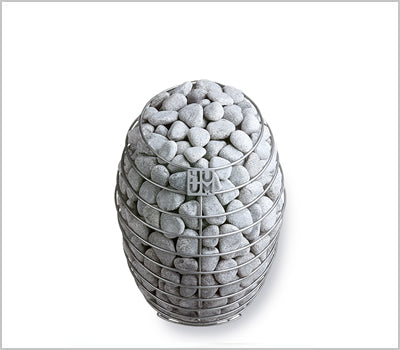
Sauna Heater Guard: Essential Safety for Your Sauna
A sauna heater guard is a protective railing or fence that surrounds your sauna heater to prevent accidental contact with the hot surface. It's a simple piece of equipment, but it can save you from a nasty burn - especially in smaller saunas where the heater is close to the benches.
Quick Answers
What is a sauna heater guard?
It's a protective railing or fence, usually wood or metal, that surrounds the heater to prevent accidental contact with its hot surface. It creates a physical buffer zone since the outer surface of an electric heater can reach 300-400F, with the rocks even hotter.
What wood should a sauna heater guard be made from?
Aspen is the best choice because it's low density, doesn't splinter, and stays cool to the touch. Alder works similarly well. Avoid pine and spruce, since their resin can melt and drip, and never use treated lumber, which releases toxic fumes when heated.
How much clearance does a sauna heater guard need?
Typical codes call for 4-6 inches of side clearance between the heater and guard, 1-2 inches of floor clearance for air circulation, and a top that doesn't extend above the heater rocks so airflow isn't restricted. Always check the heater's UL-listed clearance documentation.
Can I build my own sauna heater guard?
Yes, if you have basic woodworking skills. Use 2x2 or 1.5x1.5 inch aspen or alder stock, stainless steel screws, and no finish or sealant, since varnish and polyurethane off-gas at sauna temperatures. A height of 24-30 inches works for most residential saunas.
Do pre-made heater guards fit any heater?
Pre-made guards typically run $50-150 and are designed to fit specific heater models, complete with mounting hardware. If your sauna brand sells a guard made for your heater, that's generally the easiest option to install.
Shop all heaters at SweatDecks
- Pipe Adapter Wood-Burning Sauna Heater - PIPE ADAPTOR - $169
- Kuru Safety Wall Set - KURU SAFETY WALL SET - $518
Affirm financing available. Free curbside shipping on orders over $5,000. See all all heaters.
Why You Need One
Sauna heaters get extremely hot. An electric heater's outer surface can reach 300-400F, and the rocks on top can be even hotter. In a small sauna, it only takes a momentary loss of balance or an absent-minded hand placement to make painful contact. Heater guards create a physical buffer zone between you and the hottest surface in the room.
If you have kids who use the sauna (even supervised), a guard is non-negotiable. Same goes for commercial or semi-commercial settings where multiple people are moving around in a confined hot space.
Types of Heater Guards
Wood Rail Guards
The most common type for residential saunas. These are open-frame railings made from heat-resistant wood - usually aspen, alder, or western red cedar. The rails run horizontally between vertical posts, creating a fence-like barrier around the heater. Wood rail guards don't get dangerously hot to the touch because wood conducts heat poorly, which is the whole point. If you brush against a wood guard at 185F, it feels warm but won't burn you the way metal would.
Wood guards look natural inside a sauna and match the bench wood for a cohesive appearance. They typically have 3-4 horizontal rails spaced 3-4 inches apart - close enough to prevent a hand from reaching through, but open enough to allow airflow around the heater.
Metal Guards
More common in commercial and public sauna settings. Metal guards are typically made from stainless steel or powder-coated steel tubing. They're more durable than wood and resist damage from being kicked or knocked by heavy traffic. The drawback is that metal conducts heat, so metal guards are designed with standoff brackets that keep the rails further from the heater. Some commercial guards include a wood cap rail on top for a comfortable touch point.
Built-in Bench Guards
Some sauna manufacturers integrate the guard into the bench design itself. The lower bench section nearest the heater extends out as a barrier, with the bench support structure acting as the guard frame. This is the cleanest look since there's no separate piece of hardware, but it only works in saunas designed specifically for this layout.
Stone or Tile Surrounds
In custom-built saunas, some builders create a partial stone or tile wall around the heater. This acts as both a heat guard and a heat mass - the stone absorbs and slowly releases heat, which can improve the sauna's thermal performance. This approach is more common in European custom builds and requires planning during construction, not as an aftermarket addition.
Materials That Work (and Don't Work)
Not all wood is suitable for heater guards. The guard sits in the hottest zone of the sauna, so material selection matters:
- Aspen: The best choice. Low density, doesn't splinter, stays cool to the touch, and doesn't contain pitch or resin that could melt and drip near the heater.
- Alder: Similar to aspen. Lightweight, low heat conductivity, clean appearance.
- Western red cedar: Works well and matches most sauna interiors. It has natural antimicrobial properties but does contain some oils that can produce a stronger scent when close to the heater.
- Avoid pine and spruce: Softwoods with high resin content. Near a heater, the resin can melt, drip, and create sticky spots. Worse, hot resin on skin causes burns.
- Avoid treated lumber: Pressure-treated or chemically treated wood releases toxic fumes when heated. Never use treated lumber anywhere inside a sauna, especially near the heater.
DIY vs. Pre-Made Guards
Pre-made heater guards are available from most sauna manufacturers and accessory suppliers, typically running $50-150. They're designed to fit specific heater models and come with mounting hardware. If your sauna brand sells a guard for your heater, that's the easiest path.
Building your own guard is straightforward if you have basic woodworking skills. The construction is simple - vertical posts with horizontal rails. Use stainless steel screws (not regular steel, which rusts in sauna conditions). The key measurements are maintaining manufacturer clearances and making the guard tall enough that you can't reach over it to the heater. A 24-30 inch height works for most residential installations.
For a DIY guard, use 2x2 or 1.5x1.5 inch stock for the rails and posts. Sand everything smooth - splinters near a heater where people are barefoot and lightly clothed are a problem. Don't apply any finish or sealant to the guard. Varnish, stain, and polyurethane all off-gas toxic fumes at sauna temperatures.
Code Requirements
Building codes and heater manufacturer specifications both dictate minimum clearances between the heater and combustible materials (which includes the guard itself). Typical requirements:
- Side clearance: 4-6 inches between the heater and the guard on all exposed sides
- Top clearance: The guard should not extend above the top of the heater rocks, so airflow over the rocks isn't restricted
- Floor clearance: Leave 1-2 inches between the bottom of the guard and the floor for air circulation
- Wall clearance: The guard only needs to cover the sides of the heater that face the room. Sides against walls are already protected by the wall clearance the heater requires
UL-listed sauna heaters come with specific clearance documentation. Your local building inspector will reference these specs, so keep the installation manual accessible. In commercial settings, fire codes may impose additional requirements for guard height and spacing.
Installation and Spacing
Mount the guard securely to the floor or wall so it can't be knocked over. Use stainless steel lag screws into the wall studs or floor framing. The top of the guard should be high enough that you can't easily reach over it and touch the heater - at least as tall as the heater itself. For wall-mounted heaters (common with electric units), the guard should extend from the floor to above the heater's lower edge, wrapping the exposed sides.
Related Terms
Safe Saunas, Happy Families
Our saunas are designed with safety in mind. Check out our indoor saunas and outdoor saunas, and browse our heater accessories for guards and other safety additions.
Browse our expert-tested cold plunge collection.